Bulgogi (불고기) is thinly sliced marinated beef cooked quickly over heat, usually with soy sauce, garlic, sesame oil, green onions, black pepper, and a small amount of sweetness in the marinade. This Bulgogi guide explains what the dish is, how it is served in Korea, and how travelers can order and eat it without confusing it with other Korean barbecue dishes.
The name is commonly understood as a combination of bul, meaning fire, and gogi, meaning meat. In restaurants, bulgogi may appear as a grilled beef dish, a hot-plate dish, or a broth-style dish depending on the house style.
What Is Bulgogi?
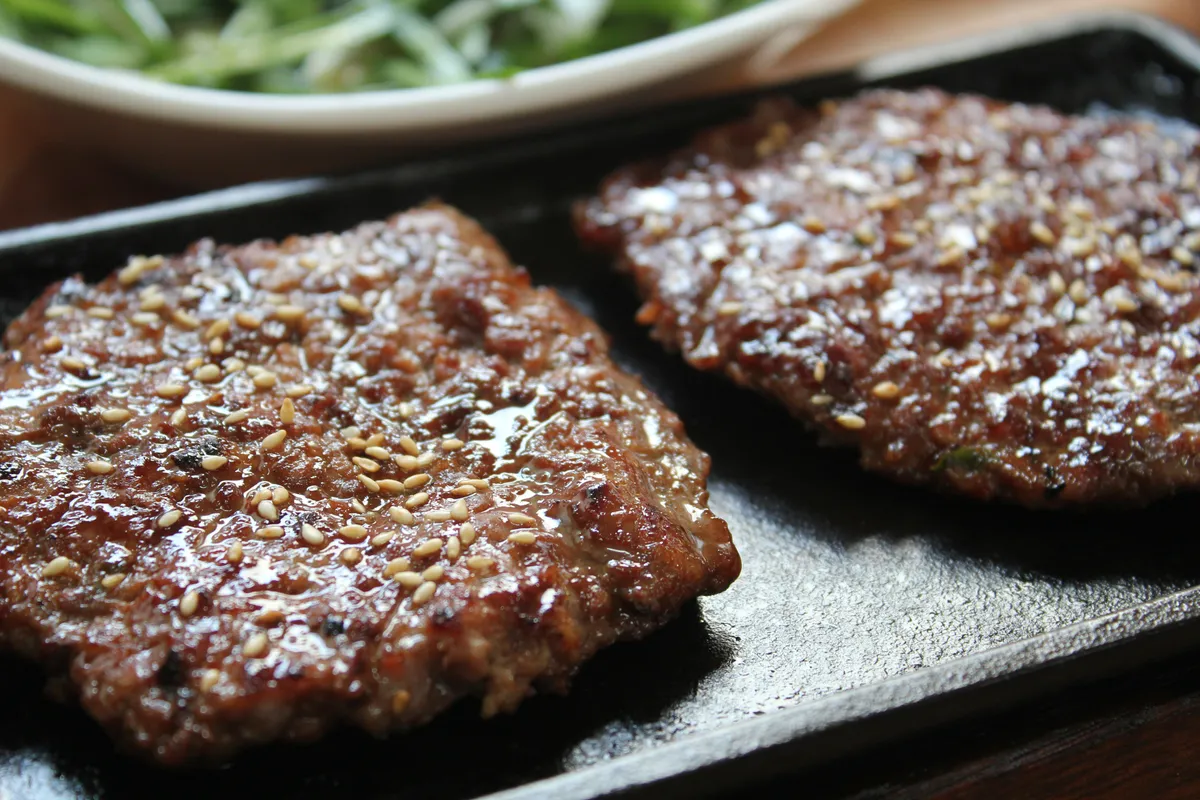
Bulgogi is a Korean beef dish made with thin slices of meat marinated before cooking. A standard bulgogi marinade uses soy sauce, sugar, green onions, garlic, black pepper, sesame seeds, and sesame oil before the beef is grilled at the table.
The texture is different from thick steak or unseasoned barbecue cuts. Bulgogi is sliced thin so the marinade coats the surface and the meat cooks quickly. The result is a savory-sweet beef dish that is easy to share with rice, lettuce wraps, soup, and side dishes.
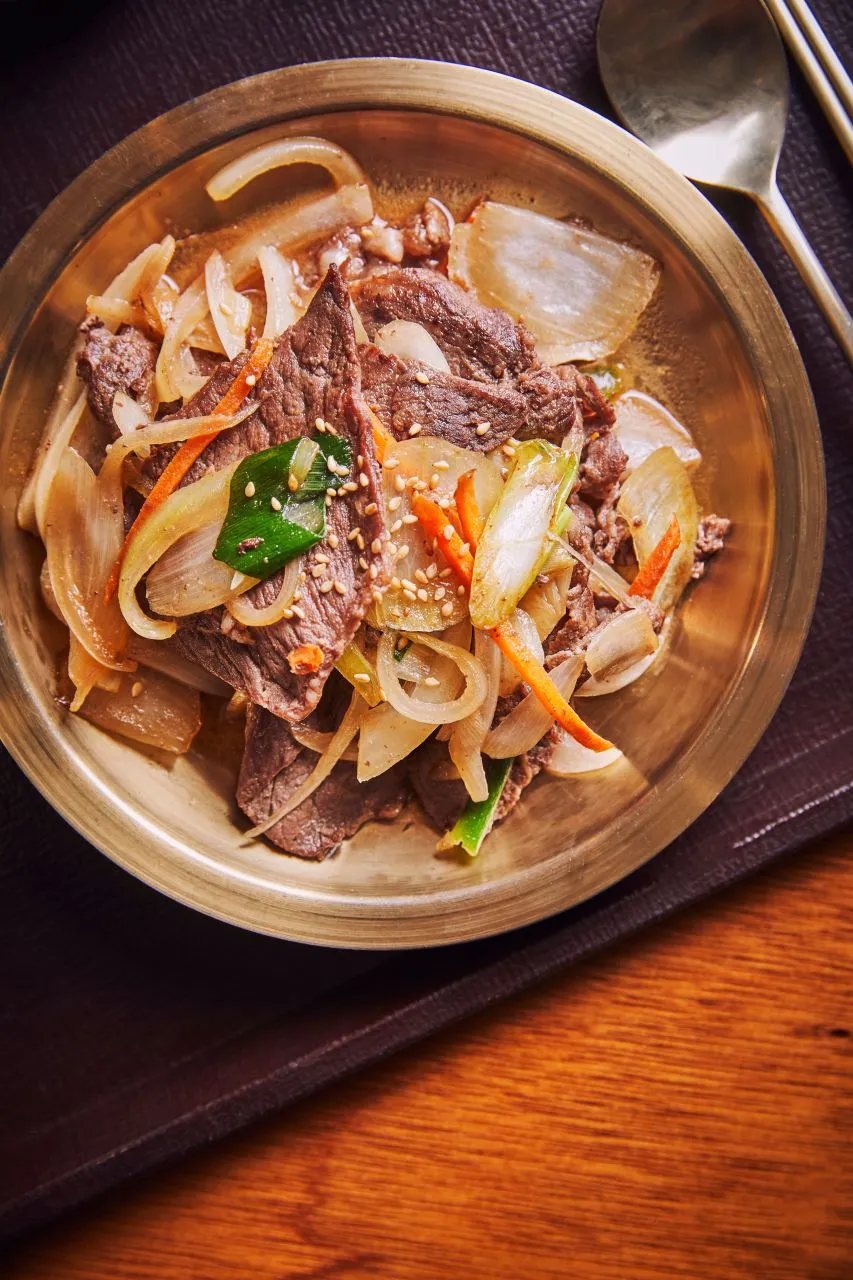
Photo: Korea Tourism Organization
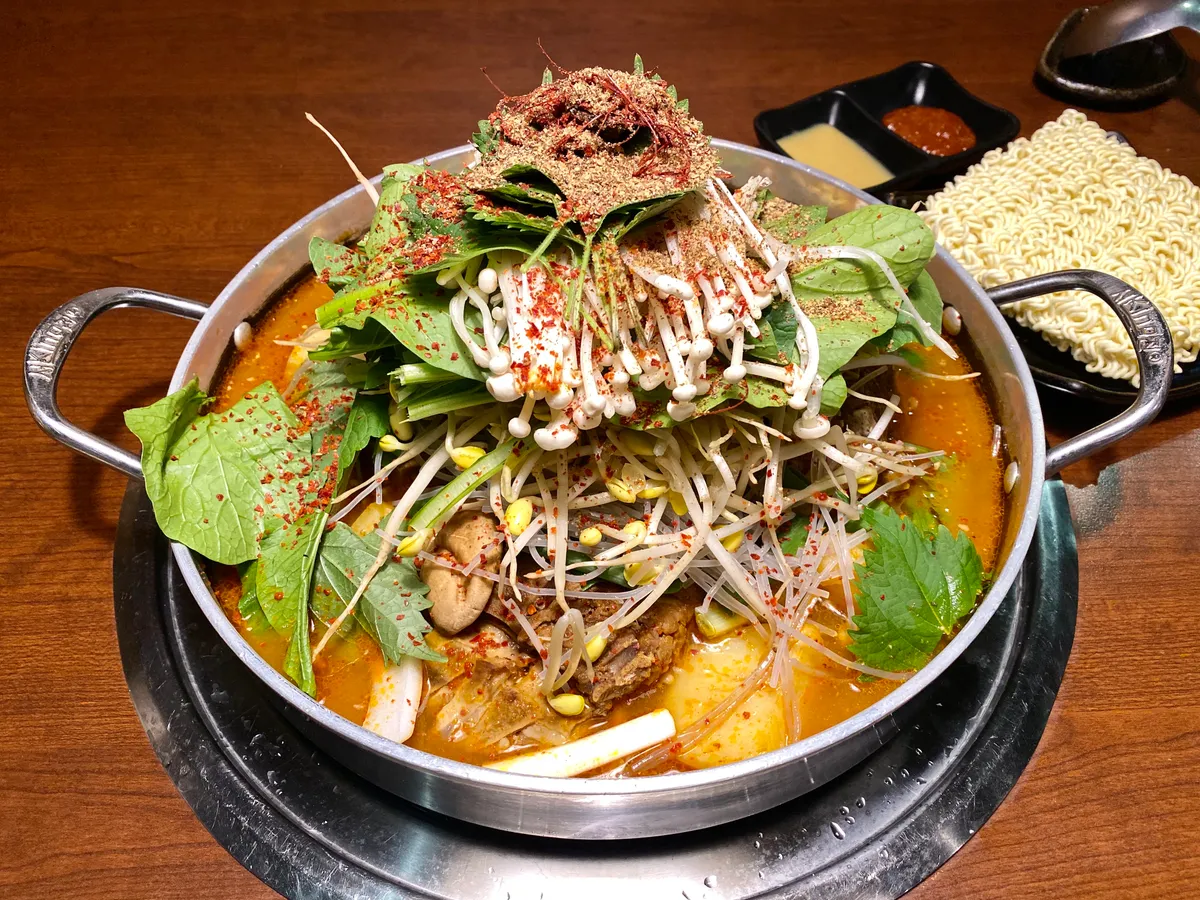
In Korea, bulgogi is not limited to one restaurant format. Some restaurants cook it on a grill at the table. Others serve it already cooked on a hot plate, in a shallow pan, or in a small stew-like style with broth and vegetables.
Bulgogi Ingredients and Marinade
The core flavor of bulgogi comes from a soy-sauce-based marinade. Common ingredients include soy sauce, garlic, green onion, sesame oil, black pepper, sesame seeds, and sugar. Some versions also use fruit or onion to add sweetness and soften the meat, but the exact recipe depends on the restaurant or household.
Beef is the classic base. The slices are usually cut thin across the grain so they cook fast and remain easy to bite. Because the meat is marinated before cooking, bulgogi generally tastes more seasoned than plain grilled beef.
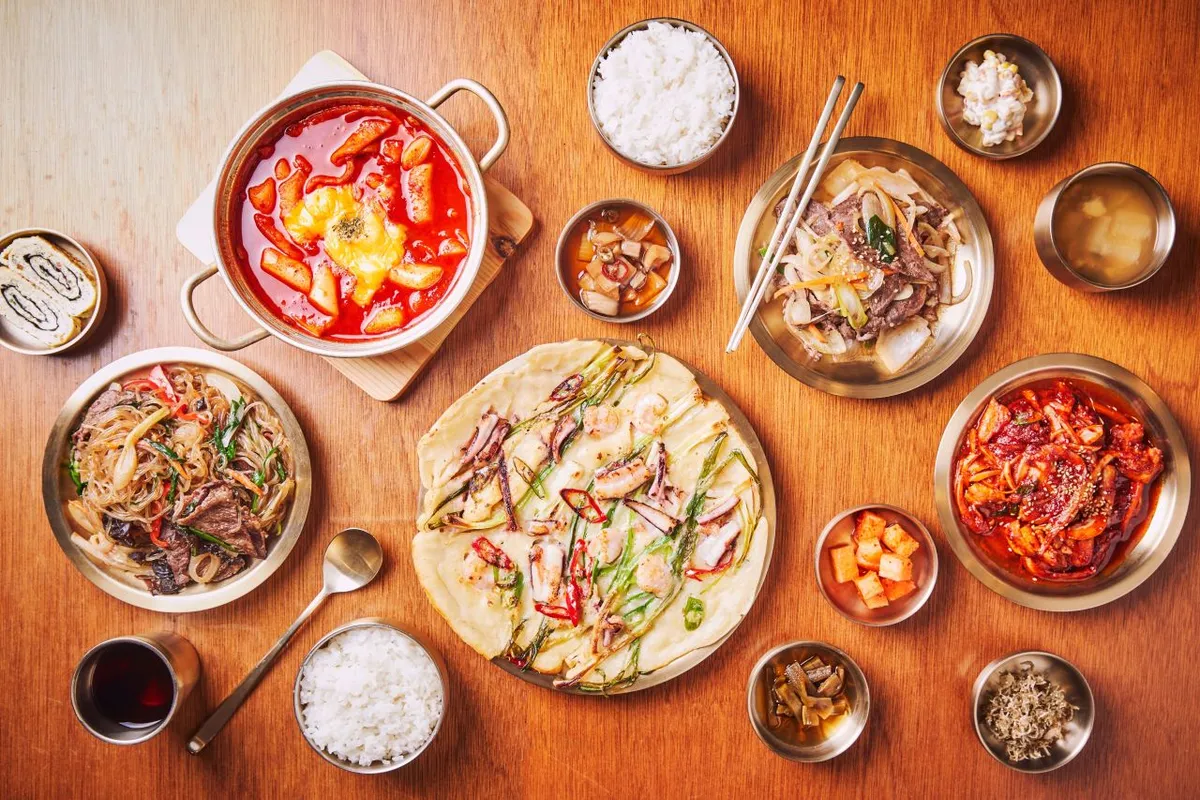
Photo: Korea Tourism Organization
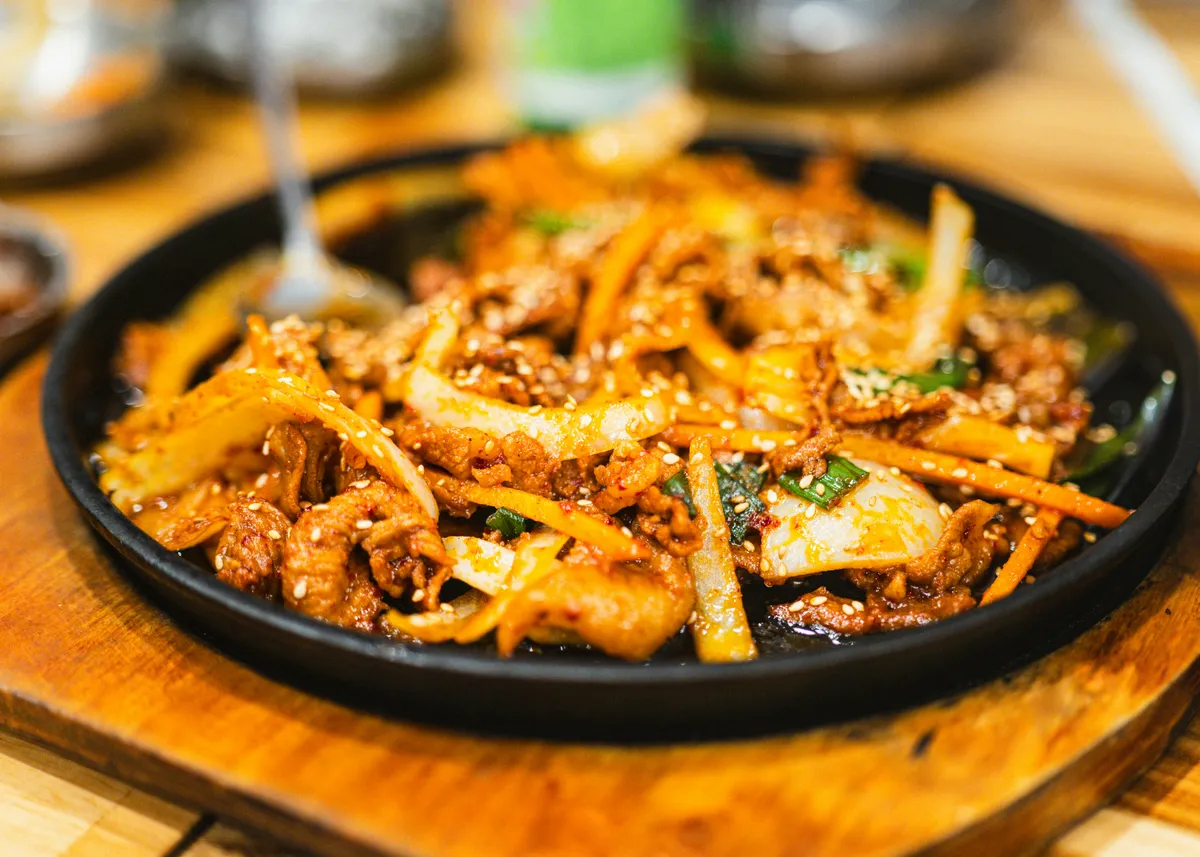
Vegetables may appear with the beef, especially onion, green onion, mushrooms, or glass noodles in pan-style versions. These additions absorb the marinade while cooking and are usually eaten with rice.
Travelers with allergies should ask the restaurant directly about sesame oil, sesame seeds, soy sauce, and any fruit-based marinade ingredients. Recipes vary, and menu translations do not always list every seasoning.
How Bulgogi Is Cooked and Served
Table-grilled bulgogi is cooked quickly because the beef is thin. The meat is placed on a grill or pan, turned as it browns, and shared from the center of the table. Unlike thick barbecue cuts, bulgogi does not usually require long grilling.
Restaurants may serve scissors and tongs for handling meat, especially when pieces are long. Staff sometimes start the cooking process, but service style varies by restaurant.
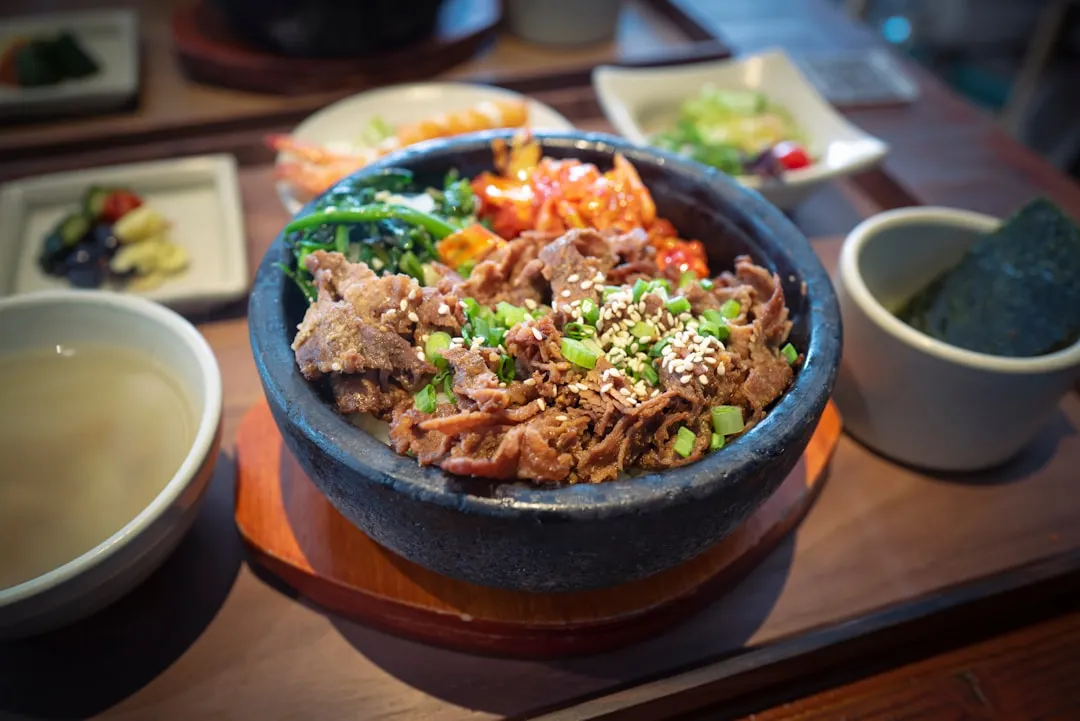
Photo: Zhuojun Yu on Unsplash
A typical meal includes rice, soup, and banchan, the small side dishes served with many Korean meals. Lettuce or perilla leaves may be provided for ssam, a wrap made by placing meat, rice, sauce, and side dishes inside a leaf.
When eating bulgogi as ssam, keep the wrap small enough to eat in one bite. Add a moderate amount of sauce because the beef is already seasoned.
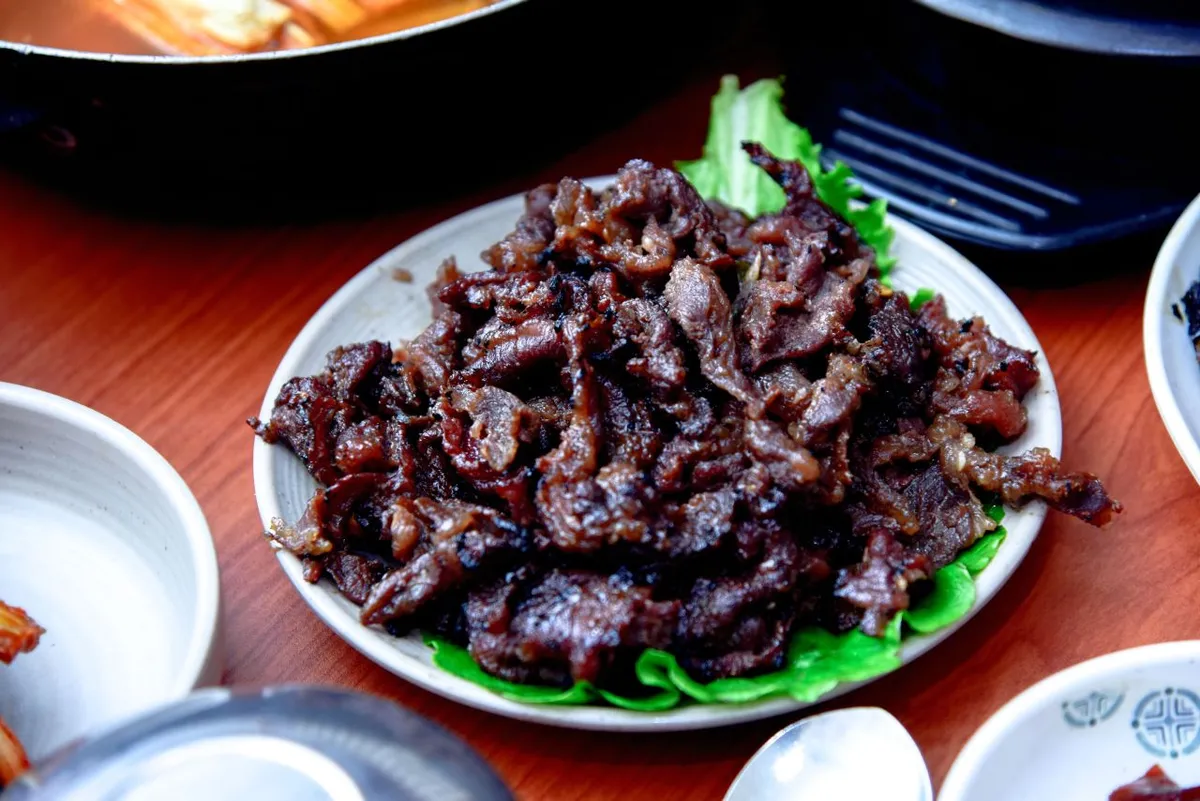
Photo: Korea Tourism Organization
Bulgogi vs Korean BBQ vs Galbi
Bulgogi is often translated loosely as Korean barbecue, but it is more specific than the general category. Korean barbecue can include many meats and cuts, such as samgyeopsal, galbi, brisket, and pork shoulder. Bulgogi refers to marinated sliced beef.
Samgyeopsal is grilled pork belly and is usually served without a sweet soy marinade. Diners season it at the table with salt, ssamjang, garlic, kimchi, and wraps.
Galbi means ribs. Beef galbi is often marinated and grilled on the bone or as rib meat, while bulgogi uses thinly sliced beef rather than rib cuts. Galbi can feel closer to a barbecue centerpiece, while bulgogi is often easier to eat with rice as a shared main dish.
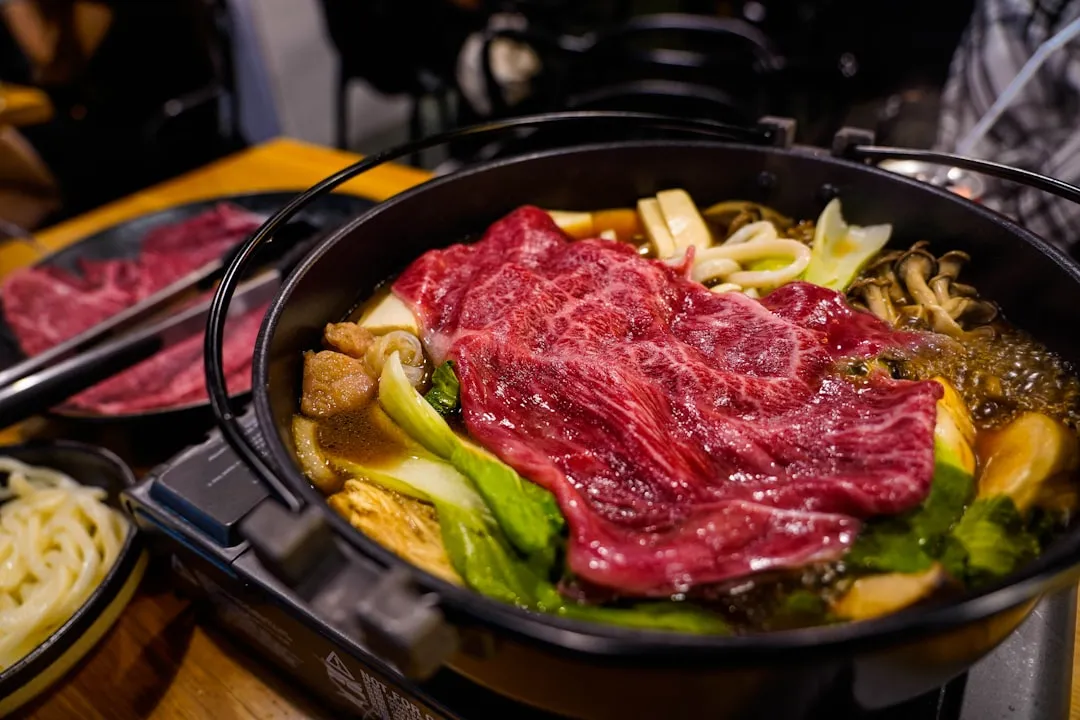
Photo: 0xk on Unsplash
For travelers reading menus, the safest distinction is simple: bulgogi usually means marinated sliced beef; galbi means ribs; samgyeopsal means pork belly. If the English menu uses only the phrase Korean barbecue, check the Korean name beside it.
How to Order Bulgogi in Korea
On Korean menus, bulgogi is written as 불고기. You may also see so-bulgogi (소불고기), meaning beef bulgogi, or ttukbaegi-bulgogi (뚝배기불고기), a hot stone-bowl version often served with broth.
At barbecue restaurants, bulgogi may be priced per serving and restaurants may require a minimum order of two servings. Do not assume the price or serving rule from one restaurant applies to another; check the menu before ordering.
Useful ordering phrases include:
- Bulgogi isseoyo? (불고기 있어요?) = Do you have bulgogi?
- Maeun geoyeyo? (매운 거예요?) = Is it spicy?
- Chamgireum deureogayo? (참기름 들어가요?) = Does it contain sesame oil?
- Gonggibap hana juseyo. (공기밥 하나 주세요.) = Please give me one bowl of rice.
Bulgogi is generally not known as a chili-heavy dish, but side dishes, sauces, and restaurant variations can differ. If spice level matters, ask before ordering.
Where Bulgogi Fits in a Korean Meal
Bulgogi works as a main dish in a shared Korean meal. It pairs naturally with steamed rice because the marinade is savory and slightly sweet. In set meals, it may come with soup and several banchan.
In barbecue-style restaurants, bulgogi may be one of several meats on the table. In casual restaurants, it may appear as a single-person bowl, a hot-plate main, or a stone-bowl broth dish.
For food-focused travel planning, bulgogi is useful because it sits between two common dining styles: Korean barbecue and everyday rice-based meals. It introduces the flavor of marinated Korean beef without requiring the diner to learn every barbecue cut first.
If you want to connect this meal with broader Korea travel planning, TripKorea also lists Korea things to do and food-related activities for readers comparing tours, markets, and city activities.
Frequently Asked Questions
Is bulgogi beef or pork?
Classic bulgogi is beef. Some menus may use similar seasoning for pork or other meats, but the standard traveler meaning of bulgogi is marinated sliced beef unless the menu specifies otherwise.
Is bulgogi spicy?
Bulgogi is usually based on soy sauce, garlic, sesame oil, and sweetness rather than chili heat. Spice level can still vary by restaurant, especially through side dishes and sauces, so ask before ordering if you avoid spicy food.
What is the difference between bulgogi and galbi?
Bulgogi uses thinly sliced marinated beef. Galbi means ribs, often beef short ribs or pork ribs, and may be served on or near the bone depending on the cut and restaurant style.
How do you eat bulgogi in Korea?
Eat bulgogi with rice, banchan, and optional ssam wraps. Place a small piece of meat, rice, and sauce inside a lettuce or perilla leaf, then eat the wrap in one bite.
What should travelers check before ordering bulgogi?
Check whether the restaurant requires a minimum number of servings, whether rice is included, and whether the marinade contains sesame, soy, fruit, or other allergy-related ingredients. Restaurant rules and recipes vary.
Complete Your Korea Trip with TripKorea
K-Food Tours & Activities
Use TripKorea to compare food-related activities, market visits, and local experiences across Korea.
Explore Korea Food Tours and Activities
Sources & References
Data Sources:
- Korean Food Information: Korea Foundation Korean Food Database
- Photos: Korea Tourism Organization
Official Sites:
Last verified: 2026-08-27
Restaurant hours and menus subject to change. Please confirm directly before visiting.