Top 5 Korean Markets for shopping include traditional market routes in Seoul, Busan, Jeju, and Jeonju where visitors can compare textiles, everyday goods, local food products, crafts, and compact souvenirs in one walkable area.
This guide is not a ranking of every market in Korea. It is a practical shopping route for five well-documented markets with visitor-friendly addresses, opening-hour guidance, and clear product categories.
Top 5 Korean Markets for Shopping at a Glance
Korean traditional markets are not all used in the same way. Some are better for textiles and clothing materials, some for daily groceries and packaged goods, and others for regional products or general market shopping.
Use the list below as a route planner rather than a strict ranking. Choose one Seoul market for a short city trip, or combine Busan, Jeju, and Jeonju markets with regional sightseeing days.
- Gwangjang Market, Seoul — silk, dress materials, fashion apparel, bedding, handicrafts, groceries, dried fish, and traditional goods.
- Mangwon Market, Seoul — fruits, vegetables, seafood, manufactured goods, lifestyle items, and compact market snacks.
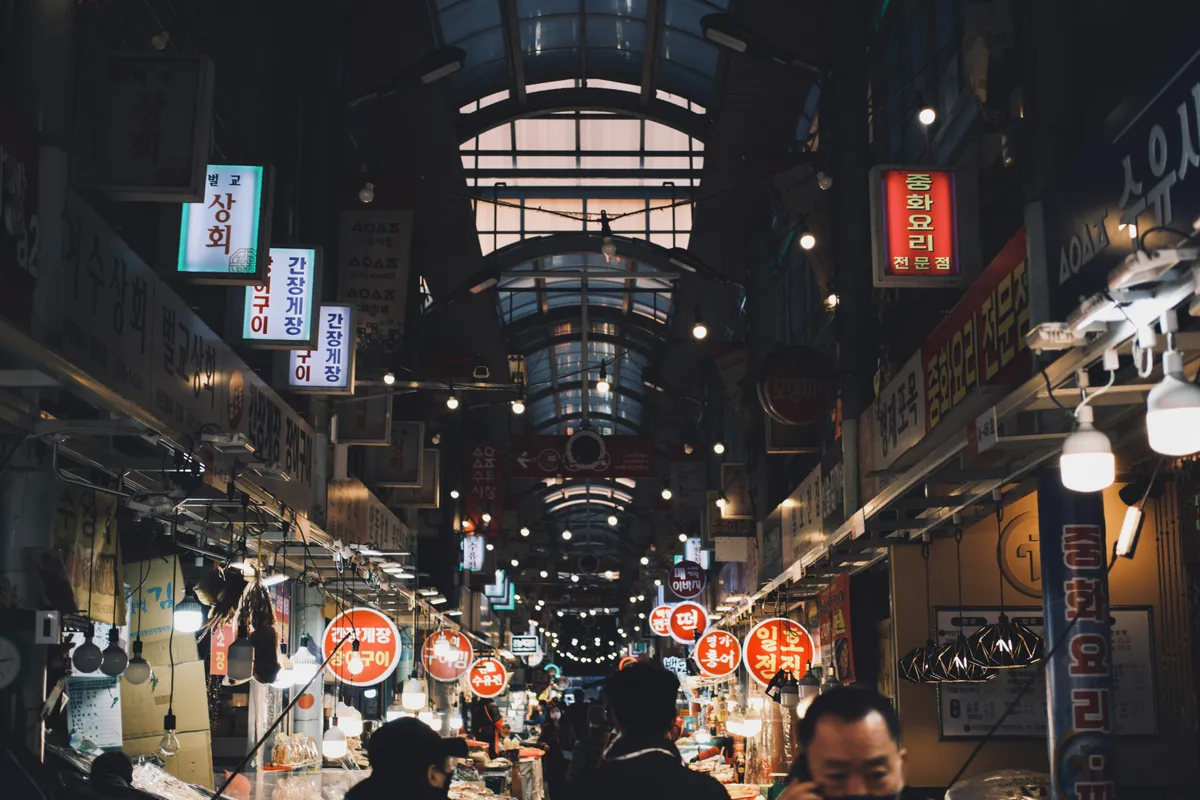
- Gukje Market, Busan — agricultural produce, electronics, general goods, cosmetics, and a large maze-like market route.
- Dongmun Traditional Market, Jeju — agricultural products, livestock products, seafood, grains, medicinal herbs, and Jeju market goods.
- Jeonju Nambu Traditional Market, Jeonju — fabric, furniture, dried fish, vegetables, fruits, medicinal herbs, poultry, and general goods.
For Seoul-only planning, pair the market stop with things to do in Seoul. For Busan planning, Gukje Market fits naturally with things to do in Busan.
1. Gwangjang Market, Seoul
Gwangjang Market (광장시장) is listed at 88, Changgyeonggung-ro, Jongno-gu, Seoul. It is Korea’s first permanent market and remains a large wholesale market for textiles, groceries, dried fish, traditional goods, and everyday market shopping.
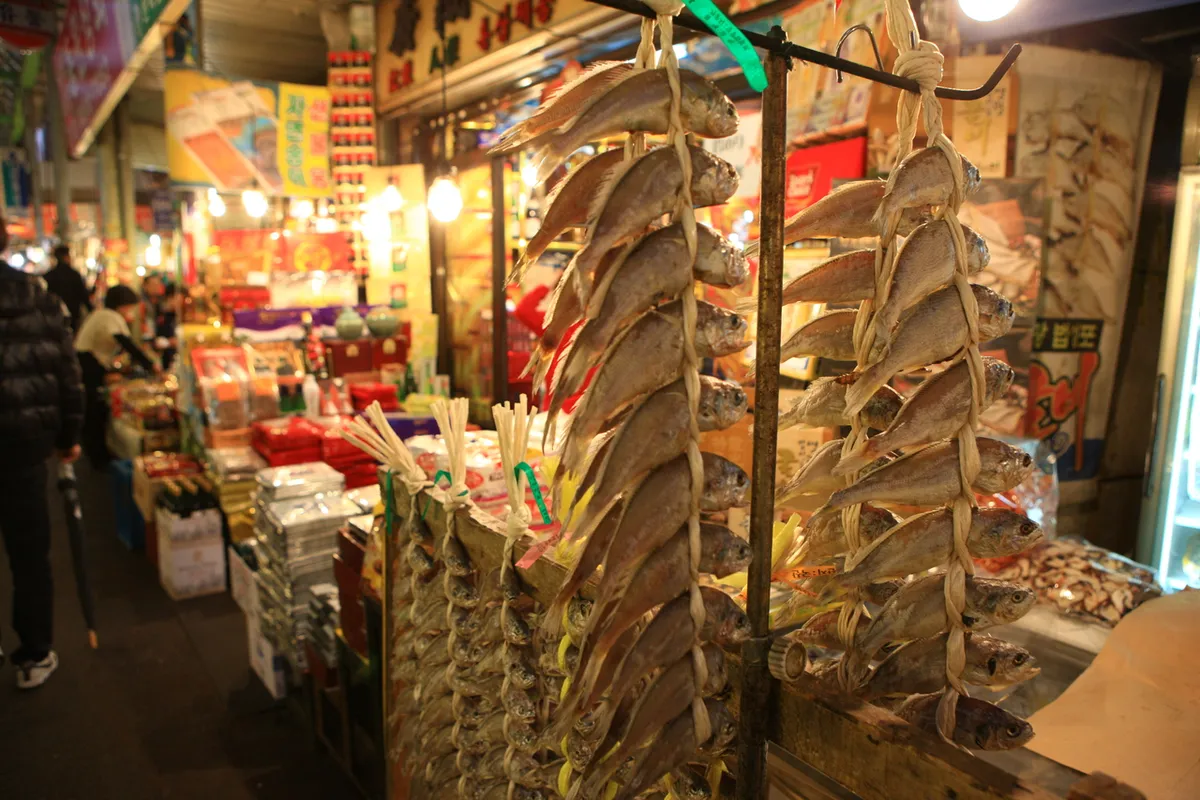
The strongest shopping angle here is not only food. Gwangjang is useful for visitors who want a market with fabric, silk, dress materials, bedding, fashion apparel, handicrafts, and lacquerware inlaid with mother-of-pearl.
General market hours are 09:00-18:00, charity stores are 10:00-19:00, and the food street runs 09:00-23:00. The regular closure is Sundays, while the food street is open year-round.
- Address: 88, Changgyeonggung-ro, Jongno-gu, Seoul
- Shopping focus: silk, dress material, fashion apparel, bedding, handicrafts, groceries, dried fish, and traditional goods
- Hours: 09:00-18:00; charity stores 10:00-19:00; food street 09:00-23:00
- Closure: Sundays; food street listed as open year-round
- Parking: Jongno 4(sa)-ga Jongmyo Parking Lot available
2. Mangwon Market, Seoul
Mangwon Market (망원시장) is located at 27 Poeun-ro 6-gil, Mapo-gu, Seoul. It is a compact traditional market near Mangnidan Street and Hangang Park, which makes it useful for visitors who want a smaller market stop before a riverside walk or picnic.
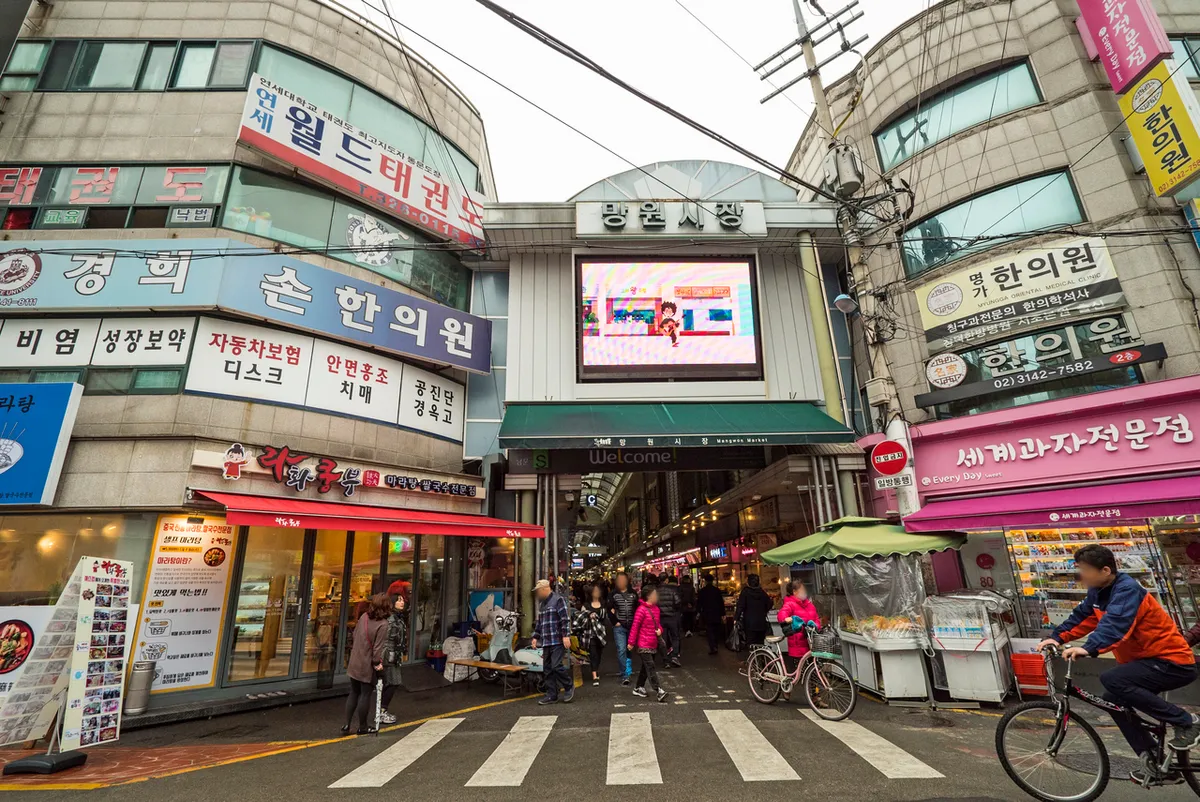
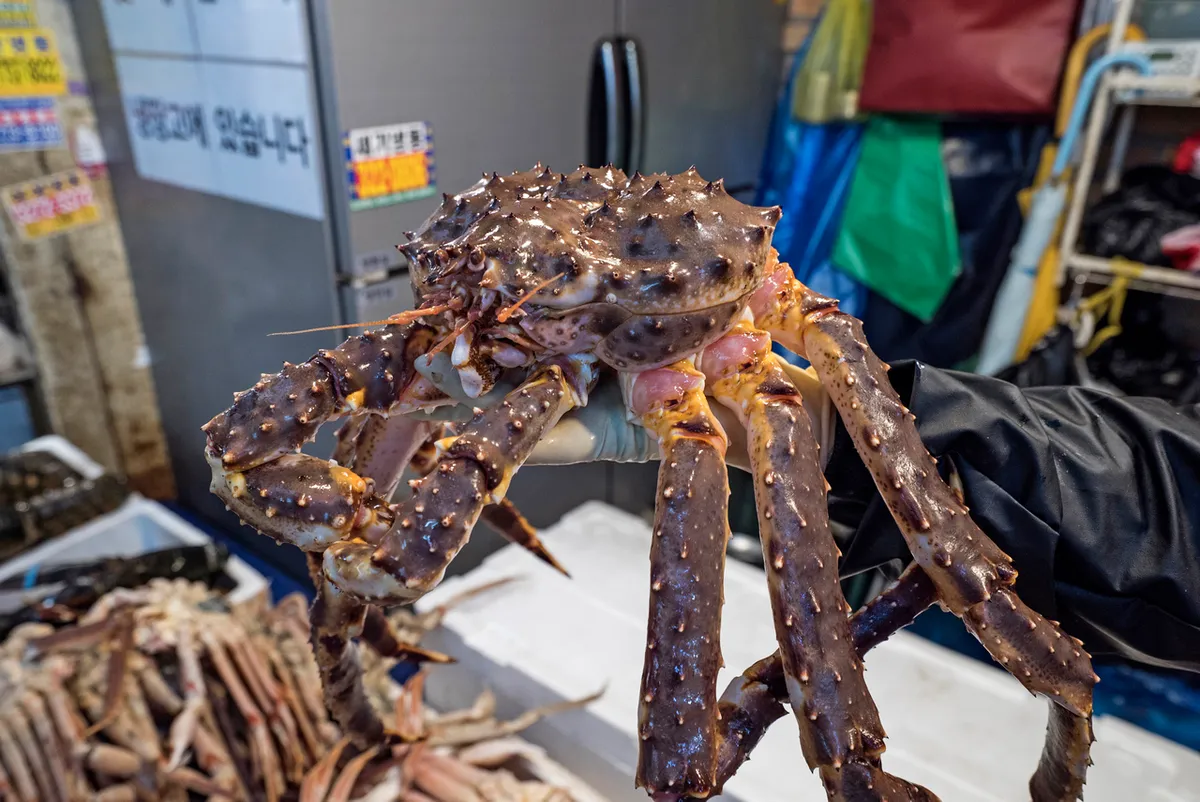
The market sale items include fruits, vegetables, seafood, and manufactured goods. For travelers, this means Mangwon works better for browsing small purchases and everyday market goods than for large souvenir shopping.
Hours and closures vary by store. This makes Mangwon a good daytime or early-evening stop, but visitors should not rely on one fixed closing time for every shop.
- Address: 27 Poeun-ro 6-gil, Mapo-gu, Seoul
- Shopping focus: fruits, vegetables, seafood, manufactured goods, and lifestyle items
- Hours: Varies by store
- Closure: Varies by store
- Parking: Available
3. Gukje Market, Busan
Gukje Market (국제시장) is located around Sinchang-ro 4-ga, Jung-gu, Busan. Its name means “international,” and the market is tied to Busan’s post-liberation and Korean War history, when goods from overseas and imported products were traded in the area.
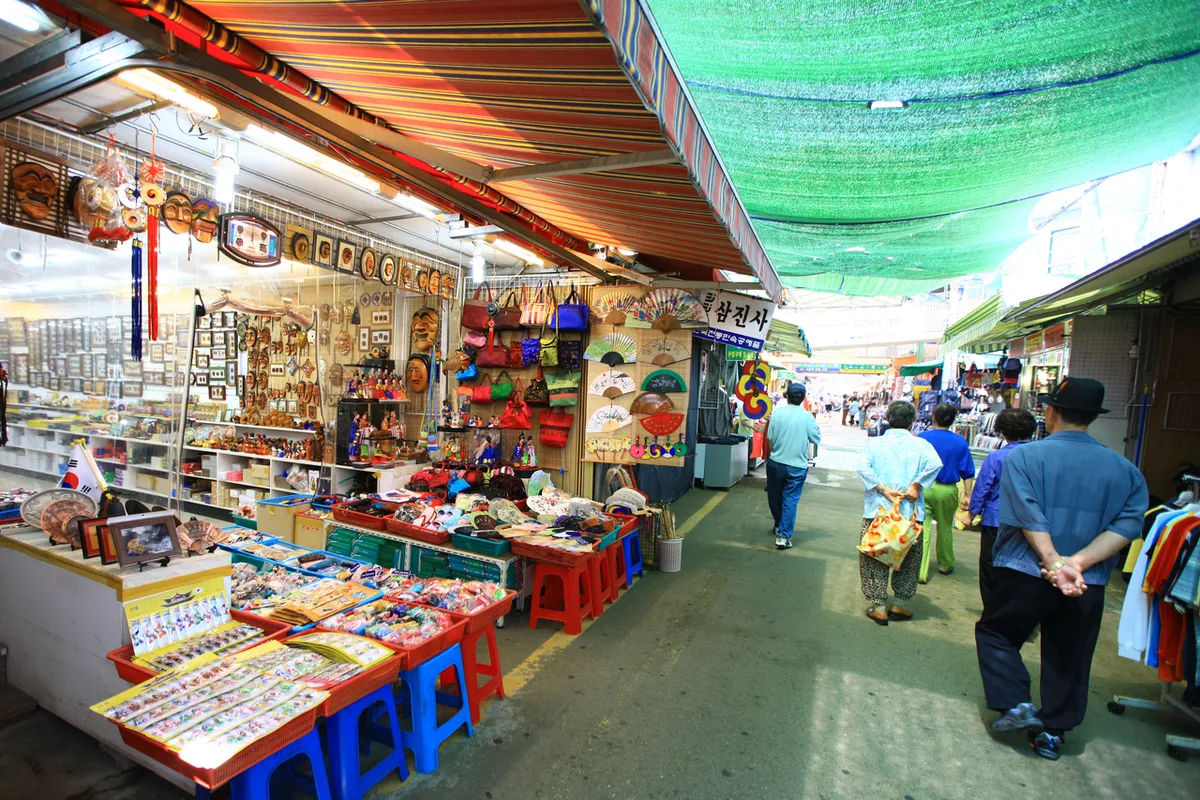
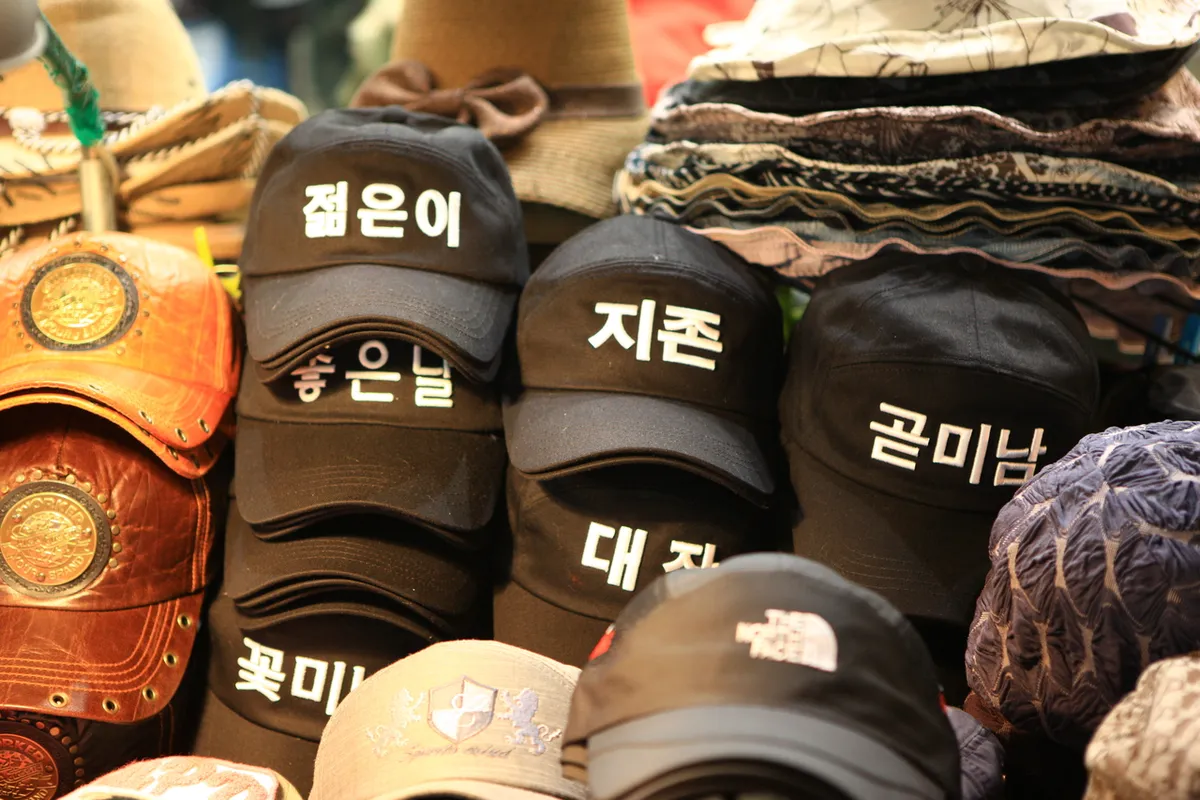
For shopping, Gukje Market is useful because the listed sale categories include agricultural produce, electronics, general goods, and cosmetics. The market is divided into wings, and first-time visitors should move carefully through the maze-like alleys and halls.
Hours are listed as 09:00-20:00, with variation by shop. Sundays are listed as the regular closure. Because the area is large, allow time to browse rather than treating it as a quick stop.
- Address: Area of Sinchang-ro 4-ga, Jung-gu, Busan
- Shopping focus: agricultural produce, electronics, general goods, cosmetics, and accessories
- Hours: 09:00-20:00; varies by shop
- Closure: Sundays
- Parking: Public parking lot available
4. Dongmun Traditional Market, Jeju
Dongmun Traditional Market (동문재래시장) is located at 20 Gwandeok-ro 14-gil, Jeju-si, Jeju-do. It is one of Jeju Island’s core permanent markets and is linked with the adjacent Dongmun Traditional Fish Market.
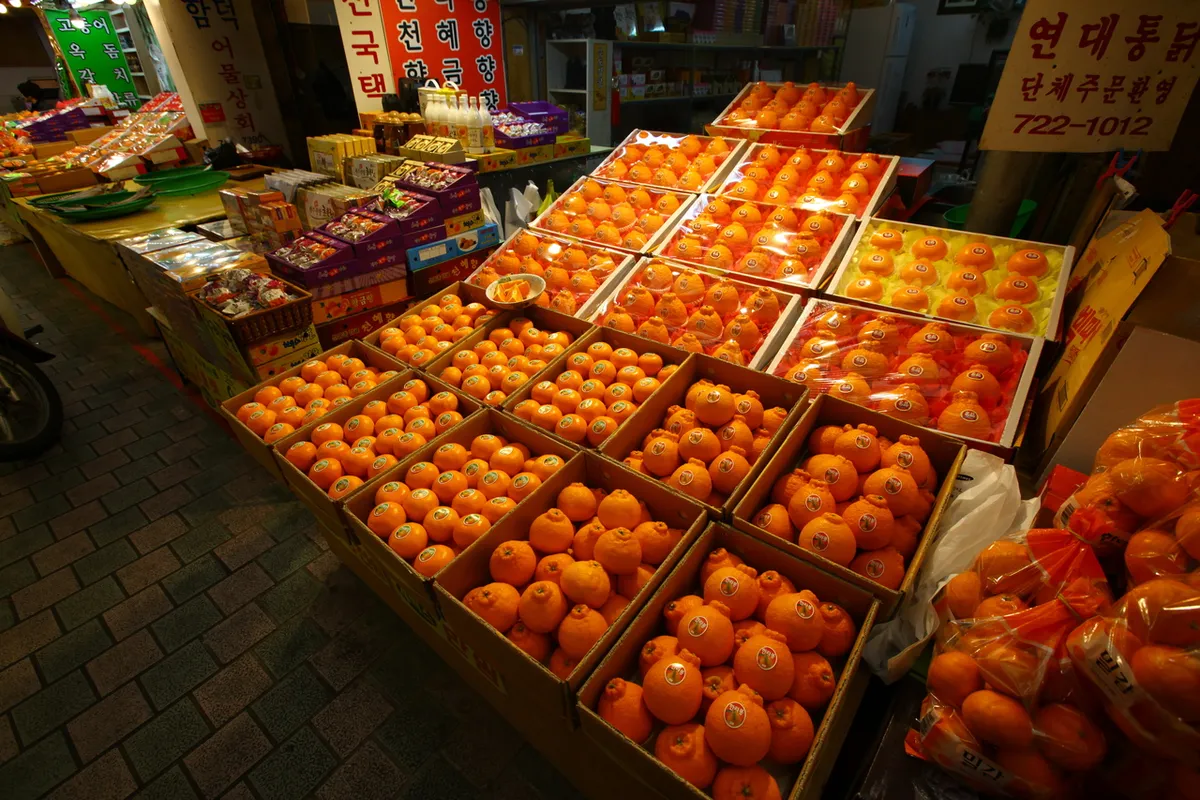
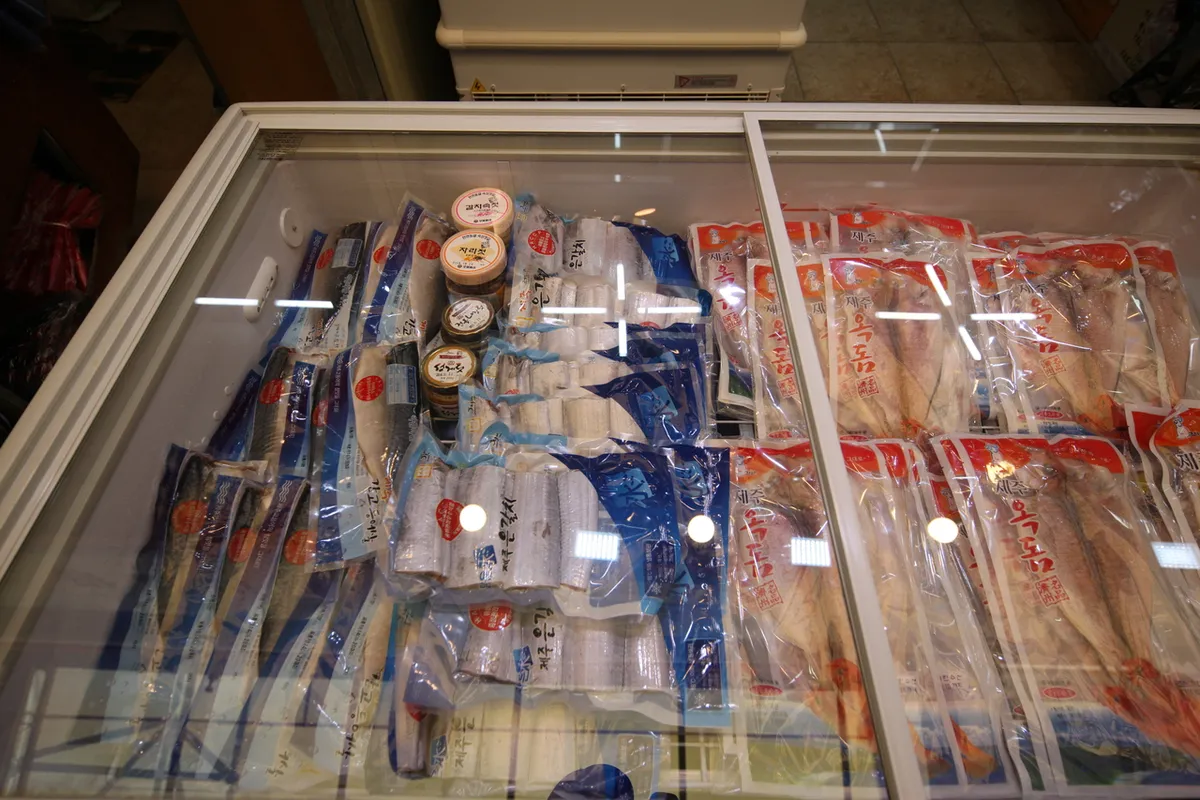
The market product categories include agricultural and livestock products. Its wider market route also covers vegetables, fruits, seafood, medicinal herbs, grains, and clothing, making it a practical Jeju stop for regional food products and everyday market browsing.
Hours are 08:00-21:00. The market is open year-round, with details varying by shop. Visitors should treat individual vendor hours as flexible.
- Address: 20 Gwandeok-ro 14-gil, Jeju-si, Jeju-do
- Shopping focus: agricultural products, livestock products, seafood, grains, medicinal herbs, and clothing
- Hours: 08:00-21:00
- Closure: Open year-round; varies by shop
- Parking: Available
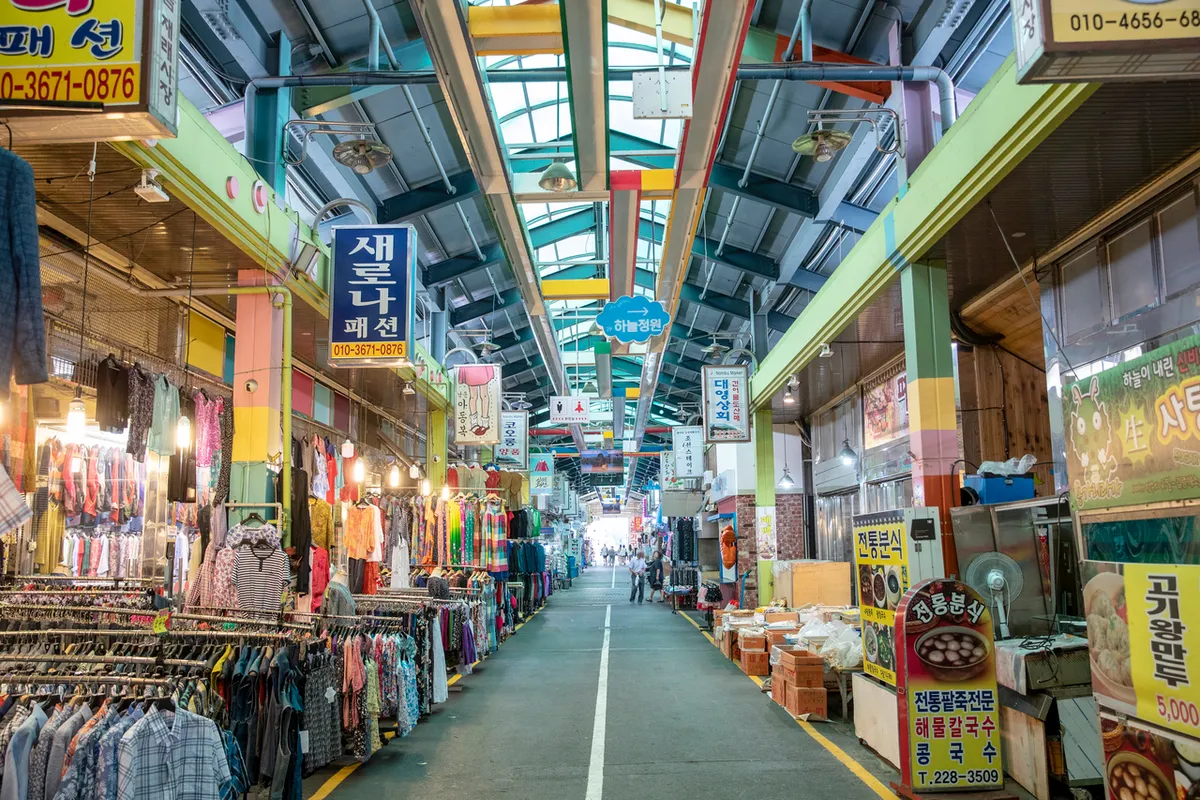
5. Jeonju Nambu Traditional Market, Jeonju
Jeonju Nambu Traditional Market (전주 남부시장) is located at 19-3 Pungnammun 1-gil, Wansan-gu, Jeonju-si, Jeonbuk-do. The market opened as a regular public market in 1905 at the site of Nammunbakk Market outside the southern gate of the old city.
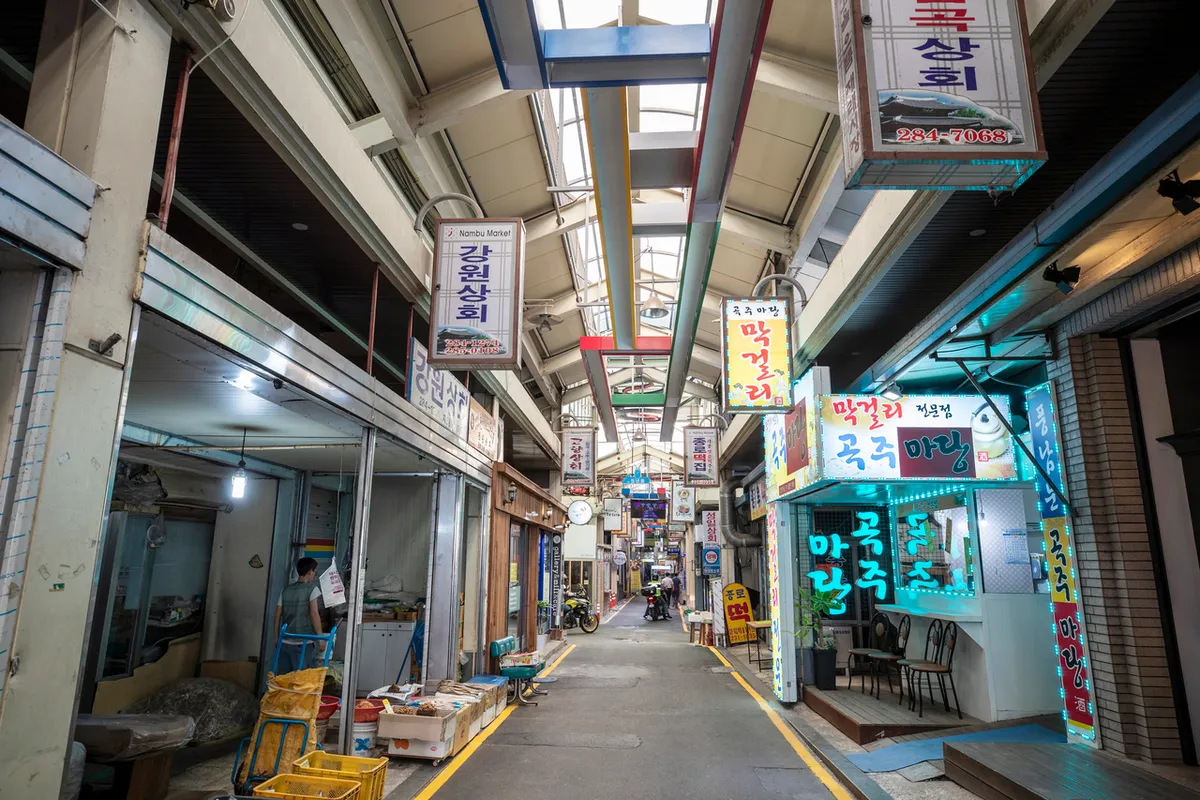
The market has about 800 stores and 1,200 workers. Its shopping categories include fabric, furniture, dried fish, vegetables, fruits, medicinal herbs, poultry, and general goods.
Jeonju Nambu also has a Youth Market on the second floor of 6-dong, developed in previously empty shops. This gives the market a mixed route: traditional goods at ground level and newer shop concepts in the upper-market area.
- Address: 19-3 Pungnammun 1-gil, Wansan-gu, Jeonju-si, Jeonbuk-do
- Shopping focus: fabric, furniture, dried fish, vegetables, fruits, medicinal herbs, poultry, and general goods
- Hours: 09:30-23:00; varies by store
- Closure: Varies by store
- Parking: Available
How to Choose the Right Korean Market
If you only have time for one Seoul market, choose Gwangjang for textiles and a larger historic market atmosphere, or Mangwon for a smaller neighborhood market route near Mapo and the Han River area.
If your trip includes Busan, Gukje Market is the stronger general-goods choice. If your trip includes Jeju, Dongmun Traditional Market is the practical city-center option. If your trip includes Jeonju, Nambu Traditional Market pairs naturally with the old-city area.
- Best for textiles and materials: Gwangjang Market and Jeonju Nambu Traditional Market
- Best for compact Seoul market browsing: Mangwon Market
- Best for Busan general goods: Gukje Market
- Best for Jeju regional market shopping: Dongmun Traditional Market
- Best for a mixed traditional-and-youth-market route: Jeonju Nambu Traditional Market
Shopping Tips for Traditional Markets in Korea
Traditional markets are easier to use when you keep the plan simple. Bring a small bag, carry some payment flexibility, and check whether the shop can pack fragile or food items securely before buying.
For food and regional products, choose sealed packaging when possible. For textiles, clothing, accessories, and craft goods, inspect size, material, stitching, and damage before payment. For electronics or cosmetics, confirm the product is new, sealed, and suitable for your country’s use rules.
- Check hours by shop: Several markets list hours that vary by store.
- Inspect before payment: Markets may have different return and exchange practices from department stores.
- Pack carefully: Separate food, liquids, fragile goods, and textiles before leaving the market.
- Ask before photographing: Some stalls may prefer that visitors do not photograph products or staff closely.
- Keep receipts: Receipts are useful for exchanges, customs questions, and personal expense tracking.
Frequently Asked Questions
What are the best traditional markets in Korea for shopping?
For a practical first route, consider Gwangjang Market, Mangwon Market, Gukje Market, Dongmun Traditional Market, and Jeonju Nambu Traditional Market. They cover Seoul, Busan, Jeju, and Jeonju, with shopping categories ranging from textiles and general goods to regional market products.
Which Korean market is best for textiles?
Gwangjang Market is useful for silk, dress materials, bedding, fashion apparel, and related textile shopping. Jeonju Nambu Traditional Market also lists fabric among its sale items. Check product condition and measurements before payment.
Which Korean market should I visit in Busan?
Gukje Market is a practical Busan choice for general goods, cosmetics, electronics, and market browsing. It is large and maze-like, so allow enough time and keep your route simple. Many shops operate around 09:00-20:00, with variation by shop.
Are Korean traditional markets open every day?
Opening rules differ by market and by shop. Gwangjang Market closes on Sundays for the general market, while its food street is open year-round. Mangwon, Dongmun, Gukje, and Jeonju Nambu all include some shop-by-shop variation.
Can I use cards at traditional markets in Korea?
Card acceptance can vary by stall and market section. Larger shops are more likely to accept cards, while small stalls may prefer simpler payment methods. Carry a backup payment option and confirm before ordering or selecting goods.
Plan Your Market Shopping Route
The safest way to use Top 5 Korean Markets as a trip plan is to match the market to your city route. Pick Gwangjang or Mangwon for Seoul, Gukje for Busan, Dongmun for Jeju, and Jeonju Nambu for Jeonju, then focus on a few product categories instead of trying to buy everything in one stop.
Sources & References
- Shopping venue information: Korea Tourism Organization (TourAPI)
- Market images: Korea Tourism Organization / PhotoKorea
- Traveler shopping and customs references: Visit Korea and Korea Customs Service
- Last verified: August 19, 2026
Note: Market hours, shop closures, product availability, payment methods, and refund handling can change. Confirm current details at the market before visiting or purchasing.