Hongdae and Yeonnam (홍대·연남동) bring two different public landscapes together around Hongik Univ. Station: streets with designated performance spaces and a former railway corridor transformed into parkland. This guide focuses on Hongdae Walking Street, the Yeonnam section of Gyeongui Line Forest Park, and the station exits and visitor information that help distinguish them.
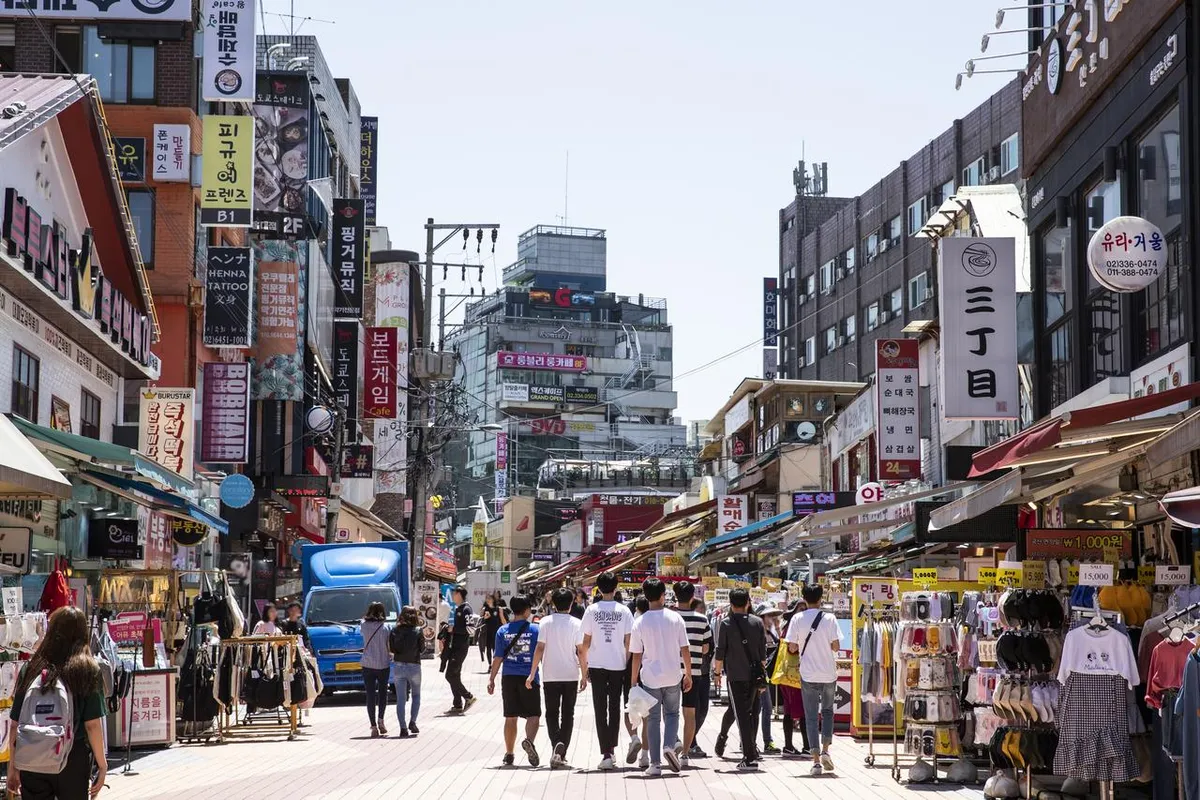
Photo: Korea Tourism Organization / 한국관광공사 이범수; May 2018 archive; KOGL Type 1.
1. Hongdae and Yeonnam: choosing the right side
Hongik Univ. Station (홍대입구역) serves Subway Line 2, the Gyeongui–Jungang Line and the Airport Railroad. Choosing an exit for the part you want to explore is more useful than treating “Hongdae” as a single destination with one entrance.
Exits 8 and 9 serve Hongdae Walking Street toward Hongik University. Exit 3 serves the Yeonnam park side. The streets and park are different settings around the same transport hub, rather than interchangeable names for one attraction.
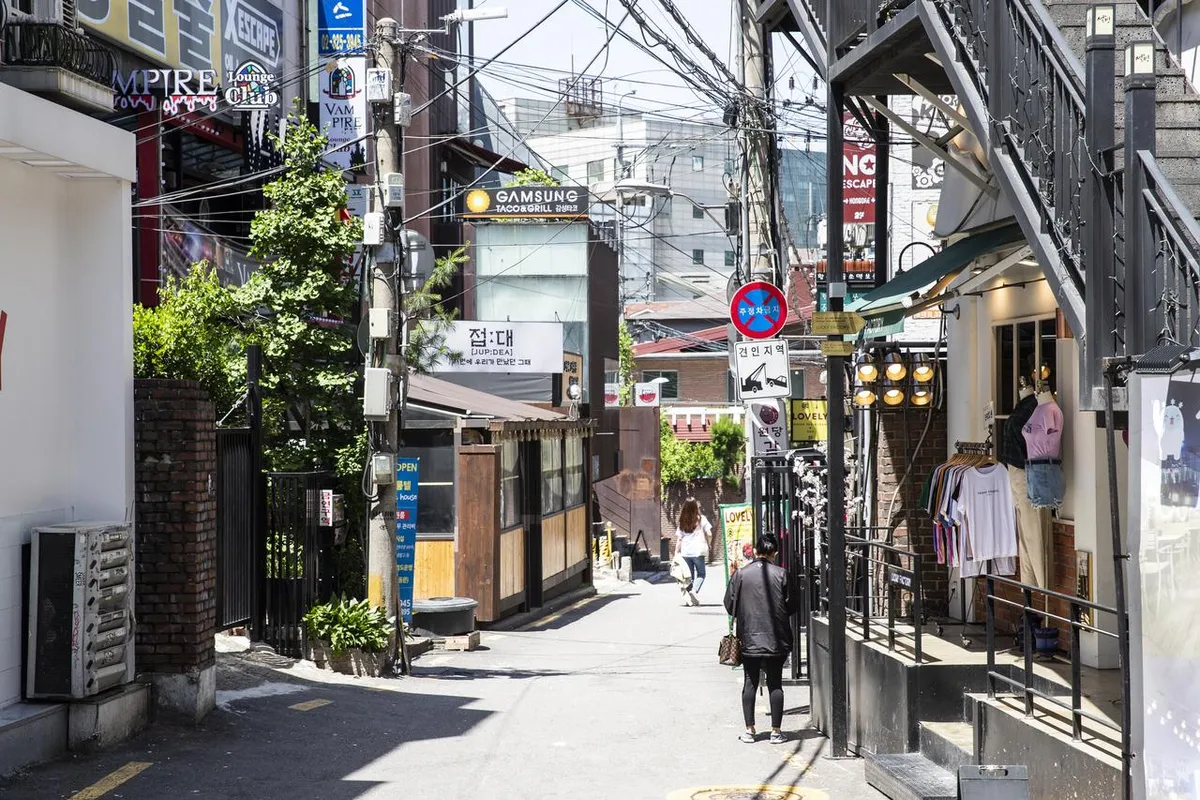
Photo: Korea Tourism Organization / 한국관광공사 이범수; May 2018 archive; KOGL Type 1.
Hongdae Walking Street (홍대 걷고싶은거리) includes designated busking spaces and public stages. Its street network is part of the area's cultural identity, with open-air activity taking place among the surrounding buildings. The district's Red Road project adds differently themed sections to this public-street setting.
Red Road is an approximately 2-kilometre tourism street, not another name for the entire forest park. The two can be considered separately: one emphasizes street culture and performance spaces, while the other follows a landscaped former railway corridor. Neither length defines a required route for a visit.
TripKorea's Tip: Use the station exit number when arranging a meeting. “Hongdae station” alone does not distinguish the university-facing streets from the Yeonnam park side.
2. Yeonnam's railway corridor and park landscape
Gyeongui Line Forest Park (경의선숲길) occupies space released when the railway moved partly underground. Developed in stages between 2012 and 2016, the full linear park extends 6.3 kilometres across Mapo-gu and Yongsan-gu. That figure describes the whole park, not the distance through Yeonnam alone.
The Yeonnam section runs between Yeonnam intersection and Hongik Univ. Station and is approximately 1.2 kilometres long. It is also called Yeontral Park (연트럴파크), a nickname combining Yeonnam with a reference to New York's Central Park.
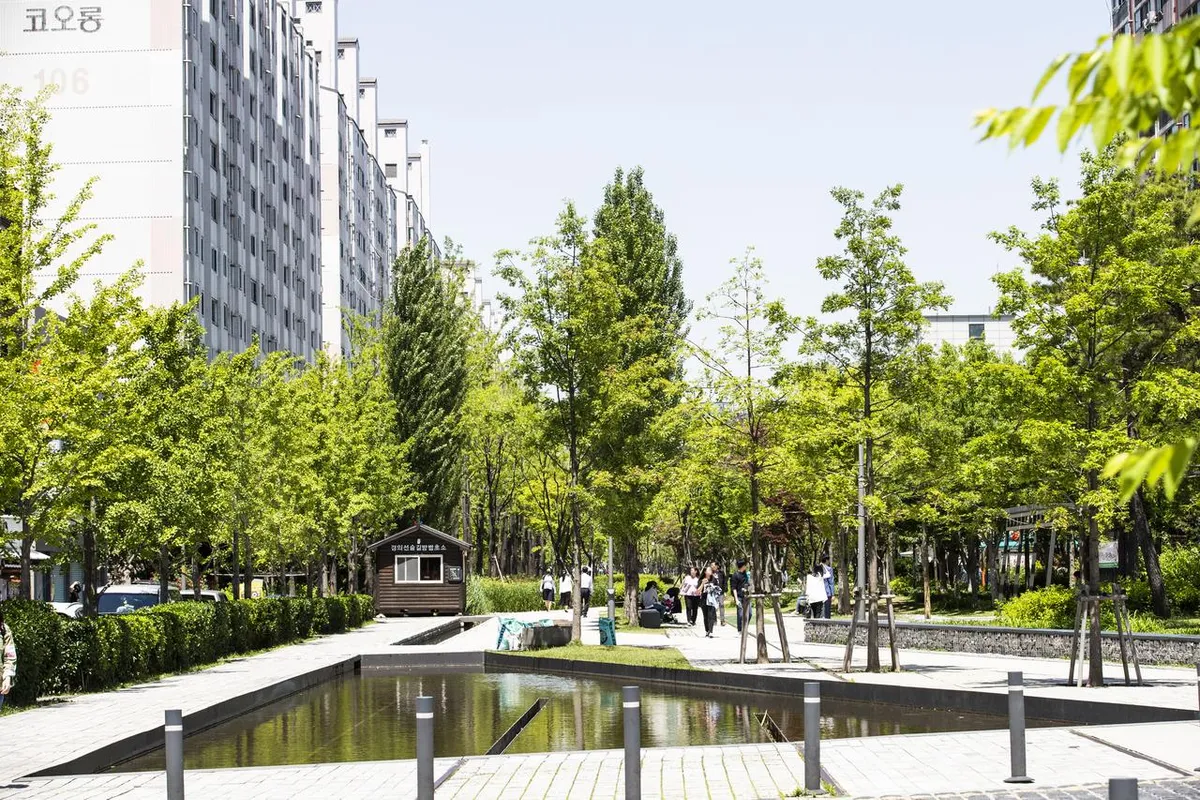
Photo: Korea Tourism Organization / 한국관광공사 이범수; May 2018 archive; KOGL Type 1.
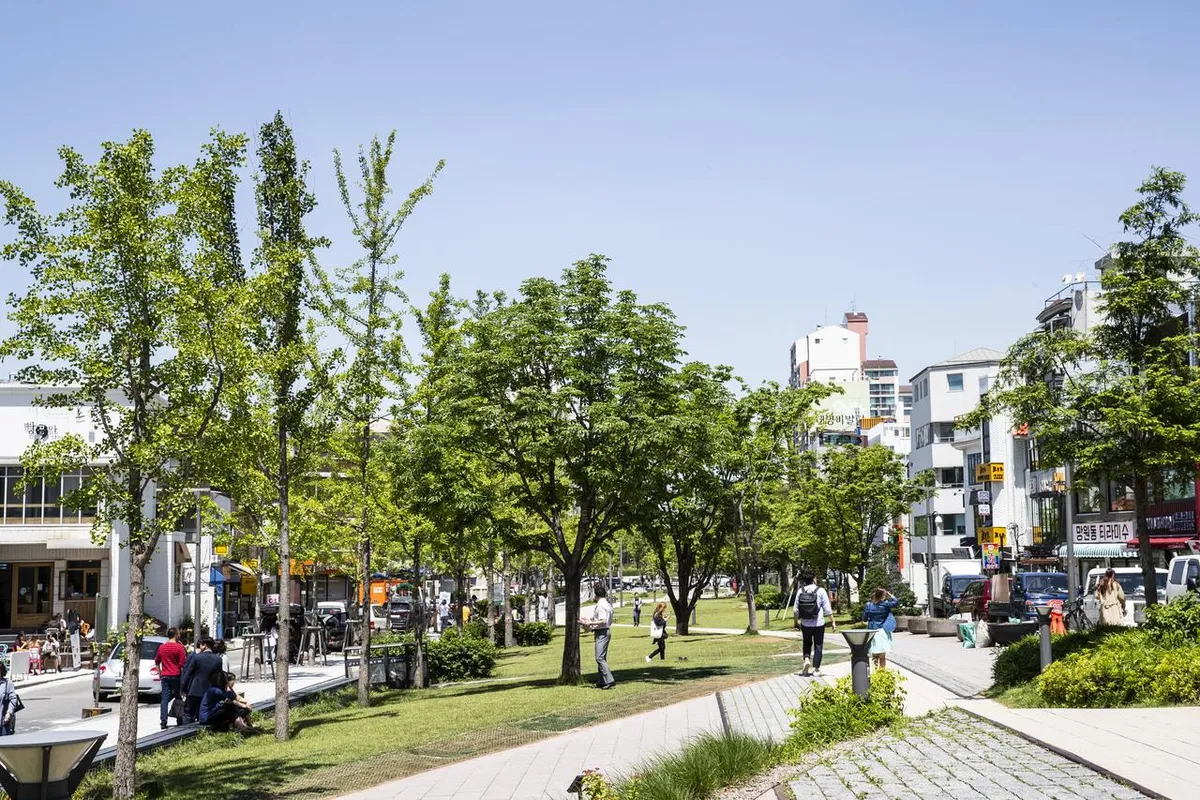
Lawns, rows of ginkgo trees, railway traces and resting places resembling small stations give this section its character. The former railway is therefore more than a name: its linear arrangement and references to train travel remain part of the landscape.
A landscaped channel recalls Segyocheon (세교천). It belongs to the park's design, but the presence of a channel does not mean water features operate throughout the year. Treat the water and foliage in archival photographs as the conditions at the time of photography, not as a promise for a winter visit.
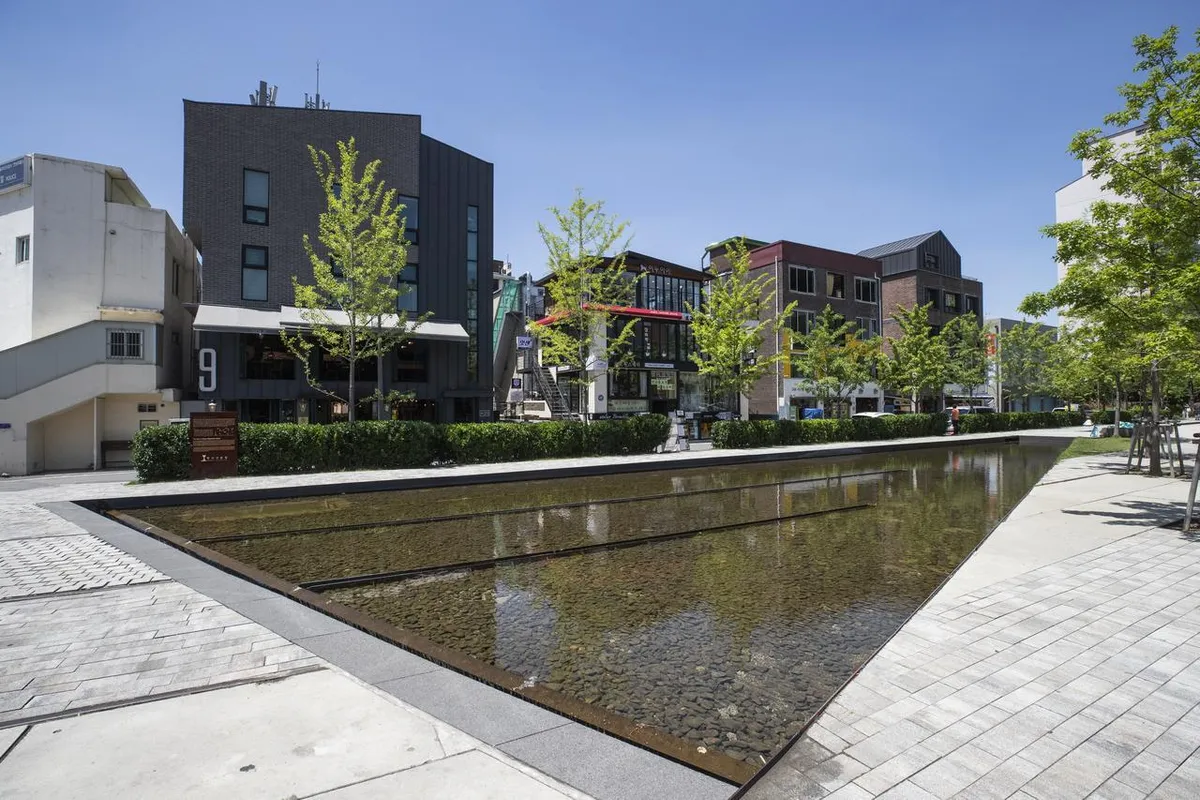
Photo: Korea Tourism Organization / 한국관광공사 이범수; May 2018 archive; KOGL Type 1.
Other parts of the forest park have different landmarks. The restored railway crossing and Book Street associated with the Waugyo section should not be confused with Yeonnam's lawns and ginkgo-lined paths. Exploring this station-side section does not require covering the entire park.
Local Tip: For Yeonnam park information, ask staff at the booth in front of Yeonnam Police Substation. Park leaflets are available there; the main management office is elsewhere along the longer park.
3. Street performances and changing cultural spaces
Designated busking zones are a feature of Hongdae Walking Street, but they are not a guarantee that a performance will be taking place when you arrive. A reserved performance space and an advertised event are different things.
Performers use a district reservation system, which changed to lottery-based selection in August 2026. For a particular date, consult the approved performance information through Mapo's current busking guidance. Old festival announcements should not be treated as a recurring daily programme.
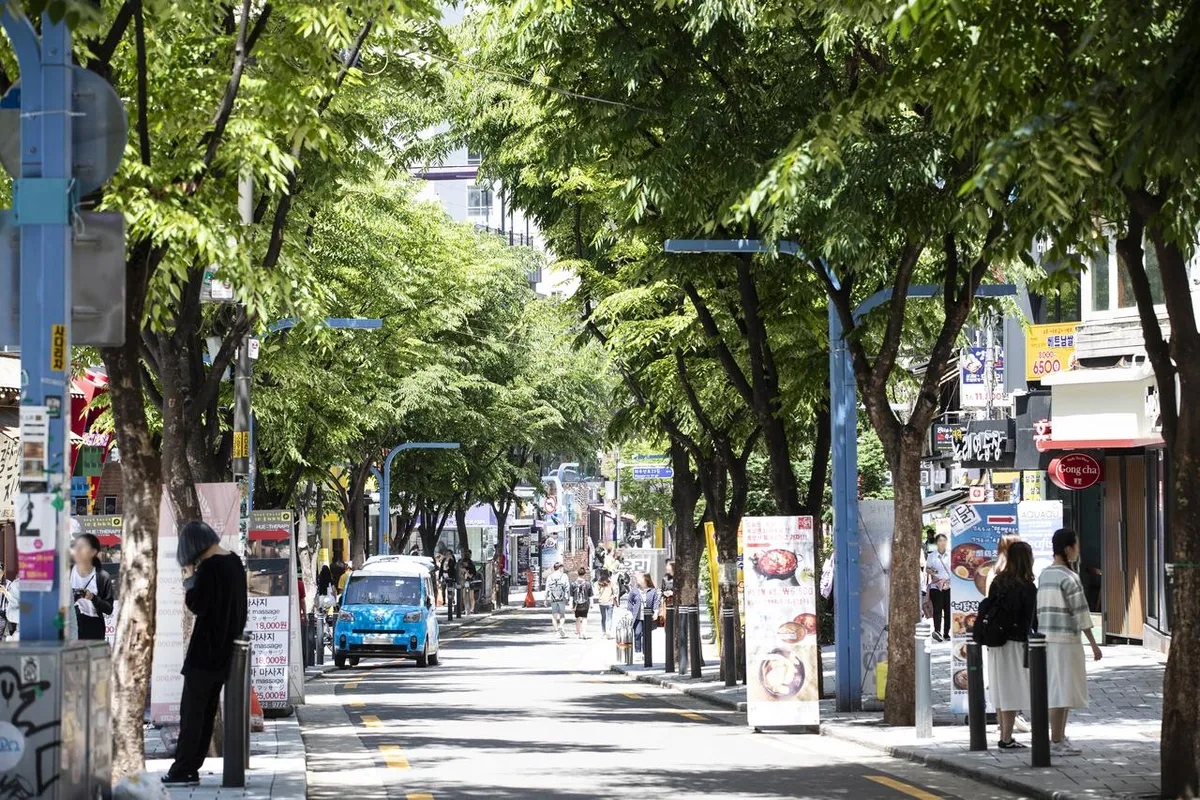
Photo: Korea Tourism Organization / 한국관광공사 이범수; May 2018 archive; KOGL Type 1.
Street-performance rules prohibit performances after 22:00 and require clear entrances and pedestrian movement. This is a performance cutoff, not a closing time for the whole neighborhood. An audience should leave space for people passing through rather than turn a street into a blocked viewing area.
Public cultural spaces also change. Hongik Cultural Park, still found under the older name “Hongdae Playground” in some listings, was redeveloped as Drawing Village (그림동네) in December 2025. Its creative center and shared studios support artists, exhibitions and cultural activity.
That redevelopment is a reason not to rely on an old playground photograph or Saturday-market description. If visiting the Drawing Village facilities at 19-3 Wausan-ro 21-gil, check the current programme and access arrangements; the existence of studios does not establish a drop-in class.
TripKorea's Tip: Keep a street-and-park visit independent of any performance booking. Treat a confirmed show or exhibition as an additional activity, rather than the condition on which the whole visit depends.
4. Visitor help and using the public spaces
Mapo Tourist Information Center at 22 Hongik-ro provides brochures and information about festivals, events and performances. Its listed hours are 10:00–19:00, with English, Japanese and Chinese language support. The contact number is 02-334-7878.
For park-specific enquiries, contact the Gyeongui Line Forest Park Management Office on 02-719-8830. This is different from the tourist information center. The park has no dedicated parking along its length, so rail access is the practical starting point for this guide.
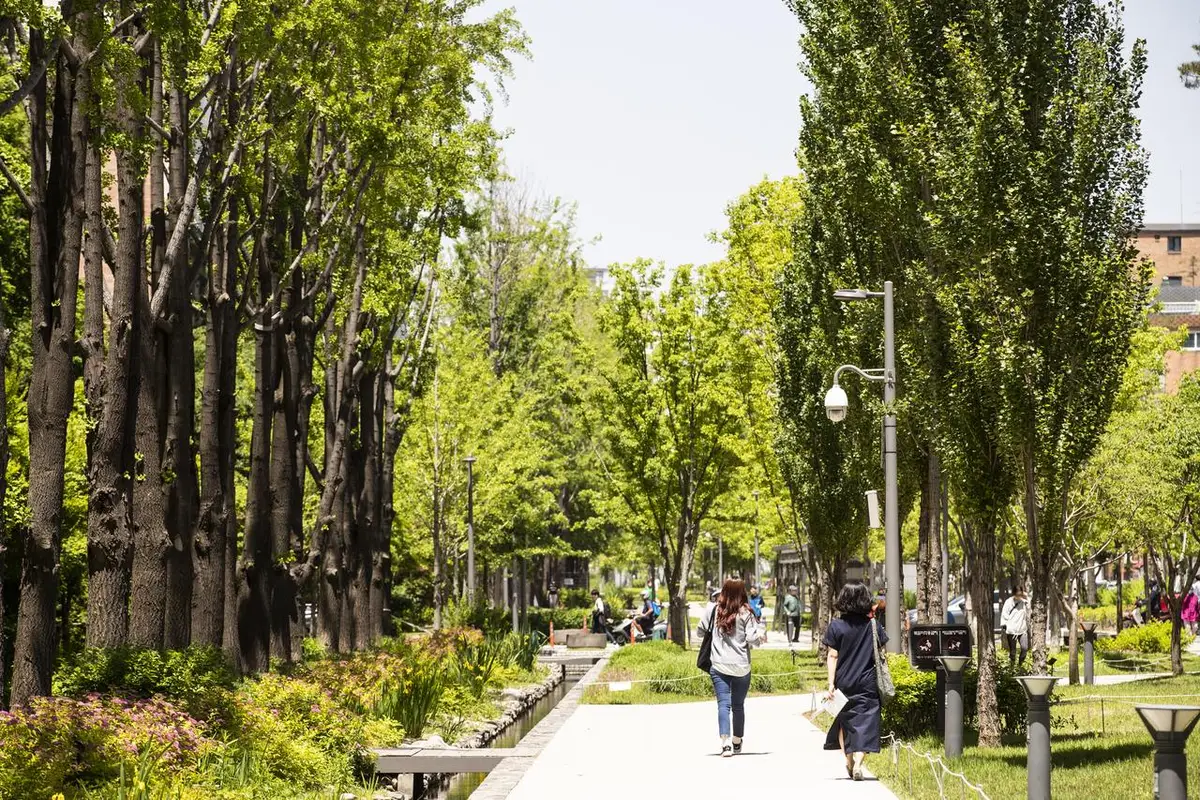
Photo: Korea Tourism Organization / 한국관광공사 이범수; May 2018 archive; KOGL Type 1.
Keep to the paths, protect planted areas and facilities, and take rubbish away. Park rules prohibit camping, cooking and fires, and ask visitors to avoid drinking and noisy behavior. Descriptions of beer picnics in older tourism material should not override the operator's rules.
The park's small-scale performance guidance emphasizes low volume and public safety. Around Hongdae Walking Street, nearby residences and accommodation are another reason to keep sound down and entrances clear.
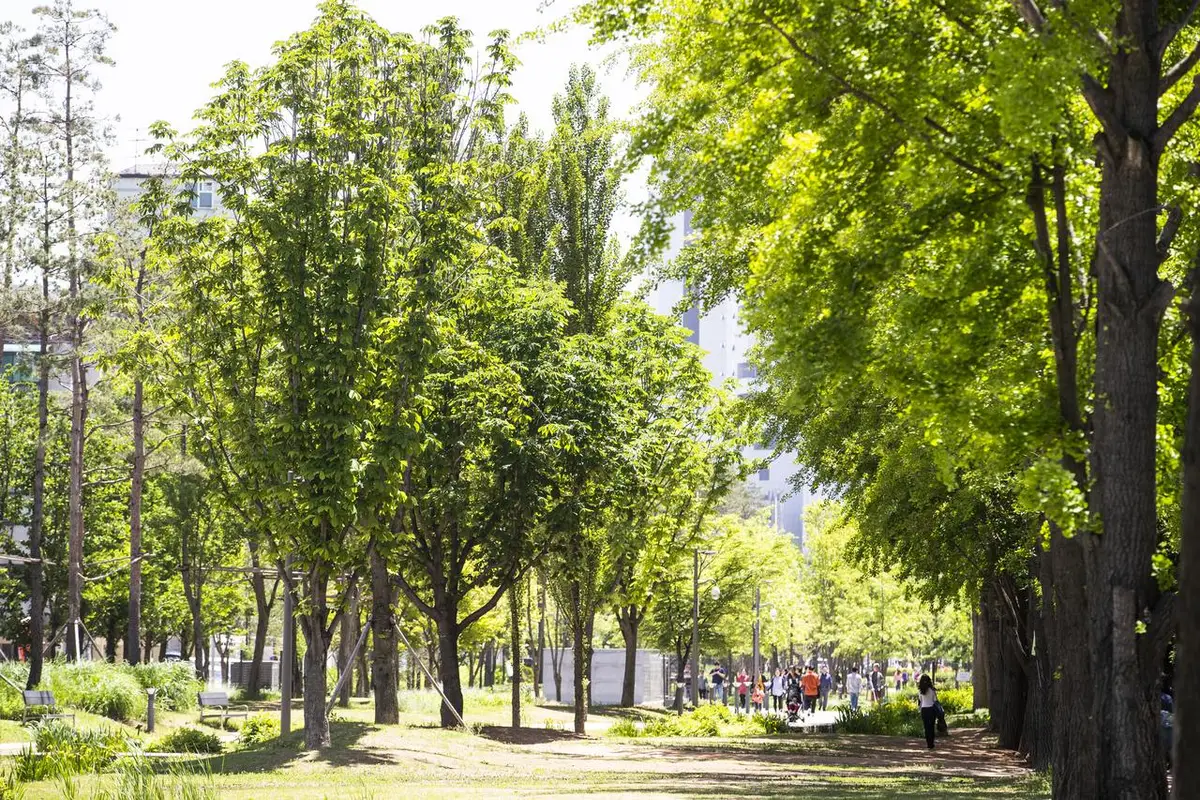
Photo: Korea Tourism Organization / 한국관광공사 이범수; May 2018 archive; KOGL Type 1.
Planning Tip: Compare hotels in Hongdae if this part of Seoul is a focus of your stay. Use the appropriate station exit when returning to the streets or the park, rather than treating every nearby destination as the same meeting point.
Frequently Asked Questions
Which Hongik Univ. Station exit should I use?
Use Exit 3 for the Yeonnam park side. Exits 8 and 9 serve Hongdae Walking Street toward Hongik University. The station is served by Line 2, the Gyeongui–Jungang Line and the Airport Railroad.
Is Yeontral Park the entire Gyeongui Line Forest Park?
No. The nickname refers to the Yeonnam stretch. The full park is 6.3 kilometres long, while the Yeonnam section is approximately 1.2 kilometres.
Are street performances guaranteed every day?
A designated busking zone does not guarantee a show on a particular date. Check the district's approved performance information. An old festival notice or an available reservation slot is not confirmation of a current performance.
What can I see in the Yeonnam park section?
The landscape includes lawns, ginkgo rows, railway traces, station-like resting places and a channel recalling Segyocheon. Winter water operation is not established by photographs showing water in another season.
Where can I get help while visiting?
Mapo Tourist Information Center at 22 Hongik-ro offers visitor information and foreign-language support. For Yeonnam park information, use the booth in front of Yeonnam Police Substation or call the park management office on 02-719-8830.
Plan your Seoul base
Browse Hongdae hotels for your Seoul stay and explore things to do in Seoul. For Hongdae and Yeonnam, keep the street and park settings distinct, choose the appropriate station exit, and check any performance separately.
Sources & References
Tourist attraction information: Korea Tourism Organization (TourAPI); Seoul Metropolitan Government, Seoul Tourism Organization and Mapo-gu.
Seoul Parks: Gyeongui Line Forest Park; Seoul Parks: visitor rules; Mapo: Hongdae Walking Street; Mapo: Red Road; Mapo: current busking reservation rules; Mapo: street-performance conditions; Visit Seoul: Hongdae; Visit Seoul: Gyeongui Line Forest Park; Visit Seoul: Drawing Village / Hongik Cultural Park; Visit Seoul: Mapo Tourist Information Center.
Photos: Korea Tourism Organization / 한국관광공사 이범수, PhotoGalleryService1, KOGL Type 1. All eight photographs, including the opening landscape, were taken in May 2018. They illustrate the earlier streets and park, not current shop tenants, Red Road paving, Drawing Village facilities or seasonal water operation. Photo service and reuse terms.
Last verified: 2026-11-18. Visitor services, performance arrangements and access conditions may change. Confirm current information before visiting.