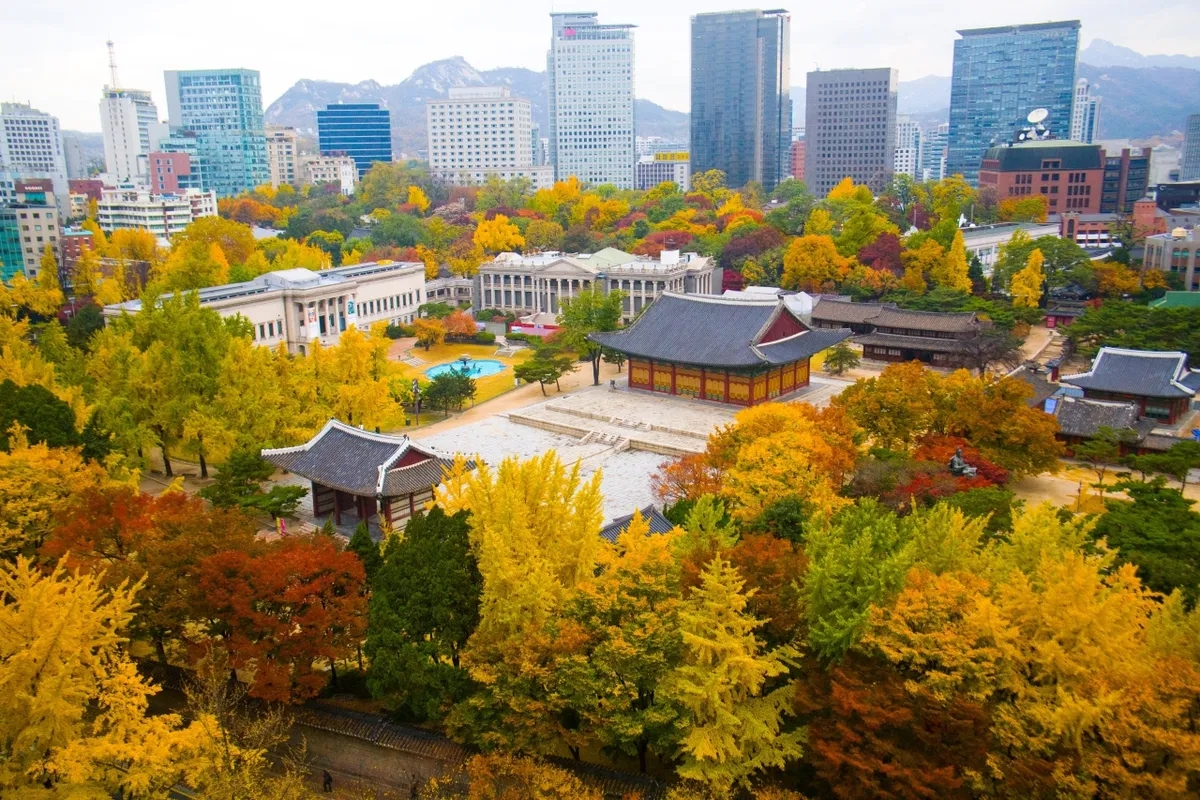
Traditional throne halls and a neoclassical stone building share the grounds of Deoksugung Palace (덕수궁), the imperial palace associated with the Korean Empire proclaimed in 1897. Beside Seoul City Hall, the complex brings royal ceremony, diplomatic history and Western-style architecture into the same visit.
This guide covers the principal buildings, regular evening access, separate interior reservations and the public stone-wall walkway. The distinction matters: the grounds remain open later than the exhibition buildings, and a palace ticket does not give unrestricted access to every interior.
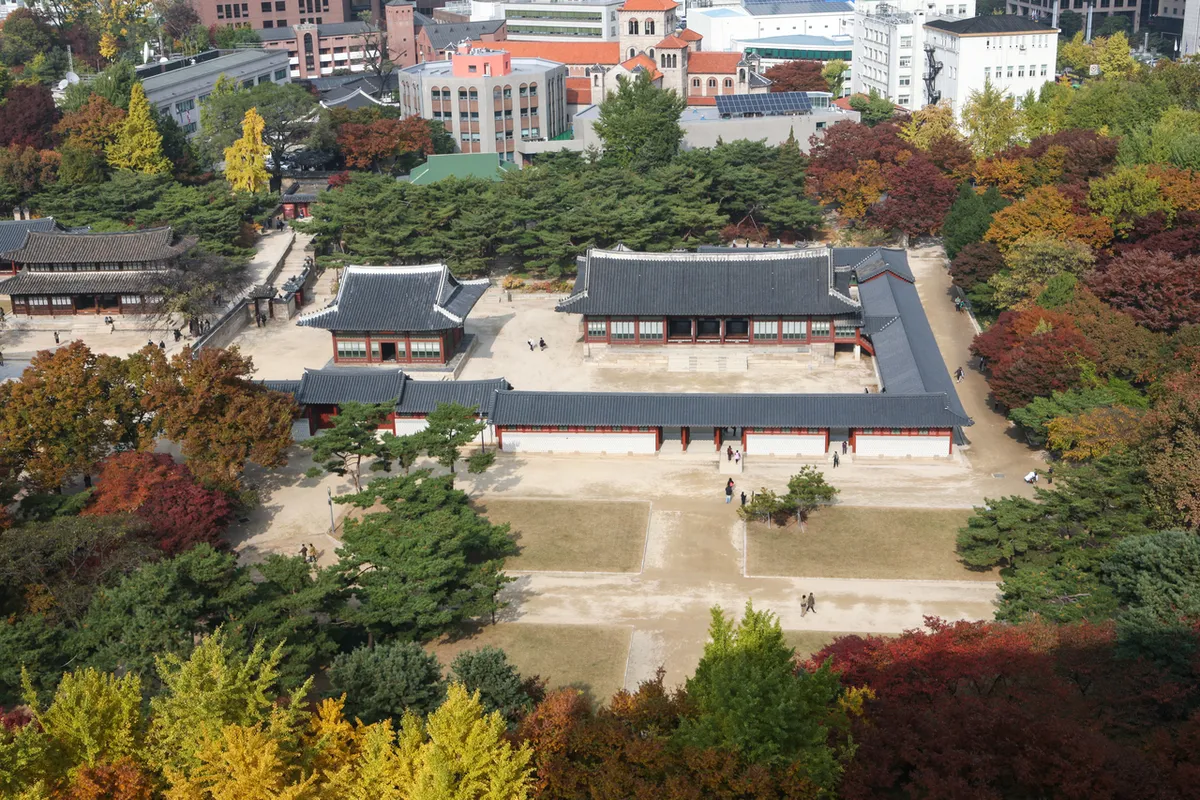
Photo: Korea Tourism Organization / Kim Ji-ho (김지호), November 2013.
1. Deoksugung Palace and the imperial court
The palace's history began before the Korean Empire. A private residence belonging to Grand Prince Wolsan became a temporary royal court in 1593, after the Japanese invasion of 1592 destroyed the capital's palaces. It received the name Gyeongungung (경운궁) and formal palace status in 1611.
Its later imperial role explains much of the architecture visible today. Gojong returned here from the Russian legation in 1897, the year the Korean Empire was proclaimed. Following his forced abdication, the palace received its present name in 1907. These changes distinguish its history from a straightforward account of a single building campaign.
Junghwajeon (중화전), the throne hall, was used for state ceremonies, official meetings and receptions for foreign envoys. Originally built in 1902 with a two-tier roof, it was destroyed in the 1904 fire and rebuilt with a single-tier roof. The hall and courtyard express the ceremonial purpose of this part of the palace.
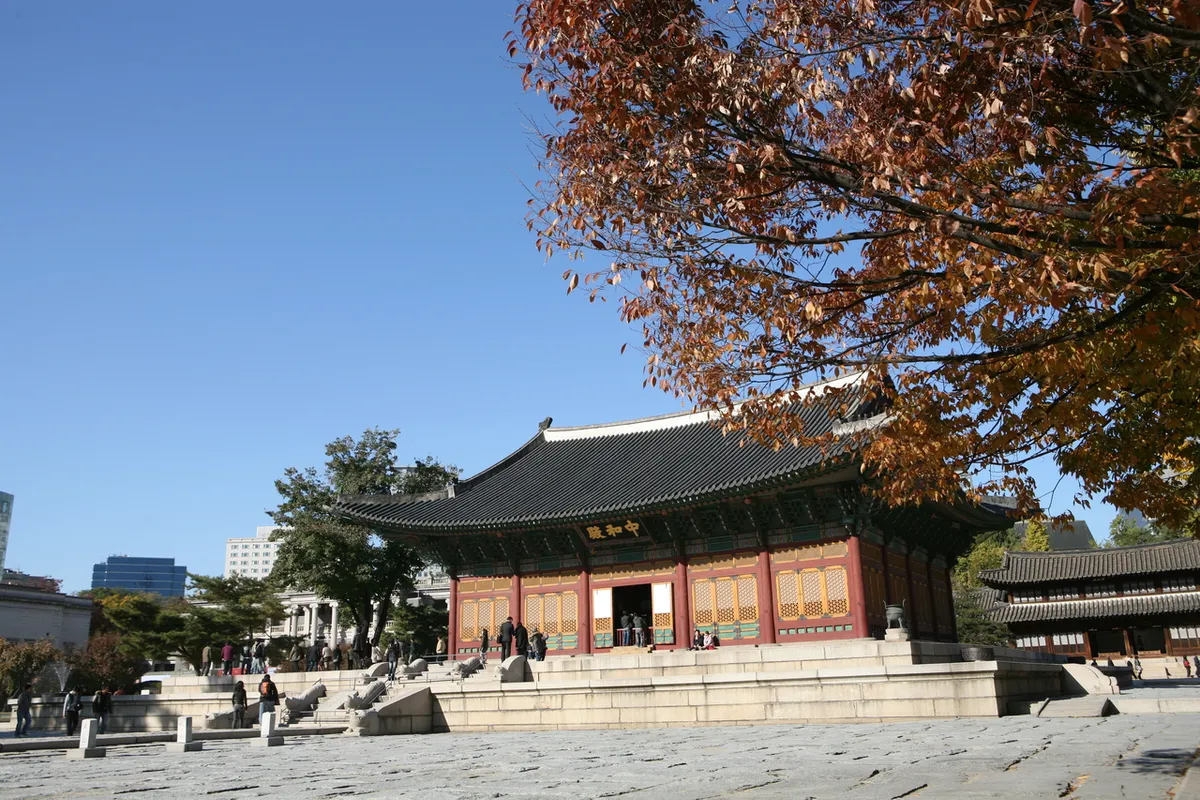
Photo: Korea Tourism Organization / Lee Beom-su (이범수), November 2010.
Stone rank markers stand in the courtyard, while dragon ornament on the staircase approach reflects imperial symbolism. Junghwamun is the principal gate in front of the hall. Viewing the arrangement of hall, gate and courtyard provides context for the ceremonies once held here without requiring access to the hall's interior.
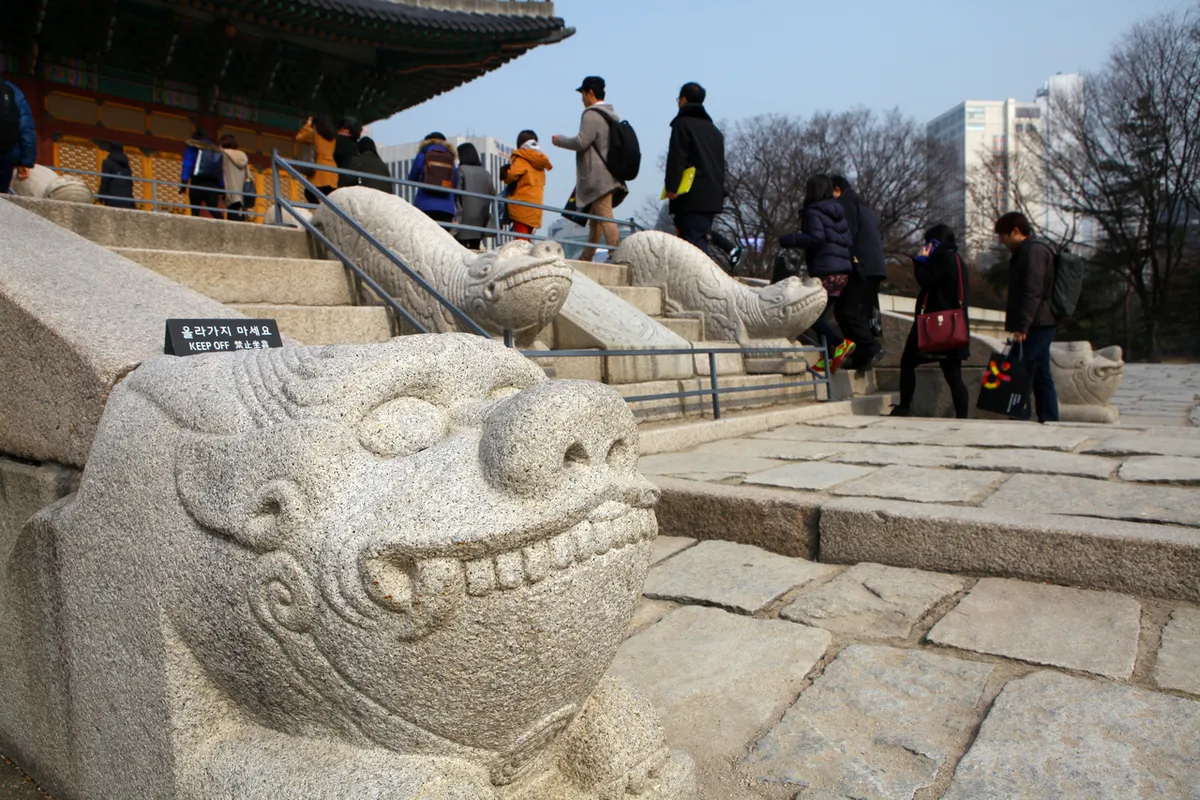
Photo: Korea Tourism Organization / Lee Beom-su (이범수), February 2014.
The present complex also reflects loss and restoration. Buildings were demolished and the palace grounds reduced during Japanese colonial rule; subsequent restoration has recovered parts of the historical setting. The buildings should not all be treated as untouched survivals from the same period.
TripKorea's Tip: Use the throne hall and its courtyard to understand the palace's ceremonial layout before comparing the Western-style buildings. Exterior viewing and permission to enter a building are separate matters.
2. Seokjojeon, Jeonggwanheon and Dondeokjeon
Seokjojeon (석조전), completed in 1910, is the palace's neoclassical stone building. British architect G. R. Harding designed it as part of the empire's modernization policy. Columns, balconies and a European architectural vocabulary contrast with the tiled roofs and painted timberwork elsewhere in the grounds.
Its planned reception and dining rooms and imperial sleeping quarters show how the building combined state functions with residential spaces. Those intended uses should not be confused with a claim that every reconstructed room was occupied exactly as it appears today.
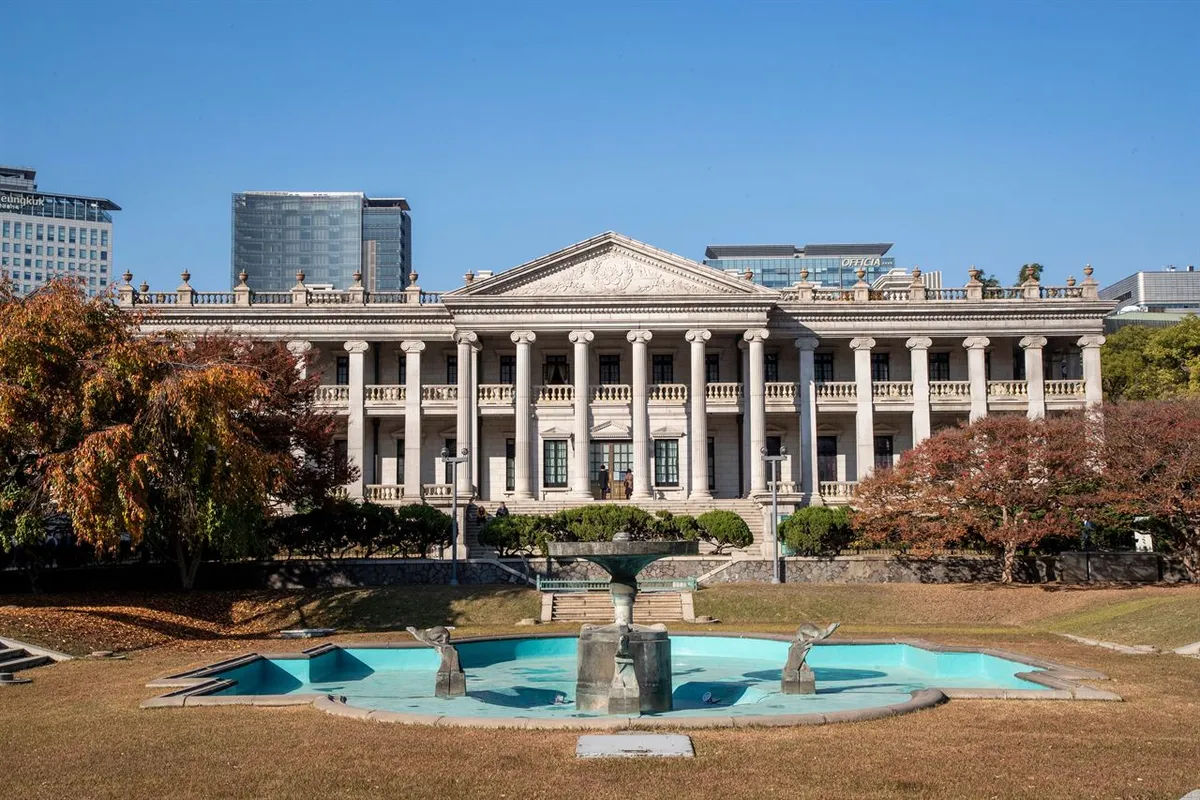
Photo: Korea Tourism Organization / Lee Beom-su (이범수), November 2019.
The general interior viewing window is 09:30–17:30, with the last guided session at 16:30. First- and second-floor viewing is controlled through guided sessions and reservations. Do not arrive for an evening grounds visit expecting to enter these rooms independently.
English guided sessions are listed at 11:50 and 14:50, Tuesday–Sunday and public holidays. Booking is on site at the Seokjojeon information desk, first come first served, with a maximum of twenty people per session. Eligibility covers foreign visitors and accompanying Koreans, limited to one Korean per foreigner party; bring a passport or alien registration card.
Korean-language sessions use a different reservation arrangement. Online reservations open one week ahead, while limited on-site places are available for eligible older visitors and foreigners; advanced Korean sessions do not offer on-site booking. Check the selected language and session rather than assuming one booking method applies to every tour. Seokjojeon enquiries: 02-751-0753.
Jeonggwanheon (정관헌) combines Eastern and Western architectural forms. Its name means “silent gaze,” and its historical uses include temporarily enshrining royal portraits. The porch, columns and decorative railings provide another architectural contrast within the grounds, rather than evidence of a currently operating cafe.
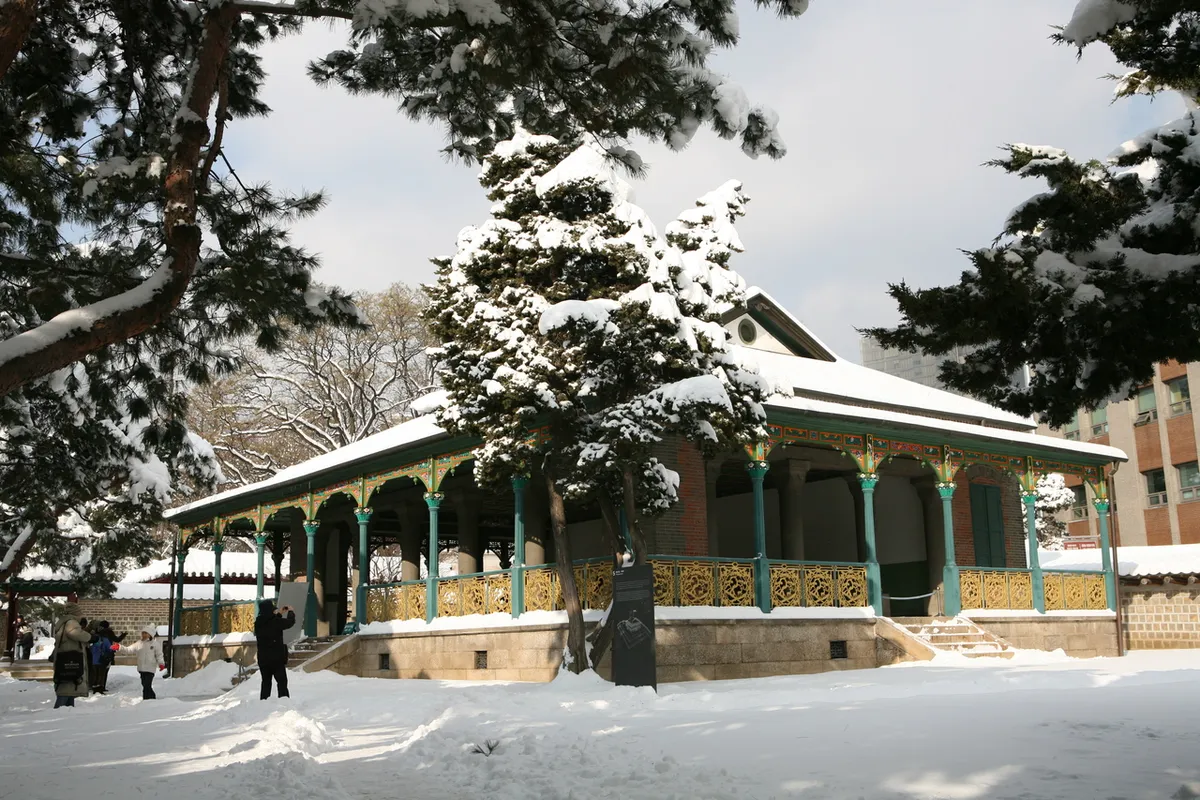
Photo: Korea Tourism Organization / Lee Beom-su (이범수), January 2010.
Dondeokjeon (돈덕전) was associated with imperial audiences, banquets and accommodation for state guests, and Sunjong's accession ceremony took place there in 1907. The building was lost during the 1920s and reconstructed in 2023. Its European-style brick exterior belongs to the palace's diplomatic history.
Current restriction: Dondeokjeon's first and second floors are closed from October 13 through November 1, 2026, for exhibition removal and preparation. Its normal interior hours are 09:00–17:30, last admission 17:00, but those hours do not override the closure. Check the latest notice before making interior access part of a visit.
3. Evening access, admission and closures
The general palace grounds open 09:00–21:00 throughout the year, with last admission at 20:00. This is regular evening opening, not a promise of admission to a separate special program. Seokjojeon and Dondeokjeon have earlier interior closing times.
A daytime visit allows the buildings' different materials and architectural details to be viewed together. An evening visit instead uses the later grounds hours. If a guided interior visit is a priority, arrange that session first and treat evening grounds access as a separate part of the plan.
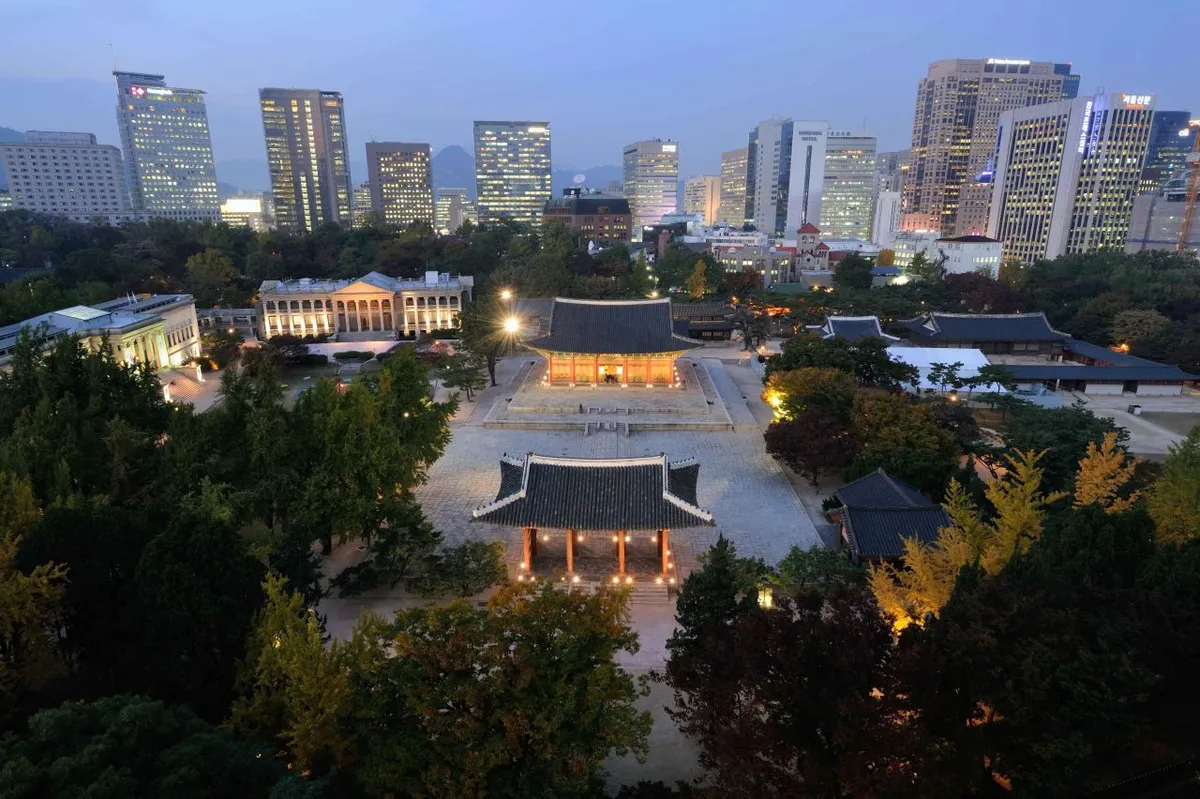
Photo: Korea Tourism Organization / An Sang-hyeon (안상현), 2012.
Monday is the regular closure day. When it falls on a public holiday or substitute public holiday, the palace opens and closes on the first subsequent non-holiday instead. Check the dated holiday notice for the actual visit rather than relying on a blanket rule that every Monday is closed.
General individual admission is 1,000 KRW for foreign visitors aged 19–64. Foreign visitors aged 18 and under or 65 and over qualify for free admission with supporting proof. The domestic paid age band differs, so foreign visitors aged 19–24 should not assume that a Korean youth exemption applies to them.
Qualifying hanbok wearers can also enter free. Both traditional and contemporary styles are accepted when they meet the clothing rules: a jeogori top must be worn with a skirt or trousers. A durumaegi overcoat alone, a jeogori with jeans, or hanbok bottoms with a T-shirt do not qualify.
TripKorea's Tip: Keep admission eligibility, interior booking and opening hours separate. Free grounds admission does not remove a guided building's reservation requirements, and a reserved session may still be adjusted or cancelled.
For accommodation planning, browse hotels in Myeongdong alongside your central Seoul sightseeing plans. Choose a base for the wider visit rather than treating a hotel listing as part of the palace itself.
4. City Hall access and the stone-wall walkway
The address is 99 Sejong-daero, Jung-gu, Seoul, 04519. City Hall Station serves subway Lines 1 and 2, and the palace's own access instructions direct visitors to Exit 2. Follow current station signs and the entrance information rather than relying on an estimated walking time.
The palace does not provide parking. For operational enquiries, contact the palace office at 02-771-9951. Visitors needing assistance with a particular building or route should confirm the relevant arrangements individually; access to the grounds does not establish step-free access to every interior or upper floor.
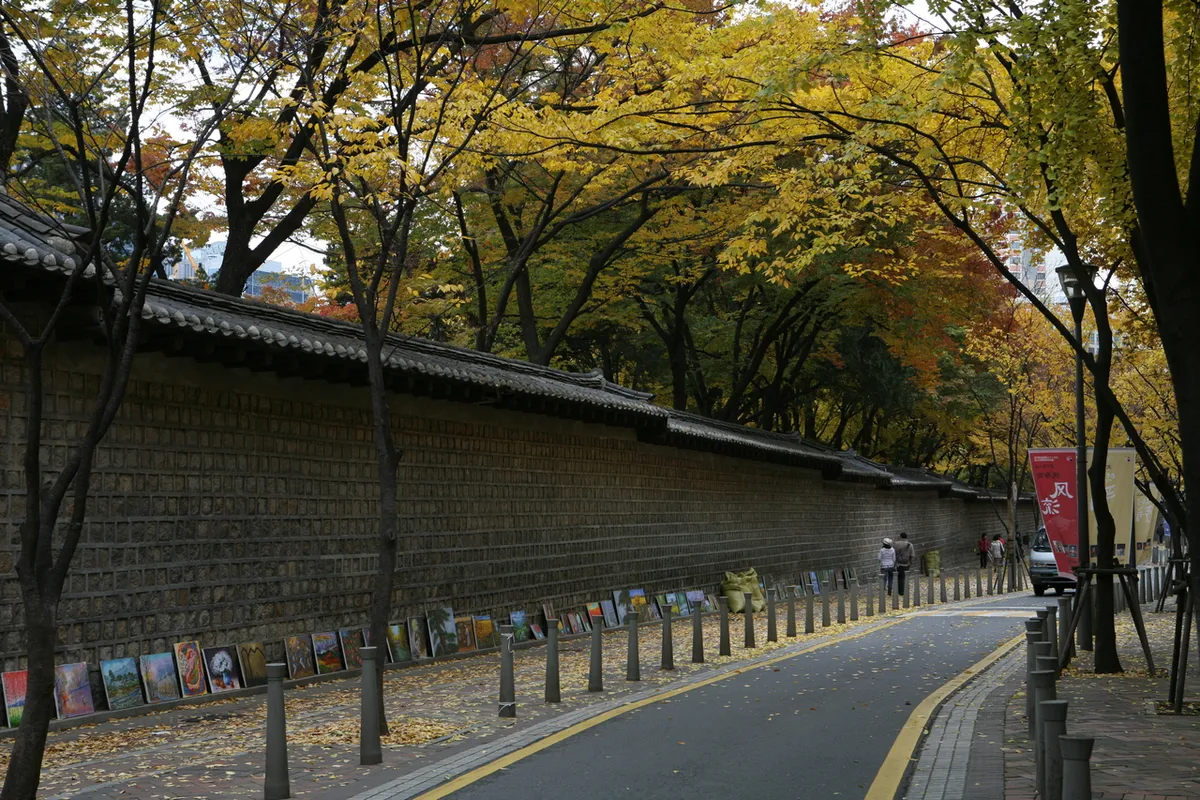
Photo: Korea Tourism Organization / Lee Beom-su (이범수), November 2010.
The stone-wall walkway is outside the paid palace grounds and is listed as free and open year-round. It offers a different perspective on the complex's boundary and surrounding streets, but it is not an alternative entrance to the ticketed grounds. Keep the public walkway and palace admission conditions distinct.
Wall works are scheduled from September 21 through November 19, 2026, along the southern outer wall and at Pyeongseongmun. Pyeongseongmun itself is restricted from October 25 through November 19. These are localized works, not a notice that the entire palace or every part of the public walkway is closed.
Construction dates may change with site conditions. Do not build a visit around passing through that gate, or assume that the scheduled end date guarantees reopening the following day. Follow the current barriers and directions in place during your visit.
TripKorea's Tip: The photographs illustrate the palace and walkway in different seasons and past years. Autumn foliage, snow and illuminated buildings in archival views do not establish the conditions or accessible areas on a particular visit date.
Frequently Asked Questions
Is Deoksugung open at night?
The general grounds open until 21:00, with last admission at 20:00, except on closure days. Exhibition buildings close earlier. Regular evening opening does not guarantee access to a special event or guided interior.
How much is admission for foreign visitors?
Individual admission is 1,000 KRW for ages 19–64. Foreign visitors aged 18 and under or 65 and over qualify for free admission with proof. Qualifying hanbok wearers also receive free entry.
Do English Seokjojeon tours require online booking?
The listed English sessions at 11:50 and 14:50 use first-come, on-site booking at the Seokjojeon information desk. Bring a passport or alien registration card. Availability and session operation are not guaranteed.
Is Dondeokjeon currently open inside?
The first and second floors are closed October 13–November 1, 2026, for exhibition work. Normal interior hours do not apply during that restriction. Confirm the latest notice before visiting after the scheduled closure period.
Is the stone-wall walkway included in the palace ticket?
The public walkway is outside the paid grounds and has no admission fee. Localized wall works and gate restrictions may affect access to particular stretches. It does not provide free entry to the palace interior grounds.
Plan your central Seoul visit
Browse Myeongdong hotels for your accommodation search, or explore things to do in Seoul to complement a palace visit.
Plan a Deoksugung Palace visit around the buildings you want to enter, not only the grounds' closing time. Match guided interiors to their session rules, and check current restrictions before adding the outside walkway.
Sources & References
Historical interpretation, building descriptions, admission, access and operating information: Korea Heritage Service, Royal Palaces and Tombs Center. Supporting public-walkway information: Seoul Tourism Organization.
Palace history · Hours and closure rules · Admission and exemptions · Hanbok admission guidelines · Guided visits and Seokjojeon booking · Official access information.
Dondeokjeon interior closure notice · Wall repairs and Pyeongseongmun restriction · Stone-wall walkway.
Hero photo: Korea Tourism Organization / Gu Bon-sang (구본상), 2011. Photos: Korea Tourism Organization, KOGL Type 1, with individual photographer and capture-date credits. Archival photographs illustrate different seasons and do not establish current access, foliage or programs.
Last verified: October 30, 2026. Operating hours, admission rules, guided sessions and construction schedules may change. Confirm current notices before visiting.