Hyehwa (혜화) brings together Daehangno’s performing-arts district, the former university grounds of Marronnier Park and the hillside paths of Naksan Park. This part of Jongno offers two different ways to explore Seoul: cultural spaces around the theaters and a climb toward the Seoul City Wall. This guide explains the main places to see, how to approach them and what to check before booking a performance.
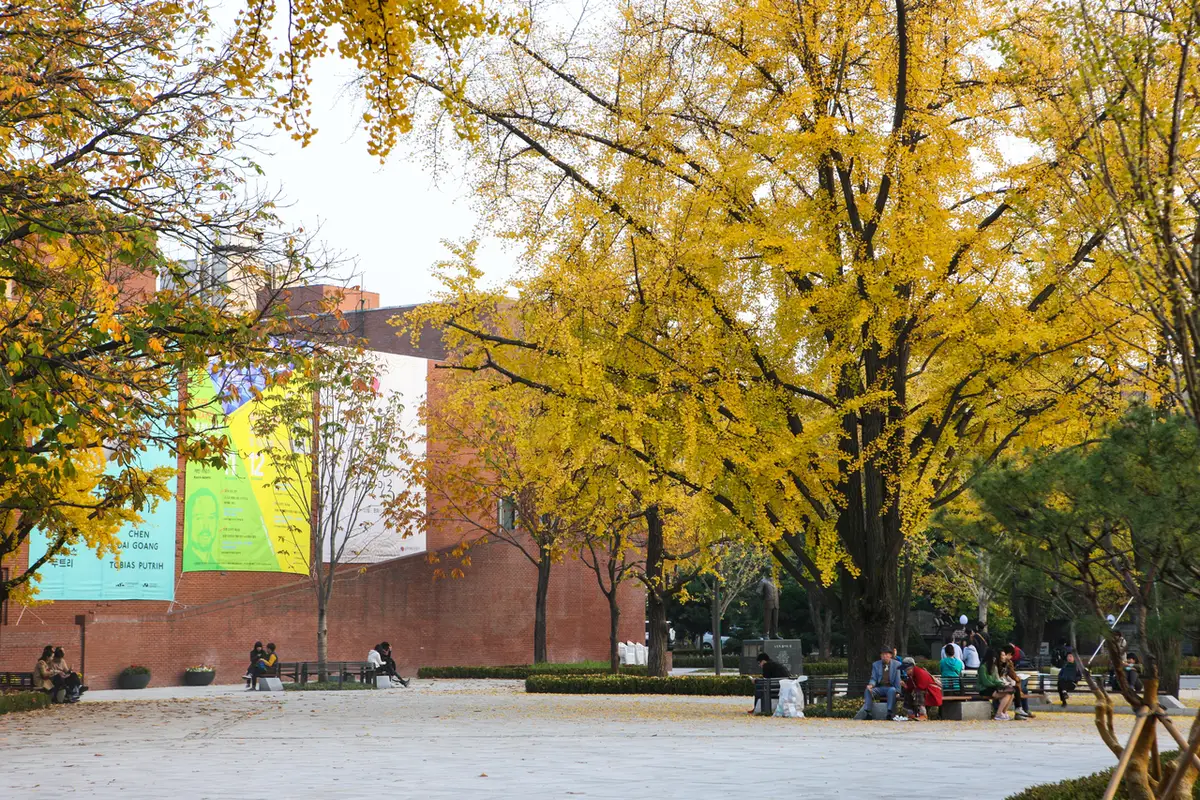
Photo: Korea Tourism Organization / Kim Ji-ho, November 2013.
1. Hyehwa and Marronnier Park
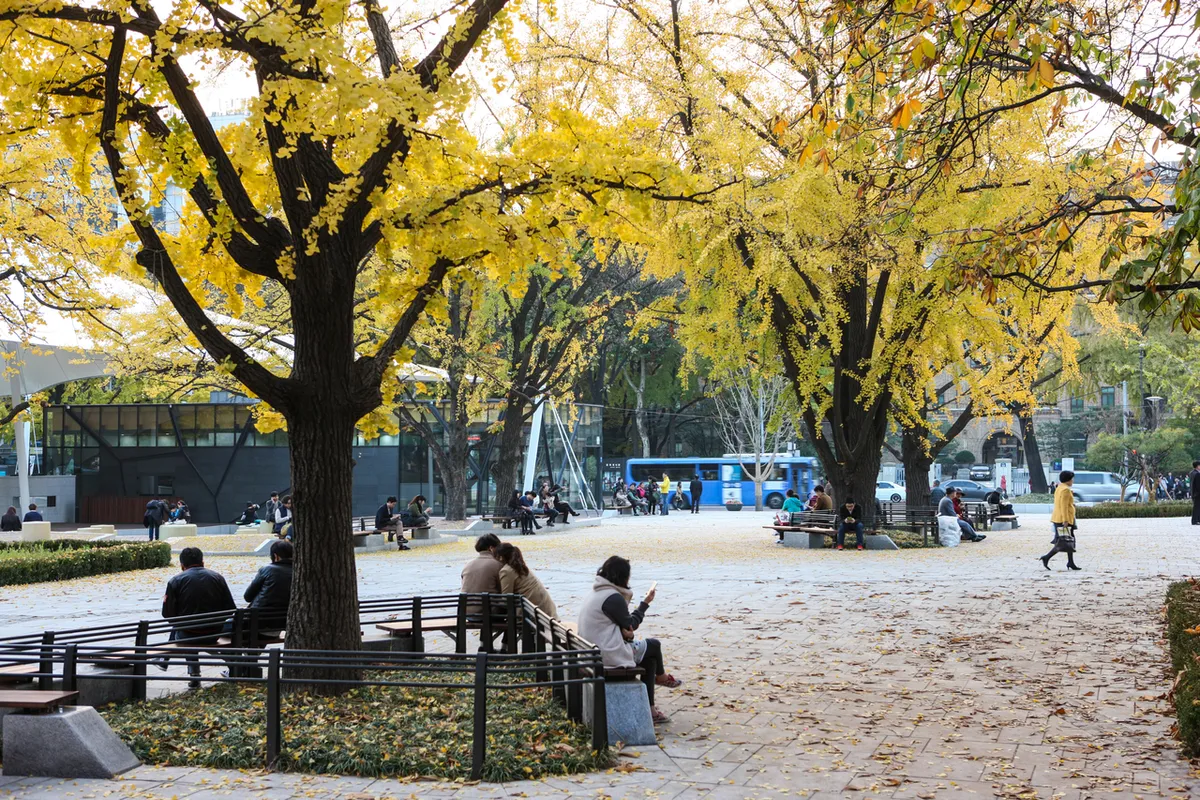
Marronnier Park (마로니에공원) occupies part of the former Seoul National University campus. When the university relocated to Gwanak in 1975, the site became part of the public landscape that now anchors the surrounding theater district. Its name comes from the marronnier, or horse chestnut tree.
The park is a place to understand the relationship between Daehangno’s streets and its cultural buildings. Trees, benches and an outdoor performance space sit beside the surrounding theaters. You can visit the public park without committing to a theater performance, while tickets and entry conditions for the neighboring venues remain separate.
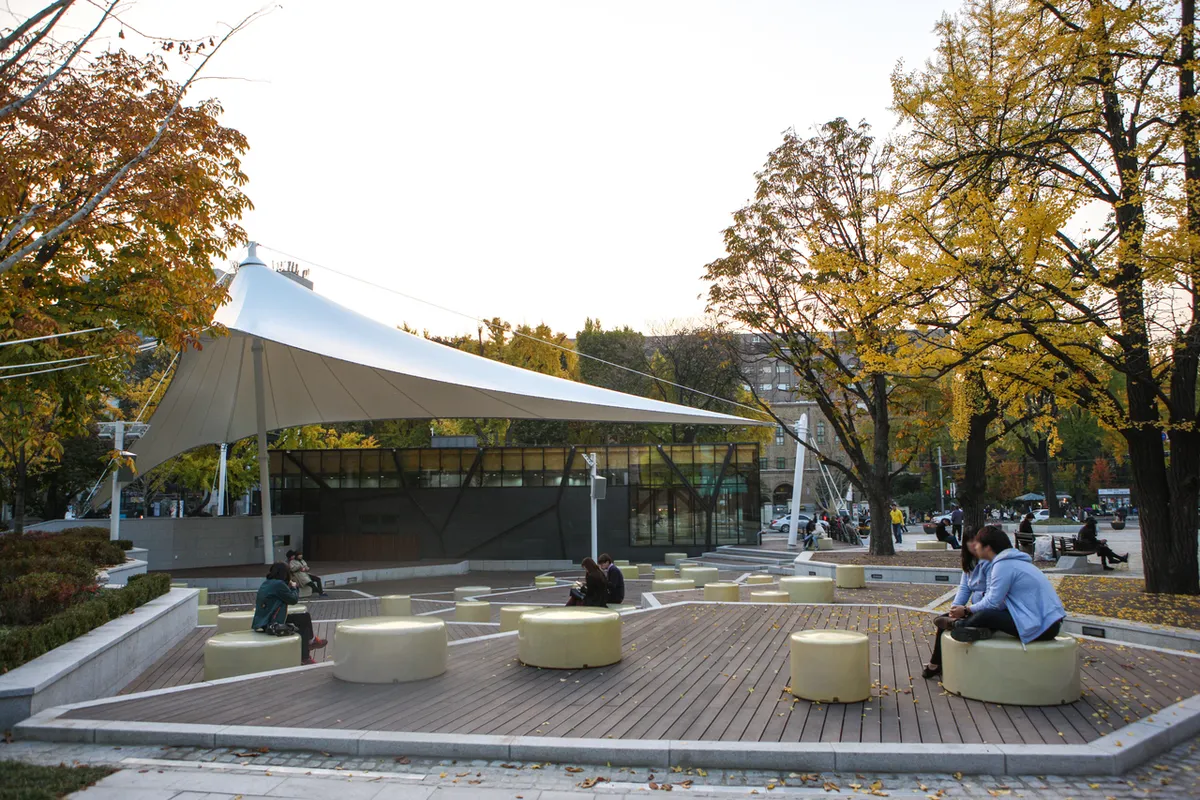
Photo: Korea Tourism Organization / Kim Ji-ho, November 2013.
The outdoor performance area is a bookable venue, not a promise of continuous entertainment. An empty stage is not evidence that the district is closed, and a visit does not guarantee a free show or a busking performance. If an event is central to your plans, check its own date, organizer and admission conditions rather than relying on the park’s general opening hours.
The park itself is listed as open around the clock throughout the year. This does not extend the opening hours of theater foyers, ticket offices or other indoor spaces. It also should not be confused with the outdoor stage’s rental timetable, which is a separate operating arrangement.
Marronnier Park’s address is 104 Daehak-ro, Jongno-gu. Hyehwa Station on Subway Line 4, Exit 2, is the access point used for the park and the nearby ARKO Arts Theater. Use the park as an orientation point before deciding whether to remain in the cultural district or continue uphill toward Naksan.
TripKorea’s Tip: Treat the park, individual theaters and the hill walk as separate parts of a visit. Their opening conditions and physical demands are not interchangeable.
2. Daehangno’s theaters and cultural streets
Daehangno (대학로) is a theater and performing-arts district rather than a single attraction with one entrance or ticket. Its cultural landscape includes theater buildings, performance information spaces and the outdoor areas around Marronnier Park. A visit can focus on the streets and architecture, or include a separately booked production.
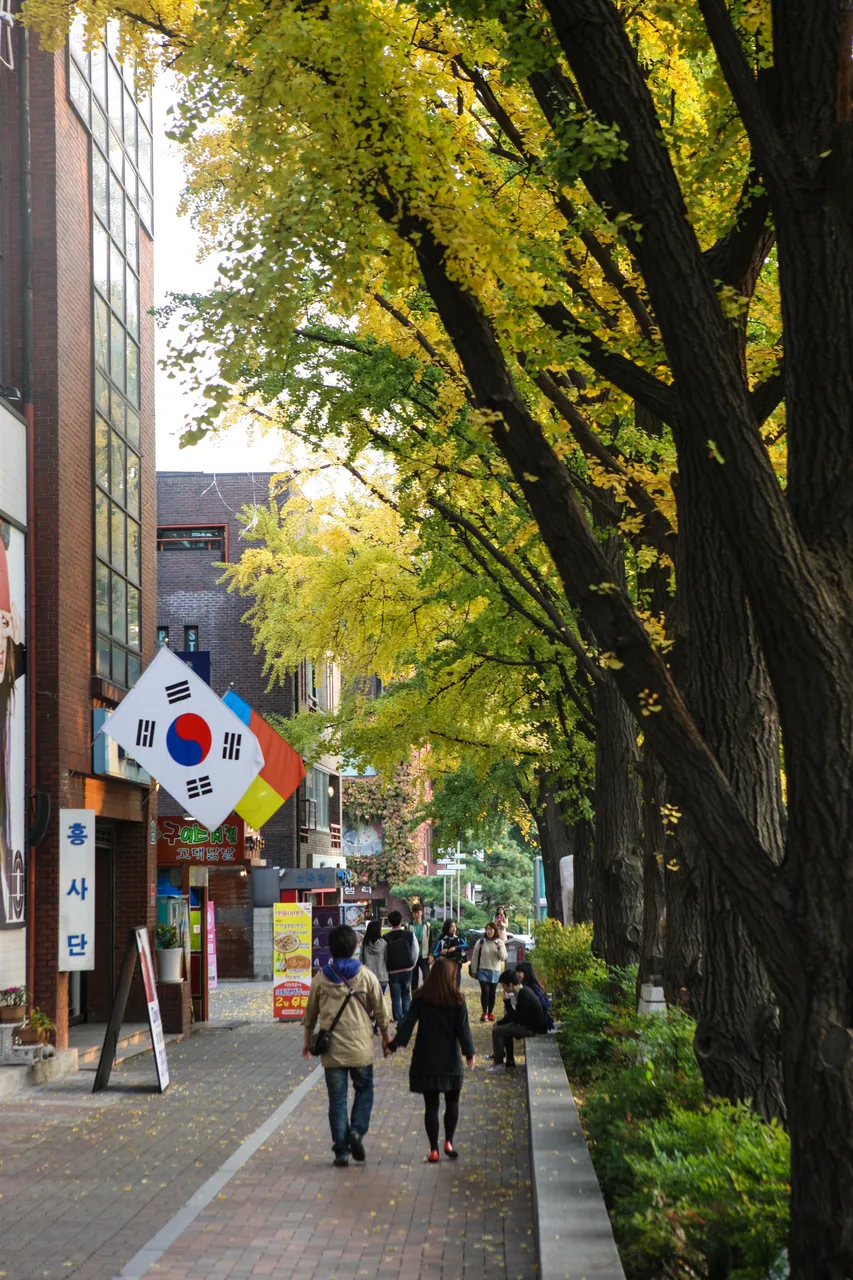
Photo: Korea Tourism Organization / Kim Ji-ho, November 2013.
ARKO Arts Theater (아르코예술극장), which opened in 1981, is one of the district’s established performance venues. It includes a main hall and a small theater, along with other production and rehearsal facilities. Its address is 7 Daehak-ro 8-gil, close to the park.
The building’s presence does not make its auditoriums public sightseeing spaces. Performance admission, rehearsal access and foyer opening depend on the venue’s arrangements. Likewise, enquiry-office hours should not be read as showtimes. Check the specific production rather than assuming that a theater operates on the same schedule as the surrounding streets.
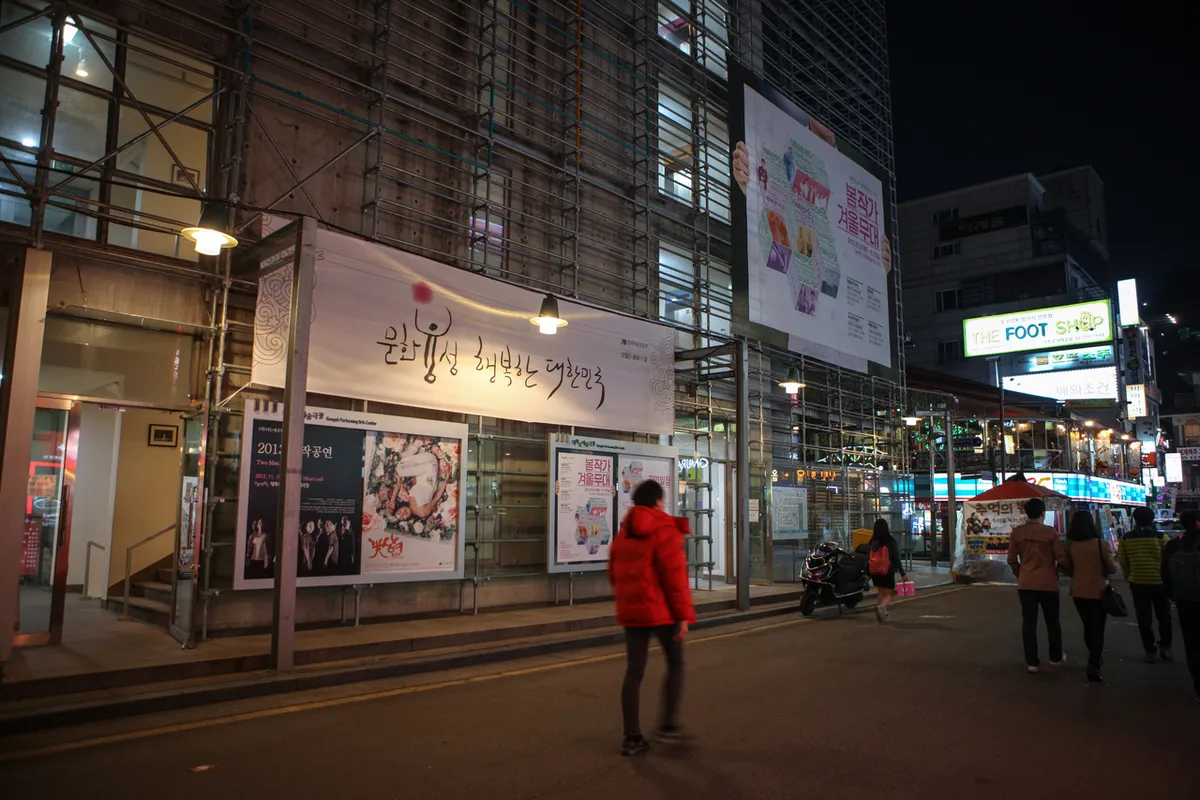
Photo: Korea Tourism Organization / Kim Ji-ho, November 2013.
Language is an important part of choosing a performance. Some theaters offer multilingual caption screens or smart-glasses services, but these are not available at every venue or for every show. Confirm the spoken language and whether English support applies to your selected date and performance time before buying a ticket.
When language-support equipment is offered, check how it is supplied and whether a particular seat or advance arrangement is required. Do not assume that a musical, comedy or visually led production is automatically understandable without Korean. The organizer’s description and booking conditions should guide that decision.
The Seoul Theater Center (서울연극센터), at 3 Daemyeong-gil, is another source of district and performance information. Its information role is useful when comparing venues, but it is not a guarantee of immediate seats, discounts or English-supported performances.
TripKorea’s Tip: The street photographs in this guide are archival. Any posters or production titles visible in them document the photography date, not the current theater program.
3. Naksan Park: the climb beyond the theater district
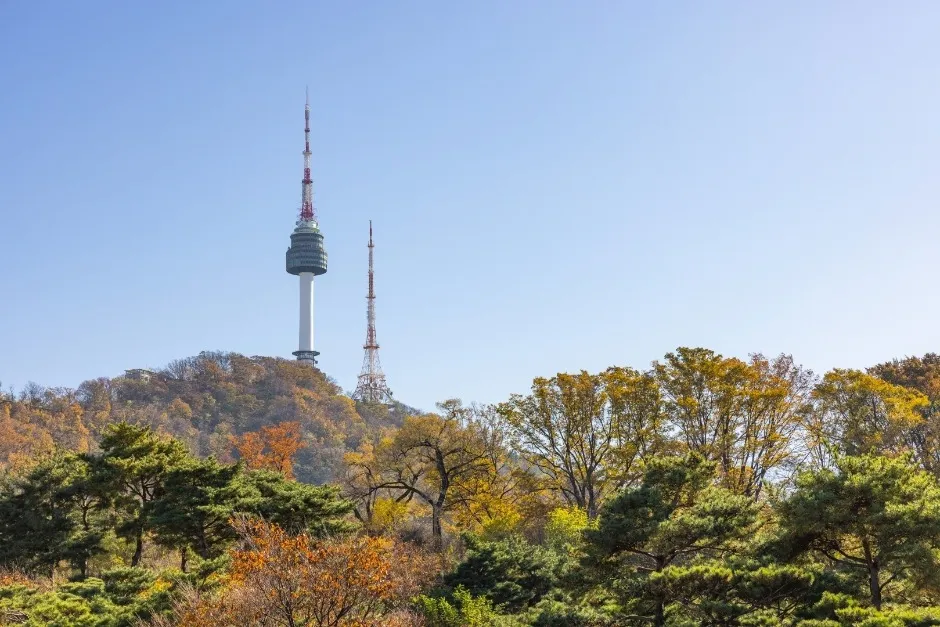
Naksan Park (낙산공원) occupies one of Seoul’s four inner mountains. The name is connected with the ridge’s resemblance to a camel’s back. The present park was created through a restoration project and opened in 2002, bringing public paths and viewpoints to a hillside shaped by earlier residential development.
From the Hyehwa side, the approach using Exit 2 passes Marronnier Park and continues toward Naksan-gil. The streets below and the hillside paths are different environments: reaching the cultural district does not mean that you have already reached the viewpoints. Choose how far to continue according to your mobility and the conditions on the day.
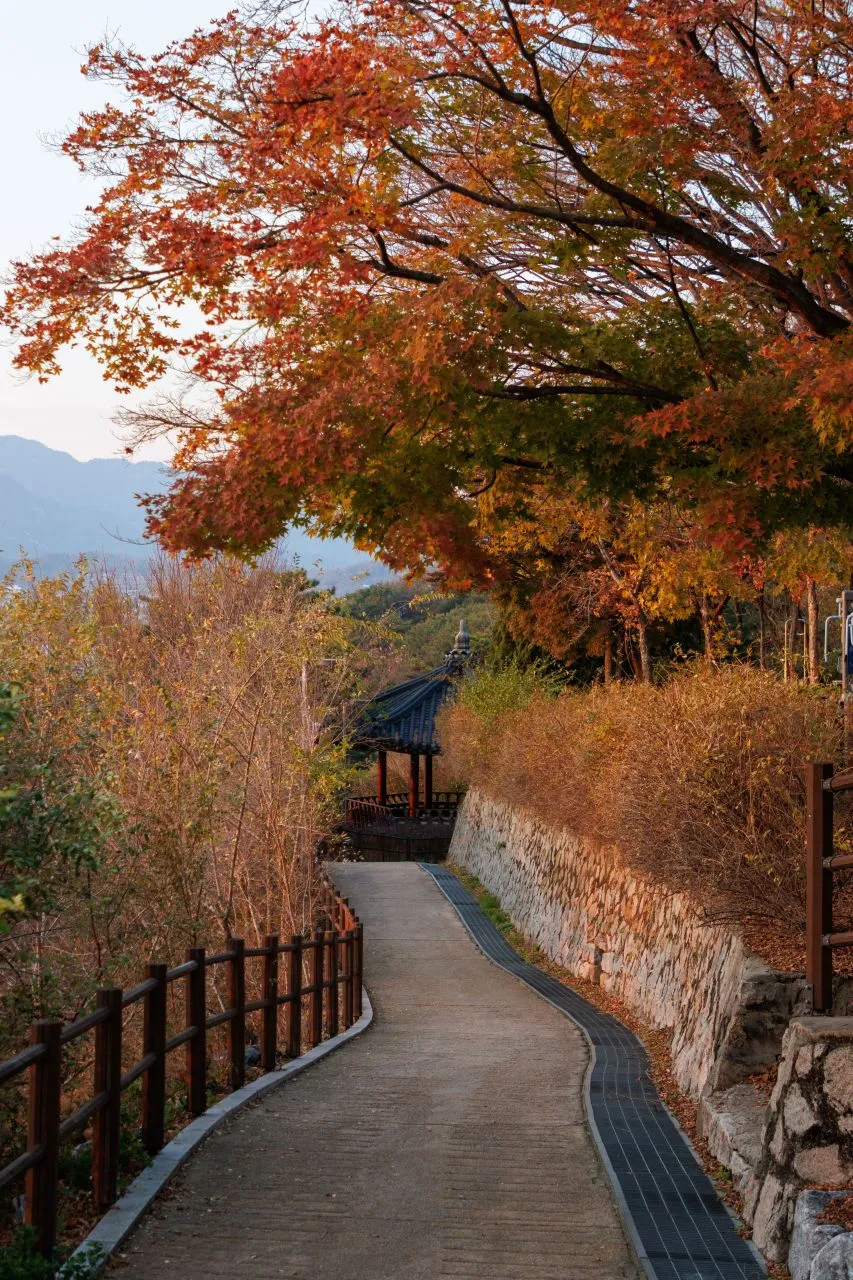
Photo: Korea Tourism Organization / Shin Hye-seong (신혜성), November 2023.
The park includes a central plaza, Naksanjeong pavilion and several viewing areas. From the higher ground, the relationship between the city’s buildings, wooded ridges and historic wall becomes part of the visit. There is no need to turn every viewpoint into a compulsory stop or to complete an entire wall section to see the setting.
Naksan Park is open 24 hours and admission is free. Naksan Exhibition Hall, a small optional stop near the entrance, has different hours: 09:00–17:00, also with free admission. Its displays explain the hill’s history and the Seoul City Wall; the park’s overnight opening does not mean that the exhibition hall remains open.
Approaches and adjoining routes include slopes, stairs and some unpaved surfaces. Accessible entrance features and toilets are available, but this does not establish a continuous step-free journey from the subway to every viewpoint or residential lane. Visitors using mobility aids should ask the park office about a suitable entrance and route before relying on a particular approach.
TripKorea’s Tip: The park office is at 41 Naksan-gil and can be contacted on 02-743-7985. Confirm access needs directly rather than interpreting the hill’s modest size as a guarantee of easy terrain.
4. The Seoul City Wall and nearby residential lanes
Hanyangdoseong (한양도성), the Seoul City Wall, linked the capital’s inner mountains as part of its defenses. At Naksan, the wall follows the hillside above the surrounding neighborhoods. Its stonework and the changing views on either side give the walk a different focus from the theater streets below.
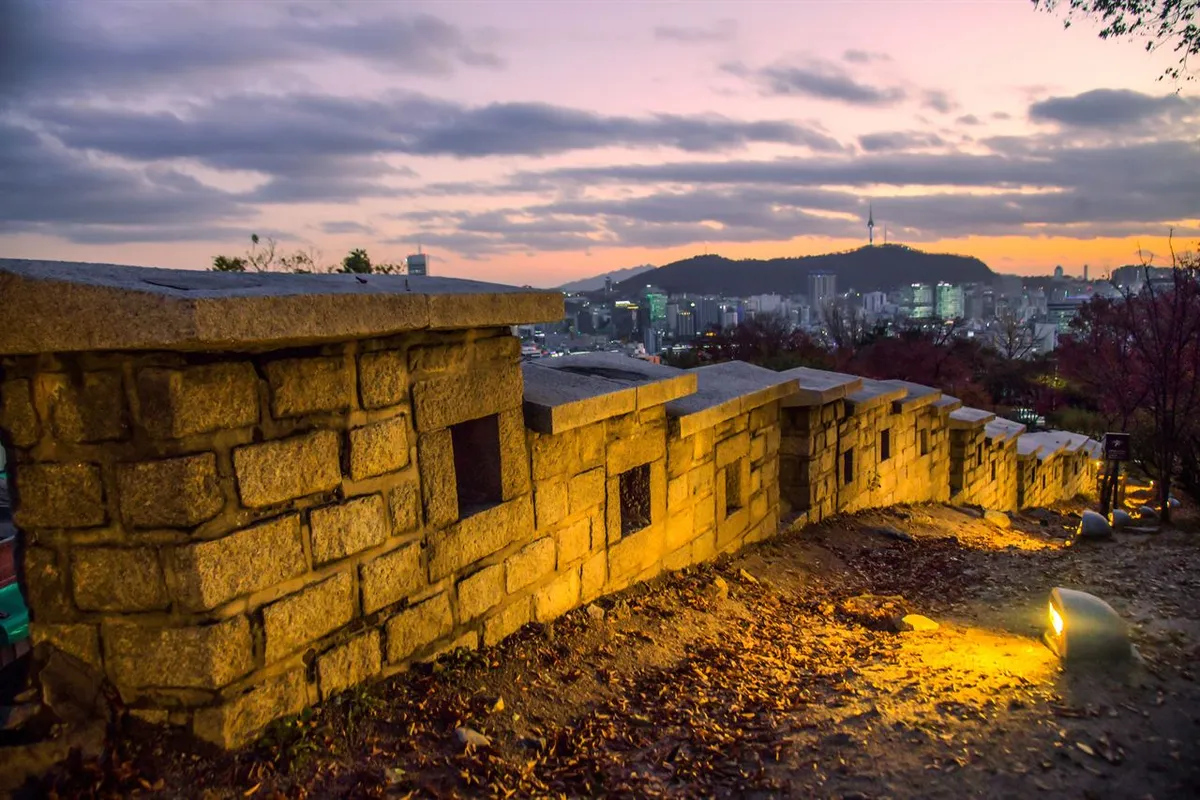
Photo: Korea Tourism Organization / Dudeurim (두드림), November 2019.
The Naksan section includes places where stones from different construction periods can be compared. Do not assume that every visible block belongs to the same building campaign or that every stretch is unchanged from the early Joseon period. The wall is a historic structure with a history of construction, repair and restoration.
Hyehwamun and Heunginjimun are reference points for the wider wall area, but they need not become mandatory endpoints for this district visit. You can explore the viewpoints near the park and return toward Hyehwa rather than treating the whole wall course as a required itinerary.
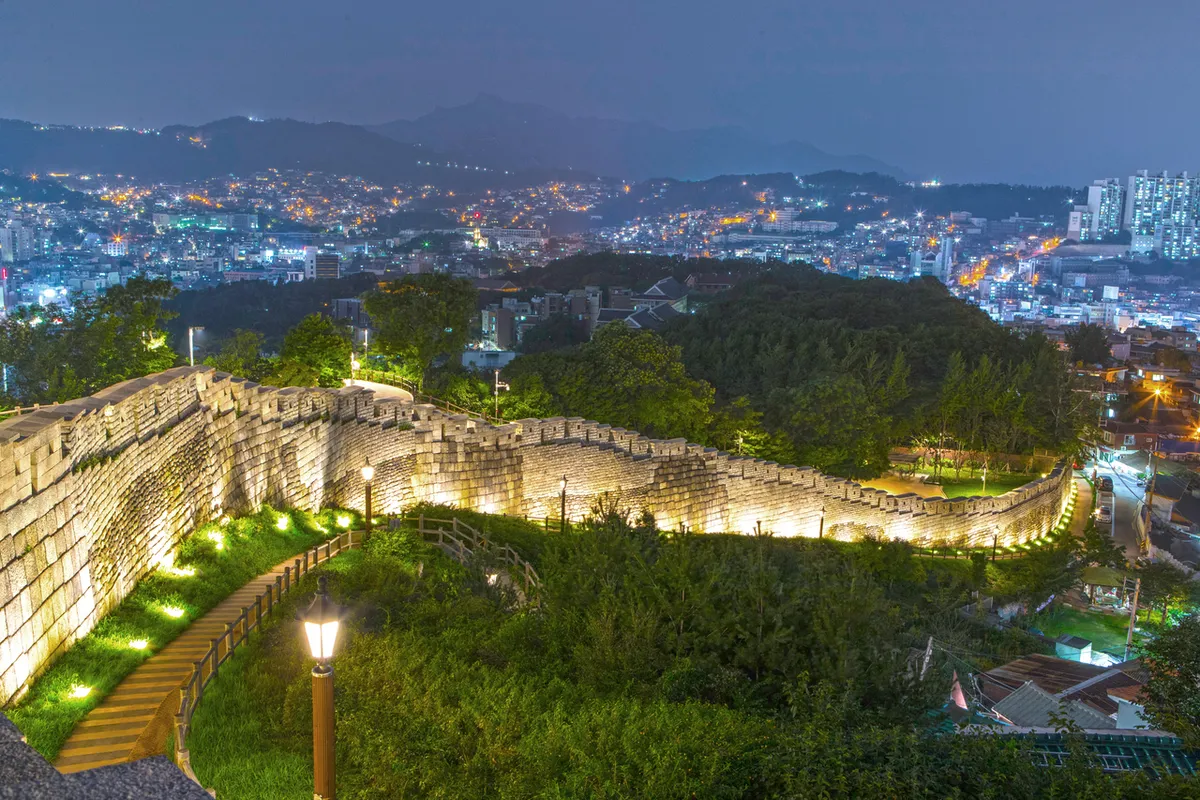
Photo: Korea Tourism Organization / Lee Beom-su (이범수), August 2017.
The Naksan wall section is listed as open 24 hours. Temporary maintenance, weather or safety restrictions may still affect individual paths. For an evening visit, check current notices and follow posted barriers; general opening hours do not establish that every branch of the route is available. Sunset and lighting conditions also vary, so the photographs do not represent a guaranteed view at a fixed time.
Ihwa Village lies just inside the wall and contains homes and narrow lanes. If you enter this residential area, keep noise low, avoid blocking doorways and respect residents’ privacy. Historical accounts of mural projects are not proof that particular painted stairs or artworks remain in place, so this guide does not prescribe a mural-recreation route.
Protect the wall and park: do not climb onto or damage the stonework. Camping, cooking, fires and disruptive behavior are prohibited. Carry away your rubbish and use designated paths rather than entering private spaces for a photograph.
For accommodation in the district, browse hotels in Hyehwa. Compare the individual property’s location with your chosen station access and plans rather than assuming every address has the same approach.
Frequently Asked Questions
Which subway station serves Hyehwa and Daehangno?
Use Hyehwa Station on Subway Line 4. Exit 2 is an access point for Marronnier Park and ARKO Arts Theater, and for the approach toward Naksan-gil.
Is Naksan Park free to enter?
Yes. The park has free admission and is open 24 hours. Naksan Exhibition Hall is separately open from 09:00 to 17:00, with free admission.
Do Daehangno performances have English subtitles?
Some theaters offer multilingual support, but it is not universal. Check the individual production, date and performance time, including any equipment or seating conditions, before booking.
Is the walk to Naksan entirely step-free?
No continuous step-free route to every area is established here. The wider network includes slopes, stairs and unpaved sections. Contact the park office to discuss an appropriate approach if you use a mobility aid.
Can I visit without seeing a performance?
Yes. The public park, theater streets and Naksan viewpoints can be explored without booking a show. Theater interiors and individual performances have their own entry conditions.
Plan your stay
For a Hyehwa visit combining the cultural district and hill walk, compare Hyehwa hotels and check your chosen property’s access details. For other parts of the capital, explore things to do in Seoul.
Sources & References
District and cultural spaces: Seoul Metropolitan Government’s Marronnier Park introduction; Korea Tourism Organization’s park visitor information; Visit Seoul’s ARKO Arts Theater guide and 2026 arts travel guide; Jongno Foundation for Arts and Culture’s outdoor performance-space information.
Park and wall: Seoul Parks’ Naksan Park guide; official Naksan wall-course information and current notices; Korea Tourism Organization’s accessible-tourism information and Naksan Park attraction information.
Photography: Korea Tourism Organization, KOGL Type 1. Individual photographers and capture dates appear beside the photographs; the hero is Marronnier Park by Kim Ji-ho, November 2013. Archival images illustrate the district and do not establish current performances, signage or foliage. Photo service and reuse terms.
Last verified: October 22, 2026. Opening arrangements, performance programs and path access are subject to change. Confirm current notices before visiting.