Designed by Zaha Hadid and opened in 2014, Dongdaemun Design Plaza (동대문디자인플라자) brings contemporary architecture, changing exhibitions, and excavated city history together in central Seoul.
This DDP Seoul guide covers the building, design spaces, heritage park, nighttime programs, and the different opening and admission arrangements that shape a visit.
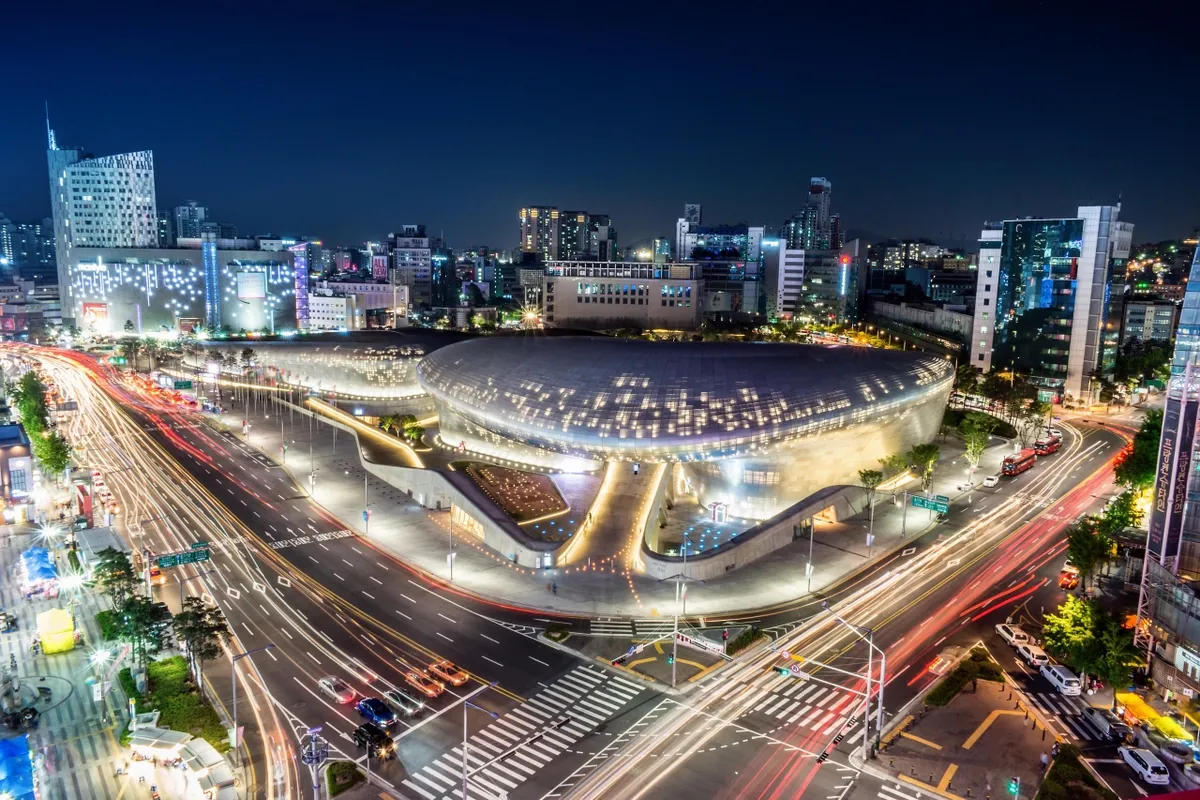
Photo: Korea Tourism Organization.
1. DDP Seoul: Reading Zaha Hadid’s Architecture
The first thing to examine is the building itself. Curved aluminum surfaces rise above open passages and sloping ground, while exposed concrete forms part of the structure beneath them.
The design connects architecture and landscape rather than presenting a conventional rectangular building behind a single front door.
The exterior consists of 45,133 aluminum panels with different shapes, curvatures, and patterns.
Their joints make the surface legible at close range; from farther away, the panels form the continuous silver outline of the complex. Looking at both scales explains more than treating the building as one photograph.
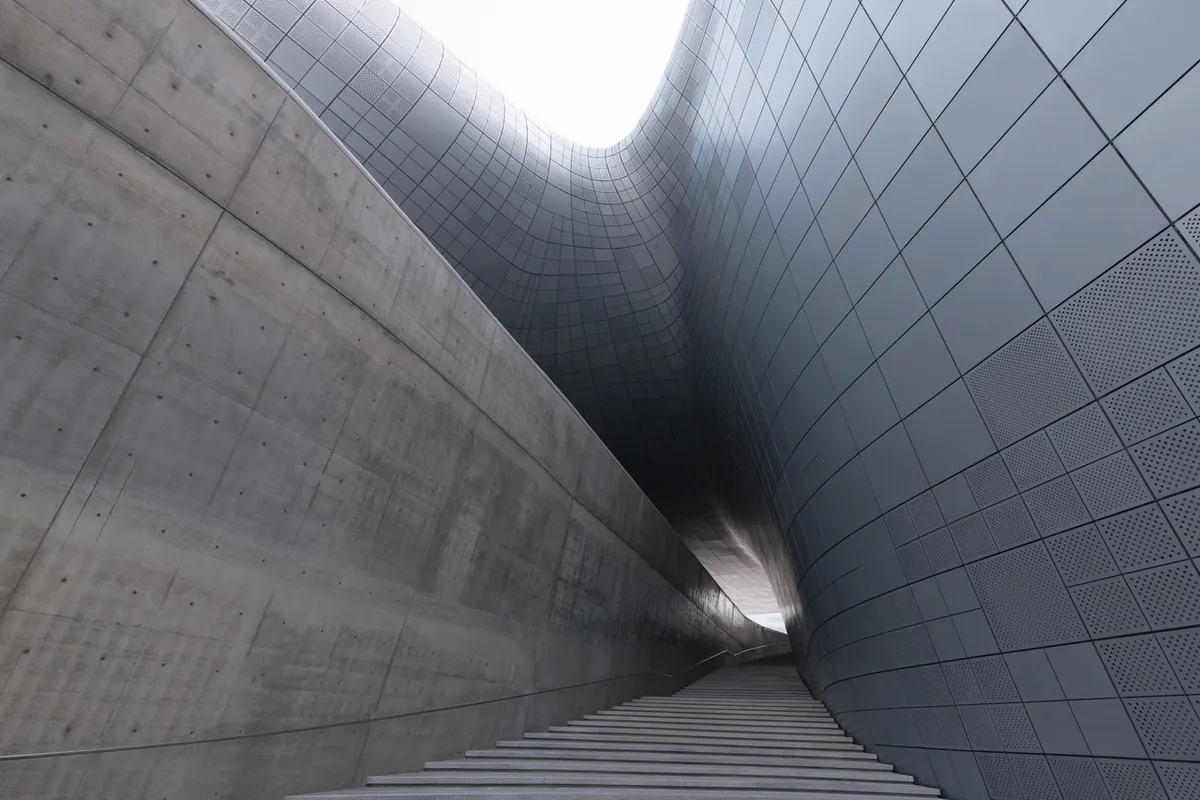
Architectural photograph taken in February 2014. Photo: Korea Tourism Organization.
Zaha Hadid Architects and Samoo Architects and Engineers developed the design, and the complex opened on March 21, 2014.
Building Information Modeling was used throughout construction, while mega-trusses and a space frame helped reduce the need for interior columns. The building combines three underground levels with four above ground.
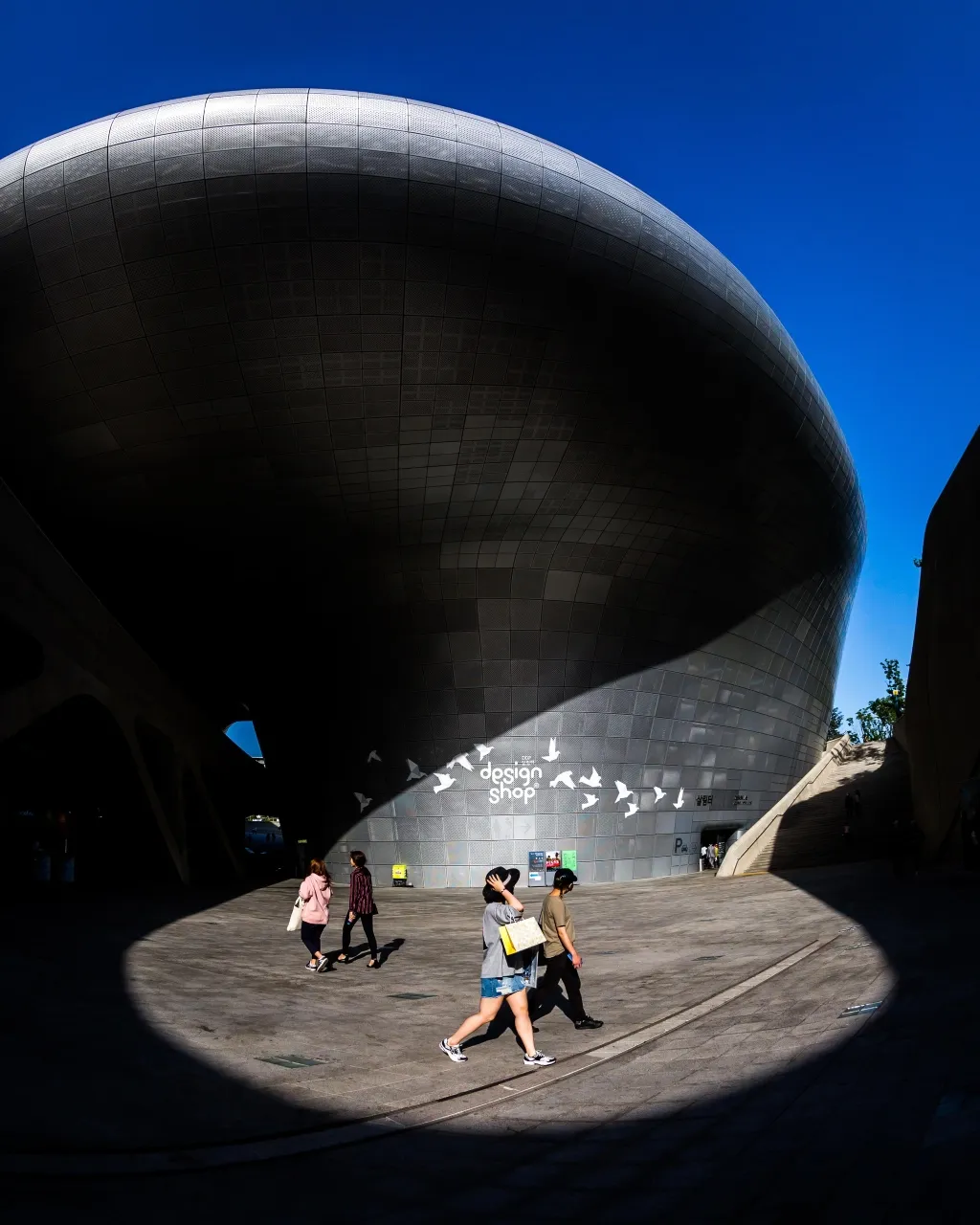
Photo: Korea Tourism Organization.
The covered passages and overhangs show how the structure meets the public space below. Indoors, curved walls and illuminated stair openings continue the same architectural language. These are building features, distinct from the artworks and installations brought in for individual exhibitions.
📍 TripKorea’s Tip: Separate an architecture visit from a ticketed exhibition. Examine the exterior and public approaches, then use the floor plan to identify the entrance for the particular program you want to see.
2. Design Exhibitions and the Museum’s Connecting Spaces
The Museum is an exhibition venue within the larger complex, not a promise that the same collection will be displayed whenever you arrive.
Its two principal exhibition halls occupy different levels: Exhibition Hall 1 is on B2, and Exhibition Hall 2 is on 2F. The Art Hall spaces are separate venues used for events.
Design Dulegil (디자인둘레길) adds another way to understand the Museum. This 533-meter, gently sloping passage connects exhibition spaces and accommodates experiential displays, rest areas, and waiting spaces.
Access to particular sections depends on the program and venue arrangements; its total length should not be read as a guaranteed, unrestricted walking circuit.
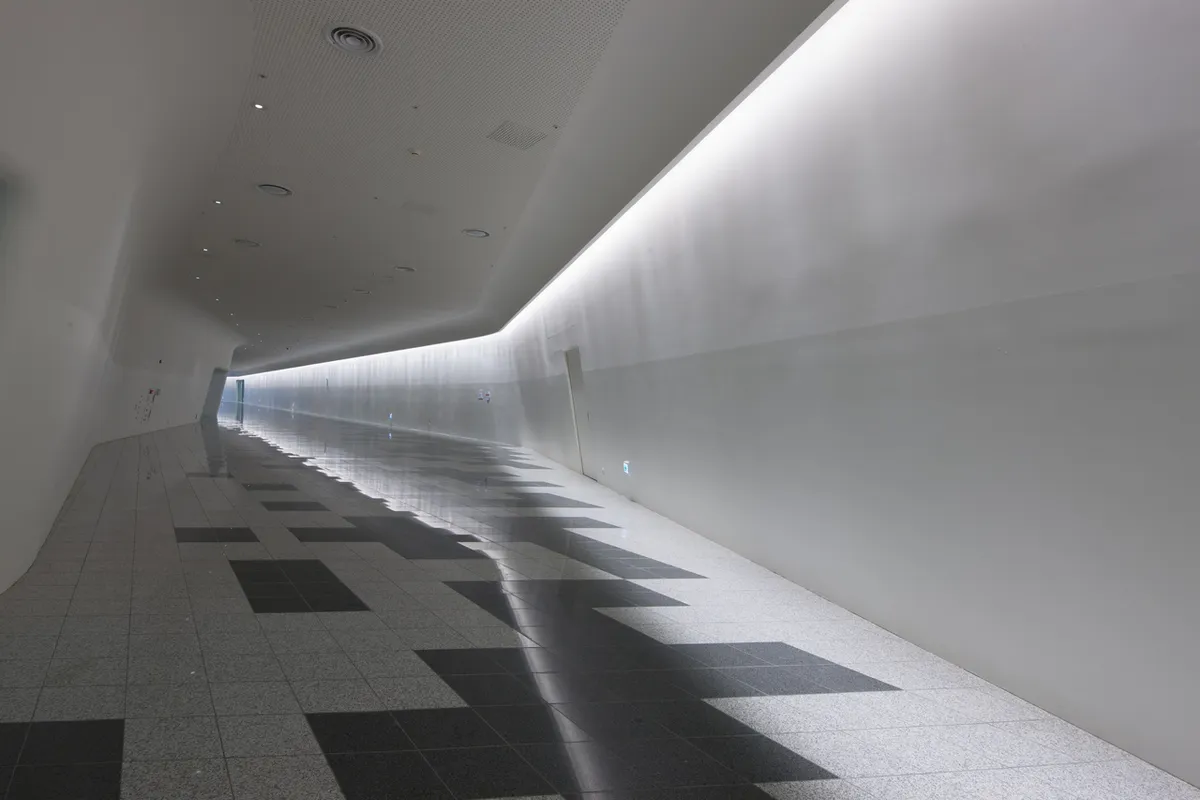
Architectural photograph taken in February 2014. Photo: Korea Tourism Organization.
Scheduled exhibition: Wayne Thiebaud: The Order of Things runs from September 19, 2026, to February 21, 2027, in Museum Exhibition Hall 1.
It presents the artist’s treatment of everyday objects and operates from 10:00 to 20:00. Admission is paid; check the exhibition’s booking information for the current ticket price and entry conditions.
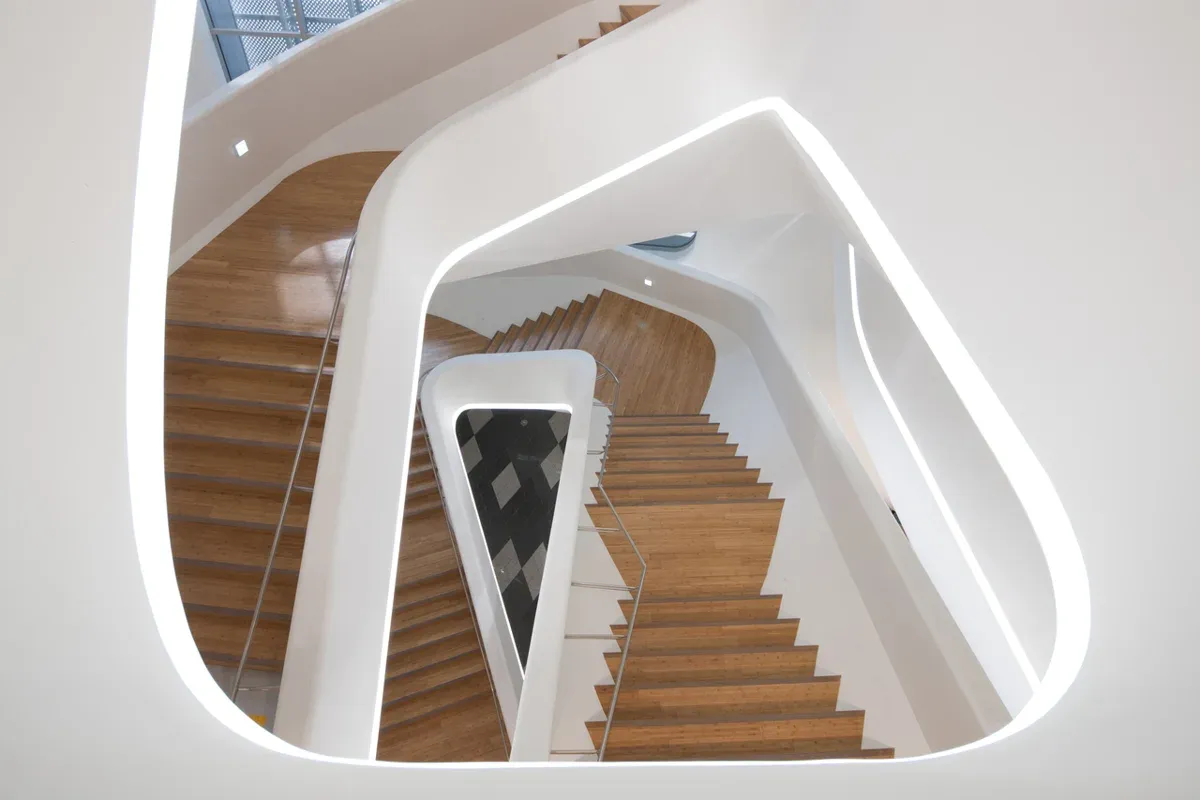
Architectural photograph taken in February 2014. Photo: Korea Tourism Organization.
The exhibition calendar is therefore a practical starting point, not an optional extra. Select the program first, then confirm its building, floor, dates, admission, and last-entry arrangements. A free gallery program elsewhere in the complex does not make a separately ticketed Museum exhibition free.
💡 Local Tip: Match the full venue name on your ticket or program page to the floor plan. “Museum Exhibition Hall 1” and “Art Hall 1” are different spaces, even though their numbers are the same.
3. The City Beneath Dongdaemun History and Culture Park
Dongdaemun History and Culture Park (동대문역사문화공원) places the contemporary building beside older layers of Seoul. Excavations in 2008–2009 revealed remains of the Hanyang city wall, projecting defensive structures, Igansumun water gate, and Joseon-period military facilities beneath the former stadium site.
Igansumun (이간수문) was a drainage structure. Its twin stone arches provide a concrete contrast with the metal and curved concrete of the modern complex. Do not confuse the historic water gate with Igansumun Exhibition Hall, a separate multipurpose venue named after it.
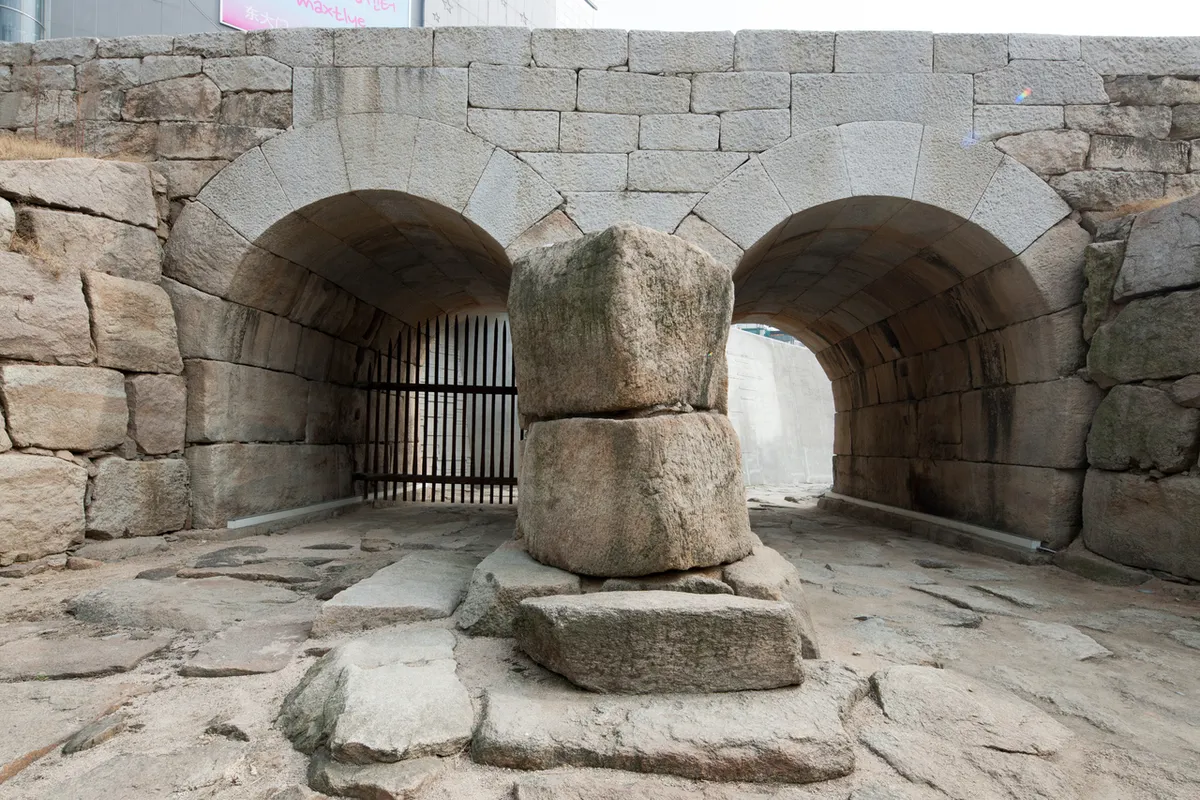
Igansumun water gate. Photo: Korea Tourism Organization.
Dongdaemun History Museum (동대문역사관) explains the excavated site through artifacts, video, excavation plans marked on the floor, and augmented-reality experiences. It gives the visible remains their historical context rather than leaving them as isolated stonework beside a new building.
A different layer appears in Dongdaemun Stadium Memorial (동대문운동장기념관). The stadium opened as Gyeongseong Stadium in 1925 and was demolished in 2007. Photographs, objects, and video in the memorial document sporting events and the life of the surrounding district.
Both the History Museum and Stadium Memorial have free admission and open from 10:00 to 19:00.
They close every Monday, including public-holiday Mondays, as well as January 1, Lunar New Year’s Day, and Chuseok Day. These are the two museums’ rules, not one schedule for the entire outdoor park.
📍 TripKorea’s Tip: Include the two history displays before their closing time if you want to understand the site as well as photograph its architecture. A Monday visit cannot include their interiors.
4. Nighttime Architecture and Dated Light Programs
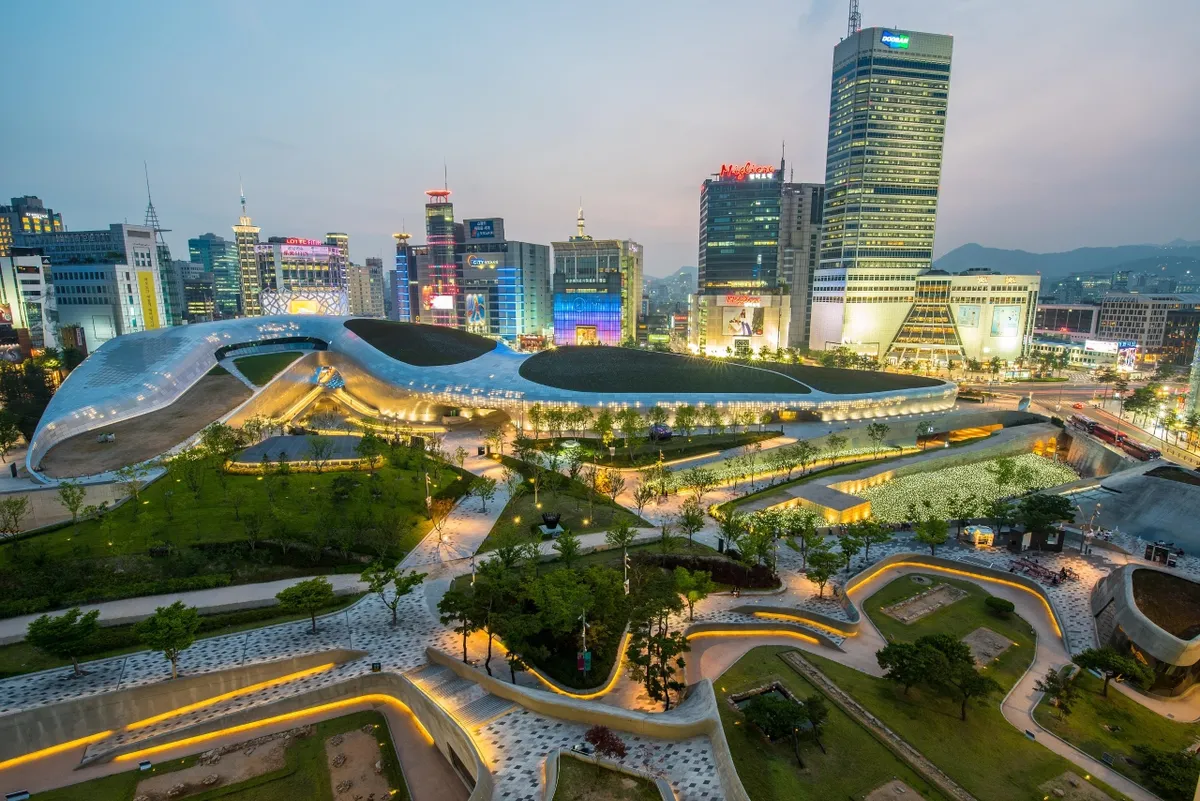
The curved facade and surrounding city streets provide a different architectural setting after dark. An evening building visit, however, is not the same as attending a media-art festival. Ordinary nighttime views, seasonal Seoul Light DDP events, and other lighting programs have different operating conditions.
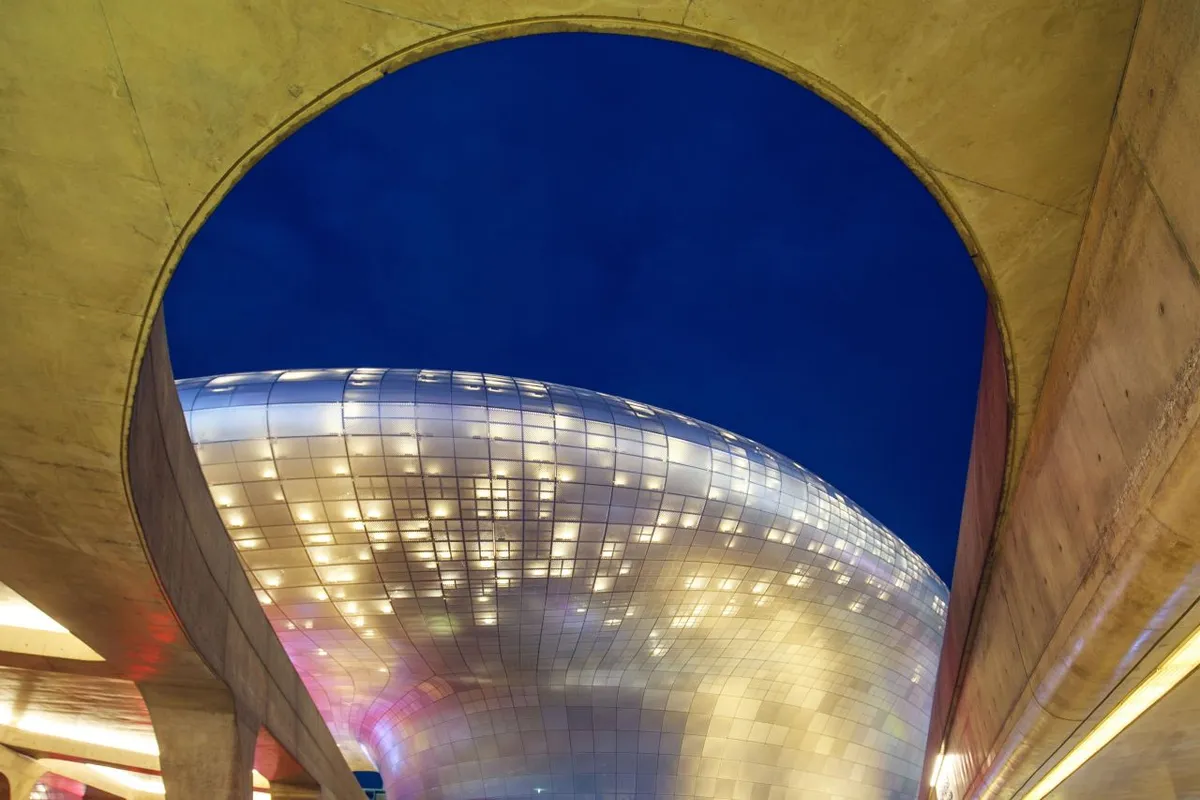
Nighttime architectural view, photographed in 2019; not a current light-show image. Photo: Korea Tourism Organization.
DDP 365 Light (DDP 365라이트) is scheduled from September 21, 2026, to January 31, 2027, with a temporary suspension during December for Seoul Light preparations. Admission is free, and the program takes place in front of the excavation-remains exhibition area.
The work by 윤제호 combines lasers, percussion, electronic sound, imagery, and lighting in a presentation lasting five minutes and 35 seconds. Sessions run every 30 minutes after sunset.
The published September–October timetable begins at 19:00 and ends at 22:00; the November–February timetable begins at 18:00, subject to the program’s date range and December suspension.
Seoul Light DDP 2026 Autumn was a separate festival held from September 3 to 13, 2026, and has already ended. Its main-facade show should not be treated as a daily attraction, and those autumn dates do not establish a winter schedule.
🚨 Warning: Confirm the current lighting notice before arranging an evening around a show. Timetables can change seasonally, and “365 Light” does not mean uninterrupted operation throughout the year.
Getting There, Opening Hours, and Admission
The address is 281 Eulji-ro, Jung-gu, Seoul. Dongdaemun History & Culture Park Station (동대문역사문화공원역), served by subway Lines 2, 4, and 5, is the access point for the complex.
Exit 1 leads toward the B2 entrance and Oullim Square, with access to the Museum and Design Lab.
Exit 2 serves the Design Lab’s first-floor entrance and the History and Culture Park entrance. Choose the exit for your intended venue rather than assuming every activity begins at the same door.
General operating hours are 10:00–20:00, with closures on January 1, Lunar New Year’s Day, and Chuseok Day. Individual spaces may vary their hours by program. Oullim Square is described as open 24 hours; that does not extend to the indoor exhibition halls.
There is no single ticket price covering every experience. The two history museums are free, while temporary exhibitions and programs set their own admission conditions. For general visitor inquiries, call 02-2153-0000 within Korea.
If this district is your overnight base, compare hotels in Dongdaemun. Check each property’s location individually rather than assuming every hotel in the district is beside the plaza.
Frequently Asked Questions
Is Dongdaemun Design Plaza free to visit?
There is no universal admission charge for all its spaces. Dongdaemun History Museum and Stadium Memorial are free, while exhibitions such as Wayne Thiebaud: The Order of Things require paid admission. Check the specific program before booking.
Which subway station and exit serve DDP?
Use Dongdaemun History & Culture Park Station on Lines 2, 4, or 5. Exit 1 serves the B2 approach and Oullim Square; Exit 2 serves the Design Lab’s first-floor and heritage-park approaches.
Is the entire complex open at night?
Not all spaces remain open at night. General hours are 10:00–20:00, while Oullim Square is open 24 hours. Exhibition halls, the two history museums, and lighting programs follow separate schedules.
Are the history museums open on Mondays?
No. Dongdaemun History Museum and Stadium Memorial close every Monday, even when Monday is a public holiday. Their other closure days are January 1, Lunar New Year’s Day, and Chuseok Day.
Does Seoul Light DDP run every evening?
No; Seoul Light DDP is a seasonal event. The separate DDP 365 Light program has a dated run through January 31, 2027, with a December suspension. Confirm its current timetable rather than relying on the name.
Plan a Dongdaemun Base
Stay in the district: Compare Dongdaemun Hotels in Seoul.
Explore other activities: Browse Seoul Tours and Activities. Check each product’s inclusions separately; this is not a DDP exhibition-ticket page.
A DDP Seoul visit can combine contemporary architecture, a chosen exhibition, and the history of the former stadium site. Let exhibition dates and museum closures shape the visit, and add a nighttime program only when its operating notice matches your travel date.
Sources & References
Visitor information: Dongdaemun Design Plaza and Seoul Design Foundation; Korea Tourism Organization attraction information. Photos: Korea Tourism Organization Photo Gallery. Architectural photographs from 2014–2019 illustrate the building and heritage site, not current exhibition installations.
DDP overview and general hours; building and construction; subway access.
Dongdaemun History Museum; Stadium Memorial; Igansumun Exhibition Hall.
Wayne Thiebaud exhibition; DDP 365 Light dates and timetable; Seoul Light DDP 2026 Autumn.
Photo credits: 김대형 (hero), 황선영 (opening), 한국관광공사 김지호 (architectural interiors, stair passage, and Igansumun), Emre Topdemir (overhang), and Liu Lu (night facade), through the Korea Tourism Organization Photo Gallery.
Last verified: 2026-10-01.
Operating hours, exhibition dates, admission conditions, and light programs may change. Confirm the relevant venue or event notice before visiting.