Suwon Hwaseong is the landmark national heritage site of Suwon, and the city tourism site presents it as a World Cultural Heritage attraction. This guide connects the fortress wall, Hwaseong Haenggung Palace, Haenggung-dong café streets, Banghwasuryujeong Pavilion, and nearby mural alleys into one culture-focused walking plan.
The route is designed for travelers who want more than a fortress checklist. It keeps the UNESCO-era architecture at the center, then adds the lower streets around Haenggung-dong where workshops, cafés, and small alleys make the area easier to enjoy between heritage stops.
1. Start with Suwon Hwaseong Fortress
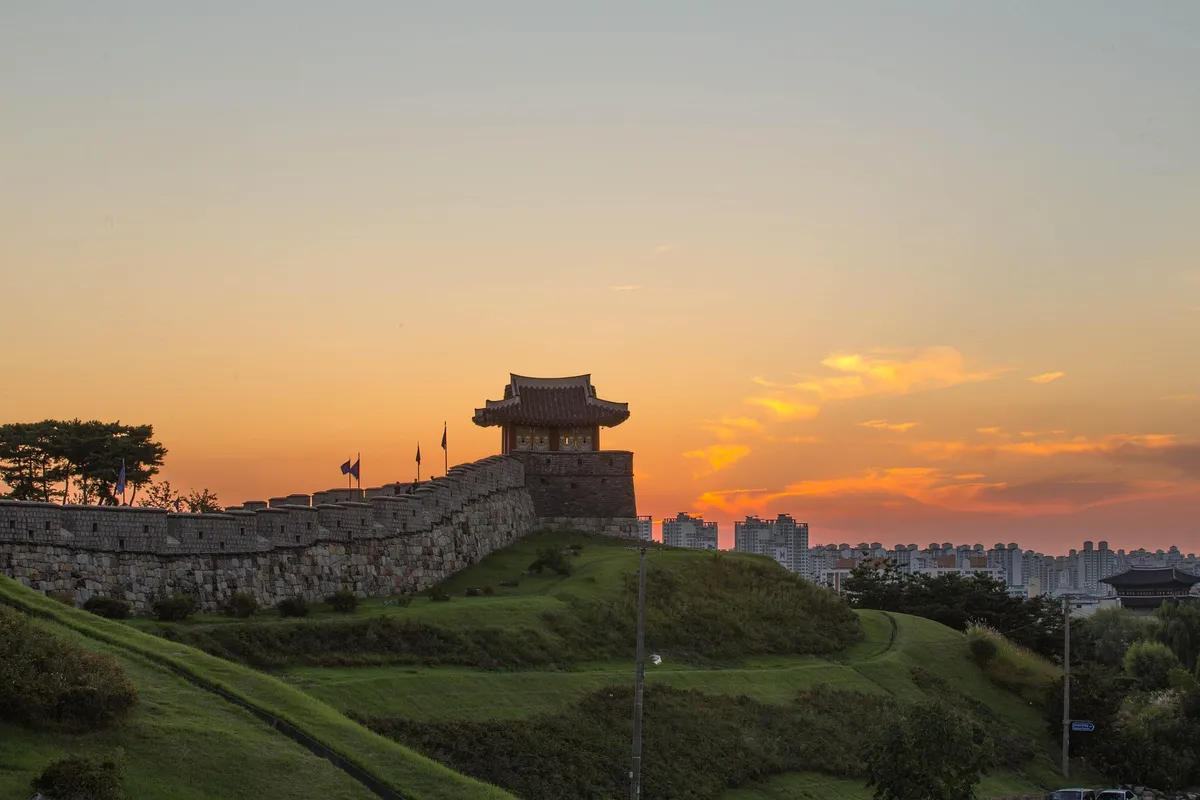
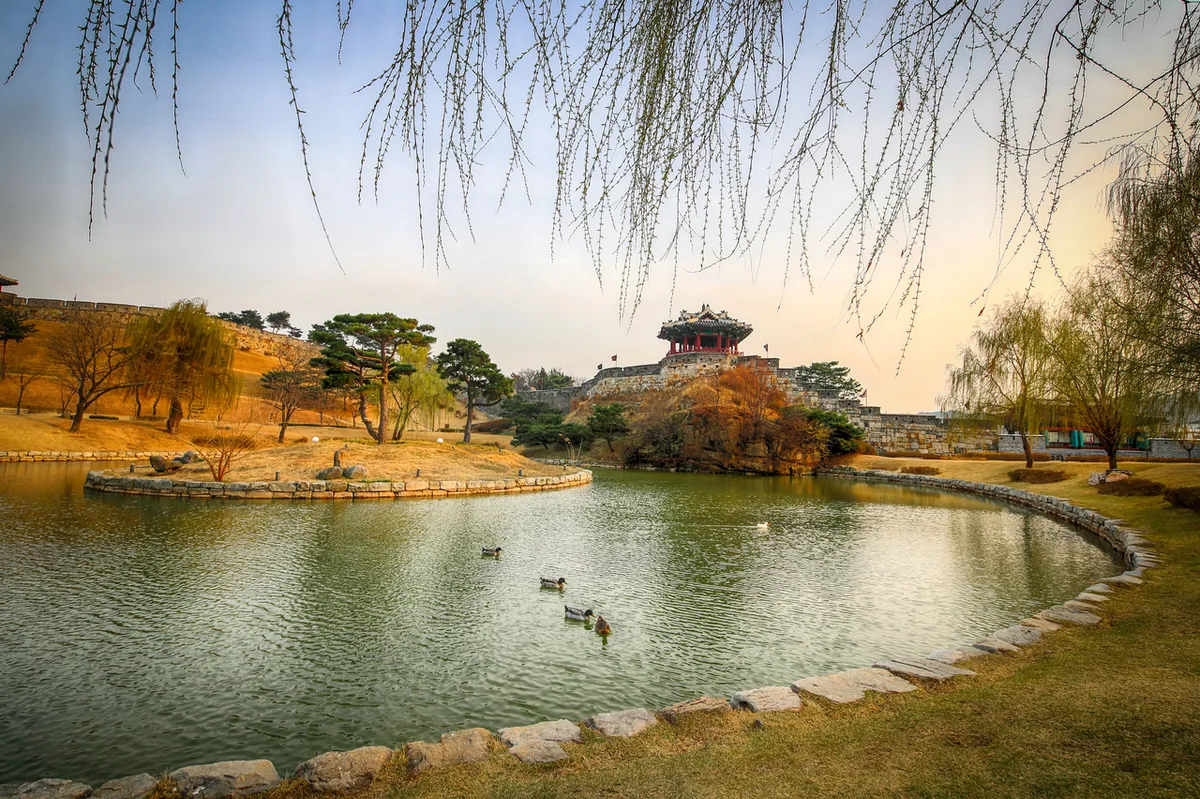
The fortress is the core reason to visit this part of Suwon. The fortress was built around the late Joseon royal city planned by King Jeongjo, and its walls, gates, command posts, and pavilions still shape the center of Paldal-gu. The official Suwon tourism site introduces Suwon Hwaseong as the city’s representative national heritage and a World Cultural Heritage site.
For a first visit, treat the fortress as a living urban wall rather than a single monument. The attraction is spread across gates, slopes, and neighborhoods, so a practical approach is to choose a section and combine it with nearby streets. Janganmun Gate, Paldalmun Gate, Hwahongmun Gate, and the wall sections near Banghwasuryujeong are among the most useful reference points for planning a walk.
The wall route gives Suwon a different character from central Seoul palaces. Instead of staying inside one palace compound, you move between stone walls, older gates, ponds, residential lanes, craft streets, and cafés. That makes the area especially suitable for travelers who want a heritage walk with pauses for food, coffee, and local streets without leaving the historic district.
📍 TripKorea's Tip: Do not try to cover every wall section if your schedule is short. Choose one fortress zone, then connect it with Hwaseong Haenggung Palace and Haenggung-dong so the walk stays focused.
2. Add Hwaseong Haenggung Palace
Hwaseong Haenggung Palace sits at 825 Jeongjo-ro, Paldal-gu, Suwon-si. A haenggung was a temporary palace used by kings and the royal family outside the main royal palaces of Seoul. This palace is closely associated with King Jeongjo, who used it during visits connected to his father’s tomb and royal events.
The palace is an important anchor because it turns the fortress walk into a clearer historical route. Visitors can understand the site not only as a defensive wall, but also as part of a planned royal city centered on processions, administration, ceremonies, and royal travel. The palace also gives the area a natural meeting point before moving into Haenggung-dong streets.
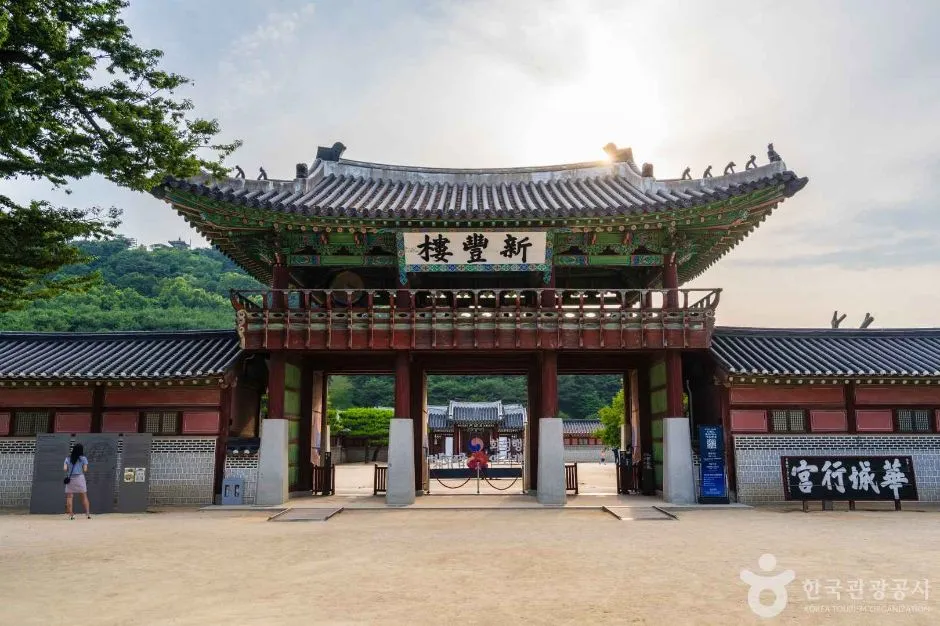
Official visitor information lists the palace as open all year round. Listed hours are 09:00-18:00 from March to October and 09:00-17:00 from November to February. Parking is listed as available, and the information center phone number is +82-31-228-4480 / 031-228-4480 in Korea.
Because the palace is close to the streets around Haenggung-dong, it works well as the cultural midpoint of the day. Start with the palace if you prefer structured history first, or leave it for the middle of the route if you want to begin with the wall and pond views around Banghwasuryujeong.
💡 Local Tip: Check the official Suwon tourism or palace page before visiting. Hours and program schedules can change, especially around events and maintenance days.
3. Walk into Haenggung-dong Café Streets
Haenggung-dong is the softer side of the fortress area. The neighborhood around the palace and fortress has low-rise lanes, small storefronts, cafés, and workshops, which makes it a practical break point between heritage stops. It should be treated as a neighborhood walk, not as a list of individual cafés.
The most relevant verified street for this guide is Suwon Workshop Street. It stretches from the plaza of Hwaseong Haenggung Palace toward the Nammun Rodeo Youth Culture Performance Hall near Paldalmun Gate. The street is lined with workshops where artists display and sell handmade crafts, and the visitor information also notes craft experiences such as woodcraft, hanji craft, ribbon craft, sewing, and metalworking.
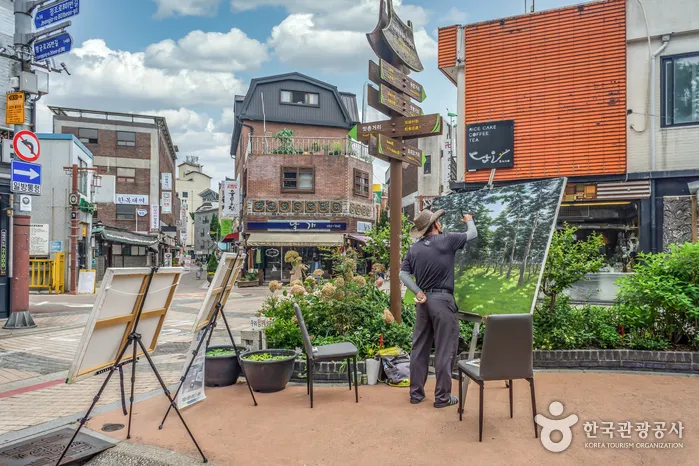
This is where the guide should include the café-street feeling without turning into a food or café review. Several cafés are part of the street environment, but specific shop names, menus, prices, and operating hours should be checked individually because they change faster than heritage-site information. For TripKorea Destination purposes, the useful point is the setting: cafés and craft shops sit close enough to the palace and fortress wall to make the heritage district easier to pace.
The broader Haenggung-dong area is also useful for travelers who want photos of streets rather than only gates and stone walls. Keep the walk simple: palace plaza, workshop street, café lanes, then back toward the fortress wall or Banghwasuryujeong Pavilion.
📍 TripKorea's Tip: Use Haenggung-dong as the rest stop in the route. It keeps the article within Destination scope while still giving readers the café-street atmosphere they search for around Suwon Hwaseong.
4. See Banghwasuryujeong Pavilion and Yongyeon Pond
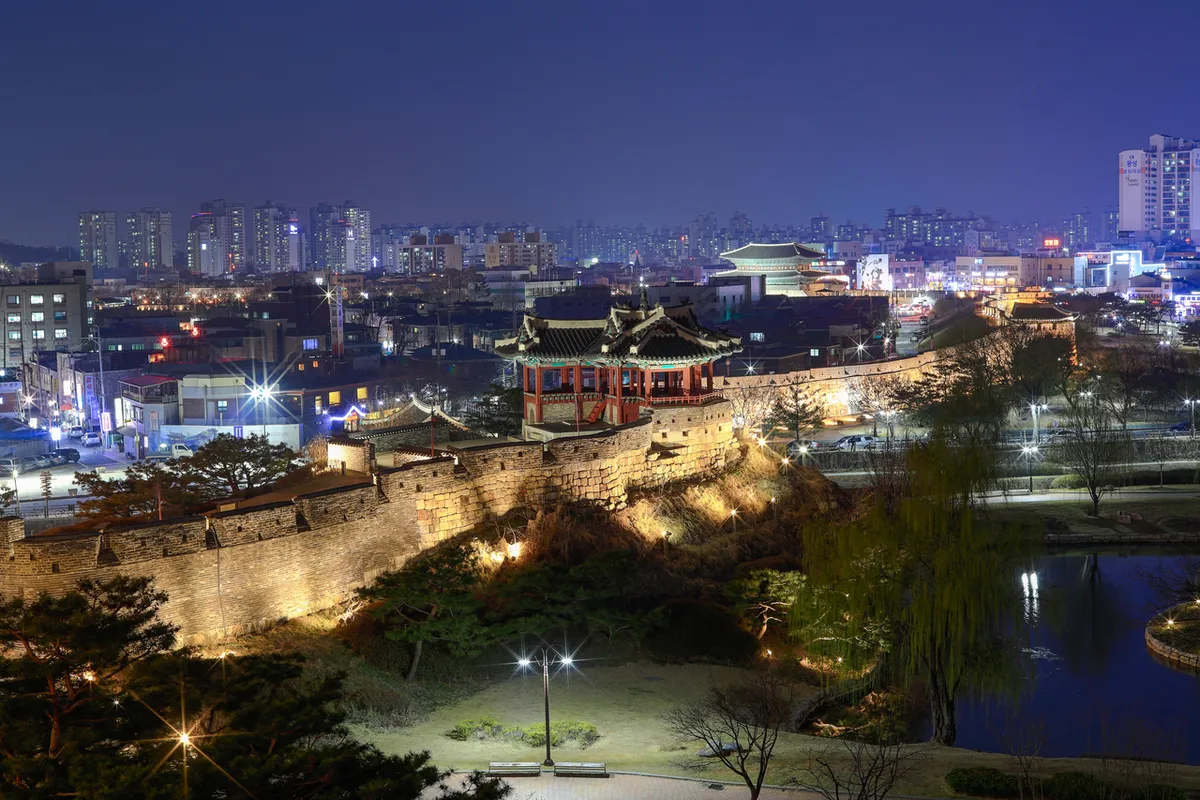
Banghwasuryujeong Pavilion is one of the strongest visual stops around Suwon Hwaseong. Its official name is Dongbukgangnu Pavilion, and it was built in 1794 during the construction of the fortress. The pavilion stands on a hill east of Hwahongmun Gate, beside the pond area known as Yongyeon.
The name Banghwasuryujeong is commonly explained as a pavilion where one can “find flowers and stroll among willow trees.” The pavilion was damaged by flooding and reconstructed in 1848, with later preservation work continuing over time. It was designated Treasure No. 1709 in 2011.
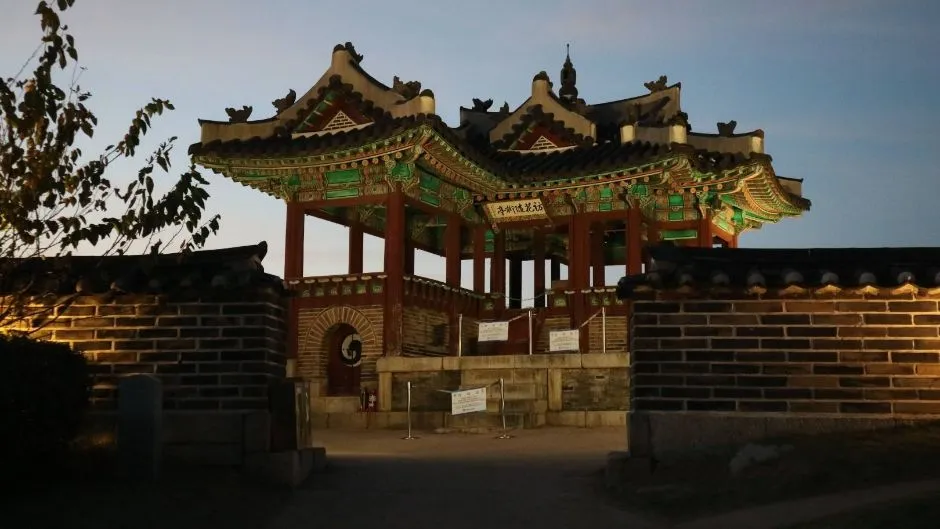
This stop fits the “pretty around the fortress” request better than a generic café list. The stone wall, pavilion roofline, pond, and surrounding trees create a distinct scene within the heritage area. It also gives the route a natural scenic point before or after the palace and Haenggung-dong streets.
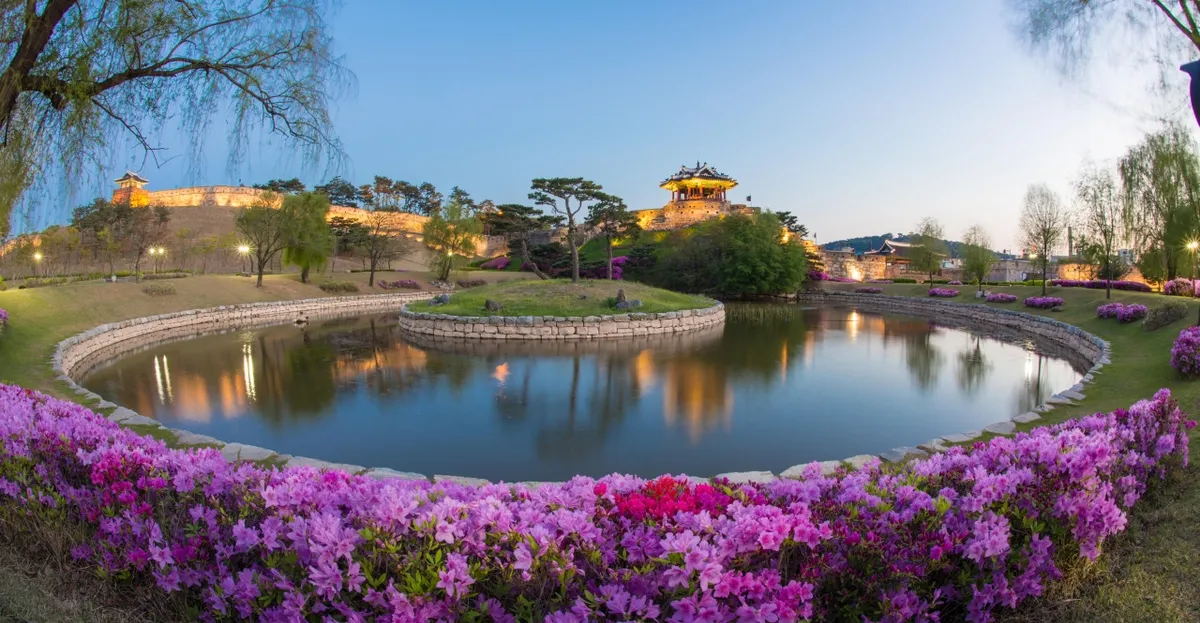
Visitor information lists Banghwasuryujeong Pavilion as open all year round and open 24 hours. The information center phone number is +82-31-228-4672 / 031-228-4672 in Korea. As with any outdoor heritage site, lighting, weather, and event controls can affect the experience, so check local notices if visiting at night.
🚨 Warning: Outdoor fortress paths include slopes, stone surfaces, and stairs in some sections. Wear walking shoes and avoid rushing the route after dark or during wet weather.
5. Add Jidong Mural Village or the Tourist Trolley
If you want one extra stop after Haenggung-dong, Jidong Mural Village is a verified nearby alley attraction at 75-5 Changnyongmun-ro, Paldal-gu, Suwon-si. Visitor information describes it as a neighborhood with winding alleys and murals along a 6-kilometer road. The site is listed as open all year round and open 24 hours, with no parking available.
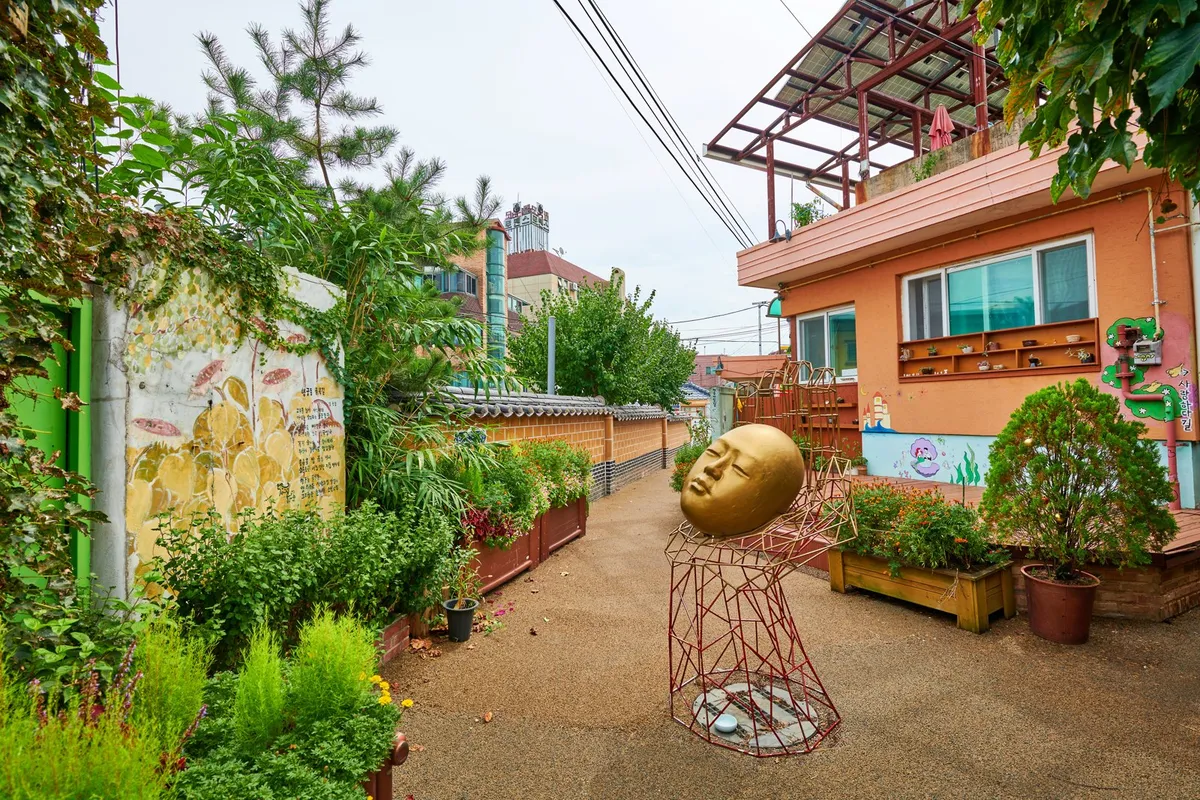
This village works well as an optional extension, not a required stop. It adds color and alley scenery to the heritage route, but it also shifts the day away from the fortress core. Use it when the main purpose is a longer walk with photos and neighborhood scenes.
Travelers who prefer not to walk every section can consider the Hwaseong Fortress Tourist Trolley. The trolley design is inspired by royal vehicles and Joseon palanquins, and the service connects main attractions around Suwon Hwaseong. Visitor information lists two route styles: a sightseeing course starting at Hwaseong Temporary Palace and a circular course starting at Yeonmudae Post. Reservations are required on the website, and seats include earphone jacks with audio guidance in English, Chinese, and Japanese.
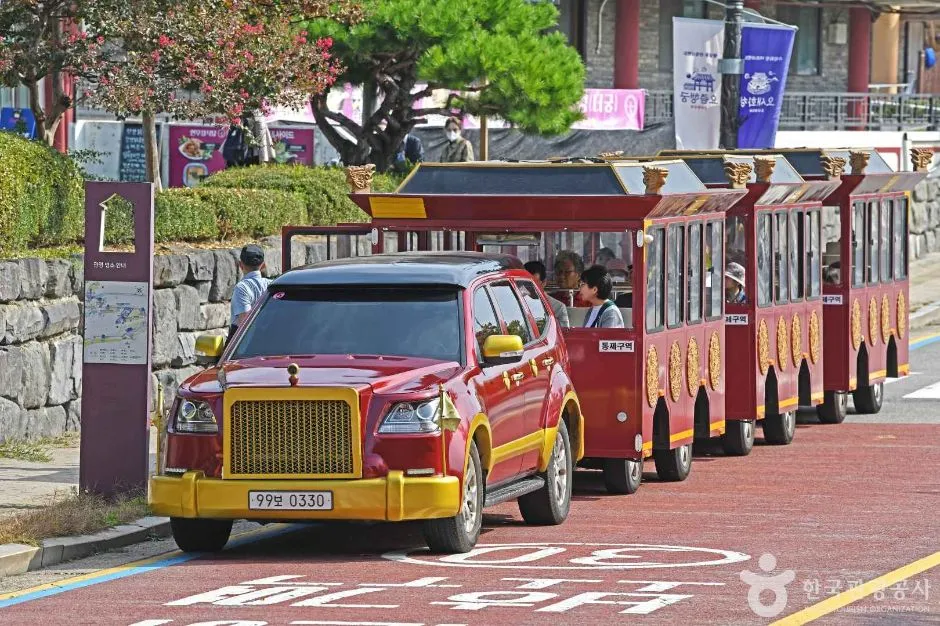
Listed trolley hours are 09:40-17:00, with Mondays listed as the regular closure day. Parking is available, and the information center phone number is +82-31-228-4686 / 031-228-4686 in Korea. Confirm reservations and operating status before building your day around it.
💡 Local Tip: For a compact route, choose either Jidong Mural Village or the Tourist Trolley. Adding both can make the day feel scattered unless you are staying in Suwon overnight.
Where to Stay and What to Book
Suwon works well as a short cultural base if you want to see the fortress area without returning to Seoul immediately. Staying near the fortress or Suwon Station can also make the route easier if you plan to combine the fortress district with other Gyeonggi-do attractions.
Find hotels in Suwon before choosing your walking route. If you want the most direct heritage focus, compare options around the fortress area first, then check Suwon Station for wider transport convenience.
For tours and local activities, check things to do in Suwon. Use activity listings as a supplement, not a replacement for checking official heritage-site hours.
Frequently Asked Questions
Is Suwon Hwaseong good for a café-street walk?
Yes. The fortress area connects naturally with Haenggung-dong and Suwon Workshop Street, where cafés, workshops, and small storefronts sit near Hwaseong Haenggung Palace. The article treats cafés as part of the surrounding street experience rather than recommending specific shops.
Which nearby scenic point fits a Suwon Hwaseong walk?
Banghwasuryujeong Pavilion and Yongyeon Pond are the strongest nearby scenic stops in this route. The pavilion was built in 1794 and designated Treasure No. 1709 in 2011. It is listed as open all year round and open 24 hours.
Can I visit Hwaseong Haenggung Palace on the same walk?
Yes. Hwaseong Haenggung Palace is one of the main anchors of the route and sits close to Haenggung-dong streets. Listed hours are 09:00-18:00 from March to October and 09:00-17:00 from November to February.
Is the Hwaseong Fortress Tourist Trolley available for foreign visitors?
The Tourist Trolley visitor information notes audio guidance in English, Chinese, and Japanese through earphone jacks. Reservations are required on the website. Listed hours are 09:40-17:00, and Mondays are listed as the regular closure day.
Should I stay overnight in Suwon?
An overnight stay is useful if you want a slower fortress walk, evening views around the wall, or a wider Gyeonggi-do itinerary. For a compact visit, many travelers can focus on the palace, Haenggung-dong, and Banghwasuryujeong in one day.
Plan Your Suwon Basecamp
1. Stay close to the fortress or station
Use Suwon hotels to compare bases near the heritage area and transport hubs.
2. Add local activities only when useful
Check Suwon things to do for tours and activity ideas that match your schedule.
3. Keep the route focused
For a balanced fortress day, combine the fortress wall, Hwaseong Haenggung Palace, Haenggung-dong café streets, and Banghwasuryujeong Pavilion before adding optional mural alleys or trolley rides.
Sources & References
Data Sources:
Tourist Attraction Info: Korea Tourism Organization (TourAPI)
Photos: Korea Tourism Organization Photo Korea and TourAPI public tourism images
Local Tourism Information: Suwon Special City Tourism
Official Sites:
Last verified: 2026-08-23
All information verified at time of publication. Operating hours, reservations, and visitor programs are subject to change. Please confirm before visiting.