Knife-cut noodles, thin pan-fried dumplings and fruit shaved ice give Seomun Market food a place in a Daegu itinerary beyond a single snack stop. The market's basement dining areas and surrounding food alleys offer daytime meals, while the organized night market follows a separate evening schedule.
This guide compares three noodle restaurants and three snack or dessert stops. Choose one meal and one snack according to your appetite; the six places are alternatives, not a six-stop eating challenge.
1. Plan a Daytime Seomun Market Food Visit
Seomun Market (서문시장) is divided into numbered districts, with food businesses both inside market buildings and along the surrounding passages. District 2's basement is a useful starting point for noodles and dessert; District 4 provides another noodle-and-dumpling option.
For the general market destination, use 45 Keunjang-ro 26-gil, Jung-gu, Daegu. Individual shops below have their own building addresses or basement units. Daegu Metro Line 3 serves Seomun Market Station (서문시장역); follow the shop's Korean name and district once inside the market.
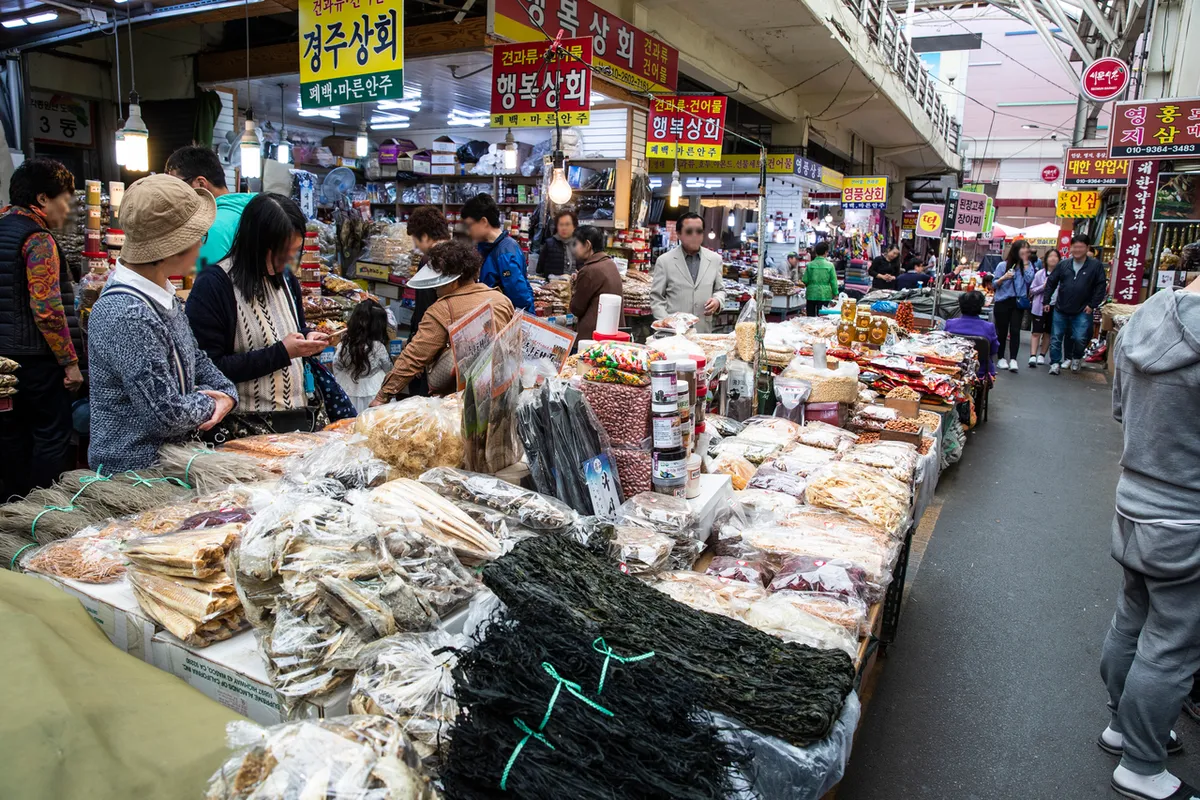
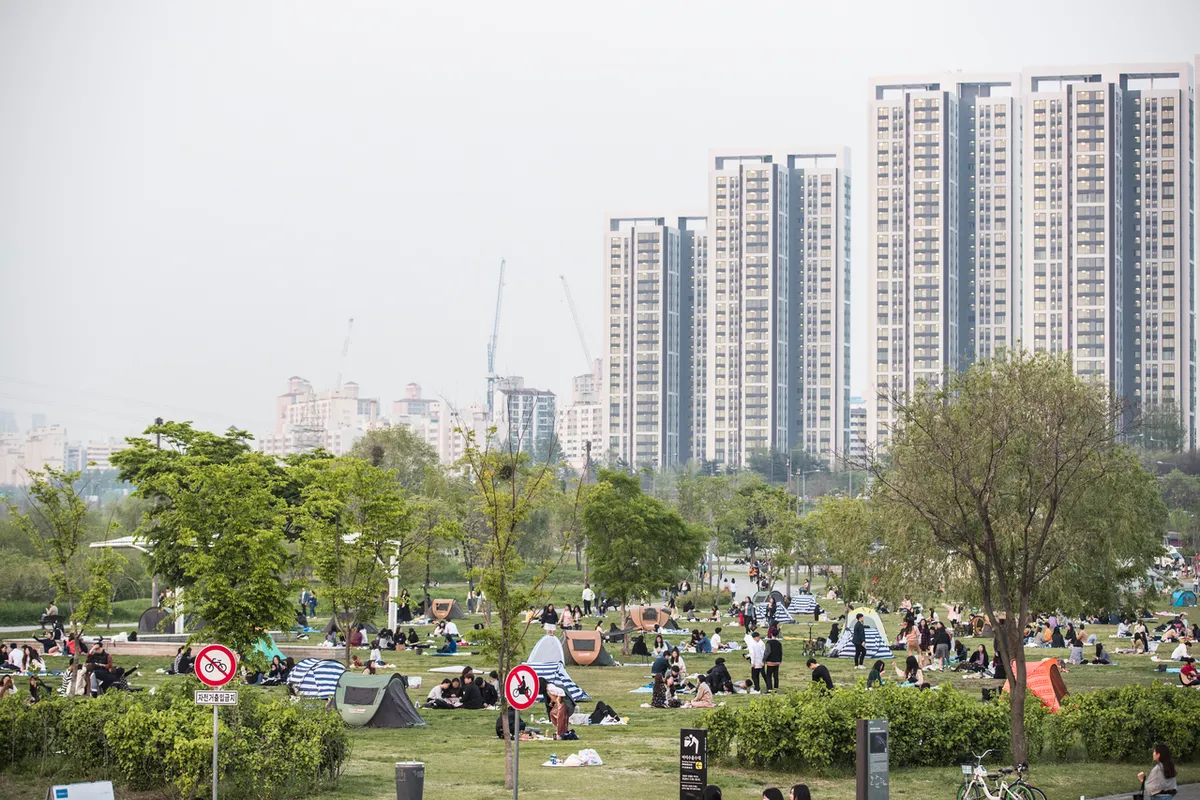
Photo: Korea Tourism Organization / Lee Beom-su, May 2018. Archival view of the market's food-ingredient stalls.
The daytime market's regular closed days are the first and third Sundays of each month. General visitor hours are 09:00–18:00, but these are not a shared restaurant timetable: individual shops can keep different hours and closed days.
Make the noodle restaurants and basement dessert shop a daytime plan rather than assuming they reopen with the night market. A Friday or Saturday visit can include both formats, but an evening return is a separate choice, not a guarantee that lunch venues will still be serving.
2. Choose a Noodle Meal: Three Restaurants
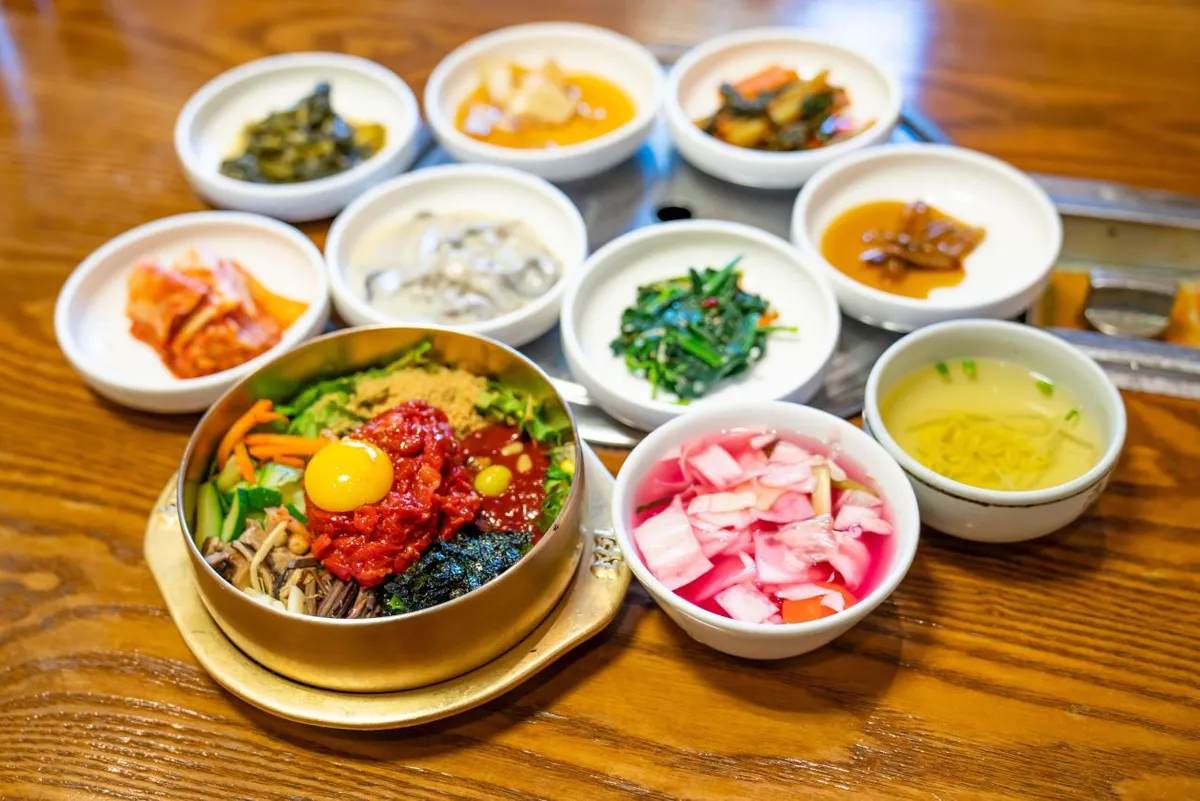
The useful distinction is between kalguksu (칼국수), knife-cut wheat noodles, sujebi (수제비), hand-torn dough pieces, and kaljebi (칼제비), which combines both in one bowl. Kaljebi gives you long noodles and irregular dough pieces together, rather than asking you to choose one texture.
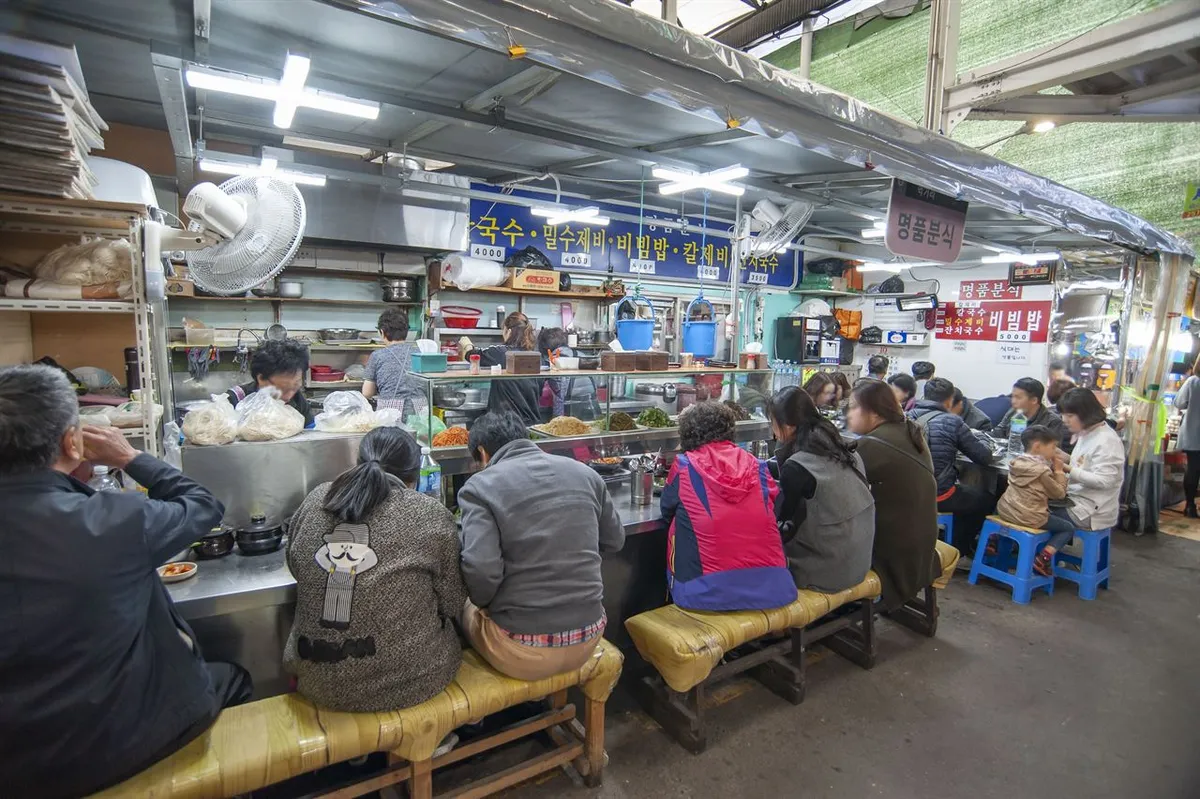
Photo: Korea Tourism Organization / Niotani Studio, October 2018. Archival market dining scene, not a photograph of the three restaurants below.
Eomma Kalguksu (엄마칼국수)
Eomma Kalguksu is in District 2, basement, unit 서 126-1호, 25 Keunjang-ro 26-gil. Its menu includes kalguksu, sujebi and kaljebi, as well as janchi guksu (잔치국수), thin-noodle soup, and bibim guksu (비빔국수), mixed noodles.
Choose kalguksu for a noodle-focused bowl, sujebi for dough pieces, or kaljebi for both. The exact basement unit makes this a specific destination rather than a general instruction to find the market's noodle alley.
Janggeumi Guksijip (장금이 국시집)
Janggeumi Guksijip is also in District 2, B1, 25 Keunjang-ro 26-gil. The shop can appear simply as 장금이 in restaurant directories. Its choices include kaljebi, kalguksu, sujebi and janchi guksu, so it provides another named option within the same basement dining area.
The two District 2 restaurants share a building address, not a business identity. Look for 장금이 rather than borrowing Eomma's unit number; the Korean shop names are more useful for distinguishing the counters than an English translation of “noodle restaurant.”
Myeongsin Son Kalguksu (명신손칼국수)
For a different part of the market, Myeongsin Son Kalguksu is in District 4, 28 Keunjang-ro 28-gil. Its menu includes handmade knife-cut noodles, wheat-dough soup and a mixed bowl called seokkeo (섞어).
Here, seokkeo is the ordering term for the noodle-and-dough combination. It gives you a concrete alternative to searching only for the word kaljebi. Choose this restaurant if District 4 fits your food stops better than the District 2 basement.
A market noodle bowl should not automatically be treated as vegetarian. Broth and seasonings require a separate ingredient check; the presence of vegetables or a clear-looking soup does not establish a meat-free meal.
3. Dumplings or Dessert: Three Snack Stops
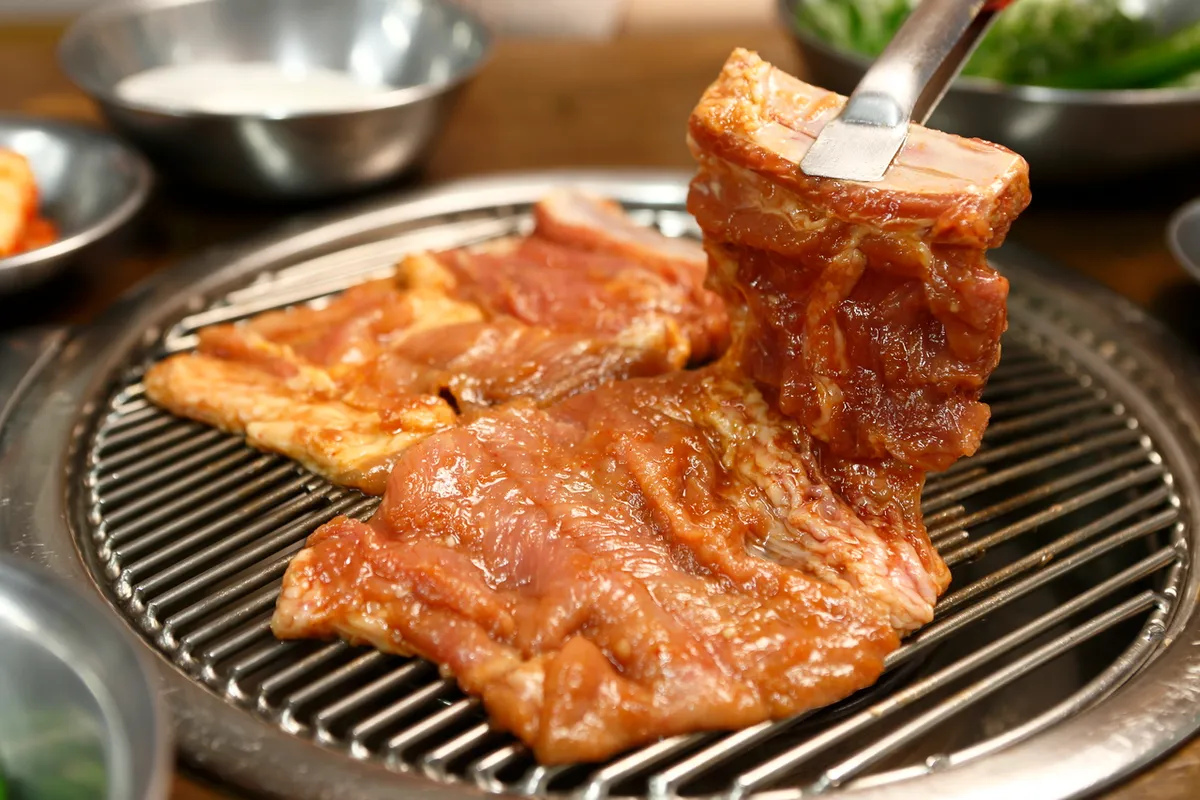
Daegu's napjak mandu (납작만두) are thin, lightly filled dumplings cooked on an oiled griddle. Their flat wrappers distinguish them from the fuller dumplings familiar from many other Korean menus. Glass noodles and chives feature in the regional preparation, while sauces and accompaniments vary.
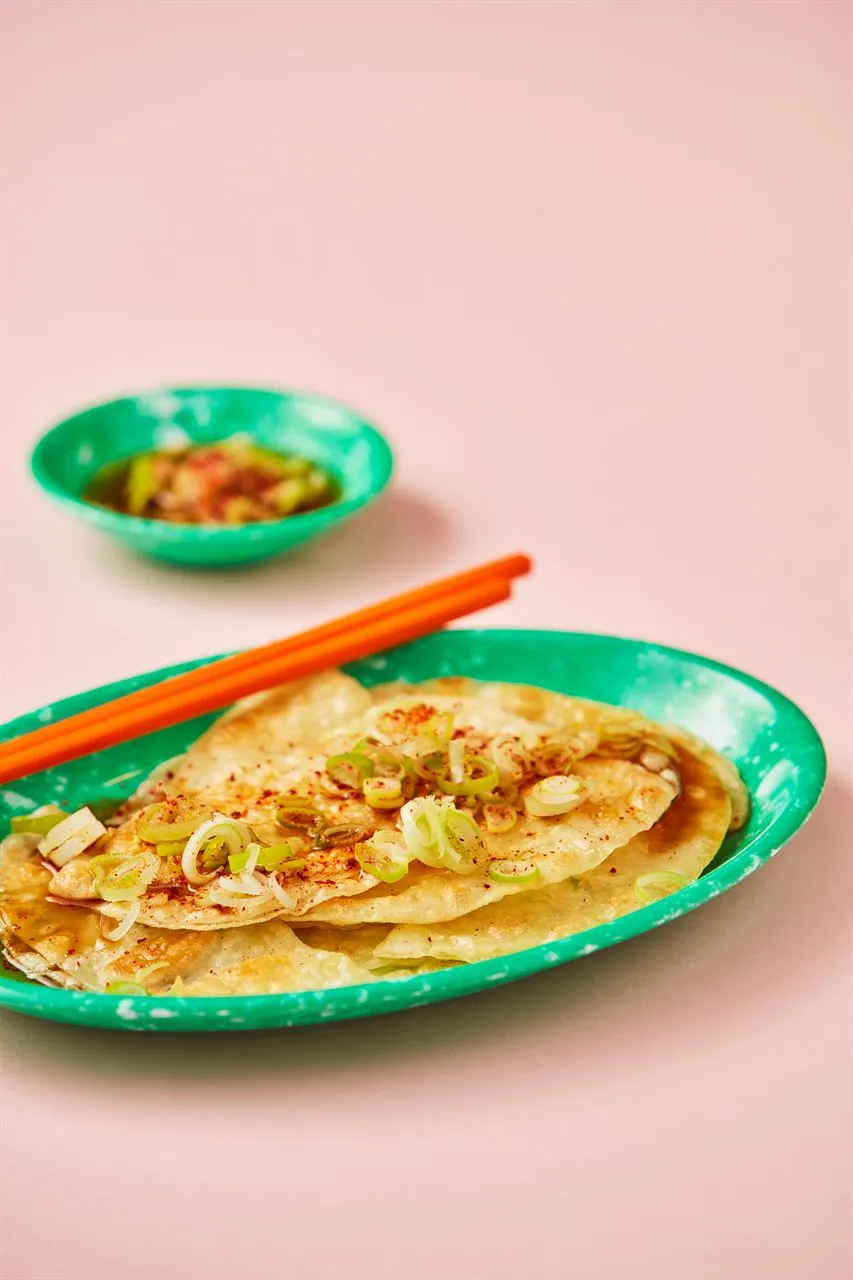
Photo: Korea Tourism Organization / Alex Bundo, December 2020. Illustrative flat-dumpling photograph, not a meal from a recommended market stall.
Miseongdang Napjak Mandu, Market Branch (미성당 납작만두 서문시장점)
The Seomun Market branch is at 28 Keunjang-ro 28-gil. Flat dumplings are the reason to choose this stop; its other dishes include tteokbokki (떡볶이), spicy rice cakes, and yubu jeongol (유부전골), tofu-pouch hotpot.
Flat dumplings and tteokbokki make two different orders: a thin pan-fried wrapper and rice cakes in sauce. This is the market branch, not a reason to navigate to a similarly named Miseongdang elsewhere in Daegu or assume that another branch's menu applies here.
Seomun Samgak Mandu (서문 삼각만두)
For triangular rather than flat dumplings, look for Seomun Samgak Mandu in the District 1 dumpling cluster near Seomun police outpost (서문치안센터). The shop sells samgak mandu (삼각만두), griddle-cooked triangular dumplings.
Several neighboring businesses sell a similar food. Match the full Korean name 서문 삼각만두 rather than treating every triangular-dumpling stall as the same shop. Choose it as an alternative to the flat-dumpling stop, especially if you want to compare wrapper shapes without ordering another noodle bowl.
Seomun Bingsu (서문빙수)
Seomun Bingsu is in District 2, B1, west unit 141 (서141호), 25 Keunjang-ro 26-gil. Its fruit desserts use names borrowed from savory foods: danmuji bingsu (단무지빙수) is fresh-mango shaved ice, not pickled-radish ice, while kkakdugi bingsu (깍두기빙수) uses fresh pineapple rather than radish kimchi.
Red-bean shaved ice is another listed choice. Check the day's fruit menu rather than expecting every seasonal version throughout the year. This provides a sweet alternative to the two dumpling stops, and its basement location pairs naturally with either District 2 noodle restaurant.
4. Keep the Night Market a Separate Plan
Seomun Night Market is an organized evening service, not an extension of every daytime shop. Its regular timetable is Friday and Saturday 19:00–23:30, Sunday 19:00–22:30, with Monday–Thursday normally closed.
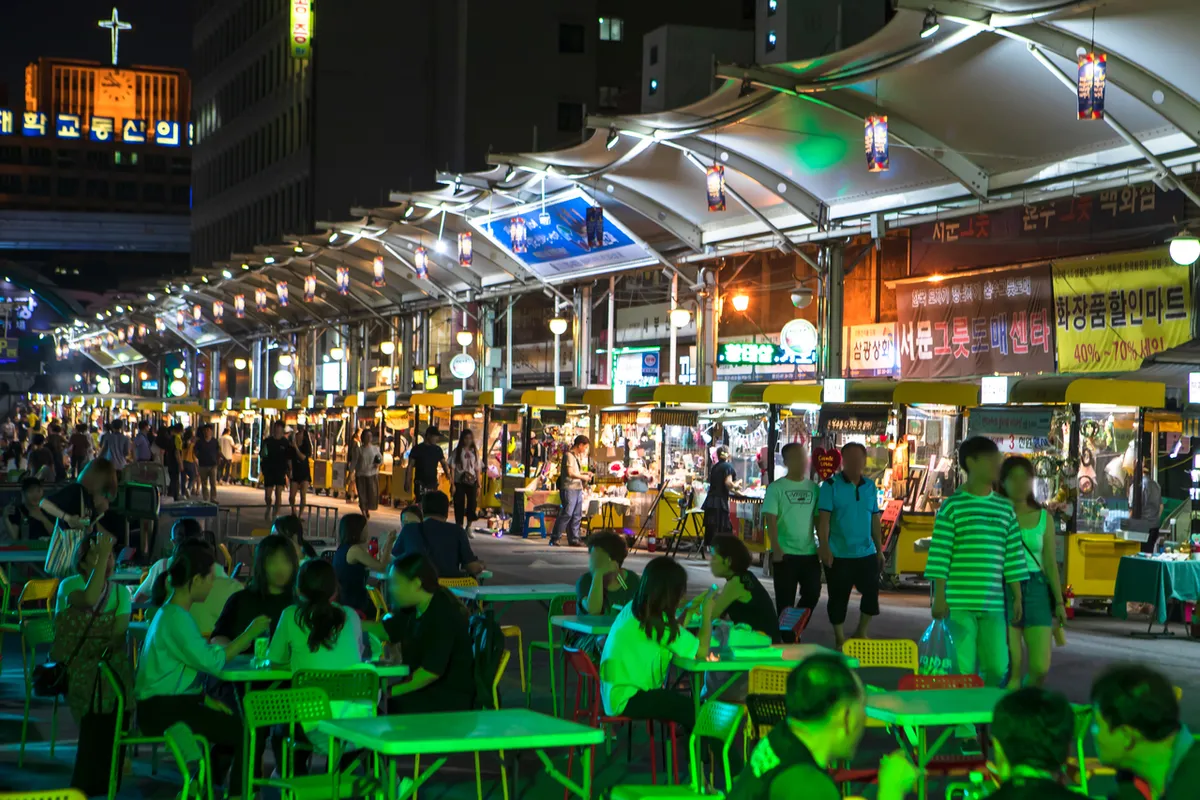
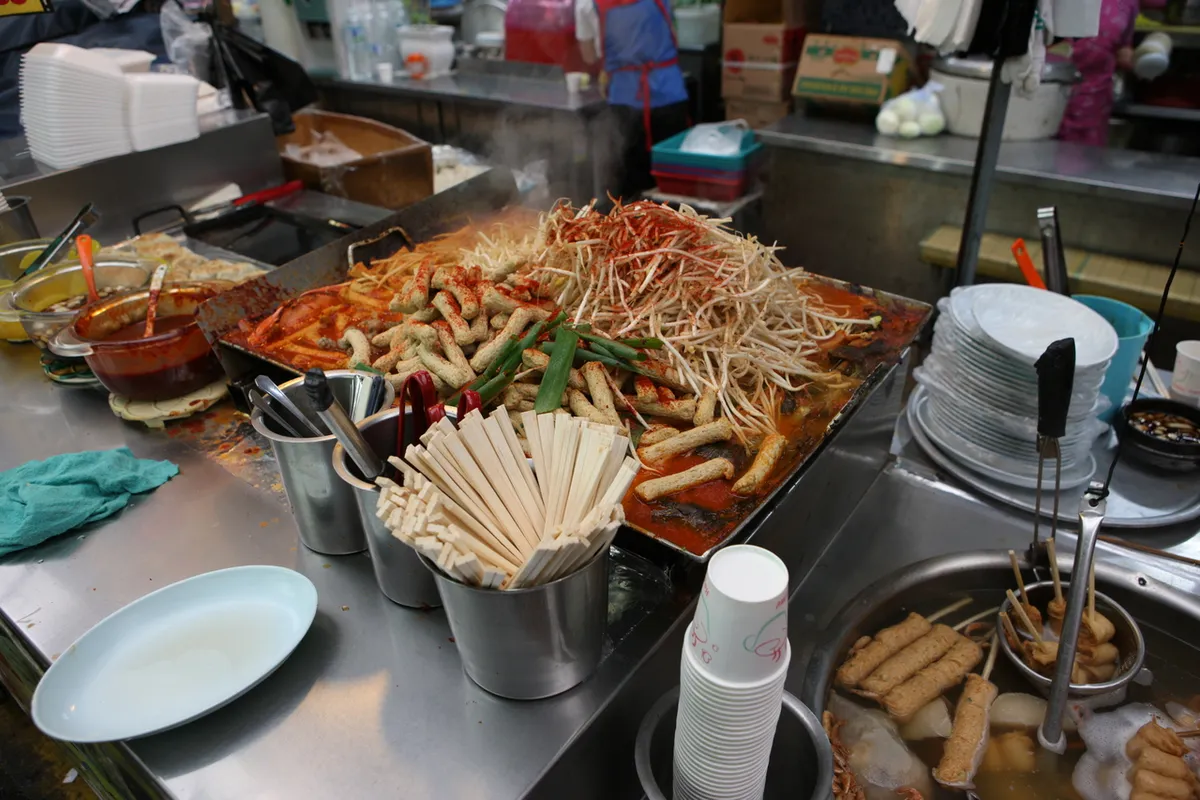
Photo: Korea Tourism Organization / Kim Ji-ho, July 2018. Archival night-market dining area; stalls and seating arrangements may have changed.
The operator's 2026 plan lists a March–December season, subject to changes. Winter conditions, bad weather and holidays can affect service, so check the official night-market schedule and its notices before choosing an evening visit.
A daytime Sunday closure and a Sunday night-market session belong to different schedules. Do not assume that a noodle shop or Seomun Bingsu opens simply because the evening market is operating. Likewise, an old photograph of a night-market dish does not establish that the same stall or menu remains available.
For Seomun Market food, the clearest starting plan is one named noodle restaurant plus one dumpling or dessert stop. Add the night market only when its operating day and current notices fit your visit.
Frequently Asked Questions
What should I eat at Seomun Market?
Start with kaljebi, which combines knife-cut noodles and hand-torn dough pieces, or choose kalguksu alone. For a snack, compare flat dumplings with triangular dumplings; Seomun Bingsu offers a fruit shaved-ice alternative.
Is Seomun Market open every day?
The daytime market generally closes on the first and third Sundays, with shop-specific variations. The organized night market has a separate Friday–Sunday timetable. Check the chosen business rather than relying on one market-wide schedule.
Are the daytime restaurants open during the night market?
The evening timetable does not establish the hours of the daytime restaurants. Plan the noodle and basement dessert stops separately from the night-market session. Confirm directly if you need a particular shop at a specific time.
Does danmuji bingsu contain pickled radish?
At Seomun Bingsu, danmuji bingsu is a fresh-mango shaved-ice dessert. Its kkakdugi bingsu uses fresh pineapple. These menu names refer to fruit desserts, not bowls of actual radish side dishes.
Complete Your Daegu Food Trip
For an overnight visit, explore hotels in Daegu and choose a base that fits your wider meal plans. Keep Seomun Market food stops tied to the individual shops' schedules rather than assuming every market counter stays open into the evening.
Sources & References
Official market and food information: Korea Tourism Organization: market address, general hours and closures; KTO: Seomun Market foods, October 2025; KTO: archival market dumpling descriptions; Korea Foundation Korean Food Database, kalguksu and sujebi entries.
Individual shops: Secondary restaurant listings and corroborating visitor accounts were used for Eomma Kalguksu, Janggeumi, Myeongsin Son Kalguksu, Miseongdang's market branch and Seomun Samgak Mandu. Restaurant details are supported by secondary listings and corroborating visitor accounts, not operator-confirmed live schedules.
English shop labels are romanizations; use the accompanying Korean names. Seomun Bingsu's operator account supplies its market address; its Tabling introduction describes the fruit desserts. Exact prices and disputed shop hours have been omitted.
Night market: Daegu Traditional Market Support Agency: 2026 operating plan and official visitor schedule. The 2026 season is a published plan, not confirmation of opening on any particular date.
Photography: Korea Tourism Organization, credited individually. Hero: Kim Ji-ho, September 2012, a Seomun Market snack counter with rice cakes and fish cakes. Historical market photographs do not establish current vendors or menus. The flat-dumpling photograph is illustrative and is not attributed to a recommended shop.
Last checked: November 10, 2026. Restaurant hours, menus and prices are subject to change; confirm directly before visiting.