Pork galbi, pork-bone stew, clam noodles and bibimbap give Seongsu (성수) a Korean-meal itinerary beyond its café stops. The choice is between a shared grill meal and a restaurant serving a prepared rice, noodle or stew dish.
This Seongsu food guide compares six places: three pork-galbi restaurants around Ttukseom and the older galbi-alley area, followed by three alternatives for a meal without a barbecue grill. Choose one restaurant for a meal rather than treating the list as a six-stop route.
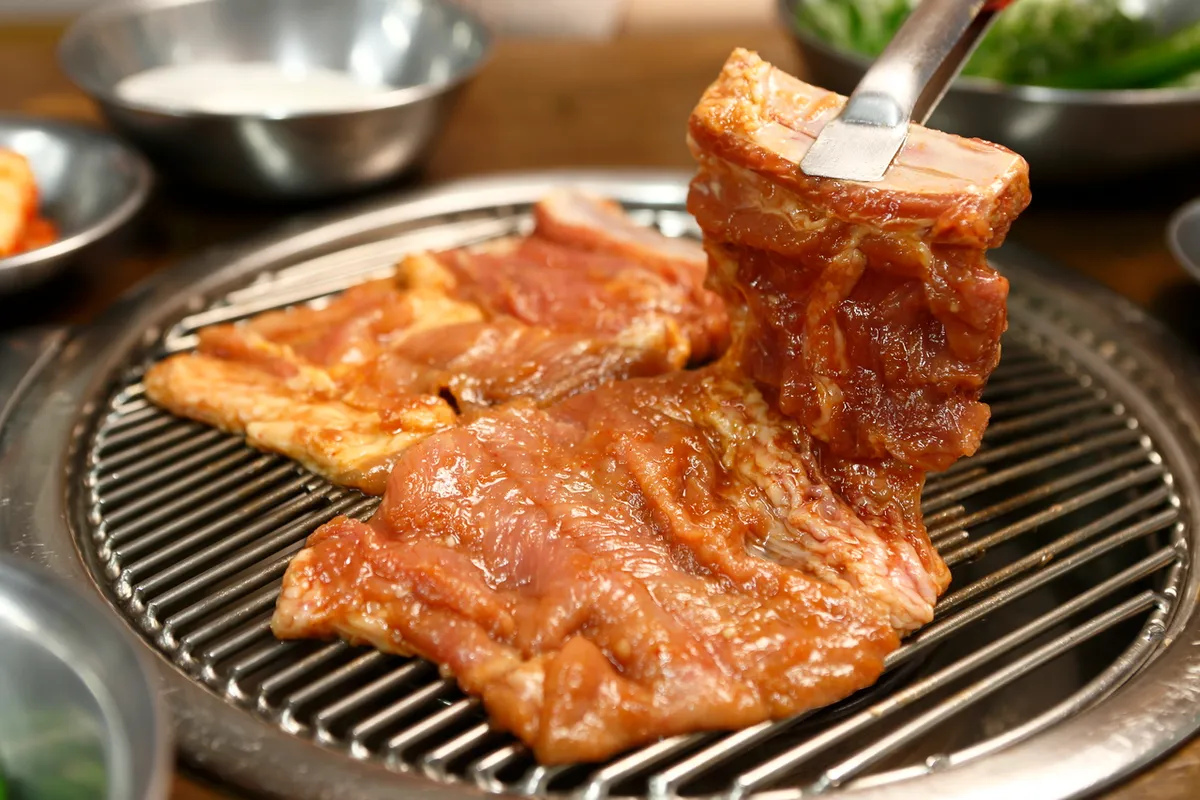
Hero photo: Korea Tourism Organization / Frame Studio, June 2013. Illustrative pork galbi photographed in Mapo, not at a restaurant featured below.
1. Choose Your Seongsu Food Stop
For pork galbi, compare Daeseong Galbi, Suwon Wonjo Galbi and Neulbom Sutbul Galbi. Their addresses matter: Daeseong has moved to Sangwon 1-gil near Ttukseom Station, while Suwon and Neulbom are at separate neighboring addresses on Wangsimni-ro 5-gil.
For a different meal, choose Somunnan Seongsu Gamjatang for pork-bone stew, Jojo Kalguksu for clam noodles, or Grandmother’s Recipe for mushroom-and-chive bibimbap with an optional bulgogi set. These are restaurant choices, not a ranking of the dishes.
2. Three Places for a Pork-Galbi Meal
Daeseong Galbi (대성갈비): Use the Relocated Address
Daeseong Galbi serves pork galbi alongside other grilled meats, including pork neck and pork belly. The practical distinction is its move: the current restaurant is in units 101–103 of Seoul Forest A Tower at 26 Sangwon 1-gil, Seongdong-gu, Seoul, near Ttukseom Station, Line 2, Exit 6.
Use that address rather than the older galbi-alley address. A lunch baekban meal also appears among its menu options, so the lunch format and a pork-galbi order should not be treated as the same meal. Check the menu for the format you intend to order.
Wrapping greens accompany the grilled pork. Seasoned crab is also described among the accompaniments, making a shellfish check relevant even when your main order is meat. Do not assume that every side dish or a particular stew is included with every order.
Suwon Wonjo Galbi (수원원조갈비): A Documented Shared Plate
Despite its name, this restaurant is in Seoul’s Seongsu area, at 12-2 Wangsimni-ro 5-gil, Seongdong-gu, Seoul. For subway access, use Ttukseom Station, Line 2, Exit 8. It is a separate restaurant from Neulbom at number 12.
The September 29, 2025 menu shows a 900 g pork-galbi plate labeled three servings for KRW 36,000, with a 450 g additional order at KRW 18,000. Those are plate prices, not per-person totals. Confirm the current price before ordering; the three-serving label does not establish a rule requiring three diners.
Kimchi stew, soybean-paste stew and cold noodles are separate choices on that menu. Rice is marked as separate from the two stews, so adding a stew does not automatically include a bowl of rice. This distinction is more useful for planning the bill than comparing meat prices without matching their weights.
Neulbom Sutbul Galbi (늘봄숯불갈비): Another Alley-Area Option
Neulbom is at 12 Wangsimni-ro 5-gil, Seongdong-gu, Seoul, with access from Ttukseom Station, Line 2, Exit 8. Its pork menu includes galbi, pork neck and fresh pork belly. It gives you another restaurant choice in the same small area without sending you to Daeseong’s relocated site.
Keep the order centered on the dish you want: dwaeji galbi (돼지갈비) is pork galbi, while samgyeopsal (삼겹살) means pork belly. Its weekday opening is shown as 17:00, so plan this as an evening option rather than assume lunch service.
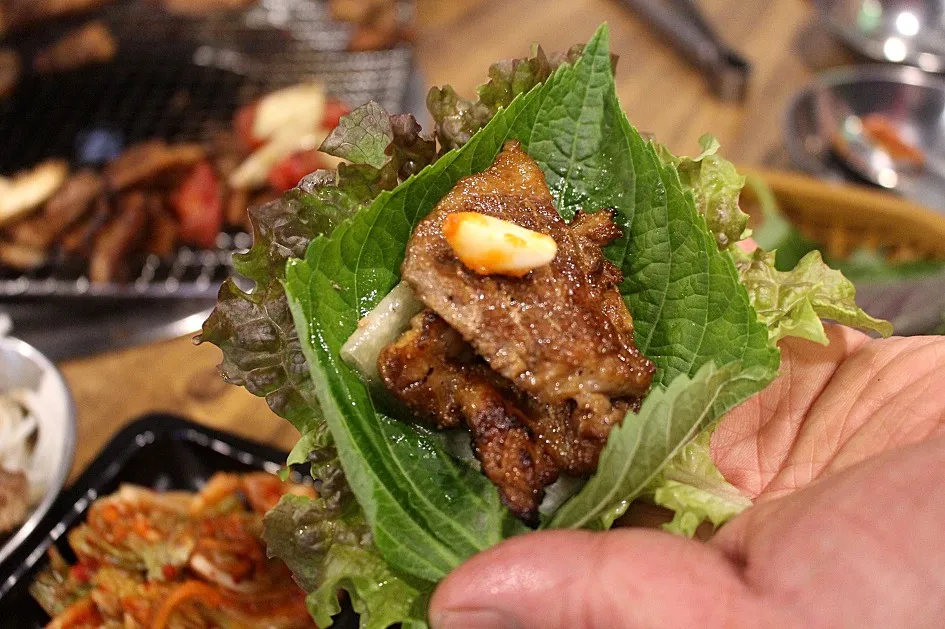
Photo: 대경라이프, via Wikimedia Commons, CC BY-SA 4.0. Resized and converted to WebP; this image adaptation is available under the same license. Illustrative pork-galbi wrap, not a meal from one of the featured restaurants.
3. Three Alternatives: Stew, Noodles or Rice
Somunnan Seongsu Gamjatang (소문난성수감자탕)
At 45 Yeonmujang-gil, Seongdong-gu, Seoul, Somunnan Seongsu Gamjatang is the pork-bone-stew option. Its access point is Seongsu Station, Line 2, Exit 4. The restaurant operates 24 hours, making it a different scheduling option from a restaurant that opens only for lunch or dinner.
There are dedicated solo-dining seats: if you are alone, approach the counter about seating. Groups should arrive together, as the admission guidance requires the whole party to be present. Solo seating does not guarantee an immediate seat or eliminate a wait when those seats are occupied.
Ask about the current individual-meal and shared-pot choices before ordering. The seating arrangement alone does not establish a pot size, a mandatory serving count or whether rice is included. For the dish’s ingredients and eating method, see the separate gamjatang guide.
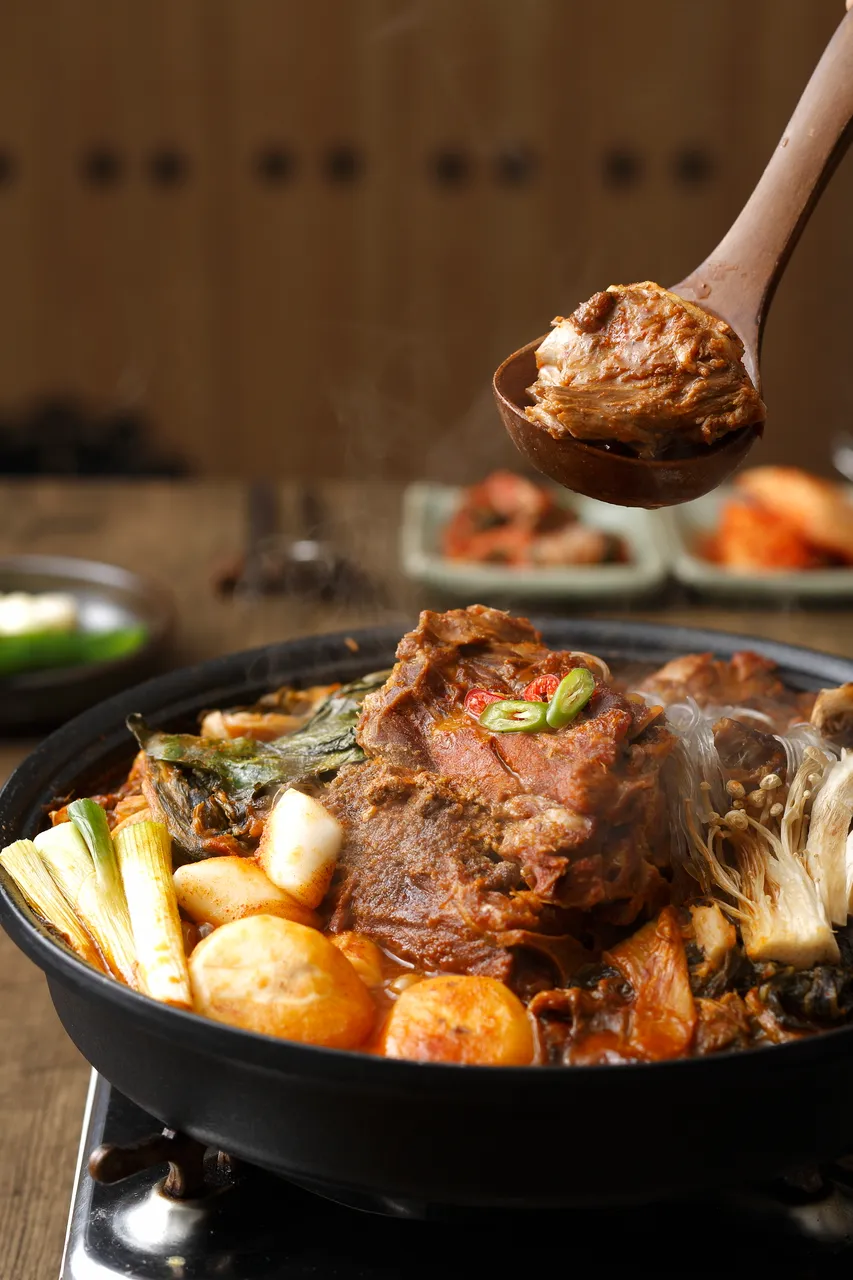
Photo: Korea Tourism Organization / Frame Studio, June 2013. Illustrative gamjatang prepared at FNC Food & Culture Academy, not Somunnan Seongsu Gamjatang’s recipe or serving.
Jojo Kalguksu, Seongsu (조조칼국수 성수점)
Jojo’s Seongsu branch is on the first floor of 55 Seongsuil-ro 8-gil, Seongdong-gu, Seoul, reached from Seongsu Station, Line 2, Exit 2. Order dongjuk kalguksu (동죽칼국수) for noodles cooked with clams and vegetables.
The branch’s September 24, 2026 online menu prices the noodles at KRW 10,000. The optional nakji haemul pajeon (낙지해물파전), at KRW 15,000, contains octopus, squid and shrimp. It is a separate order, not an included side dish.
The noodles and pancake make shellfish and seafood ingredients central to this choice. Confirm any ingredient exclusions with the restaurant rather than treating a light-colored broth as evidence of a seafood-free meal. The menu names identify what to order, but do not establish that every noodle portion arrives in a separate individual bowl.
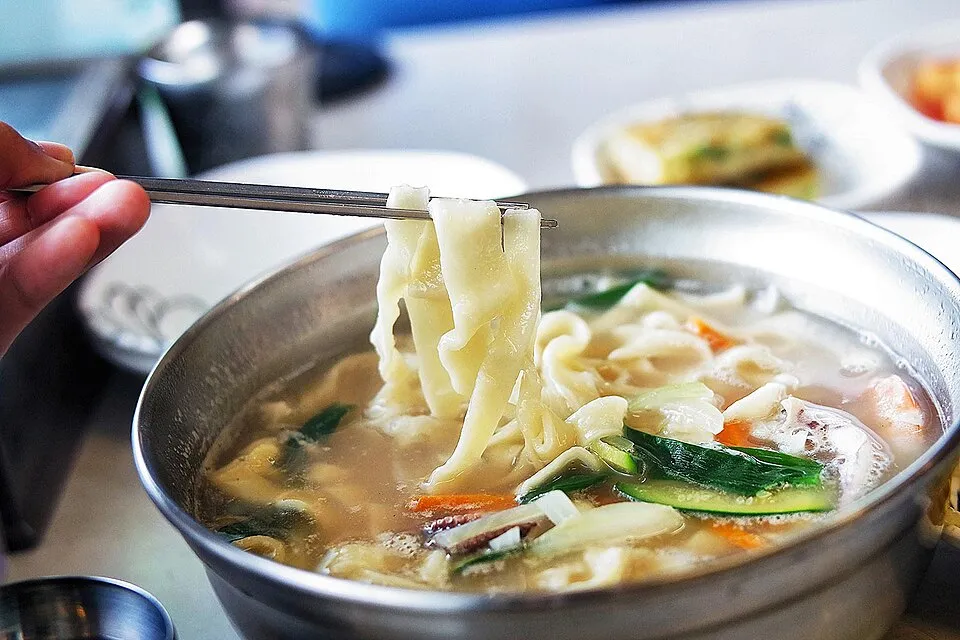
Photo: insatiablemunch, via Wikimedia Commons, CC BY 2.0. Resized and converted to WebP. Illustrative kalguksu with shellfish, not Jojo’s dish or a verified image of dongjuk clams.
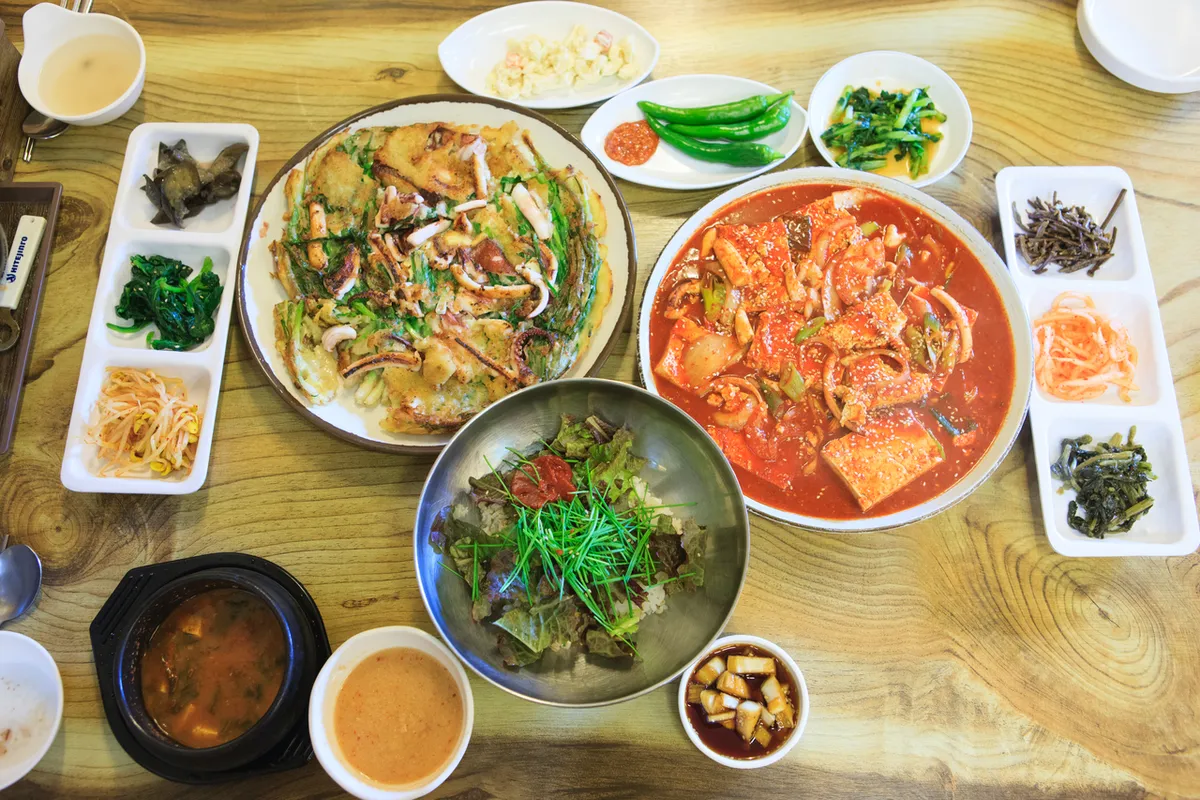
Photo: Korea Tourism Organization / Kim Ji-ho, October 2015. Illustrative seafood-pajeon meal photographed in Daejeon, not Jojo’s pancake or set menu.
Grandmother’s Recipe (할머니의 레시피)
At 44-12 Seoulsup 2-gil, Seongdong-gu, Seoul, Grandmother’s Recipe offers a rice-based alternative. Use Seoul Forest Station, Suin–Bundang Line, Exit 5 for access. The menu distinguishes mushroom-and-chive bibimbap from a bibimbap-and-bulgogi set.
Beoseot buchu bibimbap (버섯부추비빔밥) is KRW 12,000 on the September 1, 2026 online menu. The mushroom selection names oyster, shiitake and wood-ear mushrooms. The bibimbap bulgogi jeongsik (비빔밥불고기정식), KRW 17,000, pairs that bibimbap with 120 g of basak bulgogi.
The posted ordering notice requests one menu item per person, including children aged three and older. Choose the standalone rice dish or the set accordingly; a mushroom-led menu name does not itself guarantee vegetarian preparation or meat-free side dishes.
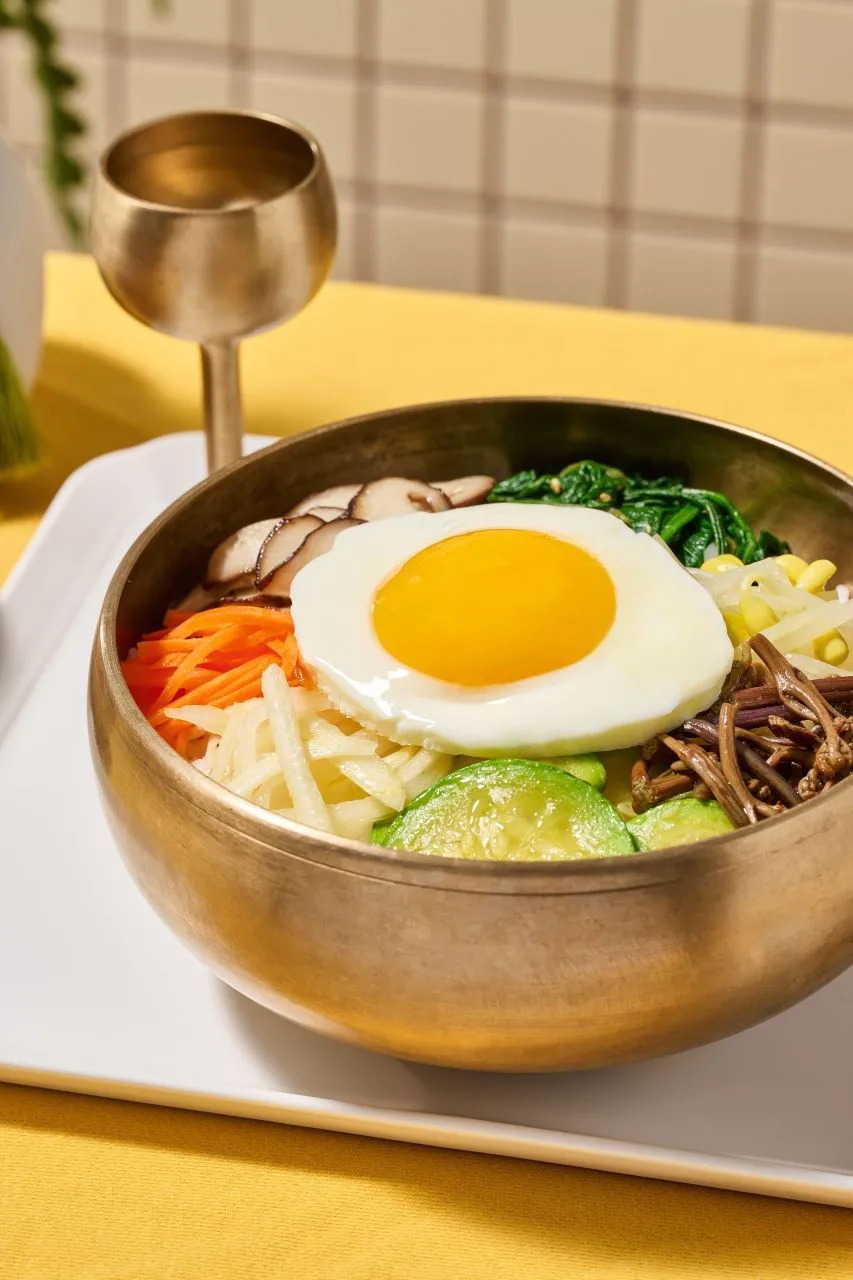
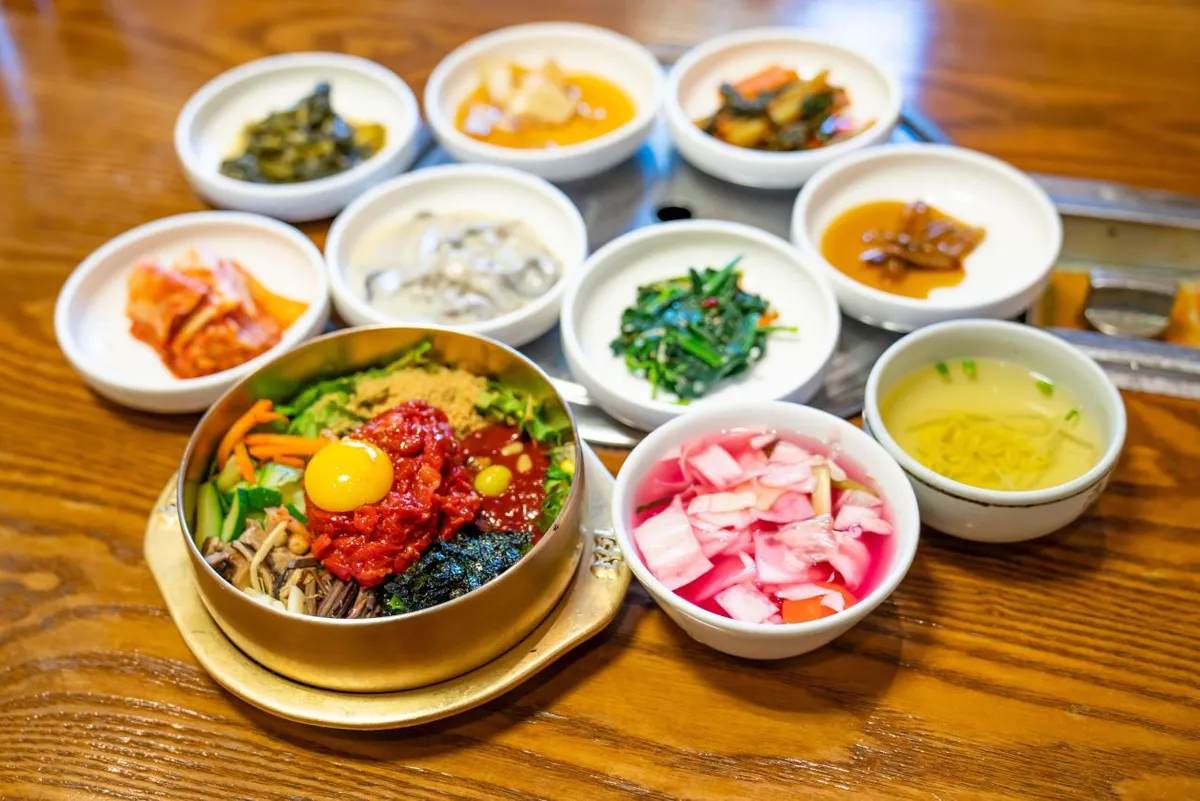
Photo: Korea Tourism Organization / 토라이 리퍼블릭, December 2023. Generic bibimbap illustration, not Grandmother’s Recipe’s mushroom-and-chive dish or bulgogi set.
4. Match the Address to the Meal
Use Ttukseom Station for the three galbi choices, Seongsu Station for Somunnan and Jojo, and Seoul Forest Station for Grandmother’s Recipe. Ttukseom and Seongsu are on Line 2; Seoul Forest is on the Suin–Bundang Line. Do not confuse Ttukseom Station with Jayang (Ttukseom Hangang Park) Station on Line 7.
Check the restaurant’s own location pin before setting out, particularly for Daeseong’s move. Full opening schedules, breaks and last orders should be checked for the day of your visit. The prices above preserve their stated menu dates and units; they are not a guaranteed future bill.
Frequently Asked Questions
Where can I eat pork galbi in Seongsu?
Daeseong Galbi, Suwon Wonjo Galbi and Neulbom Sutbul Galbi are three options. Daeseong is now at 26 Sangwon 1-gil. Suwon and Neulbom have separate addresses at 12-2 and 12 Wangsimni-ro 5-gil.
Can I eat alone at Somunnan Seongsu Gamjatang?
Yes, dedicated solo-dining seats are documented. Approach the counter about seating and ask about the current individual-meal options. This does not guarantee an immediate seat.
What can I order in Seongsu without a barbecue grill?
Choose pork-bone stew at Somunnan, clam kalguksu at Jojo, or mushroom-and-chive bibimbap at Grandmother’s Recipe. Jojo also serves a separately ordered seafood pancake. Grandmother’s Recipe offers a bibimbap-and-bulgogi set.
Is Daeseong Galbi still in the old galbi alley?
No. Use its relocated address at Seoul Forest A Tower, units 101–103, 26 Sangwon 1-gil. Ttukseom Station Exit 6 is the access point for the current restaurant, not an older alley address.
Complete Your Korea Trip with TripKorea
For a stay around these meal stops, explore hotels in Seongsu. Choose your Seongsu food stop by the meal you want, then check the specific restaurant’s address and ordering format.
Sources & References
Restaurant locations and menus: Daeseong current location and operator description; Korea Tourism Organization: Daeseong.
Suwon menu, updated September 29, 2025 and location; Neulbom menu and venue details, with its weekday schedule cross-checked against a secondary directory (not a booking confirmation).
Visit Seoul: Somunnan seating, hours and access; Jojo Seongsu menu, updated September 24, 2026 and branch location and access.
Grandmother’s Recipe menu, updated September 1, 2026, location and access, and linked menu photograph and ordering notice. Accessing an online menu on the verification date does not make an older menu newly updated.
Context and transport: Seoul municipal galbi-alley feature, October 2022, used for historical context rather than current restaurant counts; Ministry of Land, Infrastructure and Transport TAGO station-name records, with access exits from the linked venue and tourism pages. Romanized restaurant names and address renderings are editorial transliterations.
Photos: Korea Tourism Organization and the individually credited Wikimedia Commons contributors. All six photographs illustrate dishes rather than the featured restaurants; they do not establish a restaurant’s current portion, recipe or side dishes.
Last verified: November 12, 2026. Restaurant menus, prices, opening hours and ordering policies may change. Confirm directly before visiting.