Gamjatang (감자탕) is a spicy Korean stew made with pork backbone and potatoes. Its English menu name is often written as “pork back-bone stew,” which tells diners more about the main ingredient than the Korean name alone.
This guide explains what arrives at the table, how to handle the bones, what to confirm before ordering, and how to read similar-looking menu names without assuming that every restaurant serves the same version.
1. What Is Gamjatang?
Pork backbone forms the center of gamjatang. The meat remains attached to large pieces of bone, while potatoes cook in the spicy broth.
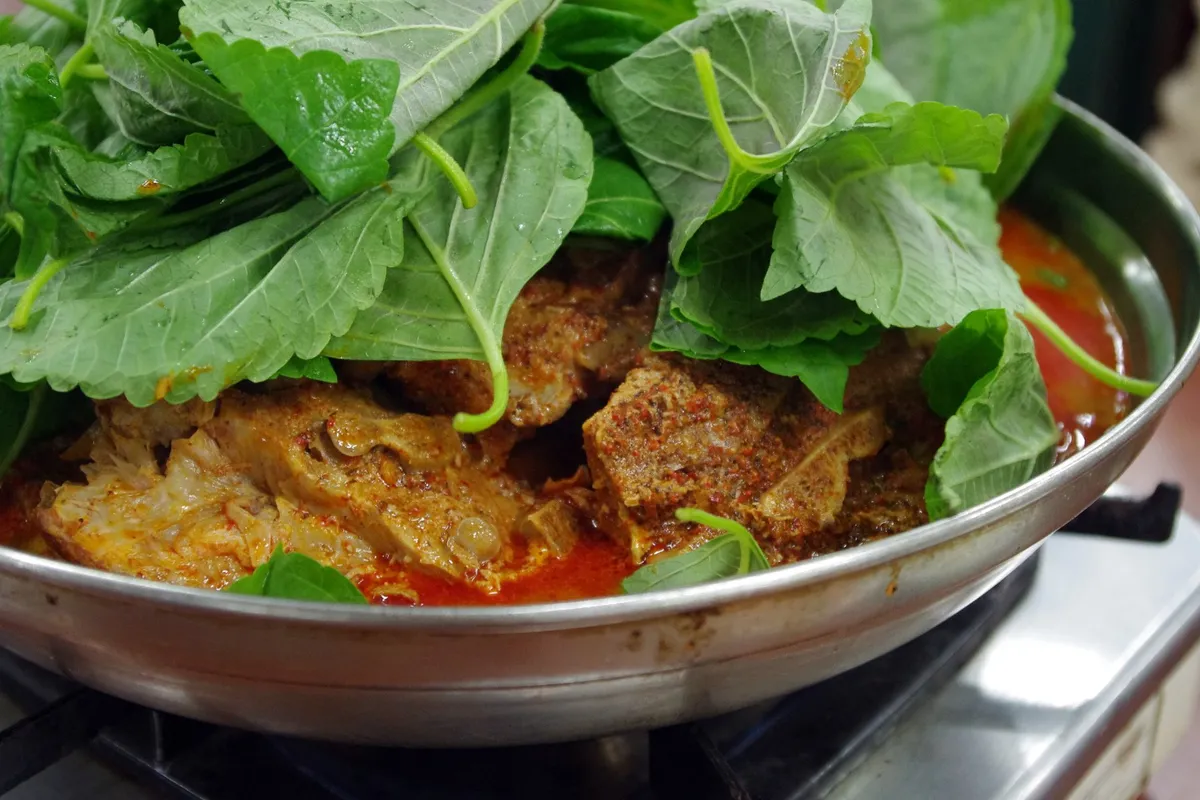
Photo: Matt @ PEK via Wikimedia Commons · CC BY-SA 2.0
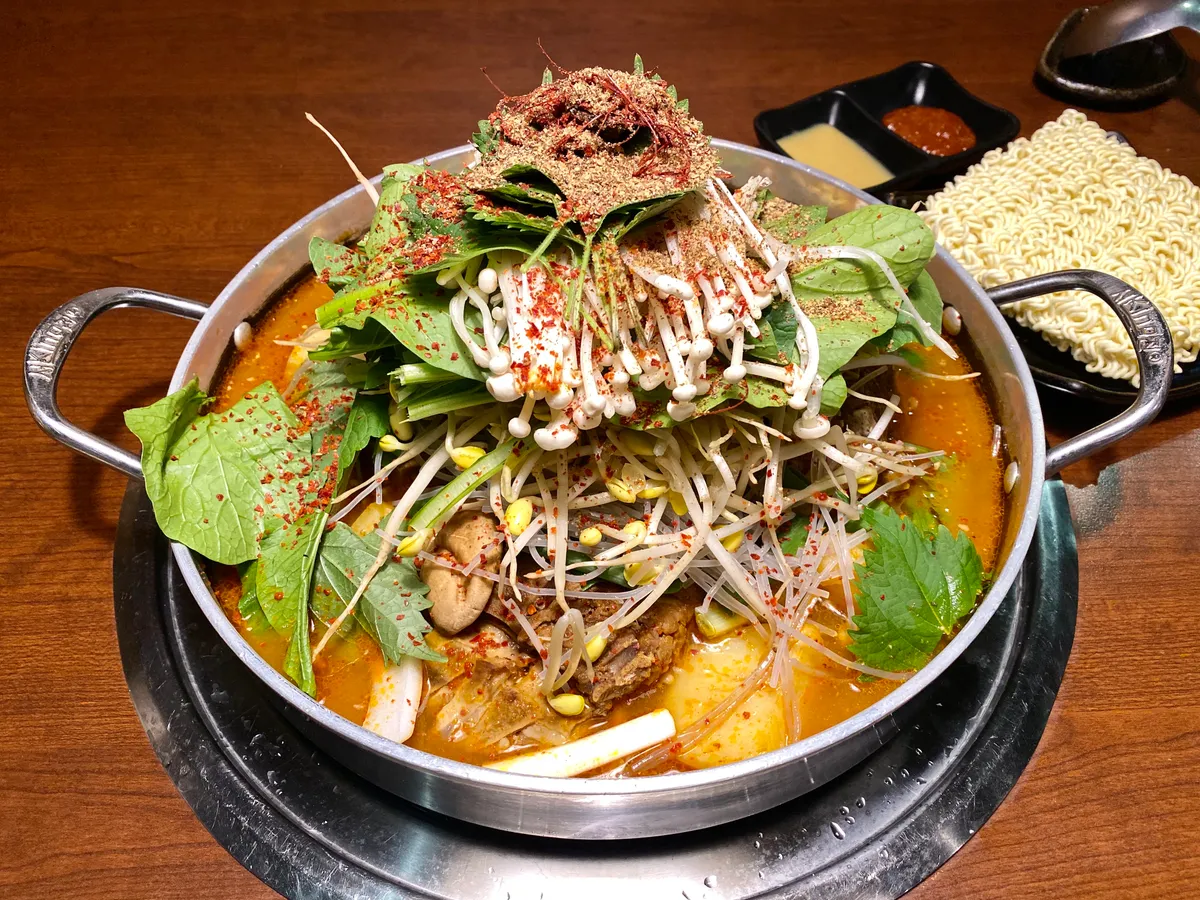
Gamjatang can arrive in a wide black pan with large bones, whole or halved potatoes, leafy greens, mushrooms, and a red-orange broth. It can also be served in a smaller black pot beside rice and side dishes.
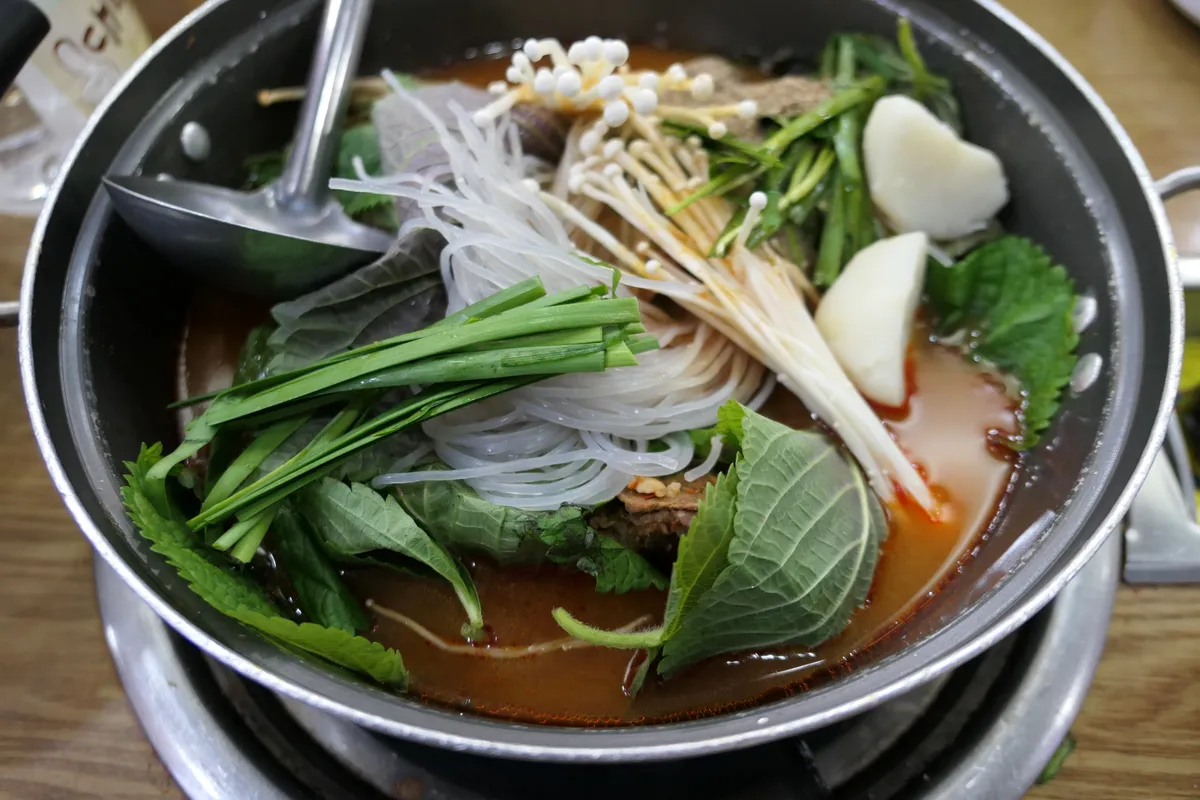
Photo: bryan... via Wikimedia Commons · CC BY-SA 2.0
This combination shows why gamjatang should not be understood as a plain potato soup. Potatoes are visible, but the pork backbone is the defining part of the dish and the basis of its English menu translation.
The exact vegetables, mushrooms, garnishes, and serving vessel can differ. Use the restaurant’s menu description for the version in front of you rather than treating one photograph as a universal recipe.
2. What Arrives at the Table
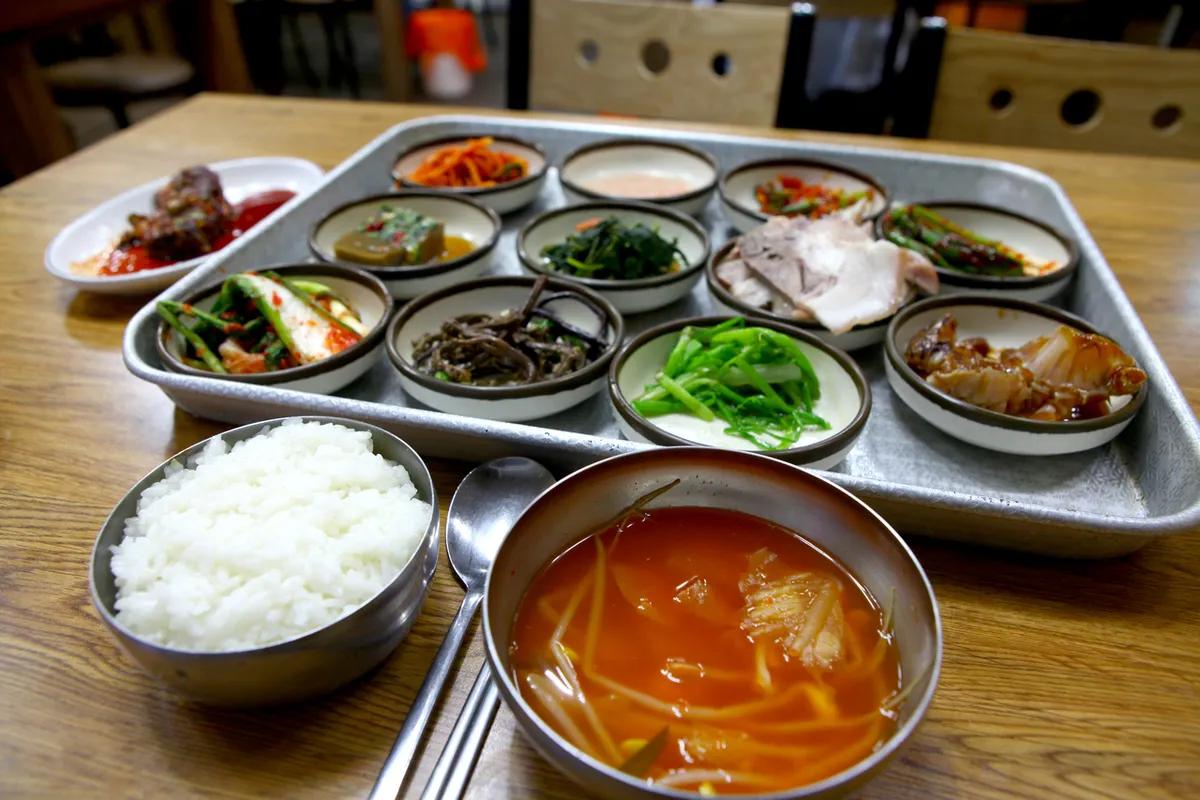
The first thing to notice is the serving format. A wide pan may be placed in the center of the table, while a smaller pot may be arranged as an individual meal with rice and banchan (반찬), the side dishes served with Korean food.
Do not assume that the portion is for one person simply because only one menu price is shown. Check whether the price applies to one bowl, one shared pan, or a stated number of diners.
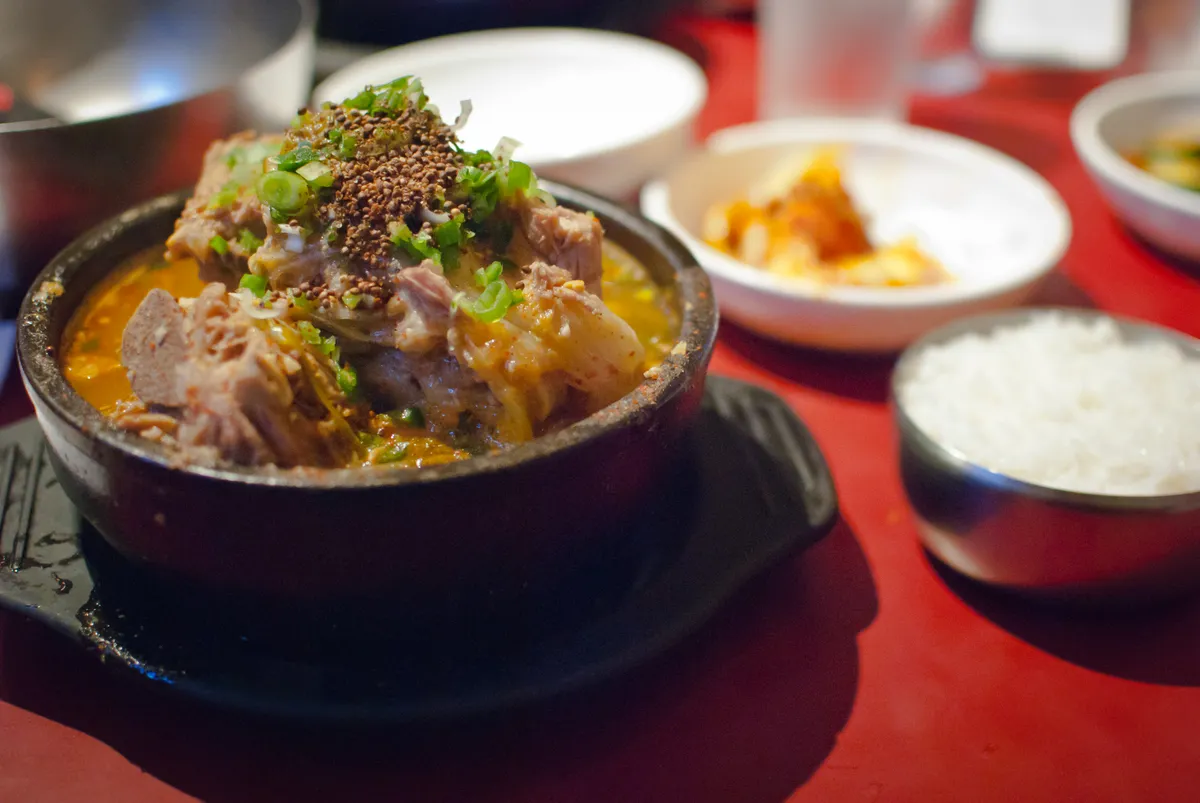
Photo: SteFou! via Wikimedia Commons · CC BY 2.0
A finished bowl can contain pieces that look similar under the broth. Identify the potatoes and vegetables first, then move the larger bone pieces carefully. The meat is attached around the bone rather than cut into boneless slices.
If the pot is placed over a burner, follow the restaurant’s instructions before serving it. Some dishes may arrive ready to eat, while others may need additional heating at the table. The menu or staff should be the guide for that specific order.
3. How to Eat Gamjatang
Begin by transferring one manageable piece of pork backbone to a personal plate or bowl if serving utensils are provided. Remove the meat in small portions with the available chopsticks, spoon, or other utensils rather than lifting a large hot piece over the table.
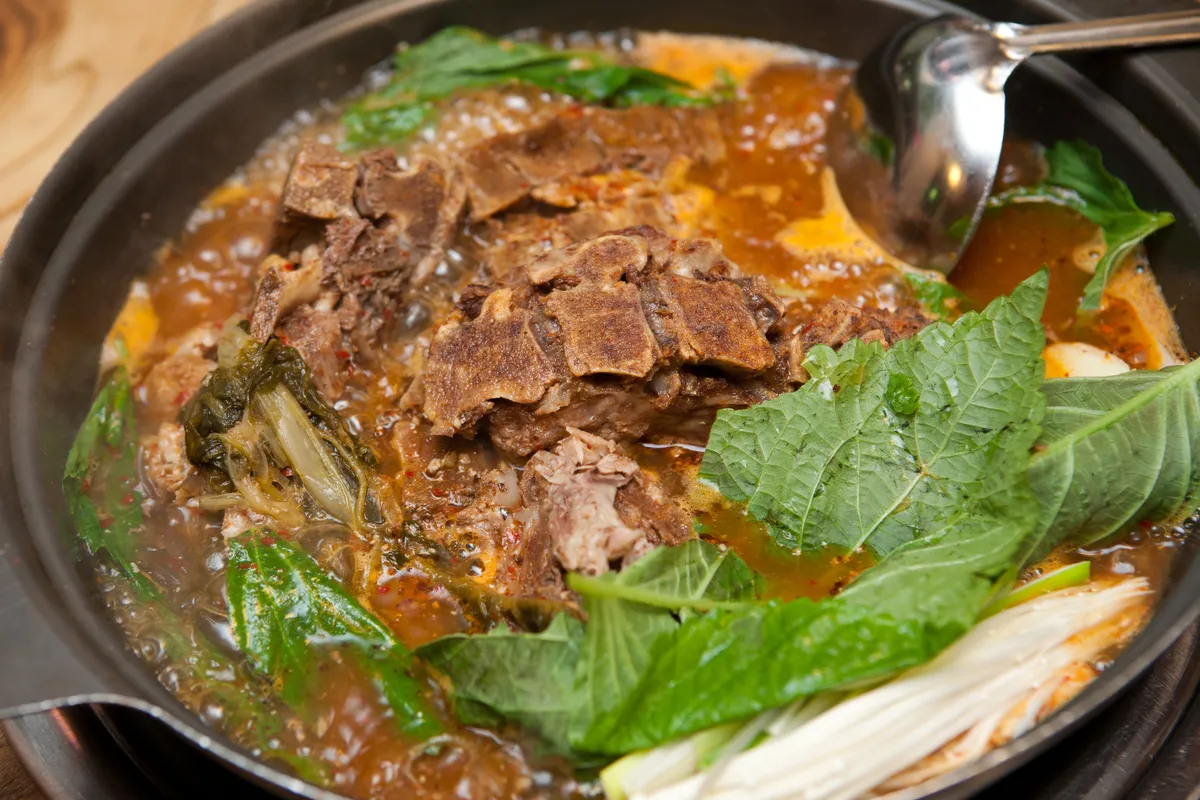
Photo: National Institute of Korean Language via Wikimedia Commons · CC BY-SA 2.0 KR
Bone fragments are not edible. Keep finished bones separate from the food, using an empty dish when the restaurant supplies one. If no plate is provided, ask the staff where the bones should be placed.
The broth, potatoes, vegetables, and pork can be eaten with rice. There is no need to mix the entire rice bowl into the stew unless that is how you prefer to eat it or the restaurant recommends it.
Large potato pieces retain heat, and the pot itself may remain hot after it reaches the table. Break a potato into smaller pieces before eating and avoid touching the serving vessel directly.
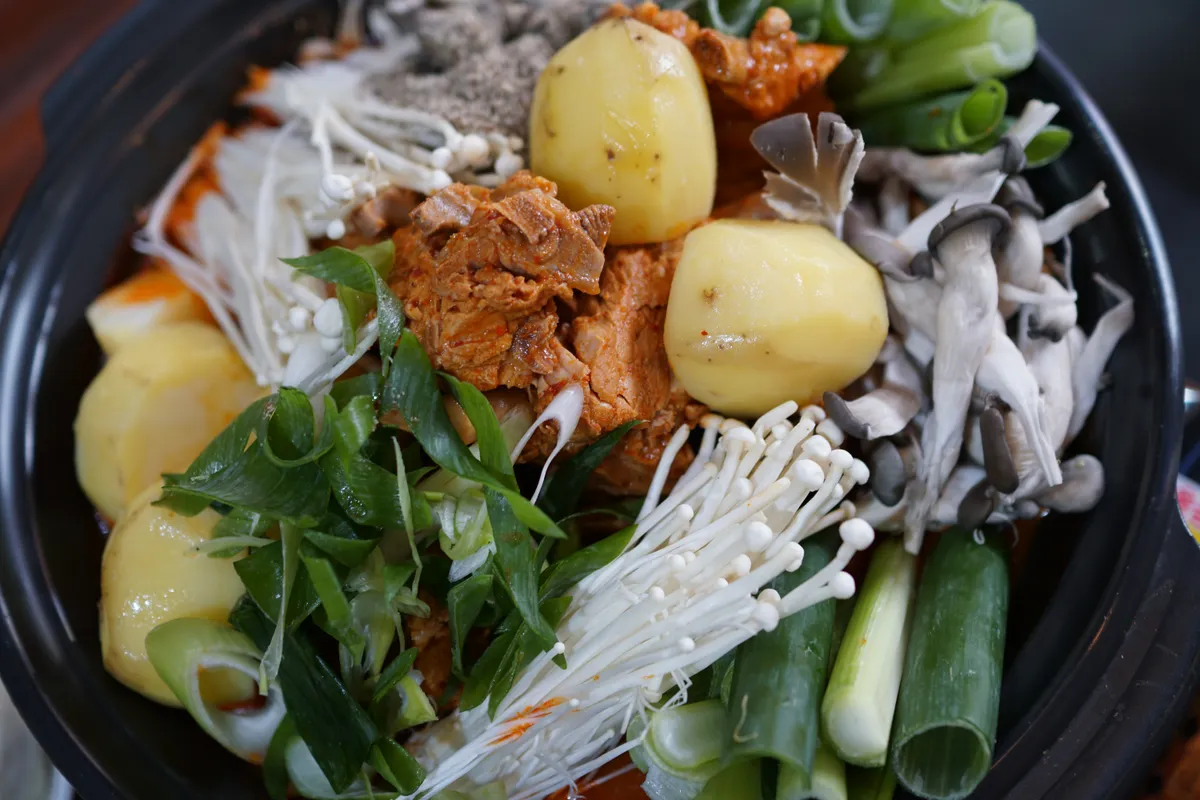
Photo: Lee Moon-hee via Wikimedia Commons · CC0
Additional noodles, rice, or fried rice should never be assumed to be included. Ask whether they are available, whether they must be ordered separately, and at what stage the restaurant prepares them.
4. Reading the Menu and Ordering
Look for “Gamjatang,” “Pork Back-bone Stew,” or the Korean spelling 감자탕. “Pork Back-bone Stew” is the English menu wording to recognize when the romanized name does not appear.
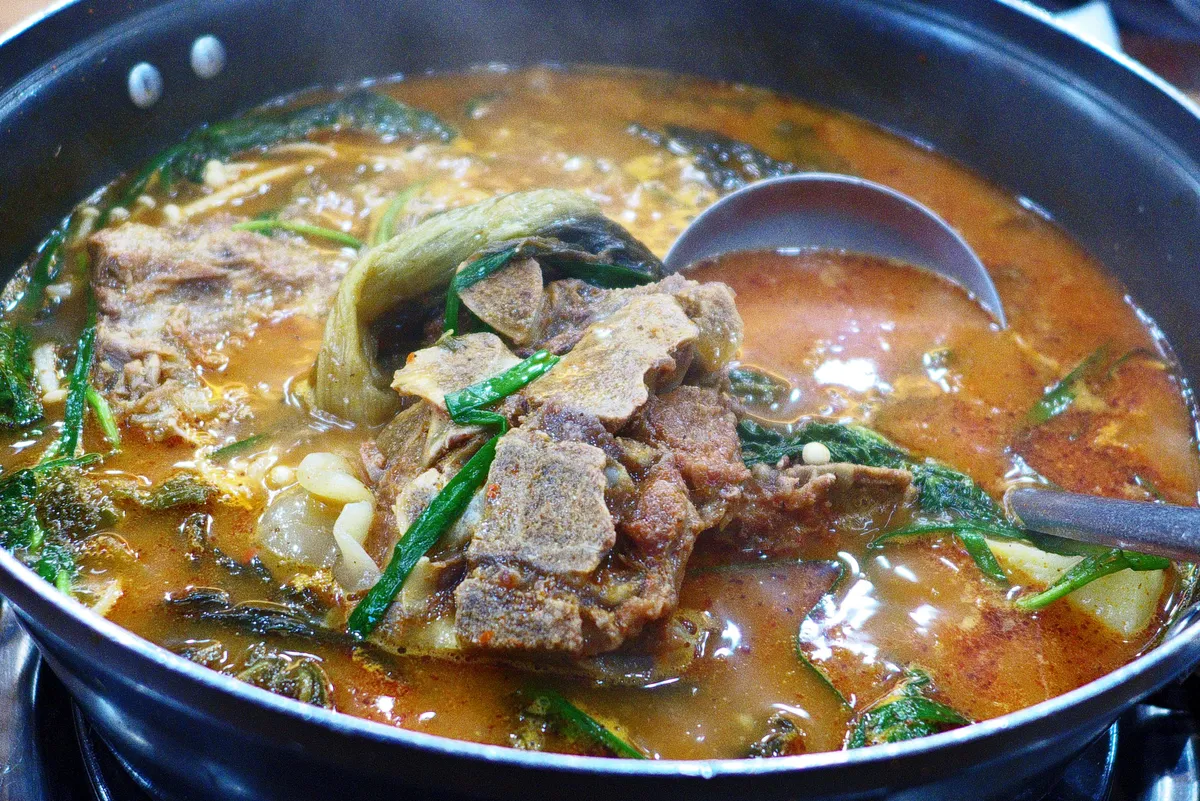
Photo: travel oriented via Wikimedia Commons · CC BY-SA 2.0
Restaurant names can combine 감자탕 with 해장국 (haejangguk). A combined sign does not prove that the two menu entries have the same ingredients, portion, or serving format. Read the individual menu descriptions and ask which item is served as a bowl and which is served as a larger pot.
- Serving size: Ask how many diners the listed pot is intended to serve.
- Spice: Gamjatang is described as a spicy stew, so confirm whether the restaurant can adjust the seasoning before ordering.
- Included items: Check whether rice, noodles, or other additions are part of the price.
- Cooking stage: Ask whether the pot is ready to eat or should continue heating.
- Ingredients: Confirm every dietary restriction directly because broth, seasoning, vegetables, and toppings vary.
A useful Korean request is “Igeo gamjatang majayo?” (이거 감자탕 맞아요?), meaning “Is this gamjatang?” For portion size, ask “Myeot myeong bun-ieyo?” (몇 명 분이에요?), meaning “How many people is this for?”
5. Dietary and Practical Checks
Gamjatang is a pork dish, not a vegetarian stew. Travelers who avoid pork should choose another menu item rather than relying on the potatoes and vegetables visible in the pot.
The stew is spicy, but appearance alone cannot establish the exact heat level. Ask before ordering if chili heat is a concern.
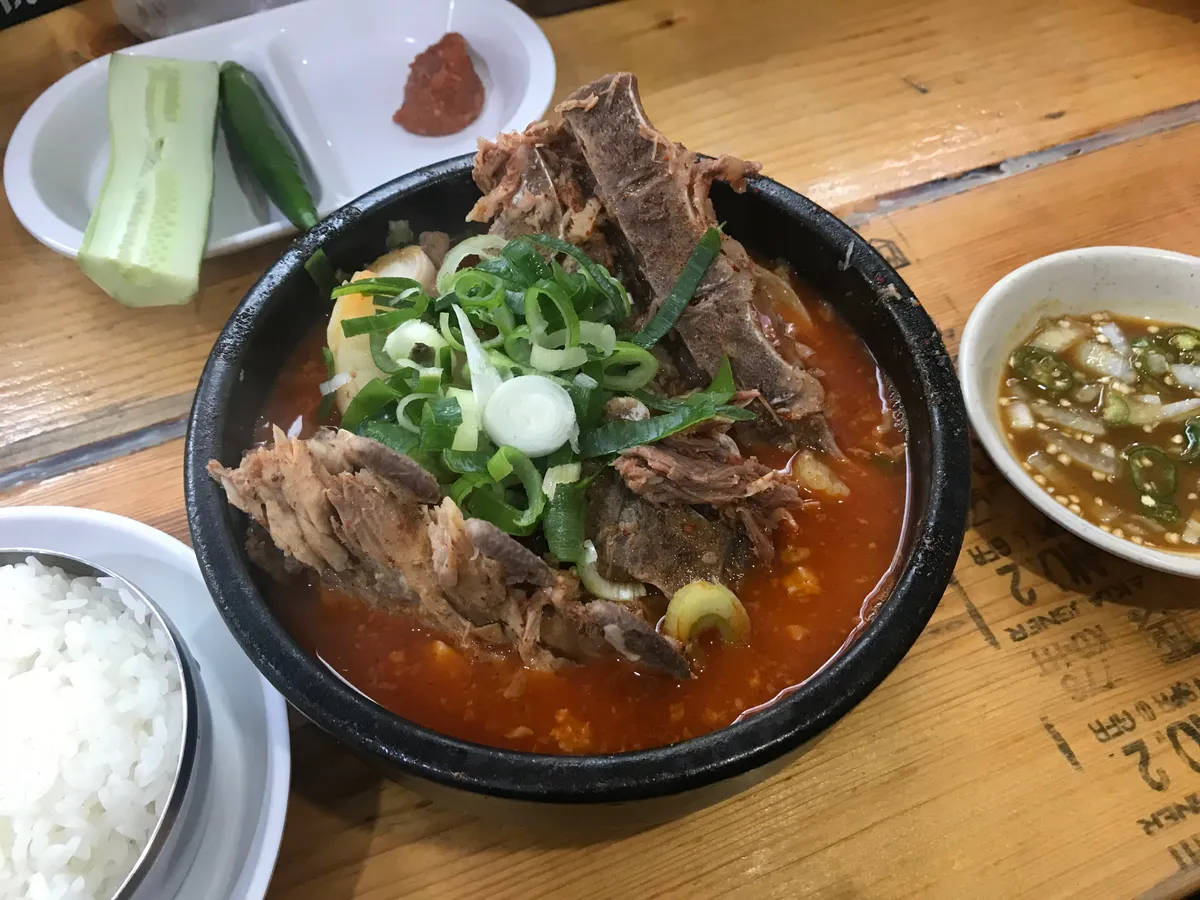
Photo: lazy fri13th via Wikimedia Commons · CC BY 2.0
Allergy information cannot be determined from the name gamjatang. Seasoning mixtures, soup bases, garnishes, and side dishes may differ by restaurant. State the specific ingredient you must avoid and request confirmation from the kitchen.
For takeout or delivery, check whether the stew is fully cooked, whether heating instructions are included, and whether rice or side dishes come with the order. Do not transfer assumptions from a dine-in menu to a packaged version.
Frequently Asked Questions
What is gamjatang made from?
Gamjatang is a spicy stew made with pork backbone and potatoes. Some versions include leafy greens and mushrooms, but toppings and vegetables can vary by restaurant.
Is gamjatang a potato soup?
Potatoes are part of the dish, but its representative English menu name is “pork back-bone stew.” The pork bones and attached meat are the central components.
Is gamjatang spicy?
Yes. Gamjatang is a spicy stew. Confirm the restaurant’s seasoning and whether adjustment is possible if you avoid chili heat.
Is gamjatang served for one person?
Serving formats vary between a wide pan and a smaller pot served with rice and side dishes. Check the portion description before ordering.
Can vegetarians eat gamjatang?
No. Gamjatang is centered on pork backbone. Travelers avoiding meat or pork should select another dish and confirm the broth ingredients directly.
Complete Your Korea Food Trip with TripKorea
Gamjatang is easiest to order when you recognize both the Korean name and the English phrase “pork back-bone stew.” Confirm the serving size, heating stage, included rice, and dietary requirements before the pot reaches the table.
Explore Things to Do in Korea to connect a Korean food stop with markets, neighborhood walks, and other activities.
Sources & References
Data Sources:
- Dish and restaurant menu information: Korea Tourism Organization (TourAPI), restaurant records for Donba Dolsot Gamjatang Haejangguk and Manna Gamjatang Mokponamak
- Food photographs and image metadata: Korea Tourism Organization PhotoKorea
- Additional exact-dish photographs: Wikimedia Commons contributors under the licenses credited beneath each image
- Hero photograph: bryan... via Wikimedia Commons · CC BY-SA 2.0
Official Site:
Last verified: September 14, 2026
Restaurant recipes, portions, side dishes, and menus may change. Confirm details directly before ordering.