Tteokgalbi (떡갈비) turns seasoned short-rib meat into patties that can be grilled and served without the bones of whole galbi. This Tteokgalbi guide explains its ingredients, preparation, regional menu names, serving formats, and the details travelers should check before ordering.
The dish may arrive as individual patties, a larger grilled portion, part of a set meal, or a skewer at a market stall. Its shape and presentation can therefore vary even when the menu uses the same Korean name.
What Is Tteokgalbi?
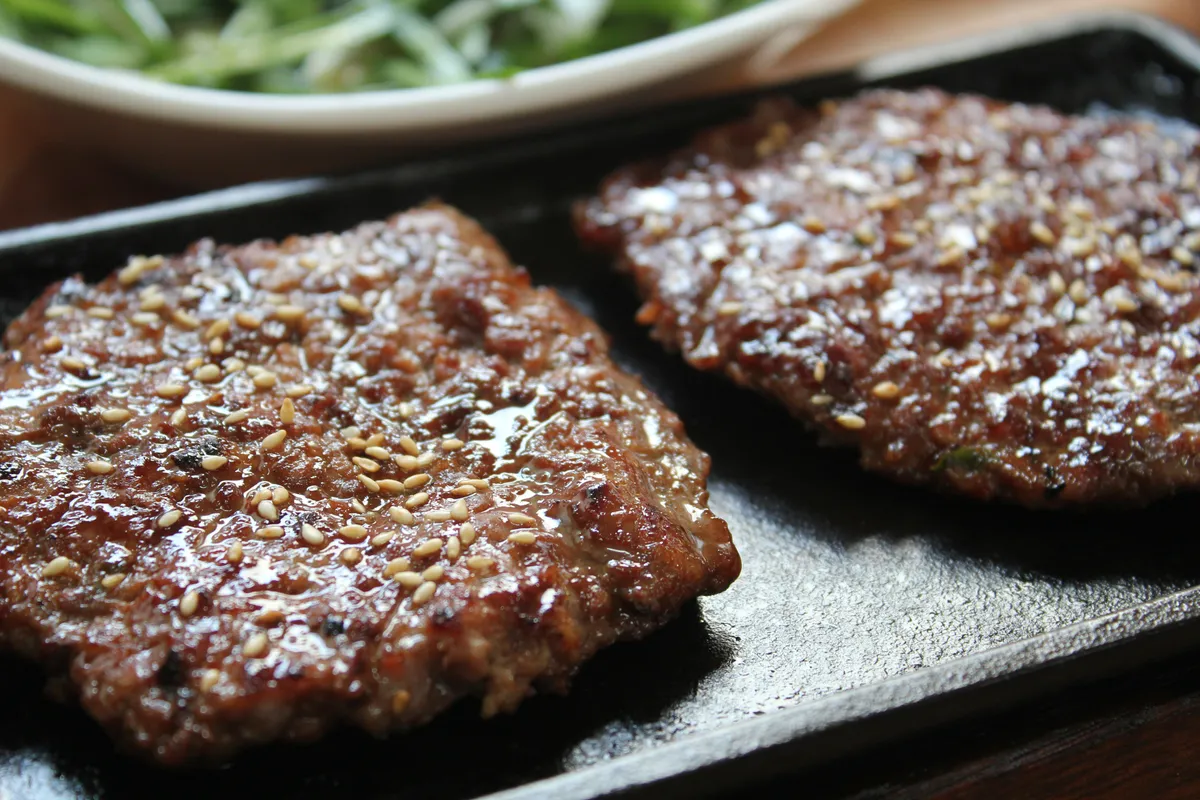
Tteokgalbi is made from beef rib meat that is ground or finely chopped, seasoned, formed into patties, and grilled. The standard seasoning recorded for the dish combines soy sauce, sugar, green onions, garlic, sesame seeds, and sesame oil.
Unlike galbi served as an intact rib cut, tteokgalbi reshapes the meat before cooking. This produces a portion that can be divided with chopsticks or a spoon rather than eaten around a rib bone.
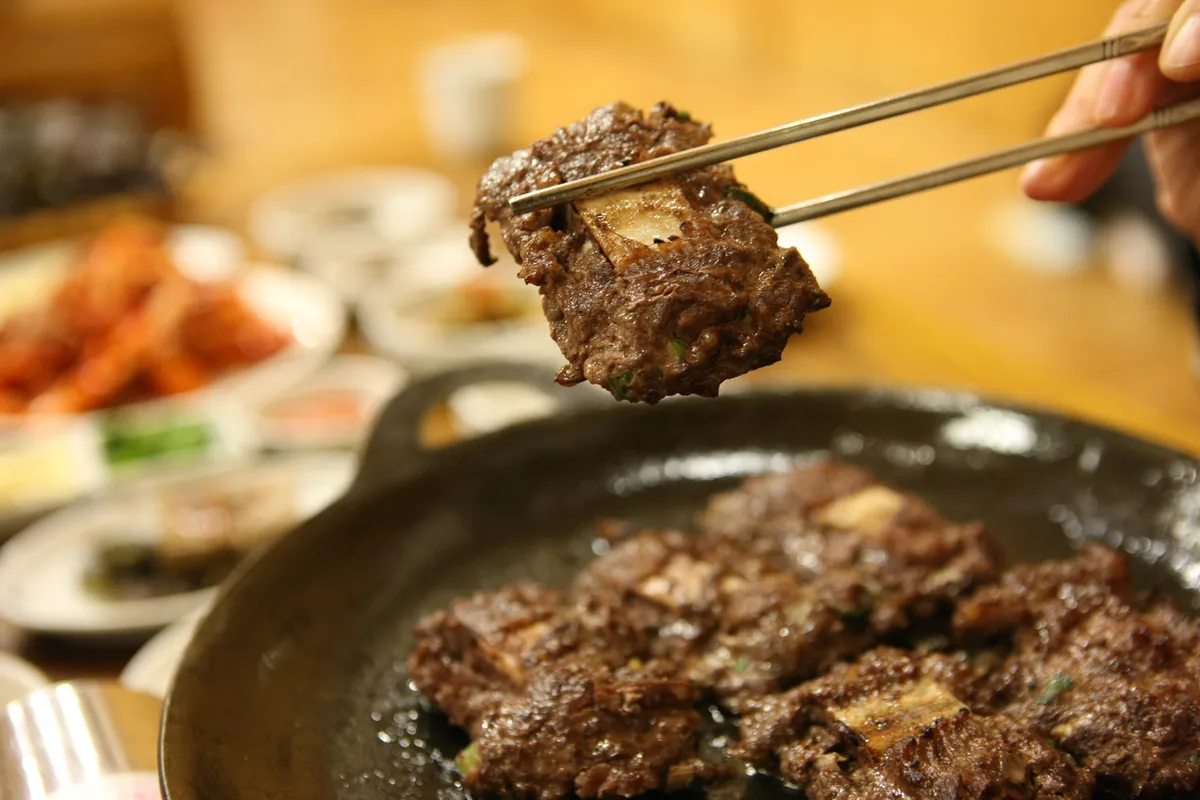
Photo: Korea Tourism Organization
The surface browns during grilling while the inside remains a formed mixture of seasoned meat. Restaurants may present the patties as squares, rectangles, rounds, or irregular portions, so appearance alone is not a reliable way to identify the menu.
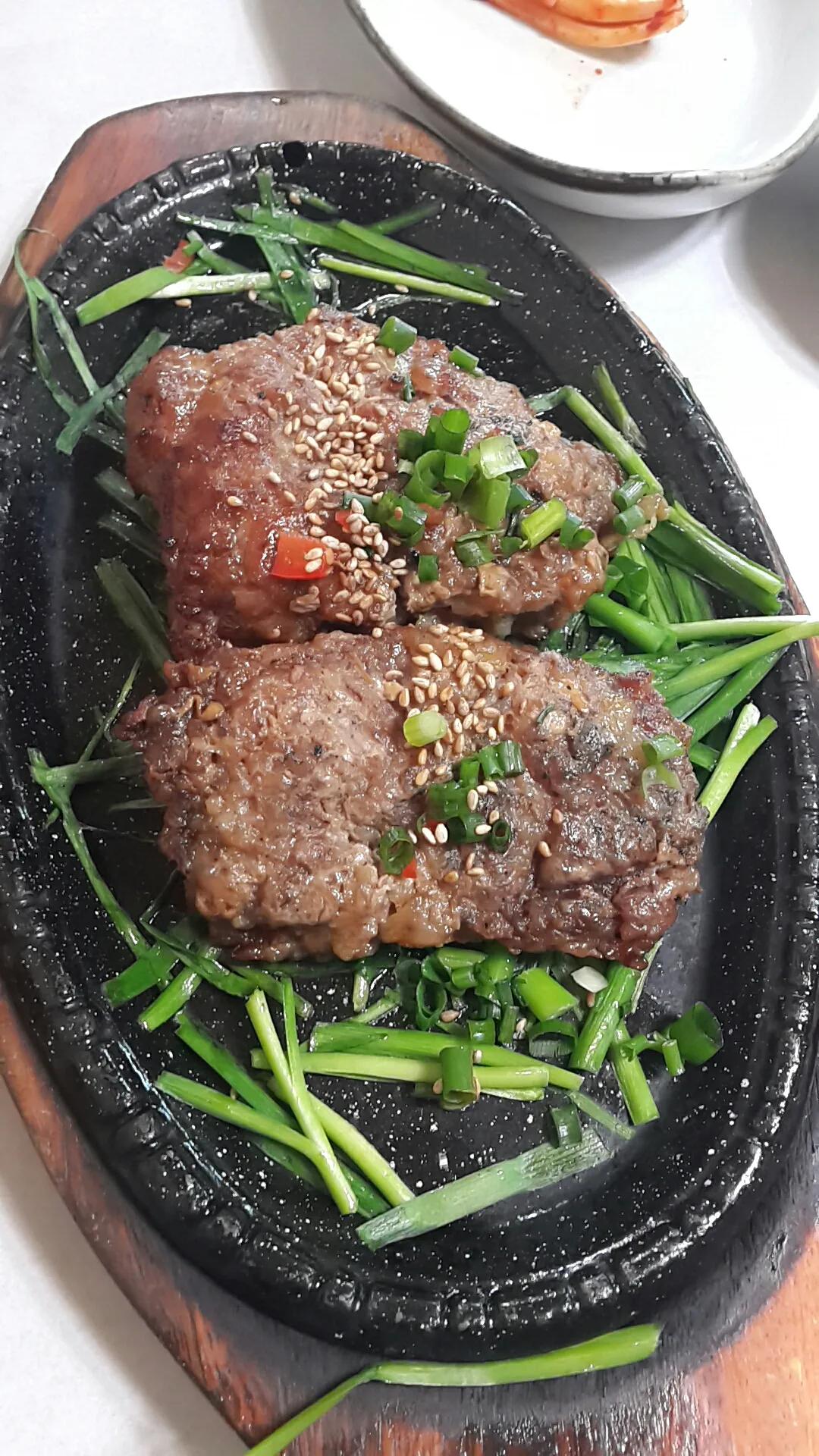
Photo: Mar del Este via Wikimedia Commons, CC BY-SA 4.0
Tteokgalbi Ingredients and Preparation
The meat base distinguishes tteokgalbi from an ordinary mixed-meat hamburger patty. The Korea Foundation recipe begins with beef rib meat, while the seasoning follows a familiar Korean soy-sauce profile.
Soy sauce supplies salt and color, while sugar adds sweetness. Green onion and garlic provide aromatics, and sesame oil and sesame seeds complete the standard seasoning.
The prepared meat is shaped before it reaches the grill or hot plate. Because the seasoning is mixed through the meat rather than applied only to the surface, the finished portion is seasoned throughout.
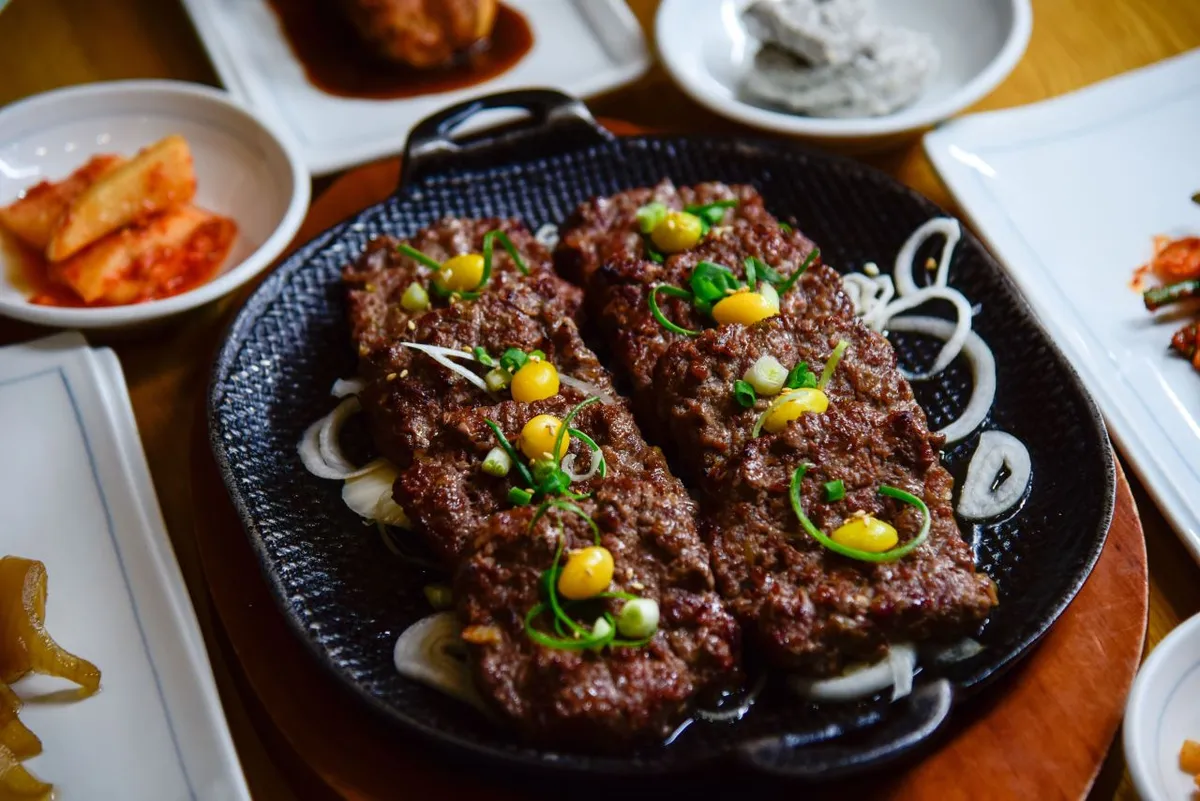
Photo: Korea Tourism Organization
Recipes and meat mixtures can differ by restaurant. Travelers who need to avoid a particular meat should not assume that every patty follows the same composition; ask whether the order is beef, pork, or a mixture before confirming it.
The standard seasoning also contains soy and sesame. Anyone managing an allergy should ask the restaurant directly about soy sauce, sesame oil, sesame seeds, and other ingredients used in the marinade.
Tteokgalbi, Galbi, and Bulgogi
These three names describe different preparations rather than interchangeable dishes. Galbi (갈비) means ribs and commonly refers to rib cuts served on or near the bone. Tteokgalbi uses rib meat that has been removed, chopped or ground, seasoned, and formed again.
Bulgogi (불고기) is based on thin slices of marinated beef. The meat remains in slices instead of being shaped into a patty, and it may be cooked on a grill, hot plate, or shallow pan.
Tteokgalbi: formed patties made from seasoned rib meat
Galbi: rib cuts, often served with the bone or as cut rib meat
Bulgogi: thin slices of marinated beef
For a closer look at sliced marinated beef, see TripKorea’s Bulgogi Guide. The Korean Barbecue Guide covers table grilling and pork belly rather than formed rib patties.
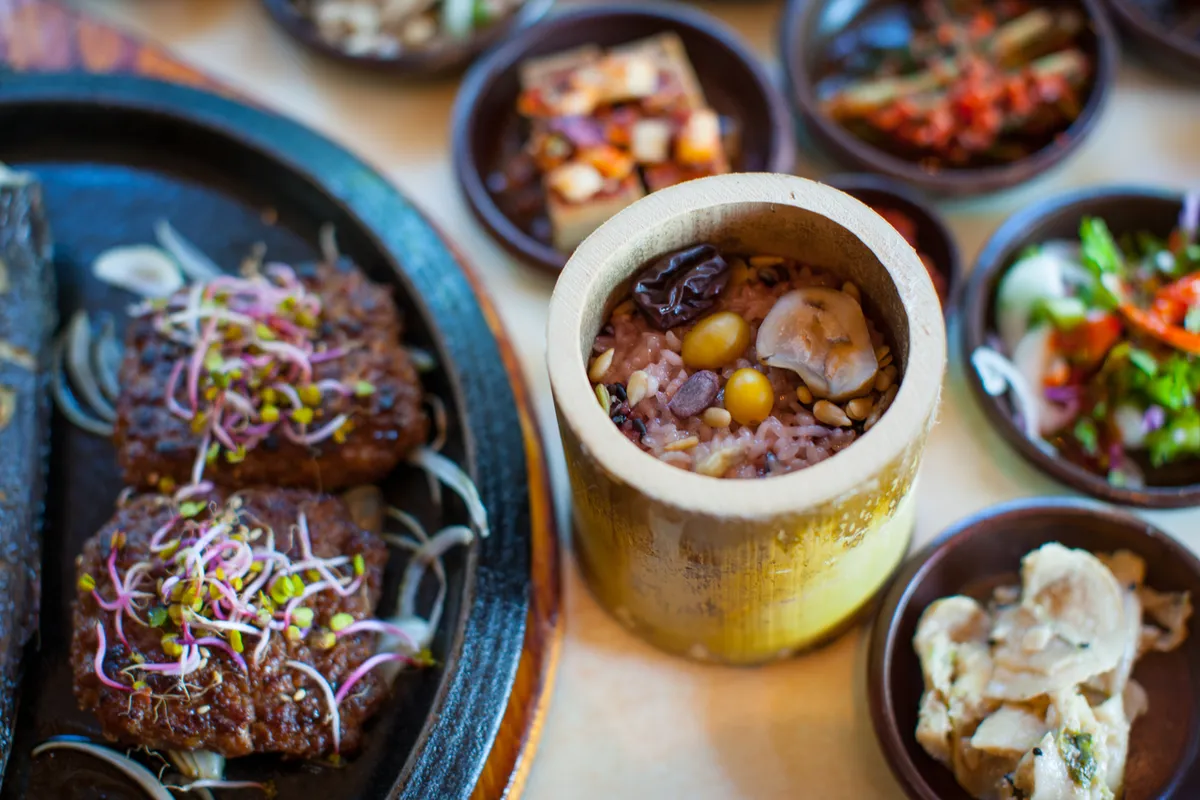
Photo: Korea Tourism Organization
Damyang and Songjeong Tteokgalbi
Damyang (담양) in Jeollanam-do is directly associated with tteokgalbi in Korea Tourism Organization photo records, where the dish appears both by itself and as part of a local set meal. Menus may use the name Damyang tteokgalbi (담양 떡갈비) to identify this regional connection.
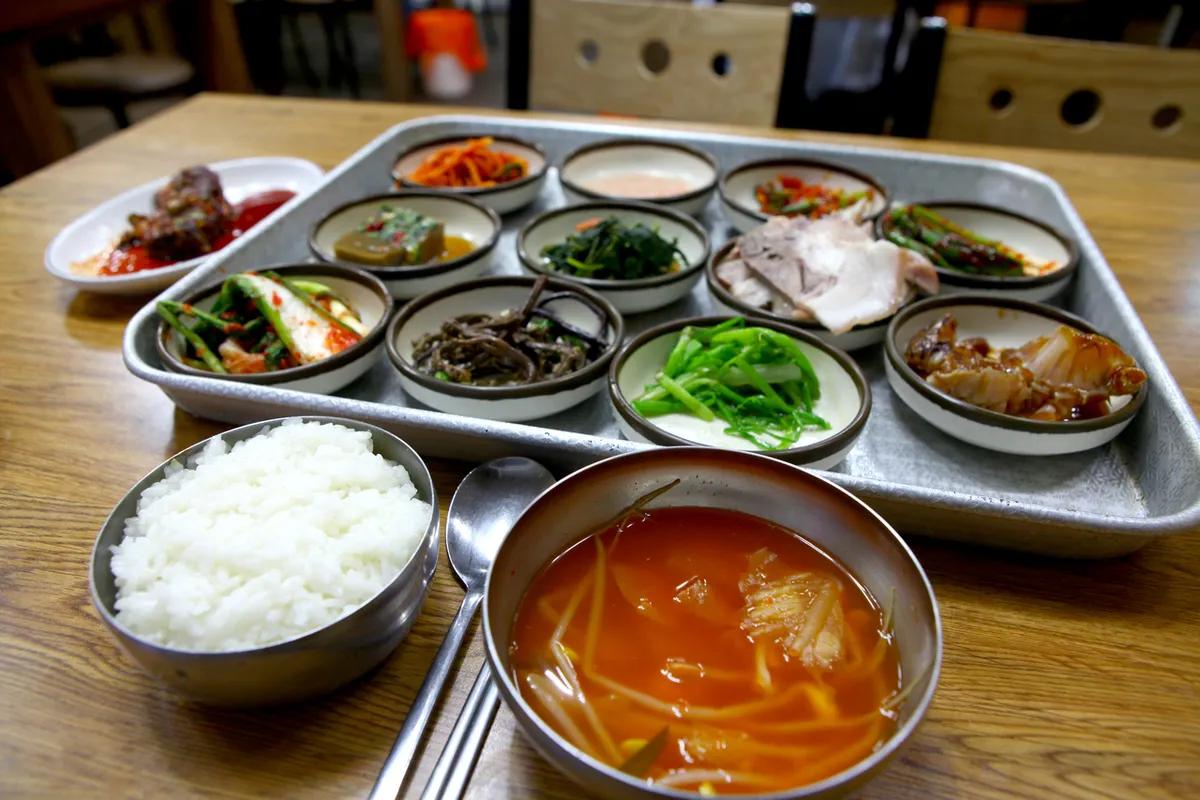
A Damyang set can place grilled patties at the center of a larger table with rice, soup, kimchi, and other side dishes. Some photographed meals pair the meat with daetongbap (대통밥), rice cooked and served in a section of bamboo.
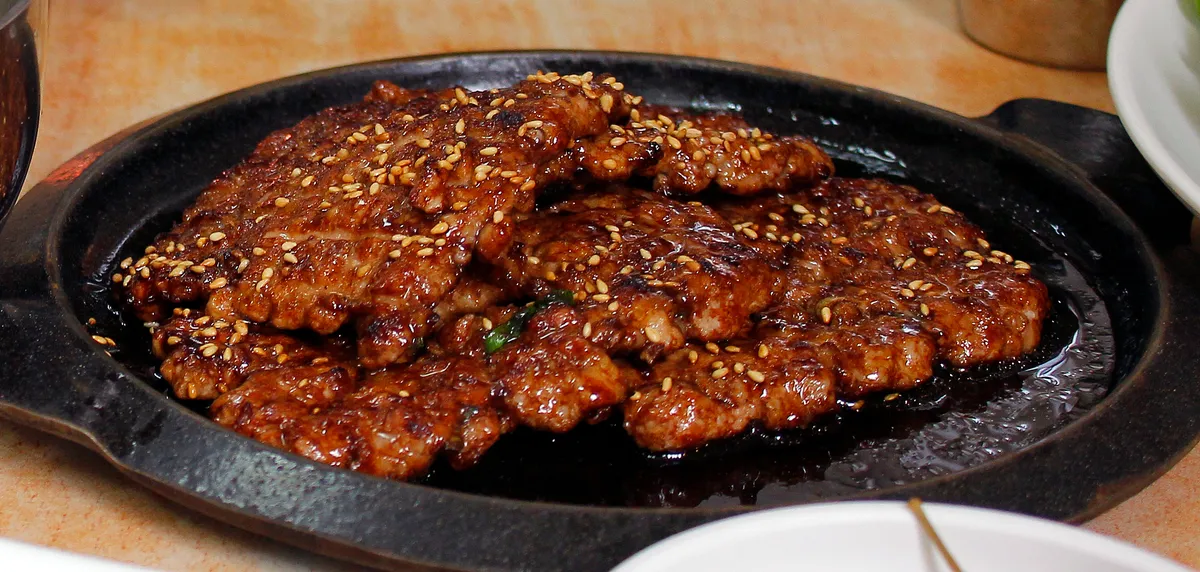
Photo: Minseong Kim via Wikimedia Commons, CC BY-SA 4.0
Songjeong tteokgalbi (송정 떡갈비) is another place-linked menu name, associated with Songjeong in Gwangju. The pictured version is served as smaller, irregular pieces on a hot plate rather than as uniform square patties.
Regional labels do not by themselves confirm the meat blend, seasoning, included side dishes, or portion size. Read the restaurant’s menu description and ask about the current preparation when those details matter.
How to Order and Eat Tteokgalbi
The simplest menu name is tteokgalbi (떡갈비). Tteokgalbi-jeongsik (떡갈비정식) indicates a set meal built around the patties, while tteokgalbi-kkochi (떡갈비꼬치) describes a skewered form.
Before ordering a set meal, check whether the displayed price applies to one person and whether the restaurant has a minimum number of orders. Also confirm whether rice and soup are included, because set composition varies by restaurant.
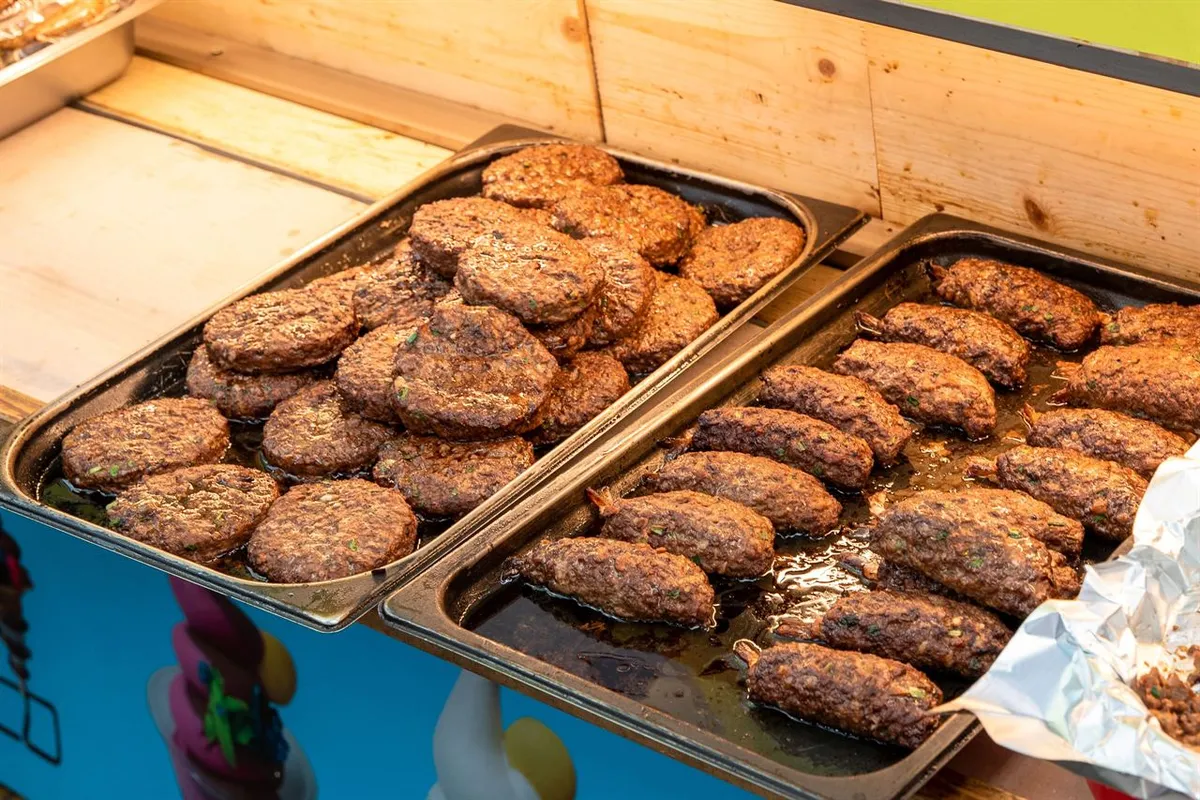
Photo: Korea Tourism Organization
At the table, the patties can be separated into smaller bites and eaten with rice and banchan. If the meat arrives on a heated plate, avoid touching the serving surface and use the utensils provided.
Useful Korean questions include:
Soegogi-yeyo? (소고기예요?) — Is it beef?
Dwaejigogi-ga deureogayo? (돼지고기가 들어가요?) — Does it contain pork?
Bap-i poham-dwaeyo? (밥이 포함돼요?) — Is rice included?
Il-inbun jumun ganeunghaeyo? (1인분 주문 가능해요?) — Can I order one serving?
The market-skewer format should be treated as a separate serving style rather than proof of what a restaurant set will contain. Check the stall’s displayed ingredients and sauce information, particularly when managing soy, sesame, or meat restrictions.
Frequently Asked Questions
What is tteokgalbi made from?
The standard Korea Foundation recipe uses ground beef rib meat seasoned with soy sauce, sugar, green onions, garlic, sesame seeds, and sesame oil. Restaurant recipes may differ, so confirm the meat blend and allergens directly.
Does tteokgalbi contain rice cake?
The standard recipe defines tteokgalbi as a grilled short-rib meat patty and does not include rice cake. The menu item is a meat dish despite the word tteok in its name.
What is the difference between tteokgalbi and bulgogi?
Tteokgalbi is chopped or ground rib meat formed into patties. Bulgogi keeps the beef in thin slices and marinates those slices before cooking.
Is tteokgalbi always beef?
The standard entry is based on beef rib meat, but restaurant mixtures can vary. Ask whether a dish contains beef, pork, or both if the distinction is important.
What does tteokgalbi-jeongsik mean?
It means a tteokgalbi set meal. Rice, soup, kimchi, and additional side dishes may be included, but the exact arrangement and ordering rules depend on the restaurant.
Complete Your Korea Trip with TripKorea
K-Food Activities
Compare food-related tours, market visits, cooking activities, and other Korea experiences listed by TripKorea.
Explore Korea Food Tours and Activities
This Tteokgalbi guide is designed to help travelers distinguish the dish from whole galbi and sliced bulgogi, read common menu names, and confirm ingredients before ordering.
Sources & References
Data Sources:
Korean Food Information: Korea Foundation (한국국제교류재단) Korean Food Database
Regional and Photo Information: Korea Tourism Organization PhotoKorea
Photos: Korea Tourism Organization and Wikimedia Commons
Official Sites:
Last verified: 2026-09-15
Restaurant recipes, set-meal contents, prices, and ordering rules are subject to change. Please confirm directly before ordering.