Gyeongbokgung Palace (경복궁) was built in 1395 as the official palace of the Joseon dynasty and remains the largest of Seoul's Five Grand Palaces. This guide covers the main halls, opening hours, admission, subway access, museum stops, and practical details visitors should check before entering the palace grounds.
Why Gyeongbokgung Palace Matters
Gyeongbokgung was established by Yi Seong-gye, later King Taejo, after the founding of the Joseon dynasty. Its name is commonly translated as the palace greatly blessed by heaven, and
its location north of central Seoul gave it the familiar description of the Northern Palace. The palace stood at the center of royal government, ceremony, and court life, and many Joseon kings were crowned here.
The site also carries the disruptions of Korean history. Palace buildings were destroyed by fire during the Imjin War of 1592-1598 and were later restored under Heungseondaewongun during the reign of King Gojong. Gyeongbokgung eventually lost its function as a royal palace after the assassination of Empress Myeongseong and the decline of the Joseon dynasty.
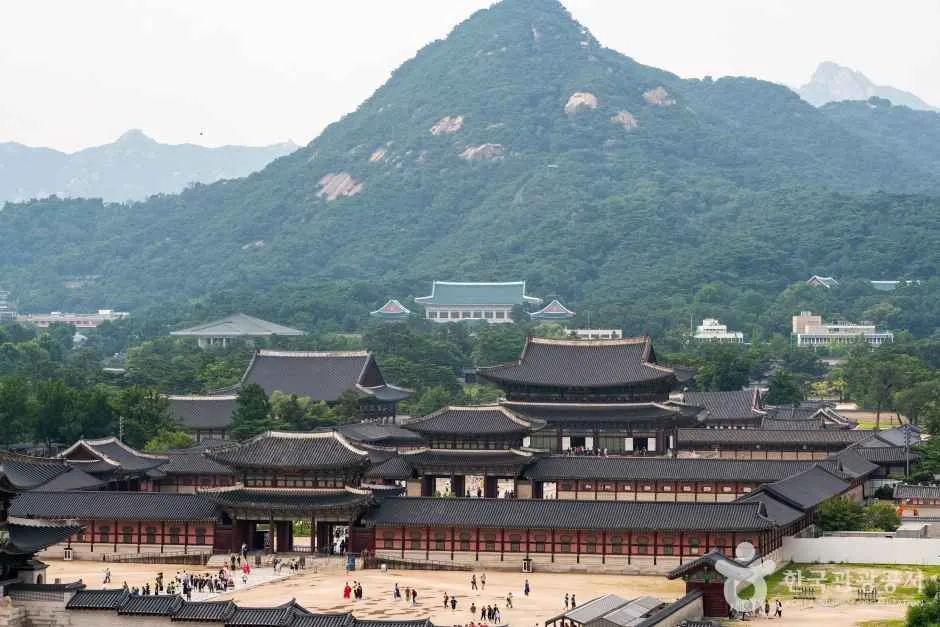
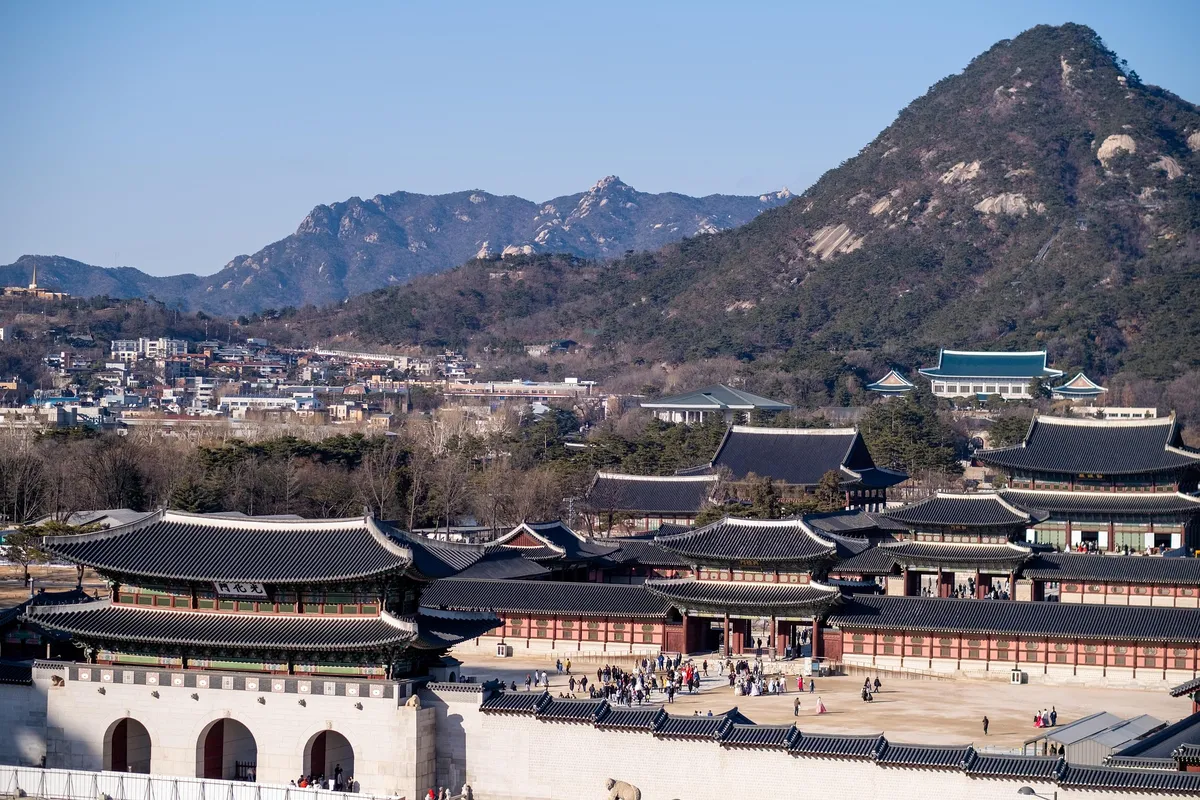
For visitors, the palace works best as a sequence rather than a single photo stop. The wide approach, formal gates, throne hall, pavilions, ponds, and museums each explain a different part of the royal compound. The scale is large enough to feel ceremonial, but the route is simple if you move from the front gate toward the inner grounds.
📍 TripKorea's Tip: Start at Gwanghwamun Gate and continue inward through the central axis. This keeps the palace layout easy to read and places the main royal architecture before the museum stops.
What to See Inside Gyeongbokgung Palace
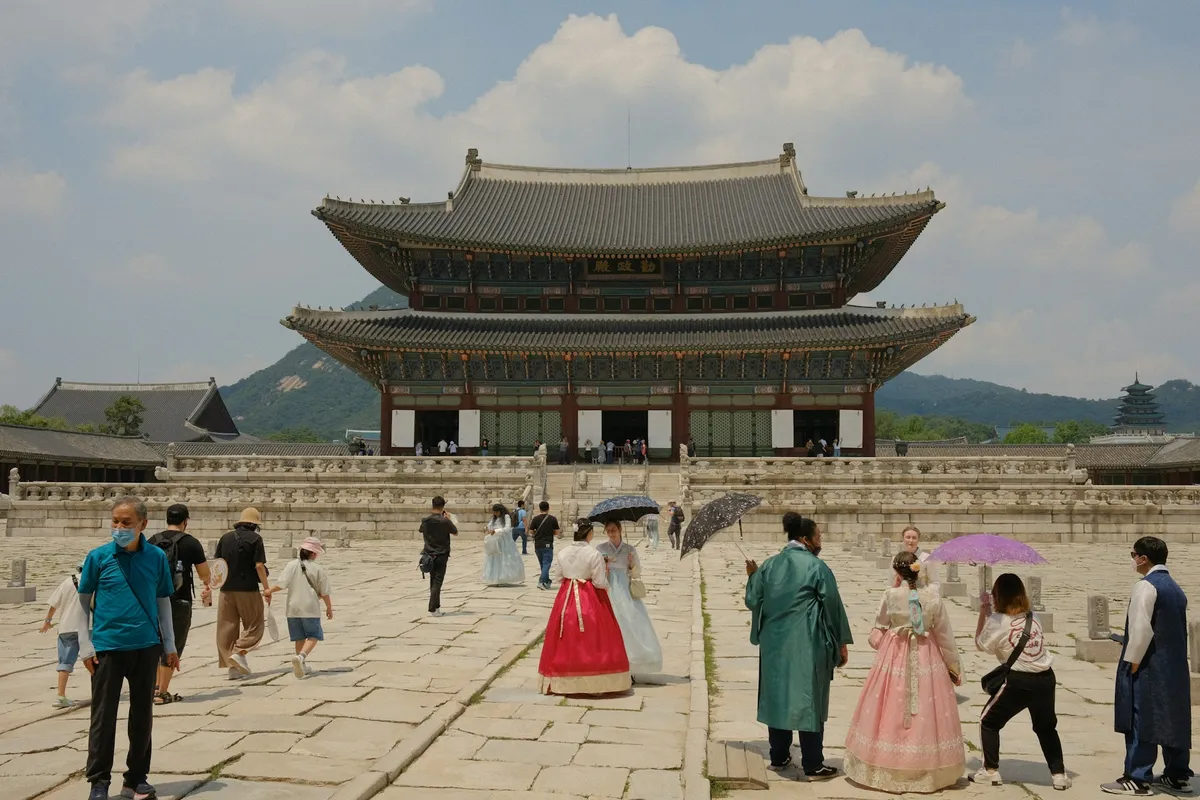
The central route leads toward Geunjeongjeon Hall, the main throne hall area. This is where the palace's formal architecture is easiest to understand: broad stone courts, raised platforms, painted wooden details, and tiled roofs arranged for state ceremony. The sculptures around Geunjeongjeon show Joseon-era sculptural techniques, while the layered gates frame the palace in a way that still explains its royal hierarchy.
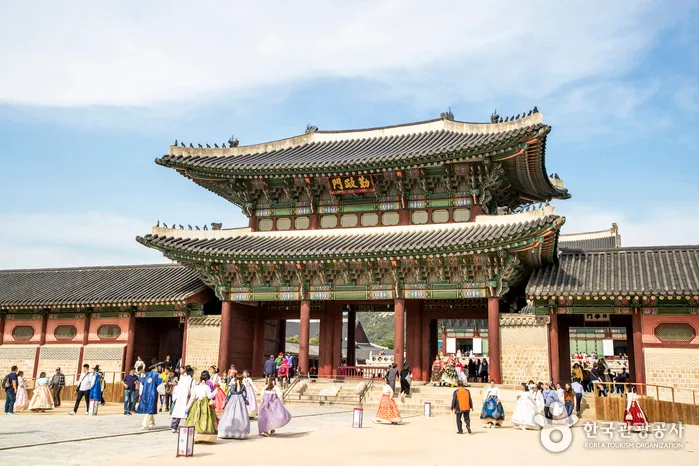
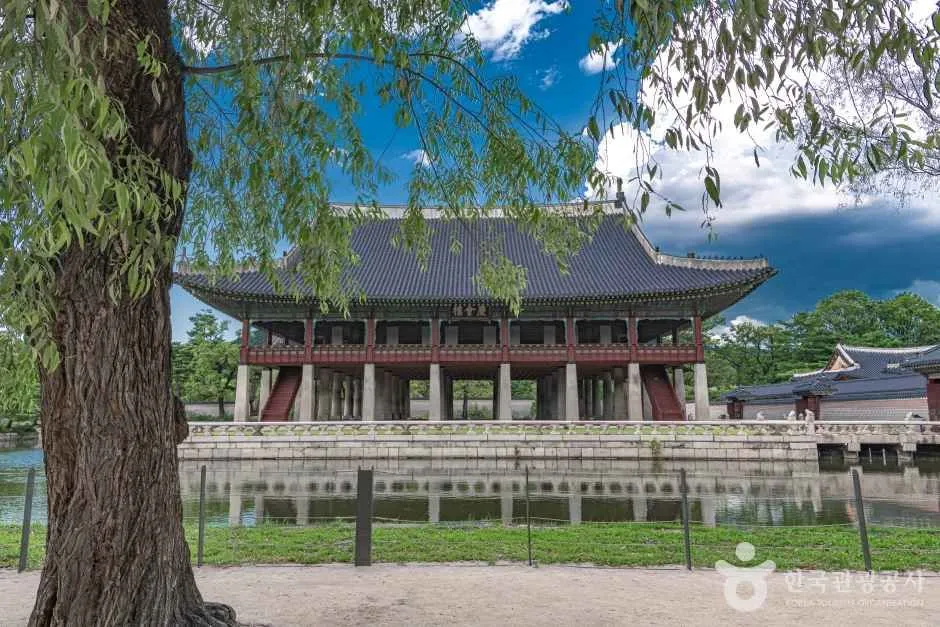
Gyeonghoeru Pavilion is one of the palace's most recognizable structures. It stands beside water and remains an original feature highlighted for its Joseon architecture. The pavilion was used for royal banquets and state occasions, and today it gives the palace a different rhythm from the formal stone courtyards near the throne hall.
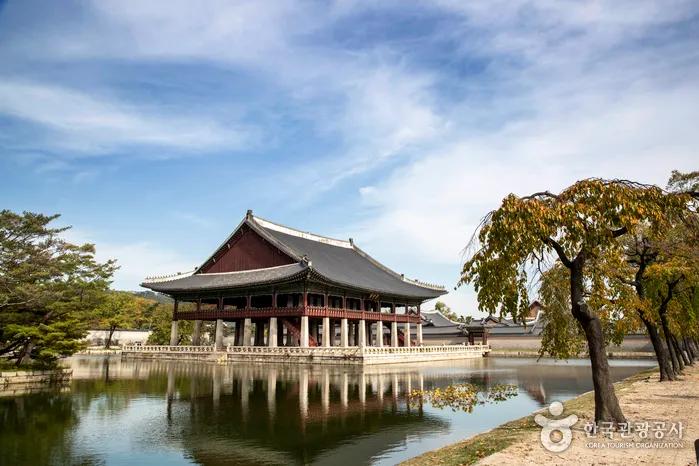
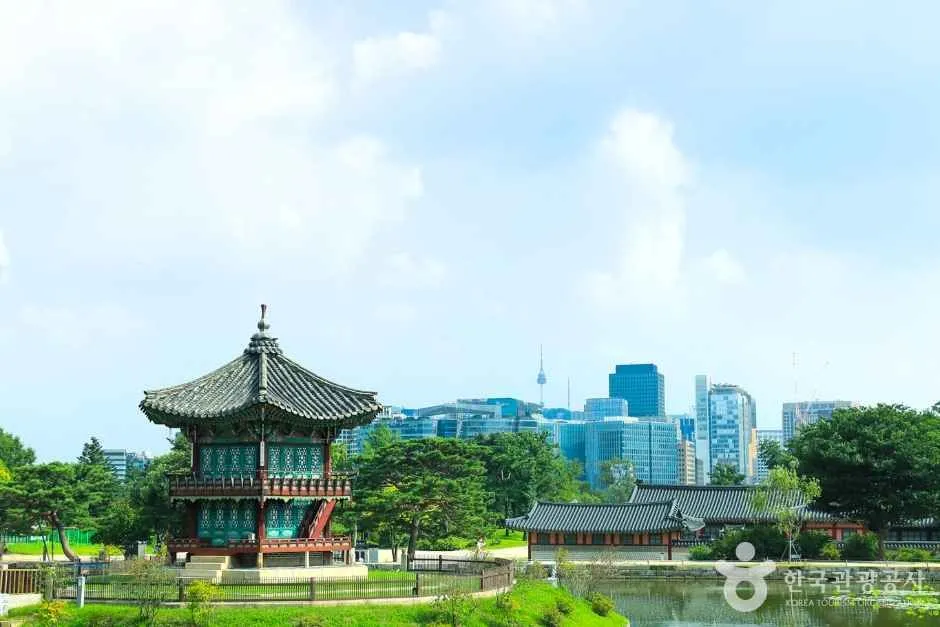
Hyangwonjeong Pavilion and its pond form another important stop deeper inside the grounds. The pavilion, bridge, water, and surrounding trees show the quieter side of palace planning. It is also close to the eastern side of the palace area, where the National Folk Museum of Korea is located within the broader Gyeongbokgung cultural zone.
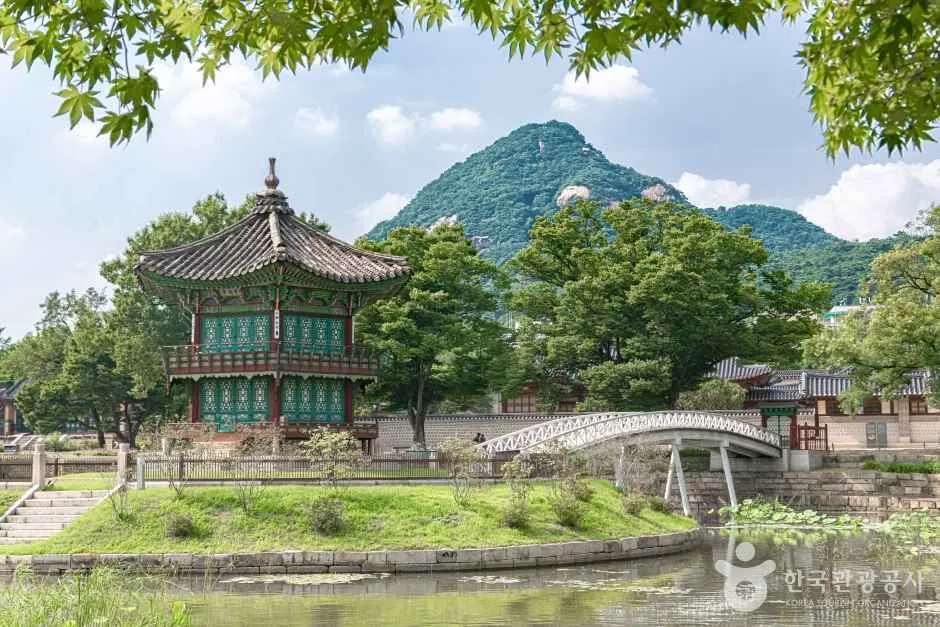
💡 Local Tip: Do not rush directly from the front gate to the exit. Gyeonghoeru Pavilion and Hyangwonjeong Pavilion are separate highlights, and both help explain how the palace combined state ceremony with landscaped royal space.
Hours, Admission, and Visitor Facilities
Gyeongbokgung Palace opens at 09:00 throughout the year, with closing times changing by season. January-February and November-December run 09:00-17:00. March-May and September-October run 09:00-18:00. June-August runs 09:00-18:30. Last admission is one hour before closing.
The palace is closed on Tuesdays. If Tuesday is a public holiday, the palace opens on that day and closes on the next business day instead. This rule is important when planning around Korean public holidays, because a normal weekly schedule may shift.
Address: 161 Sajik-ro, Jongno-gu, Seoul 03045
Phone: +82-2-3700-3900
Admission for foreign adults: KRW 3,000 for ages 19 to 64
Parking: Available
Baby carriage rentals: Available
Accessibility: Accessible parking, pathways, information services, wheelchair rentals, and accessible restrooms are listed for the site
The palace also offers regular guided tours. English tours are listed at 11:00, 13:30, and 15:30, except on Tuesdays. Groups of fewer than ten people can join regular guided tours without reservation, while groups of ten or more should reserve in advance.
🚨 Warning: Hours, guided tour times, and admission policies can change for events, weather, restoration work, or public holidays. Check the official palace website before visiting, especially if your schedule depends on a late entry or a guided tour.
How to Get There by Subway
Gyeongbokgung Palace sits in Jongno-gu, directly north of the central government and Gwanghwamun area. The closest listed subway access is Gyeongbokgung Station on Line 3, Exit 5, about 216 meters from the palace. Gwanghwamun Station on Line 5, Exit 2, is also listed at about 471 meters.
For most first visits, Gyeongbokgung Station is the simplest choice because it places you close to the western side of the main entrance zone. Gwanghwamun Station works well if you want to approach the palace from the broad Gwanghwamun Square side and see the city axis leading toward the palace gate.
The surrounding area is dense with museums, government buildings, cafes, and nearby neighborhoods such as Insadong and Bukchon. If you are staying in central Seoul, compare Hotels in Jongno near Gyeongbokgung Palace with Hotels in Myeongdong for central Seoul sightseeing. Jongno keeps you closer to the palace and hanok neighborhoods, while Myeongdong gives easier access to shopping and wider transit connections.
📍 TripKorea's Tip: Use the subway exit information as your first navigation point, then follow official signs for the palace entrance. The palace grounds are large, and entering from the correct side saves unnecessary walking before your visit begins.
Museums, Nearby Stops, and the Guard Ceremony
Two major museums sit within or beside the palace zone. The National Palace Museum of Korea occupies the west side outside Heungnyemun Gate, while the National Folk Museum of Korea occupies the eastern side within the Gyeongbokgung Palace area. Together, they make the palace visit more complete without requiring a long transfer across Seoul.
The National Palace Museum is the better fit for visitors focused on royal court culture, state symbols, and objects connected to the Joseon royal household. The National Folk Museum explains everyday Korean life, seasonal customs, and traditional culture in a broader social context. Visiting one museum after the palace is manageable; visiting both requires a slower schedule.
The Palace Royal Guard Changing Ceremony is listed for the Heungnyemun Gate and Gwanghwamun Gate areas. The Royal Guard Changing Ceremony is listed at 10:00 and 14:00, the Ceremony of Guarding
Gwanghwamun Gate at 11:00 and 13:00, and public training of the royal guard soldiers at 09:35 and 13:35. The event may be canceled in rain, and the schedule is subject to change.
For a fuller day in the same part of Seoul, combine the palace with Bukchon Hanok Village, Insadong, or the Gwanghwamun area. Keep the route compact rather than crossing the city after the palace;
the value of this district is that royal history, museums, traditional streets, and modern civic space sit close together. For bookable activities in the city, see Things to Do in Seoul.
💡 Local Tip: If the guard ceremony is a priority, arrive before the listed time and treat it as weather-dependent. The palace itself remains the main visit, so do not build the entire day around one ceremony slot.
Frequently Asked Questions
Is Gyeongbokgung Palace closed on Tuesdays?
Yes. Gyeongbokgung Palace is closed on Tuesdays. If Tuesday is a public holiday, the palace opens and closes on the next business day instead.
How much is admission to Gyeongbokgung Palace?
Foreign adults ages 19 to 64 are listed at KRW 3,000. Group pricing, discounts, and special admission rules should be checked on the official palace website before visiting.
What is the nearest subway station to Gyeongbokgung Palace?
Gyeongbokgung Station on Line 3, Exit 5, is listed about 216 meters from the palace. Gwanghwamun Station on Line 5, Exit 2, is another nearby option at about 471 meters.
Are English guided tours available?
English guided tours are listed at 11:00, 13:30, and 15:30, except on Tuesdays. Groups of fewer than ten visitors can join regular guided tours without reservation, while larger groups should reserve in advance.
Can visitors see museums during the same visit?
Yes. The National Palace Museum of Korea is on the west side outside Heungnyemun Gate, and the National Folk Museum of Korea is on the eastern side within the palace area. One museum pairs naturally with a palace visit; both require more time.
Plan Your Seoul Base Around Gyeongbokgung Palace
Gyeongbokgung Palace works well as the anchor for a central Seoul day: palace first, museum second, then a nearby neighborhood such as Bukchon, Insadong, or Gwanghwamun. Staying in Jongno keeps the route compact, while Myeongdong gives strong transit and shopping access for the rest of Seoul.
Stay near the palace: Hotels in Jongno near Gyeongbokgung Palace
Stay in central Seoul: Best Hotels in Myeongdong
Book city activities: Things to Do in Seoul
Plan local transport: Seoul Transport Options
For most visitors, the best Gyeongbokgung Palace plan is simple: arrive by subway, enter from the main gate side, follow the central halls, continue to the pavilions, and finish with one museum or a nearby historic neighborhood.
Sources & References
Data Sources:
Tourist Attraction Info: Korea Tourism Organization (TourAPI)
Photos: Korea Tourism Organization
Visitor Information: Seoul Tourism Organization and Gyeongbokgung Palace Management Office
Event Information: Korea Tourism Organization event listing for the Palace Royal Guard Changing Ceremony
Official Sites:
Last verified: 2026-06-05
All information verified at time of publication. Operating hours, admission fees, guided tours, and ceremonies are subject to change. Please confirm before visiting.