Korea convenience store branches operate as small travel-service points as well as retail shops, with official CU service pages listing parcel pickup, prepaid and mobile barcode charging, utility payment, shared power-bank rental, ATMs, transportation cards, instant tax refund at participating stores, kiosks, and store search tools (Source: CU/BGF Retail).
This guide keeps the topic practical: how foreign visitors can use convenience stores for payment, transport-card charging, daily supplies, hot water, simple printing or kiosk-style services where available, and emergency communication without turning the article into a snack list.
1. The Problem: Korea Convenience Store Services Are Useful, but Branch-Specific
For visitors, a convenience store in Korea can solve several small travel problems in one stop. A branch may sell bottled water, umbrellas, toiletries, phone chargers, basic medicine-like daily supplies, ready-to-heat meals, and prepaid cards. Some branches also provide ATMs, parcel counters, pickup services, shared battery rental, or self-service kiosks.
The important limitation is that services are not identical at every branch. A large branch near a station, university, office district, or airport area may offer more service equipment than a small residential branch. Signs near the entrance, stickers on the door, and the official store finder are safer than assuming every service is available everywhere.
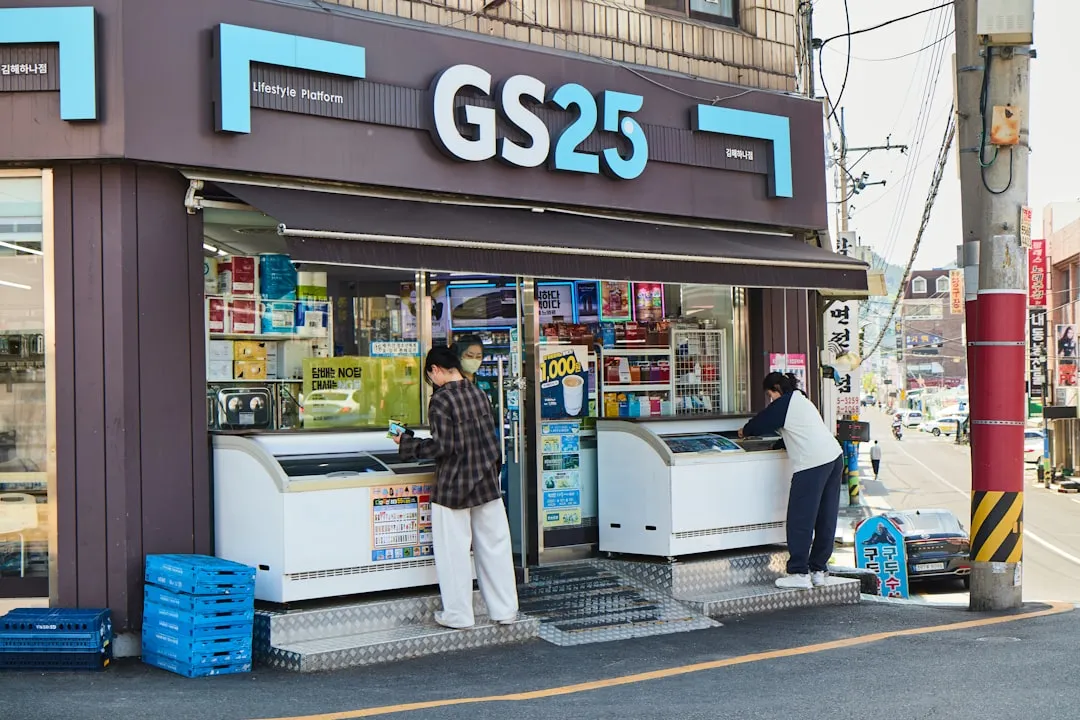
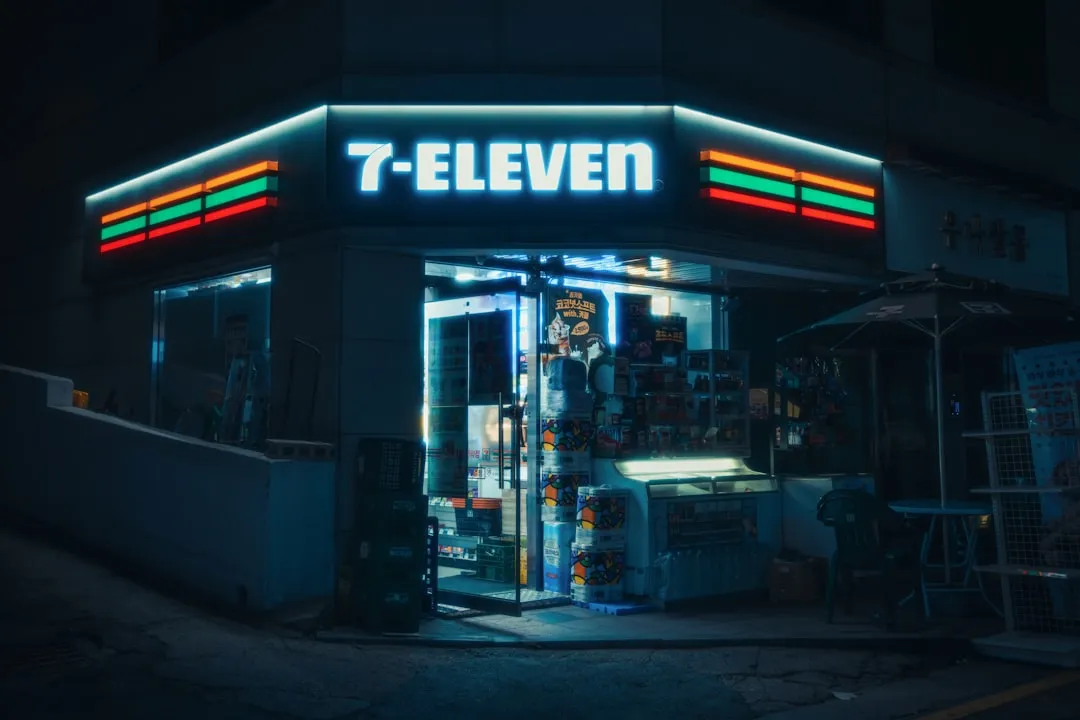
Major chains include CU, GS25, 7-Eleven, emart24, and Ministop-style legacy locations where still operating under local brand changes. The names are easy to recognize in English letters, but the in-store instructions may be partly Korean. Visitors should learn a few Korean service words before relying on the counter.
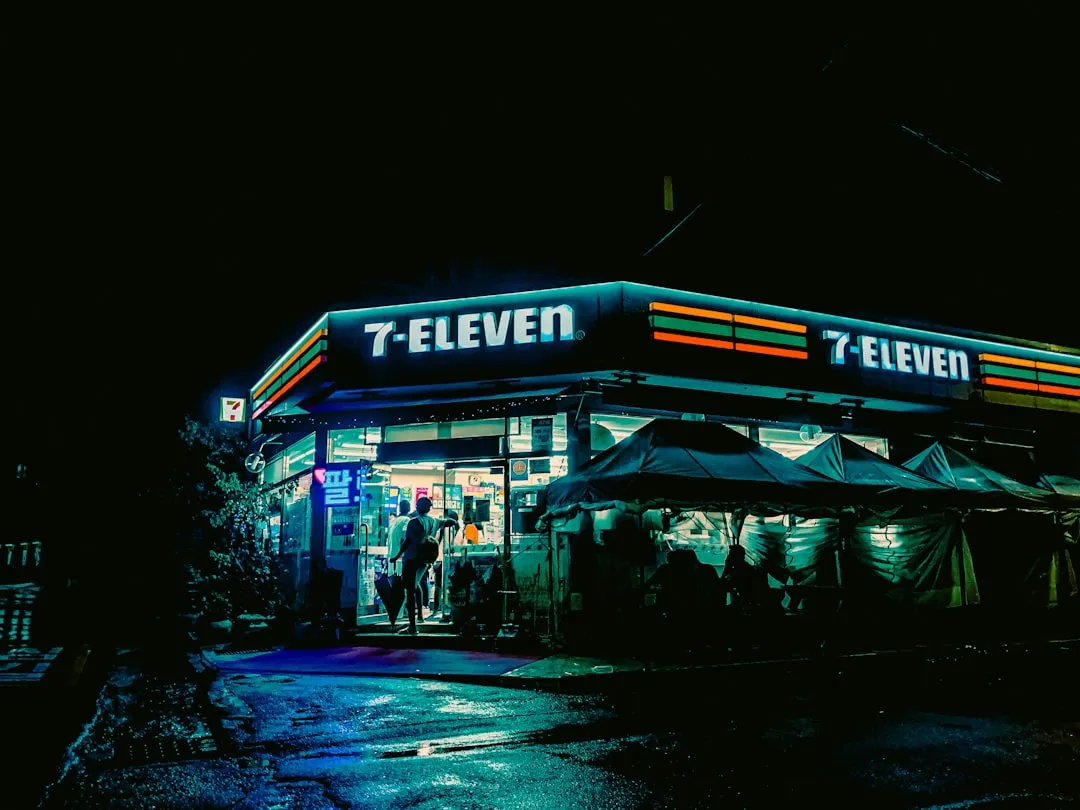
Convenience stores are also useful because they are distributed across transport nodes, shopping streets, residential districts, and nightlife areas. They are not a replacement for banks, pharmacies, immigration offices, or police stations, but they can help with small travel needs before those offices open or when a hotel front desk is not nearby.
2. The Solution: Use Convenience Stores as Travel Infrastructure, Not Just Shops
The safest way to use a Korea convenience store is to think in categories: payment, transport, daily supplies, light food preparation, charging, parcel or pickup service, and help with directions. This keeps the visit efficient and prevents confusion at the counter.
For payment, most visitors can try an international credit or debit card, but acceptance depends on the card network, issuer, terminal, and branch. A small amount of Korean won cash remains useful for transport-card charging, older machines, or payment failures. This overlaps with money planning, but the store-specific point is simple: do not depend on one card only.
For transport, Visit Korea states that Korean transportation cards such as Tmoney and EZL are reloadable prepaid cards, and that travelers can purchase and load them at convenience stores nationwide. The same Visit Korea page also notes that the cards can be used for public transportation and affiliated stores displaying the relevant logo.
Use this as a branch-level habit: look for the Tmoney, EZL, or transportation-card sticker; bring cash for top-up; and tell the clerk the amount clearly. Do not treat this article as a full Seoul subway or T-money guide. The travel takeaway here is that convenience stores can be a backup charging point when a subway machine is inconvenient.
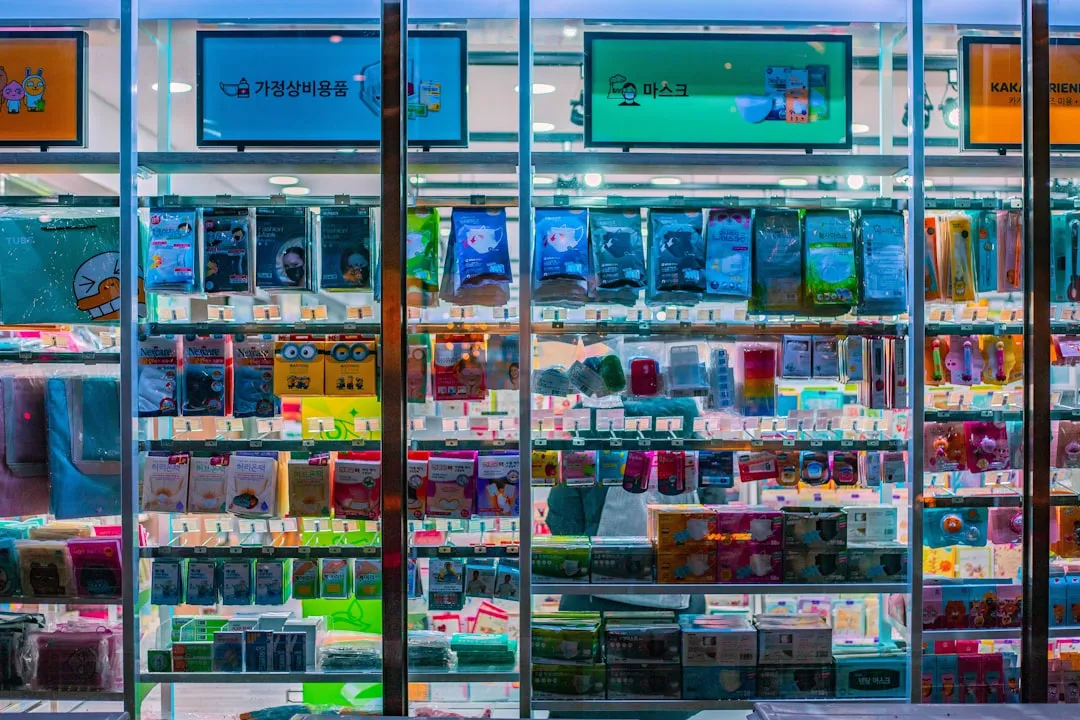
For daily supplies, convenience stores are useful for items that solve immediate problems: bottled drinks, tissue, wet wipes, travel-size toiletries, sanitary products, rain ponchos or umbrellas when stocked, simple batteries, charging cables, masks, and basic stationery. Stock changes by branch and season, so avoid relying on a specific brand or product.
For light meal preparation, many branches provide microwaves, hot-water dispensers, and sometimes seating. This guide does not recommend specific foods; the practical point is equipment. If you buy a heatable item, check whether the packaging is microwave-safe and ask staff if unsure. Do not heat sealed containers unless the instructions allow it.
3. Step-by-Step Guide to Using a Korea Convenience Store
Step 1: Check the entrance signs before entering
Look for brand signs, payment logos, transportation-card logos, ATM signs, delivery or parcel stickers, and kiosk icons. Door and window stickers are often the fastest way to know whether a service is offered at that branch.
CU's official service page, for example, lists multiple everyday services including parcel and pickup, prepaid and mobile barcode charging, utility payment, shared power-bank rental, ATMs, transportation cards, instant tax refund, and convenience kiosks. That list is useful as a service menu, but the specific branch still matters.
Step 2: Use the store finder for branch-specific needs
If you need a particular service, use the chain's store finder or a local map app. Search Korean brand names such as CU, GS25, 7-Eleven, or 이마트24 near your current location. For service searches, Korean words can help: ATM is usually visible as ATM, while parcel service may appear as 택배 and transportation card as 교통카드.
When the service is urgent, call the branch through the map app or ask your hotel desk to confirm before walking across town. For language help, 1330 Korea Travel Helpline and BBB Korea interpretation can support simple visitor communication, but they are not a substitute for the store's own policy.
Step 3: Keep the counter request short
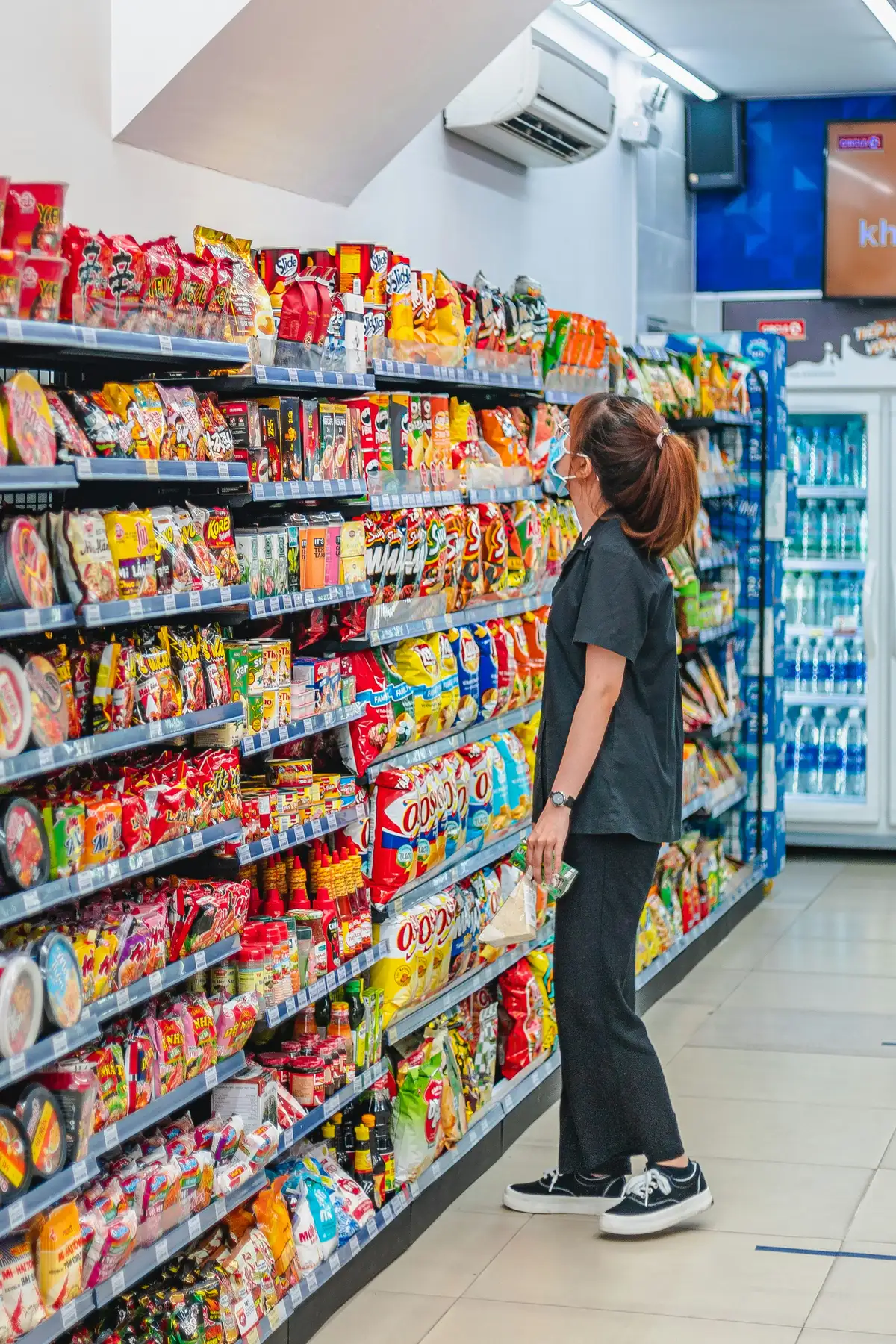
Convenience-store counters move quickly. Prepare the product, card, cash, or barcode before reaching the register. If you need a transportation-card charge, place the card on the counter and state the amount. If you need a receipt, ask before leaving.
Useful phrases include: “T-money charge, please” — “티머니 충전해주세요” (T-money chungjeon haejuseyo). “Receipt, please” — “영수증 주세요” (yeongsujeung juseyo). “Do you have an ATM?” — “ATM 있어요?” (ATM isseoyo?). “Can I use this microwave?” — “전자레인지 써도 돼요?” (jeonja-renji sseodo dwaeyo?).
Step 4: Use machines slowly and check the language button
Self-service kiosks, parcel machines, ticket machines, and ATMs may have language buttons, but not every machine supports English. If a machine requires a resident registration number, Korean mobile verification, or a domestic address format, it may not be practical for a short-term visitor.
Do not force a transaction when you cannot read the terms. Ask the clerk, use a translation app, or move to a larger branch in a transport hub where staff may be more used to visitors. For financial or identity-sensitive steps, avoid entering passport or card details into unfamiliar machines unless the official service clearly requires it.
4. Pro Tips & Warnings for Visitors
💡 Local Hack: Use convenience stores for small infrastructure gaps.
A convenience store can help when you need cash withdrawal, a transport-card top-up, a charging cable, a quick umbrella, hot water, or a place to buy a replacement item late in the day. It should not be treated as a full bank, pharmacy, clinic, immigration office, or travel agency.
🚨 Important Warning: Services depend on the branch.
Even when a chain advertises a service, the individual branch may not have the equipment, staff process, or current availability. For parcel pickup, tax-refund counters, shared battery rental, or kiosks, verify the branch before making the trip.
💳 Money Tip: Keep both card and cash.
International cards are widely useful in Korea, but payment can fail because of card issuer blocks, terminal issues, or card-network limits. Cash is especially useful for small transport-card top-ups and backup purchases. Keep small bills rather than only large notes.
🗣️ Korean Phrase: “Please charge this card.”
“이 카드 충전해주세요” (i kadeu chungjeon haejuseyo) is useful when the card is not Tmoney or when you want to keep the request general. Show the card and the cash amount at the same time.
📦 Parcel and pickup caution.
CU states that parcel and pickup services can be used through its service system and that detailed delivery tracking or POSTBOX information is available through CU Post. For short-term travelers, parcel services may require Korean phone numbers, Korean address formats, partner shopping malls, or SMS pickup messages. Use them only when you can receive the required confirmation.
🔌 Charging and battery caution.
Shared battery rental can be useful, but return locations, app requirements, deposits, and payment methods may vary. If your phone battery is nearly empty, buy or carry a cable and power bank rather than relying only on a rental device.
🍱 Heating caution.
Microwaves and hot-water dispensers are common in many branches, but use them only for items designed for heating. Open lids according to the package instructions and avoid blocking the machine while reading labels.
5. FAQ
Can tourists buy and charge Tmoney at convenience stores in Korea?
Yes. Visit Korea states that transportation cards can be purchased and loaded at convenience stores nationwide. Availability still depends on the branch and the card type, so look for the transportation-card logo or ask the clerk.
Do all Korea convenience stores have ATMs?
No. Some branches have ATMs, while others do not. Even when an ATM is present, international-card support depends on the machine and card network. Use a bank ATM or airport ATM as a backup for larger withdrawals.
Can I use convenience stores for parcel pickup or delivery?
Some branches support parcel, pickup, or POSTBOX-style services. CU's official service page lists parcel and pickup services, but short-term visitors should check whether the process requires a Korean phone number, SMS notice, domestic address, or partner shopping mall.
Are convenience stores a good place to buy daily travel supplies?
Yes, for small everyday items such as water, tissues, umbrellas when stocked, toiletries, batteries, charging cables, sanitary products, and simple stationery. Stock varies by branch, so do not depend on one exact item or brand.
Can I sit and eat inside a convenience store?
Some branches have seating, microwaves, or hot-water dispensers, but not all branches provide seating. Use the equipment only for items designed for heating, keep the area clean, and follow any posted store rules.
Useful Korean Words
편의점 (pyeonuijeom): convenience store
교통카드 (gyotong kadeu): transportation card
충전 (chungjeon): recharge or top up
영수증 (yeongsujeung): receipt
택배 (taekbae): parcel delivery
전자레인지 (jeonja-renji): microwave
온수 (onsu): hot water
비닐봉투 (binil bongtu): plastic bag
For most trips, a Korea convenience store is most useful as a nearby problem-solving stop: charge a transportation card, buy small daily supplies, use available machines carefully, and confirm branch-specific services before depending on them.
Image Credits
GS25 storefront: Polina Kneis / Unsplash
7-Eleven storefront: Tahsin Labib / Unsplash
Convenience store shelves: Ryoo Geon Uk / Unsplash
Korean storefront with boxes: yeojin yun / Unsplash
Card payment counter: Blake Wisz / Unsplash
Store interior shelves: Richard Vance Cabusao / Unsplash
7-Eleven counter at night: Andrea De Santis / Unsplash
Sources & References
Official Tourism Source: Visit Korea — Transportation Cards
Convenience Store Service Source: CU / BGF Retail — Living Convenience Services
Convenience Store Finder Source: CU Store Finder
Traveler Support: Visit Korea and 1330 Korea Travel Helpline
Interpretation Support: BBB Korea 1588-5644
Emergency Numbers: 119 for fire or medical emergency, 112 for police emergency
Last verified: 2026-08-21
Service availability, payment acceptance, machine language support, and branch equipment can change. Verify with the store, the chain's official store finder, or the relevant official service before relying on a specific branch.