Korea restaurant etiquette is shaped by shared dishes, rice-and-soup table settings, metal chopsticks, and service customs that may differ from restaurants in other countries. This practical guide uses Korea.net table-manners guidance, VISITKOREA food information, and official traveler helplines to explain how foreign visitors can order, eat, pay, and ask for help in Korean restaurants.
The goal is not to make every meal formal. Many restaurants in Korea are casual, fast-moving, and used by office workers, families, students, and travelers. The useful point is knowing which habits are practical, which are tied to respect, and which phrases can prevent confusion at the table.
1. Korea Restaurant Etiquette: The Basic Table Setup
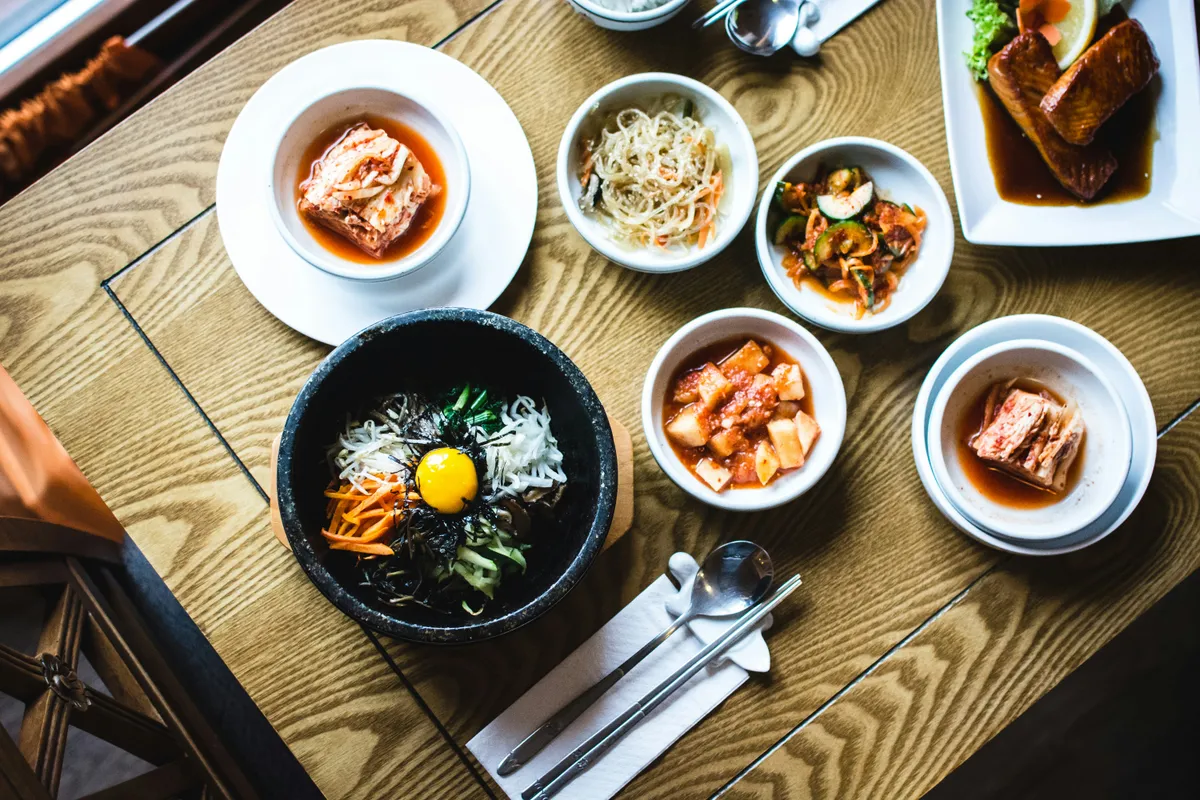
Korea.net explains that a Korean set menu usually places the dishes on the table at once rather than serving them as separate Western-style courses. Rice is commonly placed on the left, soup on the right, with the spoon on the left and chopsticks on the right.
This table layout matters because Korean meals often combine individual rice or soup with shared dishes. The main dish may be grilled meat, stew, noodles, rice bowls, or another menu item, while banchan (반찬, side dishes) are placed for the table.
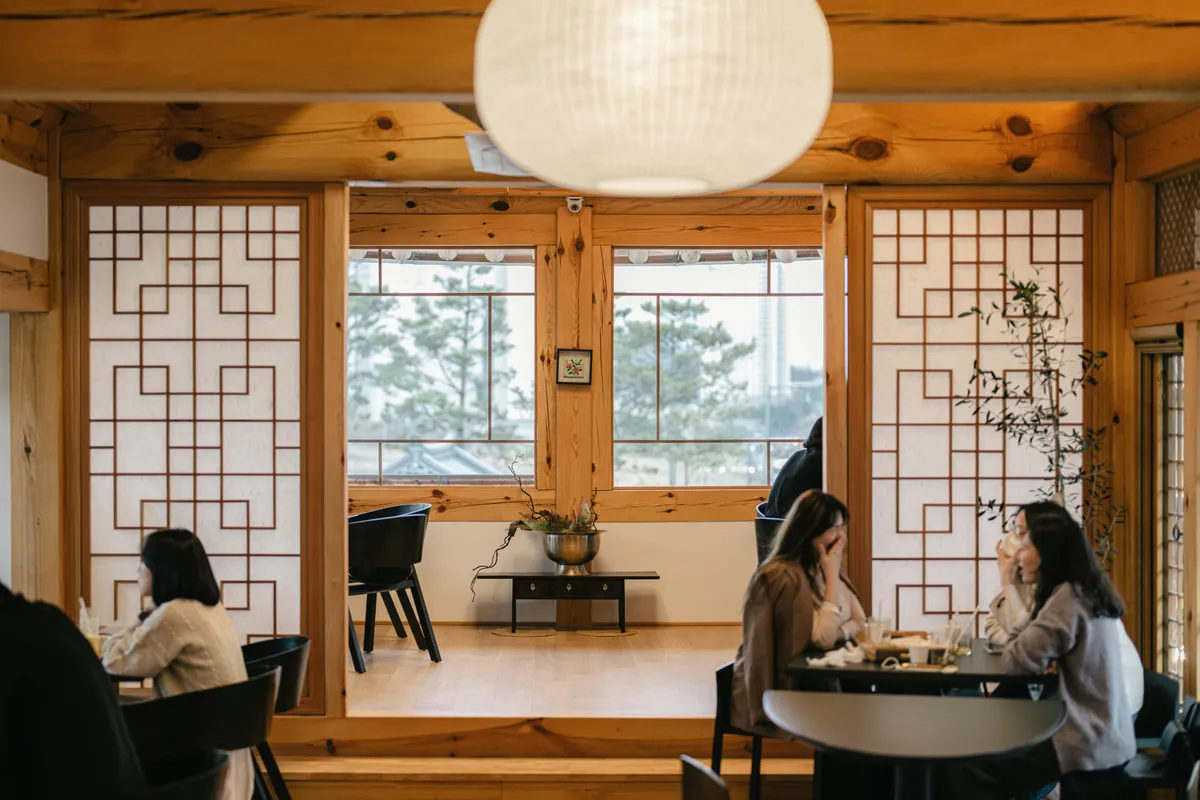
VISITKOREA states that typical Korean restaurants serve a number of side dishes along with the main dish. Some banchan are refilled without extra charge, while others may not be refillable depending on the restaurant, menu, and service style. If you are not sure, ask politely before assuming.
Useful phrase: "Banchan jom deo juseyo" (반찬 좀 더 주세요) means "Please give us a little more side dishes." Use this only when the side dish is already provided with your meal and the restaurant appears to offer refills.
Many restaurants place water, cups, napkins, chopsticks, and spoons in a drawer at the side of the table. In casual restaurants, taking these items yourself is normal when they are clearly provided for customers. If staff bring them first, wait and follow the restaurant's setup.
2. Ordering, Seating, and Service Customs
Korean restaurants vary widely. A small bunsik (분식) shop, a barbecue restaurant, a market stall, a noodle shop, and a full-course Korean restaurant do not operate in exactly the same way. Travelers should look for three practical signals first: whether staff seat you, whether ordering is at the table or counter, and whether payment happens before or after eating.
At many restaurants, staff will ask how many people are in your group. "Du myeong" (두 명) means two people, and "honja" (혼자) means one person. If a restaurant uses self-order kiosks, language options may be available, but not always.
Some restaurants have a call button on the table. Pressing the button is a normal way to ask for staff attention. In restaurants without a button, raising a hand slightly and saying "jeogiyo" (저기요, excuse me) is commonly understood.
Do not call staff by snapping fingers or shouting across the room. A short "jeogiyo" is more suitable. If the restaurant is busy, wait until staff can approach the table.
Several menu items are sold by portion or by person. Korean barbecue, dakgalbi, hot pot, and some stews may require a minimum order of two portions. This is a menu rule rather than a personal judgment about travelers. If you are eating alone, look for one-person meals such as bibimbap, gimbap, gukbap, kalguksu, or set meals marked as individual portions.
At market stalls and casual counters, seating may be limited. Keep bags close to your seat, avoid occupying extra seats during busy hours, and order in the way the stall indicates. In traditional markets, some menus are paid at the stall, while others are paid after eating.
3. Chopsticks, Spoons, and Shared Dishes
Korea.net notes that Korean meals use both spoon and chopsticks. Rice and soup are commonly eaten with a spoon, while chopsticks are used for many side dishes and solid foods. Korean chopsticks are often metal, and Korea.net describes metal chopsticks as a distinctive Korean utensil tradition.
For visitors used to wooden or plastic chopsticks, metal chopsticks may feel thinner and heavier. It is acceptable to eat slowly. If a dish is difficult to pick up, use the spoon for rice, soup, or foods that naturally fit the spoon.
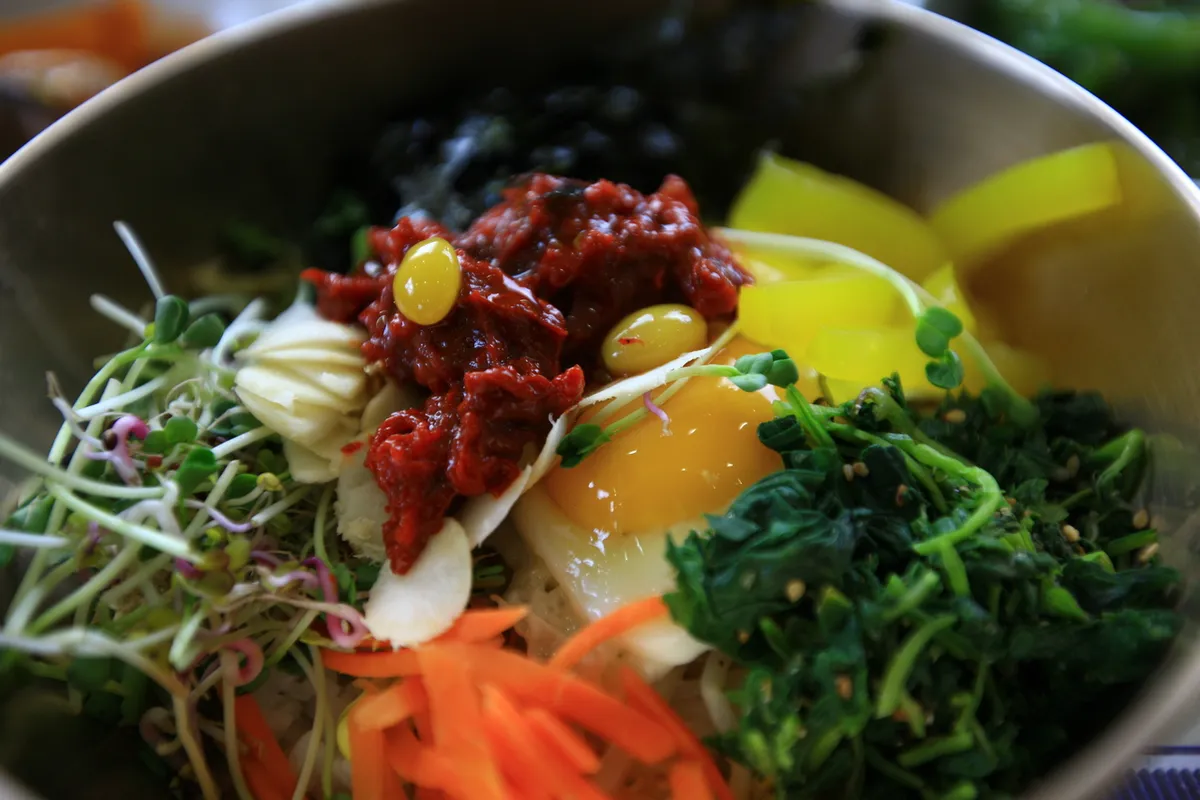
A clear table-manners point from Korea.net is not to stick chopsticks upright in a bowl of rice. Korea.net explains that this action is associated with rituals for the dead, so it should be avoided at meals.
Another Korea.net point is not to lift a rice bowl or soup bowl while eating. Keep bowls on the table and bring food to your mouth with the spoon or chopsticks.
Shared dishes are common, but use serving tongs, ladles, or shared spoons when they are provided. If only your own chopsticks are available, take food neatly from the edge of the shared dish rather than searching through the dish. In stews, use the ladle if one is on the table.
Do not place used chopsticks directly into shared condiments or communal sauces if a serving utensil is present. This is both a hygiene habit and a table-courtesy habit.
When eating barbecue, staff may cook, cut, or turn the meat at some restaurants. At other places, the customer cooks at the table. Follow the staff's first action. If staff start the grill and handle the meat, wait before taking over.
4. Respect Rules: Age, Alcohol, and Noise
Korea.net states that younger people usually wait until older people at the table begin using dining utensils. This matters most in meals with Korean hosts, older relatives, workplace groups, or formal invitations. In casual meals among travelers, the rule is usually less formal, but the underlying idea is respect.
When alcohol is poured for someone older, Korea.net says the cup or bottle should be held with both hands. When receiving alcohol from someone older, use both hands or support the receiving arm with the other hand. Korea.net also describes turning slightly away from older people when drinking.
These alcohol customs are most relevant in social meals with Korean hosts or colleagues. Travelers are not expected to know every detail, but using two hands when giving or receiving a drink is a simple sign of courtesy.
Korea.net also notes that picking teeth or blowing the nose during a meal is considered poor table manners in Korea. If needed, step away from the table or use the restroom.
Conversation during meals is common in many households and restaurants today, though Korea.net notes that older etiquette placed more emphasis on quiet eating. In public restaurants, keep voice level reasonable, especially in small dining rooms where tables are close together.
If you are visiting a Korean home rather than a restaurant, the meal may feel more formal. Small gifts such as fruit, beverages, or packaged snacks may be suitable when invited to someone's home, but this article focuses on restaurant situations for travelers.
5. Practical Restaurant Habits Travelers Should Know
Restaurant etiquette is also about understanding the flow of service. In many Korean restaurants, the bill is paid at the counter near the exit after the meal. In some casual places, food is paid for first. If there is a kiosk, counter sign, or cashier near the entrance, check before sitting down.
Credit cards are widely used in Korea, but carrying a small amount of Korean won can help at markets, small stalls, and older local restaurants. This is especially useful when a menu is handwritten or the restaurant is busy.
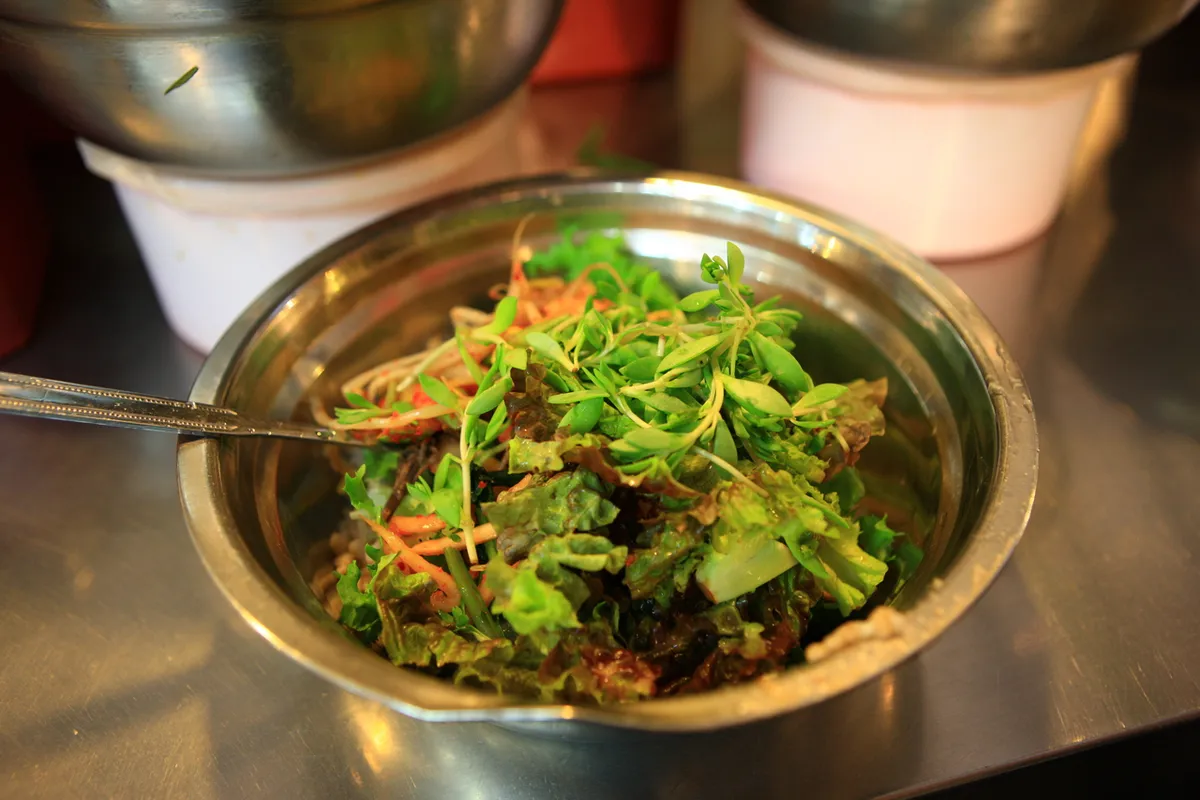
Food waste should be kept reasonable. Korean meals often include several side dishes, but that does not mean every dish must be emptied. Take small amounts from shared dishes first, then ask for more only if you plan to eat it.
If you have allergies, dietary restrictions, or religious food requirements, do not rely only on visual inspection. Sauces, broth, seasoning paste, and side dishes may contain ingredients that are not obvious. Use a translation app, show a written note in Korean, and ask staff before ordering.
Helpful phrases include: "Igeo maeweoyo?" (이거 매워요?) for "Is this spicy?" and "Gogi deureogayo?" (고기 들어가요?) for "Does it contain meat?" For allergies, prepare a written Korean sentence that names the allergen clearly.
If a restaurant asks you to remove shoes, use the shoe area near the entrance and place shoes neatly. This is more common in floor-seating restaurants, traditional venues, or private dining rooms. Many modern restaurants use regular tables and do not require this.
In busy restaurants, long conversations after finishing may hold a table that the restaurant needs for waiting customers. If people are waiting and your meal is finished, moving to a cafe for a longer conversation is usually more considerate.
6. Step-by-Step Guide for a First Korean Restaurant Meal
Step 1: Check seating and ordering style
Look for a host stand, ticket machine, kiosk, or counter. If staff approach, say the number of people. If the restaurant has a waiting list, add your name or phone number only if you can receive the message.
Step 2: Confirm the menu unit
Check whether the item is priced per person, per portion, or per table. For barbecue and hot pot, ask whether there is a minimum order. A simple phrase is "I-inbun ganeung haeyo?" (1인분 가능해요?) meaning "Is one portion possible?"
Step 3: Use the table setup correctly
Use the spoon for rice and soup, chopsticks for side dishes and solid foods, and serving utensils for shared dishes when provided. Do not stand chopsticks upright in rice.
Step 4: Ask for help politely
Use the call button if one is installed. Otherwise, say "jeogiyo" in a normal voice. If you need water, say "mul juseyo" (물 주세요). If water is self-service, staff may point to the water station.
Step 5: Pay in the restaurant's usual place
After eating, check whether the bill is brought to the table or paid at the counter. If there is no table bill, walk to the cashier and indicate your table.
7. FAQ
Do Korean restaurants refill side dishes?
Many Korean restaurants provide several side dishes with the main dish, and VISITKOREA describes side dishes as a typical part of Korean restaurant meals. Refills depend on the restaurant and the specific dish. Ask politely with "Banchan jom deo juseyo" rather than assuming every side dish is unlimited.
Should I wait for older people before eating?
Korea.net states that younger people usually wait until older people at the table begin using utensils. This is most relevant when eating with Korean hosts, elders, or workplace groups. In casual tourist meals without a Korean host, the rule is usually less formal.
Is it rude to stick chopsticks in rice?
Yes. Korea.net specifically explains that sticking chopsticks in rice is linked to rituals for the dead. Place chopsticks on the rest, wrapper, or table edge instead.
How do I call restaurant staff in Korea?
If the table has a call button, press it once and wait. If there is no button, raise a hand slightly and say "jeogiyo" (저기요, excuse me). Avoid snapping fingers or shouting across the room.
What should I do if I cannot explain an allergy?
Use a written Korean note that clearly names the allergen and ask staff before ordering. If urgent medical help is needed, call 119. For travel interpretation help, use 1330 Korea Travel Helpline or BBB Korea 1588-5644.
Useful Korean Phrases for Restaurants
Jeogiyo (저기요): Excuse me / calling staff politely.
Mul juseyo (물 주세요): Please give us water.
Banchan jom deo juseyo (반찬 좀 더 주세요): Please give us a little more side dishes.
Igeo maeweoyo? (이거 매워요?): Is this spicy?
Gyesanhalgeyo (계산할게요): I would like to pay.
Yeongeo menu isseoyo? (영어 메뉴 있어요?): Do you have an English menu?
For food-focused itineraries after learning Korea restaurant etiquette, TripKorea also lists local experiences in Things to Do in Seoul and Things to Do in Busan.
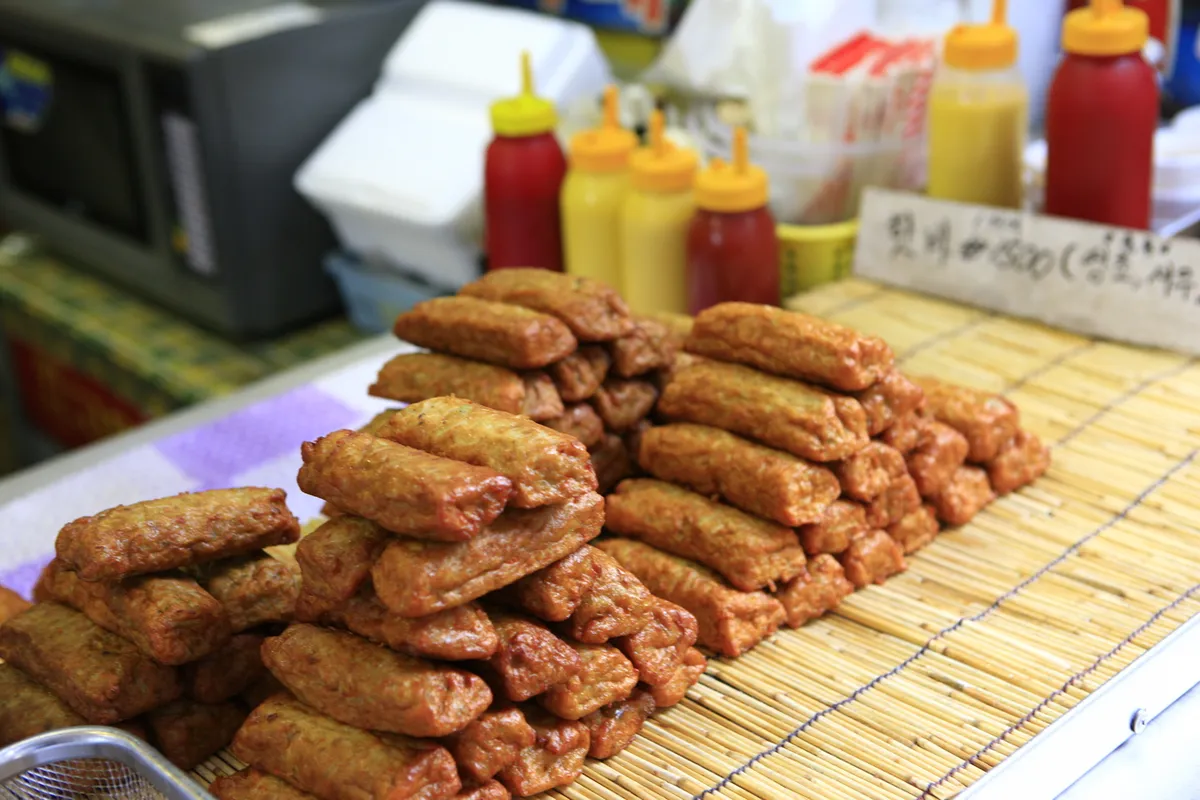
Korea restaurant etiquette is easiest when you focus on a few reliable habits: wait briefly in formal groups, use the spoon and chopsticks according to the table setting, avoid chopsticks upright in rice, ask staff with "jeogiyo," and use official helplines when language becomes a safety issue.
Sources & References
Official Government and Tourism Sources:
Traveler Help: 1330 Korea Travel Helpline / 119 emergency / 112 police / 1345 immigration / BBB Korea 1588-5644 interpretation.
Image Credits: Korean restaurant dishes and market food images: Korea Tourism Organization Photo Korea.
Last verified: 2026-08-16
Note: Restaurant practices vary by venue, region, and menu type. Confirm payment rules, allergens, and service details directly with the restaurant when needed.