Korea has four distinct seasons, with hot and humid summers and cold, dry winters under the Korea Meteorological Administration's 1991–2020 climate normals. This Korea weather by month guide explains the seasonal pattern, regional differences, and a practical packing method based on official climate information.
Climate averages describe what is typical, not what will happen on a particular travel date. Check the live forecast for each destination shortly before departure and again while traveling.
1. The Problem: Korea Weather by Month Changes Sharply
Korea's seasonal range is wide enough that one packing list cannot cover the entire year. The Korea Meteorological Administration describes spring and autumn as generally clear and dry, summer as hot and humid, and winter as cold and dry.
The same official climate page identifies August as the hottest month and January as the coldest across its published mainland climate stations. Those statistics are climate normals, so an individual year can be warmer, colder, wetter, or drier.
Transition months require particular attention. The Korea Tourism Organization notes that chilly conditions can continue into mid-March, even though spring is beginning. September can still feel like late summer before cooler autumn conditions become established, while November moves quickly toward winter.
City also matters. KTO's monthly table lists Seoul's January average high and low at 2.1°C and -5.5°C, while Busan's are 8.2°C and -0.1°C. In August, the table lists Seoul at 30.0°C and 22.9°C and Busan at 29.5°C and 23.7°C.
These figures show why a traveler should not use a Seoul packing list for every destination. Southern and coastal cities may be milder in winter, while mountains can be colder than nearby urban areas. KMA also states that coastal areas generally experience higher wind speeds due to sea and land breezes.
2. The Solution: Pack for Season, City, and Daily Range
The most reliable method is to choose clothing in three layers: a base suitable for the season, a removable middle layer, and an outer layer matched to rain, wind, or cold. This allows the same travel wardrobe to adjust between outdoor conditions, public transport, shops, and heated or air-conditioned buildings.
Spring: March to May
KTO groups March through May as spring. Seoul's average high rises from 11.0°C in March to 17.9°C in April and 23.6°C in May, while average lows rise from 1.9°C to 8.0°C and 13.5°C.
Pack a light jacket or coat, long trousers, and layers that can be removed during warmer afternoons. Early-March travelers need more insulation than late-May travelers, and a compact rain layer remains useful when the forecast changes.
Summer: June to August
June through August is the hot and humid season. KMA's climate characteristics state that summer accounts for 710.9 millimeters, or 54%, of annual precipitation in the national normals. Average monthly humidity reaches 78–79% in July and August.
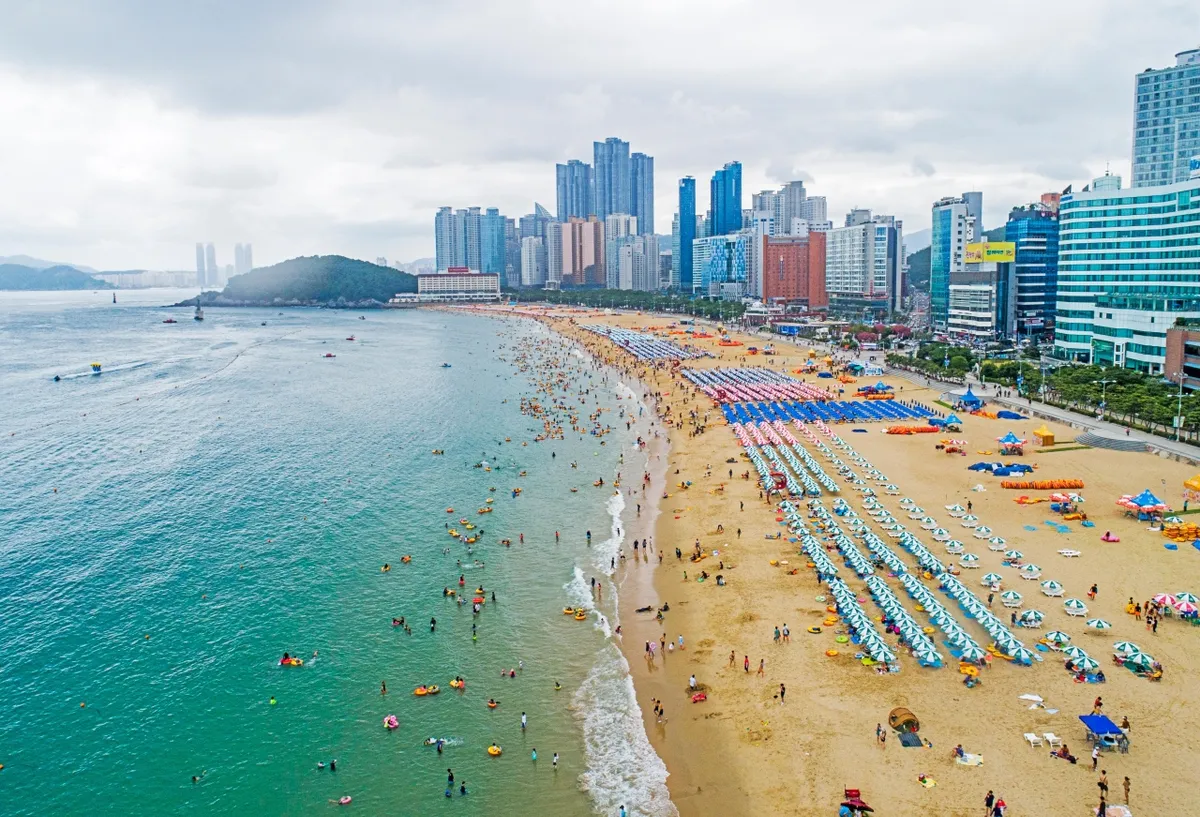
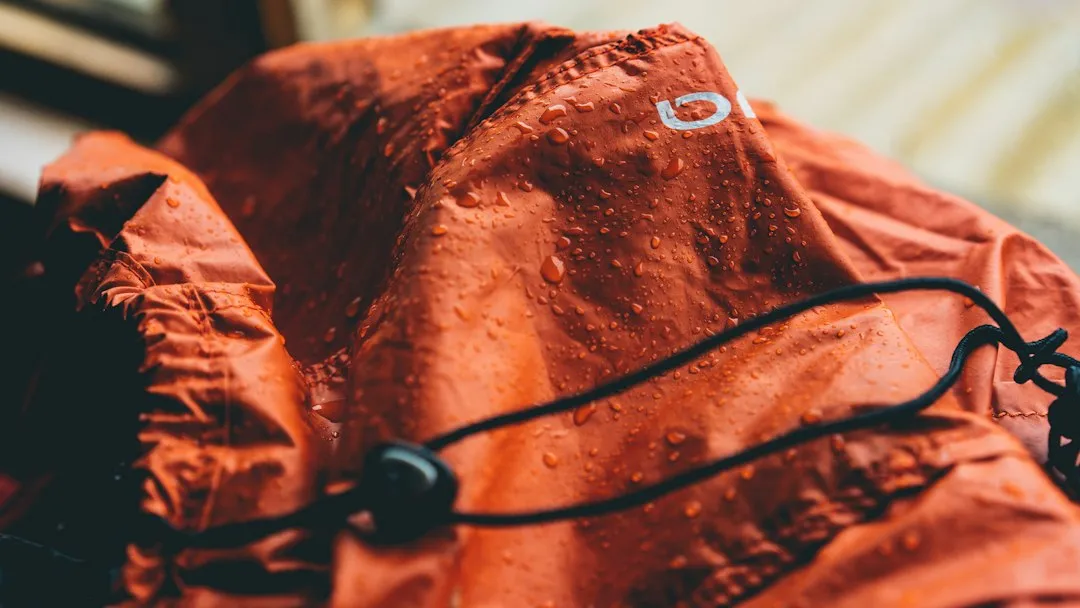
Use lightweight, breathable clothing and quick-drying fabrics. Add a compact umbrella or waterproof outer layer, comfortable shoes that tolerate wet streets, and a light indoor layer for strongly air-conditioned spaces.
Do not interpret the rainy season as continuous rain every day. It is a climatological period with variable timing and intensity, and the forecast for the actual city and date remains more useful than a fixed calendar assumption.
Autumn: September to November
KTO groups September through November as autumn. Seoul's listed average high and low are 26.2°C and 17.7°C in September, 20.2°C and 10.6°C in October, and 11.9°C and 3.5°C in November.
Pack light clothing for early September, then add a sweater or jacket for October. By November, a warmer coat becomes useful, particularly for mornings, evenings, and northern or elevated destinations.
Winter: December to February
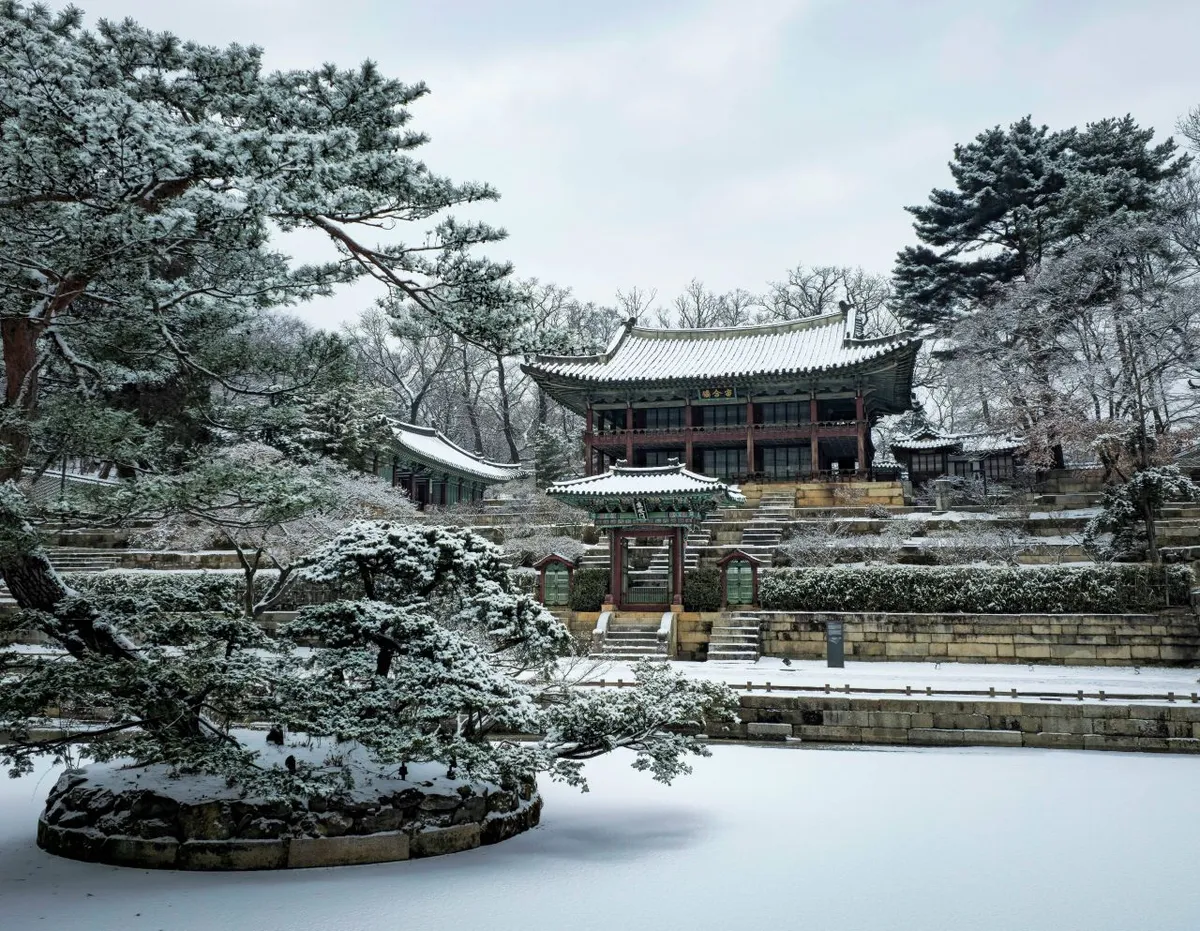
December through February requires insulated clothing. KTO states that winter temperatures frequently fall below freezing and advises travelers to prepare thick outerwear; KMA describes winter as cold and dry under the influence of a continental high-pressure system.
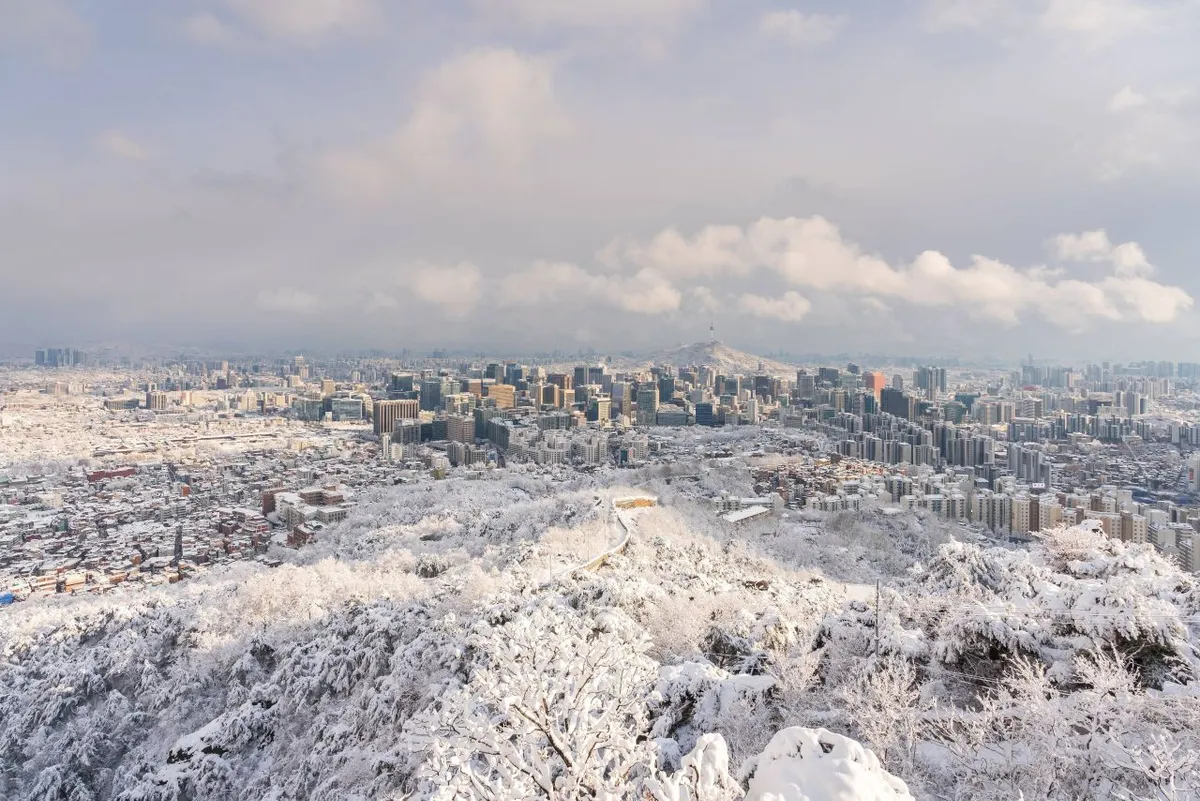
Pack an insulated coat, warm base layer, gloves, and closed footwear with stable traction. Travelers heading to ski areas, mountains, or snow-covered walking routes need equipment appropriate to those specific activities rather than a city-only winter wardrobe.
3. Step-by-Step Month Guide and Packing Decisions
January and February
These are winter months, with January the coldest month in KMA's national climate characteristics. Seoul's average lows remain below freezing in the KTO table, while Busan is milder but still cold enough for winter outerwear.
Start with an insulated coat and thermal or warm base layers. Add gloves and footwear suited to cold pavement. Check for snow, ice, and cold-wave information immediately before any outdoor itinerary.
March and April
March is a transition month rather than uniformly warm spring. KTO specifically warns that chilly weather can continue into mid-March. April is milder, but the difference between daytime and nighttime temperatures still supports layered clothing.
A medium-weight outer layer works for early spring, with a lighter jacket for warmer afternoons. Keep one warm layer available for evening walks and windy or elevated locations.
May and June
May is warmer, while June begins the summer season in KTO's planning calendar. The KMA climate normals place the average onset of the rainy season in the second half of June, beginning first in Jeju and then extending to southern and central regions.
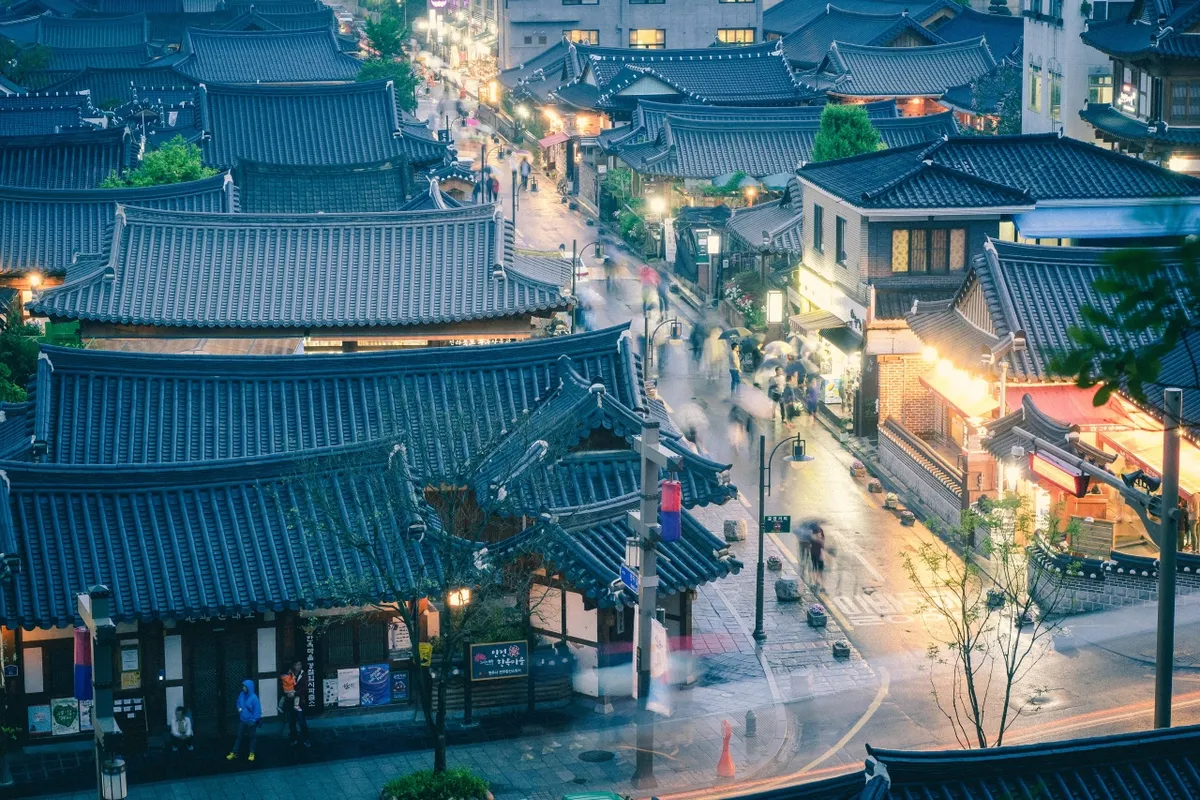
Those onset dates are long-term averages, not guaranteed dates for any specific year. Pack a waterproof layer and check the current regional forecast instead of assuming that rain begins on a fixed day.
July and August
July and August combine high humidity with the hottest part of the year. KTO advises special care during midsummer from late July through August and recommends checking for heavy-rain or typhoon advisories before and during travel.
Choose breathable clothing that can dry quickly, and plan a second pair of socks or shoes if the forecast is wet. Keep temperature-sensitive documents and electronics in a water-resistant pouch rather than relying only on an umbrella.
September and October
September begins the autumn calendar but can remain warm. October is cooler and more suitable for a light jacket, particularly after sunset. The Seoul and Busan averages in KTO's table also show that Busan remains milder at night.
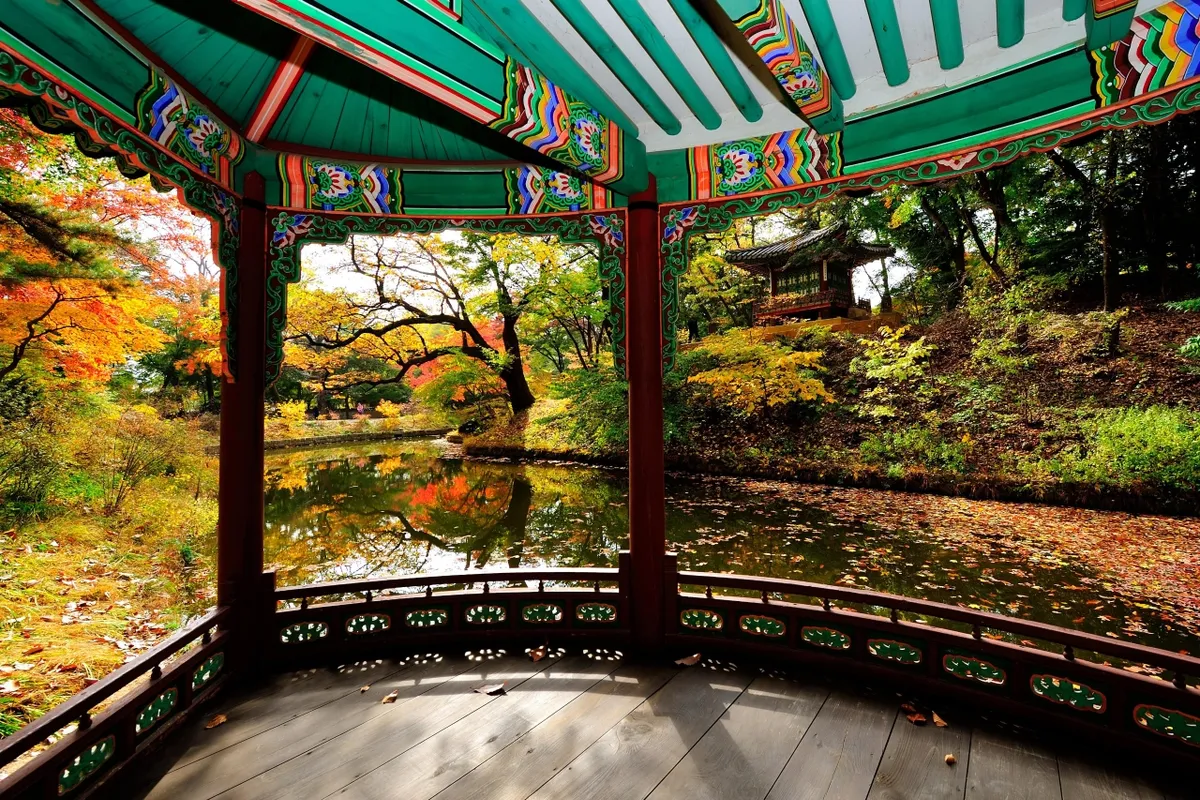
Use layers instead of one heavy garment. A short-sleeved or light base can work during warmer hours, while a sweater or jacket covers cooler evenings and changing regional conditions.
November and December
November is the transition into winter, and December is a winter month. Seoul's KTO averages fall from an 11.9°C high and 3.5°C low in November to 4.2°C and -3.4°C in December.
Move from autumn layers to a proper winter coat. Add gloves and cold-weather footwear when the forecast indicates freezing temperatures or snow, especially for long outdoor days.
4. Pro Tips and Weather Warnings
💡 Packing Method: Check three things separately: the climate normal for the month, the short-term forecast for the city, and the conditions at any mountain, island, or coastal stop. A nationwide seasonal description cannot replace a destination forecast.
🚨 Rainy-Season Warning: KMA's 1991–2020 normals place the average rainy-season onset around June 19 in Jeju, June 23 in southern regions, and June 25 in central regions. These are climatological averages and must not be used as fixed annual dates.
⏰ Forecast Check: Review the KMA forecast when packing, again before a long transfer, and before any weather-dependent outdoor plan. If an official warning or advisory is active, follow the current government guidance rather than an old itinerary or climate average.
💧 Wet-Weather Tip: Protect travel documents, medicines, and electronics inside the bag. An umbrella covers the traveler but may not protect luggage during transfers, exposed platforms, or walks from a station.
🧥 Layering Tip: Indoor temperatures can differ from outdoor conditions. Removable layers are more adaptable than one garment that is comfortable only outdoors.
- Spring: light-to-medium outerwear, removable layers, and a compact rain layer.
- Summer: breathable clothing, waterproof protection, and an indoor layer.
- Autumn: light clothing plus a sweater or jacket, becoming warmer by November.
- Winter: insulated coat, warm base layer, gloves, and stable closed footwear.
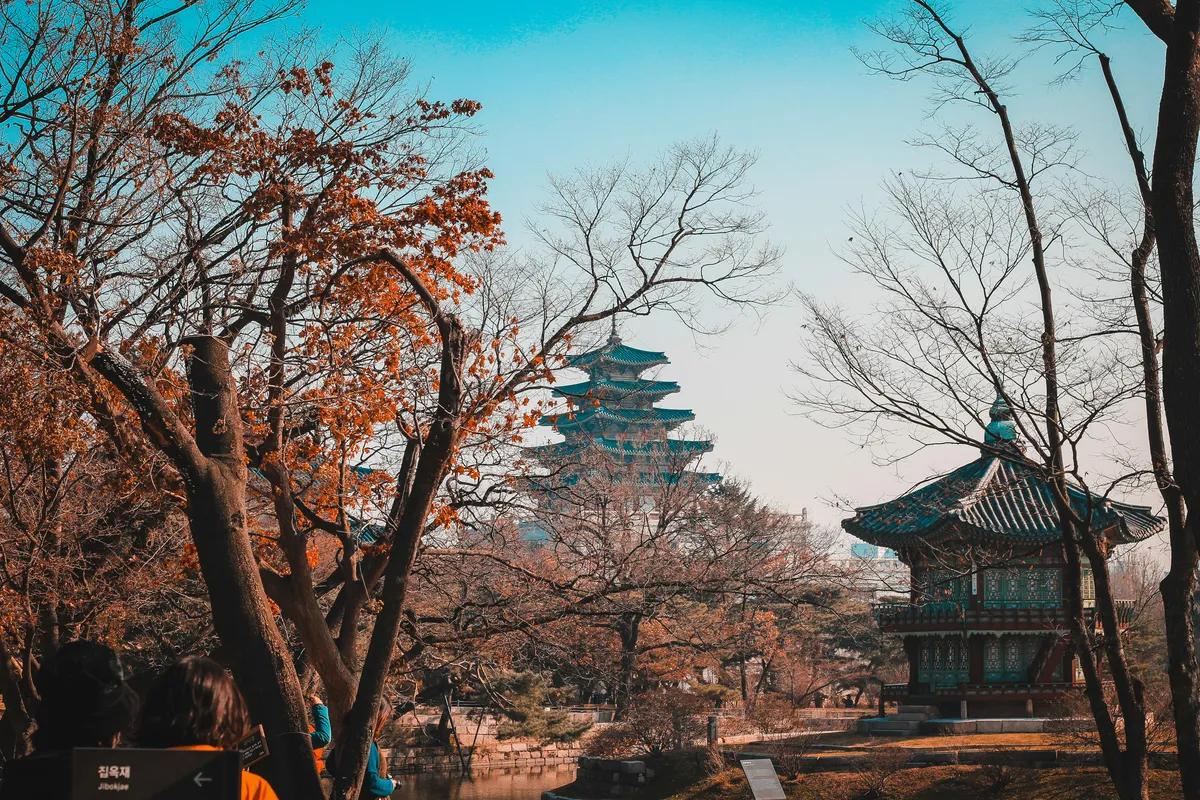
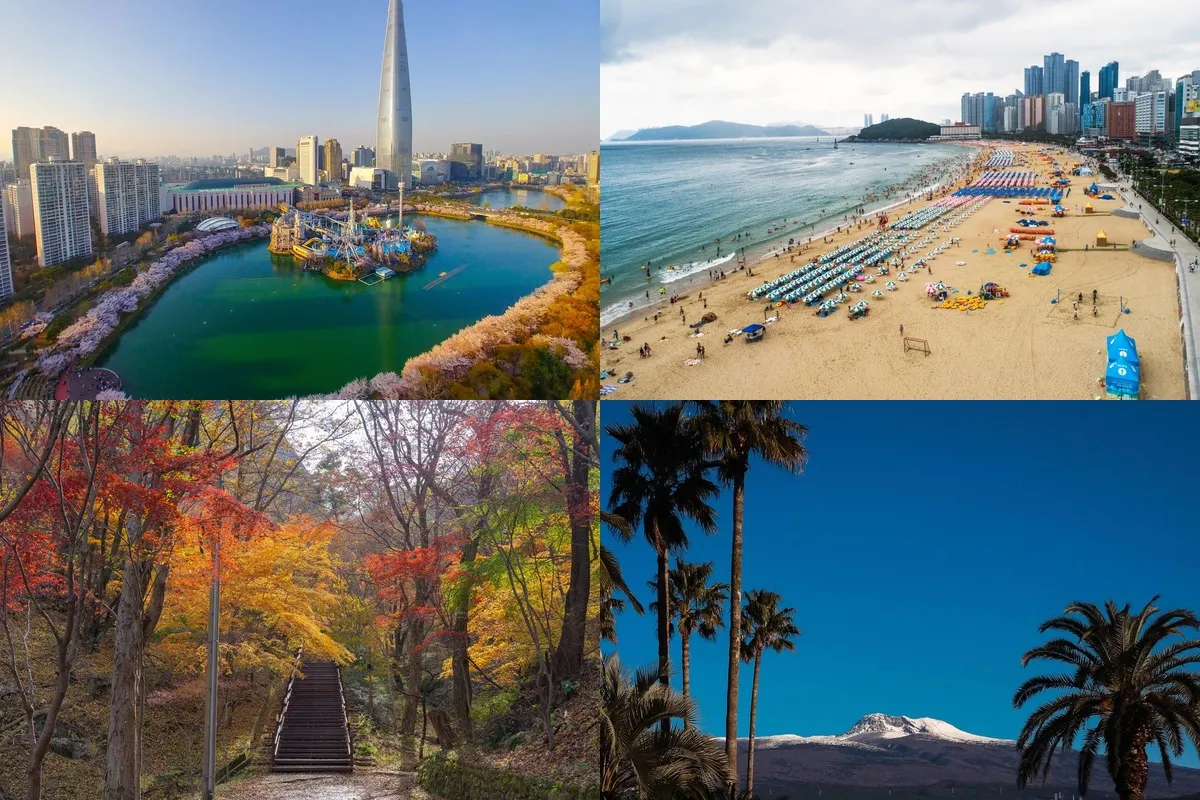
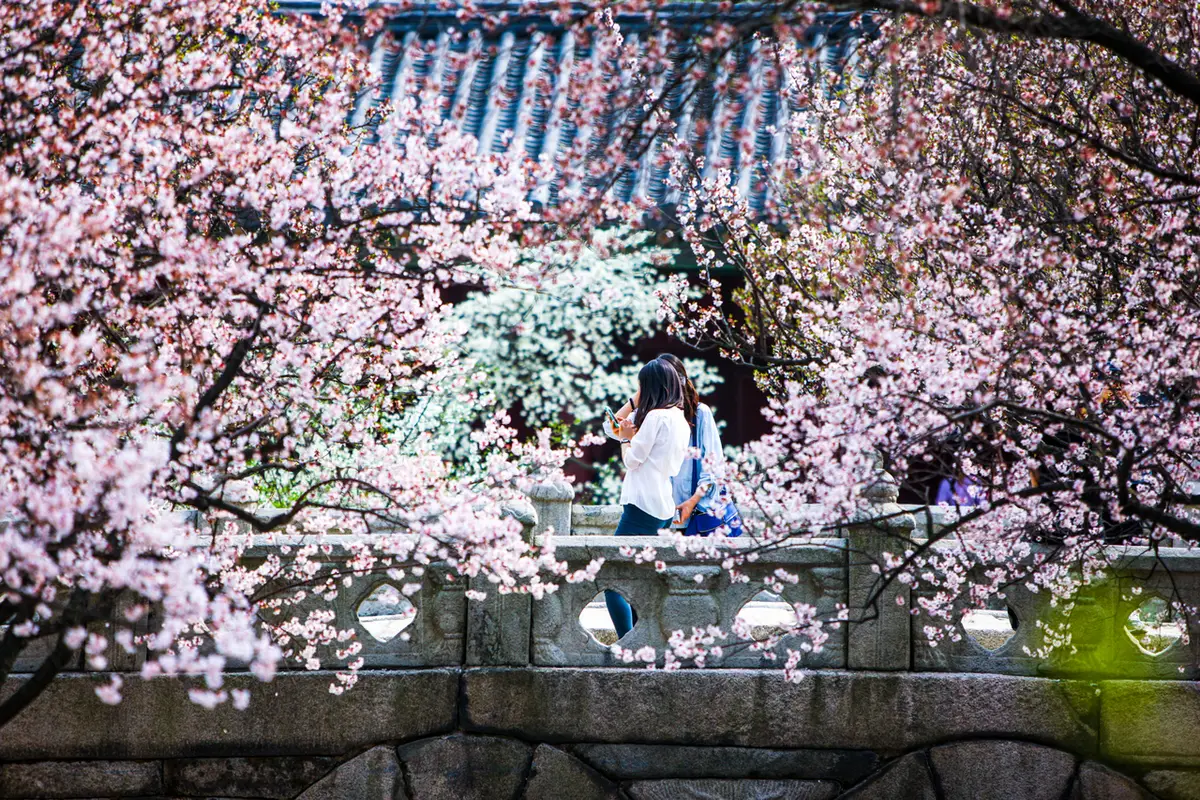
Seasonal photographs should also be treated as examples rather than promises. Blossom timing, foliage color, snowfall, and beach conditions vary with location and weather from year to year.
5. Frequently Asked Questions
Which months usually have milder weather in Korea?
No single month guarantees mild weather. KTO identifies spring from March to May and autumn from September to November as the main moderate-weather periods, but early March, early September, and late November can still resemble the preceding or following season. Check the city forecast before packing.
When is the rainy season in Korea?
KMA's climate normals place the average onset in the second half of June and the average duration at approximately 31–32 days, depending on region. These are long-term averages, not fixed dates. Rainfall timing and intensity vary each year.
Is Seoul colder than Busan in winter?
KTO's monthly table shows lower January averages in Seoul than in Busan: 2.1°C/-5.5°C for Seoul and 8.2°C/-0.1°C for Busan. These are monthly averages rather than a forecast for a particular day.
Does it rain every day during Korea's rainy season?
No official climate source says that it rains continuously every day. The rainy season describes a climatological period, while actual rain varies by date and region. Use the live KMA forecast for daily planning.
What should travelers pack for Korea in winter?
Start with an insulated coat, warm base layer, gloves, and closed footwear with suitable traction. Add activity-specific equipment for mountains, ski areas, or extended outdoor exposure. Recheck the destination forecast before departure.
Korea weather by month is most useful as a packing framework: use official climate normals to choose the basic wardrobe, then adjust it with the live KMA forecast for every city on the itinerary.
Sources & References
Official Government and Tourism Sources:
- Korea Meteorological Administration — Korea Climate Characteristics (1991–2020 climate normals)
- Korea Meteorological Administration — Short-Term Forecast
- Korea Tourism Organization — Climate
Image Credits:
- Hero spring panel, Seokchon Lake: Song Seung-uk / Korea Tourism Organization
- Hero summer panel, Haeundae Beach: Live Studio / Korea Tourism Organization
- Hero autumn panel, Maisan: Jo Young-kwon / Korea Tourism Organization
- Hero winter panel, Hallasan: Jeong Da-hee / Korea Tourism Organization
- Changgyeonggung spring: Korea Tourism Organization / Kim Ji-ho
- Rainy Jeonju Hanok Village: Choi Young-rak / Korea Tourism Organization
- Haeundae summer: Live Studio / Korea Tourism Organization
- Changdeokgung autumn: Park Gi-ju / Korea Tourism Organization
- Changdeokgung winter: Lee Jae-hyeong / Korea Tourism Organization
- Snow-covered Seoul: Gu Gyo-bok / Korea Tourism Organization
- Waterproof jacket: Dan Gold / Unsplash
Last verified: September 24, 2026
Climate normals, forecasts, and seasonal conditions can change. Verify destination-specific weather and active advisories through the Korea Meteorological Administration before travel.