Dakgalbi (닭갈비) brings seasoned chicken and vegetables together on a wide iron plate, with diners sharing the dish from the center of the table. Closely associated with Chuncheon (춘천), it appears in both griddle-cooked and charcoal-grilled forms.
This Dakgalbi guide explains what goes into the dish, how the two main cooking styles differ, which additions may appear on restaurant menus, and how fried rice or makguksu can complete the meal.
1. Dakgalbi and Its Chuncheon Origins
The name can be confusing. Dak means chicken, while galbi means ribs. In restaurant use, however, Dakgalbi refers to a chicken dish rather than a plate of beef or pork ribs.
Chuncheon is the place most closely identified with the dish. The Korea Tourism Organization describes a story from the 1960s in which chicken was seasoned and grilled over charcoal in place of pork ribs.
Vegetables including cabbage and onion were later added, and the ingredients moved onto a large iron plate for stir-frying. Restaurants gathered along a backstreet of Chuncheon Myeong-dong during the 1970s and 1980s, forming what is now Chuncheon Myeongdong Dakgalbi Street (춘천 명동 닭갈비 골목).
The present-day street is a 150-meter restaurant alley at 52 Joyang-dong, Chuncheon-si, Gangwon-do. It includes restaurants serving griddled and charcoal-grilled versions, while operating hours vary by vendor.
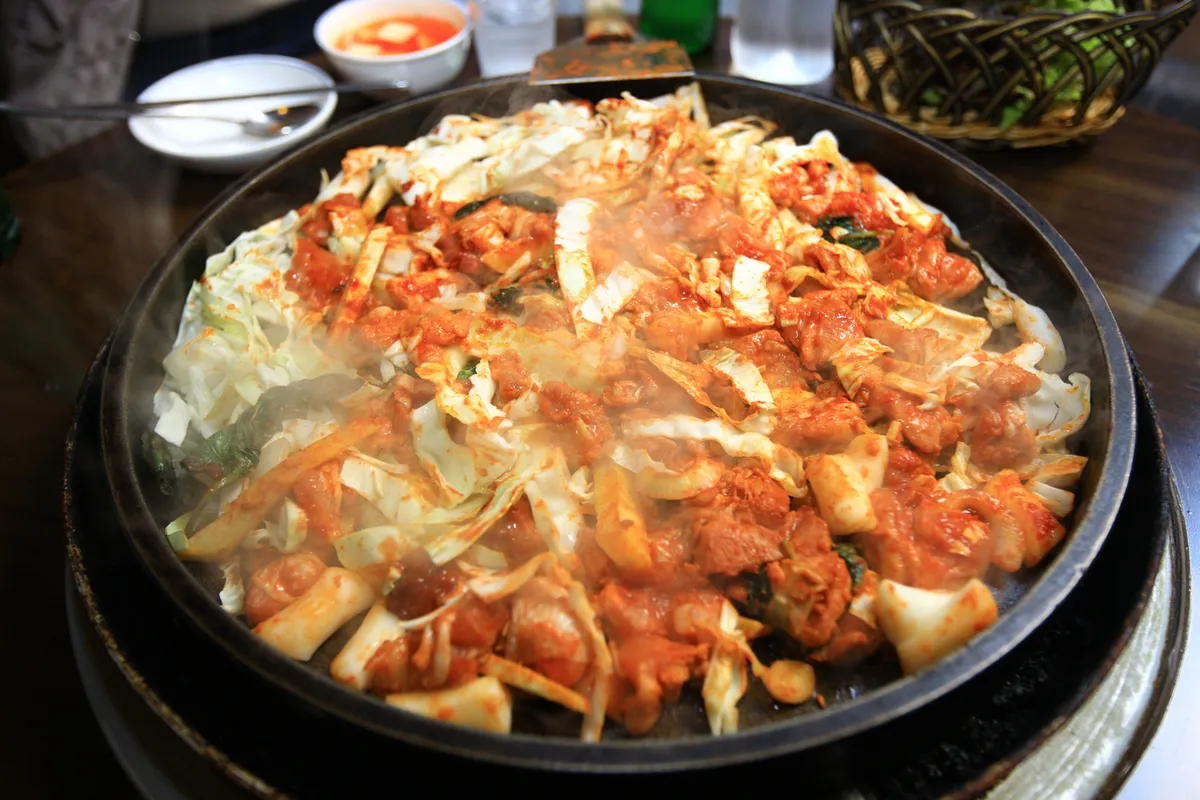
Photo: Korea Tourism Organization
2. What Goes Into Iron-Plate Dakgalbi?
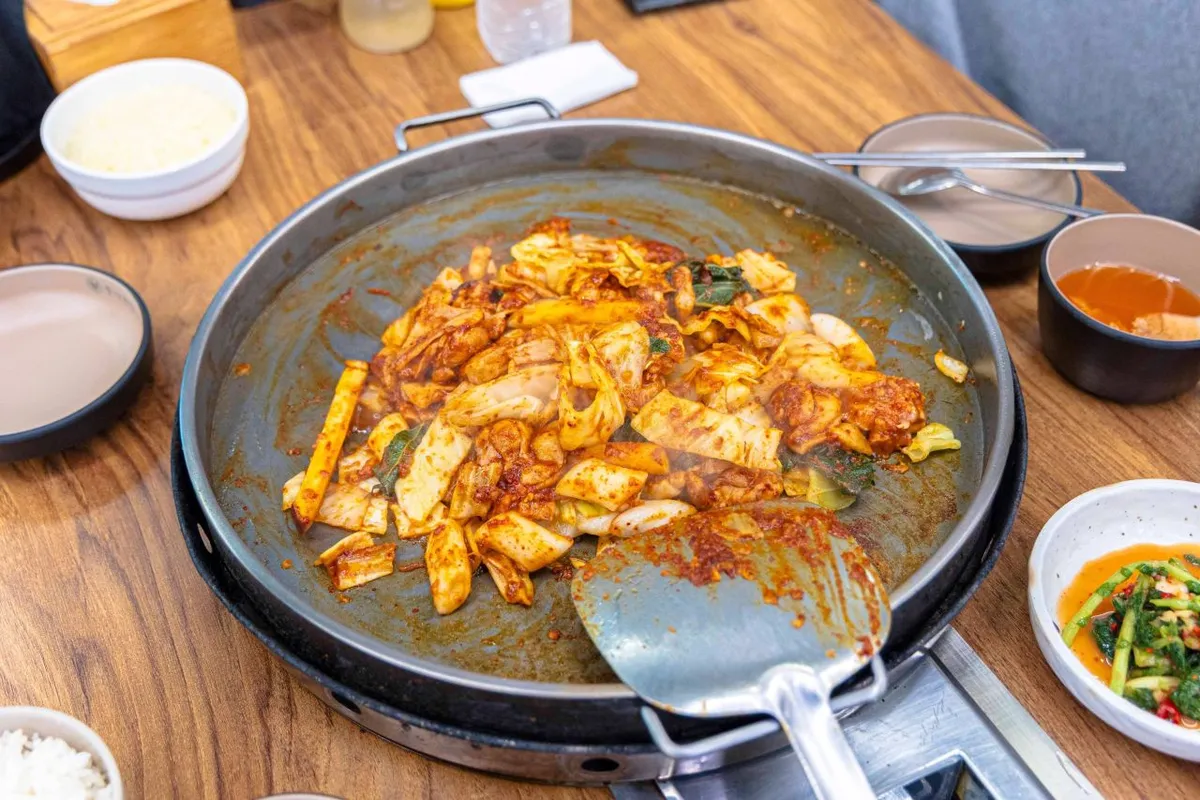
The griddle version is built around seasoned chicken cooked with vegetables. The official description of Chuncheon Dakgalbi Street names cabbage and onion, while Korea Tourism Organization restaurant records also show versions with tteok (떡, rice cakes) and sweet potatoes.
The ingredients share one pan, so the vegetables cook in the chicken seasoning rather than arriving as separate side dishes. Exact recipes and additions differ by restaurant, and a menu may offer a base order followed by optional extras.
Cheese and additional rice cakes are examples recorded on a Chuncheon restaurant menu. These should be treated as options rather than fixed components of every Dakgalbi order.
At restaurants where raw chicken arrives on the griddle, follow the staff's cooking instructions and wait until they indicate that the dish is ready.
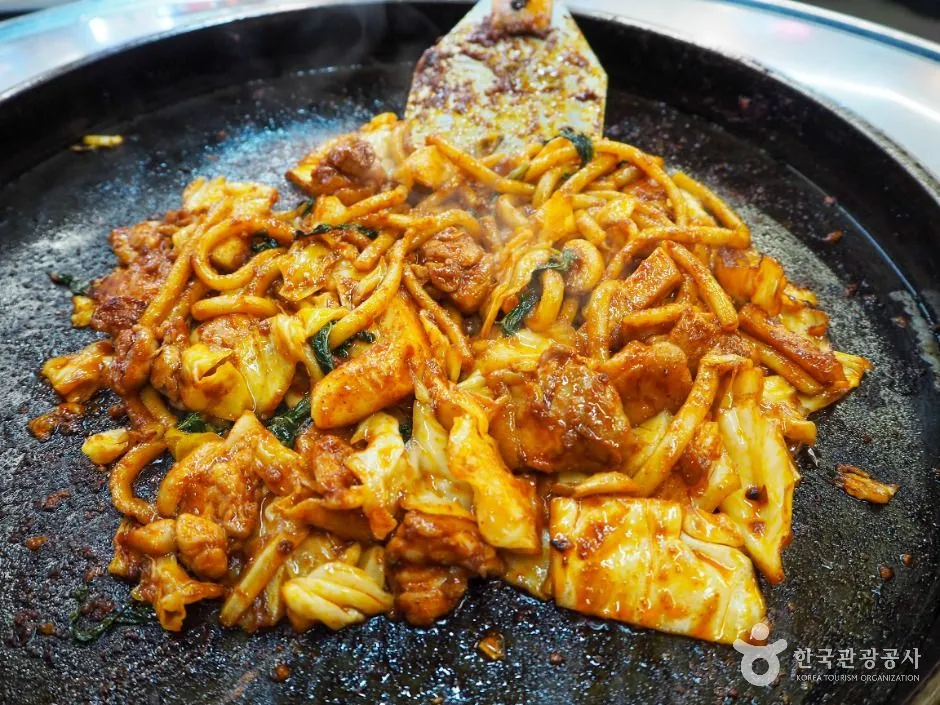
Photo: Korea Tourism Organization
3. Iron-Plate and Charcoal Dakgalbi
Chuncheon restaurants serve two recognizable formats. The iron-plate version cooks chicken and vegetables together on a broad griddle. This is the format that accommodates rice cakes, sweet potatoes, noodles, or cheese when those additions are available.
Charcoal Dakgalbi, called sutbul Dakgalbi (숯불닭갈비), places seasoned chicken over a charcoal grill. The official Chuncheon street guide lists charcoal-grilled spicy chicken alongside spicy griddled chicken, confirming that both belong to the city's Dakgalbi tradition.
The table setup shows which version a restaurant serves. A wide solid pan indicates the stir-fried format, while a grill grate indicates the charcoal version. Check the menu before ordering because a specialist restaurant may focus on one style.
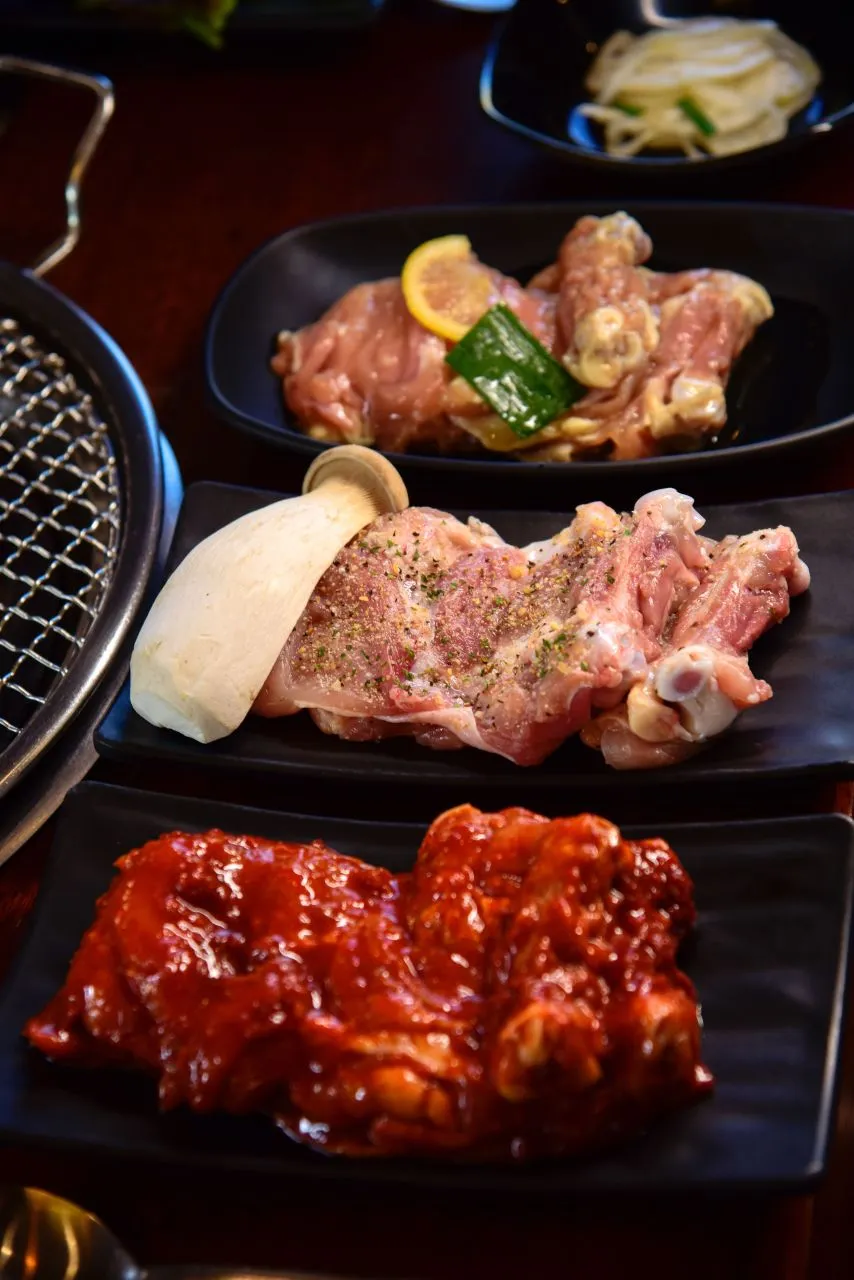
Photo: Korea Tourism Organization
4. Additions, Makguksu, and Fried Rice
Dakgalbi menus often separate the main chicken order from additions. Korea Tourism Organization records for Chuncheon restaurants identify rice cakes and cheese as optional additions, but availability and portion rules depend on the individual restaurant.
Makguksu (막국수), a buckwheat noodle dish associated with Chuncheon, is another documented accompaniment. Chuncheon Myeongdong Dakgalbi Street serves both Dakgalbi and Chuncheon buckwheat noodles, and some restaurant menus list cold dongchimi makguksu made with radish-water-kimchi broth.
Bokkeumbap (볶음밥), or fried rice, may be offered after the chicken and vegetables have been eaten. A Korea Tourism Organization restaurant listing specifically describes fried rice prepared in the remaining sauce.
If you want this finish, check the menu before the pan is cleared. The useful menu word is bokkeumbap for fried rice.
5. Ordering Dakgalbi in Korea
Start by confirming the cooking style: cheolpan Dakgalbi (철판닭갈비) for the iron-plate version or sutbul Dakgalbi for the charcoal-grilled version. Then check how the restaurant lists its serving counts.
Choose additions only when they are shown on the current menu. Cheese, rice cakes, noodles, and fried rice are not universal, and the kitchen may add them at different stages of the meal.
Dakgalbi is described by Korea Tourism Organization sources as a spicy chicken dish. A recorded Chuncheon restaurant also lists soy-sauce and cheese variations, but this does not mean every restaurant can make a non-spicy version.
If spice level or allergens are a concern, ask the restaurant about the sauce and ingredients before ordering. Recipes are not standardized across every kitchen.
Frequently Asked Questions
Is Dakgalbi made with ribs?
No. Although galbi means ribs, Dakgalbi is a chicken dish. The common Chuncheon format uses seasoned chicken cooked with vegetables on an iron plate.
Is Dakgalbi always cooked on an iron plate?
No. Chuncheon has both iron-plate Dakgalbi and charcoal-grilled Dakgalbi. The pan or grill setup usually makes the restaurant's style clear.
Is every Dakgalbi dish spicy?
Korea Tourism Organization descriptions identify the standard dish as spicy stir-fried chicken. Some restaurants list soy-sauce or cheese versions, but options vary, so confirm the current menu directly.
What can be ordered after Dakgalbi?
Some restaurants offer bokkeumbap made in the remaining sauce. Makguksu may also be ordered as a separate noodle dish, particularly in Chuncheon.
Plan a Chuncheon Food Trip
Dakgalbi can be combined with other stops in the city. Explore things to do in Chuncheon when planning the rest of the route.
Sources & References
Food and regional history: Visit Korea — Chuncheon Myeongdong Dakgalbi Street
Restaurant menu examples: Korea Tourism Organization (TourAPI), including Woomi Dakgalbi and Dunggeun Dakgalbi records
Photos: Korea Tourism Organization
Last verified: September 8, 2026
Restaurant menus, additions, and operating hours may change. This Dakgalbi guide was last verified on September 8, 2026; confirm current details directly before visiting.