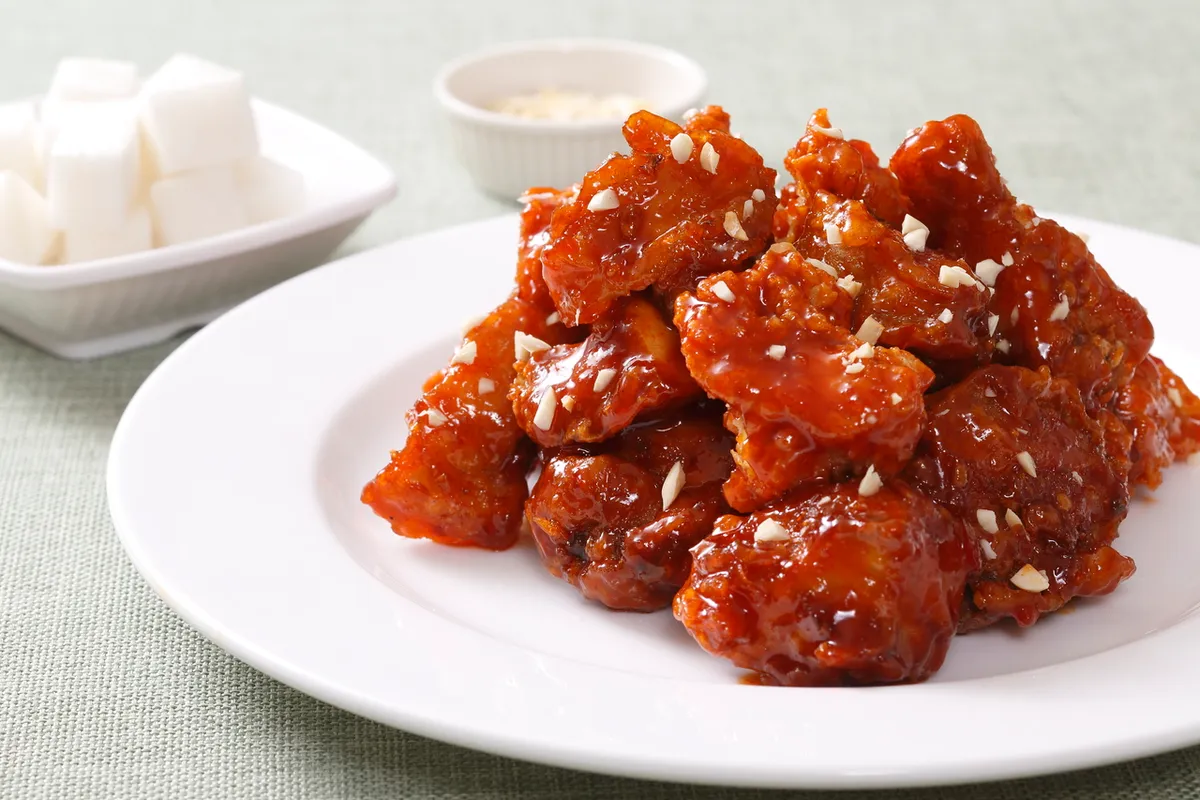
Dakgangjeong (닭강정) is fried chicken coated in a glossy sweet-and-spicy sauce, commonly sold at Korean markets and specialist takeaway shops.
This Dakgangjeong guide explains the dish, how it differs from Korean fried chicken, and what to confirm before ordering.
1. What Is Dakgangjeong?
The name combines dak (닭), meaning chicken, with gangjeong (강정). On a food-market sign, the full word identifies a prepared chicken dish rather than a general category of fried chicken.
The chicken is fried and then coated with sauce. The finished pieces therefore arrive already seasoned, with the coating covering the surface rather than being supplied only as a separate dip.
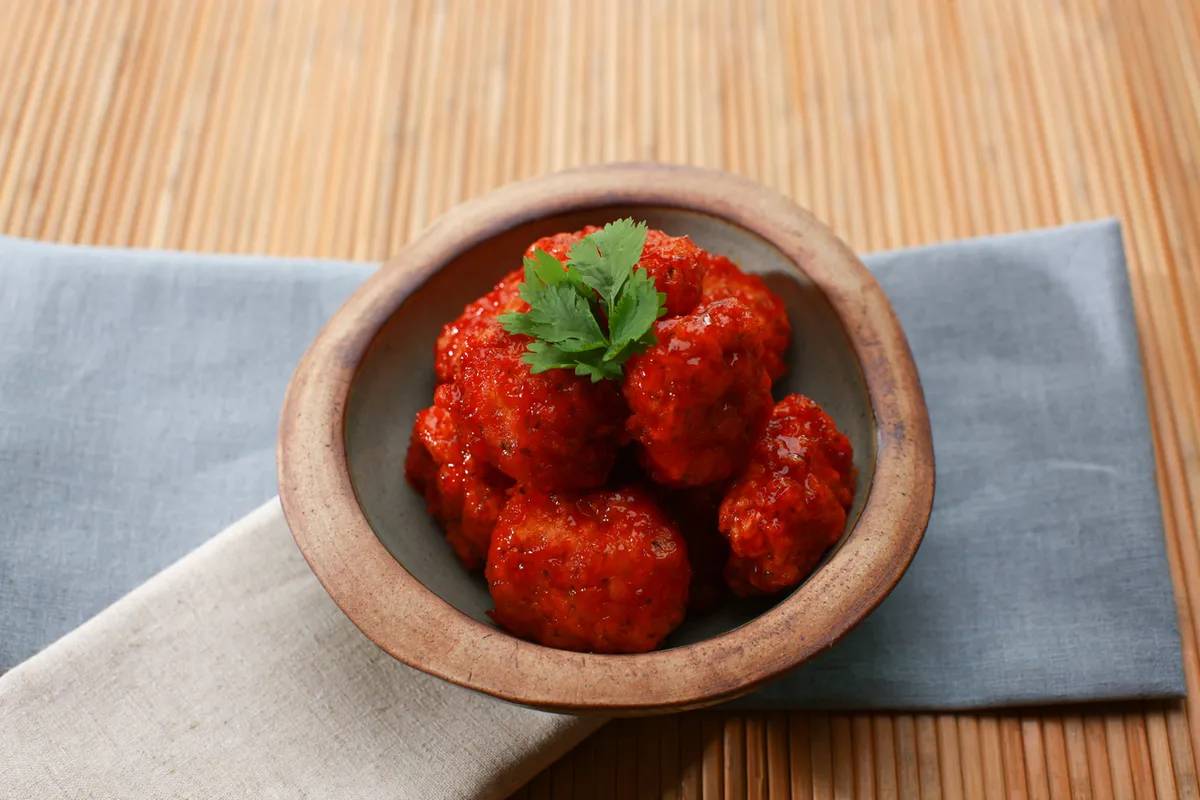
Photo: Korea Tourism Organization
Color alone does not establish the heat level. A red coating may contain chili, but each shop controls its own recipe, so sweetness and heat can vary.
Some portions contain bones, while others are sold as boneless pieces. The name Dakgangjeong does not by itself guarantee either format; check the menu or ask the vendor before paying.
2. Dakgangjeong vs Korean Fried Chicken
Korean fried chicken, usually written as chikin (치킨), is a broad restaurant category. It can include plain fried chicken, sauce-coated chicken, wings, drumsticks, boneless pieces, and half-and-half orders.
Dakgangjeong is a more specific menu name. The chicken is presented with its sauce already coating the pieces, and market shops frequently display or pack it in trays, cups, or boxes.
Menu scope: Chikin can refer to several fried-chicken styles; Dakgangjeong identifies one sauce-coated dish.
Seasoning: Plain fried chicken may have no heavy coating. Dakgangjeong is sold after the fried pieces have been coated.
Piece size: Dakgangjeong is often offered in smaller pieces, but cuts and bone content vary by shop.
Ordering format: Chicken restaurants may organize menus around whole orders and flavor choices. Market vendors may offer Dakgangjeong by container or displayed portion.
Eating setting: Dakgangjeong is closely associated with markets and takeaway counters, although it can also be sold in dedicated shops.
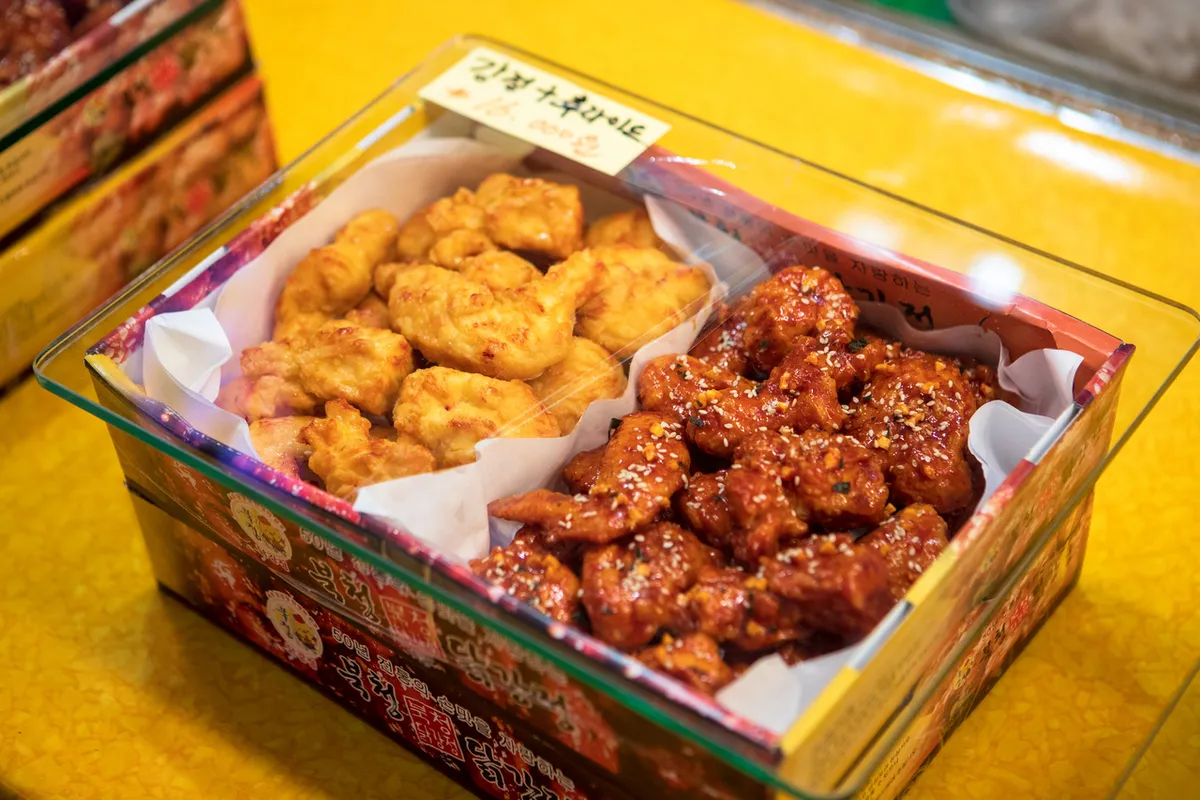
Photo: Korea Tourism Organization
Yangnyeom chicken (양념치킨) creates the closest point of confusion because it is also fried chicken covered with seasoning.
The safest distinction is the menu label and the shop's own description, not an assumed recipe rule.
Choose Dakgangjeong when you want the market-style coated dish shown at the counter.
Choose a regular chicken shop when you want to compare plain, sauced, bone-in, boneless, or half-and-half options. The separate Korean Fried Chicken Guide covers those broader choices.
3. Sauce, Texture, and Serving Styles
A visible sauce layer is the dish's defining feature. It can leave the surface glossy and sticky while the fried coating remains underneath.
The exact balance changes from shop to shop. Some batches are darker, some are bright red, and garnishes can also differ.
Do not use color, sesame seeds, or nuts as a reliable guide to ingredients or spice.
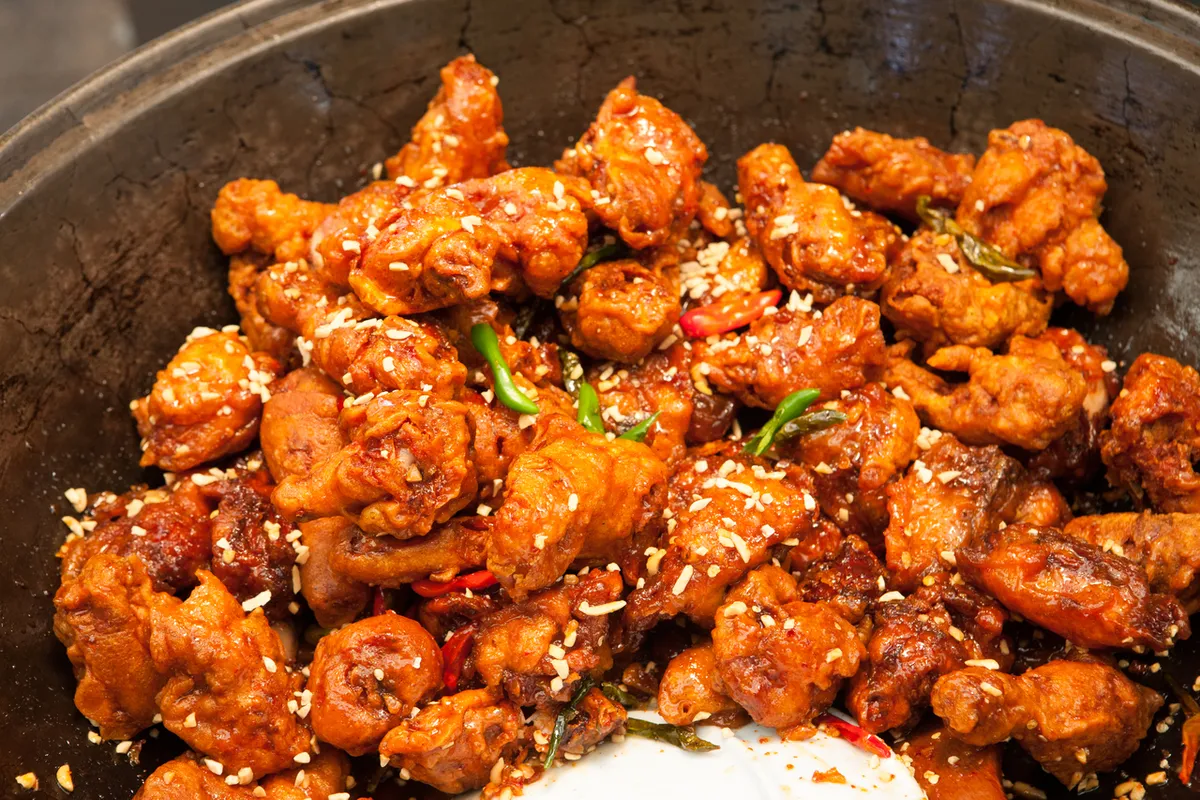
Photo: Korea Tourism Organization
Market counters may sell a single flavor or several levels of seasoning. When more than one tray is displayed, confirm which is mild, which is spicy, and whether the portion contains bones.
If the chicken has already been cooked and coated, the vendor may not be able to adjust the sauce for one order.
Ask before the portion is packed rather than requesting a change afterward.
4. Dakgangjeong at Korean Markets
Incheon’s Sinpo International Market (신포국제시장) dates back to the late nineteenth century and was formally registered as a market in 1970.
It now contains more than 140 stores, and its official tourism description identifies Dakgangjeong as the market’s best-known food item.
The dish is also documented at Sokcho Tourist and Fishery Market (속초관광수산시장). These market settings explain why visitors often encounter Dakgangjeong in takeaway packaging rather than as a plated restaurant course.
A box may be intended for immediate sharing or for carrying away.
Portion names, container sizes, sauces, and bone content are shop-specific, so read the displayed options instead of assuming every market uses the same system.
Travelers building an Incheon or Sokcho food stop can browse things to do in Incheon and things to do in Sokcho for related trip planning.
5. How to Order Dakgangjeong
Start with three questions: portion size, bone content, and heat. These details matter more than trying to identify the recipe from the display alone.
Dakgangjeong hana juseyo (닭강정 하나 주세요): One Dakgangjeong, please.
Igeo maewoyo? (이거 매워요?): Is this spicy?
Sunsarieyo? (순살이에요?): Is it boneless?
Gyeon-gwa-ryu deureogayo? (견과류 들어가요?): Does it contain nuts?
Jageun saijeu isseoyo? (작은 사이즈 있어요?): Do you have a small size?
If you have an allergy, ask the shop directly about the sauce, frying oil, garnishes, and cross-contact. Appearance alone cannot confirm the ingredients.
For groups, check whether the vendor offers separate flavors or a mixed box. Do not assume that a two-flavor package follows the same banban system used by Korean fried-chicken restaurants.
Frequently Asked Questions
What separates Dakgangjeong from regular chicken-shop orders?
Regular chicken menus cover plain and sauced styles in several cuts. Dakgangjeong is a specific dish sold with the pieces already coated in sauce.
Is Dakgangjeong always boneless?
No. Boneless versions are available, but the name does not guarantee boneless chicken. Ask “Sunsarieyo?” before ordering if bones are a concern.
Is Dakgangjeong always spicy?
No single heat level applies to every shop. The sauce is commonly described as sweet and spicy, but recipes and available flavor levels vary, so ask the vendor.
How is Dakgangjeong different from yangnyeom chicken?
Both are fried and sauce-coated, so they can look similar.
Dakgangjeong is sold under its own dish name and is strongly associated with market and takeaway counters. Yangnyeom chicken is one sauce category within a broader chicken-shop menu.
Where can travelers find Dakgangjeong in Korea?
It is sold in traditional markets and dedicated takeaway shops.
Sinpo International Market in Incheon is officially associated with the dish. Korean tourism photography also documents it at Sokcho Tourist and Fishery Market.
Complete Your Korea Food Trip with TripKorea
Dakgangjeong is the menu name to remember when you want Korean market chicken coated before it reaches the box.
Compare the portion, sauce, and bone options, then continue planning with Incheon activities or Sokcho activities.
Sources & References
Data Sources:
Dish and market information: Korea Tourism Organization, Sinpo International Market (TourAPI)
Photos and image metadata: Korea Tourism Organization PhotoKorea
Official Sites:
Last verified: 2026-09-09
Market menus, portion sizes, and ingredients are subject to change. Please confirm directly before ordering.