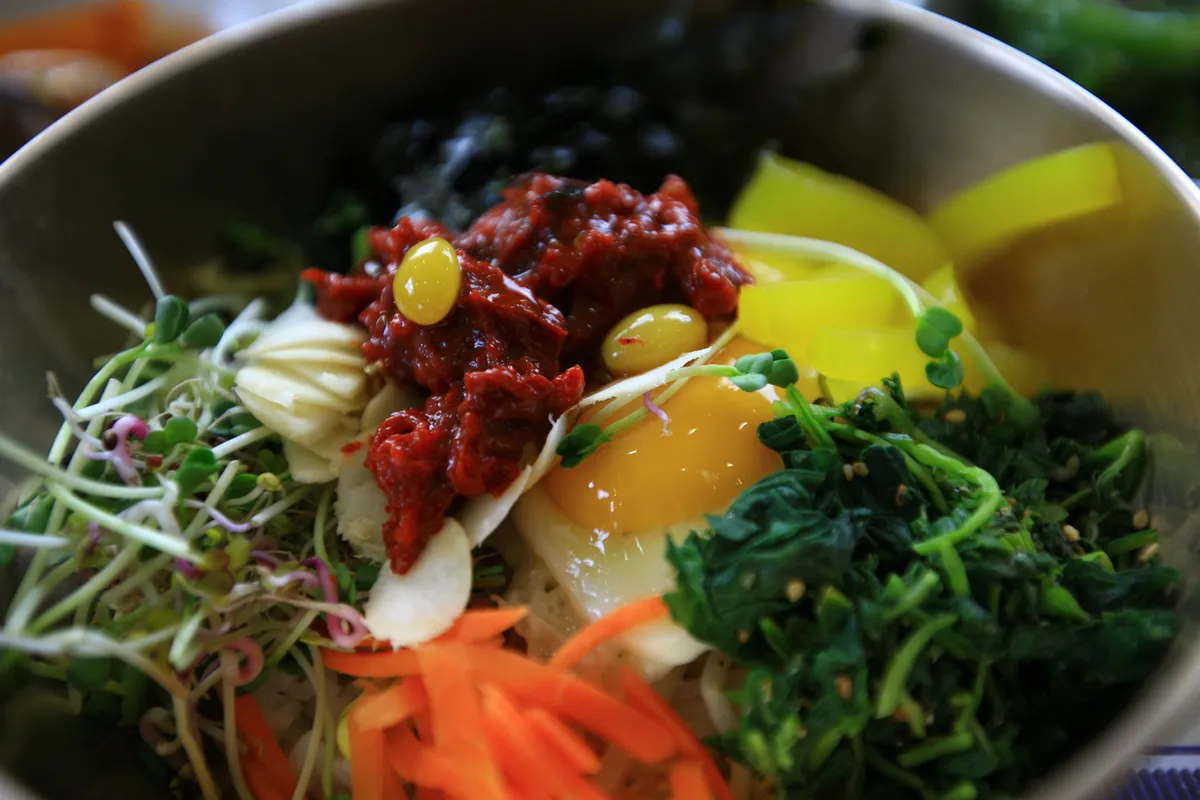
Bibimbap is Korea’s mixed rice bowl: steamed rice topped with fresh and cooked vegetables, gochujang red chili paste, and optional beef or egg before everything is mixed together. This bibimbap guide focuses on the parts travelers see most often on menus — classic bibimbap, dolsot bibimbap served in a hot stone bowl, and regional styles associated with Jeonju and Jinju.
The name is direct: bibim means mixed, and bap means cooked rice. The dish is useful for visitors because it explains a central Korean dining idea in one bowl: rice, vegetables, seasoning, and side dishes are not always separate experiences, but can be combined into one balanced meal.
What Bibimbap Means on a Korean Menu
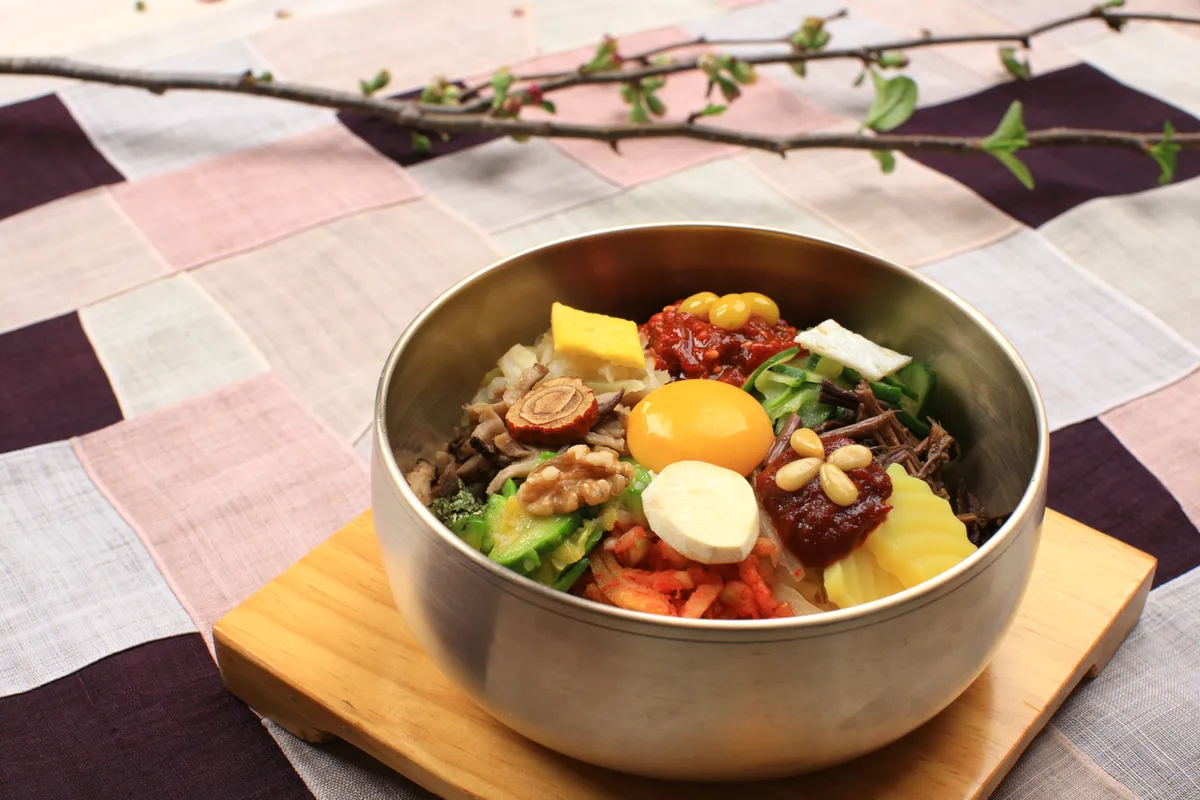
Bibimbap (비빔밥) usually arrives as a bowl of rice with vegetables arranged on top. The toppings may include fresh greens, cooked namul vegetables, mushrooms, and other seasonal ingredients. Gochujang is the defining seasoning in many versions, adding red color, chili heat, saltiness, and slight sweetness. The bowl may also include seasoned raw beef, grilled beef, or a fried egg, depending on the restaurant and style.
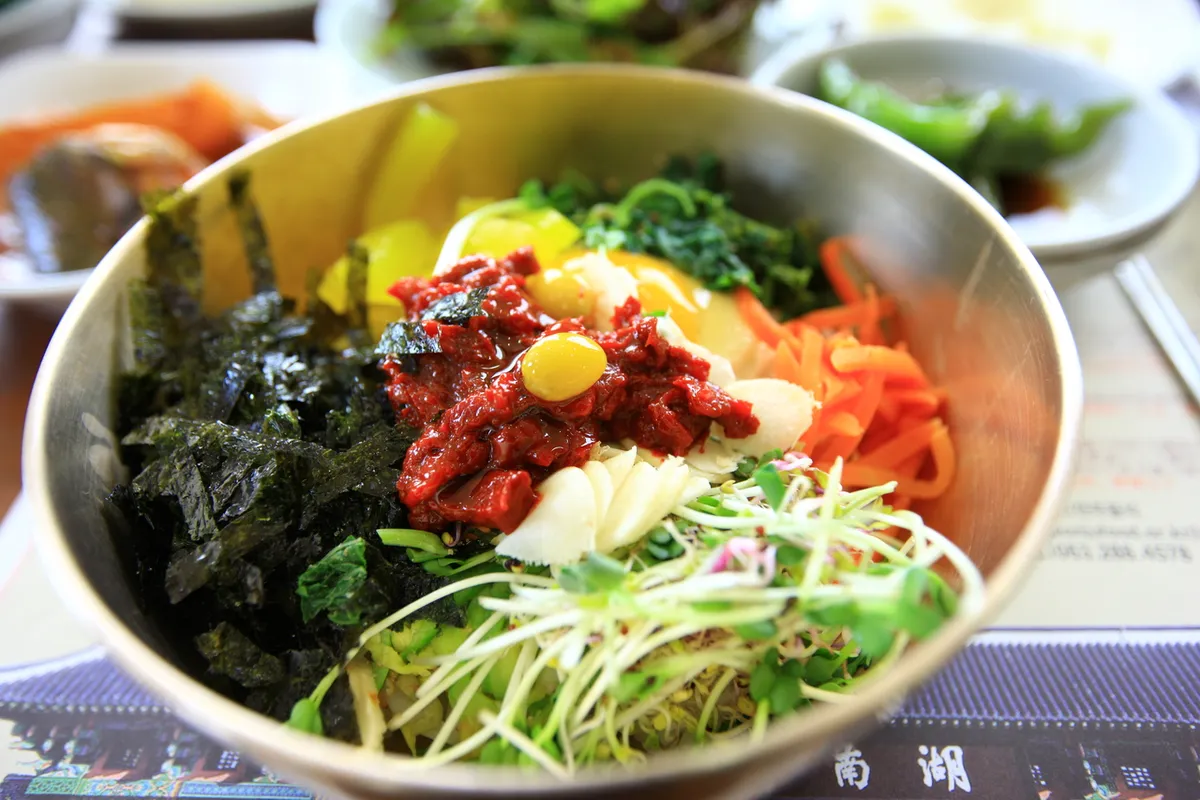
The important step happens after serving. Bibimbap is mixed before eating, so the rice, vegetables, gochujang, and egg or meat become one dish rather than separate layers. Restaurants may serve the gochujang on the side. In that case, add a small amount first, mix, taste, and add more only if needed.
Dolsot Bibimbap: The Hot Stone Bowl Version
Dolsot bibimbap is the hot stone pot version of bibimbap. The bowl is heated before serving, so the rice at the bottom can become firm and browned where it touches the stone. This texture is one reason travelers often search specifically for dolsot bibimbap rather than standard bibimbap.
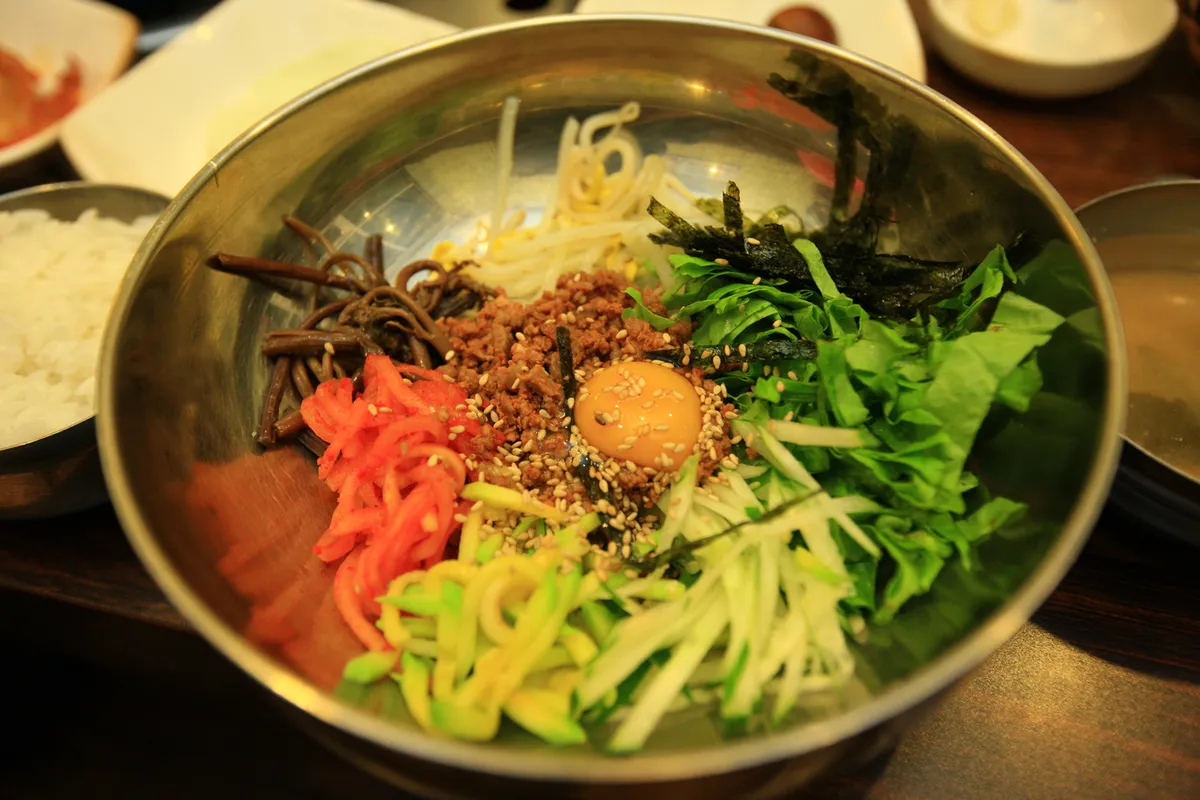
When the stone bowl arrives, it may be very hot. Mix the toppings carefully with the spoon provided, scraping from the edge toward the center. If a raw or soft egg is served on top, the heat from the bowl helps combine it with the rice and vegetables. The result is still bibimbap, but with a warmer serving style and a different rice texture.
Not every bibimbap restaurant serves dolsot bibimbap, and not every dolsot version uses the same toppings. The reliable menu signal is the word dolsot (돌솥), meaning stone pot. If you want the hot bowl version, look for dolsot bibimbap on the menu rather than assuming every bibimbap order will be served that way.
Jeonju and Jinju Styles to Know
Jeonju bibimbap is a regional style connected with the dish. Jeonju is strongly associated with bibimbap in Korean food culture, and many PhotoKorea food images identify Jeonju bibimbap as a representative form. A Jeonju-style bowl often emphasizes carefully arranged toppings, making it visually easy to understand before it is mixed.
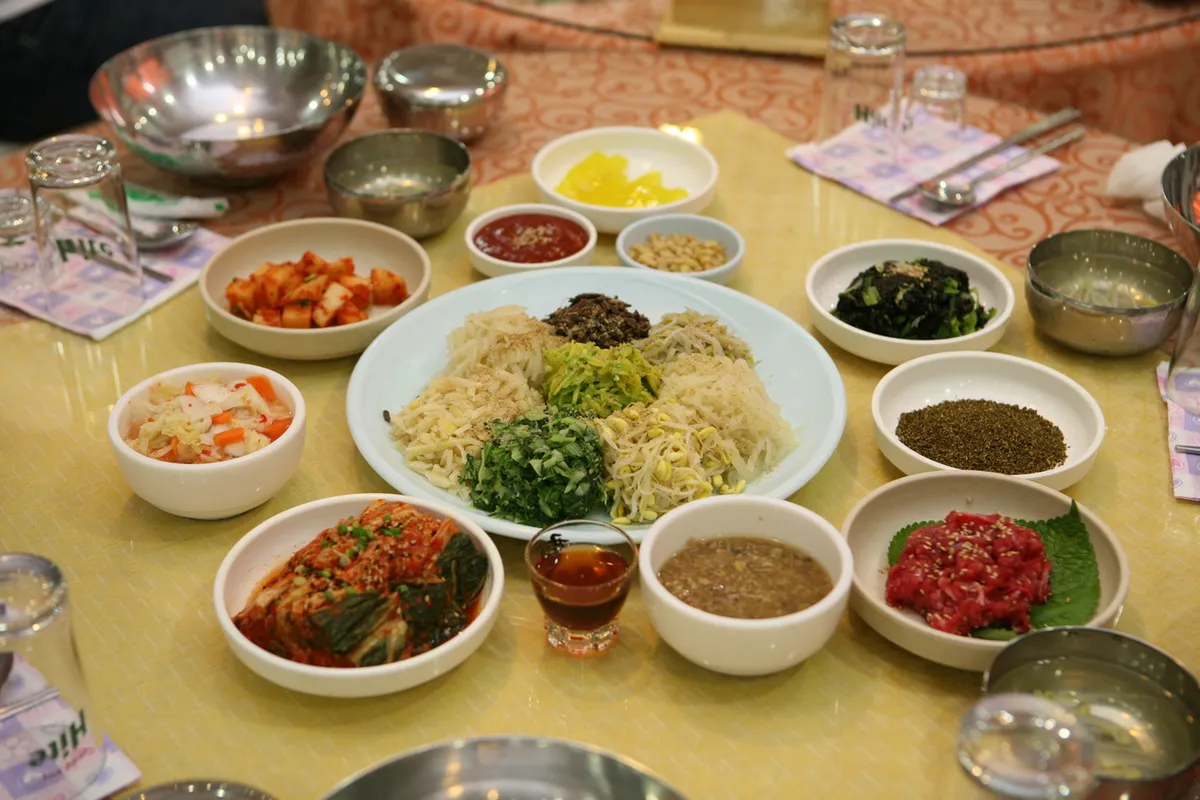
Jinju is another city associated with a distinctive bibimbap style. For travelers, the practical point is that bibimbap is not only a single recipe. It is a category of mixed rice dishes with regional versions, restaurant versions, and home-style versions. The core structure stays recognizable: rice, vegetables, seasoning, and mixing before eating.
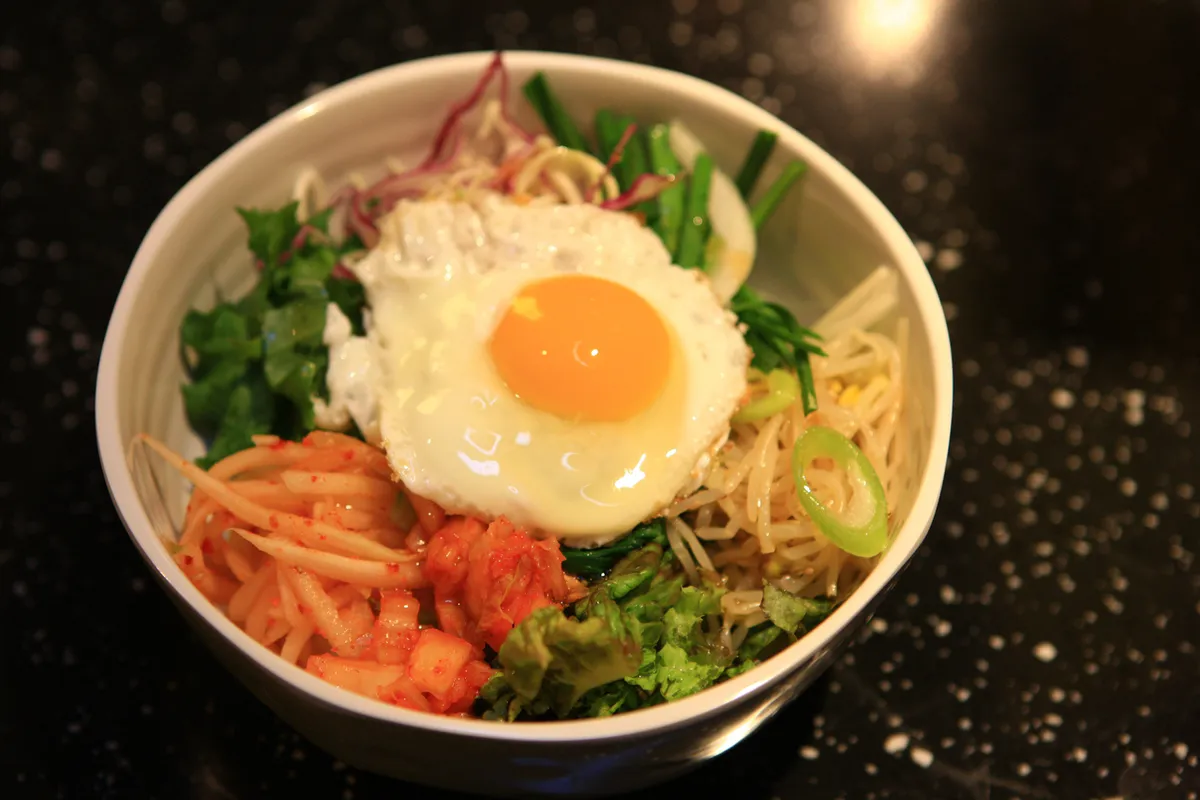
The older royal court term goldongban is also connected with bibimbap. It refers to a mixed rice dish in court cuisine terminology. This does not mean every modern bowl is a royal court dish, but it shows that the concept of mixing rice with prepared ingredients has a recognized place in Korean culinary language.
How to Mix and Eat Bibimbap
The standard way to eat bibimbap is simple. First, check whether the gochujang is already in the bowl or served separately. Second, use the spoon to fold the toppings into the rice until the color and ingredients are evenly distributed. Third, taste before adding more chili paste. The aim is a balanced bowl, not the maximum amount of sauce.
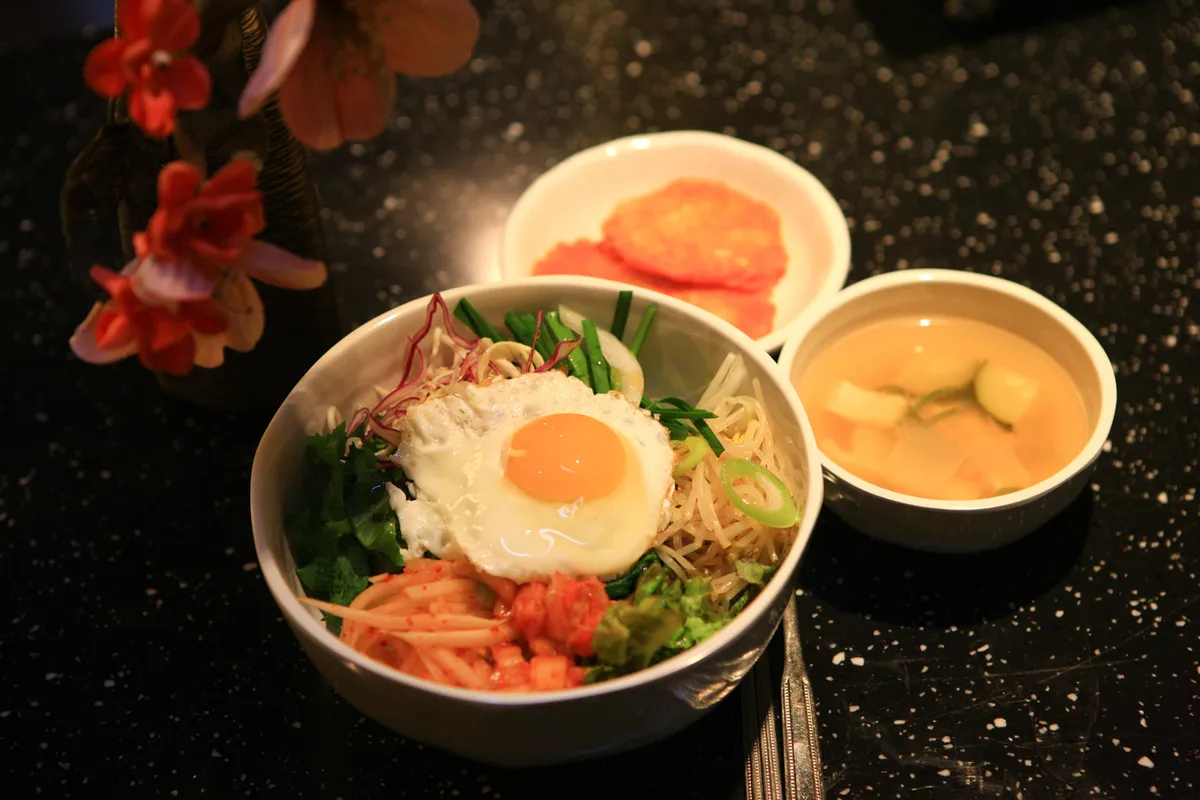
Bibimbap is usually eaten with a spoon rather than chopsticks because rice and finely cut vegetables are easier to mix and scoop. Chopsticks may still be used for side dishes served with the meal. If the bowl includes beef or egg, mix those ingredients into the rice unless the restaurant presents them separately for a specific reason.
Travelers who prefer less chili heat can ask for the sauce on the side. A useful phrase is: An-maep-ge hae-ju-se-yo (안 맵게 해주세요), meaning “Please make it not spicy.” This request is especially practical for dolsot bibimbap because the hot bowl can intensify the eating experience even when the ingredients themselves are familiar.
Bibimbap Ingredients and Common Variations
The base of bibimbap is cooked rice. The toppings can change by region, season, and restaurant, but fresh and cooked vegetables are central. Gochujang is the most familiar sauce, while beef and egg are common additions rather than mandatory components. Vegetable bibimbap is also a recognized variation, though travelers with dietary restrictions should still confirm broth, seasoning, and garnish details with the restaurant.
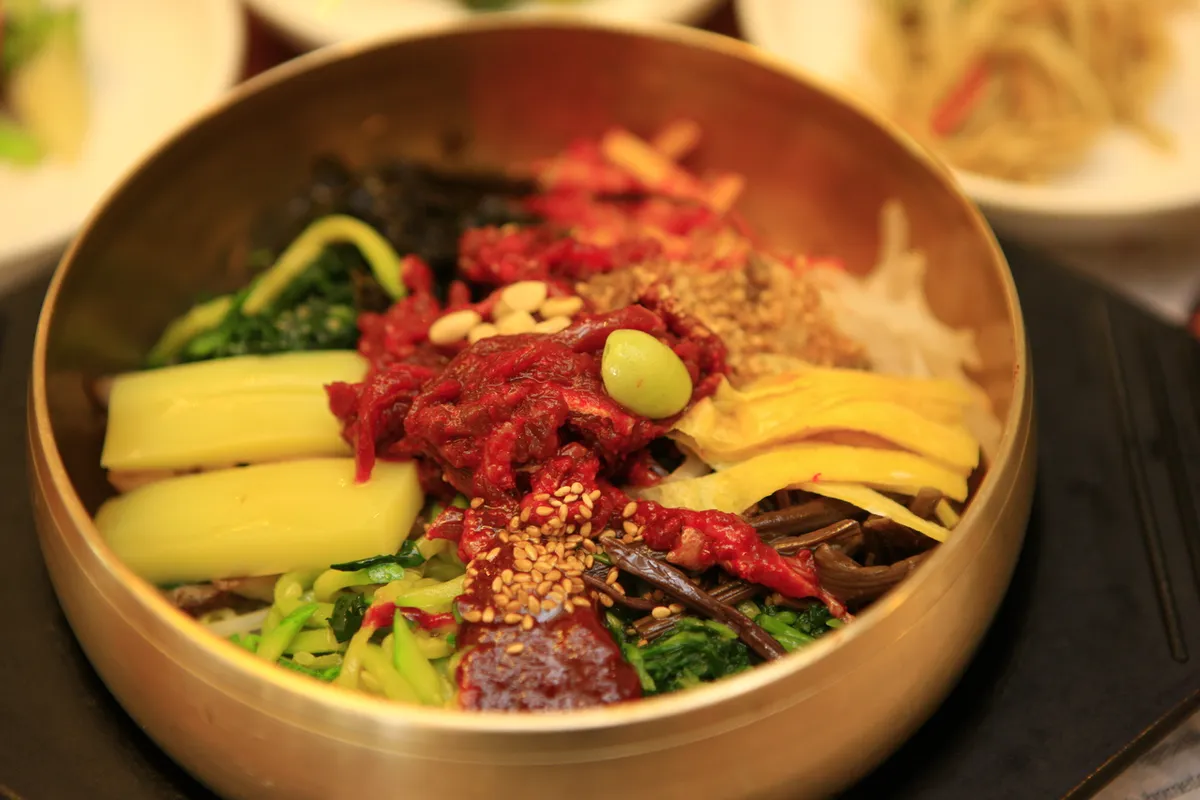
Other variations include soybean sprout bibimbap and hot stone pot bibimbap. These names usually point to the main topping or serving vessel. The basic eating method remains the same: combine the rice, toppings, and seasoning thoroughly before eating.
For a broader food itinerary, pair this bibimbap guide with market visits, cooking activities, or restaurant districts where rice dishes and side dishes are easy to compare. TripKorea’s activity listings can help travelers browse Korea food experiences without leaving the site: Explore Korea food activities on TripKorea.
Frequently Asked Questions
What is bibimbap?
Bibimbap is a Korean rice dish topped with vegetables and gochujang, with optional beef or egg. The ingredients are mixed together before eating, which is the key feature of the dish.
What is dolsot bibimbap?
Dolsot bibimbap is bibimbap served in a hot stone bowl. The heated bowl keeps the rice warm and can create browned rice at the bottom.
Is bibimbap always spicy?
Bibimbap often includes gochujang, a red chili paste, but the amount can vary. Ask for the sauce on the side or use the phrase An-maep-ge hae-ju-se-yo if you want it less spicy.
What is Jeonju bibimbap?
Jeonju bibimbap is a regional style associated with Jeonju. It is a recognized regional bibimbap style and is commonly presented with arranged toppings over rice.
Do you mix bibimbap before eating?
Yes. Bibimbap is mixed before eating so the rice, vegetables, sauce, and optional toppings become one combined bowl.
Sources & References
Data Sources:
Korean Food Information: Korea Foundation Korean Food Database
Photos: Korea Tourism Organization PhotoKorea
Official Sites:
Last verified: June 11, 2026
Restaurant hours and menus subject to change. Please confirm directly before visiting.