Korean Food Beginner's Guide starts with dishes that appear across home meals, restaurants, markets, barbecue tables, and casual snack shops. This guide explains eight essential Korean dishes by name, ingredients, typical serving style, and the kind of eating experience each dish offers for travelers new to Korean food.
Korean Food Beginner's Guide: How to Read a Korean Table
A Korean meal is often built around rice, soup or stew, a main dish, and shared side dishes called banchan. Kimchi is the most recognizable banchan, but the table may also include seasoned vegetables, seaweed, pickles, or egg dishes depending on the restaurant and meal type. Beginners do not need to order every dish separately; many restaurants serve side dishes automatically with a main order.
Names matter because English menu translations can vary. This guide uses common traveler-facing romanization for well-known foods, such as Tteokbokki rather than a literal description, while keeping the Korean name beside each dish. When ordering, saying the romanized name clearly is usually more useful than reading a long translated menu phrase.
1. Bibimbap (비빔밥): Mixed Rice with Vegetables and Beef
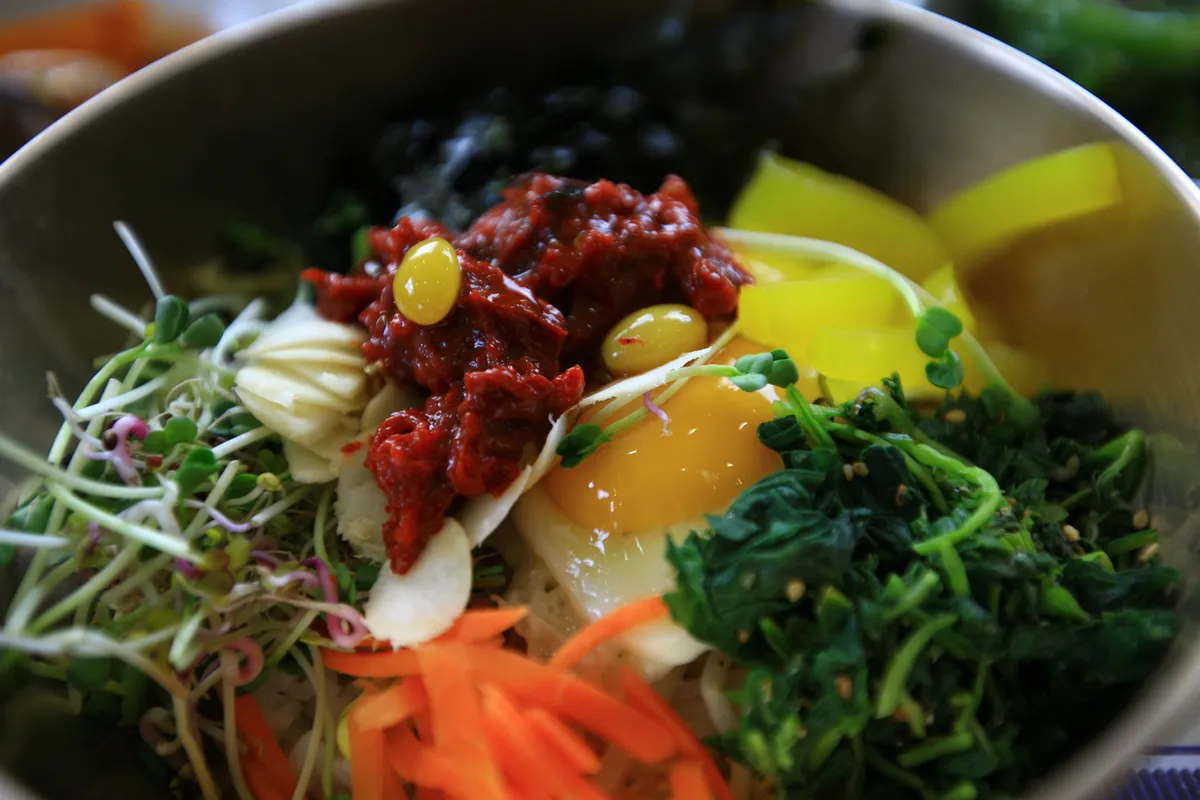
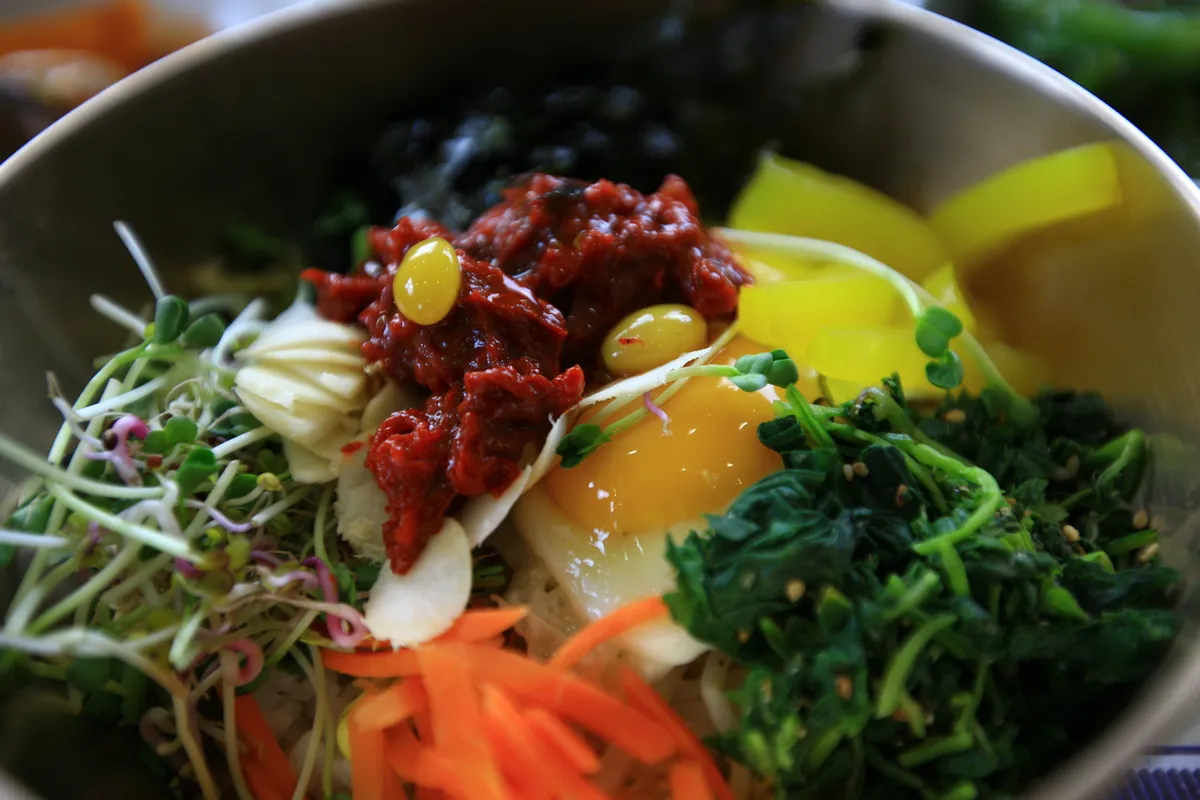
Bibimbap means mixed rice, and the dish is one of the clearest introductions to the structure of Korean cooking. A bowl of rice is topped with fresh and cooked vegetables, red chili pepper paste, and often beef or a fried egg. The key moment comes before eating: the ingredients are mixed together so the rice, vegetables, and sauce become one balanced bowl.
For beginners, bibimbap is useful because the main components are visible. The vegetables add texture, the rice gives a mild base, and gochujang brings chili heat with a rounded, fermented sweetness. Some versions are served in a hot stone bowl, called dolsot bibimbap, where the rice at the bottom can turn crisp. Jeonju and Jinju are known for regional styles, and vegetable bibimbap or soybean sprout bibimbap may appear on menus as variations.
2. Kimchi (김치): Fermented Vegetables at the Center of Korean Meals
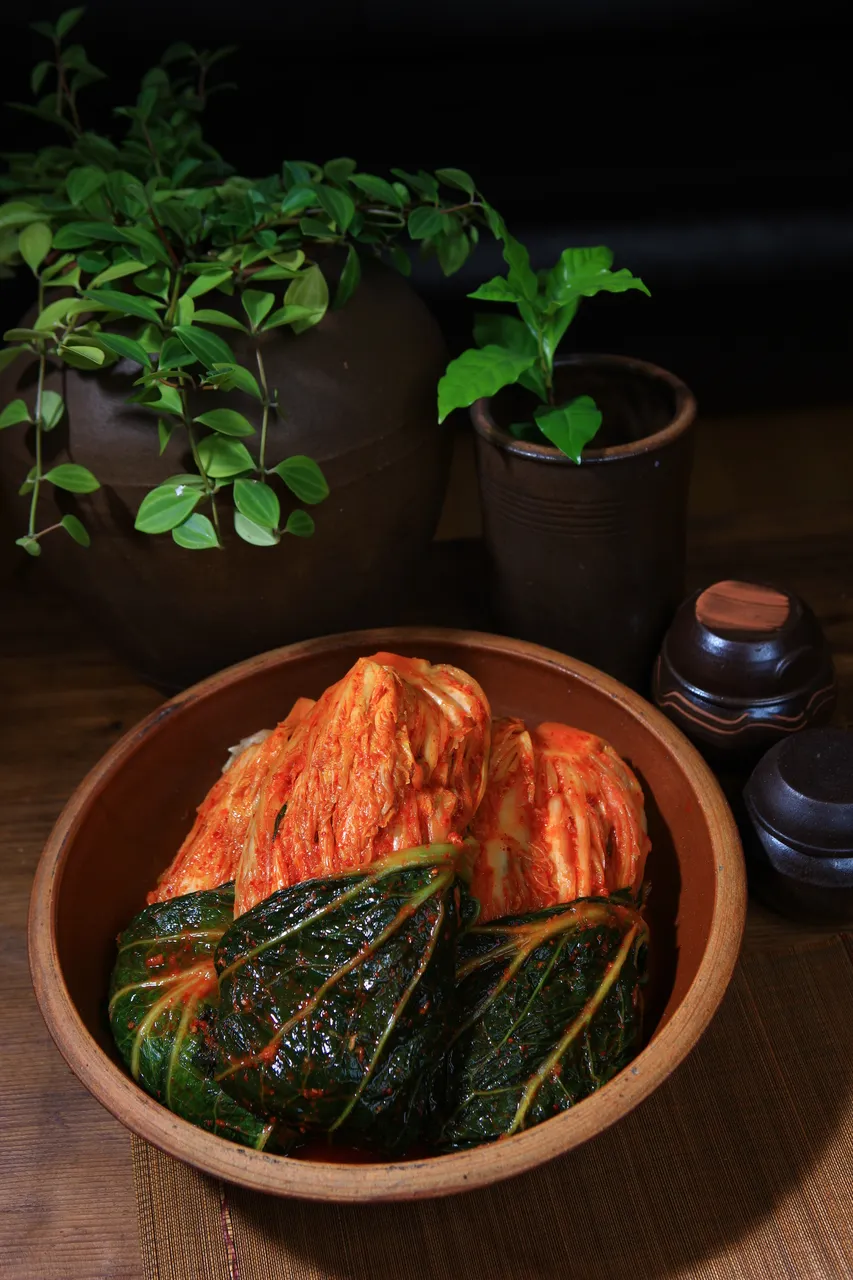
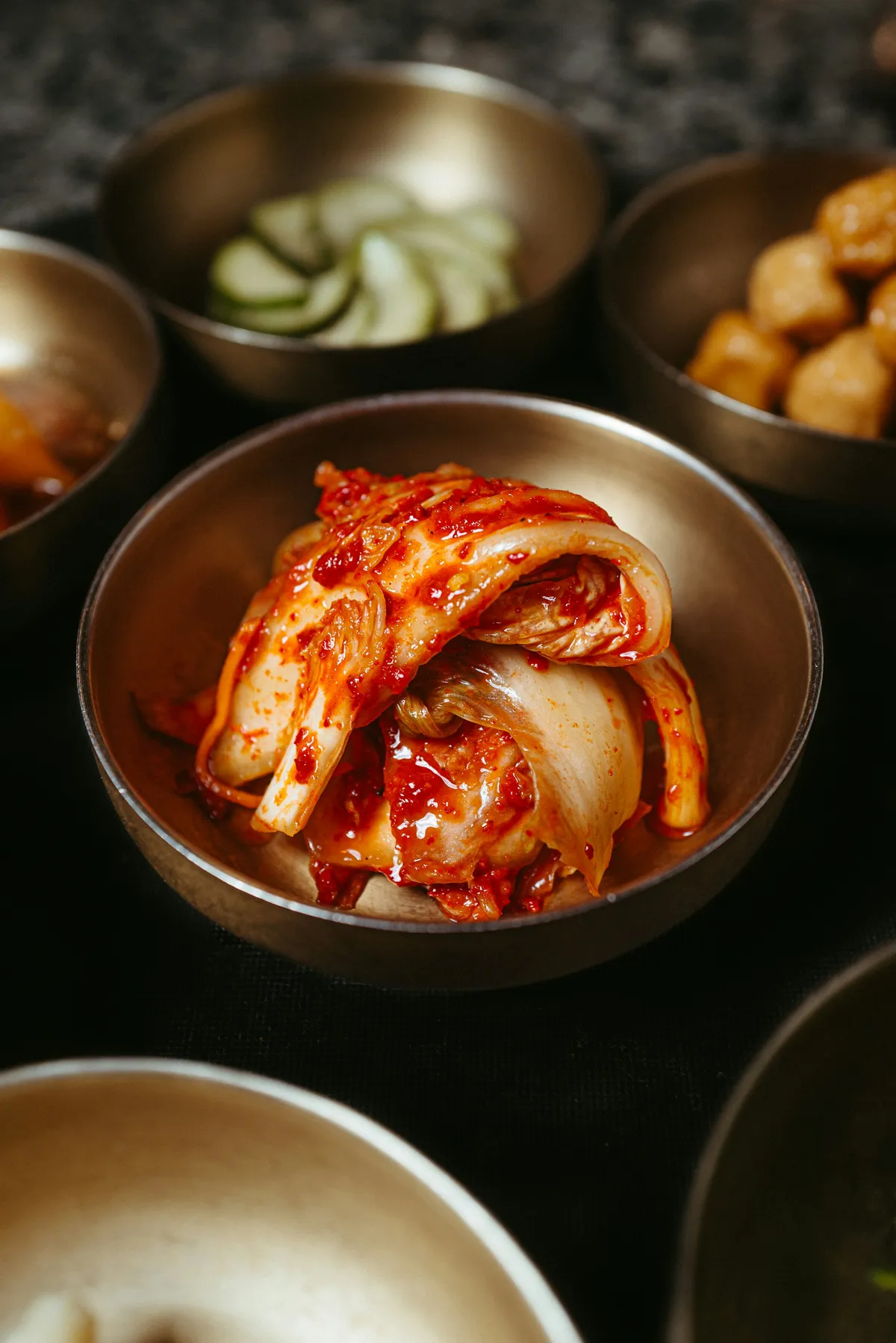
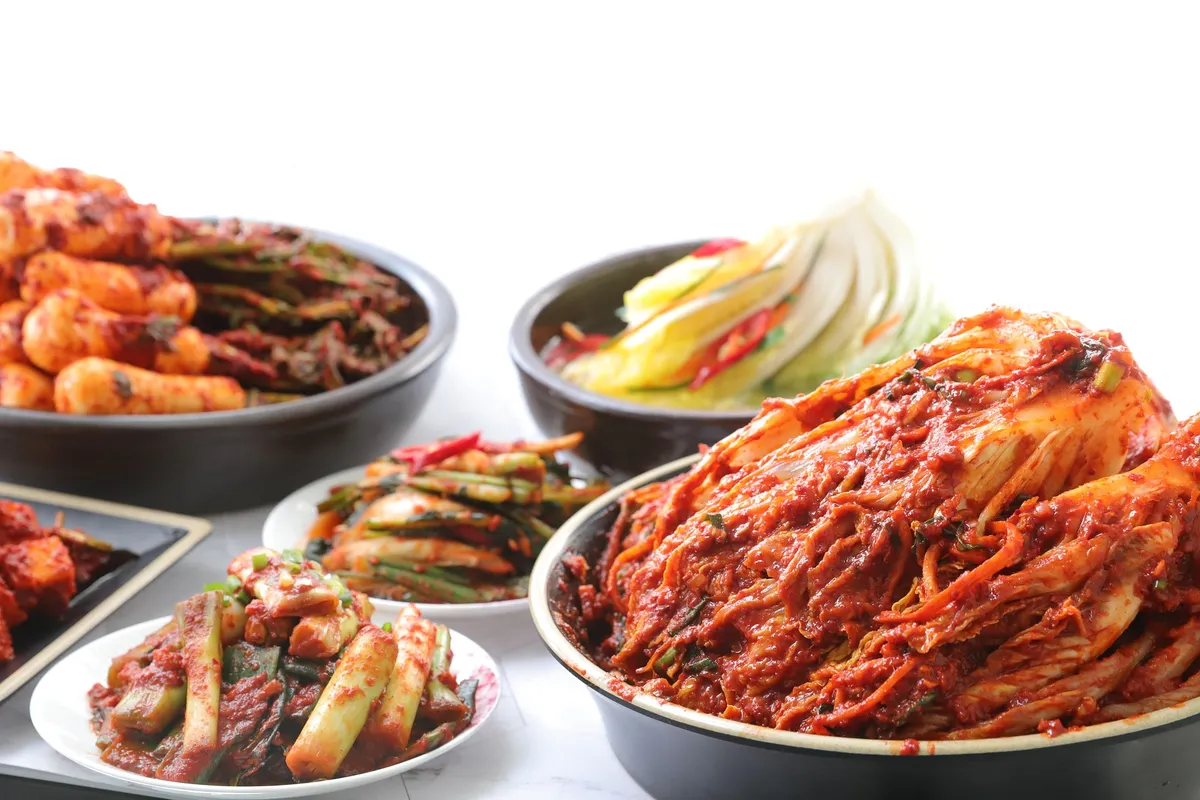
Kimchi is Korea's definitive fermented vegetable dish. The most familiar version is made with napa cabbage or radish seasoned with red chili pepper powder, green onions, garlic, ginger, and fish sauce, then left to ferment. The result is sharp, salty, spicy, and sour in different degrees depending on the recipe and age of the kimchi.
Beginners should understand kimchi as both a side dish and an ingredient. It can be served cold with rice, used in stews, cooked with pork, or added to fried rice. There are hundreds of types, so one kimchi experience does not define the whole category. If the flavor feels strong at first, try it with plain rice or grilled meat; the richness of the main dish softens the fermented edge.
3. Bulgogi (불고기): Soy-Marinated Korean Barbecue Beef
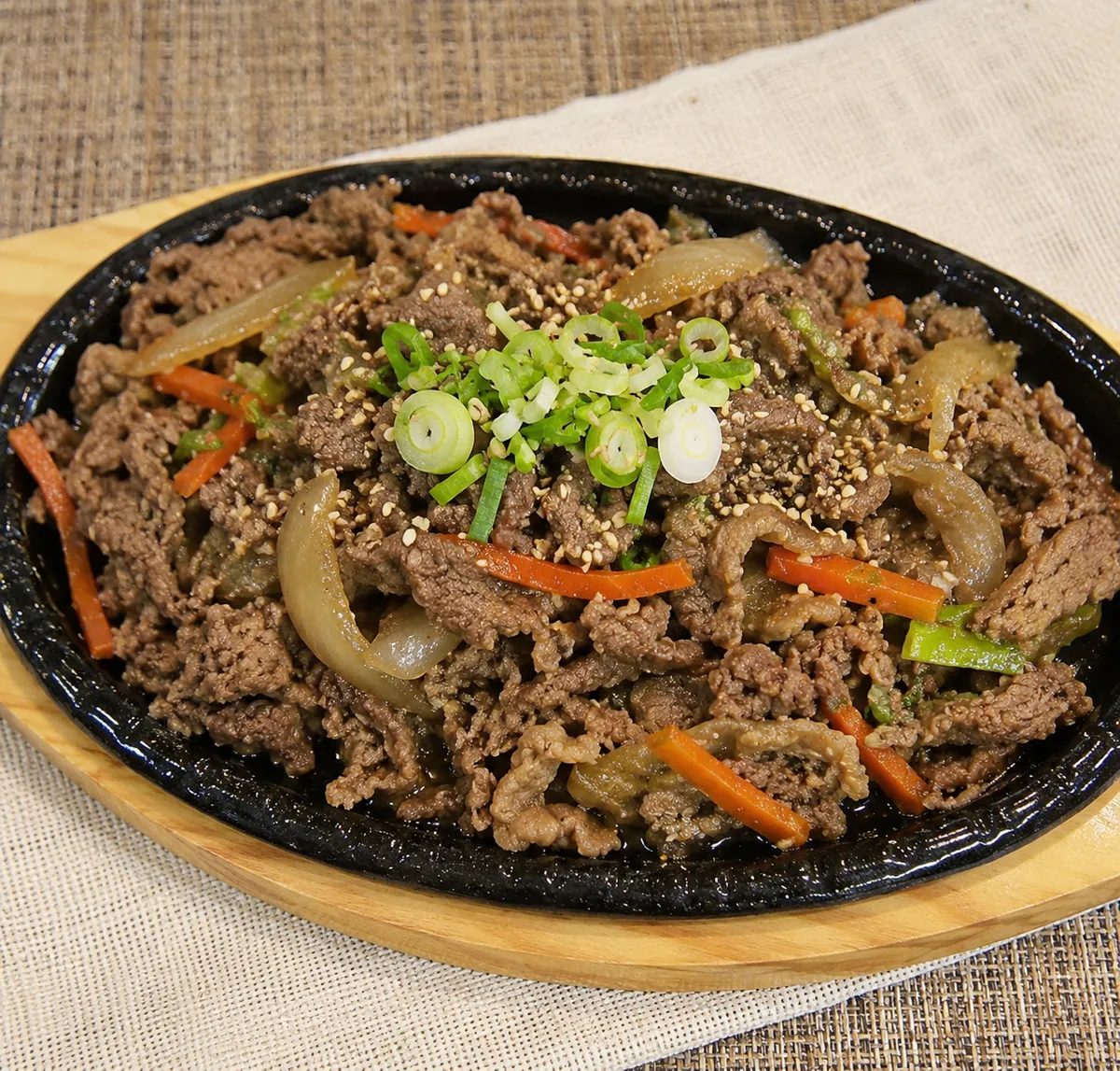
Bulgogi is thinly sliced beef marinated with soy sauce, sugar, green onions, garlic, black pepper, sesame seeds, and sesame oil. The marinade gives the beef a savory-sweet profile, and the thin slices cook quickly. In restaurants, bulgogi may be cooked at the table or served from the kitchen depending on the style of the venue.
This is a practical first barbecue dish because the meat is usually tender and already seasoned. It pairs well with rice and lettuce wraps, and it is less direct in chili heat than many red-sauce dishes. The word bulgogi is sometimes translated as Korean barbecue, but on menus it usually points to this specific marinated beef dish rather than every kind of grilled meat.
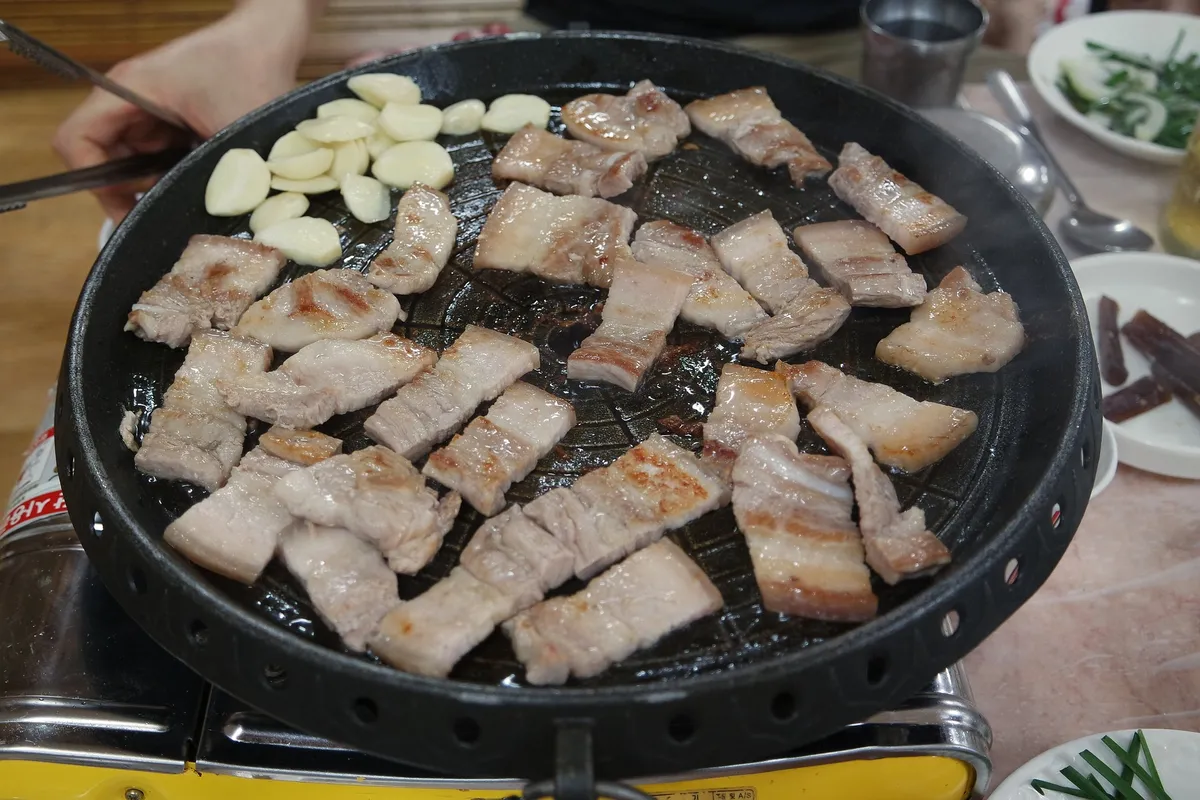
4. Samgyeopsal (삼겹살): Grilled Pork Belly at the Table
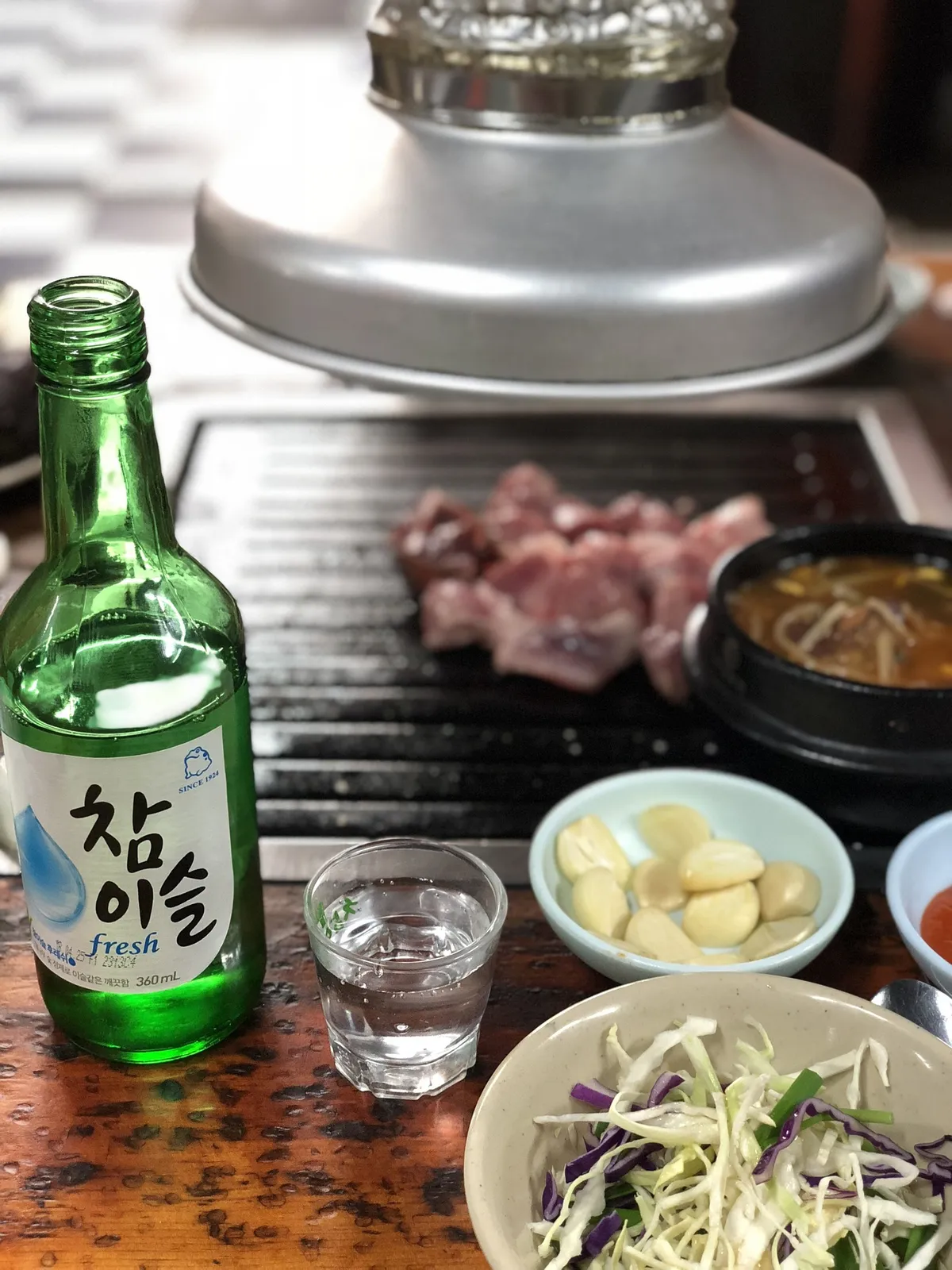
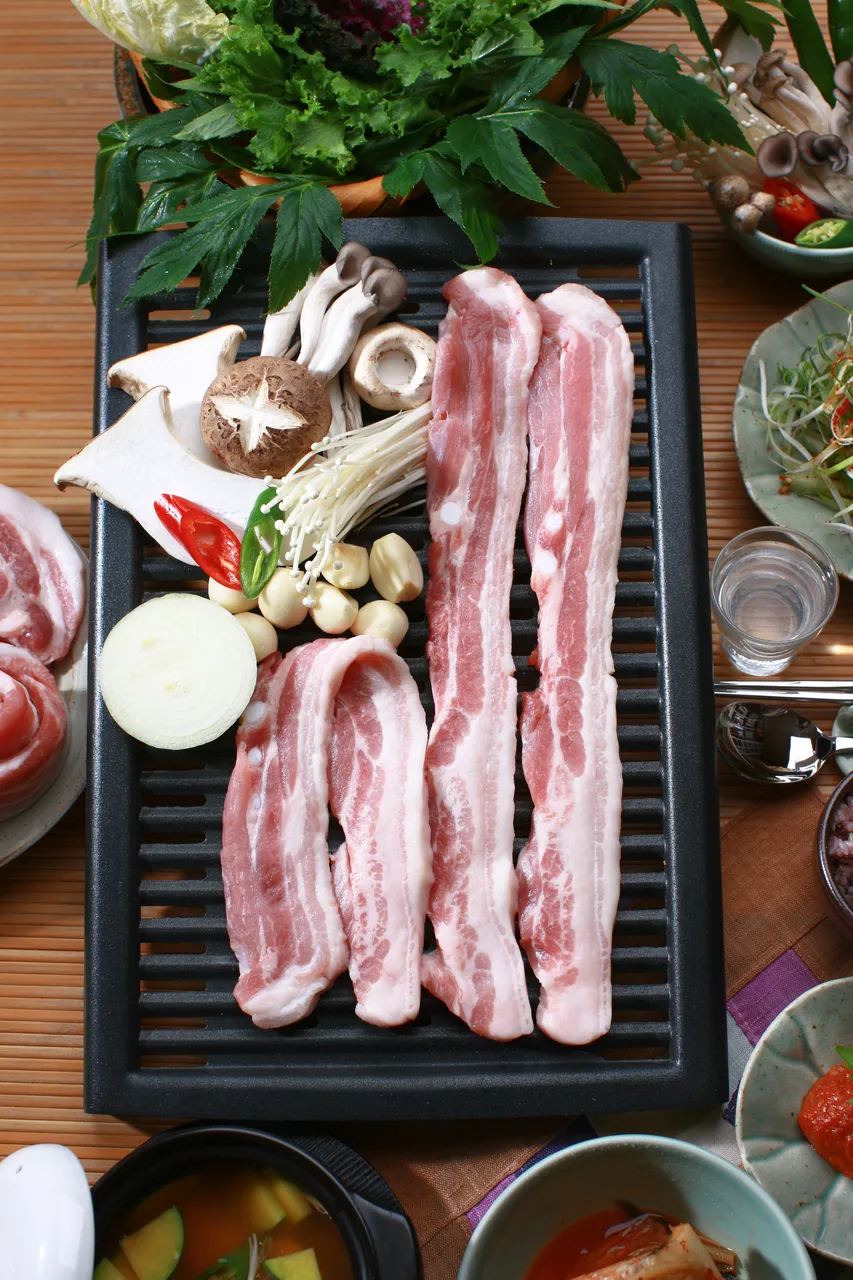
Samgyeopsal is grilled pork belly, the same cut as bacon but not smoked. It may be served plain for grilling, then dipped in sesame oil with salt, wrapped in lettuce, or eaten with garlic, green chili, and ssamjang. Some versions use spicy red chili pepper paste sauce, but the plain grilled version is one of the most common restaurant experiences.
The experience is social and hands-on. Diners grill the pork, cut it into bite-size pieces, and build wraps with rice or side dishes. For a first Korean barbecue meal, samgyeopsal shows why texture matters: the outside browns on the grill while the inside stays rich from the pork belly. Because the meat can be fatty, kimchi, pickled vegetables, and lettuce help balance the meal.
5. Tteokbokki (떡볶이): Spicy Rice Cakes from the Street Food Counter
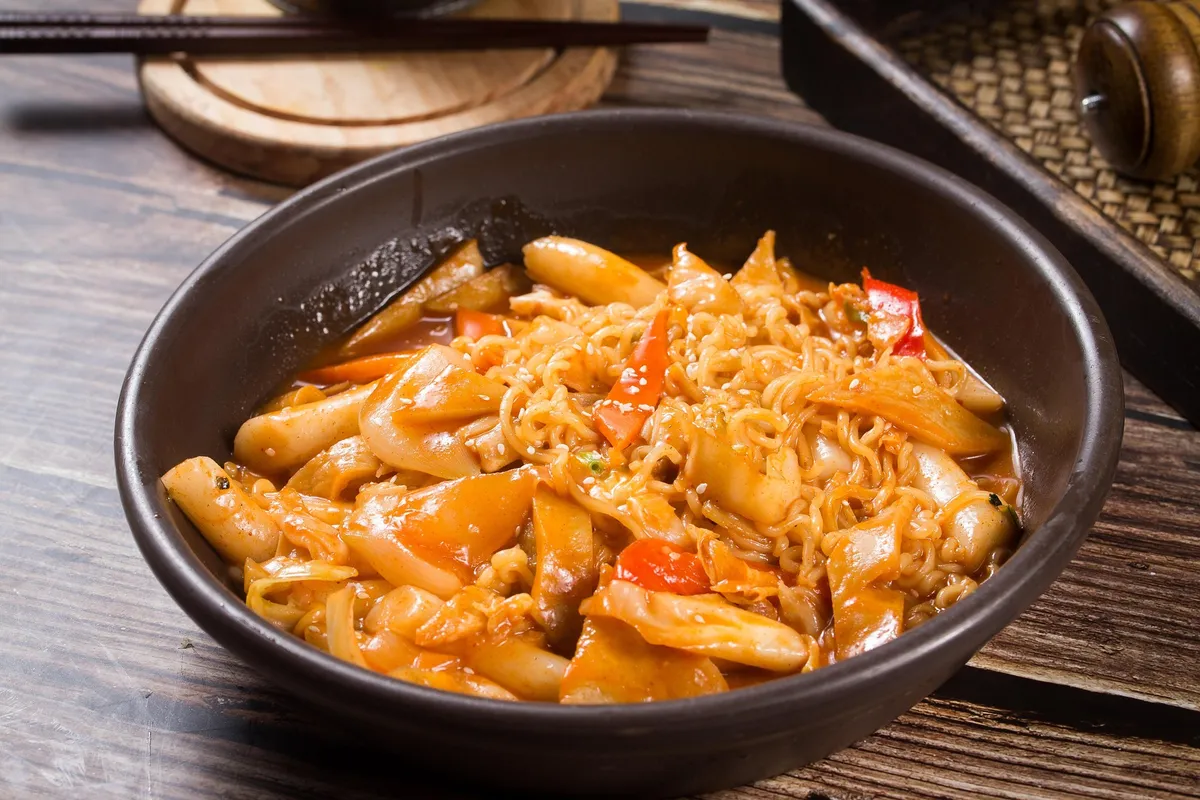
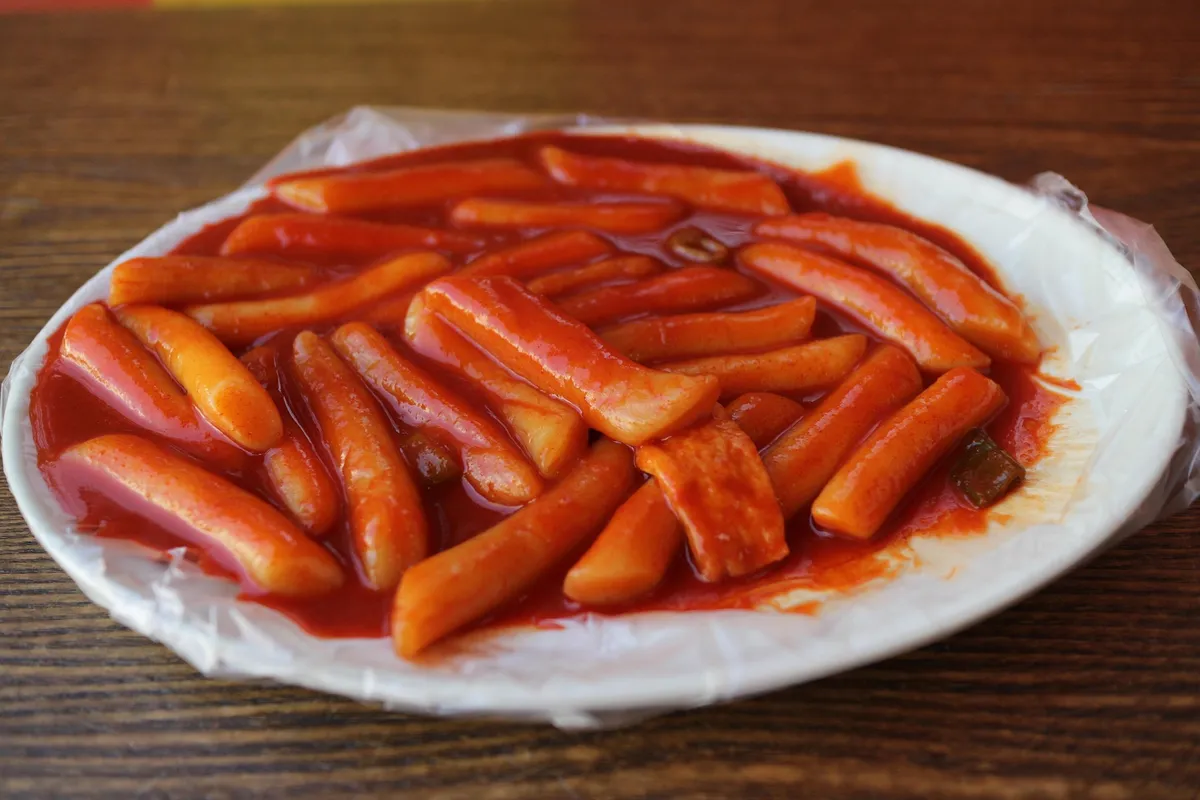
Tteokbokki is the common menu name for chewy rice cakes cooked in a red chili pepper sauce. Older formal translations may describe it as stir-fried rice pasta, but travelers will almost always see and hear Tteokbokki. The texture is as important as the sauce: each rice cake is dense, springy, and built to hold the spicy-sweet seasoning.
This dish is closely associated with snack shops and market stalls. The first impression is usually the bright red sauce, followed by the chew of the rice cakes and the heat of gochujang-based seasoning. Fish cakes, boiled eggs, or noodles may appear in some servings, but those additions depend on the shop. Beginners who are sensitive to spice should order a small portion first or pair it with a milder dish such as gimbap.
6. Gimbap (김밥): Rice Rolls for Markets, Picnics, and Quick Meals
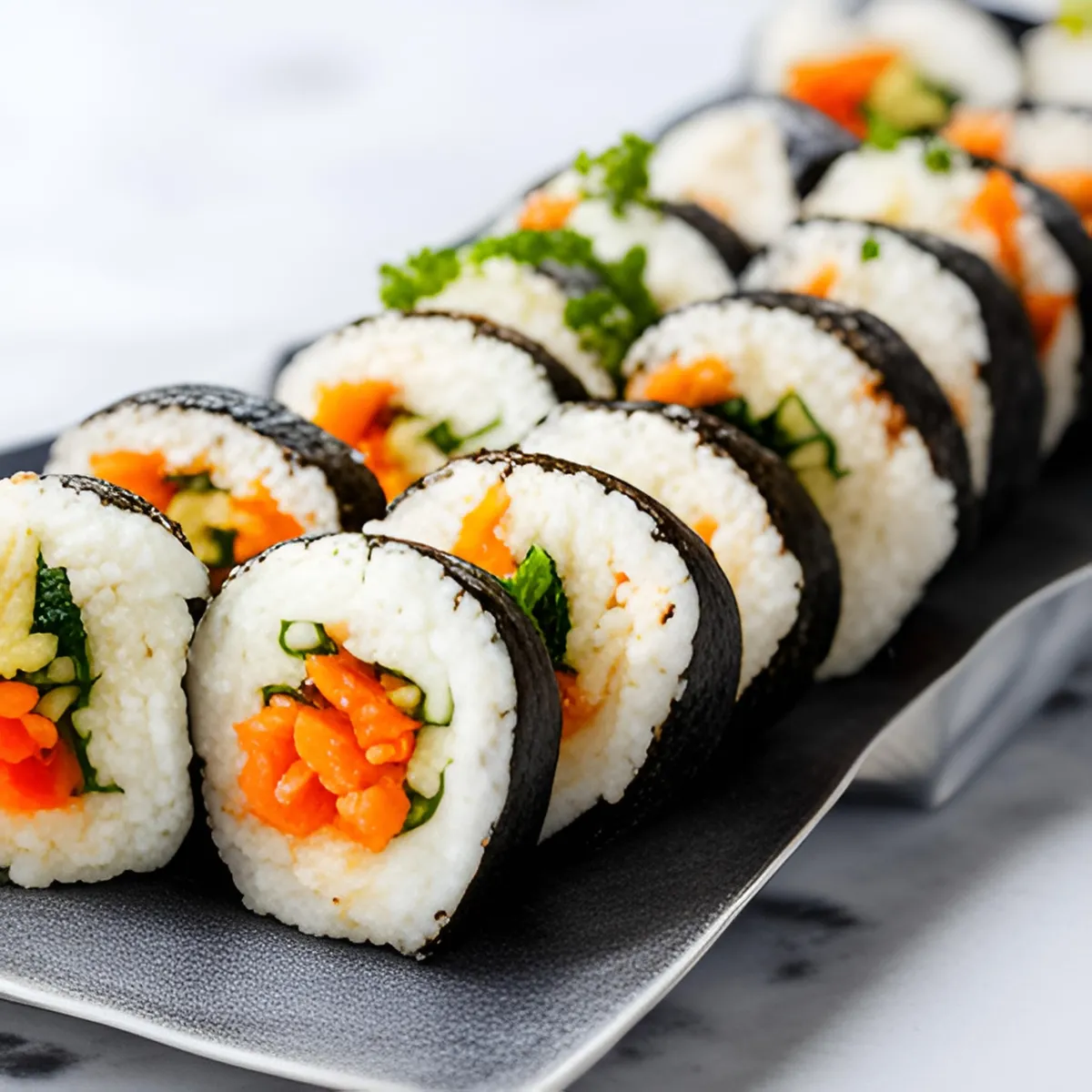
Gimbap is made by spreading rice over dried laver, adding fillings such as beef, egg, pickled radish, and vegetables, then rolling and slicing it. The shape may look familiar to travelers who know other seaweed rice rolls, but the seasoning, fillings, and role in Korean casual dining are distinct.
For beginners, gimbap is one of the easiest foods to order and share. Each slice has rice, vegetable crunch, seaweed aroma, and a lightly seasoned center. It is commonly eaten as a quick meal, a travel snack, or a companion to spicy dishes. With Tteokbokki, the mild rice roll can soften chili heat while still keeping the meal casual and affordable in style, though prices vary by restaurant and market.
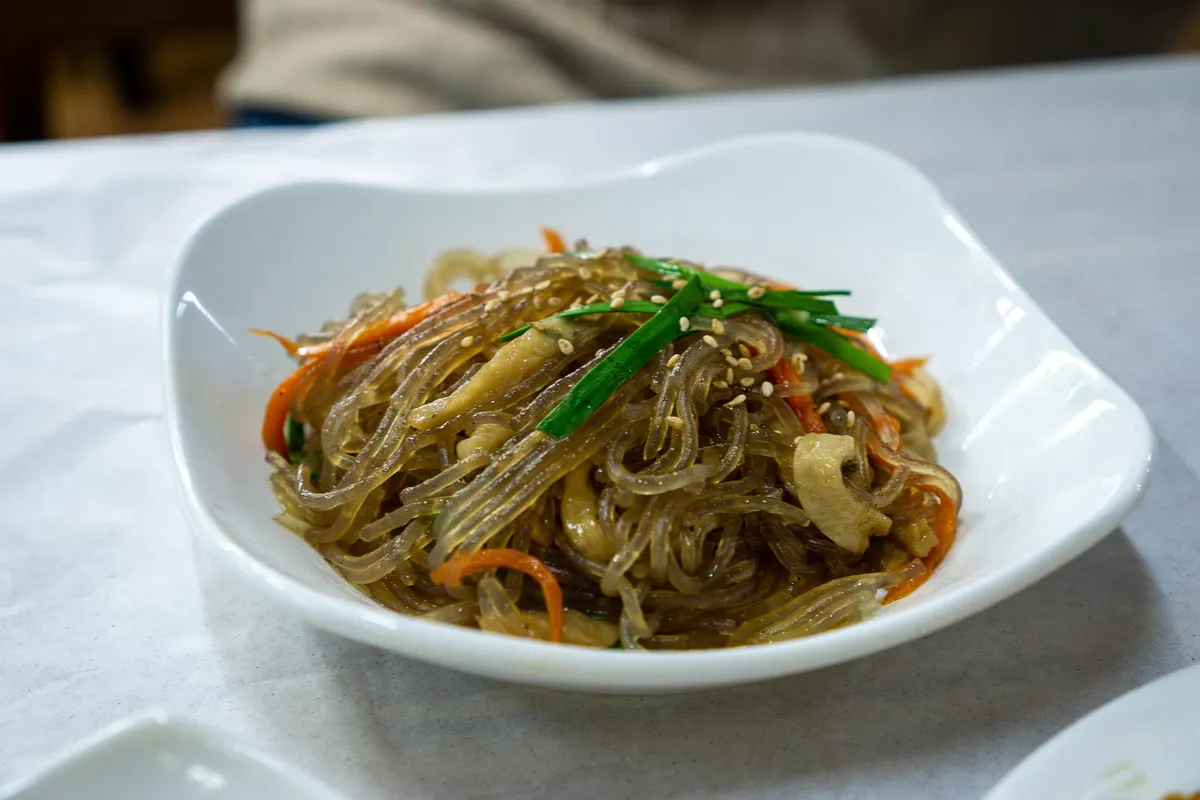
7. Japchae (잡채): Clear Noodles with Vegetables
Japchae is made with clear noodles, vegetables, and often beef, seasoned with soy sauce and other seasonings. The vegetables and beef are pan-fried separately before being mixed with the noodles, which helps each ingredient keep its texture. The noodles are smooth and slightly springy, making the dish different from wheat noodle soups or cold noodles.
Japchae often appears at special meals and banquets, but it is also common enough for beginners to find in restaurants, food courts, and prepared-food counters. Its flavor is generally savory and lightly sweet rather than fiery. For travelers who want a non-soup noodle dish and a break from strong chili sauces, japchae is a useful bridge into Korean seasoning.
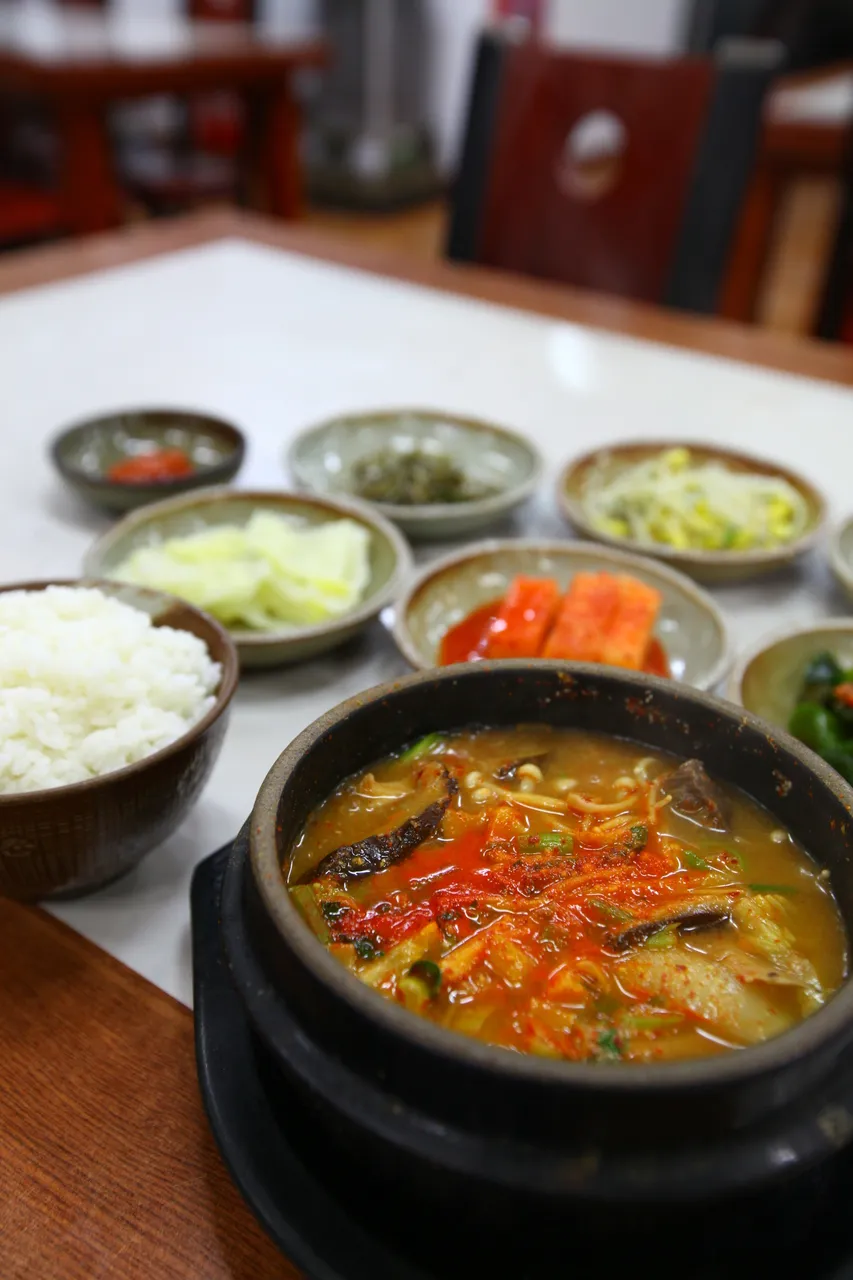
8. Doenjang-jjigae (된장찌개): Soybean Paste Stew
Doenjang-jjigae is a thick stew based on doenjang, Korean soybean paste, cooked with vegetables and other ingredients depending on the kitchen. It is related to soybean paste soup but thicker and more concentrated. The flavor is earthy, salty, and fermented, with a different profile from red chili-based stews.
Beginners often meet doenjang-jjigae at barbecue restaurants or home-style restaurants, where it can come with rice and side dishes. It is usually eaten with a spoon, alternating with rice and other dishes on the table. If kimchi introduces the sharp side of Korean fermentation, doenjang-jjigae introduces the deeper soybean side.
How to Order Korean Food as a Beginner
Start with one rice-based dish, one grilled dish, or one stew rather than trying to cover the entire table at once. Bibimbap works well for a solo meal, bulgogi or samgyeopsal fits a shared grill table, and doenjang-jjigae is useful when you want a hot stew with rice. Tteokbokki and gimbap are better understood as snack-shop or market foods, though they can also make a simple casual meal together.
For spice control, remember that red color often signals chili, but not every red dish has the same level of heat. Gochujang-based sauces can be sweet and spicy at the same time, while fermented stews may be salty and deep rather than sharply hot. For allergies, ingredients differ by restaurant, especially sauces, broth bases, fish sauce, sesame oil, and garnish, so confirm directly before ordering.
Useful phrase: An-maep-ge hae-ju-se-yo (안 맵게 해주세요) means “Please make it not spicy.”
For shared barbecue: Order rice, lettuce wraps, and a stew if the restaurant offers them.
For markets: Pair one spicy item such as Tteokbokki with a milder rice item such as Gimbap.
Frequently Asked Questions
What Korean food should beginners try first?
Bibimbap is one of the most useful first dishes because the rice, vegetables, sauce, and optional egg or beef are easy to see before mixing. Bulgogi is also beginner-friendly because it is soy-marinated beef rather than a heavily chili-based dish. For street food, try Tteokbokki with Gimbap if you want both spice and a milder rice roll.
Is all Korean food spicy?
No. Kimchi and Tteokbokki can be spicy, but Bulgogi, Japchae, Gimbap, and many forms of Bibimbap can be mild unless extra chili paste or spicy sauce is added. Red sauces usually indicate chili, so ask before ordering if you need a non-spicy meal.
What is the difference between Bulgogi and Samgyeopsal?
Bulgogi is thinly sliced beef marinated with soy sauce, sugar, garlic, green onions, sesame oil, and seasonings. Samgyeopsal is pork belly, usually grilled plain at the table and eaten with dips, wraps, garlic, and side dishes. Bulgogi is defined by its marinade, while samgyeopsal is defined by the pork belly cut and grill-table format.
What should I eat with kimchi?
Kimchi is commonly eaten with rice, grilled meat, stews, and many everyday meals. If the flavor is strong, pair it with plain rice or fatty grilled meat. Kimchi can also be cooked into stews or fried rice, depending on the restaurant or home-style dish.
How do I ask for less spice in Korea?
Use the phrase “An-maep-ge hae-ju-se-yo” (안 맵게 해주세요), which means “Please make it not spicy.” It may not work for dishes where the sauce is already prepared, such as many Tteokbokki stalls. In that case, choose a milder dish instead.
Complete Your Korea Food Trip with TripKorea
Use this Korean Food Beginner's Guide as a starting point, then match dishes to the setting: rice bowls for simple meals, barbecue for shared dining, stews for home-style tables, and snack foods for markets. For food markets, cooking classes, and local activities, browse Things to Do in Korea on TripKorea.
Sources & References
Data Sources:
Korean Food Information: Korea Foundation (한국국제교류재단) Korean Food Database
Photos: Korea Tourism Organization Photo Korea
Official Sites:
Last verified: 2026-05-30
Restaurant hours, menus, ingredients, and preparation methods may vary by venue. Please confirm directly before visiting or ordering.