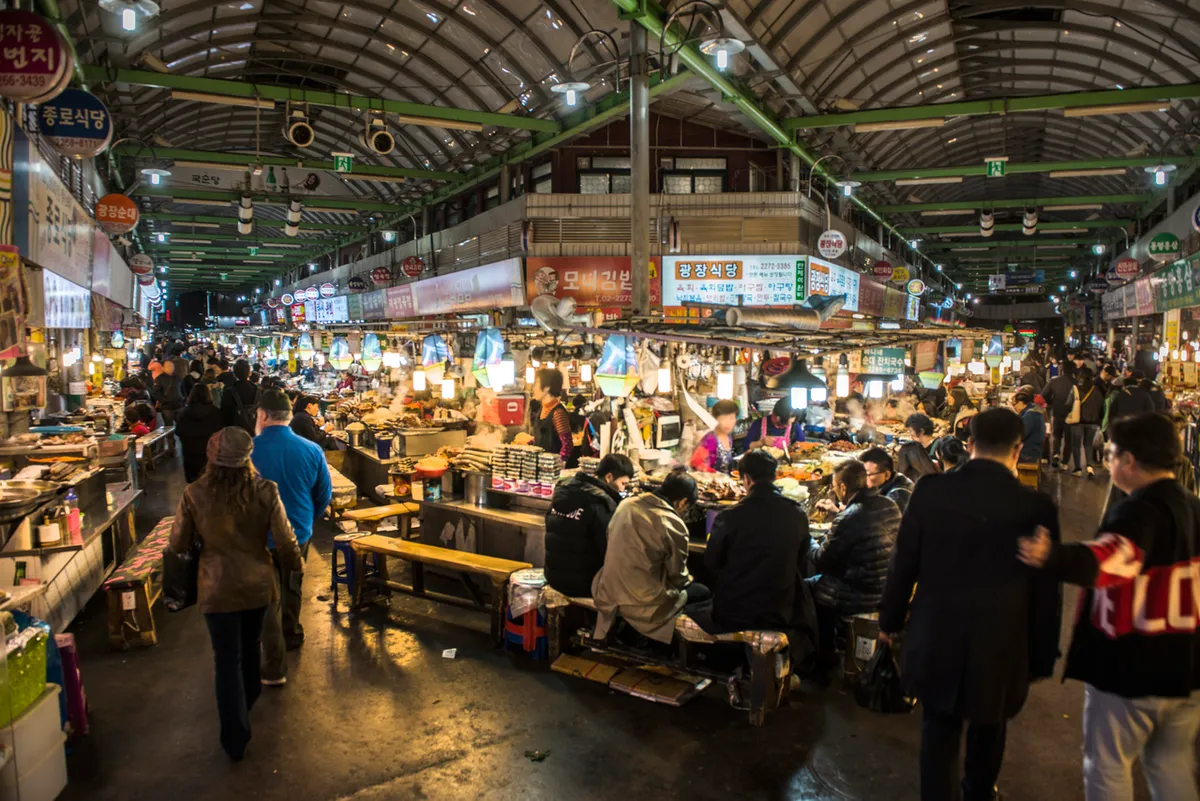
Kimchi Guide starts with Korea’s most recognizable fermented side dish: salted vegetables seasoned with red chili pepper powder, garlic, ginger, green onions, and often fish sauce.
This guide explains what kimchi is, why fermentation matters, the main types travelers will see at restaurants, and how to eat it with Korean meals.
What Is Kimchi?
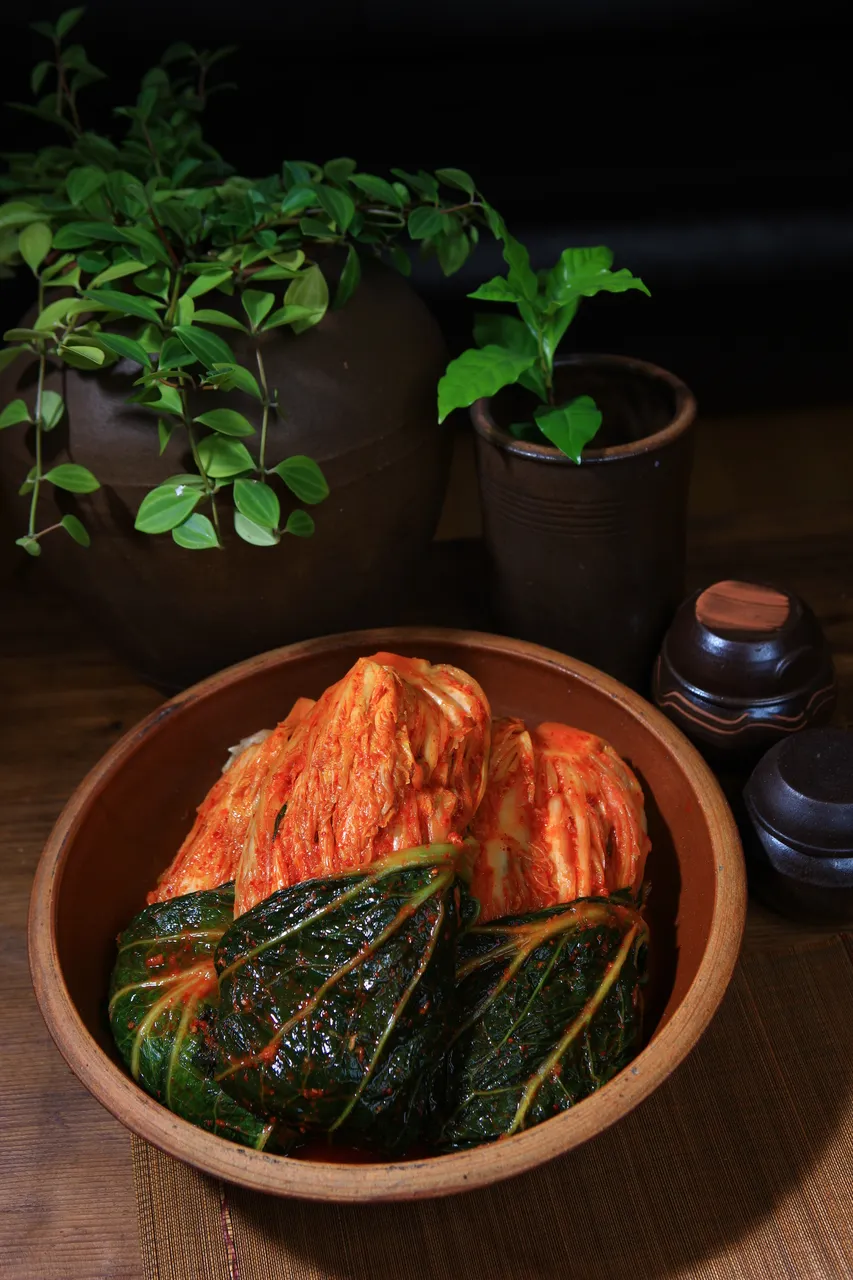
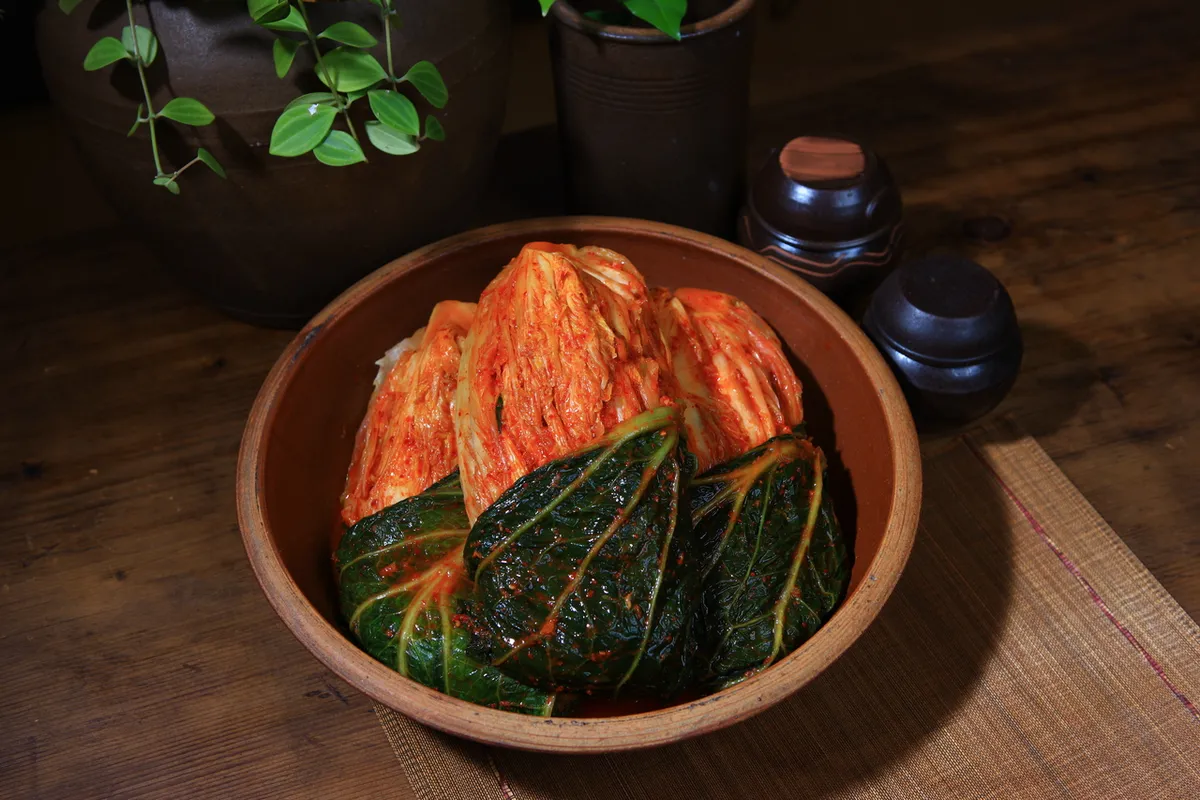
Kimchi (김치) is a Korean fermented vegetable dish served most often as banchan, the small side dishes placed on the table with rice, soup, stew, barbecue, noodles, and set meals.
The best-known version is baechu kimchi, made with napa cabbage. The cabbage is salted first, then seasoned between the leaves with a mixture that may include red chili pepper powder, garlic, ginger, green onions, white radish, and fish sauce.
Fermentation changes both the flavor and texture. Fresh kimchi can taste crisp and direct, while longer-fermented kimchi becomes sharper and more acidic.
That change is why kimchi appears in two different roles at the table. It can be eaten cold as a side dish, or cooked into stews, fried rice, pancakes, dumplings, and soups.
Why Fermentation Defines Kimchi
Fermentation is the reason kimchi is more than salted vegetables with chili seasoning. Salt draws water from the vegetable, seasoning enters the leaves or pieces, and the mixture develops a stronger flavor over time.
For travelers, the main point is practical: kimchi does not taste exactly the same everywhere. A restaurant may serve a fresher, crisp kimchi with barbecue, while a stew shop may use older kimchi because its acidity works well in hot broth.
The same dish can also change by household, region, season, and ingredient. Some kimchi uses napa cabbage; other versions use white radish, cucumber, young summer radish, spring onion, or water-based brine.
Many versions include seafood-based seasoning such as fish sauce or salted seafood. Travelers who avoid seafood or follow vegetarian diets should ask the restaurant directly before eating kimchi.
Kimchi Types Travelers Should Know
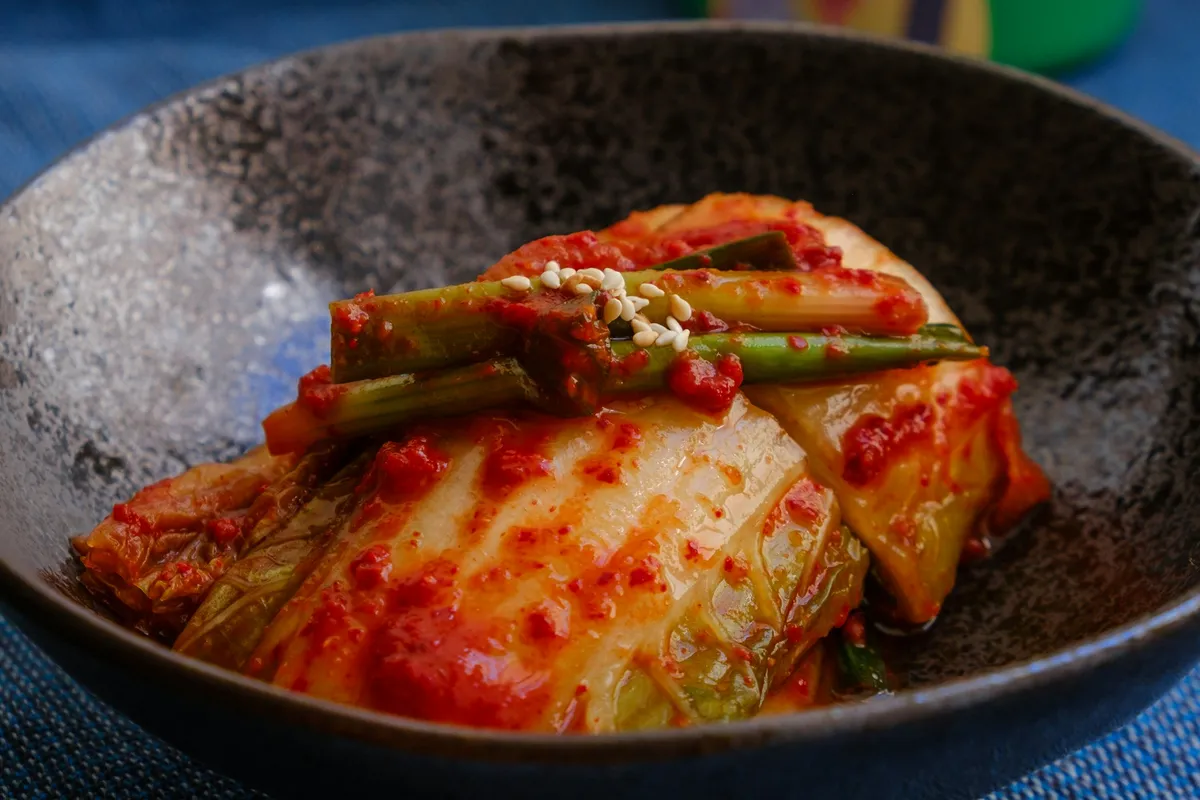
Baechu kimchi (배추김치) is the standard cabbage kimchi most travelers meet first. It is usually red from chili pepper powder and served with rice dishes, soups, barbecue, and casual restaurant meals.
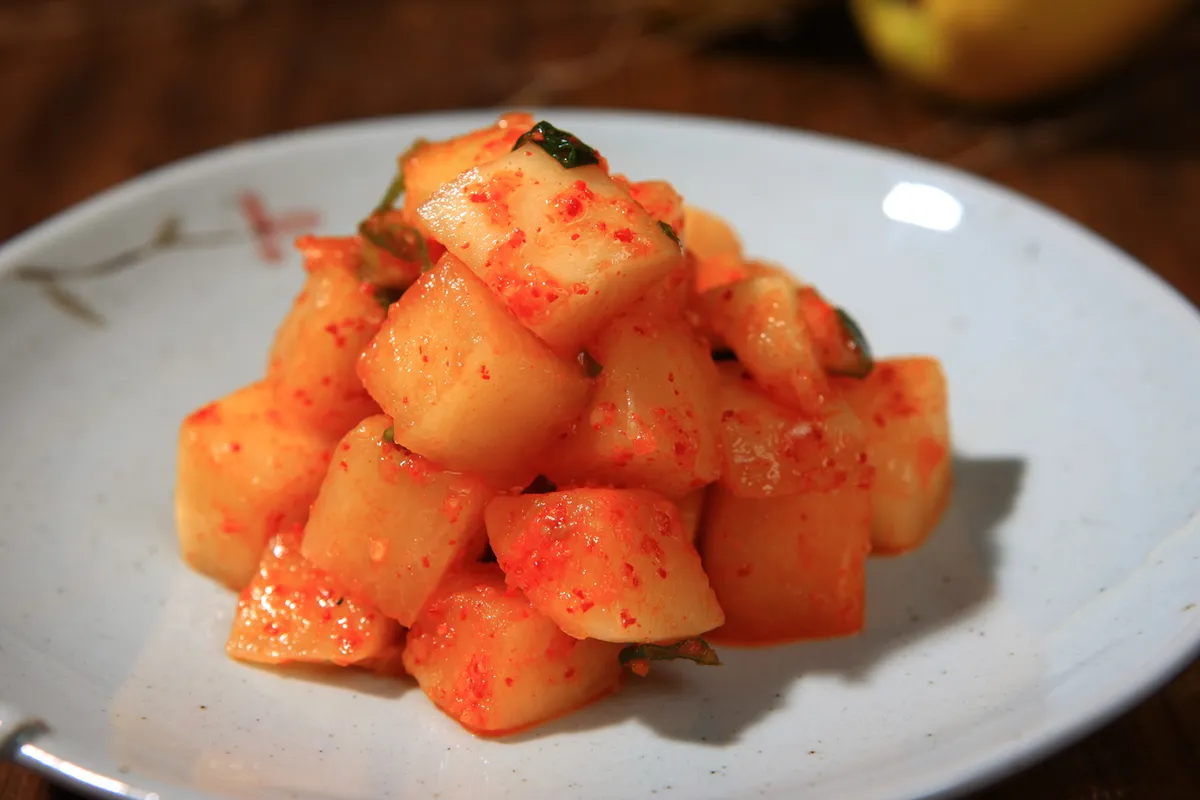
Kkakdugi (깍두기) is diced radish kimchi. The radish is cut into cubes, salted, and mixed with chili seasoning. It is commonly served with soups and stews because the crunchy texture holds up beside hot broth.
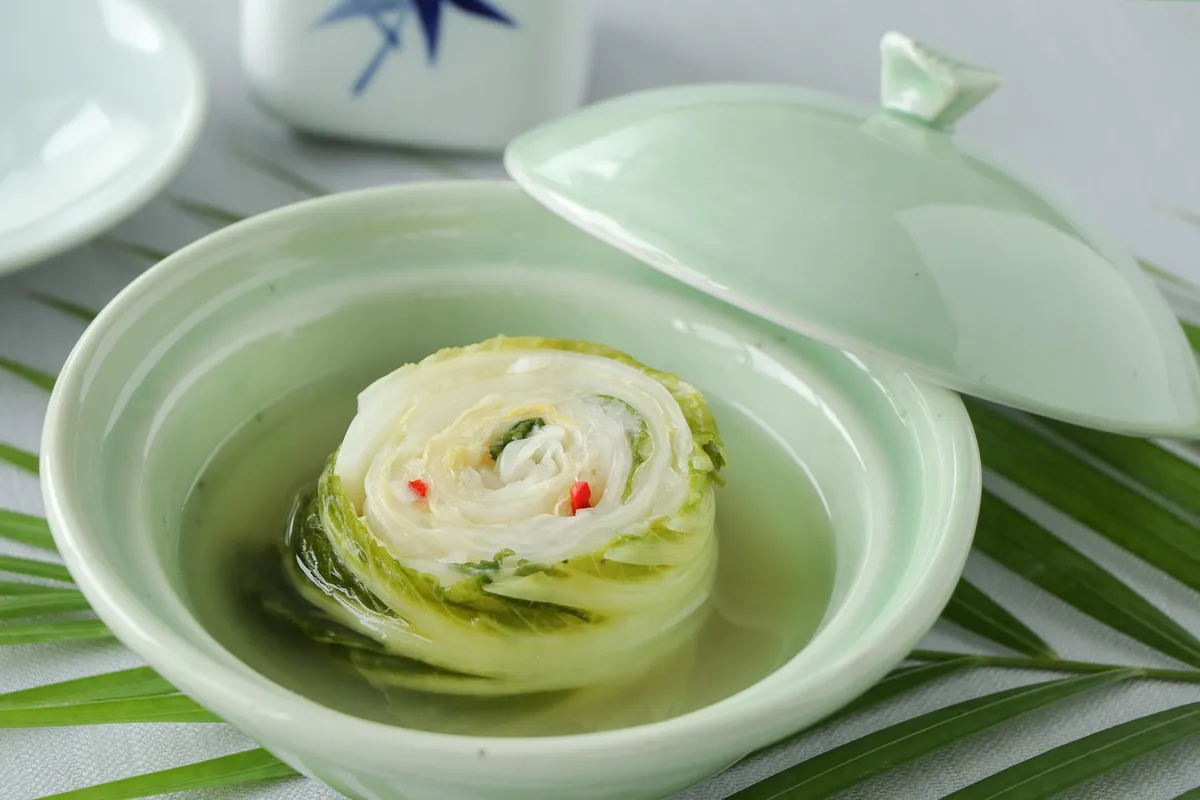
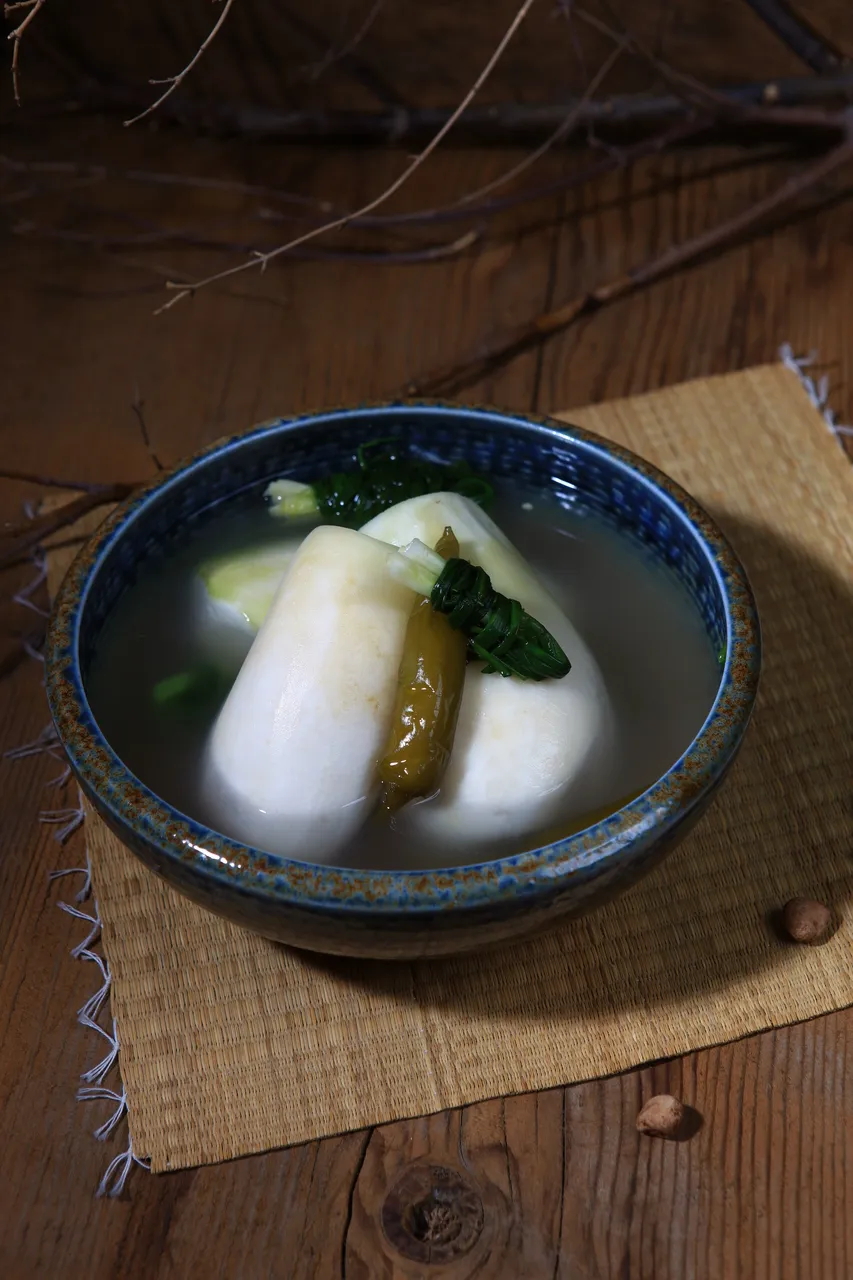
Baek kimchi (백김치) means white kimchi. It uses little or no red chili pepper powder, so it is useful for travelers looking for a milder kimchi style.
Dongchimi (동치미) is a radish water kimchi served with plenty of clear brine. It is usually associated with a cleaner, cooler taste than red cabbage kimchi.
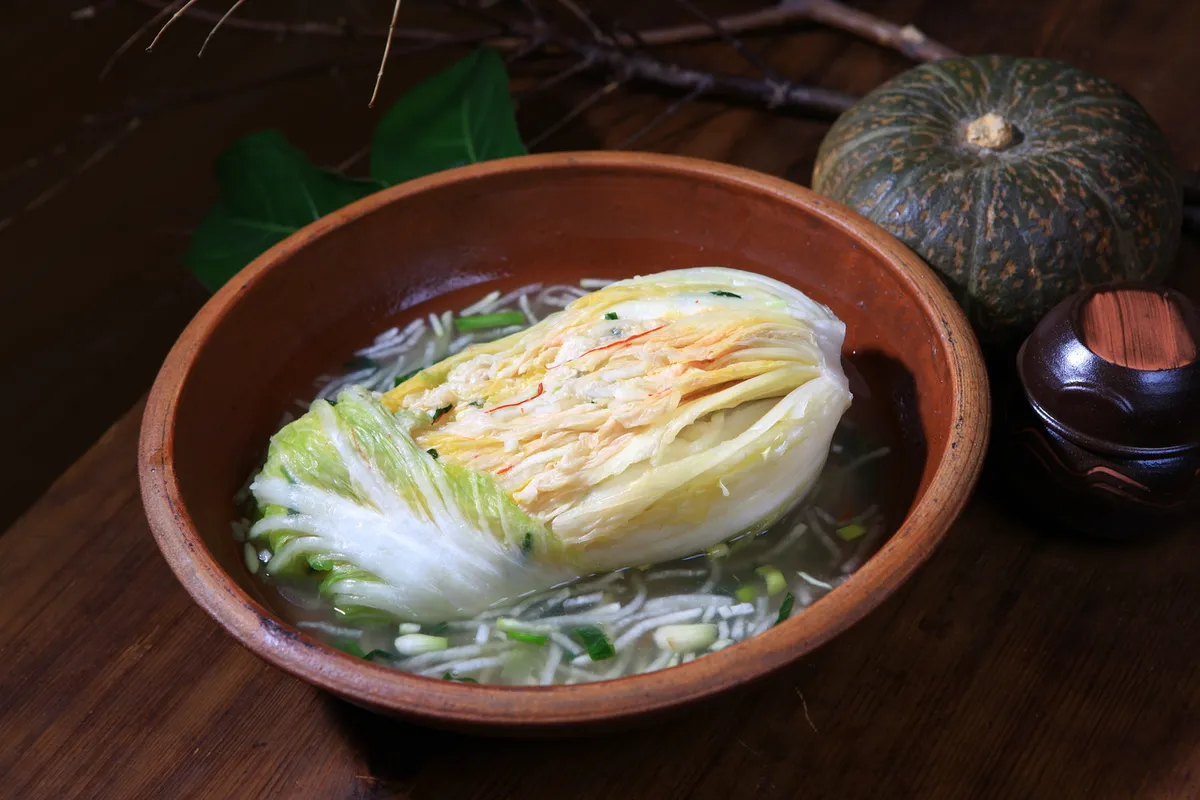
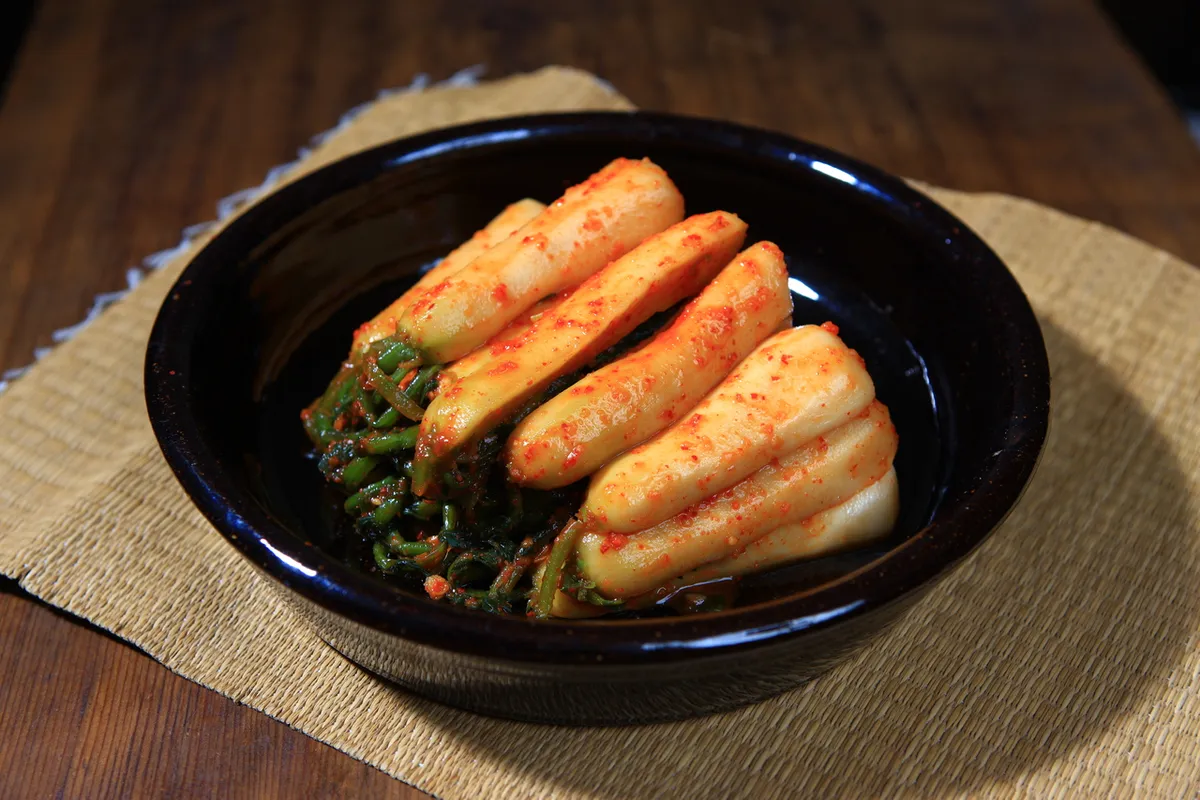
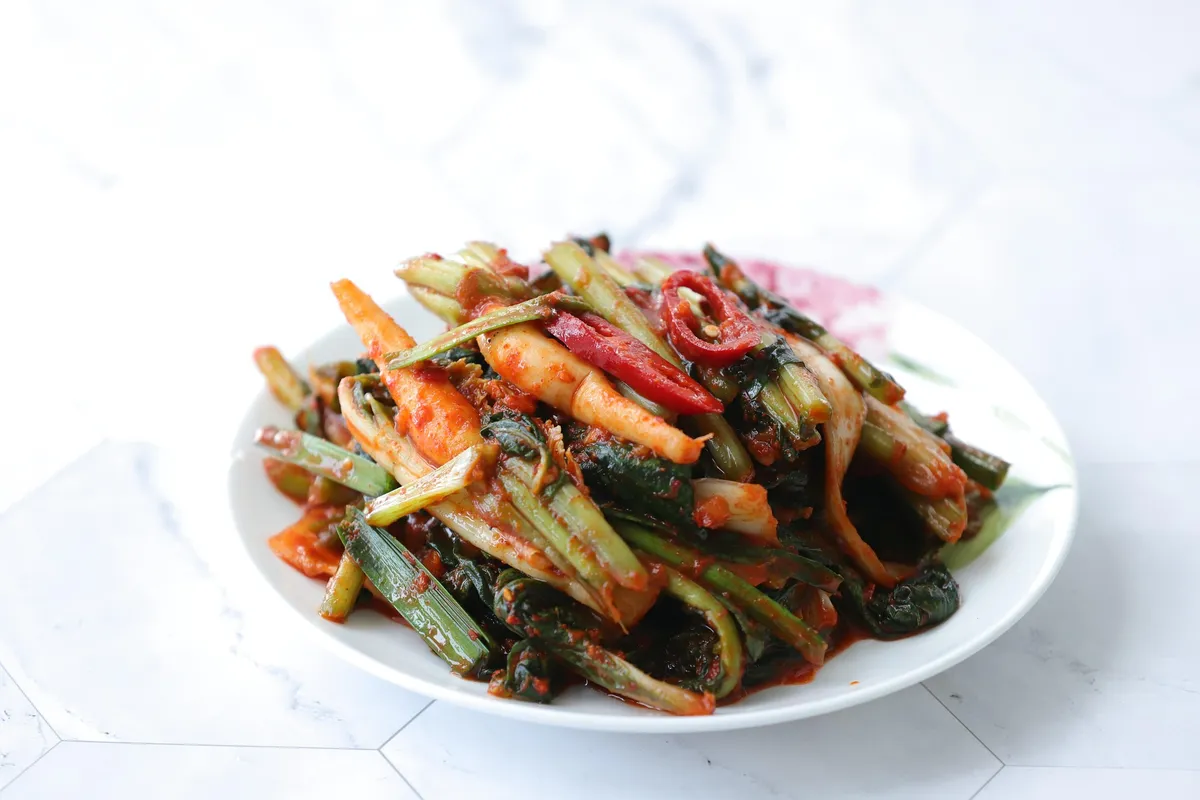
Yeolmu kimchi (열무김치) uses young summer radish. It often has more liquid and a lighter seasoning profile than dense cabbage kimchi.
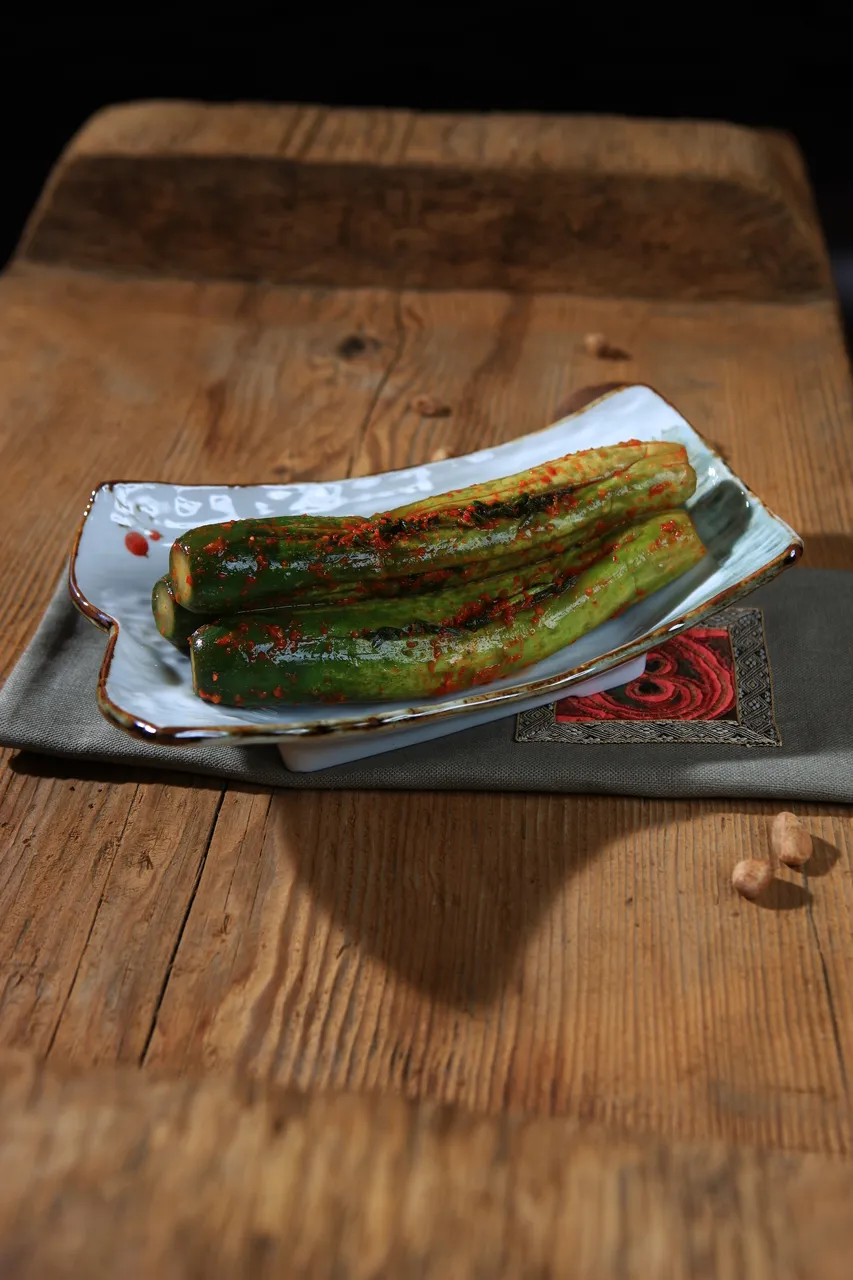
Oi sobagi (오이소박이) is stuffed cucumber kimchi. Cucumbers are cut and filled with seasoning, giving this version a crisp texture and a shape that is easy to recognize on the table.
How to Eat Kimchi with Korean Food
Kimchi is usually eaten in small portions between bites of rice, meat, soup, or noodles. It is not normally treated as a main dish by itself, even when it is one of the most noticeable flavors on the table.
With Korean barbecue, kimchi can be eaten beside grilled pork or beef, placed into lettuce wraps, or served as a side dish that cuts through the richness of meat.
With soup meals, kkakdugi or cabbage kimchi often sits next to the rice bowl. The contrast is part of the meal structure: hot broth, plain rice, and a seasoned fermented side dish.
Kimchi also becomes an ingredient when it is older or more sour. Kimchi jjigae, kimchi fried rice, kimchi pancake, and kimchi dumplings all use kimchi as a base flavor rather than just a side dish.
Spicy, Mild, and Non-Spicy Kimchi
Many red kimchi styles are spicy, but kimchi is not a single heat level. The amount of chili pepper powder, the vegetable, the brine, and the fermentation stage all affect the final taste.
Travelers who avoid chili should look for baek kimchi, dongchimi, nabak kimchi, and other water kimchi styles. These are still fermented kimchi, but they are usually milder than red cabbage kimchi.
Kimchi in Cooked Dishes
Kimchi is one of the most common ways Korean cooking builds acidity and depth in everyday meals. Older kimchi is especially useful because its sourness becomes more balanced when heated.
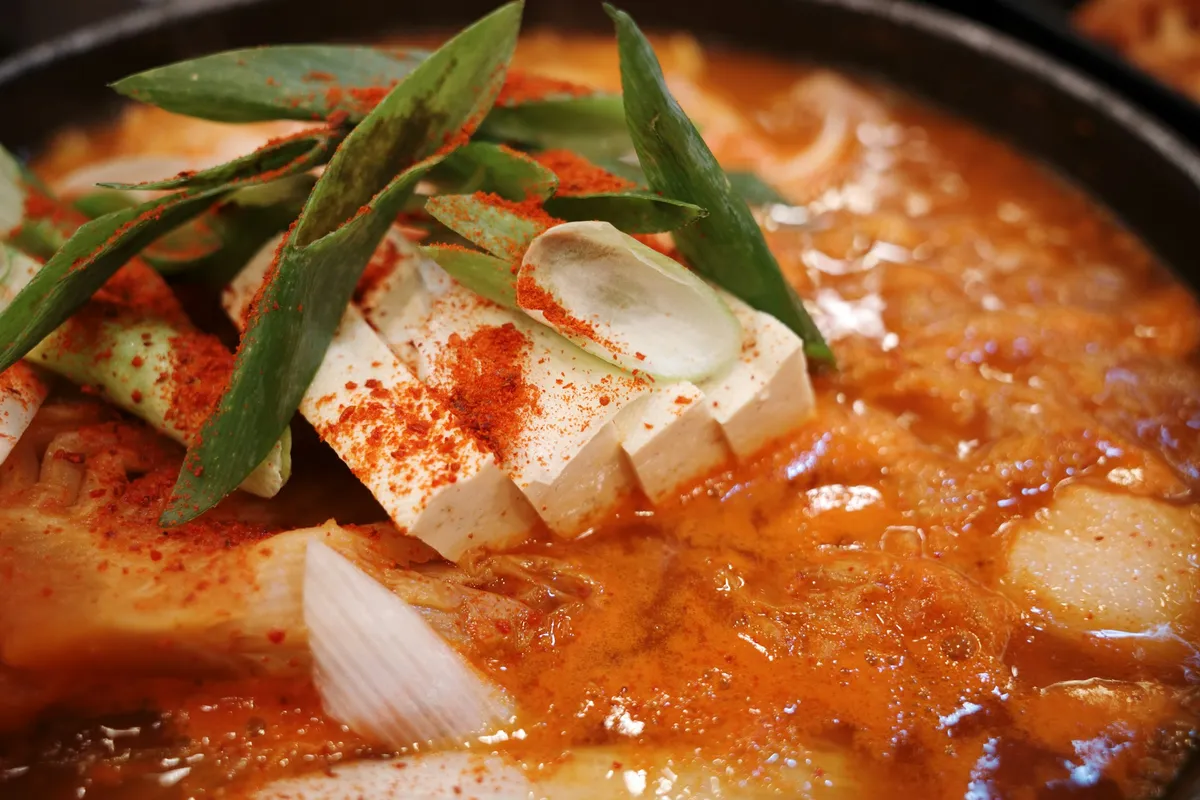
Kimchi jjigae (김치찌개) is a thick stew made with kimchi and commonly cooked with pork, tofu, or other ingredients. It is served hot and usually eaten with rice.
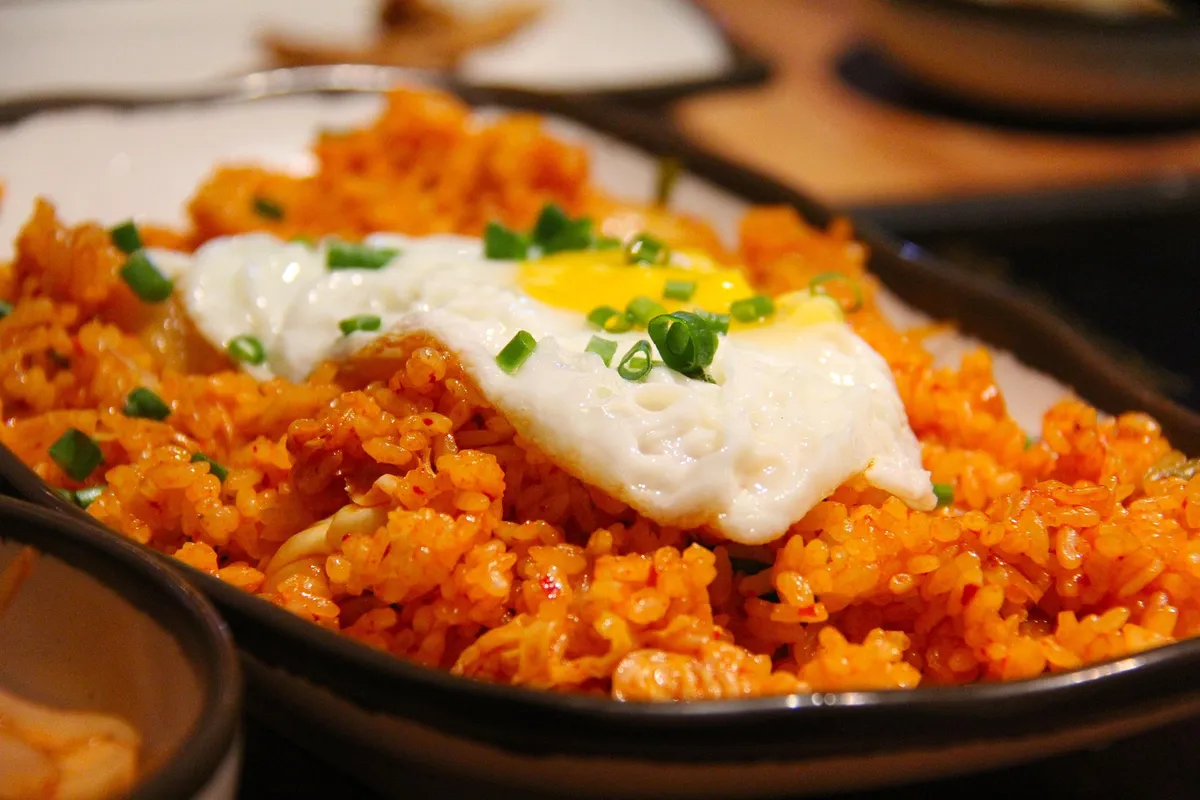
Kimchi bokkeumbap (김치볶음밥) is fried rice with chopped kimchi. The dish often appears as a casual meal because the seasoning is already built into the kimchi.
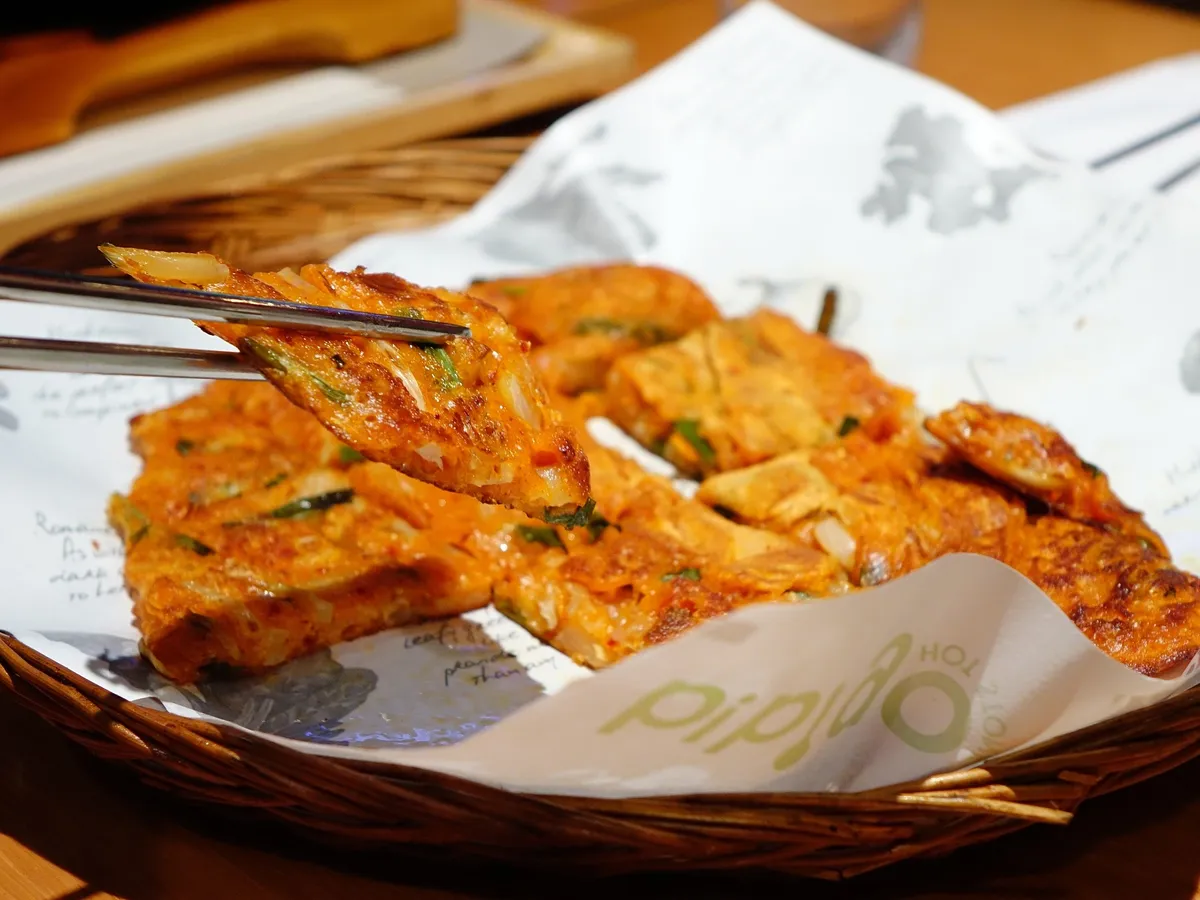
Kimchi jeon (김치전) is a pan-fried pancake made by mixing chopped kimchi into batter. It is a useful example of how kimchi moves from side dish to main flavor.
Frequently Asked Questions
Is kimchi always spicy?
No. Red cabbage kimchi is often spicy, but white kimchi, dongchimi, nabak kimchi, and other water kimchi styles are usually milder. The exact taste depends on the recipe and fermentation stage.
Is kimchi vegetarian?
Not always. Many kimchi recipes use fish sauce, salted seafood, or other seafood-based seasonings.
What is the most common type of kimchi?
Baechu kimchi, made with napa cabbage, is the version most travelers are likely to see first. It is commonly served as banchan with rice, soup, barbecue, and set meals.
What dishes are made with kimchi?
Common cooked dishes include kimchi jjigae, kimchi fried rice, kimchi pancake, kimchi dumplings, and kimchi soup. These dishes usually use kimchi as a main flavor base.
How should travelers eat kimchi?
Eat small portions of kimchi between bites of rice, soup, noodles, or grilled meat. It is usually part of the meal rather than a separate course.
Complete Your Korea Food Trip with TripKorea
Use this Kimchi Guide as a starting point for reading Korean menus and understanding banchan at restaurants.
For broader meal planning, compare kimchi with other Korean side dishes, soups, barbecue dishes, and rice meals in TripKorea’s Korean food guides.
For food markets, cooking classes, and local activities,
browse Things to Do in Korea on TripKorea.
Sources & References
Data Sources:
Korean Food Information: Korea Foundation Korean Food Database
Photos: Korea Tourism Organization PhotoKorea
Official Sites:
Last verified: 2026-06-14
Restaurant side dishes and recipes vary by restaurant. Please confirm ingredients directly if you have allergies or dietary restrictions.