Gimbap Guide starts with one of Korea's most practical rice meals: cooked rice spread over dried laver, filled with vegetables and other ingredients, then rolled and sliced into bite-size pieces.
For travelers, gimbap is useful because it can work as breakfast, a market snack, a train meal, or a simple lunch between sightseeing stops. This guide explains classic gimbap, how it differs from sushi, regional Chungmu gimbap, Gwangjang Market-style small rolls, and how to order it without confusion.
What Is Gimbap?
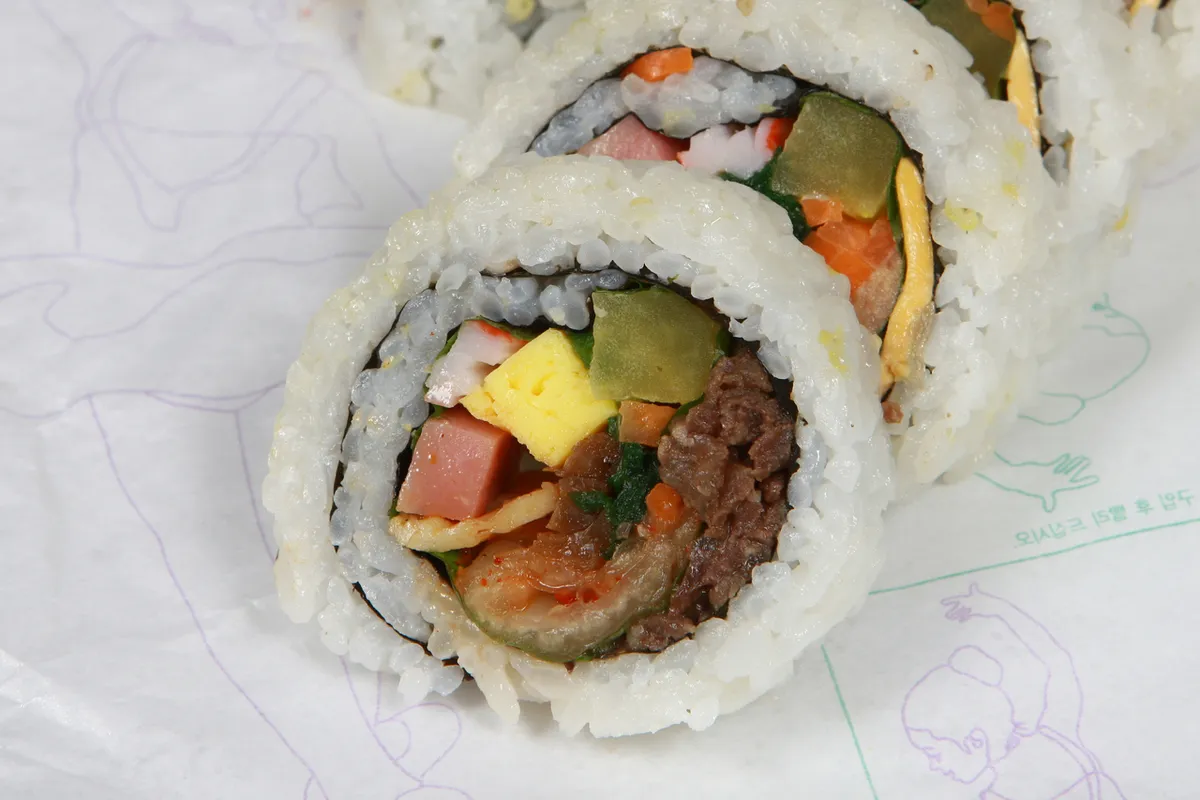
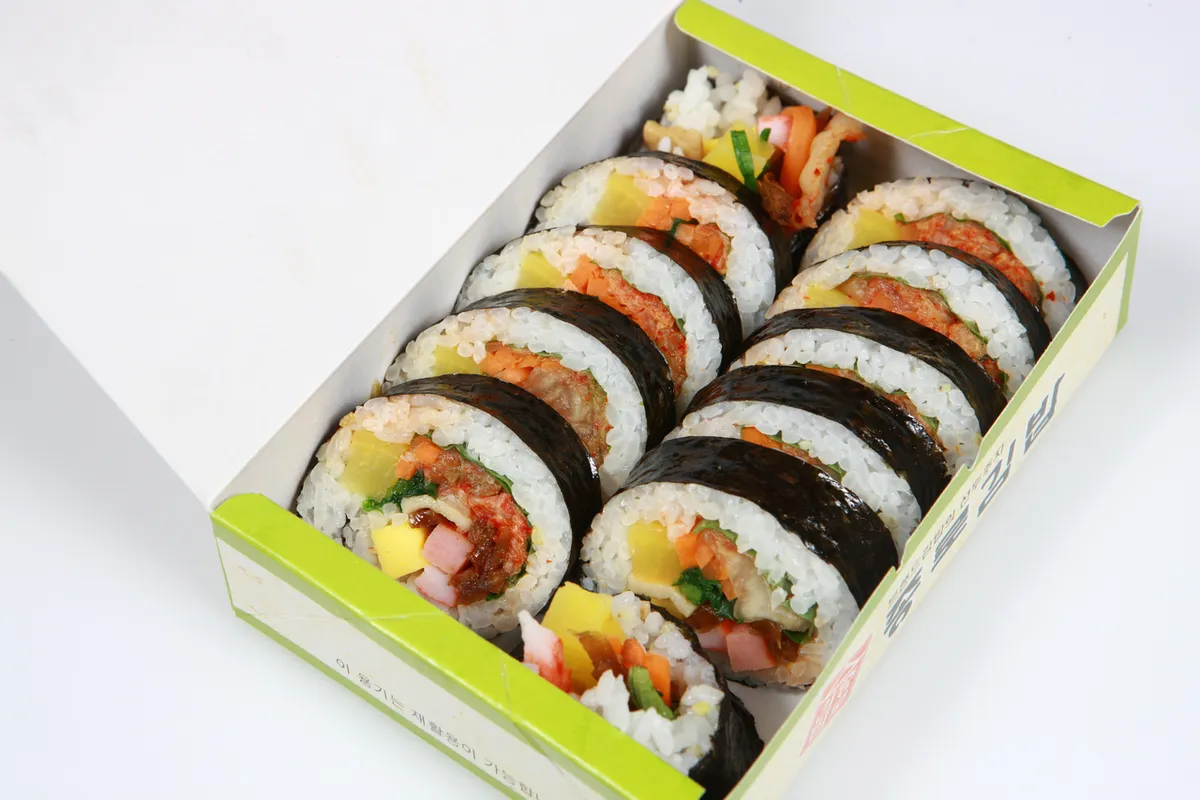
Gimbap (김밥) is a Korean rice roll wrapped in gim, the Korean word for dried laver. The Korea Foundation food reference describes the roll as rice spread on laver with beef, fried egg, pickled radish, and steamed vegetables, then rolled and cut into slices.
The common English description is “Korean seaweed rice rolls.” The older literal label “rice rolls in laver” is useful for understanding the structure, but travelers will see the menu word gimbap more often in Korea-focused English writing.
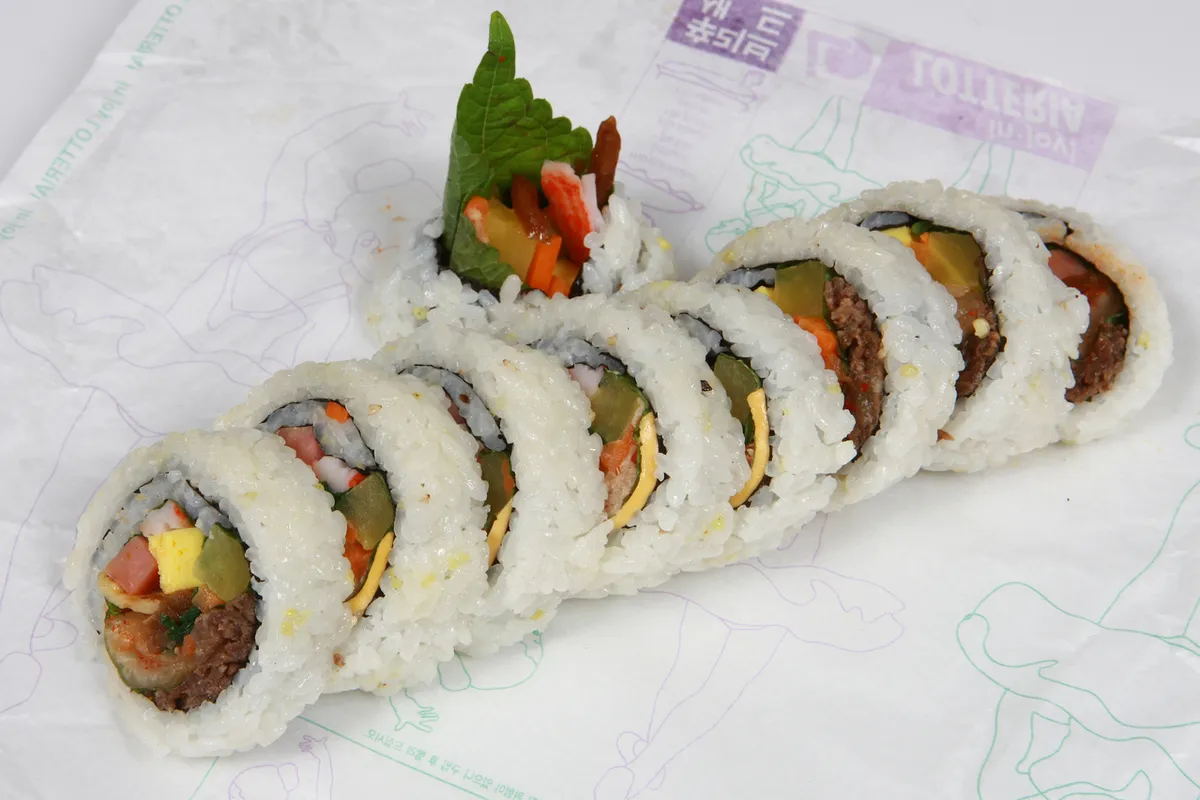
A standard roll is compact but filling. Rice gives the base, gim holds the shape, and the fillings add color, texture, and seasoning. Pickled yellow radish is especially easy to recognize because it appears as a bright strip inside many rolls.
Gimbap is usually sliced before serving. It is commonly eaten with chopsticks, toothpicks, or by hand depending on the setting.
Gimbap Guide to Sushi Differences
Gimbap is often compared with sushi rolls because both use rice and seaweed. The comparison is understandable, but the two should not be treated as the same dish.
Gimbap usually uses seasoned cooked rice and Korean-style fillings such as egg, pickled radish, vegetables, and sometimes beef or other cooked ingredients. Sushi rolls are part of Japanese cuisine and may use vinegared rice with raw or cooked seafood depending on the style.
The eating context is also different. Gimbap is common in bunsik shops, markets, lunch boxes, convenience-store sections, and casual food stops. It is not normally presented as a formal sushi course.
For search and ordering, use the Korean word gimbap. Asking for “Korean sushi” may be understood in some tourist areas, but it is less precise and can blur two separate food traditions.
Common Fillings and Classic Rolls
The Korea Foundation reference identifies beef, fried egg, pickled radish, and steamed vegetables as representative fillings. Restaurants and snack shops may vary the exact ingredients, but the visual structure is usually clear once the roll is sliced.
Classic gimbap normally places contrasting ingredients across the center of the rice before rolling. This is why each slice shows a ring of laver, a white rice layer, and several colored fillings in the middle.
Some rolls include kimchi-style filling, while others may use simpler vegetable-centered combinations. Travelers with allergies or dietary restrictions should ask directly because fillings can include egg, beef, processed meats, seafood products, sesame oil, or sauces.
Gimbap is usually not a spicy dish by default. However, kimchi gimbap, chili-seasoned fillings, or accompanying sauces can add heat, so check the menu name before ordering.
Chungmu Gimbap from Tongyeong
Chungmu gimbap (충무김밥) is a regional style associated with Tongyeong in Gyeongsangnam-do. It is a useful regional example for travelers who want more than the standard sliced roll.
The style is visually different from classic gimbap. Instead of a large roll filled with several ingredients, Chungmu gimbap is usually served as small plain rice-and-laver rolls with seasoned side items such as squid or radish kimchi on the plate.
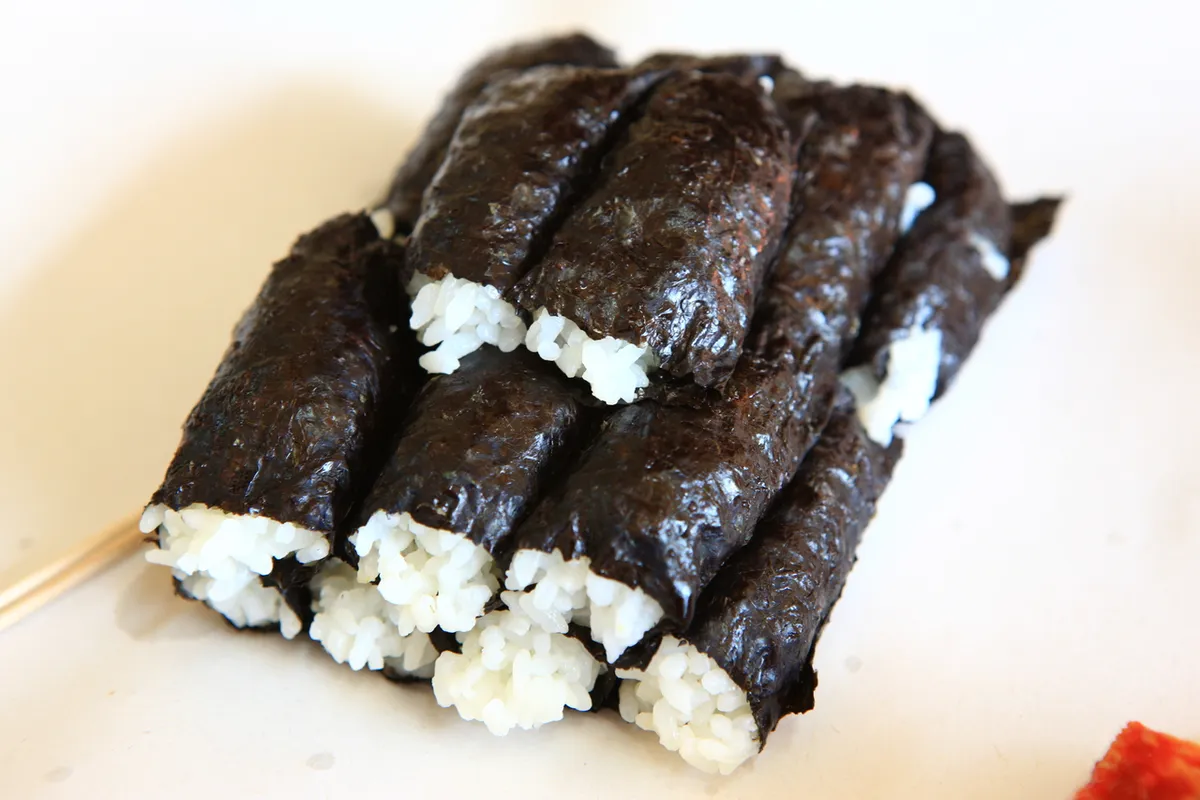
For travelers, the main point is that not every gimbap contains fillings inside the roll. Chungmu gimbap separates the rice rolls from the strongly seasoned side dishes, so the flavor is built by eating them together.
If you see Chungmu gimbap on a menu, expect a regional plate rather than a standard long roll sliced into colorful pieces.
Market Gimbap and Gwangjang Market Rolls
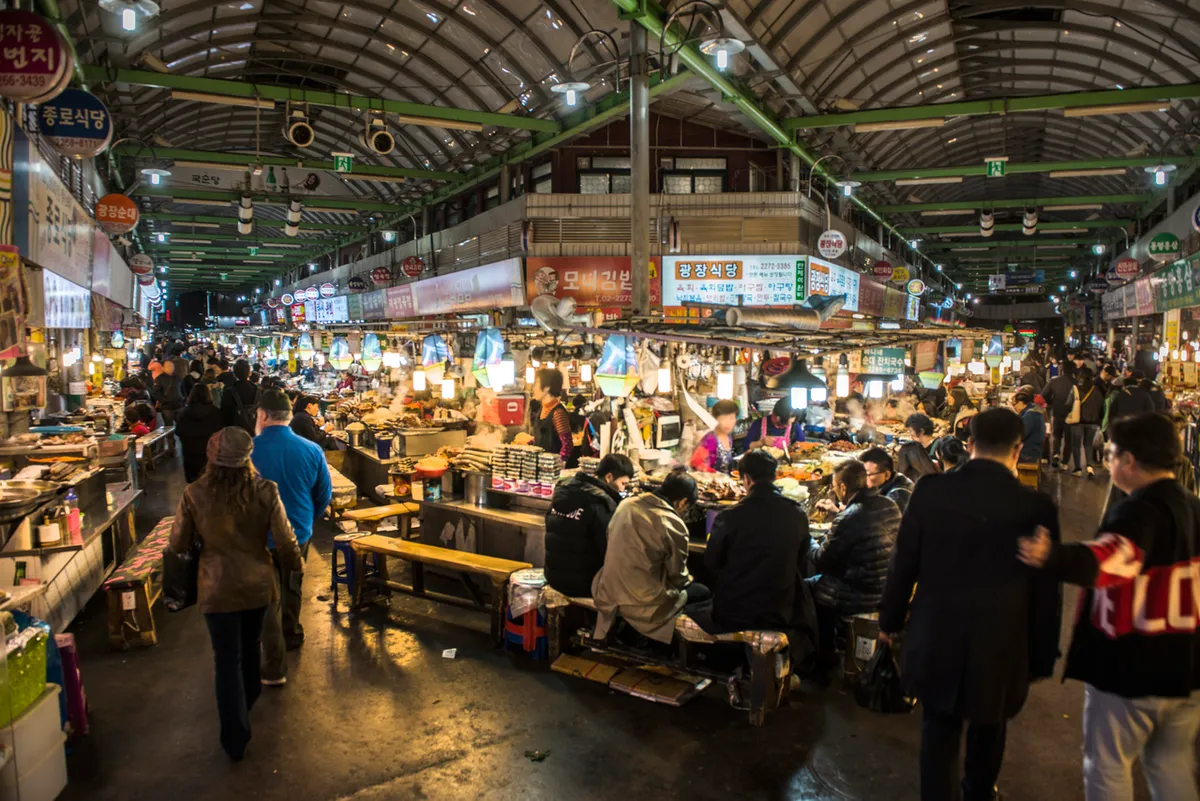
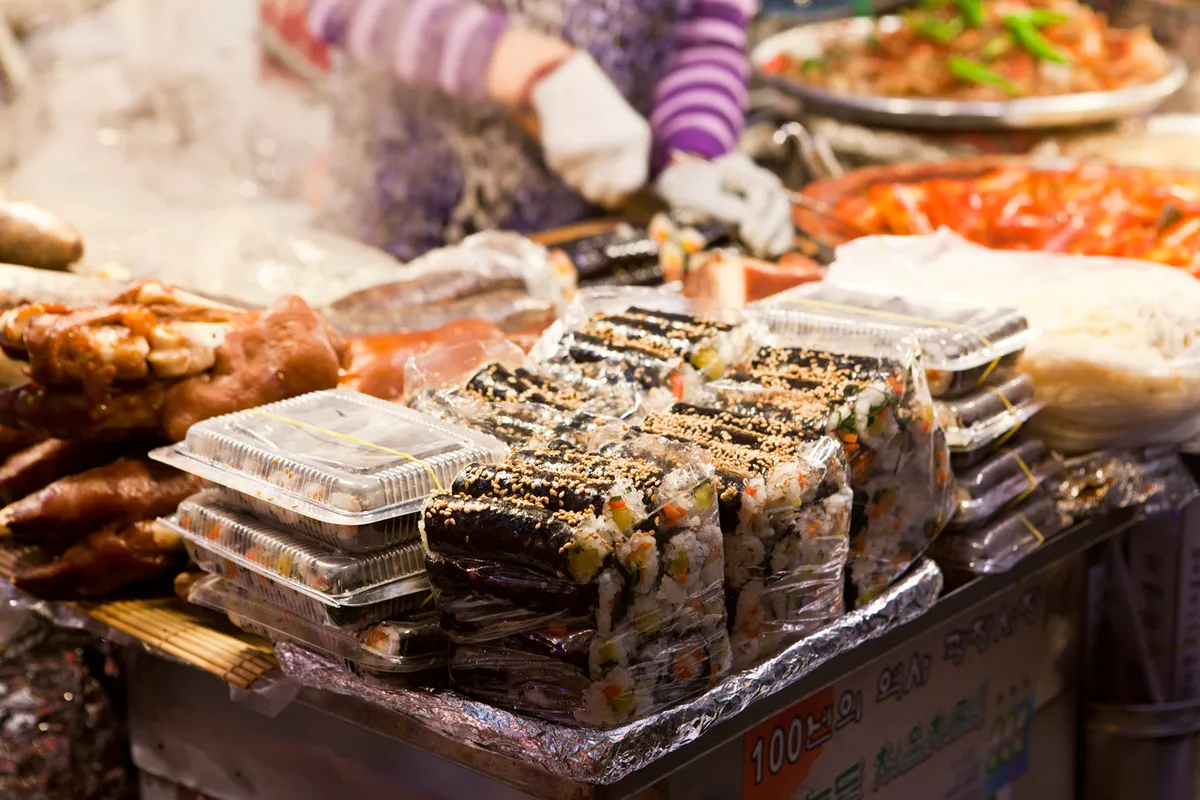
Markets are one of the easiest places to understand gimbap as everyday Korean food. Busan International Market and Gwangjang Market are practical settings for seeing gimbap as market food, including small-roll styles sold in food alleys.
In a market setting, gimbap is often built for quick eating. The roll may be smaller, served with dipping sauce, or presented beside other snack foods such as tteokbokki, fish cake, or fried items.
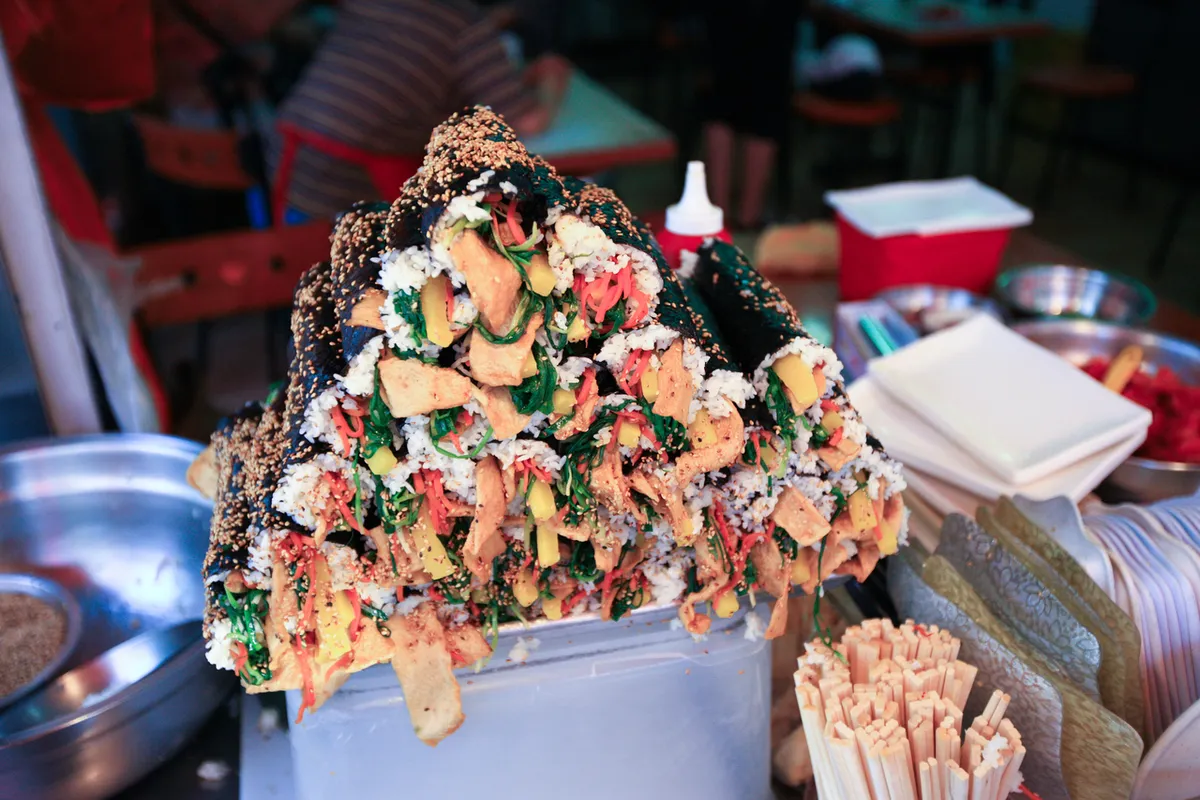
Gwangjang Market is especially associated with mayak gimbap and small gimbap rolls. The word mayak appears on signs and photo keywords for market-style rolls, but travelers should treat it as a market food name rather than a formal culinary category.
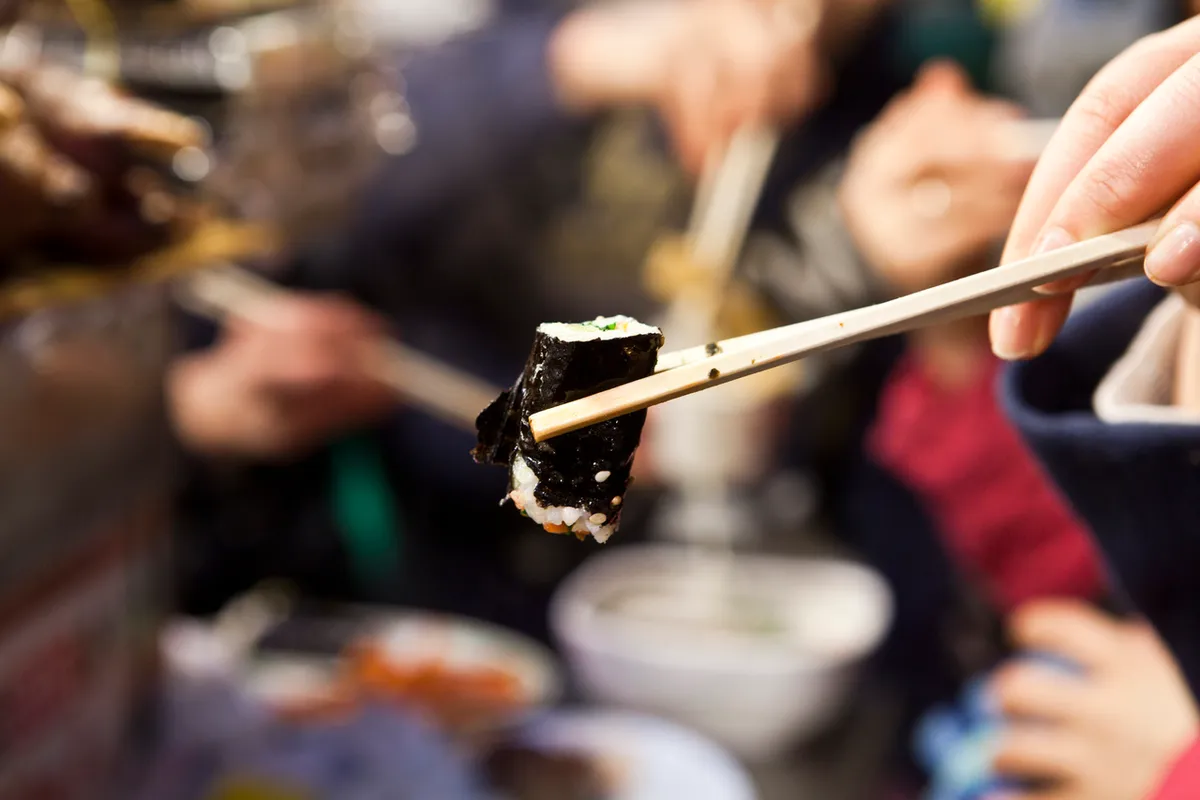
Small market rolls are practical when you want to try several foods in one stop. They are easier to share than a full roll and pair naturally with other bunsik-style snacks.
Where Travelers Can Eat Gimbap
Gimbap is most practical in casual places: bunsik shops, traditional markets, food alleys, train-station areas, and convenience-store food sections. It is a useful meal when the schedule is too tight for a full restaurant stop.
In Seoul, markets and central shopping districts make gimbap easy to combine with sightseeing. Use Things to Do in Seoul to plan nearby food walks, markets, and activities around a simple lunch stop.
If your route is based around central Seoul, Myeongdong hotels are practical for shopping and food streets. If your evening plans are closer to university areas and nightlife, Hongdae hotels may be more convenient.
Gimbap also travels well compared with many hot dishes. It can be eaten on short breaks, but always follow local rules in trains, buses, museums, and indoor attractions where food may be restricted.
How to Order Gimbap
For a basic order, say “gimbap hana juseyo” (김밥 하나 주세요), meaning “one gimbap, please.” If you want the roll cut, most shops will already serve it sliced.
If the menu has several options, start with the basic gimbap before choosing more specific styles. Basic rolls are the easiest way to understand the rice, laver, egg, radish, and vegetable structure.
Travelers avoiding meat, seafood, or egg should ask before ordering. Even rolls that look vegetable-heavy may include egg, ham, beef, fish cake, sesame oil, or sauces.
🗣️ Korean Phrase: “Gimbap hana juseyo (김밥 하나 주세요)” means “One gimbap, please.”
Frequently Asked Questions
What is gimbap?
Gimbap is a Korean rice roll wrapped in dried laver. It usually contains cooked rice and fillings such as egg, pickled radish, vegetables, and sometimes beef or other ingredients.
Is gimbap the same as sushi?
No. Gimbap is Korean, while sushi is Japanese. Both can use rice and seaweed, but gimbap usually uses Korean-style cooked fillings and is common in casual shops, markets, and lunch boxes.
Is gimbap spicy?
Basic gimbap is usually not spicy. Kimchi gimbap or rolls with chili-seasoned fillings can be spicy, so check the menu name before ordering.
What is Chungmu gimbap?
Chungmu gimbap is a regional style associated with Tongyeong. It is usually served as small plain rice-and-laver rolls with seasoned side dishes such as squid or radish kimchi.
Where can travelers try gimbap in Korea?
Travelers can find gimbap in bunsik shops, markets, convenience-store food sections, and casual food streets. Gwangjang Market and Busan International Market are practical places to look for gimbap in market-food settings.
Complete Your Korea Food Trip with TripKorea
Markets and food walks
Use Seoul activity listings to connect a gimbap stop with markets, food streets, and walking routes.
Explore Things to Do in Seoul
Stay near easy food streets
Choose a hotel district that keeps casual meals and subway access close.
Explore Hotels in Myeongdong
Explore Hotels in Hongdae
Sources & References
Data Sources:
- Korean Food Information: Korea Foundation Korean Food Database
- Photos: Korea Tourism Organization PhotoKorea
Official Sites:
- Visit Korea — Korean Food
Last verified: 2026-08-15
Restaurant menus, fillings, sauces, and market availability vary by location. Please confirm directly before ordering.