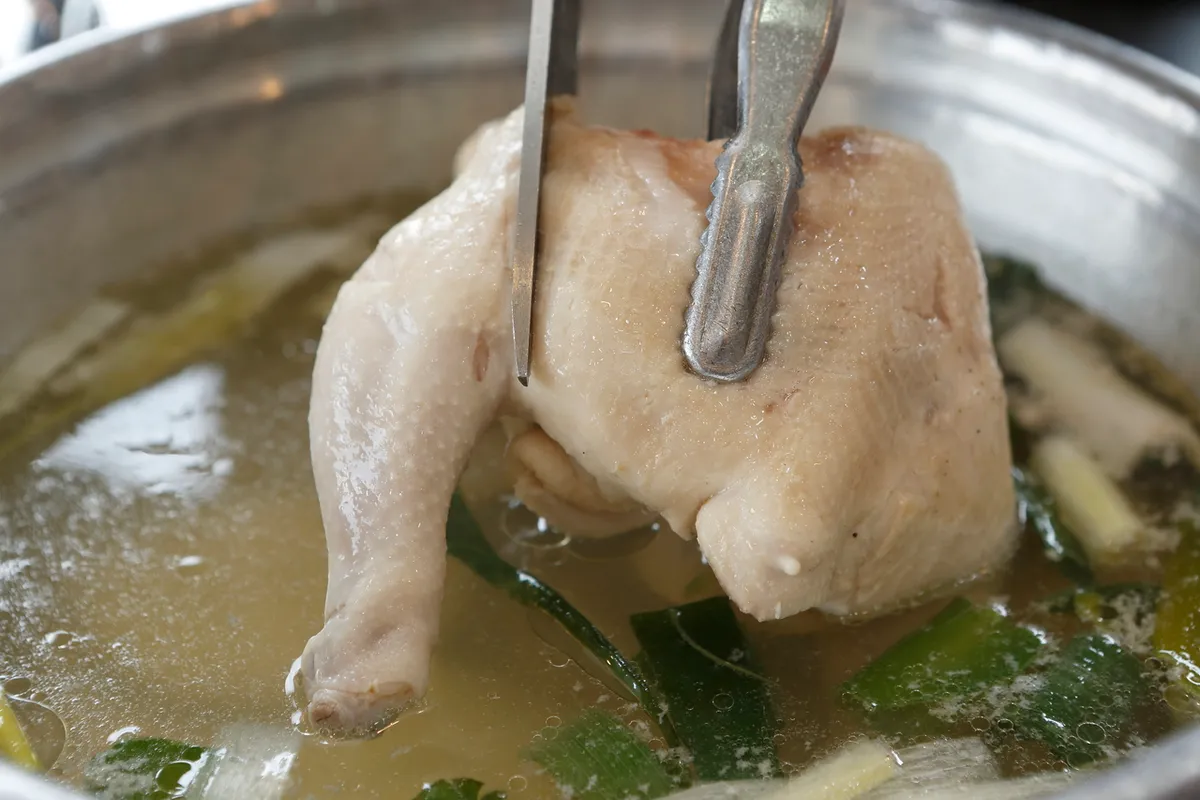
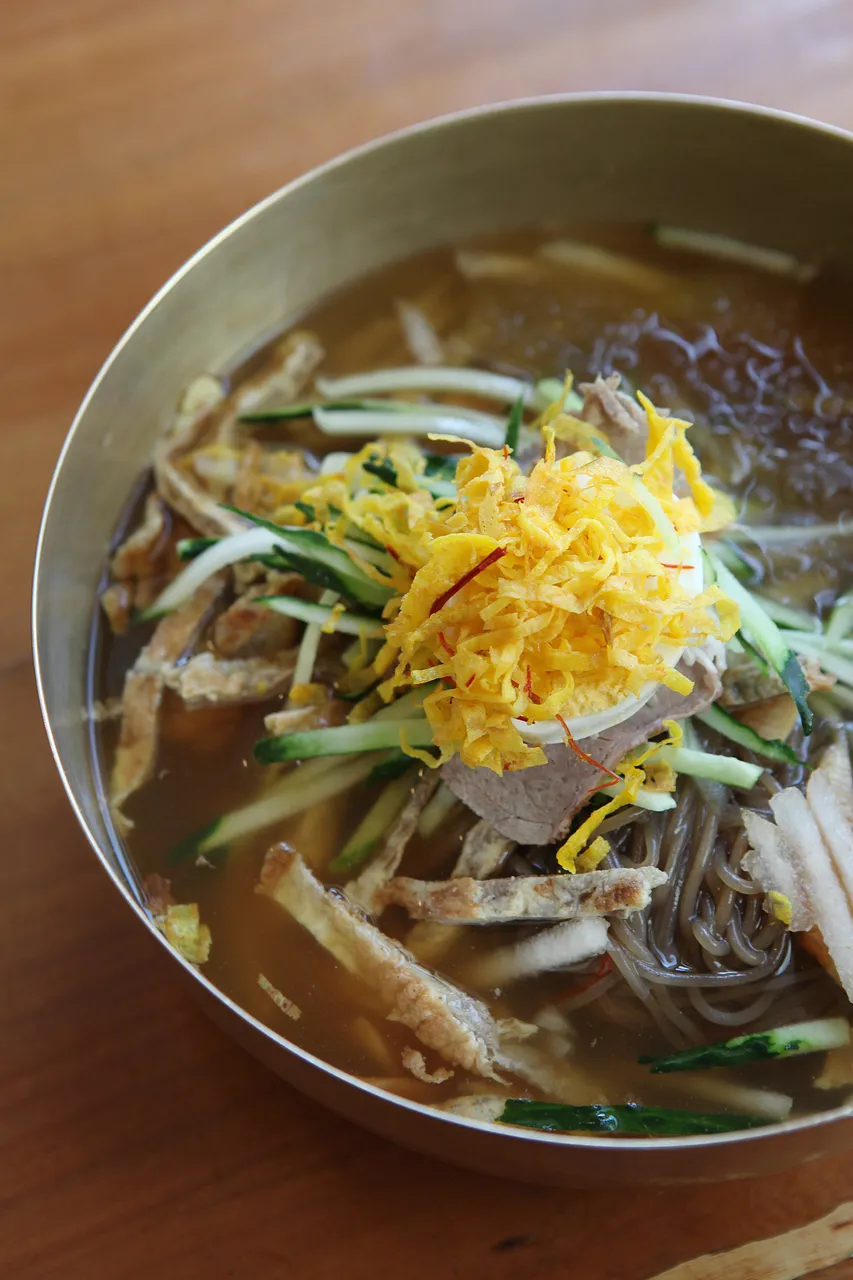
Korean cold noodles are served chilled, either in broth or mixed with sauce, and they occupy a separate place from hot noodle soups and instant ramyeon in Korean food culture. This guide covers naengmyeon, bibim-naengmyeon, kongguksu, makguksu, and Busan-style milmyeon for travelers reading Korean menus.
The focus here is simple: how each bowl is built, how it is eaten, and which names are useful when ordering in Korea. The dishes below are treated as noodle-guide topics, not restaurant rankings or personal recommendations.
Korean Cold Noodles: The Main Styles
The Korean word naengmyeon (냉면) literally points to cold noodles. In restaurants, it usually means thin buckwheat noodles served cold, with either chilled broth or a spicy mixed sauce.
The two menu names travelers see most often are mul-naengmyeon (물냉면) and bibim-naengmyeon (비빔냉면). Mul-naengmyeon is served in chilled broth. Bibim-naengmyeon is mixed with sauce instead of being served as a full soup.
A typical chilled buckwheat noodle soup includes buckwheat noodles in chilled beef broth with toppings such as sliced beef, radish kimchi, Korean pear, boiled egg, and cucumber. Vinegar and mustard may be added according to individual taste.
That last detail matters at the table. Restaurants often place vinegar and mustard nearby, but they are not mandatory. Add a small amount first, mix, and adjust only after tasting the broth or sauce.
Mul-Naengmyeon and Bibim-Naengmyeon
Mul-naengmyeon (물냉면) is the broth version. The bowl is cold, the noodles are usually thin, and the broth is part of the dish rather than a side drink.
The standard toppings vary by restaurant, but common examples include cucumber, sliced radish, pear, egg, and meat. These toppings should be treated as restaurant-specific, so travelers with allergies or dietary restrictions should confirm before ordering.
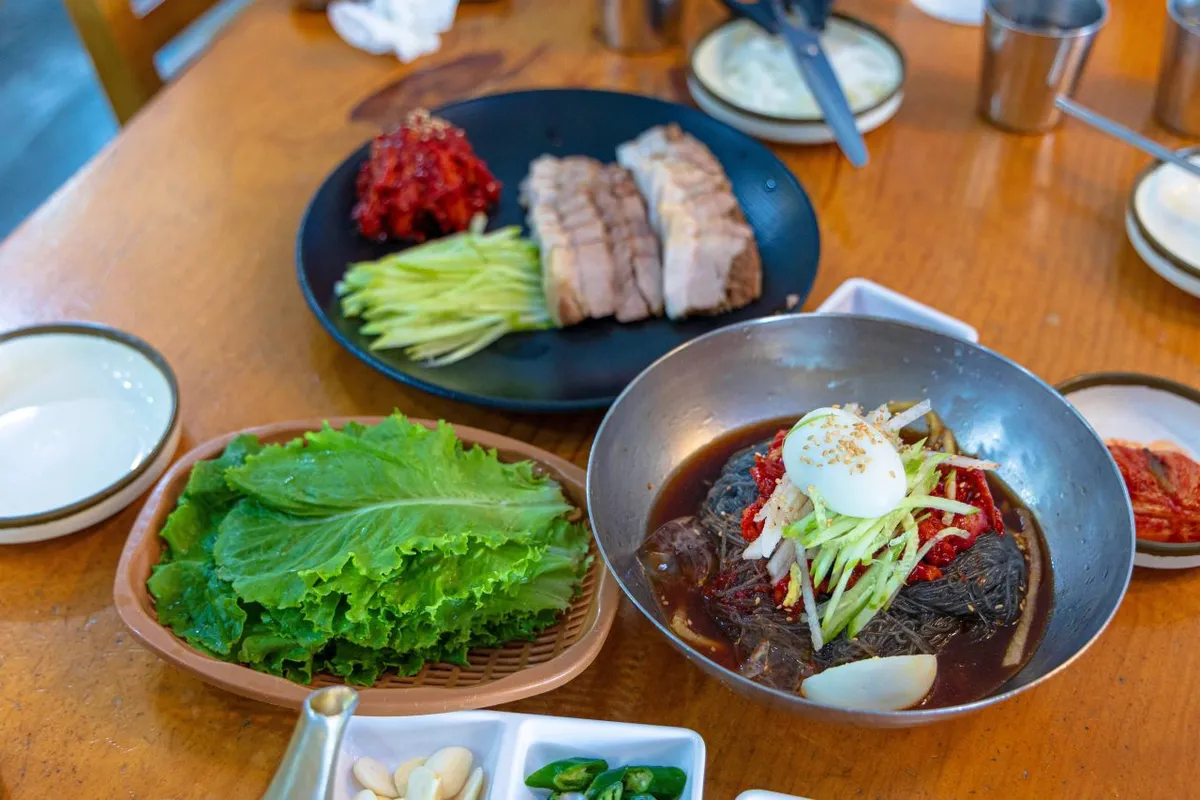
Bibim-naengmyeon (비빔냉면) is the mixed version. A typical bibim-naengmyeon bowl uses chilled buckwheat noodles mixed in spicy sauce, with toppings such as cold meat, Korean pear, cucumber, and vegetables.
Because the sauce is mixed directly into the noodles, bibim-naengmyeon is usually the stronger choice for people sensitive to chili heat. If spice is a concern, mul-naengmyeon is often the easier starting point, but the final heat level still depends on the restaurant.
Kongguksu: Soybean Broth Noodles
Kongguksu (콩국수) is built around chilled soybean broth rather than beef broth or chili sauce. The broth is made from pureed soybeans and served cold with noodles.
A typical kongguksu bowl uses noodles in chilled white bean soup, with cucumber and sometimes watermelon as garnish. Sesame seeds may also be added to the puree.
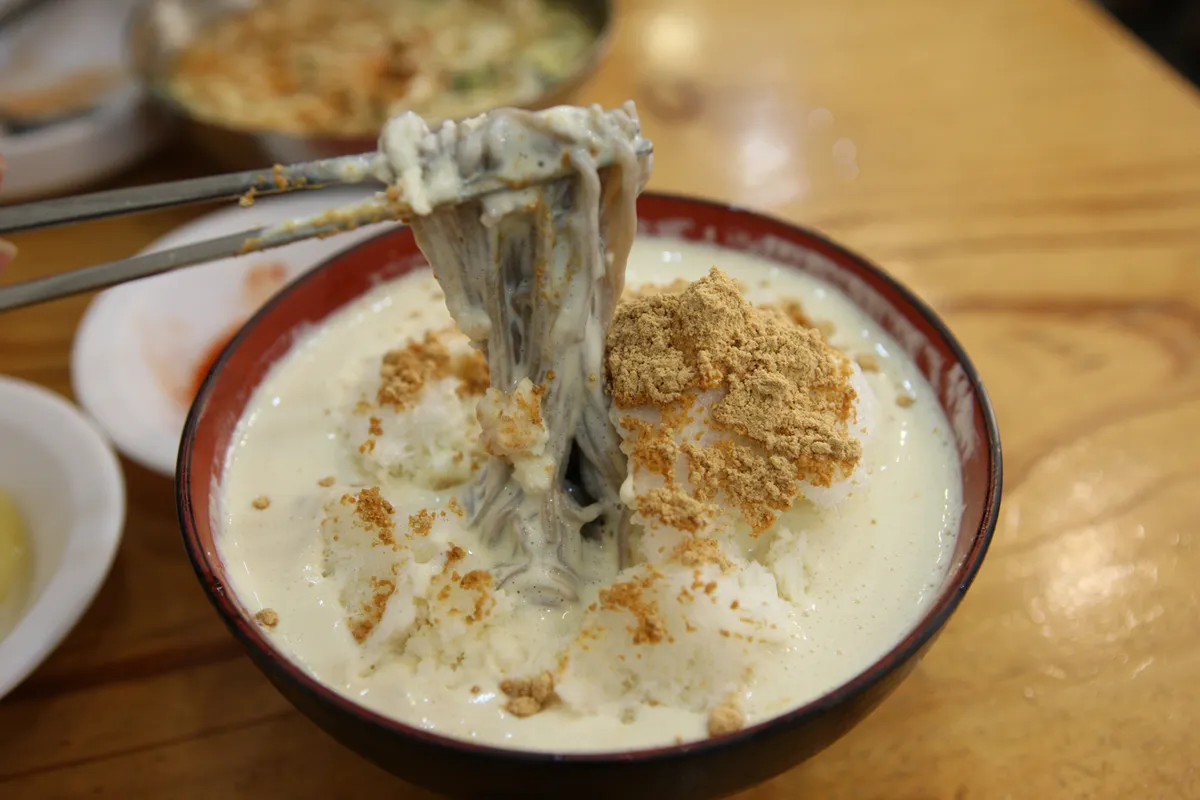
For travelers who want a cold noodle dish without a red chili sauce, kongguksu is an important menu name. It is not the same as a clear broth noodle soup. The texture is thicker and creamier because the broth comes from ground soybeans.
Allergy and diet checks are still necessary. Soy is central to the dish, and toppings can vary. If you avoid soy or sesame, confirm directly with the restaurant before ordering.
Makguksu and Regional Buckwheat Noodles
Makguksu (막국수) is another cold noodle dish associated with buckwheat noodles. It is especially connected with Gangwon-do food culture, including Chuncheon and nearby areas, but restaurant styles can differ.
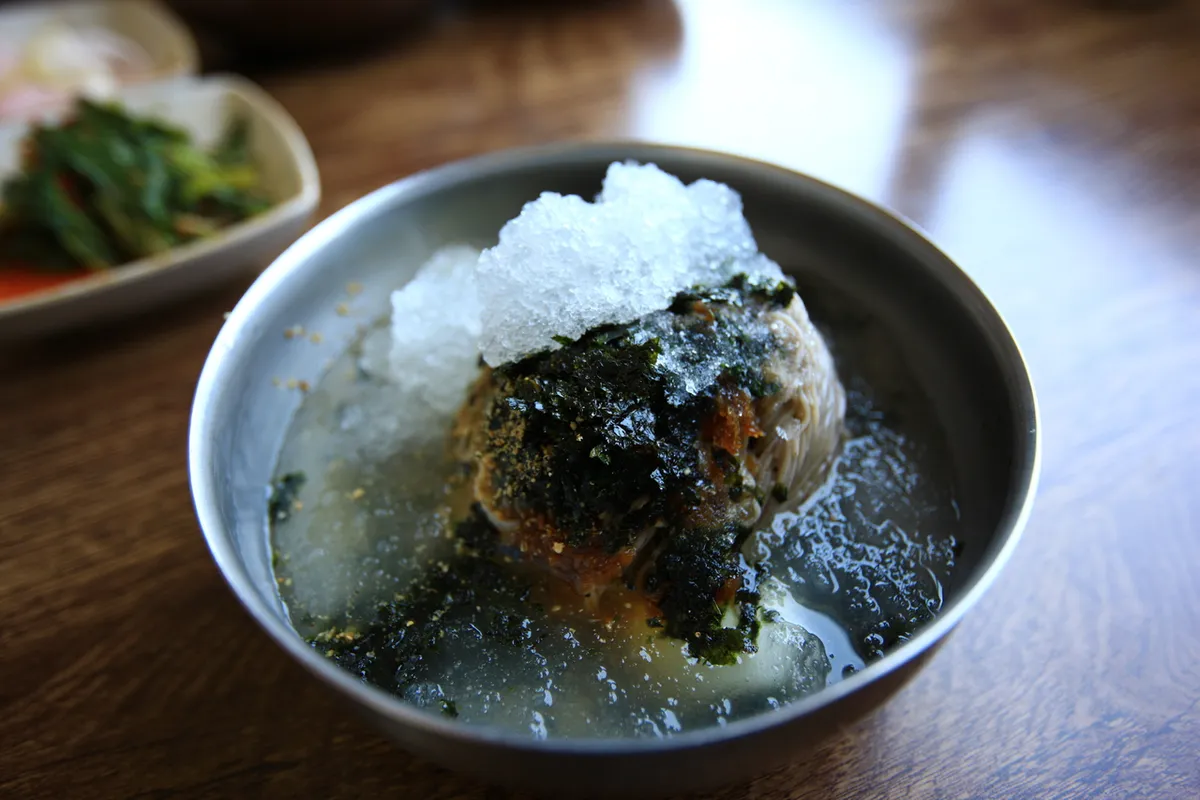
Some bowls are served with cold broth or icy liquid. Others are mixed more like a bibim-style noodle dish. Because the exact style varies, the safest approach is to look at the menu photo or ask whether the dish is served in broth.
Useful words include mul (물), meaning water or broth in this context, and bibim (비빔), meaning mixed. These words appear across several cold noodle menus, not only naengmyeon.
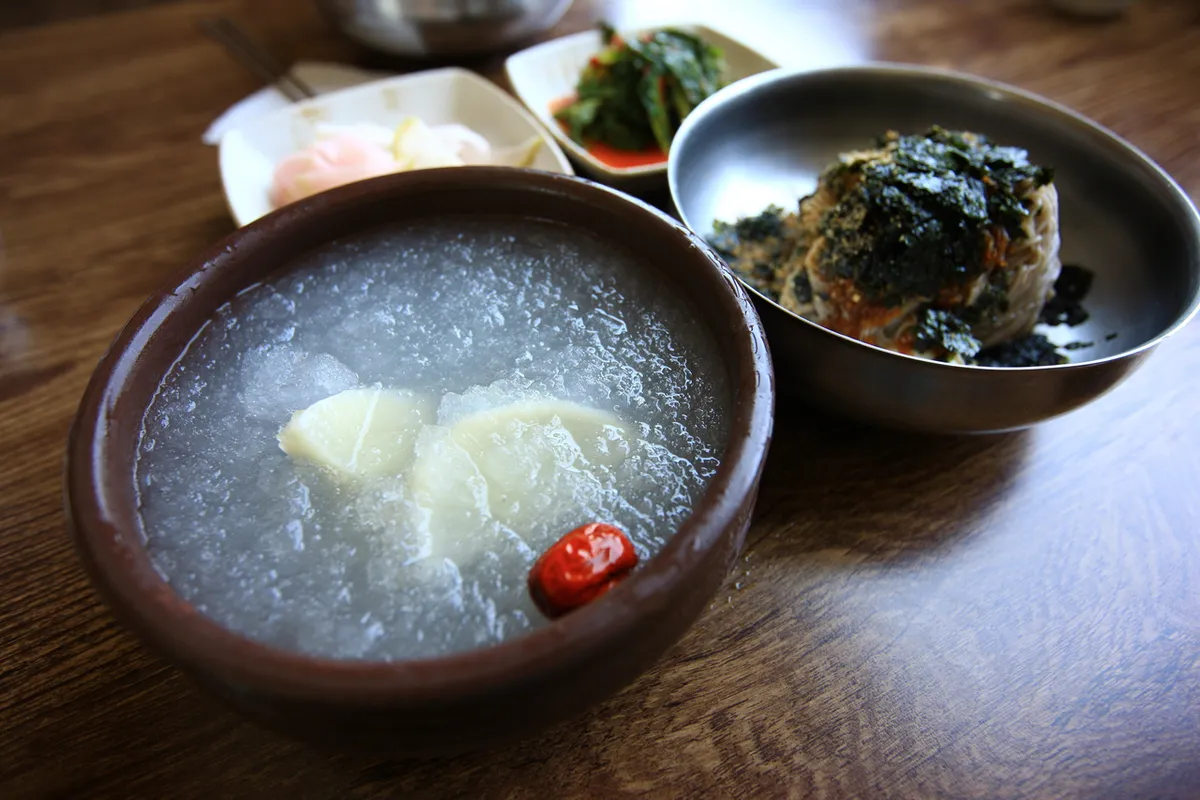
Makguksu can be a good follow-up for travelers who already know naengmyeon and want another cold buckwheat noodle style. It should not be treated as identical to naengmyeon, because the broth, sauce, noodle texture, and regional setting may differ by restaurant.
Milmyeon: Busan's Cold Wheat Noodles
Milmyeon (밀면) is closely associated with Busan. The name uses mil (밀), meaning wheat, so it is commonly explained as a cold wheat-noodle dish rather than a buckwheat noodle dish.
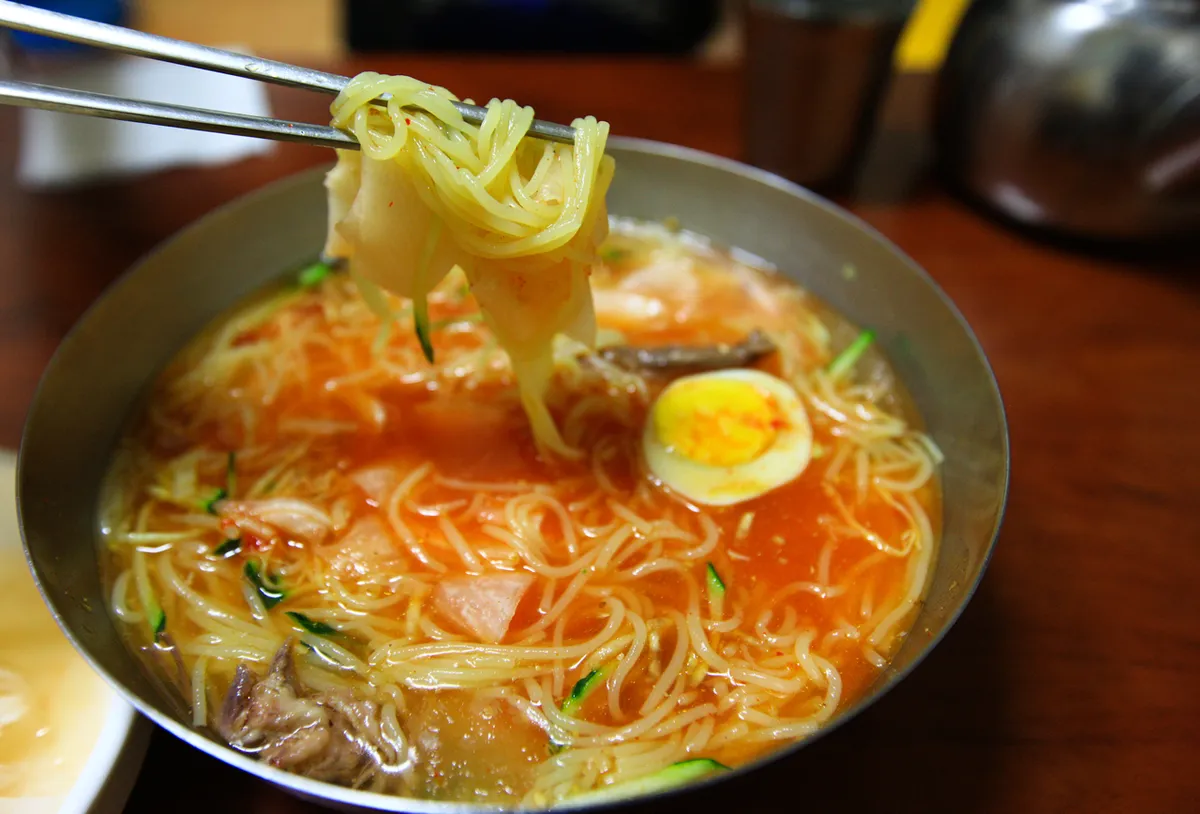
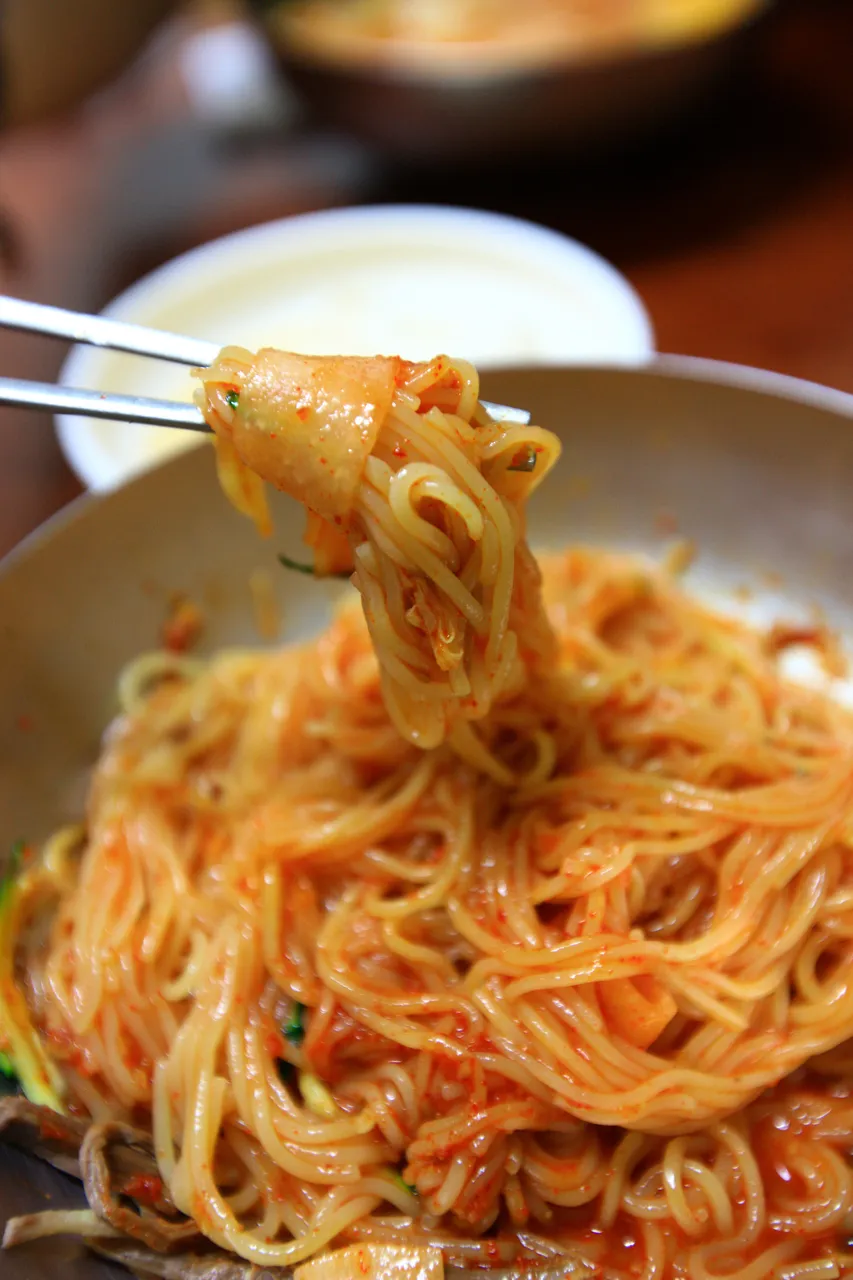
Like naengmyeon, milmyeon may appear in broth and mixed versions. Broth-style milmyeon is cold and soup-based. Bibim-style milmyeon is mixed with sauce and tends to be more sauce-forward.
For a Busan food route, milmyeon is one of the clearest regional noodle names to recognize. TripKorea's Things to Do in Busan page can help pair a food stop with nearby sightseeing or market visits.
How to Order and Eat Cold Noodles
Cold noodle bowls are usually cut with scissors before eating. In some restaurants, staff may cut the noodles at the table. In others, scissors are provided so diners can cut the long strands themselves.
Before adding vinegar or mustard, taste the broth or sauce. These condiments can change the balance quickly. Add a small amount, mix, and taste again.
For spice level, the key word is bibim. It often signals a mixed sauce dish and may include chili. The phrase An maepge haejuseyo (안 맵게 해주세요) means “Please make it not spicy,” but some sauces are prepared in advance and cannot always be changed.
- Naengmyeon (냉면): cold noodles, usually buckwheat-based
- Mul-naengmyeon (물냉면): cold noodles in chilled broth
- Bibim-naengmyeon (비빔냉면): cold noodles mixed with spicy sauce
- Kongguksu (콩국수): noodles in chilled soybean broth
- Makguksu (막국수): cold buckwheat noodles associated with regional styles
- Milmyeon (밀면): Busan-style cold wheat noodles
Travelers building a Seoul food itinerary can also browse Things to Do in Seoul for activities around major neighborhoods. Keep the food plan flexible because cold noodle restaurants may be busier during hot weather.
Frequently Asked Questions
What are Korean cold noodles called?
The most common name is naengmyeon (냉면), which refers to cold noodles. Other cold noodle names include kongguksu, makguksu, and milmyeon.
What is the difference between mul-naengmyeon and bibim-naengmyeon?
Mul-naengmyeon is served in chilled broth. Bibim-naengmyeon is mixed with sauce and is usually more chili-forward.
Is naengmyeon spicy?
Mul-naengmyeon is broth-based and is generally not the same as a red mixed sauce dish. Bibim-naengmyeon commonly uses a spicy sauce, but the exact heat level depends on the restaurant.
What is kongguksu made from?
Kongguksu is made with noodles served in chilled soybean broth. Some versions include cucumber, watermelon, or sesame, so diners with allergies should confirm before ordering.
What cold noodle dish is Busan known for?
Busan is closely associated with milmyeon, a cold wheat-noodle dish. It can be served in chilled broth or mixed with sauce depending on the restaurant.
Complete Your Korea Food Trip with TripKorea
Korean cold noodles are useful menu items for understanding summer food, regional noodle styles, and the difference between broth-based and mixed noodle bowls. For more Korea food routes and local activities, browse TripKorea Things to Do before planning your itinerary.
Sources & References
Data Sources:
- Korean Food Information: Korea Foundation Korean Food Database
- Photos and photo metadata: Korea Tourism Organization PhotoKorea
Official Sites:
Last verified: 2026-08-19
Restaurant menus, toppings, sauce levels, and operating hours are subject to change. Please confirm directly before visiting.