Korean Jeon Guide covers pan-fried savory pancakes and delicacies commonly served in restaurants, markets, home-style meals, and holiday tables.
Jeon can be a single large pancake cut into pieces, a plate of small egg-coated ingredients, or an assorted platter shared at the center of the table. This guide explains the main styles travelers are likely to meet, how they differ from Western pancakes, and how to order them in Korea.
What Is Jeon?
Jeon (전) refers to food coated in flour, egg, batter, or a similar mixture and pan-fried in oil. The result can be thin and crisp at the edges, soft in the center, or shaped as small individual pieces.
English menus often translate jeon as “Korean pancake.” That translation is useful, but it does not cover every form. A wide green onion pajeon looks like a pancake, while hobak-jeon, saengseon-jeon, or modum-jeon may appear as separate slices arranged on a plate.
The basic structure is simple: vegetables, seafood, meat, fish, tofu, or mung beans are prepared with batter or egg, then cooked on a flat pan. Jeon is usually cut or served in pieces for sharing.
Pajeon: Green Onion Pancake
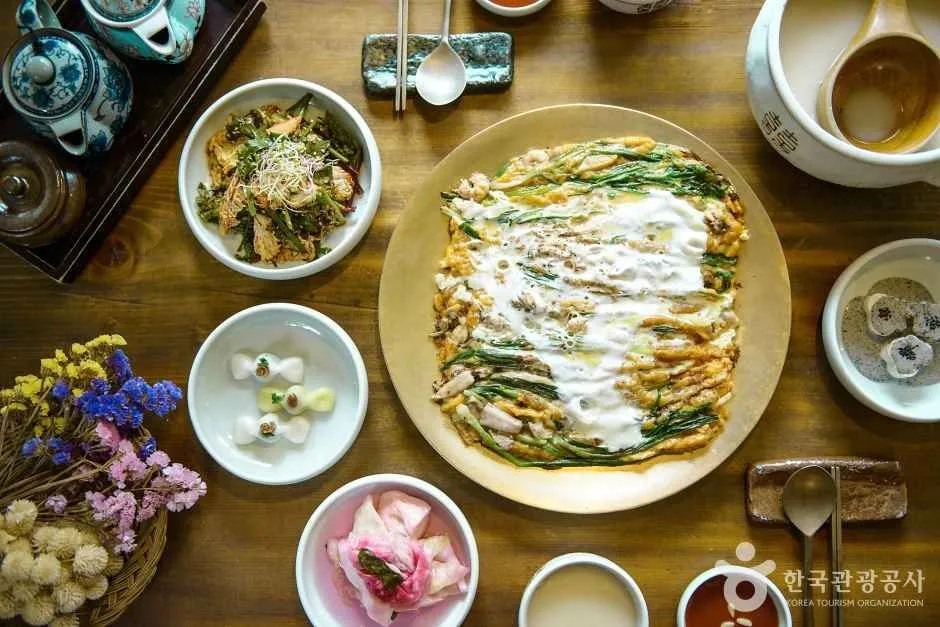
Pajeon (파전) is one of the easiest jeon names to recognize on a Korean menu. Pa means green onion, and the dish is built around long green onion pieces cooked into batter.
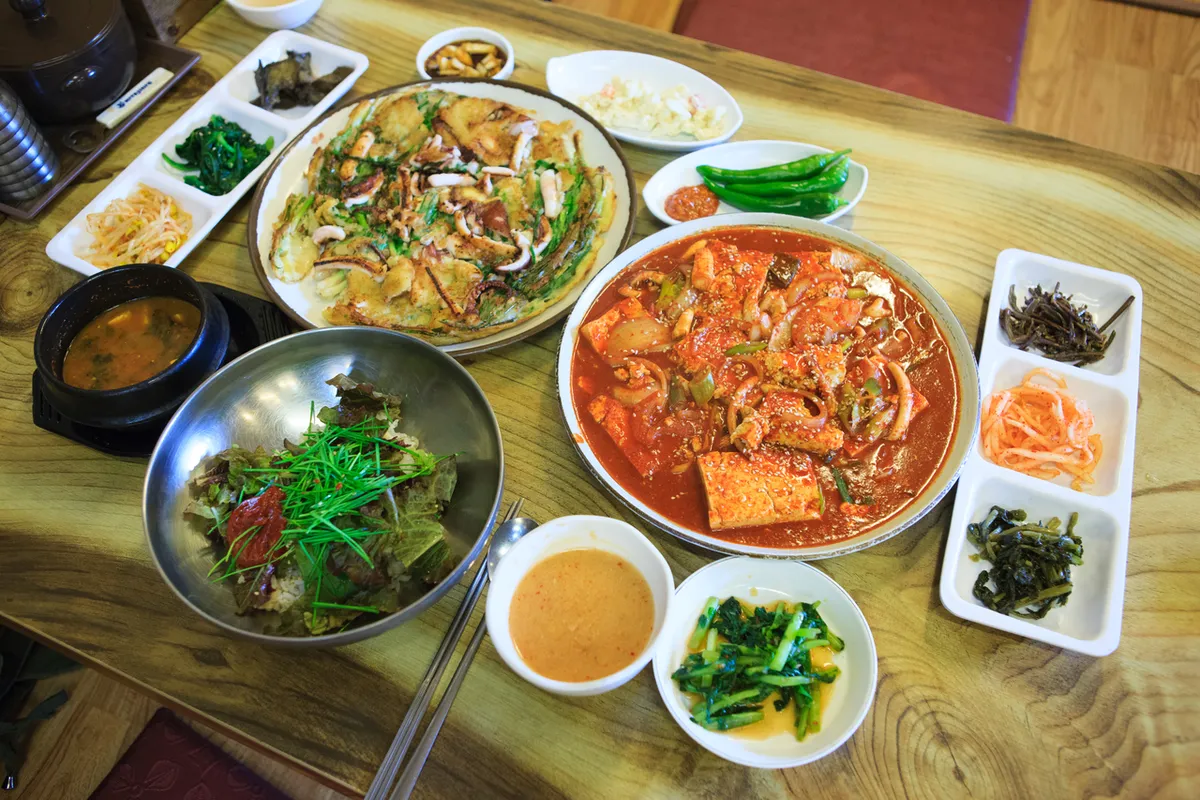
Green Onion Pancake is the common English food name. The dish uses an egg, wheat flour, and rice flour batter pan-fried with green onions, chives, beef, clams, mussels, or other ingredients.
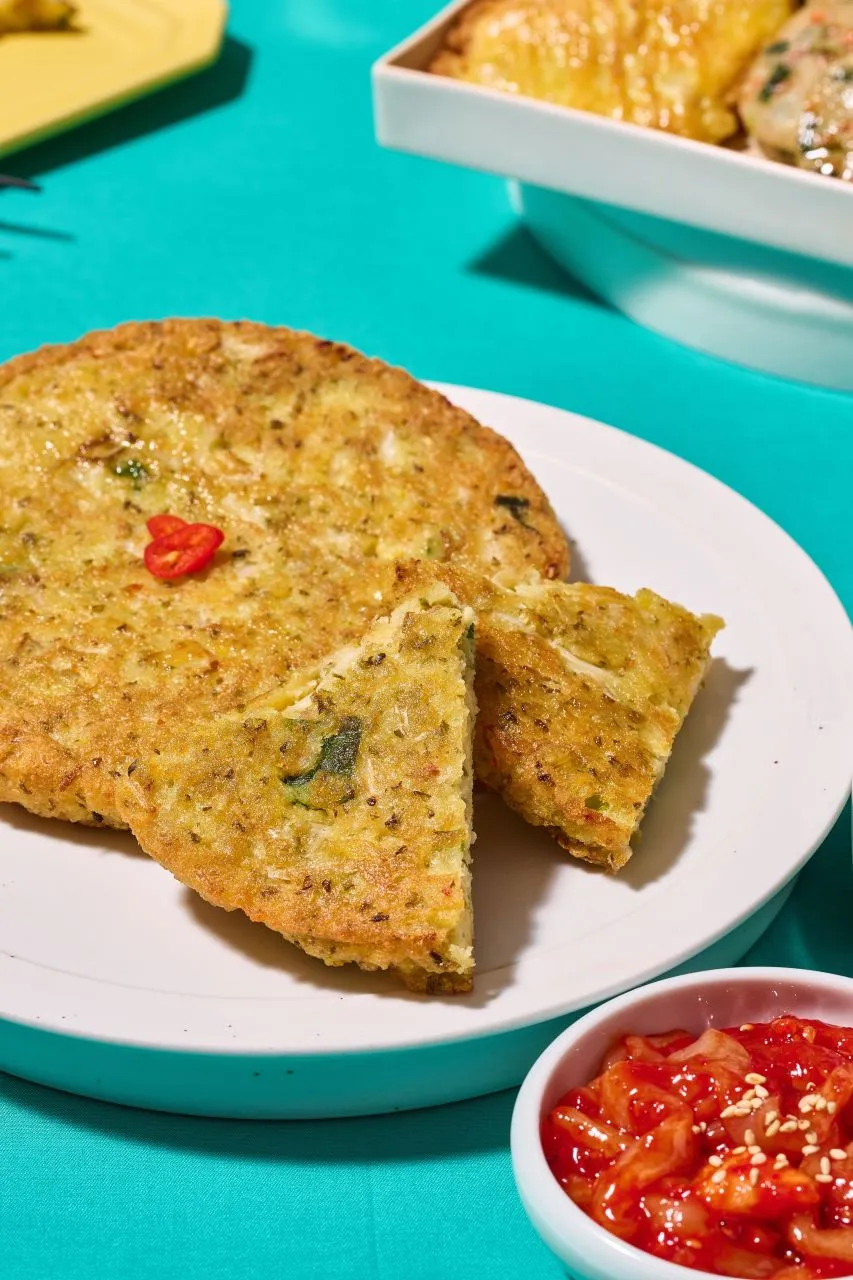
In restaurants, pajeon is commonly served as a broad round or oval pancake. It is usually cut into pieces after cooking, so diners can pick up sections with chopsticks.
Dongnae-pajeon (동래파전), associated with Dongnae in Busan, is a named regional style. If a menu lists only pajeon, expect the emphasis to be on green onion rather than a full seafood dish.
Kimchi-jeon and Gamja-jeon
Kimchi-jeon (김치전) is made by mixing finely chopped kimchi into batter and pan-frying it. English menus commonly describe it as Kimchi Pancake.
This is one of the most direct ways kimchi becomes a cooked dish rather than a side dish. The batter holds chopped kimchi together, while the pan-frying gives the pancake browned edges.
Kimchi-jeon may taste sharper when made with well-fermented kimchi. Travelers who avoid seafood should check ingredients, because many kimchi recipes use fish sauce or salted seafood.
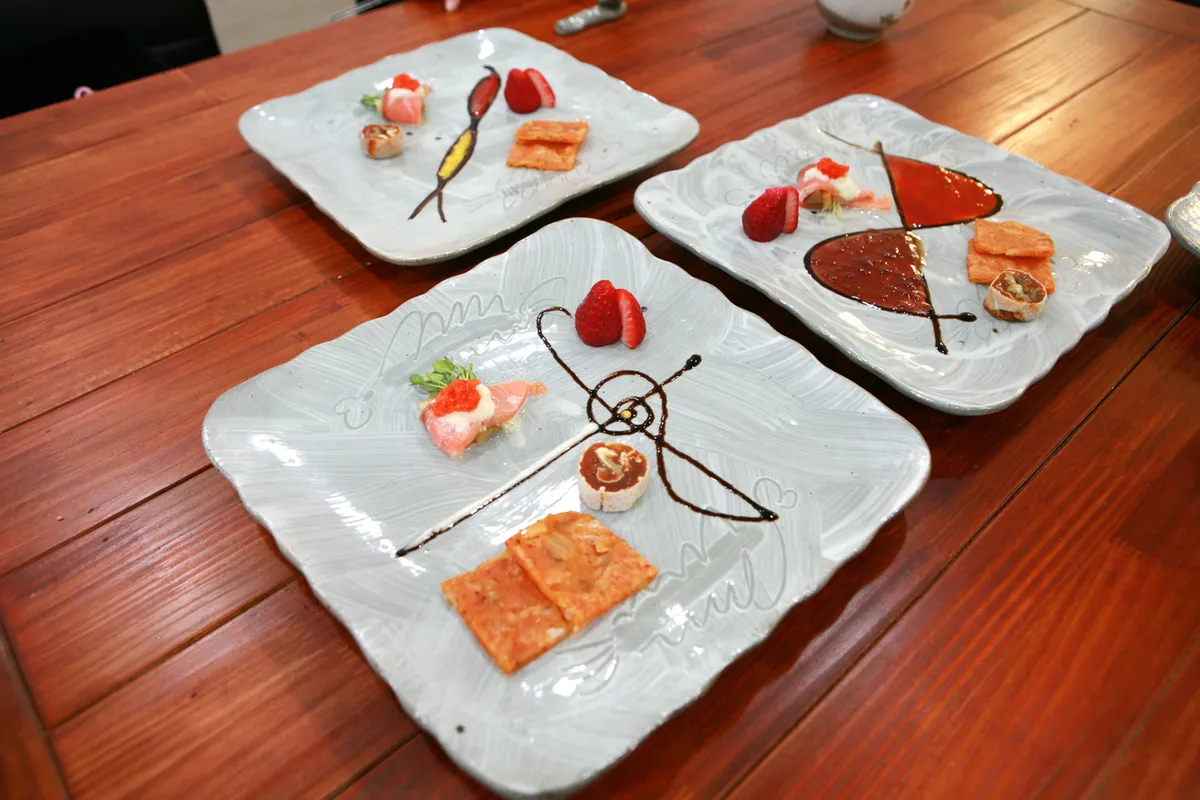
Gamja-jeon (감자전) is a potato-based jeon. English menus may describe it as Pan-fried Potato, usually referring to potato pieces or potato batter cooked on a pan.
Restaurant versions may vary by region and kitchen. Some are made as thin potato pancakes, while others appear beside other regional foods from potato- and buckwheat-growing areas.
Bindaetteok, Buchu-jeon, and Seafood Pajeon
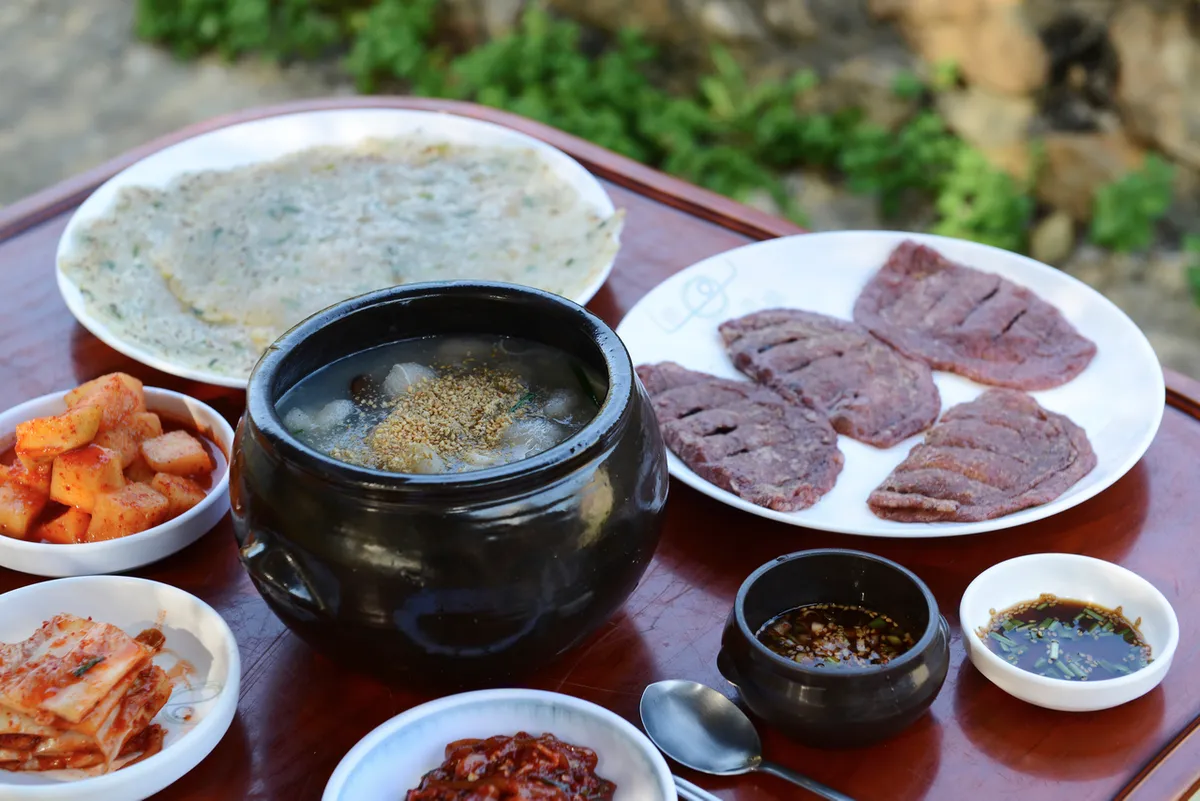
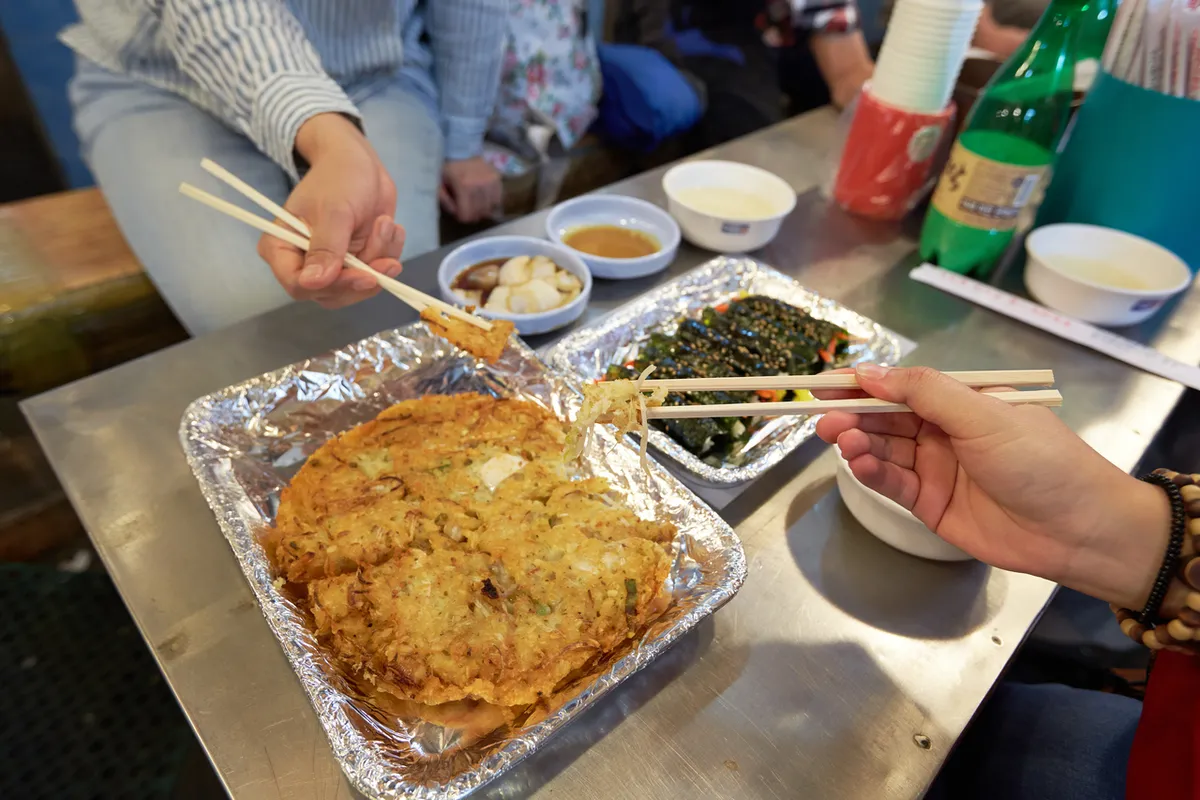
Nokdu-bindaetteok (녹두빈대떡) is a mung bean pancake. It is commonly made with mung bean batter and may include pork, sliced kimchi, bean sprouts, green onions, garlic, or other ingredients.
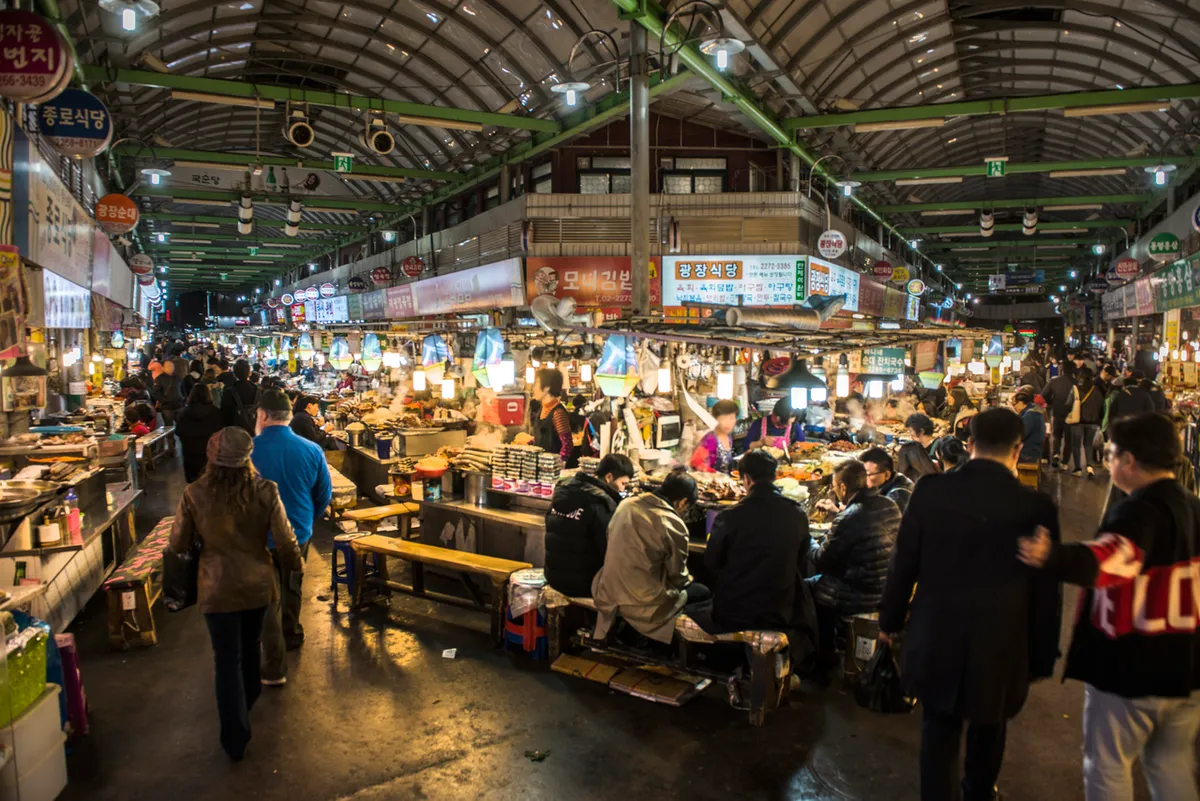
Bindaetteok has a different base from flour-batter jeon because mung bean is the main ingredient. It is strongly associated with traditional markets, especially where pancakes are cooked in large pans and sold as shared snacks or casual meals.
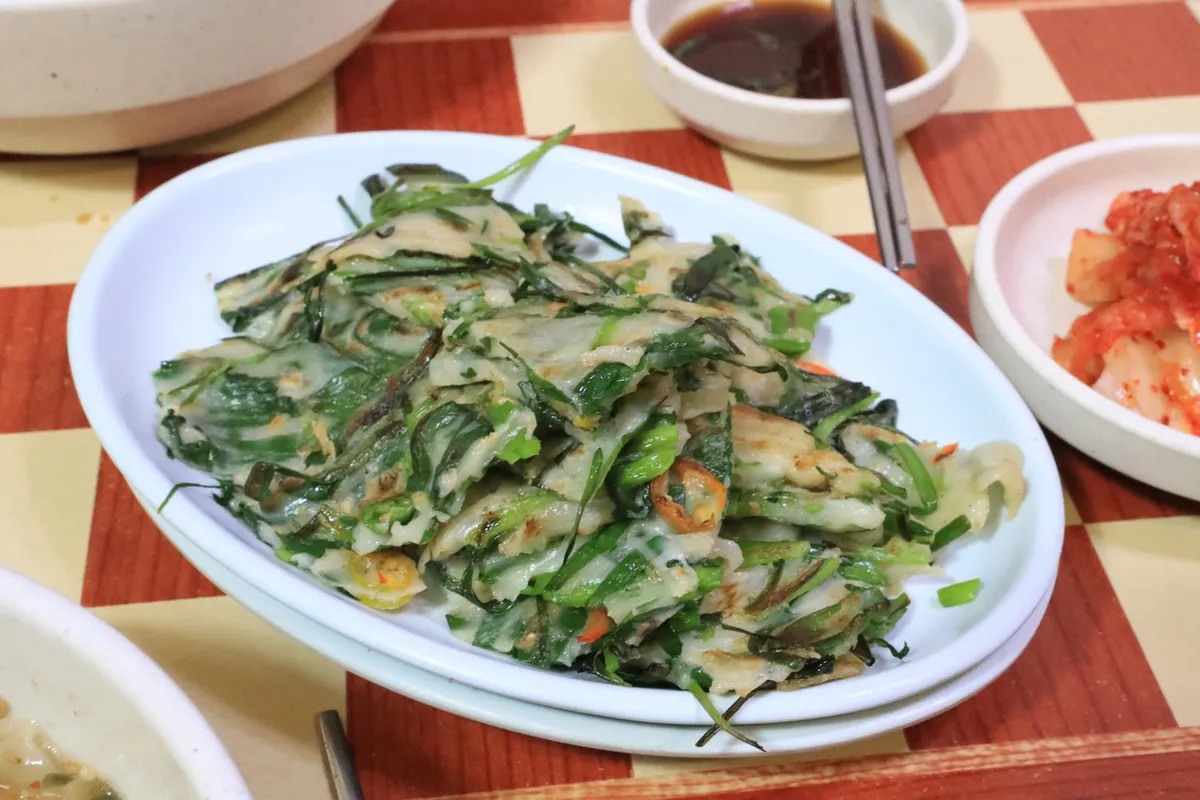
Buchu-jeon (부추전) is a chive pancake. It is made with chives mixed into flour batter and may include green chili peppers, shelled clams, or other additions depending on the kitchen.
The chives give the pancake a long green shape across the surface. It is easy to confuse with pajeon at first glance, but pajeon centers on green onion, while buchu-jeon centers on chives.
Haemul-pajeon (해물파전) means seafood pancake with green onion. It is a pajeon variation with seafood added to the batter or arranged with the green onions.
This guide treats haemul-pajeon only as a jeon type. For travelers with shellfish allergies, the important point is direct: ask the restaurant before ordering any seafood or mixed pancake.
Modum-jeon and Holiday-Style Jeon
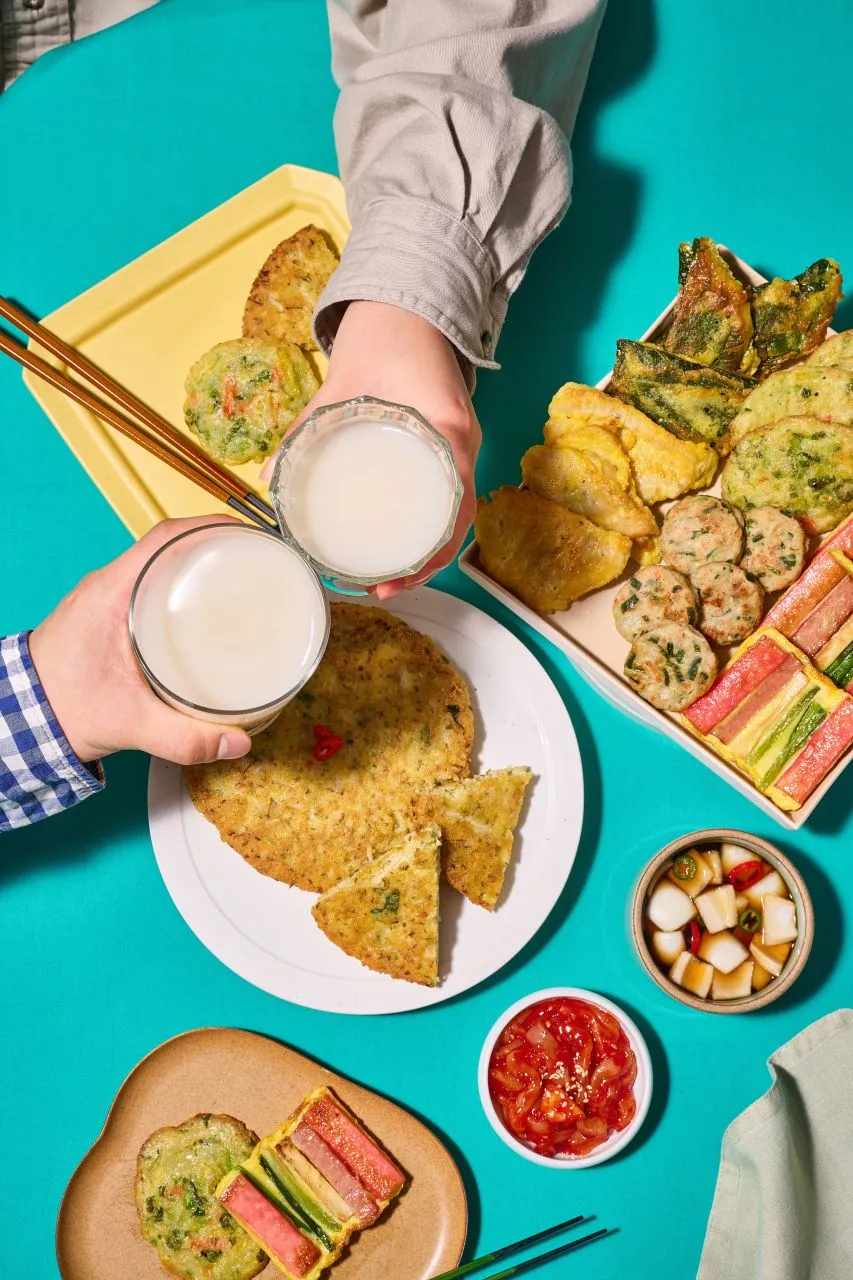
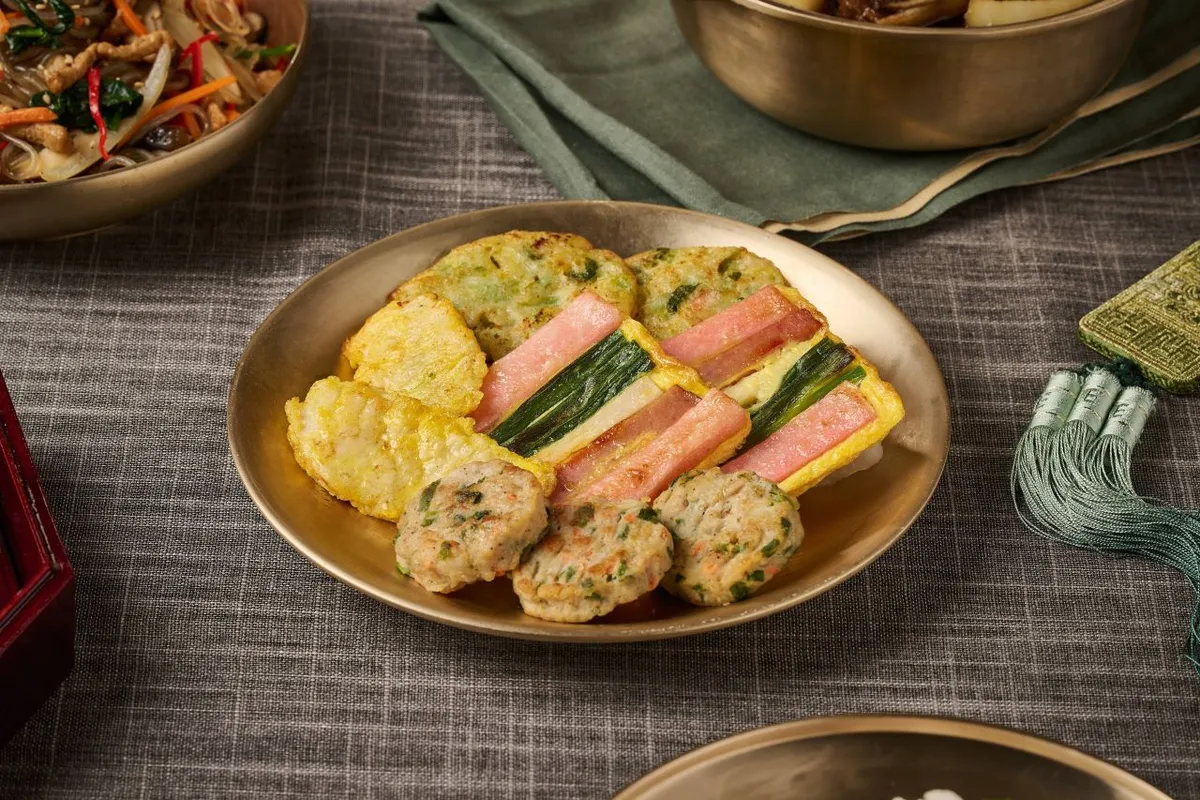
Modum-jeon (모둠전) means assorted pan-fried delicacies. A plate may include fish fillets, beef patties, tofu, mushrooms, zucchini, perilla leaves, skewers, or other ingredients coated in flour and egg.
This style is useful for travelers because it shows that jeon is not only one large pancake. Many forms are bite-sized or slice-based, and the plate is usually shared.
Assorted jeon often appears in traditional meal settings and holiday food contexts. The exact selection depends on the restaurant or household, so menus may describe the platter simply as modum-jeon rather than listing every piece.
How to Eat and Order Jeon
Jeon is usually shared. For a large pancake such as pajeon or kimchi-jeon, use chopsticks to take one cut piece at a time from the shared plate.
A soy-based dipping sauce may be served on the side. Dip lightly rather than soaking the piece, especially when the pancake already contains seasoned kimchi, seafood, or vegetables.
Jeon can appear as an appetizer, a market snack, a side dish, or a shared dish with drinks. It is also common in home-style meals and on holiday tables.
Useful menu words include pajeon for green onion pancake, kimchi-jeon for kimchi pancake, haemul-pajeon for seafood and green onion pancake, and modum-jeon for an assorted platter.
Jeon (전): pan-fried battered or egg-coated dish
Pajeon (파전): green onion pancake
Kimchi-jeon (김치전): kimchi pancake
Modum-jeon (모둠전): assorted jeon platter
Haemul (해물): seafood; check first if you have shellfish allergies
Frequently Asked Questions
Is jeon the same as a Korean pancake?
Jeon is often translated as Korean pancake, but the term is broader. It can mean a large pancake such as pajeon, or small pan-fried pieces such as fish, tofu, zucchini, mushroom, or meat patties coated in flour and egg.
What is the difference between pajeon and kimchi-jeon?
Pajeon is centered on green onions cooked into batter. Kimchi-jeon uses chopped kimchi mixed into batter, so the flavor comes mainly from fermented kimchi rather than green onion.
Does jeon contain seafood?
Some jeon contains seafood, but not all. Haemul-pajeon and haemul-jeon include seafood, while kimchi-jeon, gamja-jeon, pajeon, bindaetteok, and modum-jeon vary by recipe. Ask the restaurant directly if you have allergies.
How is jeon usually served in Korea?
Jeon is usually served on a shared plate and eaten in pieces with chopsticks. Large pancakes are cut before serving or at the table, while assorted jeon arrives as separate pan-fried pieces.
What should travelers order first?
Pajeon is the easiest starting point if you want a green onion pancake. Kimchi-jeon is useful for travelers who already like kimchi, while modum-jeon is a good way to see several styles on one plate.
Complete Your Korea Food Trip with TripKorea
Use this Korean Jeon Guide to recognize pancakes and pan-fried dishes on Korean menus, especially when choosing shared plates at restaurants or traditional markets.
For broader trip planning, browse Things to Do in Korea before building a food-focused itinerary.
Sources & References
Data Sources:
Korean Food Information: Korea Foundation Korean Food Database
Photos: Korea Tourism Organization PhotoKorea
Official Sites:
Last verified: 2026-08-21
Restaurant recipes, ingredients, and dipping sauces vary by restaurant. Please confirm directly if you have allergies or dietary restrictions.