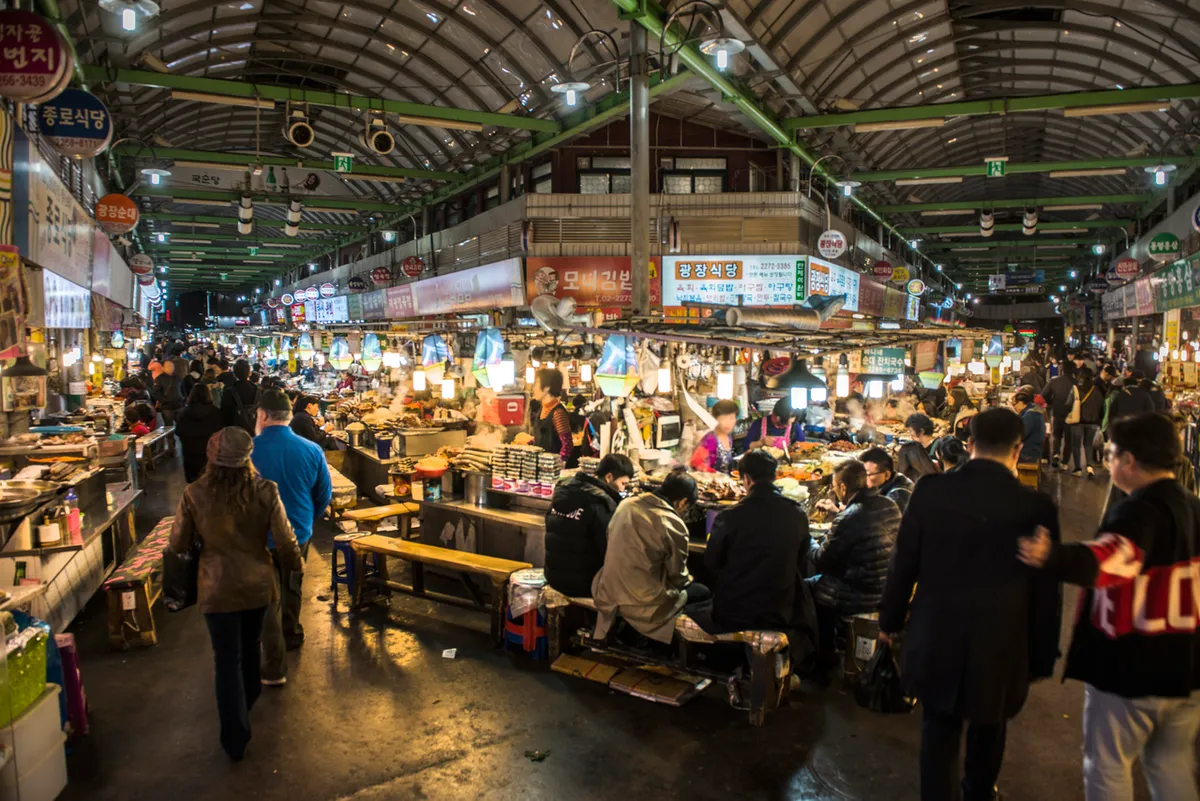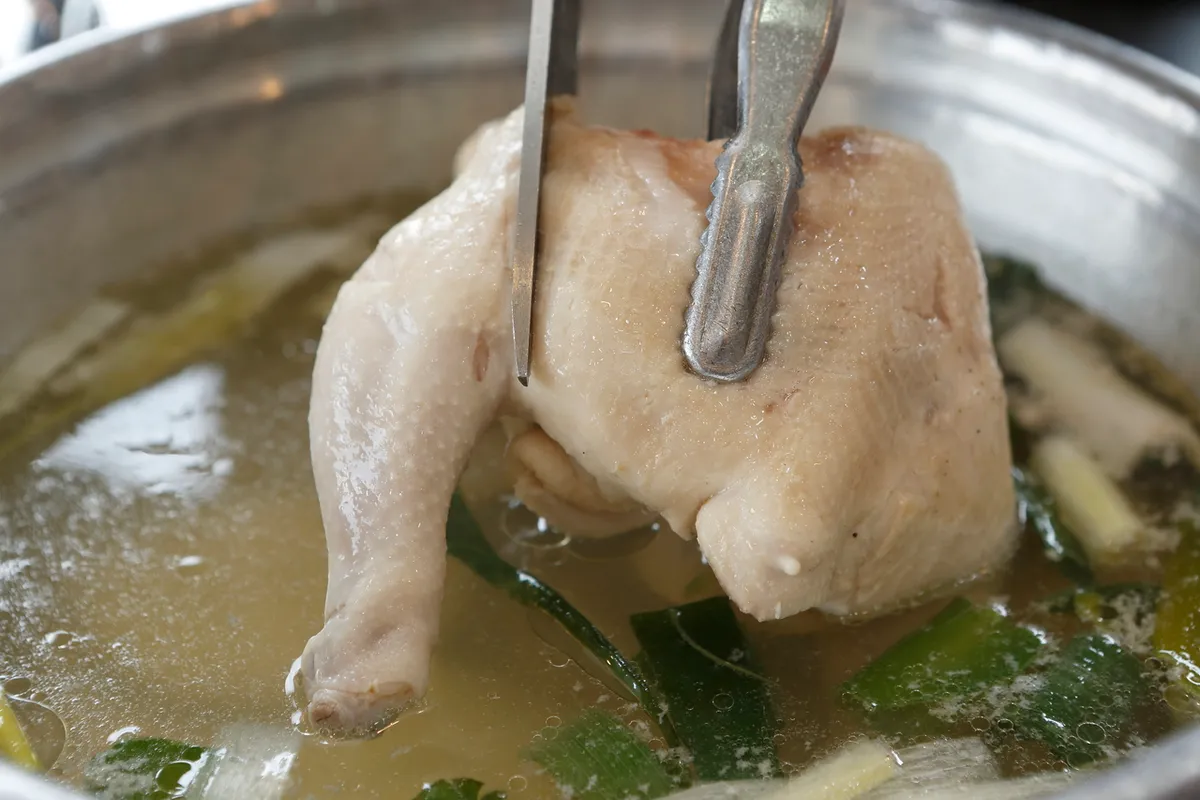
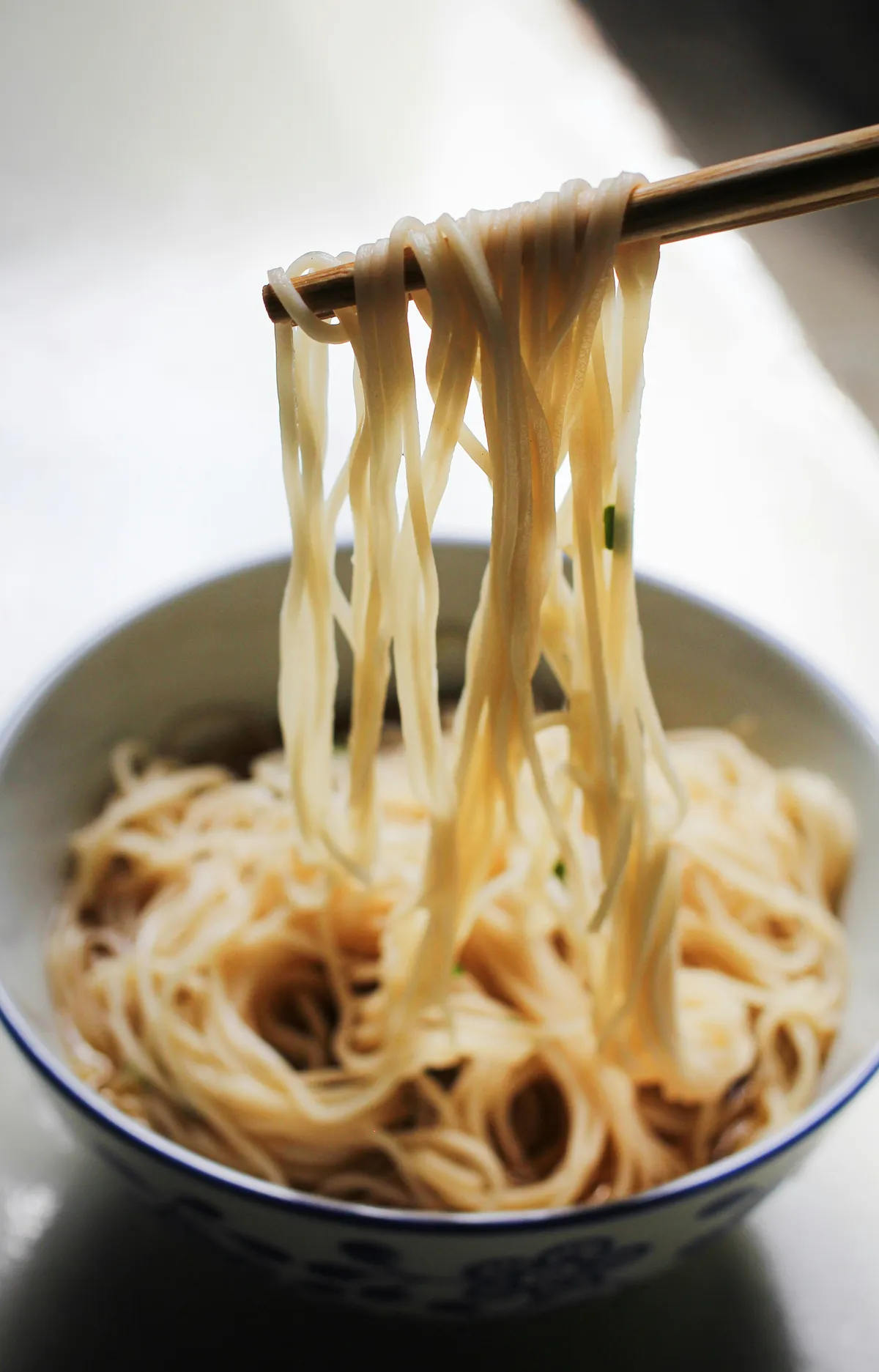
Korean noodles cover far more than cold naengmyeon or instant ramyeon. This guide focuses on warm, everyday noodle bowls such as kalguksu, sujebi, janchi guksu, and other clear-broth dishes that travelers may see in markets, noodle shops, and casual restaurants.
The common thread is comfort and simplicity: wheat noodles or hand-torn dough, broth, vegetables, and toppings that vary by region and restaurant. These dishes are useful when you want a filling Korean meal without barbecue grills, heavy spice, or a long ordering process.
Korean Noodles Beyond Ramyeon and Naengmyeon
Many travelers first meet Korean noodles through ramyeon, cold noodles, or spicy mixed noodles. Warm noodle dishes belong to a different dining lane.
They are usually served in broth and eaten with chopsticks and a spoon. The broth may be clear, seafood-based, chicken-based, beef-based, or vegetable-forward depending on the restaurant.
This article keeps the focus on warm bowls. Cold dishes such as naengmyeon, kongguksu, makguksu, and milmyeon belong in a separate cold-noodle guide.
Kalguksu: Hand-Cut Noodle Soup
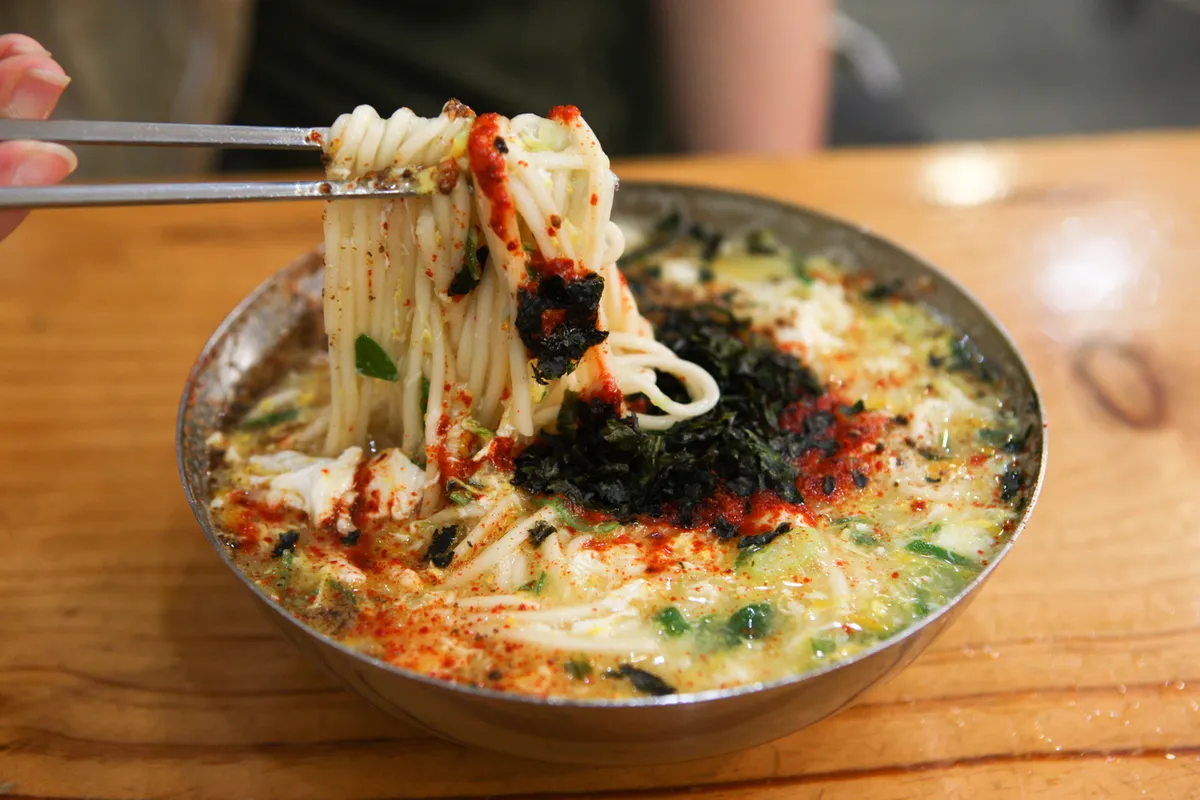
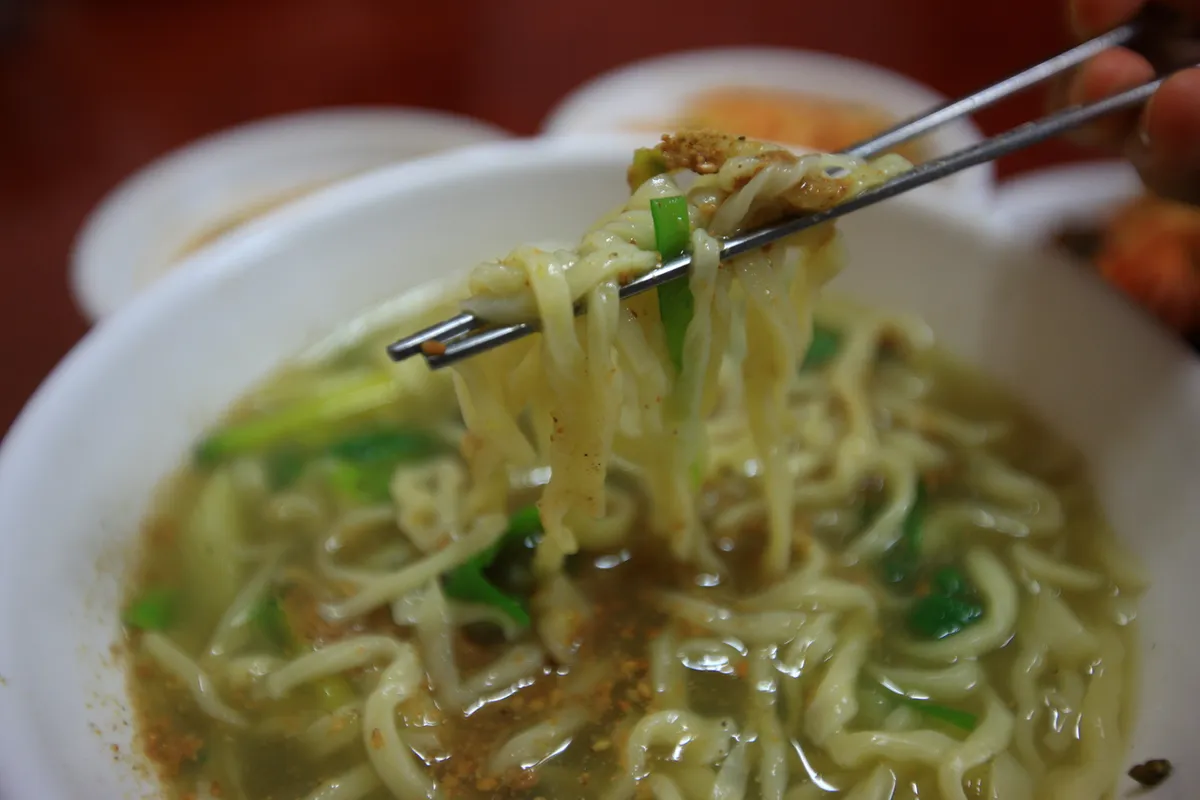
Kalguksu (칼국수) literally points to knife-cut noodles. The noodles are made from wheat flour dough, flattened, and cut into strips before being cooked in hot broth.
The bowl is often associated with a homemade texture rather than perfectly uniform noodles. The strands may be wider and softer than packaged noodles, which gives the dish its practical appeal.
Common toppings can include zucchini, green onion, egg, clams, chicken, or a seasoning sauce. Exact toppings vary, so the restaurant name or menu description often tells you what style of kalguksu is being served.
Seafood, Chicken, and Regional Kalguksu Styles
Kalguksu is not a single fixed recipe. A coastal restaurant may serve seafood kalguksu with shellfish or other marine ingredients, while another shop may use chicken broth or beef broth.
Because the broth can change by region, kalguksu is useful for travelers who want a local meal without needing to decode a long menu. The basic word remains the same, while the topping or broth name identifies the style.
If you have a shellfish allergy, ask before ordering. Seafood versions may use clams, shellfish broth, or other seafood ingredients even when the English menu is brief.
Sujebi: Hand-Torn Dough in Soup
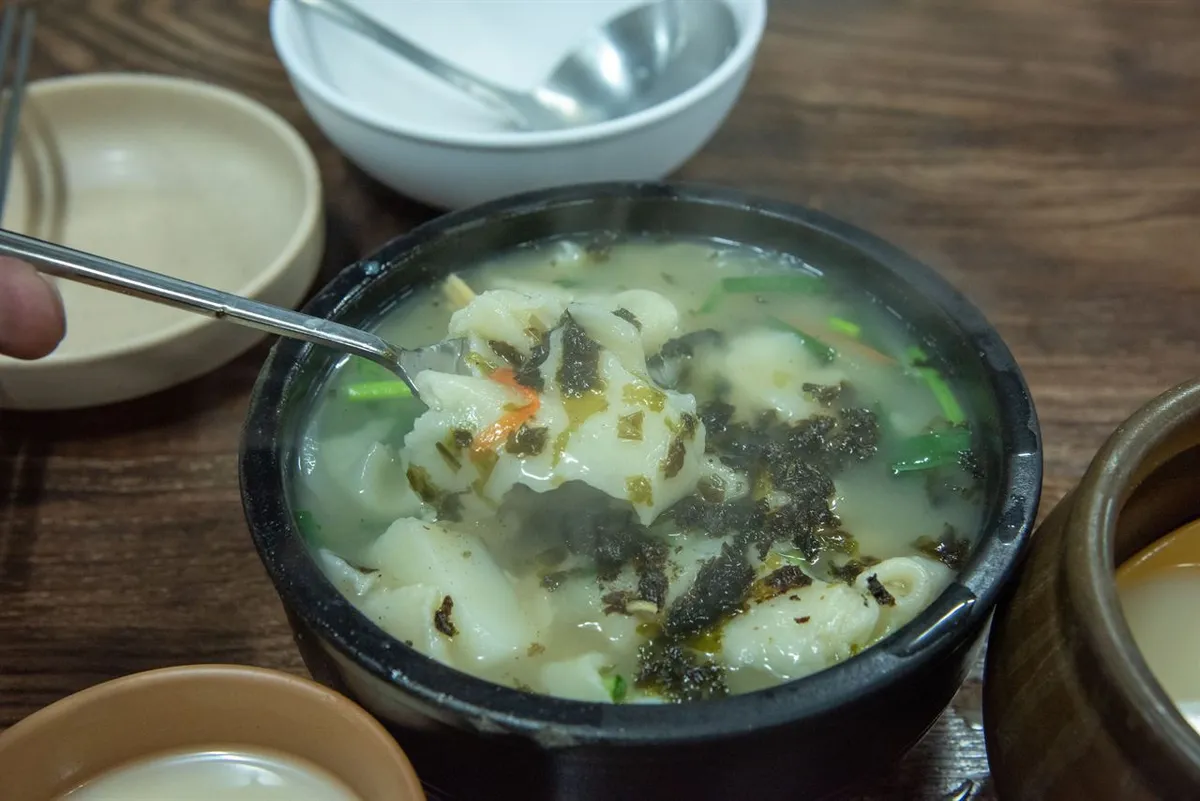
Sujebi (수제비) is close to a noodle soup in spirit, but it uses hand-torn pieces of flour dough instead of long noodles. The dough pieces are dropped into hot soup and cooked until soft.
The result is a bowl with irregular pieces rather than strands. This gives sujebi a different texture from kalguksu, even when the broth and vegetables are similar.
Sujebi may include zucchini, potatoes, seafood, perilla seed, or regional ingredients depending on the restaurant. Some versions are clear and light, while others are thicker and more rustic.
Janchi Guksu: Banquet Noodles in Clear Broth
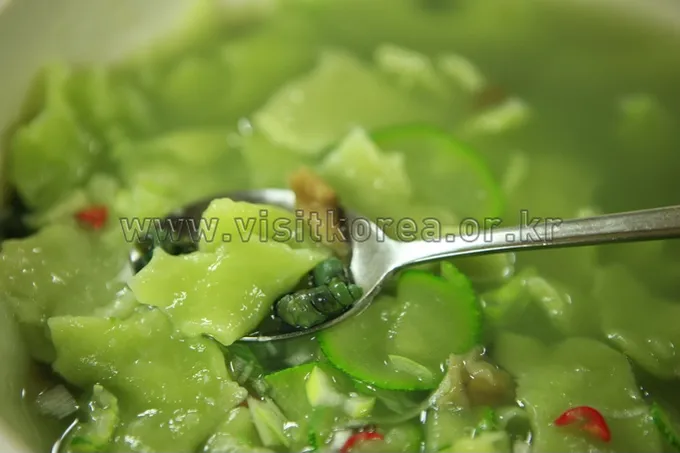
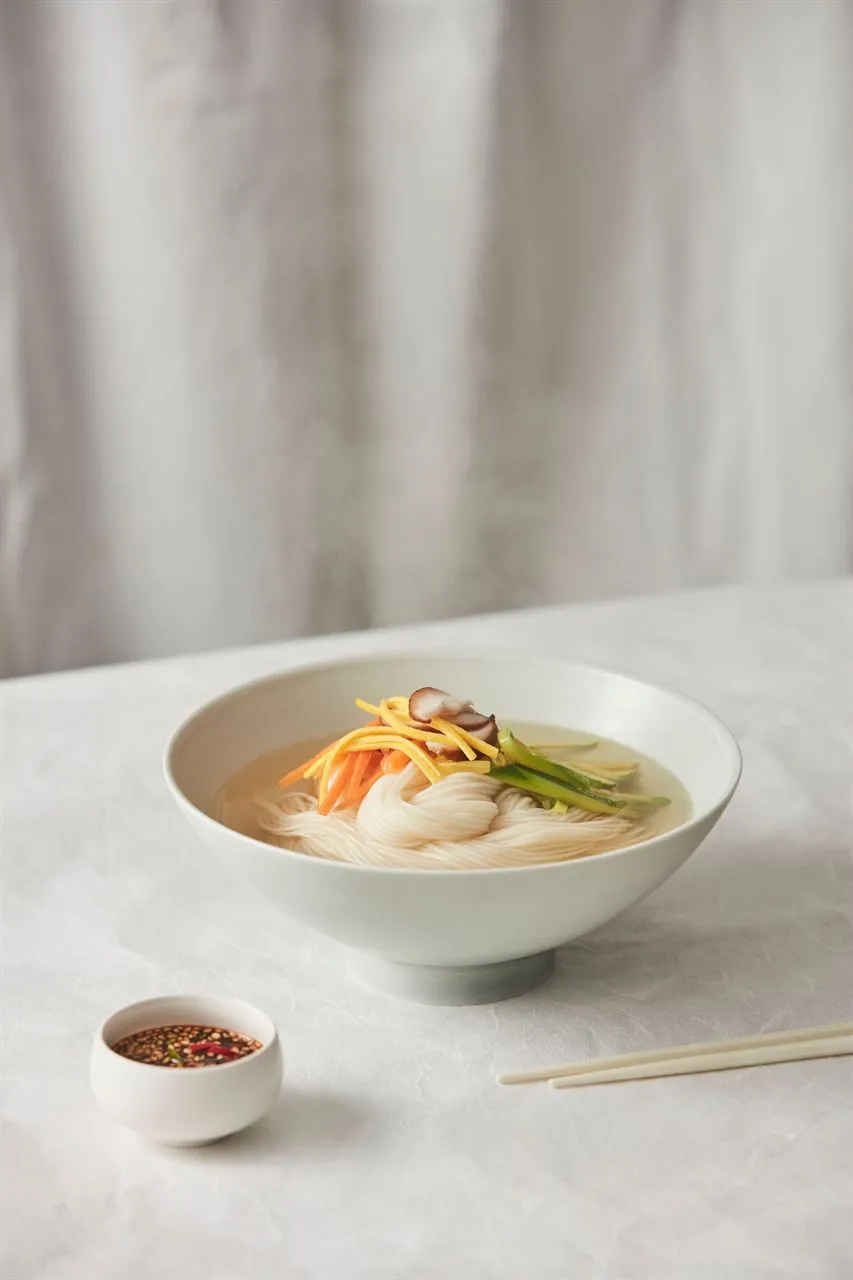
Janchi guksu (잔치국수) means banquet noodles. The dish is made with thin wheat noodles in a clear broth, usually with simple toppings such as egg garnish, vegetables, mushrooms, or beef.
The name reflects its association with large feasts and gatherings. For travelers, it is often one of the easiest warm noodle dishes to understand: thin noodles, clear broth, and mild toppings.
Janchi guksu is useful when you want a lighter bowl than kalguksu. It can appear at casual restaurants, market stalls, and shops that also serve gimbap or other snack-style meals.
Warm Guksu, Onmyeon, and Simple Broth Noodles
Guksu (국수) is a general Korean word for noodles. On menus, it may appear as part of a dish name rather than as one single recipe.
Onmyeon (온면) refers to warm noodle soup and can also be used broadly for hot noodles. Some versions use buckwheat noodles, while others focus on wheat noodles or clear broth.
Because English menus may translate several different dishes simply as “noodle soup,” Korean menu words matter. Kalguksu, sujebi, janchi guksu, and onmyeon each point to a different bowl structure.
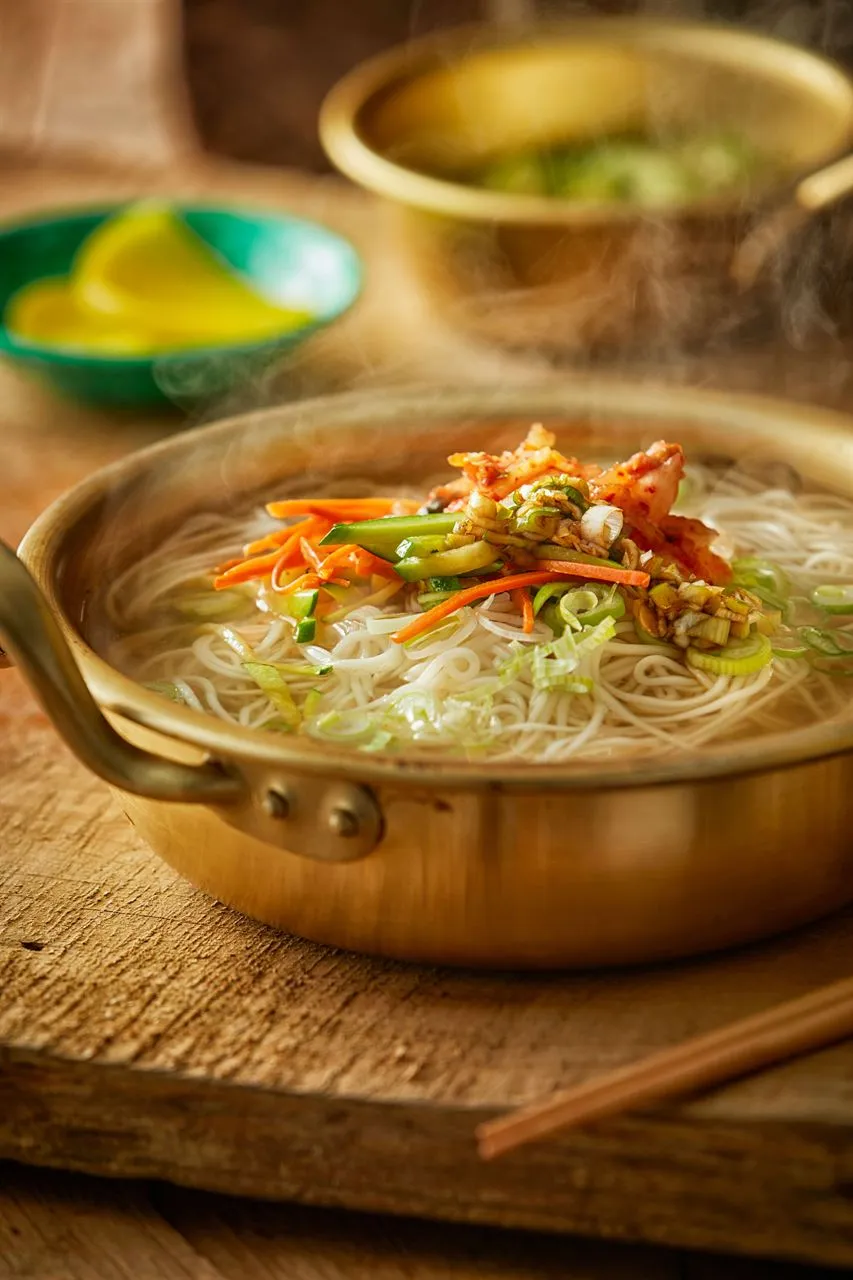
How to Order Warm Korean Noodles
The safest approach is to order by the Korean dish name. Say kalguksu for hand-cut noodle soup, sujebi for hand-torn dough soup, and janchi guksu for thin noodles in clear broth.
If you want to check spice level, ask whether the dish is spicy before ordering. Many warm noodle bowls are not built around chili sauce, but kimchi, seasoning paste, or spicy side items may still appear at the table.
For allergies, confirm broth and toppings. Seafood kalguksu may contain shellfish, and some clear broths may still use anchovy, beef, chicken, or seafood as a base.
Kalguksu juseyo (칼국수 주세요): Kalguksu, please.
Sujebi juseyo (수제비 주세요): Sujebi, please.
Janchi guksu isseoyo? (잔치국수 있어요?): Do you have janchi guksu?
Maeun gayo? (매운가요?): Is it spicy?
Haesanmul deureogayo? (해산물 들어가요?): Does it contain seafood?
Frequently Asked Questions
What are the main warm Korean noodles to try?
Kalguksu, sujebi, and janchi guksu are useful starting points. Kalguksu uses hand-cut wheat noodles, sujebi uses hand-torn dough pieces, and janchi guksu uses thin wheat noodles in clear broth.
Is kalguksu spicy?
Kalguksu is usually a broth-based noodle soup rather than a chili-sauce dish. However, seasoning sauce, kimchi, or restaurant-specific broth can add spice, so ask before ordering if you need a mild bowl.
Is sujebi a noodle dish?
Sujebi is not made with long noodles. It uses hand-torn flour dough pieces in soup, but it is often grouped with warm noodle-style meals because it is eaten in a similar way.
What is the difference between janchi guksu and kalguksu?
Janchi guksu uses thin noodles in clear broth and is associated with banquet-style noodles. Kalguksu uses hand-cut wheat noodles, usually with a thicker, more homemade texture.
Can vegetarians eat Korean noodle soups?
Some bowls may look vegetable-based, but broth can include anchovy, beef, chicken, or seafood. Vegetarian travelers should confirm the broth and toppings directly before ordering.
Complete Your Korea Food Trip with TripKorea
Warm Korean noodles are easy to combine with markets, casual restaurants, and neighborhood food streets during a Korea itinerary.
Browse Korean food tours and activities on TripKorea
Sources & References
Data Sources:
Korean Food Information: Korea Foundation (한국국제교류재단) Korean Food Database
Photos: Korea Tourism Organization Photo Korea
Official Sites:
Last verified: 2026-08-23
Restaurant hours, recipes, and menus subject to change. Please confirm directly before visiting.