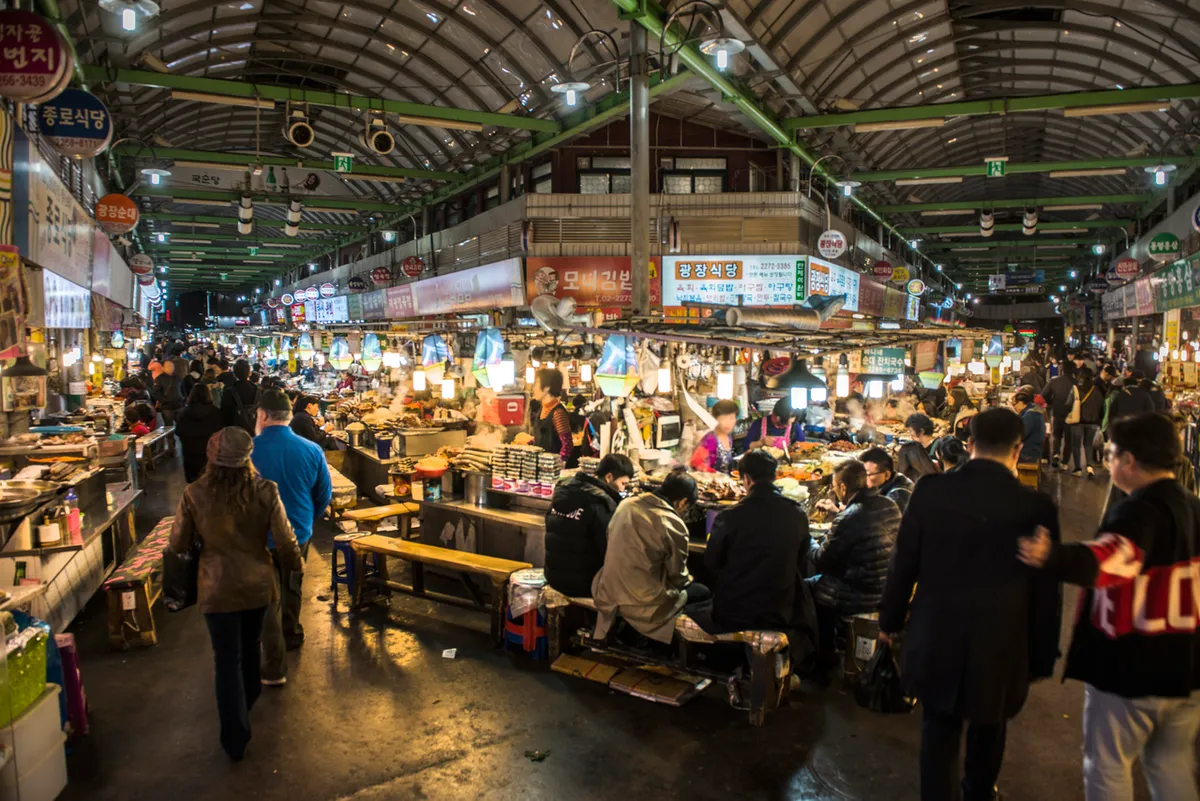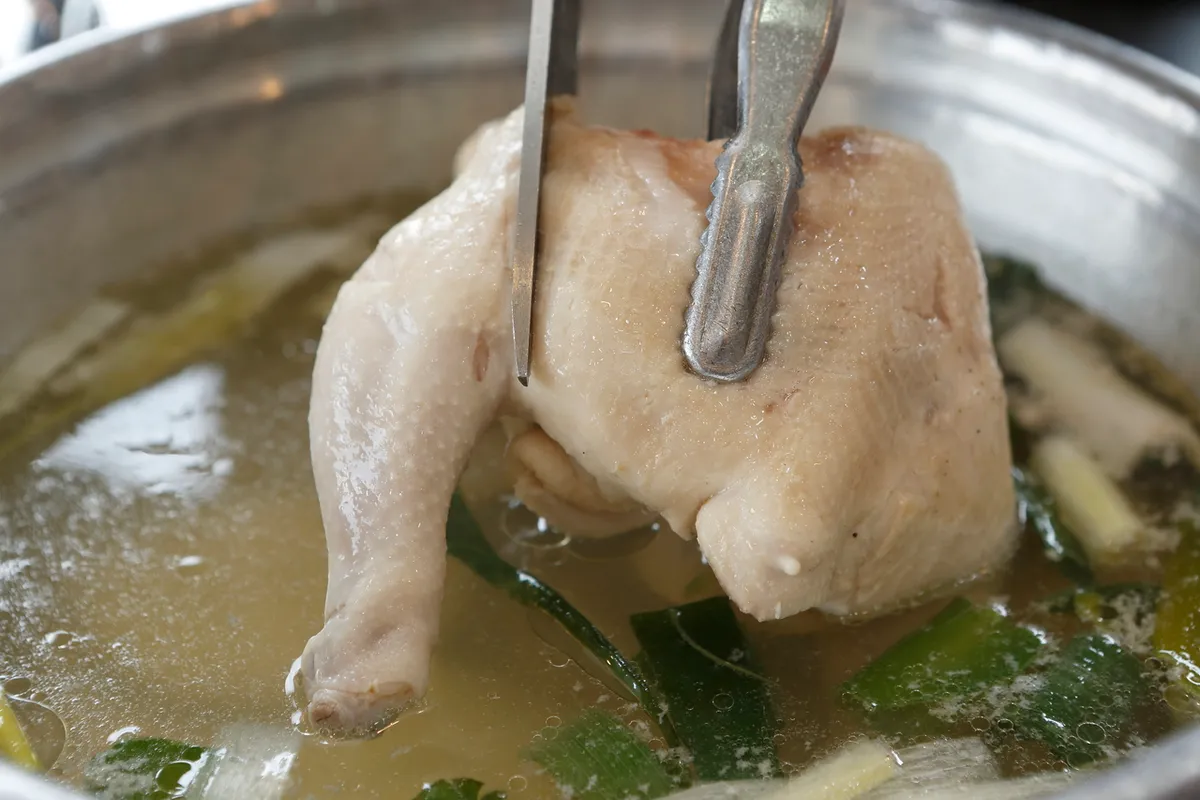
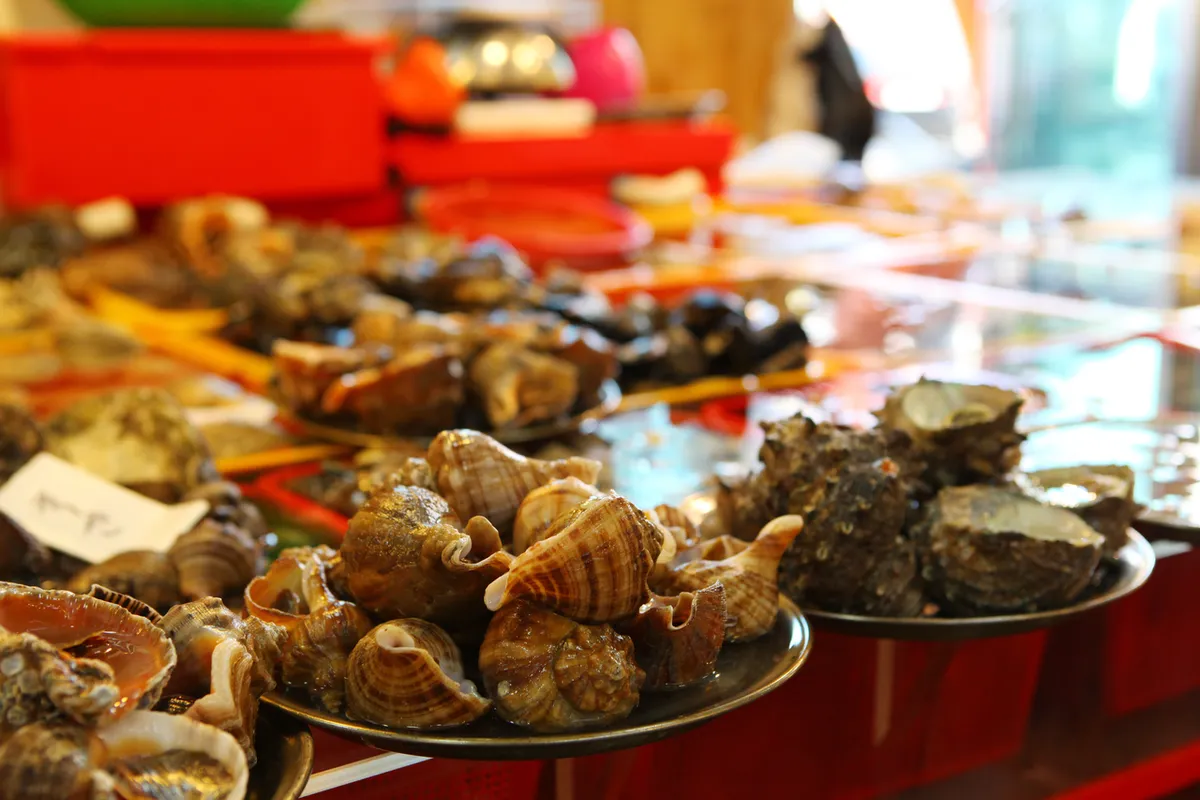
Korean seafood covers far more than market-style uncooked dishes. This guide focuses on cooked seafood dishes, grilled fish, seafood pancakes, crab, abalone porridge, stews, and market meals that travelers can order without entering the uncooked side of Korean seafood culture.
Use it as a menu guide for coastal cities, traditional markets, casual restaurants, and Korean set-meal tables where seafood appears grilled, simmered, braised, pan-fried, or served with rice.
Korean Seafood Guide with a Cooked-Dish Focus
TripKorea already has a separate seafood article centered on uncooked preparations, dipping sauces, and wrap-style eating. This article deliberately takes a different route.
The focus here is cooked Korean seafood: fish grilled with salt, seafood stews, abalone porridge, soy-marinated crab, seafood pancakes, shellfish, and market-style meals.
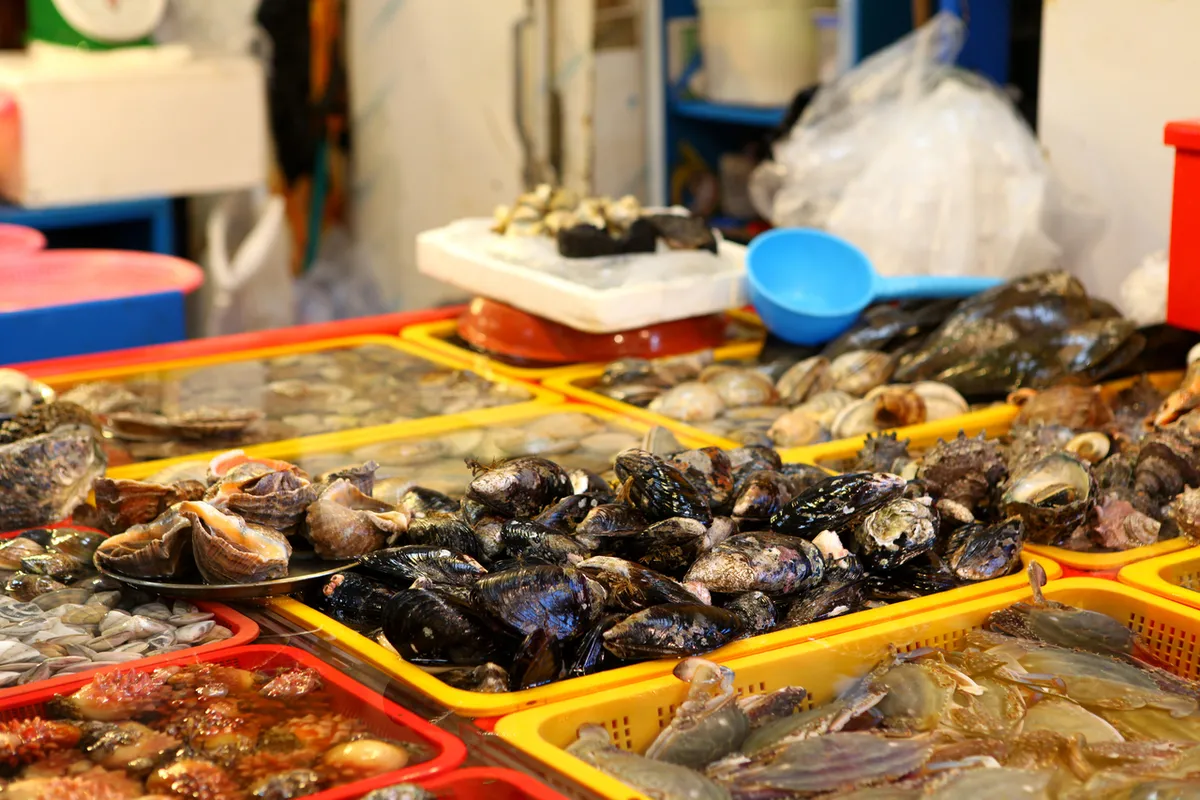
This distinction matters for travelers. Some visitors want to explore Korean seafood but prefer hot dishes, rice meals, or cooked preparations instead of raw fish. Korean menus offer many options in that category.
Seafood also appears across different meal formats. It may be the main dish, a stew shared at the table, a side dish with rice, a pancake for sharing, or a market meal chosen from a seafood counter.
Korean Seafood Guide to Grilled Fish
Grilled fish is one of the most straightforward ways to order Korean seafood. The fish is usually served with rice, soup, and side dishes, making it easy to understand as a set meal.
Godeungeo-gui (고등어구이), grilled mackerel, is listed by the Korea Foundation as mackerel sprinkled with salt and grilled. It is commonly presented as a cut fish portion with rice and banchan.
Galchi-gui (갈치구이), grilled hairtail, is another useful menu term. The Korea Foundation describes it as hairtail cut into lengths and grilled with salt.
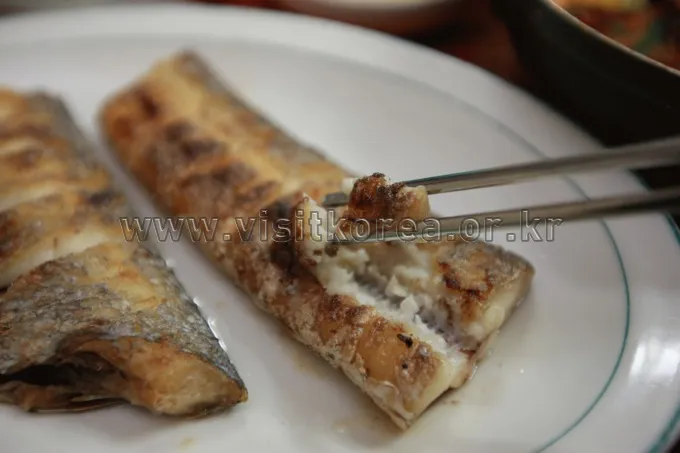
For travelers who do not want a spicy dish, grilled fish is often a safer starting point than red stews or braised fish. Still, sauces and side dishes vary by restaurant, so confirm ingredients if you have allergies or dietary restrictions.
Braised fish is different from grilled fish. Godeungeo-jorim (고등어조림), braised mackerel, uses seasonings such as soy sauce, green onions, garlic, and red chili pepper powder according to the Korea Foundation entry.
Haemul Pajeon and Pan-Fried Seafood
Haemul-pajeon (해물파전) is one of the easiest cooked seafood dishes for groups to share. The Korea Foundation lists it as seafood pancake with green onion, made from a flour and egg batter pan-fried with green onions and seafood.
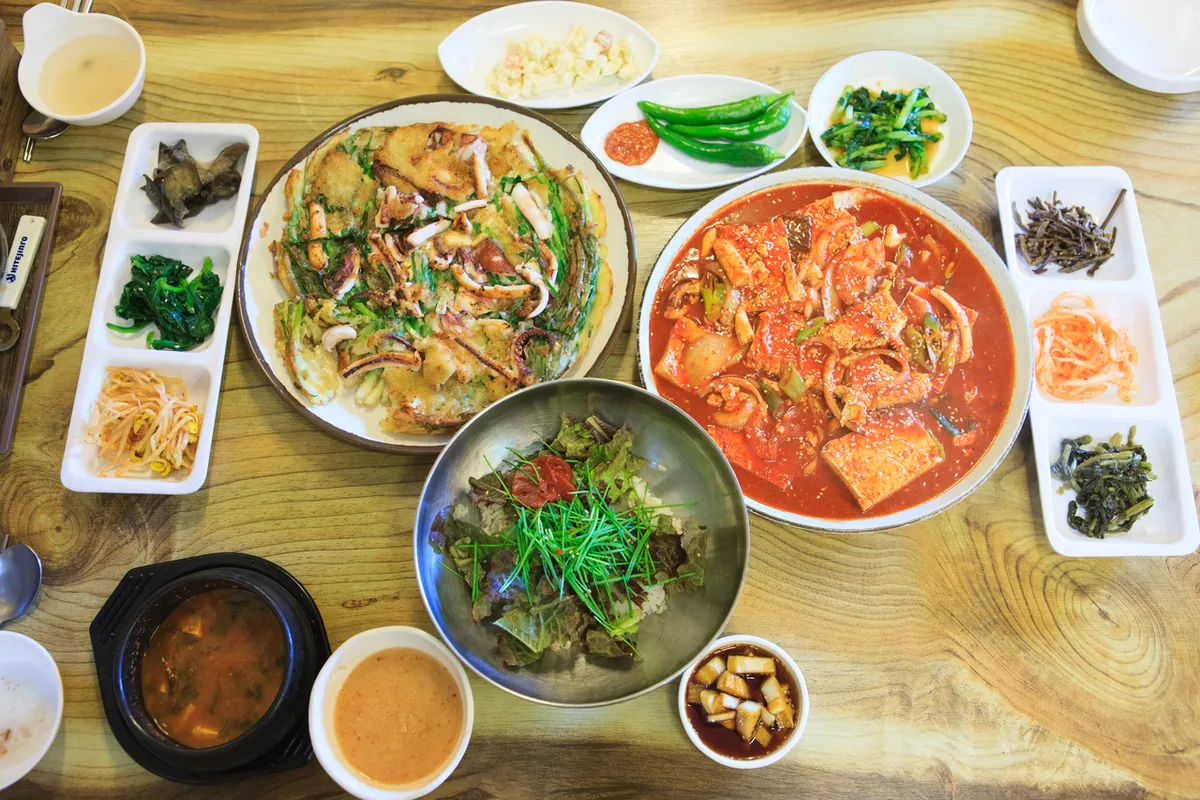
It is usually cut into pieces and placed in the center of the table. The texture is different from grilled fish or stew: the edges can be crisp, while the inside holds green onion and seafood in the batter.
Travelers often meet this dish at Korean restaurants, traditional markets, and rainy-day meal settings. It is not limited to coastal areas, although seafood quality and style can vary by region and restaurant.
Haemuljeon (해물전), pan-fried seafood, is a broader category. The Korea Foundation describes it as scallops, clams, mussels, shrimp, and oysters dipped in flour and egg batter and pan-fried.
Abalone, Crab, and Rice-Based Seafood Meals
Jeonbokjuk (전복죽), abalone rice porridge, is a gentle seafood option built around rice. The Korea Foundation describes it as a savory rice porridge cooked with minced abalone.
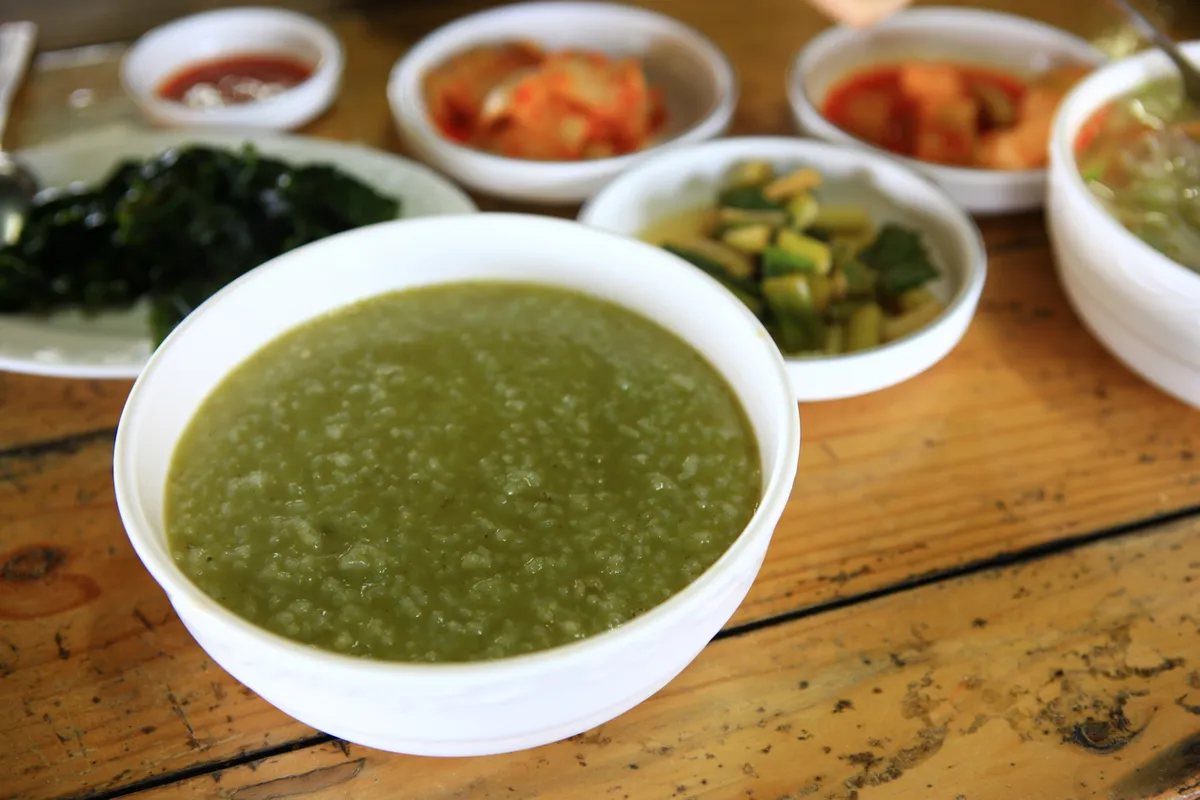
This dish is useful for travelers who want seafood flavor without a heavily seasoned stew or grilled whole fish. It is often eaten with small side dishes and can work as a slower, lighter meal.
Ganjang-gejang (간장게장), crab marinated in soy sauce, is a different style. The Korea Foundation describes it as crab marinated in soy sauce, with the soy sauce boiled and poured back over the crab during the preparation process.
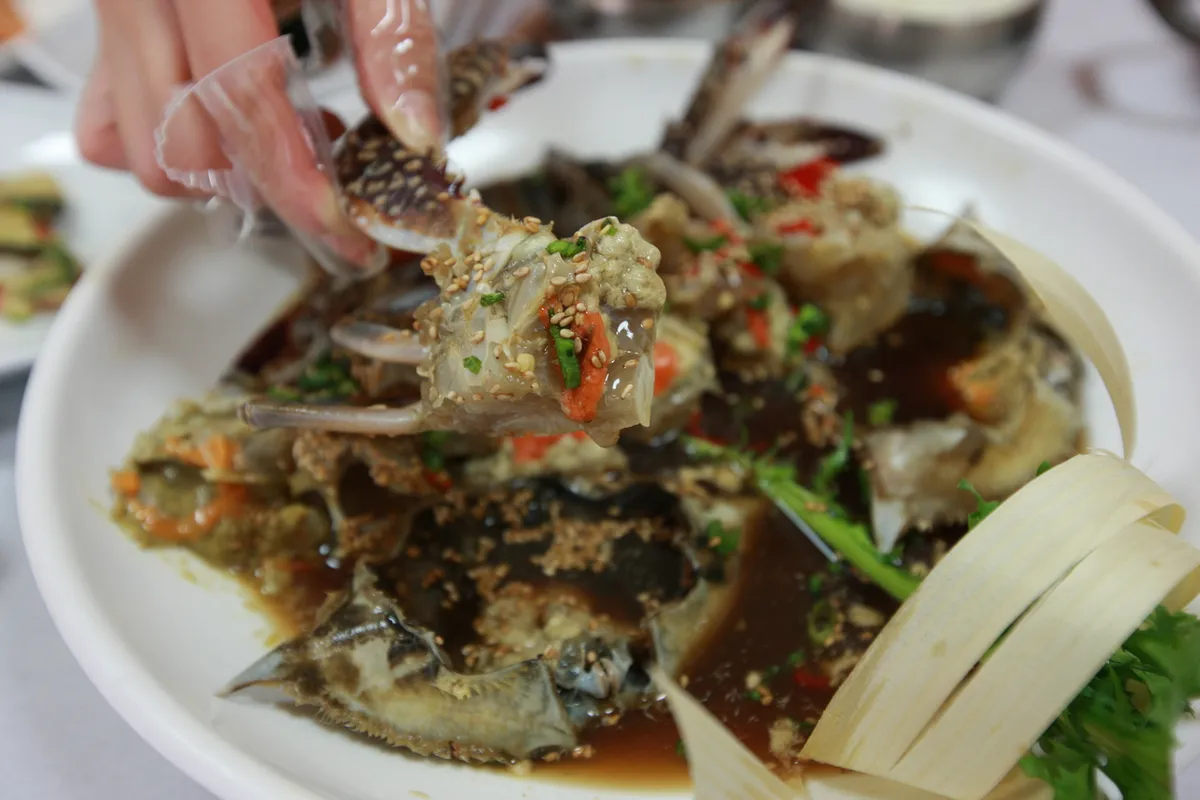
Ganjang-gejang is not a grilled or stew dish, and it can be salty because soy sauce is central to the preparation. Travelers with shellfish allergies should avoid it unless they have confirmed the dish and preparation with the restaurant.
Because marinated crab can be unfamiliar to many visitors, it is best approached as a specific Korean seafood specialty rather than a general substitute for cooked crab dishes in other cuisines.
Korean Seafood Stews and Hot Pots
Korean seafood stews can be mild, soybean-paste based, or red and spicy depending on the dish. The menu name matters because different stews use different broths, seasonings, and seafood combinations.
Haemul-doenjang-jjigae (해물된장찌개) is listed by the Korea Foundation as a thick soybean paste stew made with clams, shrimp, crab, and other seafood.
Haemul-jeongol (해물전골), seafood hot pot, is described as seafood such as fish, clams, shrimp, and squid cooked in a hot pot with vegetables and beef.
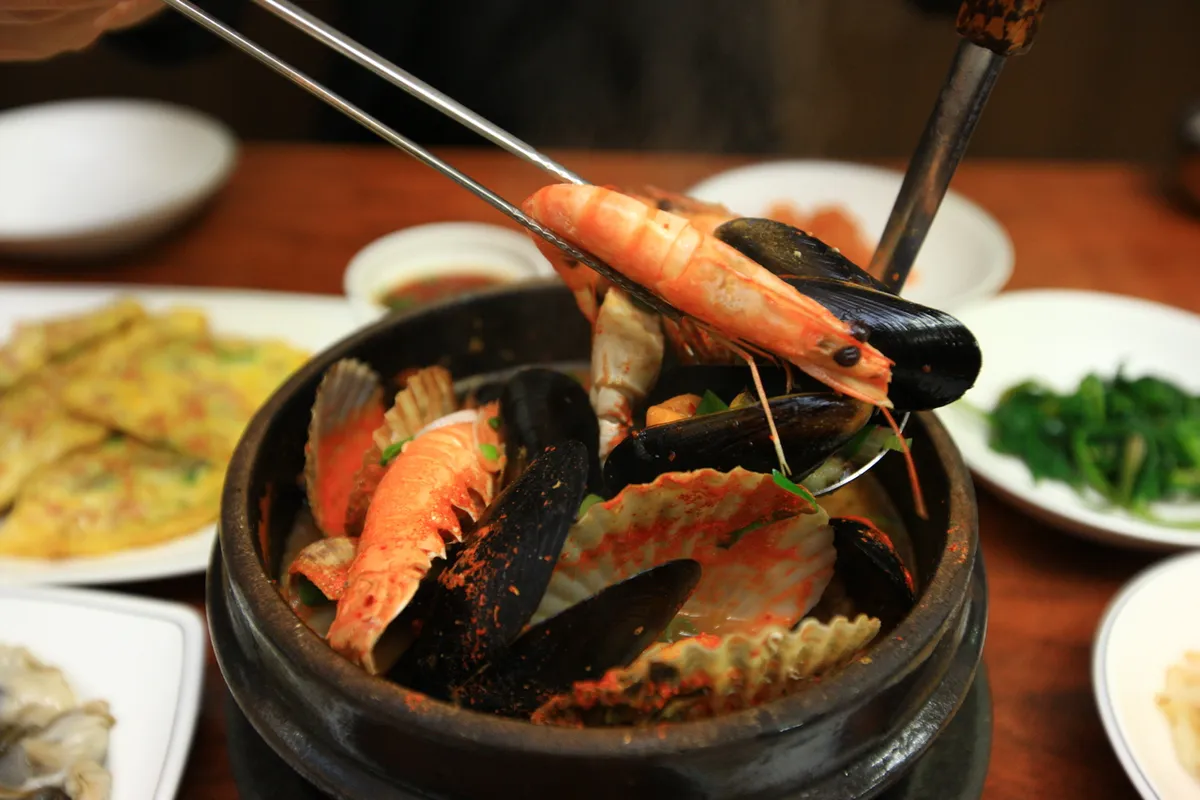
Maeuntang refers to spicy fish stew styles. Korea Foundation entries include spicy pollack stew, spicy catfish stew, spicy croaker stew, spicy mandarin fish stew, and spicy yellow croaker stew.
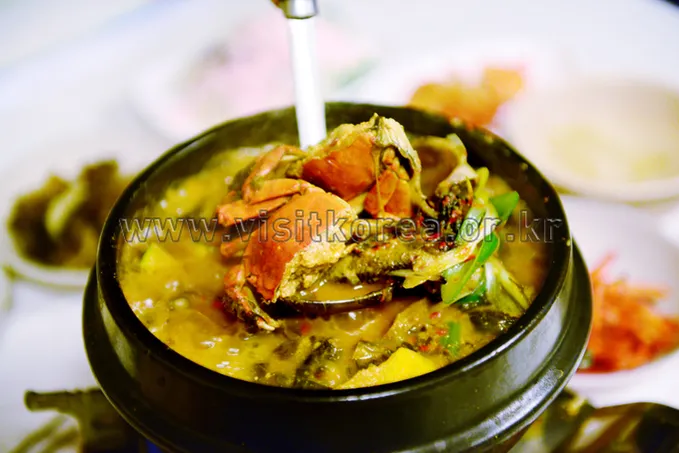
If you are sensitive to chili heat, do not assume all seafood soup is mild. Look for clear soup or ask staff whether the broth is spicy before ordering.
Korean phrase: “Igeo maewoyo?” (이거 매워요?) means “Is this spicy?” For a milder request, use “An maepge haejuseyo” (안 맵게 해주세요), meaning “Please make it not spicy.”
Where Travelers Commonly Meet Korean Seafood
Seafood appears across Korea, but the setting changes the experience. A fish market meal, a coastal restaurant, a neighborhood grilled-fish shop, and a rice-porridge restaurant all serve seafood in different formats.
Busan is strongly associated with seafood markets because of its port-city setting. Jagalchi Market is one of the best-known seafood market areas for travelers, and PhotoKorea records official tourism images of the market.
Seoul also has seafood restaurants and markets, but the traveler experience is usually more urban. In Seoul, seafood may appear as grilled fish near office districts, pajeon at traditional restaurants, crab restaurants, or stews at casual Korean dining spots.
Jeju is closely associated with abalone and coastal seafood meals, while other coastal cities and port towns have their own fish, shellfish, and stew traditions. This guide does not rank those regions because rankings require separate visitor or restaurant data.
Ordering Notes for Seafood Allergies and Spice Levels
Korean seafood dishes may contain fish, shellfish, crustaceans, mollusks, anchovy broth, shrimp seasoning, fish sauce, or mixed seafood stock. A dish that looks like a vegetable pancake or stew may still contain seafood ingredients.
Travelers with allergies should ask before ordering and avoid guessing from appearance alone. Shared grills, shared broths, and mixed seafood counters can also create cross-contact risk.
Spice level is separate from seafood content. Grilled mackerel and abalone porridge are different from spicy fish stew or spicy braised fish, so choose by both ingredient and cooking style.
Allergy note: If you have a serious seafood or shellfish allergy, confirm directly with the restaurant before eating. If staff cannot confirm ingredients clearly, choose another dish.
Frequently Asked Questions
What Korean seafood dishes are cooked, not raw?
Cooked Korean seafood options include grilled mackerel, grilled hairtail, seafood pancake, abalone porridge, seafood soybean paste stew, seafood hot pot, spicy fish stew, pan-fried oyster, and braised fish dishes.
Is Korean seafood usually spicy?
No. Some Korean seafood dishes are spicy, especially red stews and braised dishes. Others, such as grilled fish, abalone porridge, and some pan-fried seafood dishes, are not defined by chili heat.
What is haemul pajeon?
Haemul-pajeon is Korean seafood pancake with green onion. It is made with a flour and egg batter pan-fried with green onions and seafood, according to the Korea Foundation Korean Food Database.
What seafood dish is good for beginners in Korea?
Grilled fish and haemul-pajeon are practical starting points because they are easy to recognize at the table. Abalone porridge is another accessible option for travelers who want a rice-based seafood meal.
Should travelers with shellfish allergies avoid Korean seafood stews?
They should confirm ingredients directly before ordering. Seafood stews can contain clams, shrimp, crab, squid, fish, anchovy broth, or mixed seafood stock, and recipes vary by restaurant.
Complete Your Korea Food Trip with TripKorea
Busan food markets and coastal neighborhoods
Use Busan activity listings to connect seafood meals with markets, port areas, and coastal sightseeing routes.
Explore Things to Do in Busan
Stay near Busan's beach and seafood routes
Haeundae is useful for travelers who want coastal hotels, beach access, and seafood restaurants within a broader Busan itinerary.
Explore Hotels in Haeundae
Sources & References
Data Sources:
- Korean Food Information: Korea Foundation Korean Food Database
- Photos: Korea Tourism Organization PhotoKorea
Official Sites:
- Visit Korea — Korean Food
Last verified: 2026-08-16
Restaurant menus, seafood availability, spice levels, and allergy handling vary by location. Please confirm directly before ordering or eating.