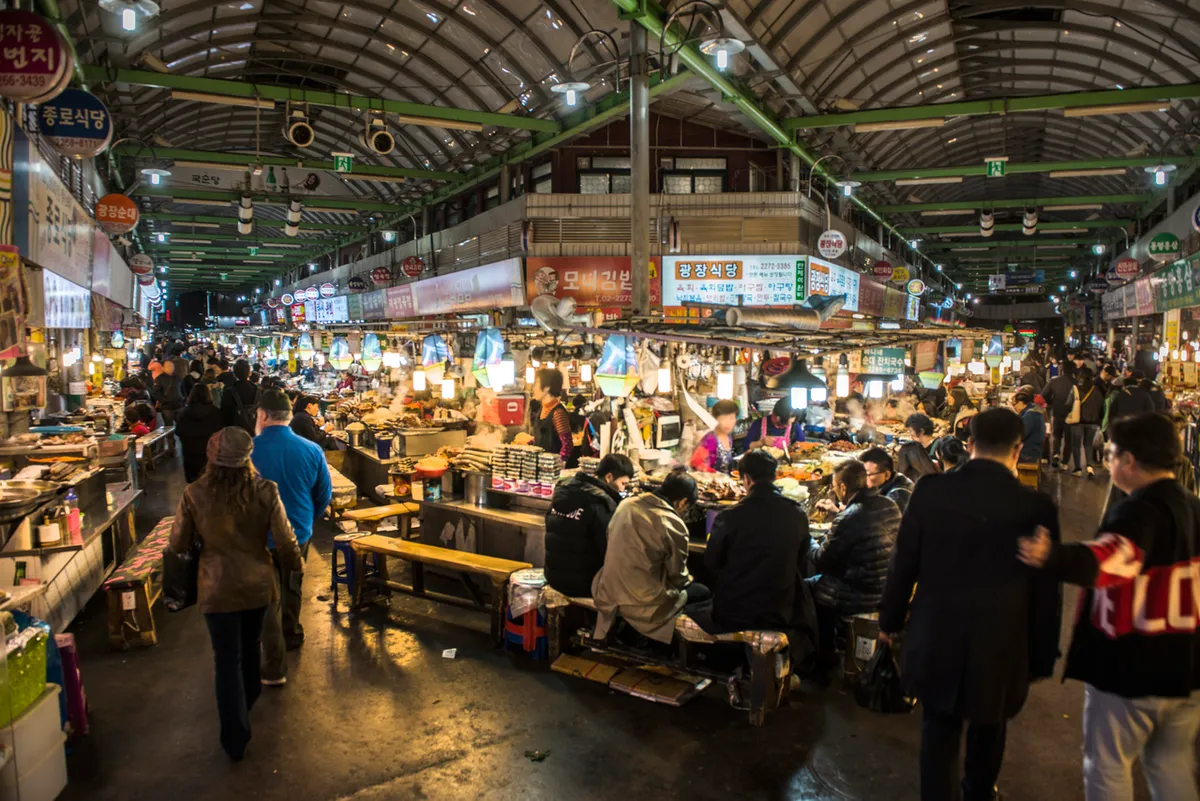
Korean sweets are part of everyday travel in Korea, from shaved-ice cafes and market doughnut stalls to winter pastry carts and regional street snacks.
This guide focuses on approachable desserts that visitors can recognize quickly, order without a long menu explanation, and find in cafe streets, markets, and busy sightseeing districts.
Korean Sweets at a Glance
The Korean sweets in this guide are not limited to formal traditional desserts. They are the kinds of sweet foods travelers are more likely to meet during a city walk, a market visit, a cafe stop, or an evening snack run.
Bingsu is the cafe-centered choice, usually served in a bowl and shared at the table. Kkwabaegi, hotteok, bungeoppang, dalgona, and ten-won bread belong more to market or street-snack culture.
Some are seasonal. Bungeoppang and hotteok are most closely associated with colder months, while bingsu is strongly linked with summer cafe culture. Availability varies by neighborhood and season, so treat this guide as a menu-reading companion rather than a fixed restaurant list.
Bingsu: Korea's Shaved-Ice Cafe Dessert
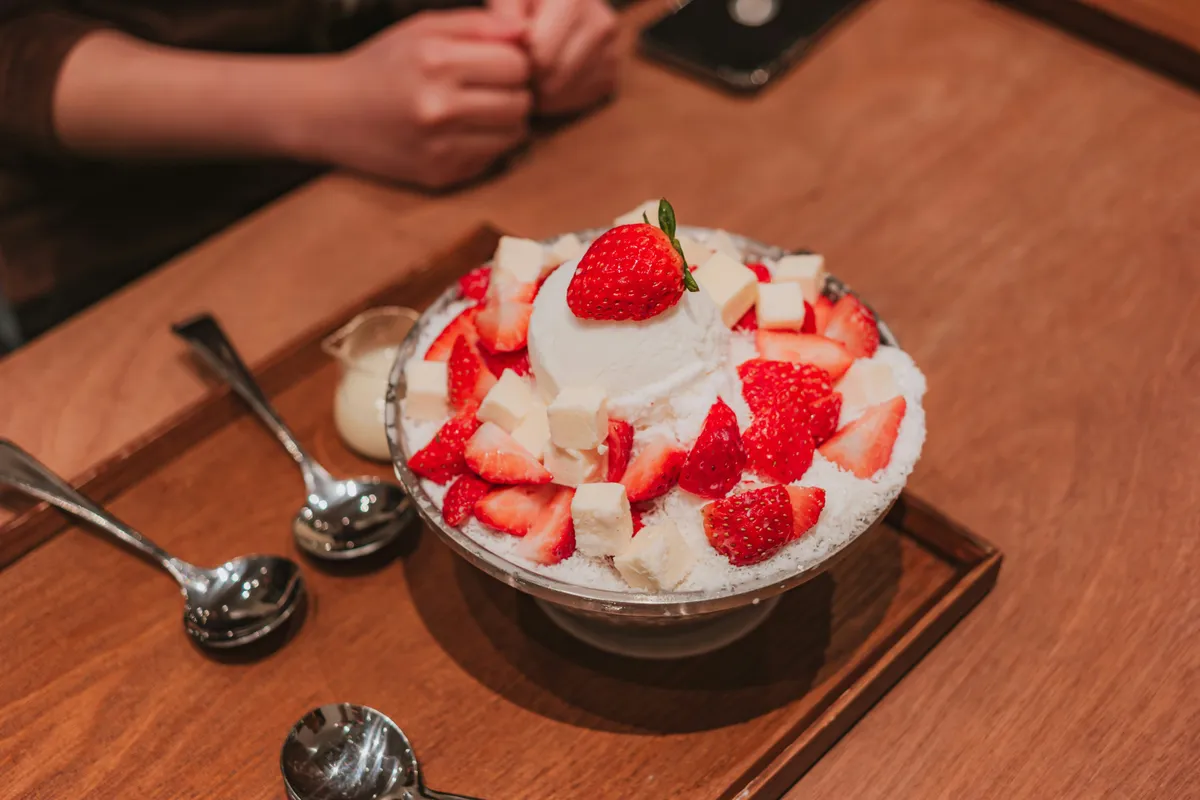
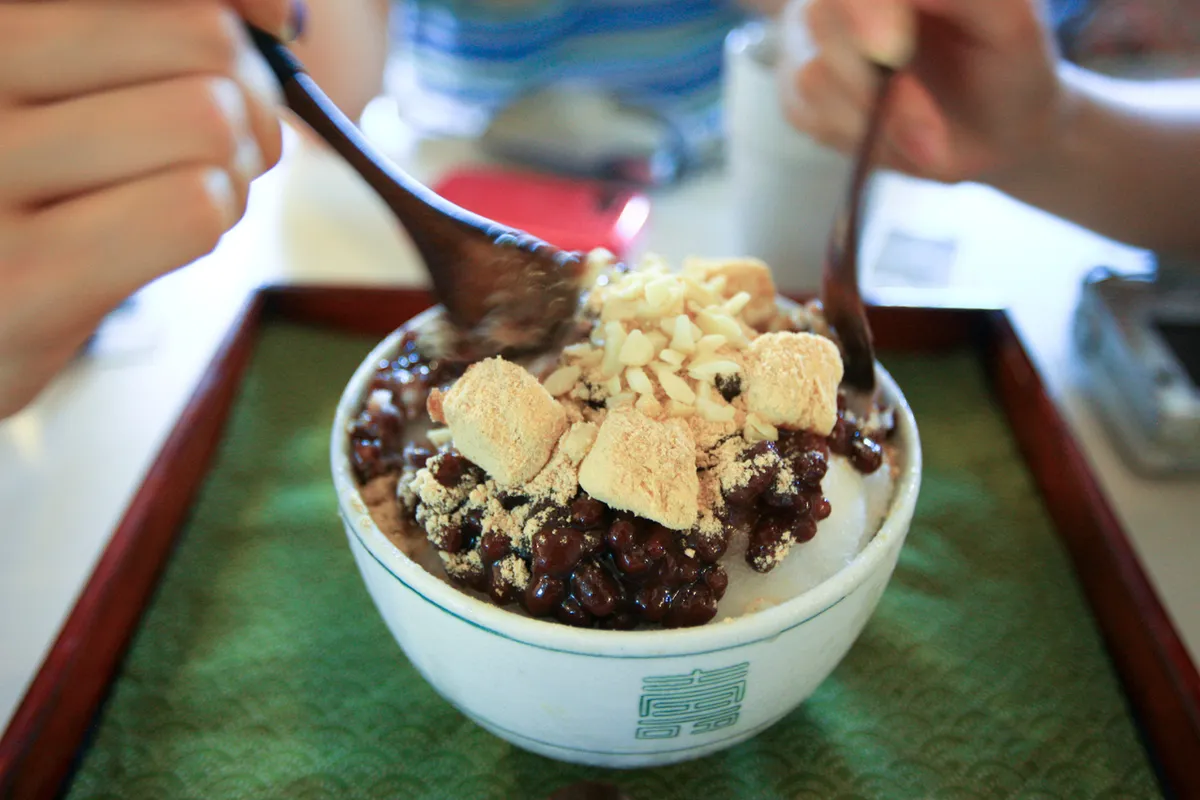
Bingsu (빙수) is one of the easiest Korean sweets for visitors to understand. It is shaved ice served with toppings such as sweet red beans, fruit, condensed milk, or other cafe-style additions.
The Korea Foundation lists bingsu in English as “Shaved Ice with Toppings” and describes pat-bingsu as the sweet red bean version. Fruit versions are often described as gwail-bingsu, while modern cafes may use seasonal fruit, chocolate, green tea, or other toppings depending on the menu.
In travel terms, bingsu works best as a cafe dessert rather than a street snack. Portions are often large enough to share, and the texture is the main point: cold shaved ice, sweet toppings, and a spoon-served bowl that slows down a summer afternoon.
For a first order, patbingsu is the reference point. It gives visitors the older red-bean style while still fitting comfortably into Korea's modern cafe scene.
Kkwabaegi and Korean Market Doughnuts
Kkwabaegi (꽈배기) is a twisted doughnut commonly seen in markets and snack shops. It is usually easier for foreign visitors to approach than formal traditional sweets because the basic idea is familiar: fried dough, a soft center, and a sweet coating.
The Korean name refers to the twisted shape. In English menus or explanations, it may appear as a twisted Korean doughnut. Market stalls may sell it alongside other fried sweet breads or simple doughnuts.
Kkwabaegi is useful for travelers because it does not require special table etiquette or a long explanation. It can be bought as a quick snack during a market walk and eaten on the move where local rules allow.
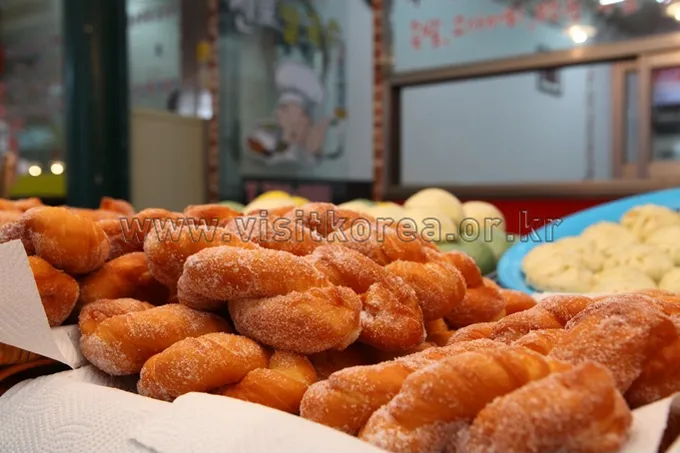
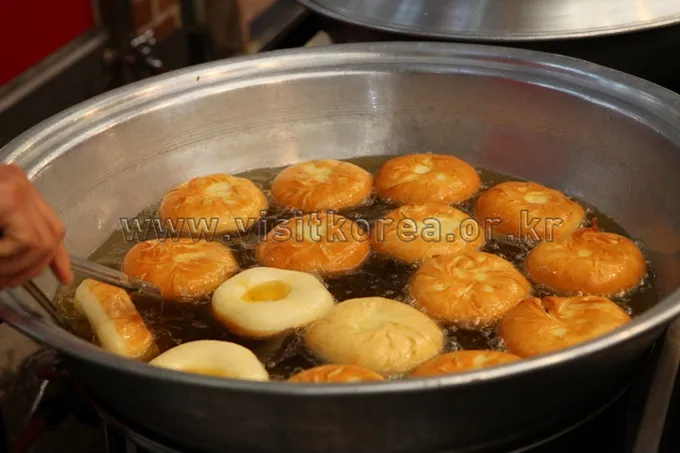
Korean market doughnuts are not one fixed recipe. Some stalls sell round doughnuts, twisted doughnuts, or filled versions, depending on the market and vendor.
For visitors comparing options, the easiest distinction is texture: kkwabaegi is the twisted version, while other market doughnuts may be round, filled, or coated differently.
Hotteok: A Sweet Pancake for Cold Weather
Hotteok (호떡) is a sweet filled pancake associated with Korean street-snack culture. The filling is commonly sweet and syrup-like once heated, and some regional versions add seeds or nuts.
For travelers, hotteok is a good bridge between street food and dessert. It is not a full meal, but it is heavier and warmer than candy or shaved ice. That makes it especially suitable for cold-weather sightseeing.
Busan's ssiat hotteok, a seed-filled version, is one of the better-known variations for visitors exploring market areas. The key difference is texture: the seeds add crunch to the soft, sweet pancake.
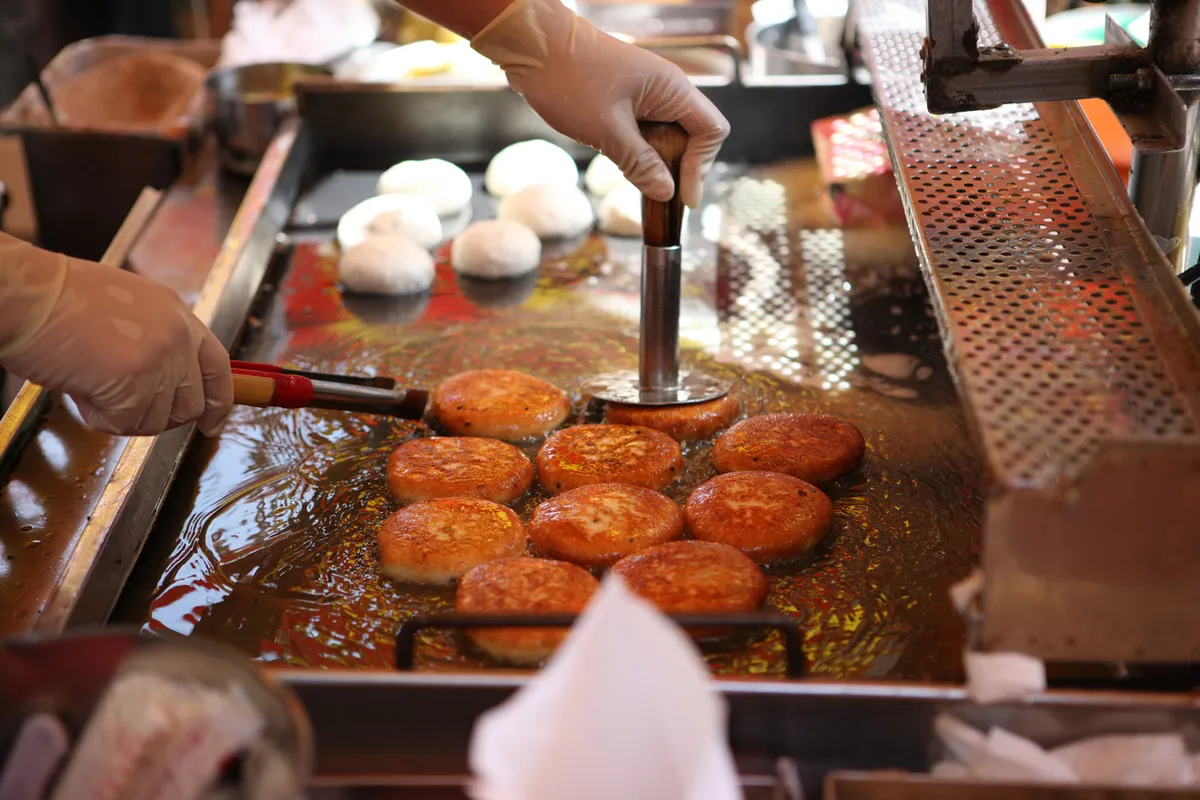
Because hotteok is served hot, the filling can be very warm. Eat carefully rather than biting straight through the center.
For more market-focused sightseeing in Busan, TripKorea's activity listings can help with planning: Things to Do in Busan.
Bungeoppang and Winter Street Pastries
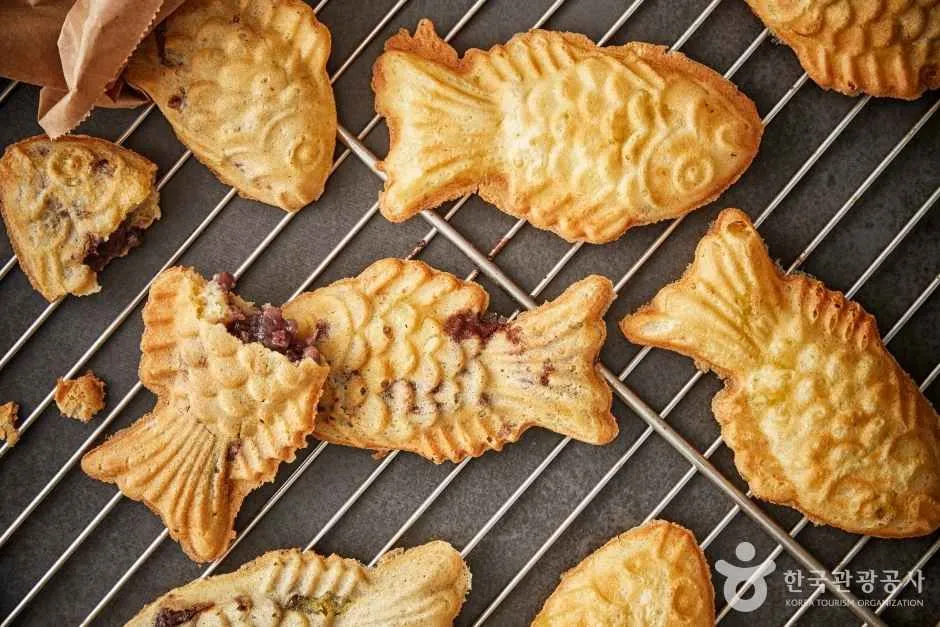
Bungeoppang (붕어빵) is a fish-shaped pastry that many travelers notice in winter. The shape is part of the appeal: it looks like a small fish, but it is a pastry, not seafood.
The filling is commonly sweet red bean, though some vendors may sell other fillings depending on the stall. Because recipes vary, check the visible sign or ask before buying if you avoid specific ingredients.
Bungeoppang is best understood as a seasonal street pastry. It is strongly associated with colder weather and neighborhood snack carts, so visitors may see it more often in winter than in midsummer.
Dalgona, Ten-Won Bread, and Trend Snacks
Dalgona (달고나) is Korean sugar candy made from heated sugar and baking soda. It became internationally recognizable through Korean screen culture, but in Korea it also belongs to older street-snack and schoolyard memory culture.
The texture is brittle rather than soft. Visitors should think of it as candy, not a cake or pastry. It works well as a quick sweet snack and as a small cultural reference point.
Ten-won bread, often written as sipwon-ppang (십원빵), is a newer-style tourist street snack associated with places such as Gyeongju's Hwangnidan-gil. The name refers to the ten-won coin shape, not the actual price.
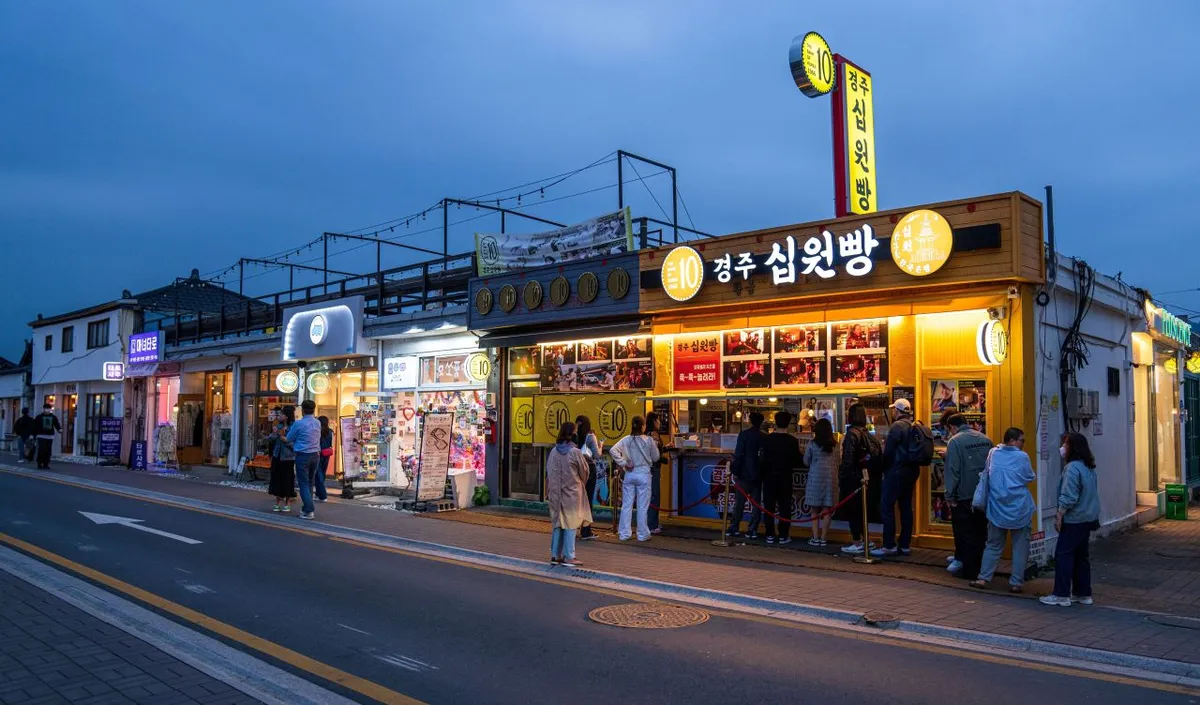
These trend snacks are useful in a Korean sweets guide because they feel less formal than traditional desserts. They are visual, easy to understand, and often found in sightseeing districts where visitors are already walking.
For Seoul cafe streets, dessert walks, and food-related activities, start with TripKorea's local listings: Things to Do in Seoul.

How to Choose Korean Sweets by Season and Setting
For summer, choose bingsu first. It is cold, shareable, and strongly connected to cafe culture.
For winter, hotteok and bungeoppang are more practical. They are warm, portable, and easier to find around street-snack areas during colder months.
For market walks, kkwabaegi and Korean doughnuts are simple choices. They are easy to recognize visually and do not require sitting down.
For sightseeing districts, look for ten-won bread, dalgona, waffles, or other visual snacks. These items change by district and trend cycle, so the exact lineup may differ from one neighborhood to another.
Frequently Asked Questions
What Korean sweet should I try first?
Bingsu is the easiest starting point for many visitors because it is served in cafes and the format is simple: shaved ice with sweet toppings. For a street option, kkwabaegi or hotteok is easier to understand than more formal traditional sweets.
Is bingsu a traditional Korean dessert?
Bingsu has older red-bean roots, but modern Korean cafes serve many versions with fruit, milk, chocolate, green tea, and seasonal toppings. In travel writing, it is best understood as both a Korean shaved-ice dessert and a modern cafe dessert.
What is the difference between hotteok and bungeoppang?
Hotteok is a filled sweet pancake, usually served hot and flat. Bungeoppang is a fish-shaped pastry, commonly filled with sweet red bean. Both are associated with colder weather, but they have different shapes, textures, and eating styles.
Is ten-won bread actually 10 won?
No. The name refers to the shape inspired by Korea's ten-won coin. The selling price depends on the vendor and location, so check the stall menu before ordering.
Are Korean sweets very spicy?
The sweets covered here are not spicy by default. Bingsu, kkwabaegi, hotteok, bungeoppang, dalgona, and ten-won bread are sweet snacks or desserts. Visitors with allergies should still check ingredients such as nuts, dairy, wheat, red bean, or seeds before ordering.
Complete Your Korea Food Trip with TripKorea
Food Streets and Local Activities
Use TripKorea to connect dessert stops with neighborhood walks, markets, and local activities.
Places to Stay Near Food Districts
Staying near a busy food district makes cafe stops, market snacks, and late-night dessert walks easier to plan.
Sources & References
Data Sources:
Korean Food Information: Korea Foundation Korean Food Database
Photos: Korea Tourism Organization PhotoKorea
Official Sites:
Last verified: 2026-08-14
Menus, seasonal availability, and ingredients vary by vendor. Please confirm directly before ordering.