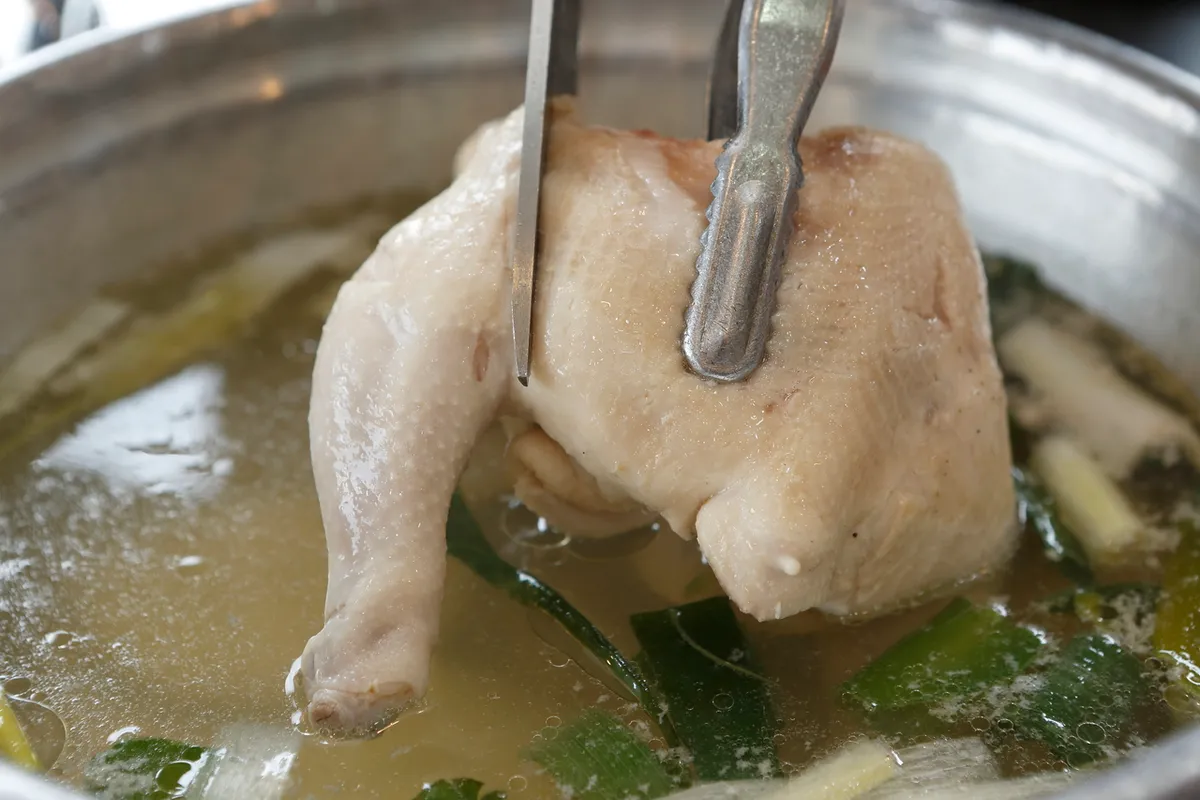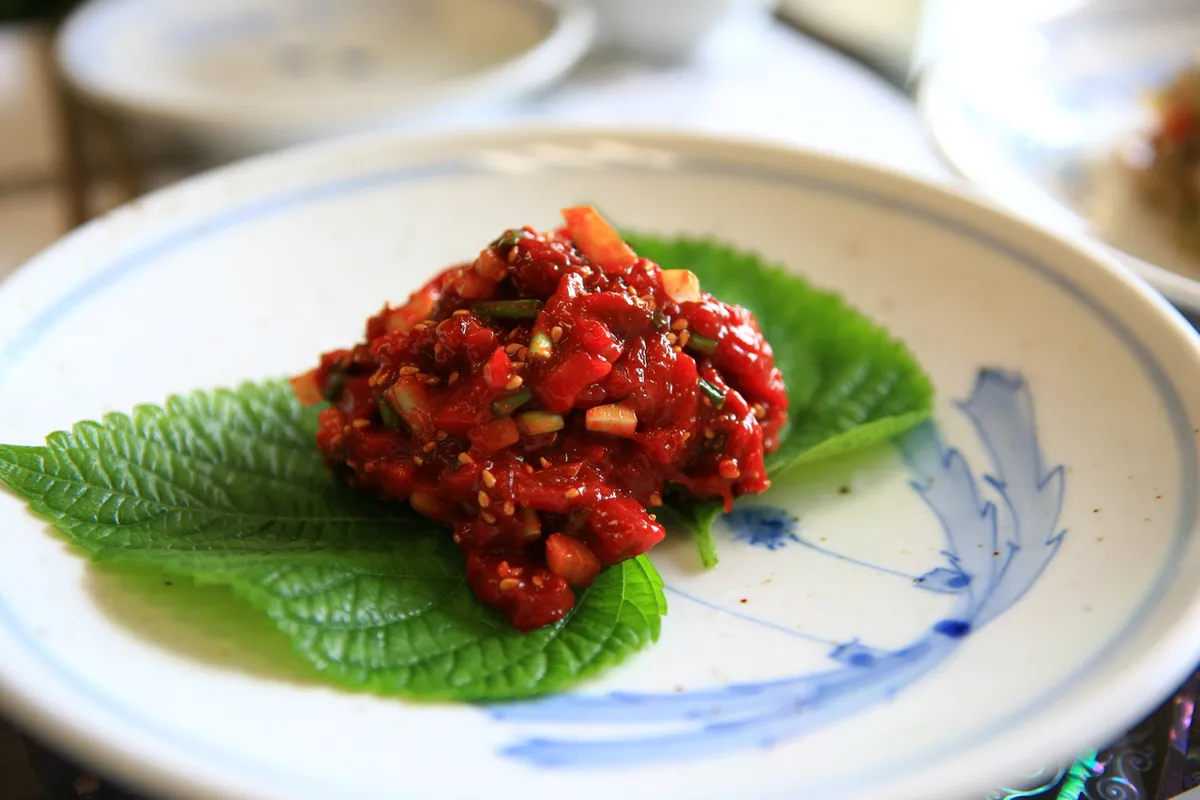
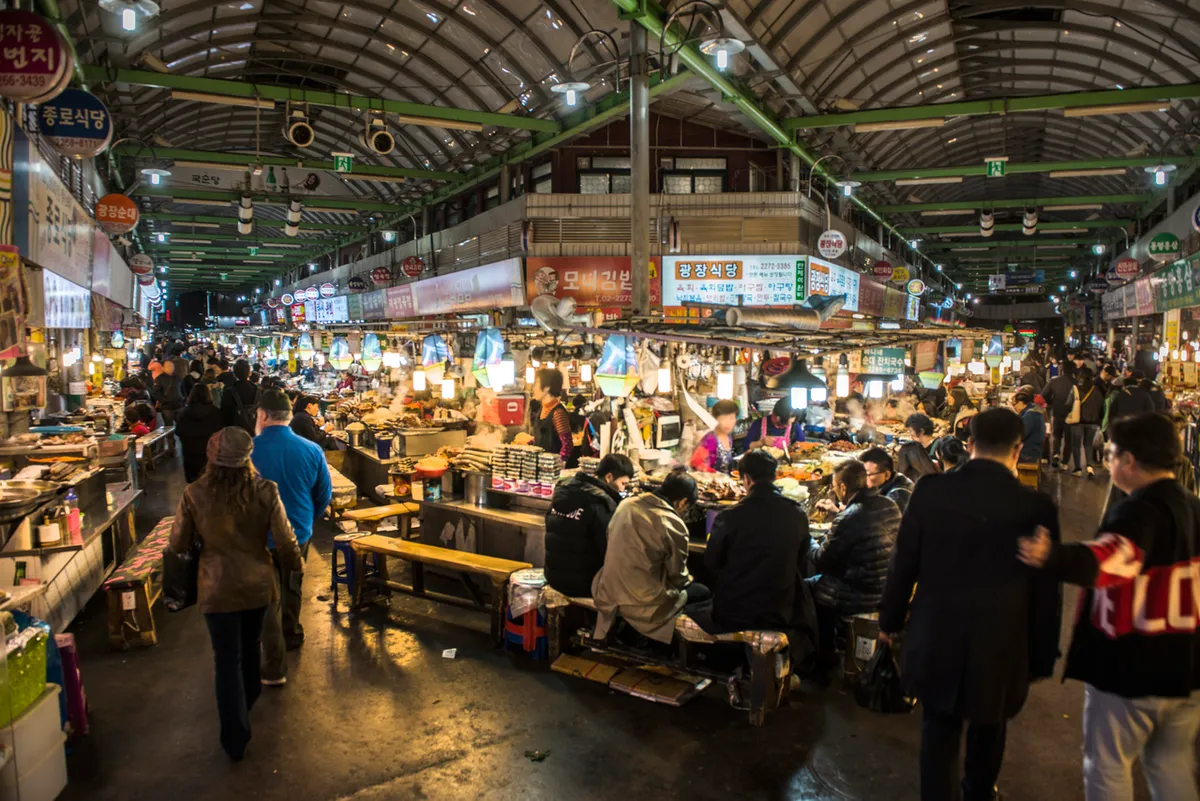
Pancakes cook on market griddles, snack stalls display fried bites, and Tongin’s token lunchboxes bring foods from several vendors into one meal.
This guide compares five Seoul food markets by their dishes and dining formats, from food-stall counters to noodle alleys and build-your-own lunches.
1. Gwangjang Market: Pancakes and Food-Stall Counters
Gwangjang Market (광장시장) gathers food stalls along a street connected to the East Gate, North Gate 2, and South Gate 1.
Bindaetteok (빈대떡), mung bean pancakes, is one of the dishes to look for here. Vendors fry the pancakes on broad griddles.
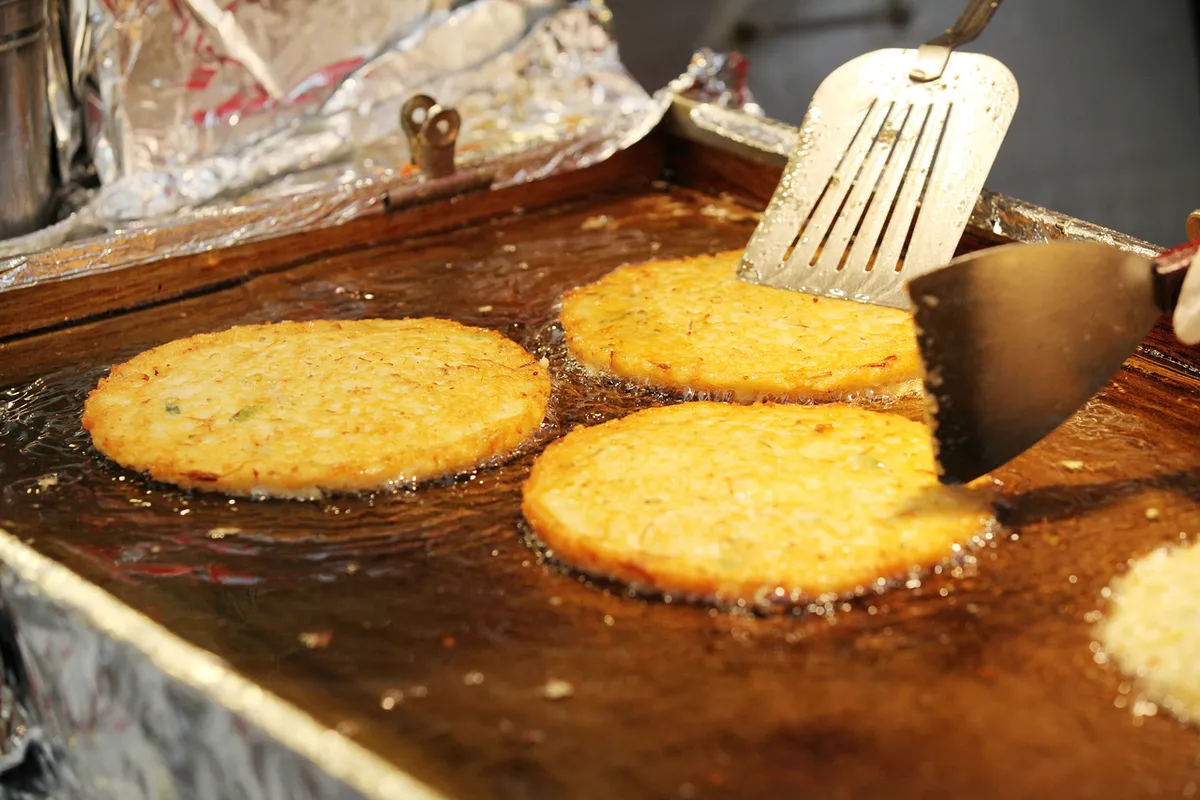
Photo: Korea Tourism Organization / Park Eun-kyeong
Mung beans form the pancake’s base. Recipes can also include pork, kimchi, bean sprouts, green onions, and garlic.
For a cooked-food selection, consider a pancake alongside gimbap (김밥), rice rolled in seaweed, or dumplings.
Dumpling restaurants provide another option beyond the pancake griddles and rice-roll stalls.
Choose a counter according to the dish you want. Pancakes, rice rolls, and dumplings offer different meals within the same market.
Raw beef and live-octopus dishes are sold here too, but they are not required parts of a Gwangjang food visit.
The cooked pancakes, rice rolls, and dumplings give you a separate set of choices.
Food-street opening hours differ from the market’s general trading hours. Check the specific stall’s schedule if you have one vendor in mind.
Address: 88, Changgyeonggung-ro, Jongno-gu, Seoul.
2. Mangwon Market: Fried Snacks and Takeaway Bites
Mangwon Market (망원시장) combines fresh produce and side-dish shops with stalls selling fried snacks, chicken, rice rolls, and noodle meals.
Dakgangjeong (닭강정), sauce-coated fried chicken, is one option. Croquettes offer another, with fillings including japchae, vegetables, cheese, and pizza-inspired combinations.
Hotteok (호떡), sweet filled pancakes, and deep-fried green chili peppers add further choices to a snack-focused visit.
The range extends beyond these items: gimbap, tteokbokki, fried pastries, and fruit can also form part of a market-food spread.
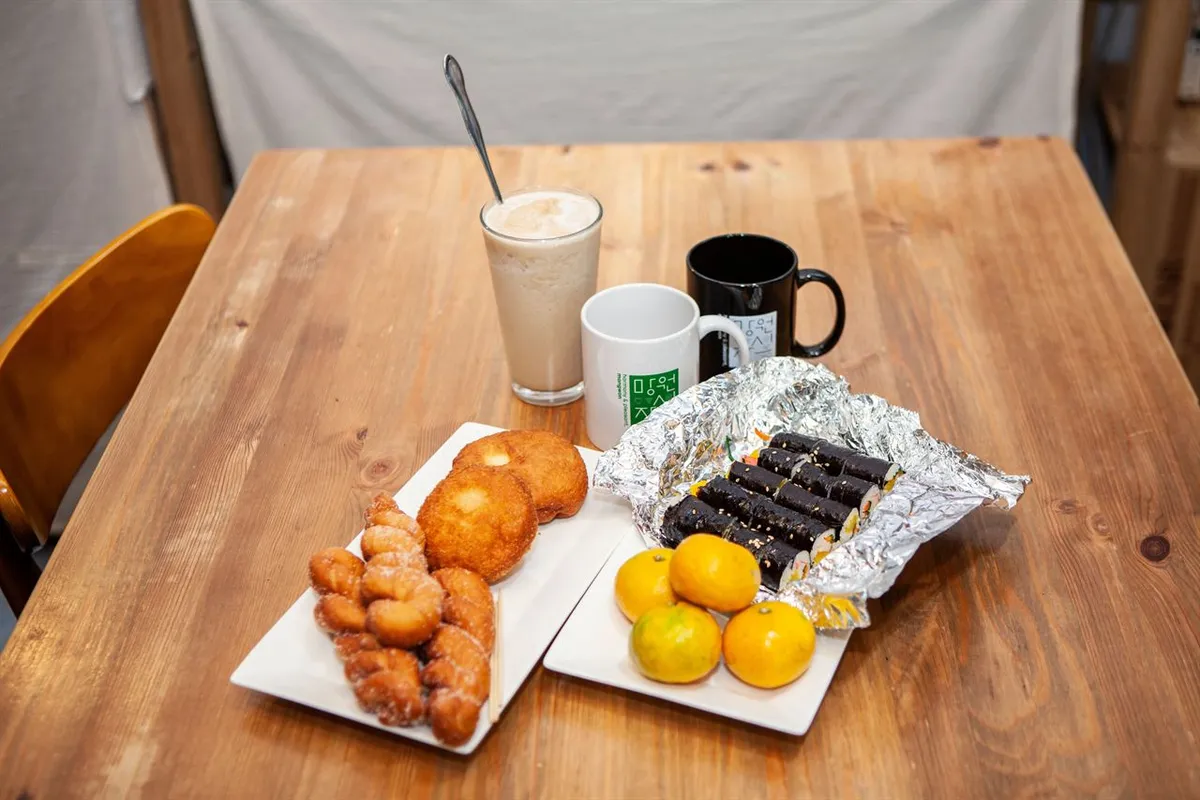
Photo: Korea Tourism Organization / Niotani Studio
For a bowl rather than several snacks, look for kalguksu (칼국수), a noodle soup. The market has both snack and meal options.
Decide whether you want one meal or a few different bites before choosing a stall; the two approaches lead to different orders.
Some shops provide seating, while others serve food to eat standing or take away. A snack purchase does not always include a table.
Most shops accept cards, although some do not. Carrying some cash remains useful for an individual stall that does not accept your card.
Address: 27 Poeun-ro 6-gil, Mapo-gu, Seoul.
3. Namdaemun Market: Noodle and Braised-Fish Alleys
Namdaemun Market (남대문시장) has two food alleys centered on distinct meals: kalguksu (칼국수), knife-cut noodle soup, and galchi-jorim (갈치조림), braised hairtail.
Kalguksu Alley has noodle eateries on both sides. Bowls combine noodles and broth with toppings such as tofu, laver, and sesame seeds.
Restaurant-specific seasoning sauces distinguish one bowl from another. The alley also has places serving boribap (보리밥), barley rice, and chalbap (찰밥), glutinous rice.
Some rice orders are accompanied by small servings of kalguksu and naengmyeon, cold noodles. Check the chosen restaurant’s combination rather than assuming every rice order includes the same extras.
Braised Hairtail Alley offers a different meal: fish in a spicy sauce. Its restaurants use different cooking methods, so the dishes are not identical across the alley.
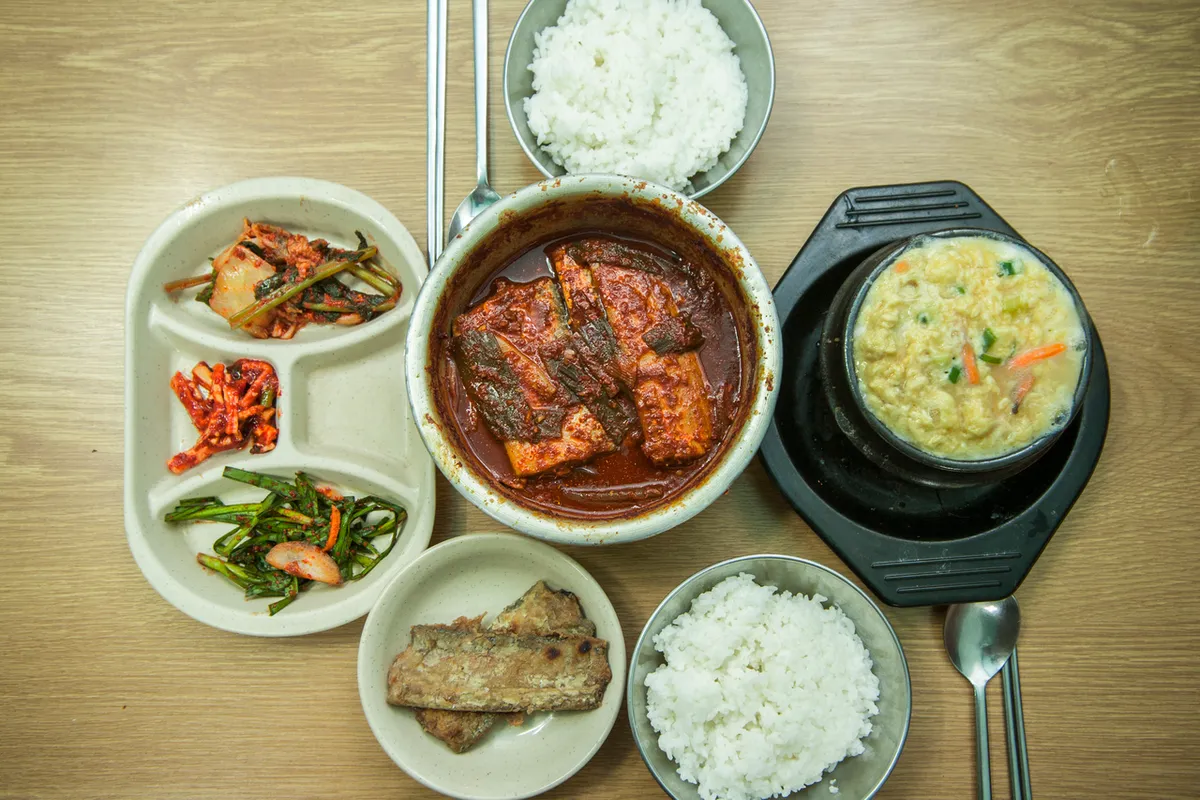
Photo: Korea Tourism Organization / Live Studio
Some restaurants also serve grilled fish. That gives diners who do not want the spicy braised preparation another fish option to check on the menu.
Choose the alley according to the meal: noodles and rice dishes in Kalguksu Alley, or braised and grilled fish in the hairtail alley.
Kalguksu Alley: 42-1, Namdaemun Market 4-gil, Jung-gu, Seoul.
Braised Hairtail Alley: 16-17, Namdaemun Market-gil, Jung-gu, Seoul.
4. Tongin Market: Assemble a Token Lunchbox
Tongin Market (통인시장) offers a different ordering format: exchange money for yeopjeon (엽전), coin-shaped tokens used in its lunchbox program.
At the Coin Lunchbox Café, you receive tokens and a lunchbox container. Take the container to participating vendors and select foods for its compartments.
Oil-fried tteokbokki is one of the market’s dishes. Vendors cook the coated rice cakes on a broad griddle before serving them.
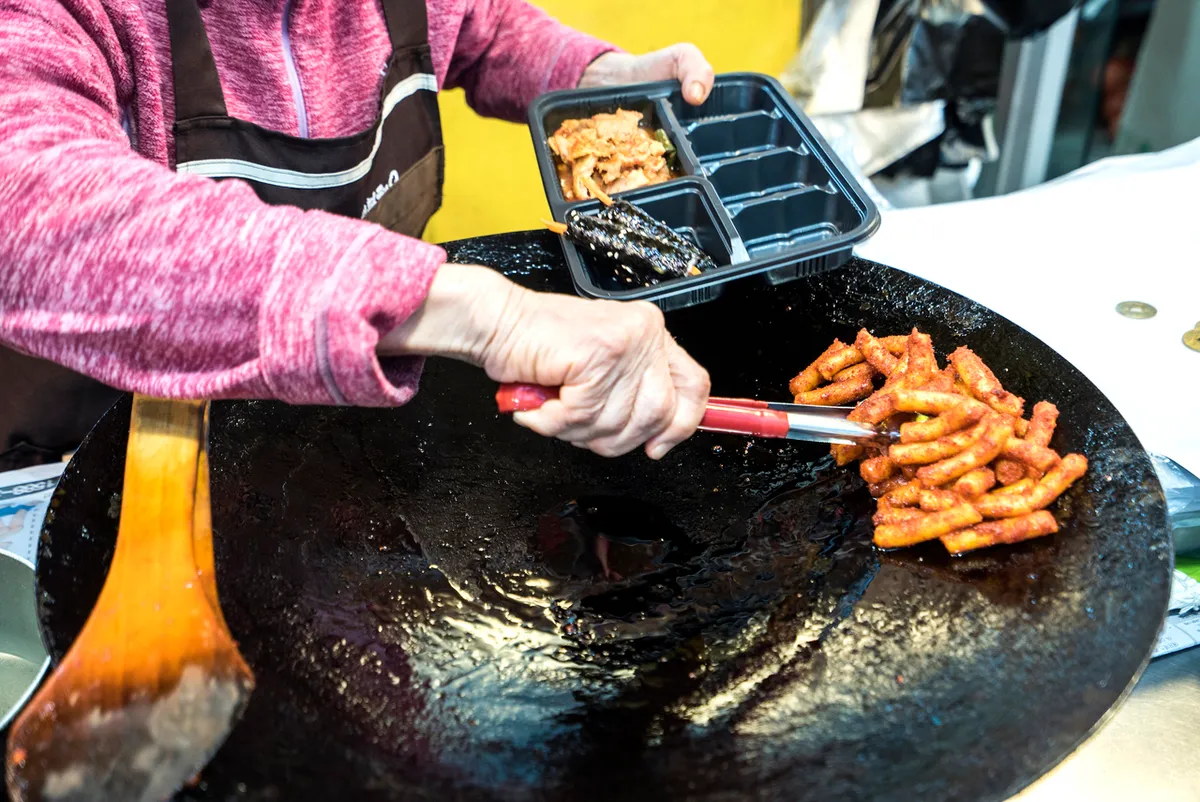
Photo: Korea Tourism Organization / Lee Beom-su
Other choices include rice-cake skewers and gimbap. The lunchbox format lets you put different foods into one tray instead of ordering one fixed dish.
Return to the café to eat the assembled meal. The filled compartments make the ordering format visible: several selections become one lunch.
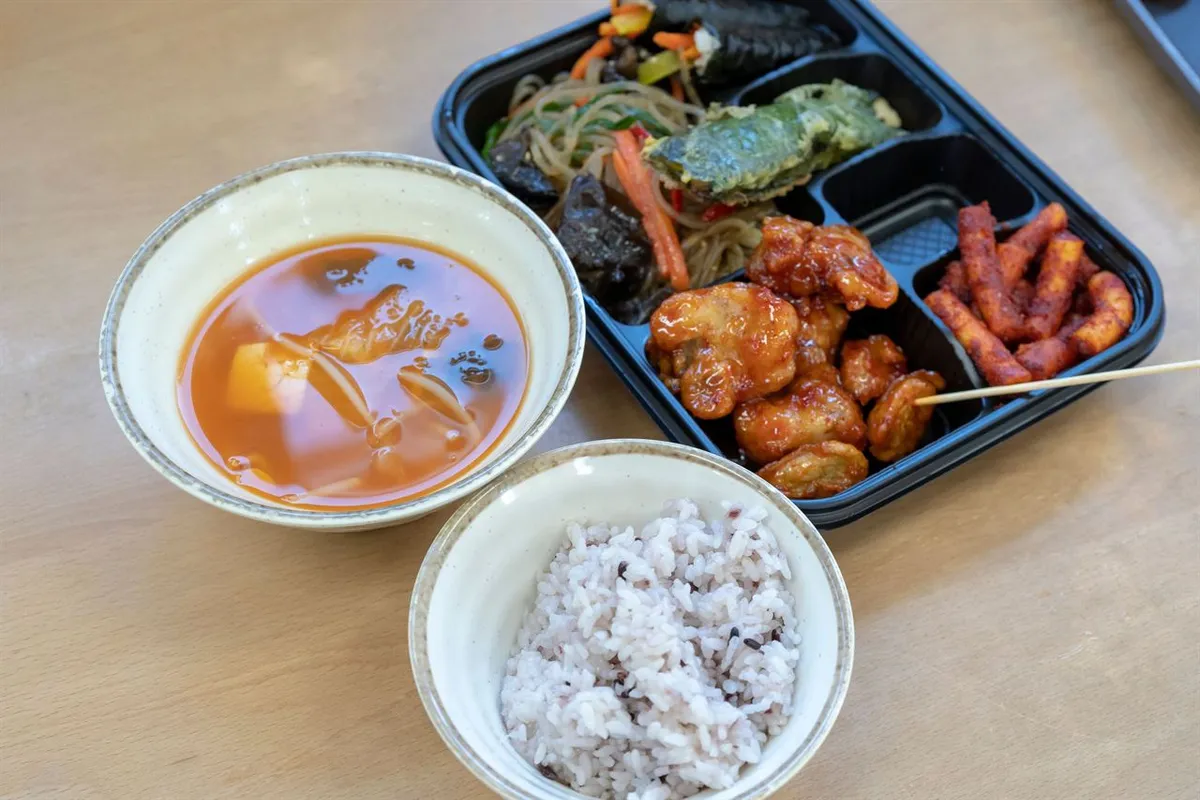
Photo: Korea Tourism Organization / Niotani Studio
This is a food-selection activity as well as a meal. Choose the dishes you want at each participating counter while filling the container.
The tokens belong to the lunchbox program; they are not a payment system used throughout Seoul’s other markets.
Plan around the café’s service schedule if the token lunchbox is your main reason for visiting. Its hours are separate from the wider market.
Address: 18 Jahamun-ro 15-gil, Jongno-gu, Seoul.
5. Gyeongdong Market: Food Ingredients and a Café Break
Gyeongdong Market (경동시장) began in June 1960 as an agricultural market. Produce and dried seafood remain part of its food identity.
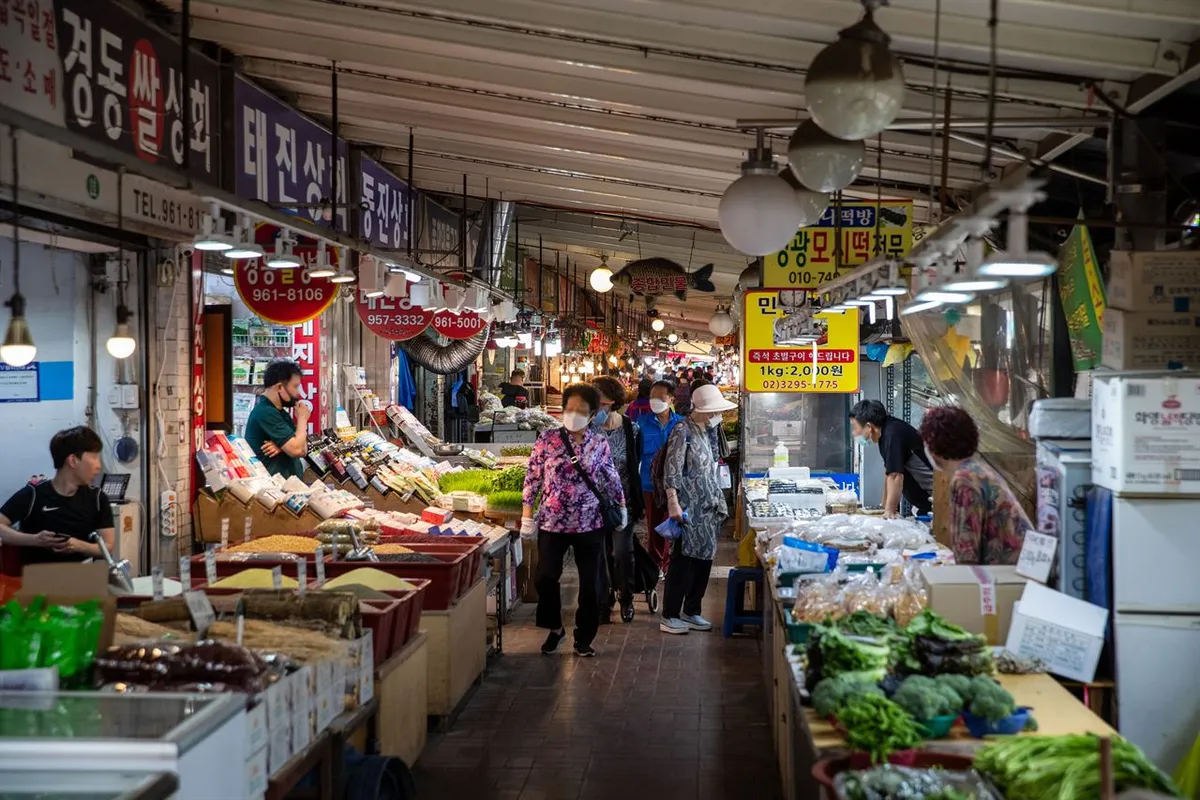
Photo: Korea Tourism Organization / Kim Ji-ho
Choose this market when the ingredients behind Korean meals interest you as much as the finished dishes. Vegetable and dried-seafood stalls give the visit a different emphasis from Gwangjang’s prepared-food counters.
For a named eating stop, Andongjip Son Kalguksu (안동집 손칼국수) is a noodle restaurant associated with chef Kim Mi-ryeong, also known as Imokase from Culinary Class Wars.
Check the restaurant’s current booking arrangements before making it the focus of your visit.
Sweet red-bean bungeoppang (붕어빵), fish-shaped pastries, has also been documented among the market’s snacks. Individual stalls and their offerings can change.
Starbucks Gyeongdong 1960 provides a separate café stop inside a restored theater. The store serves beverages and food baked on-site.
The ingredient stalls, noodle restaurant, and theater café represent different parts of the visit; this is not simply another row of snack counters.
Address: 3 Gosanja-ro 36-gil, Dongdaemun-gu, Seoul.
Frequently Asked Questions
Which Seoul food market should I choose for snacks?
Mangwon offers fried chicken, croquettes, hotteok, and other snacks. Gwangjang centers on food counters serving dishes such as mung bean pancakes and gimbap.
Where can I put together a lunchbox from several stalls?
Tongin Market’s Coin Lunchbox Café provides tokens and a container. Select foods from participating vendors, then return to the café to eat.
Which market has a dedicated noodle alley?
Namdaemun Market has Kalguksu Alley, where eateries serve knife-cut noodle soup. Barley rice and glutinous rice are also available in the alley.
Do market opening hours apply to every food stall?
No. Food-street schedules, individual restaurants, and cafés can differ from general market trading hours. Check the specific vendor, especially for Tongin’s lunchbox service.
Choose among these Seoul food markets by the meal you want: pancakes at Gwangjang, snacks at Mangwon, noodle or fish meals at Namdaemun, a token lunchbox at Tongin, or ingredients and a café stop at Gyeongdong.
Complete Your Korea Trip with TripKorea
For activities to combine with your market meal, explore Things to Do in Seoul.
Sources & References
Food and market information: Korea Tourism Organization and Seoul Tourism Organization. Mung bean pancake ingredients: Korea Foundation Korean Food Database.
Photos: Korea Tourism Organization. Hero photograph: IR Studio. Individual body-image photographers are credited beneath each photograph.
Last verified: 2026-10-07.
Restaurant hours, menus, and lunchbox-program arrangements are subject to change. Please confirm directly before visiting.