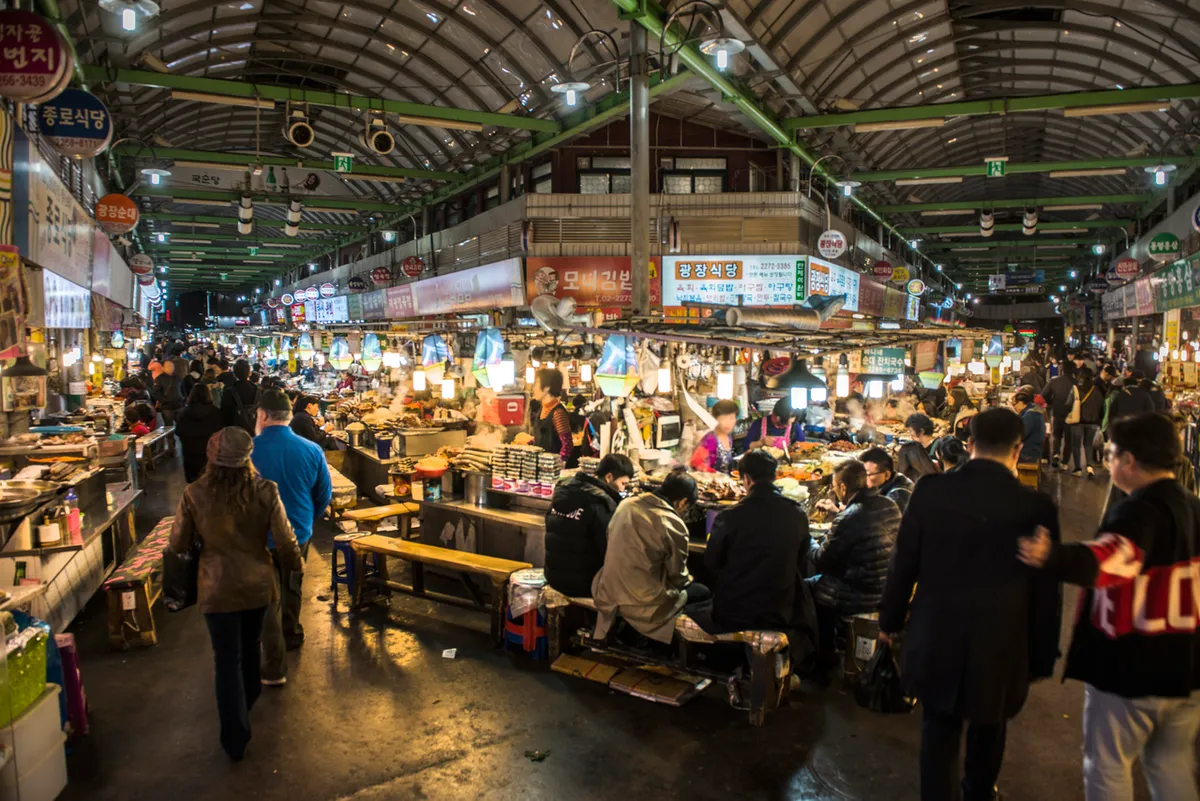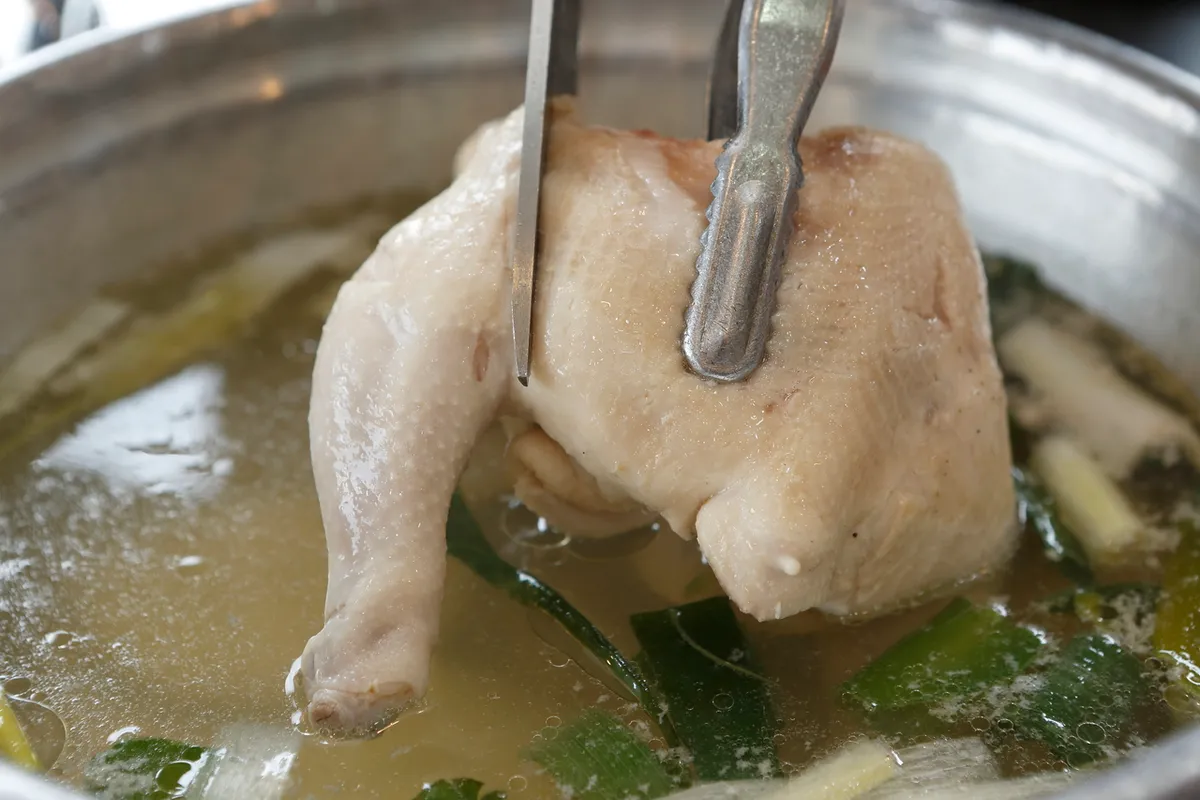
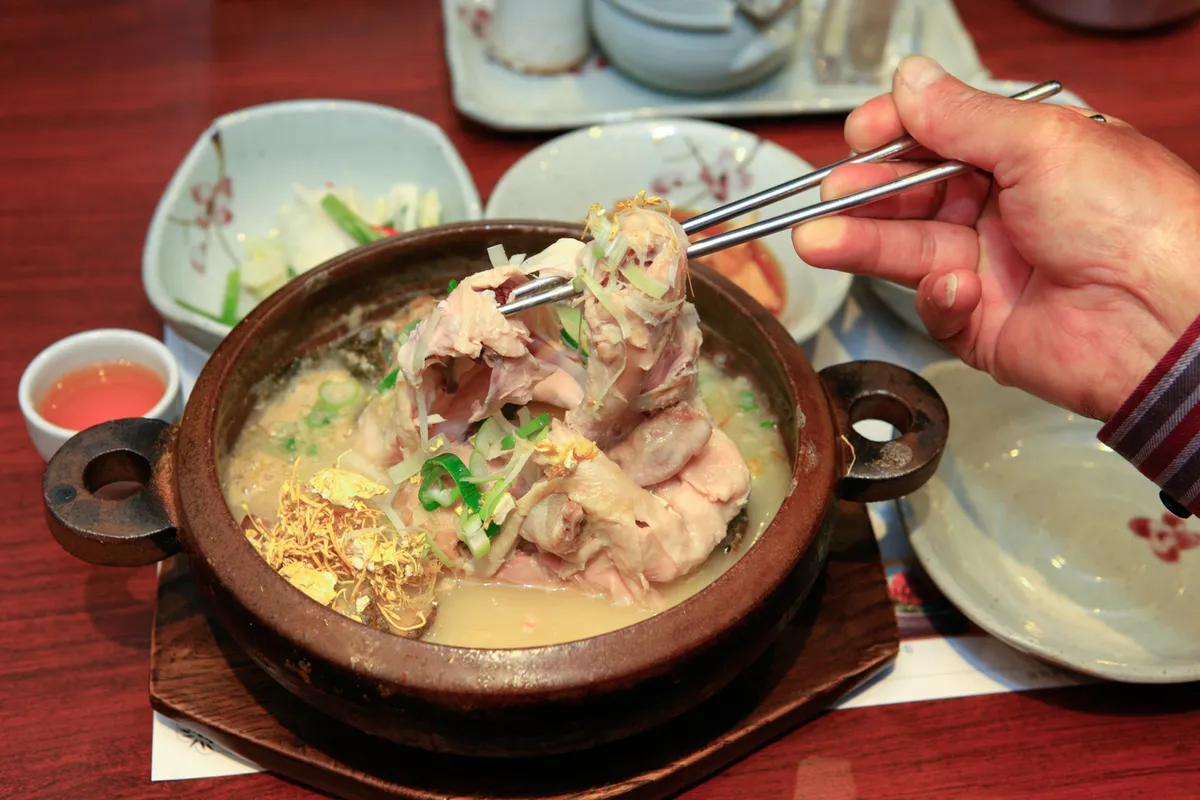
Top 7 Korean Soups and Stews introduces seven menu names that help travelers understand the difference between guk, tang, and jjigae in Korean restaurants. This is not a ranked list; it is a practical guide to representative bowls that appear across home-style restaurants, specialty shops, and seasonal menus.
Korean meals often treat soup as part of the main table, not as a small starter. Some bowls are clear and light, some are long-simmered and milky, and others are thick stews served bubbling in stone or metal pots.
Top 7 Korean Soups and Stews: Guk, Tang, and Jjigae
Before choosing a bowl, the menu endings are useful. Guk (국) usually means soup. Tang (탕) is also soup, often associated with a deeper simmered broth or a specialty bowl.
Jjigae (찌개) means stew. It is usually thicker, more concentrated, and served closer to the center of the table. Jjigae may be shared, while many tang and guk bowls are ordered as individual meals with rice and side dishes.
The seven dishes below stay within the soup-and-stew angle. They focus on broth style, stew thickness, ingredients, and ordering notes rather than broad beginner-food coverage.
1. Samgyetang: Chicken Ginseng Soup
Samgyetang (삼계탕) is chicken ginseng soup. The standard dish uses a young whole chicken stuffed with ingredients such as ginseng, sticky rice, garlic, jujubes, and chestnuts, then cooked in a clear broth.
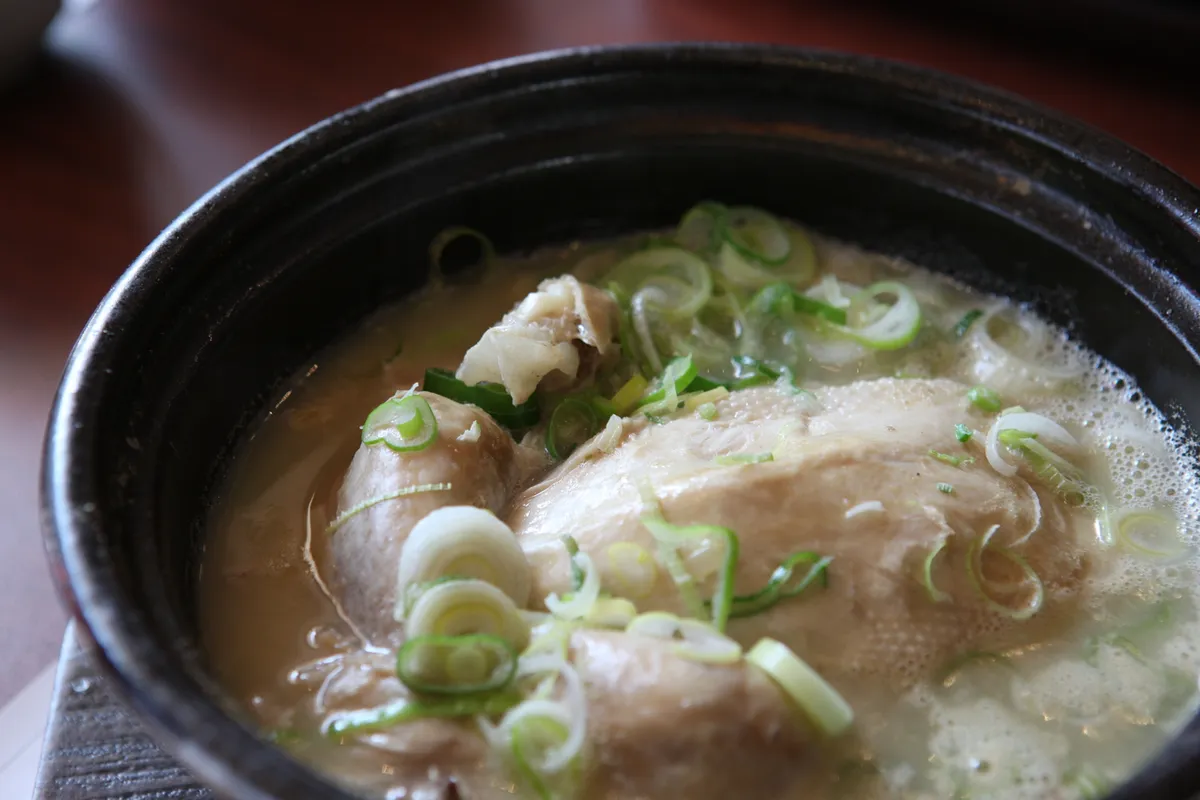
The bowl is usually served as a full meal rather than a side soup. Because the chicken is served whole or in large pieces, it is more substantial than a light broth dish.
For travelers, the main ordering note is texture. Samgyetang is not a red chili stew. The broth is clear, and seasoning may be adjusted at the table depending on the restaurant.
2. Gomtang and Seolleongtang: Milky Beef Soups
Gomtang (곰탕) and seolleongtang (설렁탕) are useful names for travelers who want a beef-based soup without a red sauce. Both are associated with long-simmered beef broths.
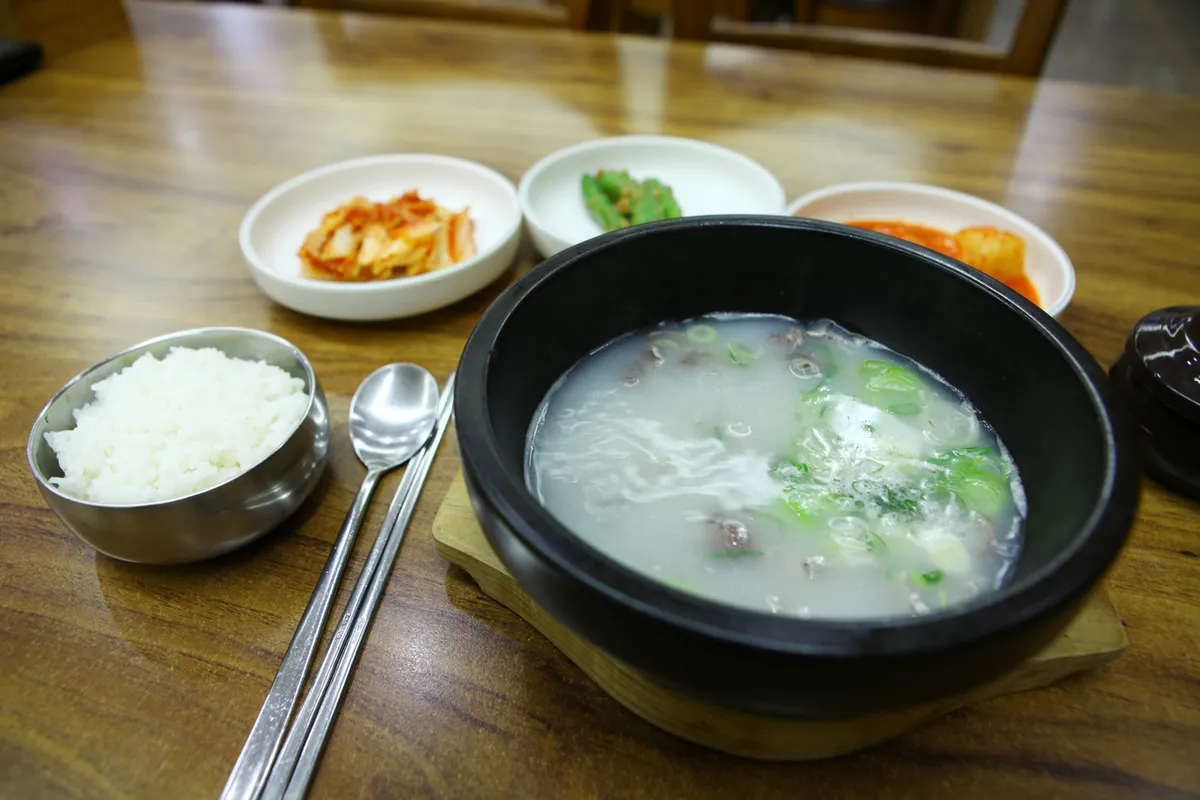
Gomtang is described as a beef-bone stock simmered for several hours, with a milky appearance and tender meat. Seolleongtang is also a milky ox-bone soup made by simmering bones and other beef parts for a long period.
These soups are often seasoned at the table with salt, green onion, or pepper. Add seasoning gradually, because the base broth may arrive lightly seasoned.
3. Galbitang: Beef Short Rib Soup
Galbitang (갈비탕) is commonly understood on Korean menus as beef short rib soup. It is a clearer meat soup than red stews such as budae-jjigae or sundubu-jjigae.
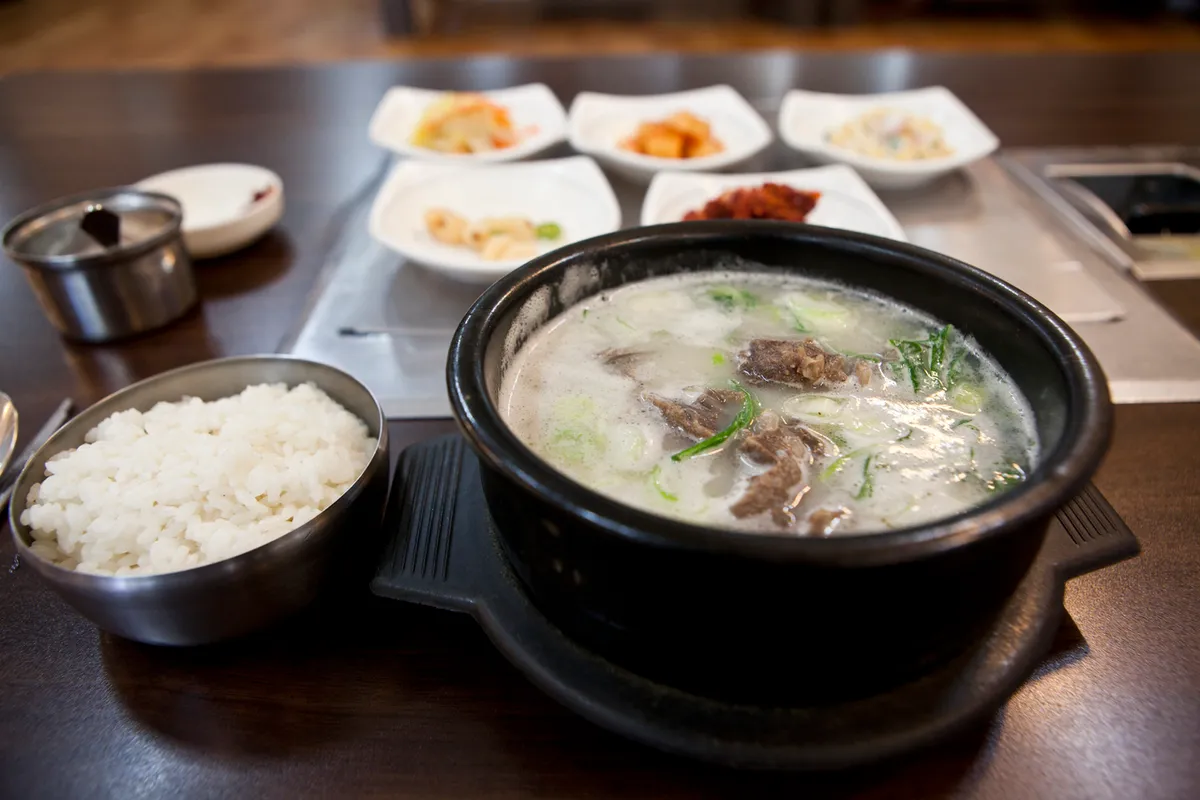
The dish is useful for travelers who want a meat-centered bowl with rice, broth, and side dishes. The rib pieces make it more structured as a meal than a small soup served beside another main dish.
As with other meat soups, toppings and seasoning vary by restaurant. Check directly if you avoid beef, bone broth, egg garnish, or specific side dishes.
4. Doenjang-Jjigae: Soybean Paste Stew
Doenjang-jjigae (된장찌개) is soybean paste stew. It is made with doenjang and vegetables, and it is thicker than doenjangguk, the soup version made with soybean paste.
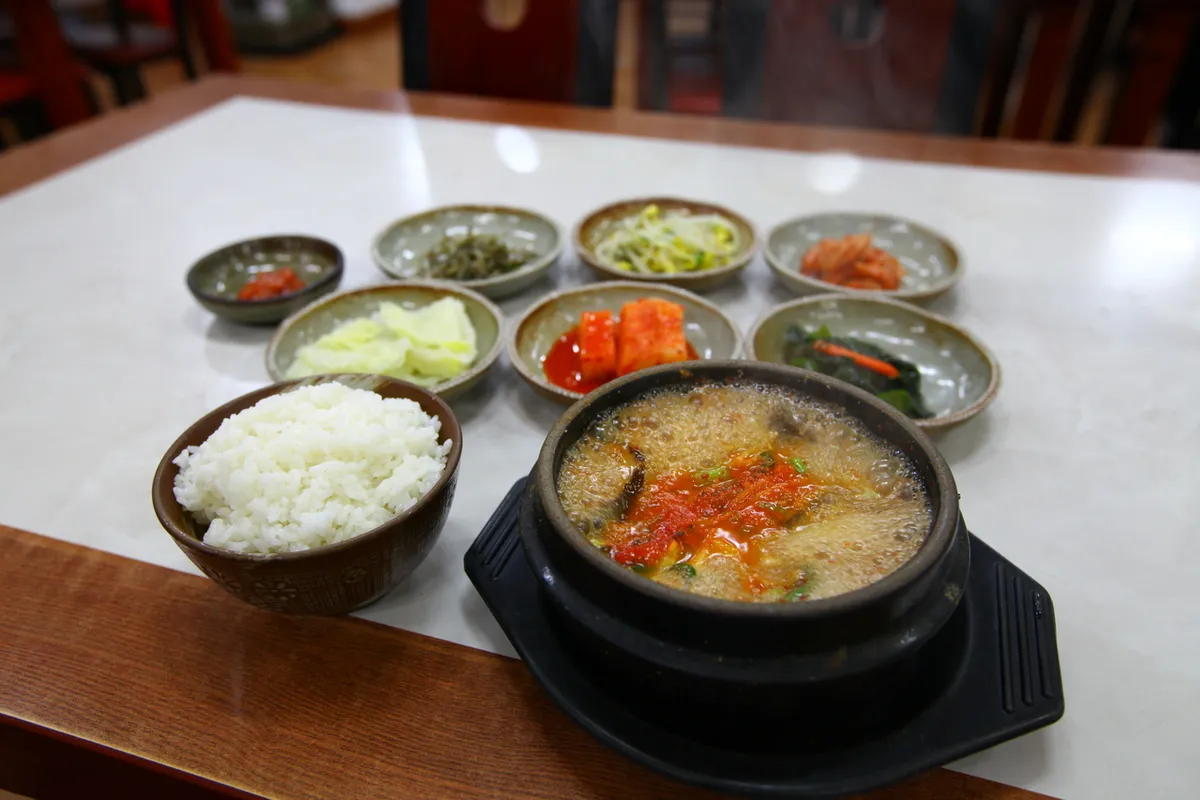
This is one of the clearest examples of why jjigae should not be treated as a light soup. The flavor is concentrated, the broth is thicker, and the stew is often eaten with rice.
Doenjang-jjigae can contain tofu, vegetables, seafood, or meat depending on the restaurant. Travelers with allergies should confirm ingredients rather than assuming one standard recipe.
5. Sundubu-Jjigae: Soft Tofu Stew
Sundubu-jjigae (순두부찌개) is soft tofu stew. The standard red version is made with soft tofu in a spicy broth and may include ingredients such as clams, fish sauce, squash, or meat.
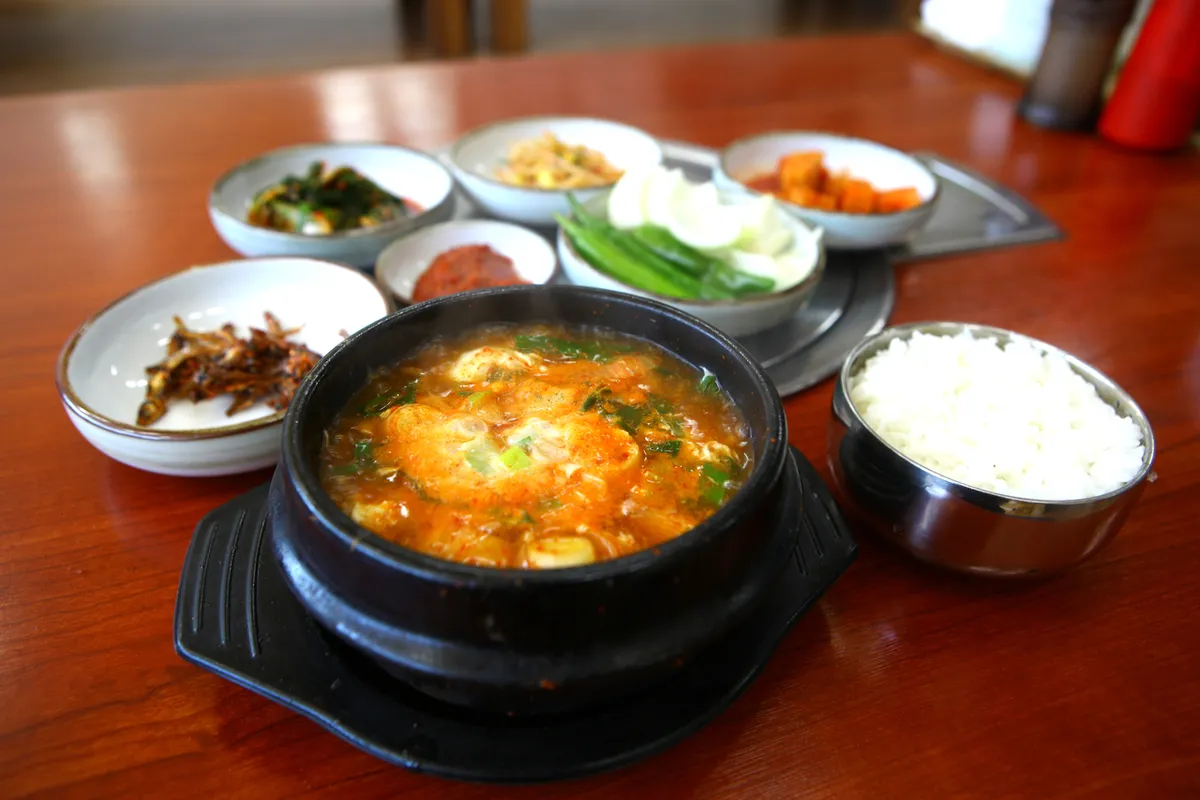
It is a strong menu word for travelers who want a hot stew but should be handled carefully by people avoiding chili heat. The red broth commonly signals spice.
If you need a milder version, ask before ordering. Some restaurants prepare the base sauce in advance, so spice level may not be fully adjustable.
6. Budae-Jjigae: Army Stew
Budae-jjigae (부대찌개) is often translated as army stew. The dish developed from ingredients associated with U.S. military camps in Korea during the Korean War period.
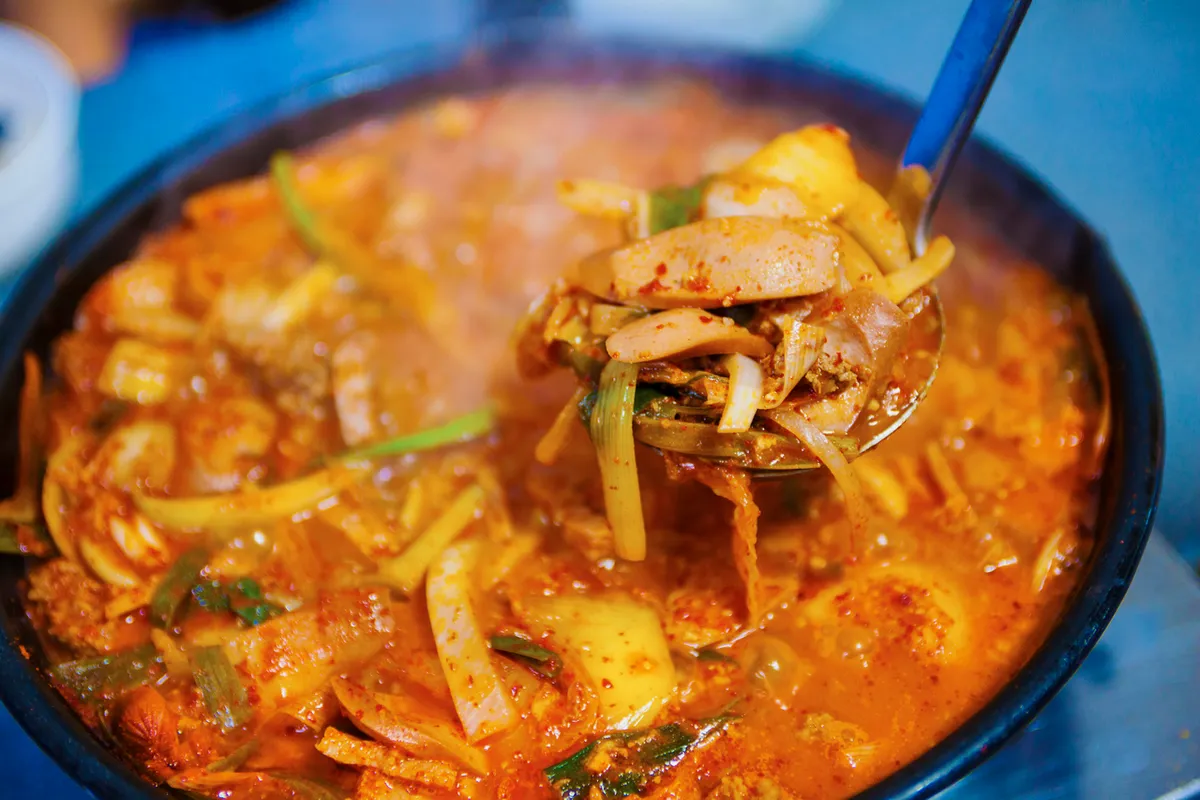
The stew commonly includes processed meats such as sausages or luncheon meat, plus vegetables and a spicy broth. Many restaurant versions are served in a large pan for sharing.
This is not the right choice for travelers avoiding pork, processed meat, or spicy broth unless the restaurant clearly offers an alternative. Confirm ingredients directly before ordering.
7. Tteokguk: Sliced Rice Cake Soup
Tteokguk (떡국) is sliced rice cake soup. The standard version uses oval slices of rice cake in a clear beef broth, topped with ingredients such as sliced beef and egg garnish.
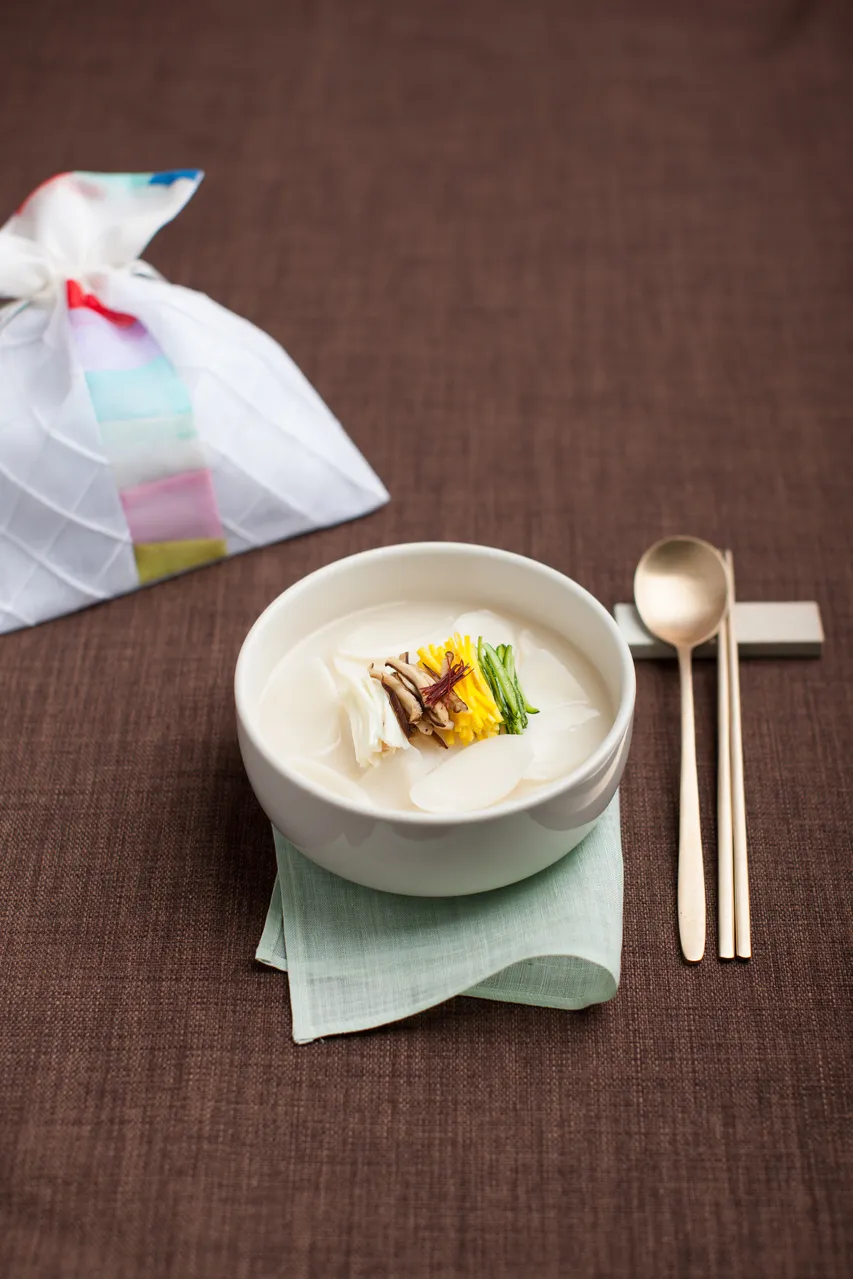
Tteokguk is especially connected with New Year food in Korea. For visitors, the main point is that it is a rice-cake soup, not a noodle soup.
Because the soup often uses beef broth and egg garnish, travelers with dietary restrictions should check before ordering. The rice cake texture is chewy, so it differs from both noodles and rice.
How to Choose a Bowl in Korea
Choose guk or tang when you want a soup-centered meal with broth, rice, and side dishes. Choose jjigae when you want a thicker stew with a more concentrated broth.
For spice, watch for red broth and words such as jjigae, maeun (spicy), or visible chili paste. Non-red soups can still contain strong flavors, but they are usually easier starting points for visitors avoiding chili heat.
For a Seoul food route, browse Things to Do in Seoul and pair a soup stop with nearby markets, cooking classes, or neighborhood walks. For broader planning, TripKorea also lists Things to Do in Korea.
Frequently Asked Questions
What is the difference between guk, tang, and jjigae?
Guk usually means soup, while tang is also soup and often appears in names of long-simmered specialty bowls. Jjigae means stew and is usually thicker and more concentrated.
Which Korean soup is not spicy?
Samgyetang, gomtang, seolleongtang, galbitang, and tteokguk are generally not red chili stews. Recipes still vary by restaurant, so confirm if you need a fully mild order.
Is sundubu-jjigae spicy?
Many sundubu-jjigae bowls are served in a spicy red broth. Some restaurants may offer milder options, but the base sauce can be prepared in advance.
What Korean stew is good for sharing?
Budae-jjigae is often served in a large pan for sharing. Doenjang-jjigae and sundubu-jjigae may be served individually or with a table set, depending on the restaurant.
What soup do Koreans eat on New Year?
Tteokguk, sliced rice cake soup, is associated with New Year food in Korea. It uses oval rice cake slices in broth and is different from noodle soup.
Complete Your Korea Food Trip with TripKorea
This guide is a starting point for reading Korean menus by category: clear soups, long-simmered beef broths, and thicker jjigae stews. Use these names with local menus, then confirm ingredients, spice level, and allergens directly at the restaurant.
Sources & References
Data Sources:
- Korean Food Information: Korea Foundation Korean Food Database
- Photos and photo metadata: Korea Tourism Organization PhotoKorea
Official Sites:
Last verified: 2026-08-19
Restaurant menus, ingredients, spice levels, and operating hours are subject to change. Please confirm directly before visiting.