Tteokbokki is one of Korea's most recognizable street foods: chewy rice cakes cooked in a red chili sauce and served from snack shops, market counters, and specialty restaurants.
This guide focuses on the common red version travelers are most likely to find in Seoul, Busan, and other Korean food districts.
What Is Tteokbokki?
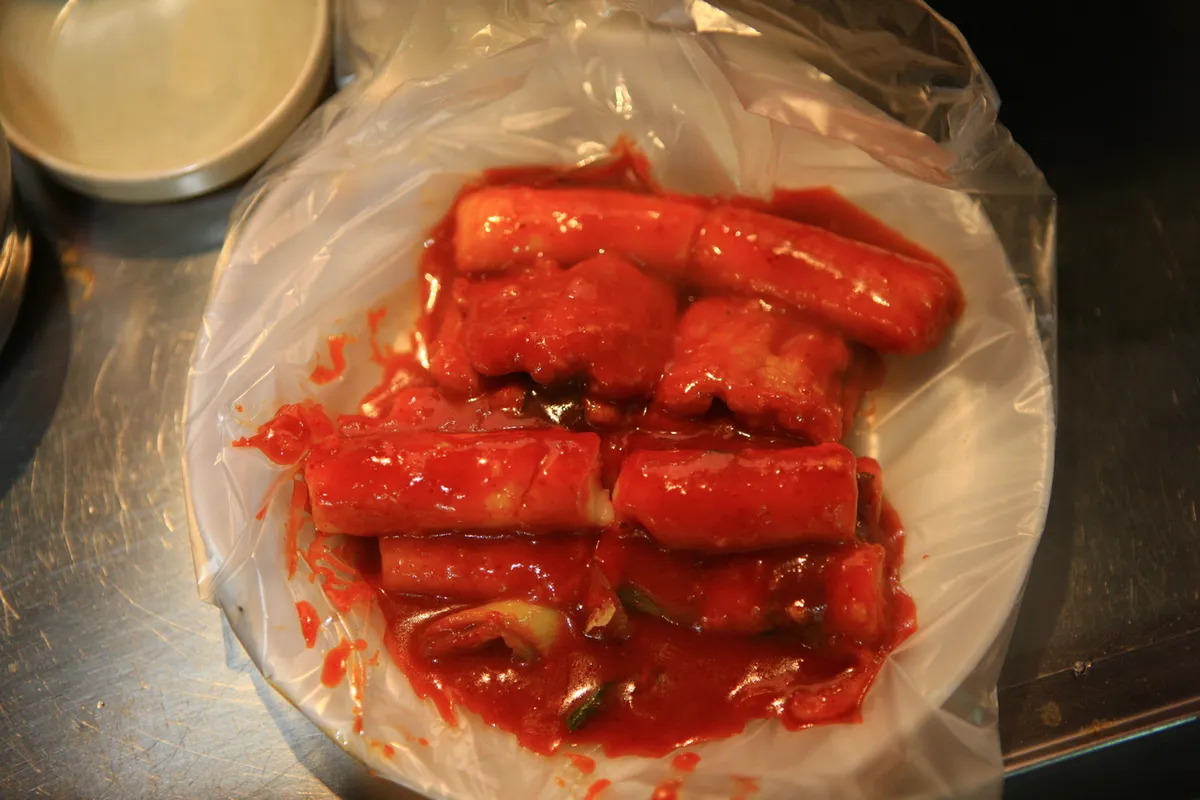
Tteokbokki (떡볶이) is a Korean rice-cake dish made with garae-tteok, the long cylinder-shaped rice cake cut into bite-size pieces. The best-known version is cooked in a red sauce built around gochujang, Korea's red chili paste.
The Korea Foundation food entry describes the dish as a stir-fried rice-cake dish and notes that the spicy red-pepper-paste version became widely popular later. In everyday Korean food culture, the word now usually means the red, spicy-sweet version served at bunsik restaurants and street-food stalls.
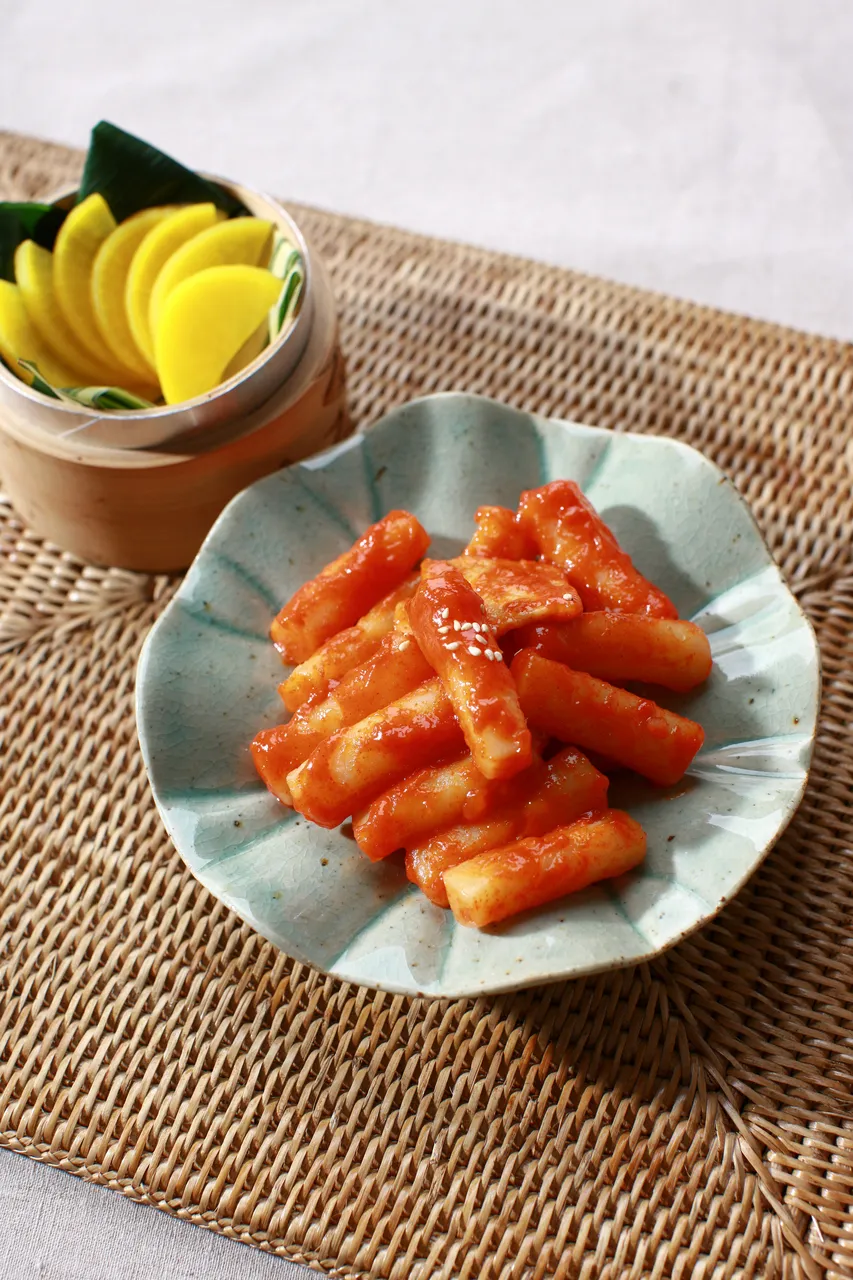
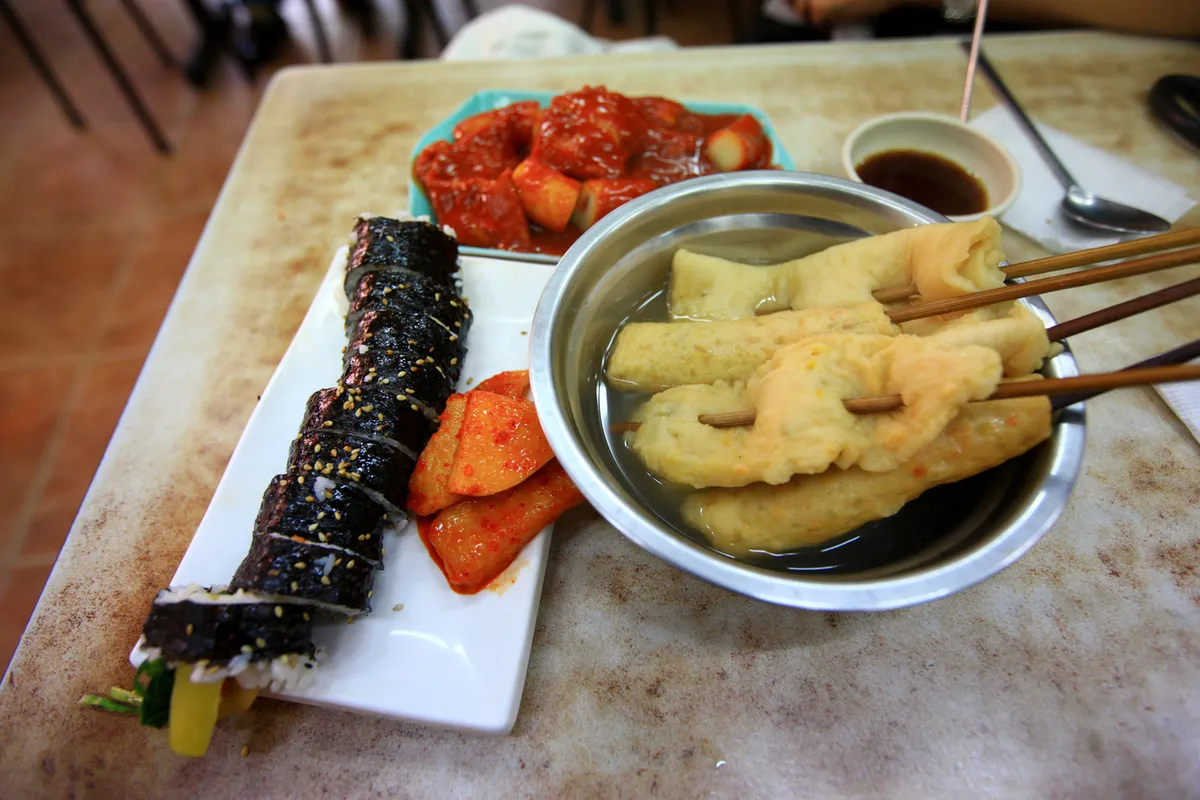
The basic bowl is usually simple: rice cakes, sauce, fish cake, and sometimes scallions, cabbage, or boiled egg. Some shops keep the sauce thin and soupy, while others cook it down until it clings tightly to the rice cakes.
For travelers, it is easy to recognize on menus and display counters. It is also useful as a quick meal because small portions are widely sold near subway stations, markets, schools, and shopping streets.
How Red Tteokbokki Tastes
The standard red version is usually spicy, sweet, and savory at the same time. The rice cakes provide chew, the sauce brings heat, and fish cake adds a soft seafood-based texture.
Spice level is not fixed. A stall portion in one market may taste sweet first and spicy later, while a specialty shop may serve a stronger sauce from the first bite. The color alone does not always tell you how hot it will be.
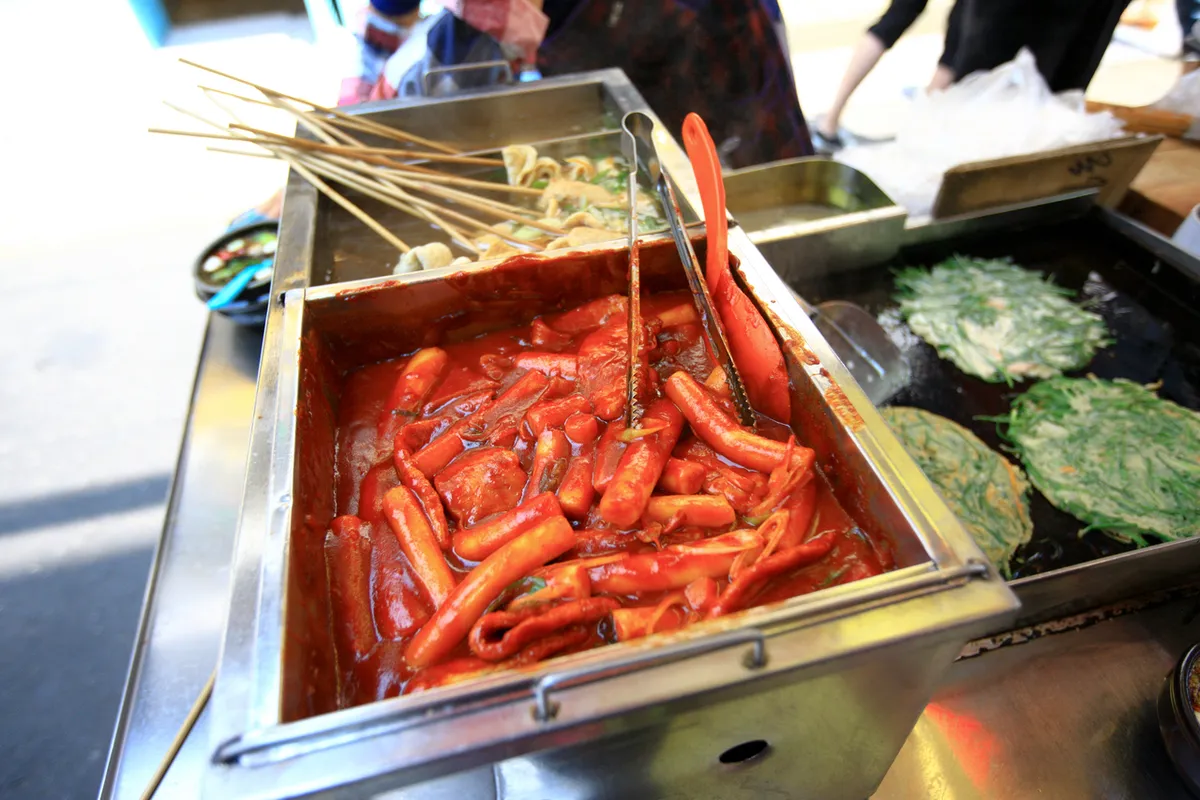
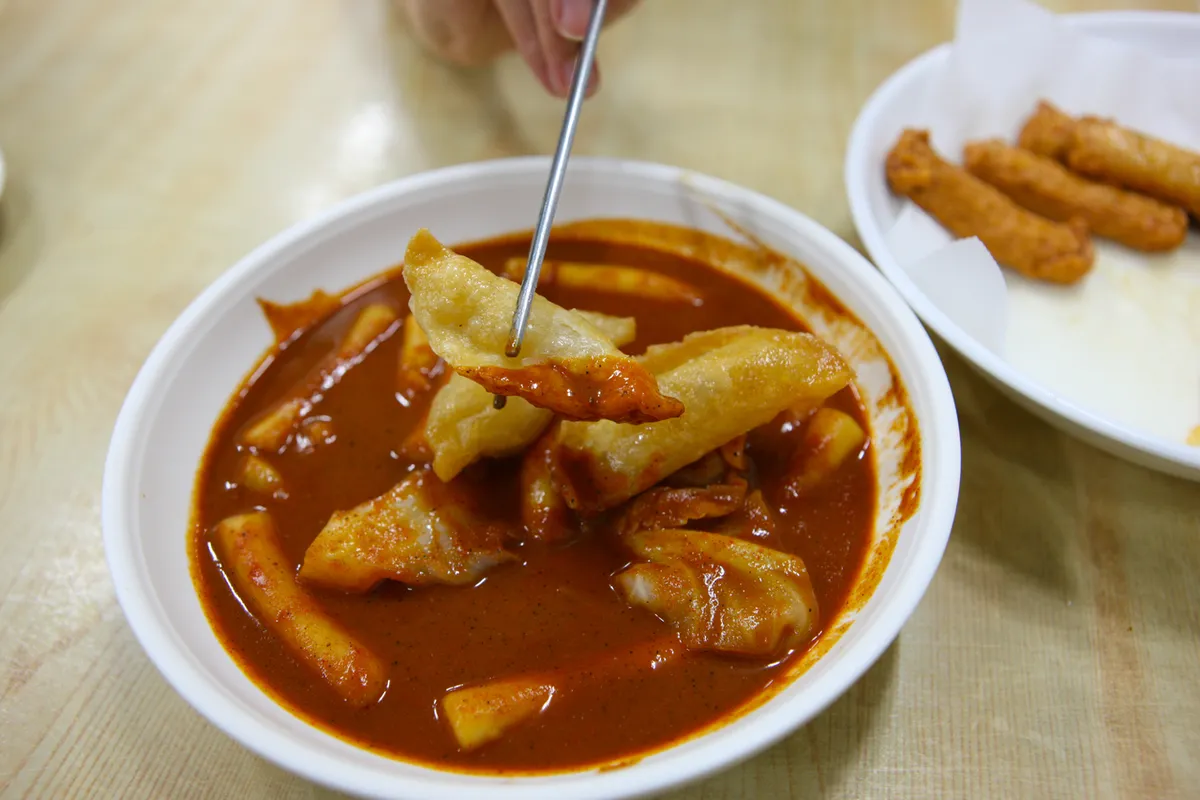
Common add-ins include eomuk (fish cake), boiled eggs, ramyeon noodles, glass noodles, fried dumplings, cheese, and assorted fried snacks. When ramyeon noodles are added, the dish is commonly called rabokki (라볶이).
If chili heat is a concern, look for menus that clearly mark mild options. Otherwise, order a small portion first and add side dishes such as gimbap, eomuk broth, or fried items to balance the sauce.
Where to Eat Tteokbokki in Seoul
Sindang-dong Tteokbokki Town is Seoul's most specific tteokbokki destination. Korea Tourism Organization lists the alley in Jung-gu, Seoul, at 10-18, Dasan-ro 33-gil, and describes its history as connected to the late 1970s, with local accounts reaching back to the 1950s.
In Sindang-dong, the dish is often served as a large pan for the table. Korea Tourism Organization notes add-ins such as eggs, cellophane noodles, fish cakes, instant noodles, squid, prawn, and cheese as part of the area's restaurant style.
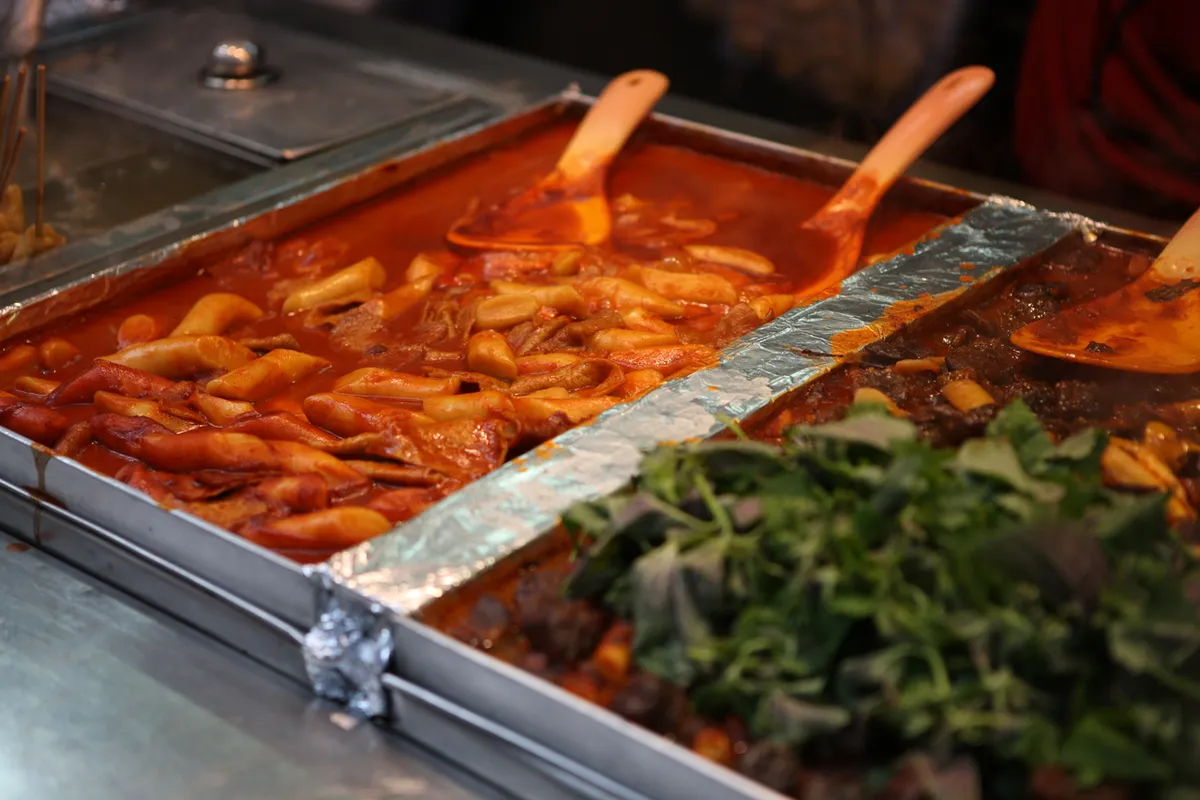
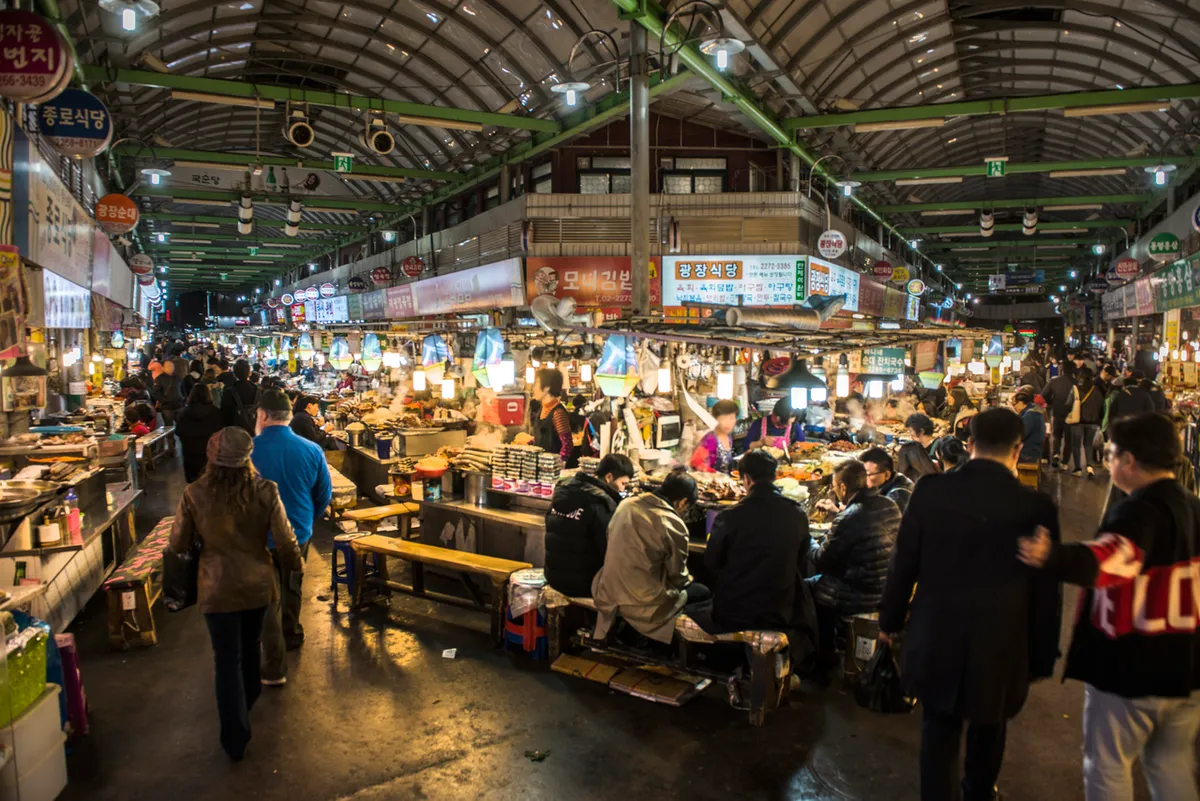
Gwangjang Market in Jongno is another practical food route. Korea Tourism Organization identifies Gwangjang Market as Korea's first permanent market and describes its food street as a major section of the market.
Myeongdong is useful for travelers who want a central evening food walk near shopping streets, subway access, and hotels. It is not a single specialty alley like Sindang-dong, but it is easy to combine with other snacks and a central Seoul itinerary.
Busan, Daegu, and Market-Style Rice Cakes
Busan is a strong city for market-style tteokbokki because many food routes sit around traditional markets and port-side shopping areas. Korea Tourism Organization lists Gukje Market Food Street in Jung-gu, Busan, and specifically names sweet-and-spicy tteokbokki among the dishes found there.
PhotoKorea records also include tteokbokki images from Busan locations such as Gukje Market, Gwangbok-ro, Haeundae Traditional Market, and Yeongdo. These are useful reference points for travelers building a Busan street-food route.
Daegu also appears in PhotoKorea tteokbokki records, including images titled Daegu mayak tteokbokki. Travelers should treat the word mayak as a local food nickname rather than a literal ingredient claim.
Market-style portions often appear with other bunsik foods such as gimbap, sundae, eomuk, and fried snacks. This makes it easier to share several small items instead of ordering one full restaurant meal.
How to Build a Tteokbokki Food Route
For a Seoul route, make Sindang-dong the main stop if the dish is the priority. Add Gwangjang Market for a broader traditional-market meal, or choose Myeongdong when you want a convenient food walk near shopping and central hotels.
Use TripKorea's Seoul activity listings to compare food tours, cooking classes, market routes, and city experiences before choosing a neighborhood: Things to Do in Seoul.
For hotels, Myeongdong works well for central street-food access, while Hongdae is useful for casual restaurants, late-night snack culture, and movement across western Seoul.
Check current hotel options here: Hotels in Myeongdong and Hotels in Hongdae.
For Busan, connect Gukje Market Food Street with Nampo-dong, Gwangbok-ro, and the Jung-gu market area. TripKorea's Busan activity listings are here: Things to Do in Busan.
Frequently Asked Questions
Is tteokbokki very spicy?
It can be. The common red version uses gochujang-based sauce, but sweetness and spice level vary by shop. If you are sensitive to chili, start with a small portion or choose a shop that marks mild options clearly.
What is tteokbokki made of?
The core ingredient is garae-tteok, a cylinder-shaped rice cake. The common red version usually includes gochujang-based sauce and often adds fish cake, scallions, cabbage, or boiled egg.
What is rabokki?
Rabokki is a version that adds ramyeon noodles to tteokbokki. It is more filling than a basic rice-cake portion and is common at bunsik shops and casual restaurants.
Where is the most famous tteokbokki area in Seoul?
Sindang-dong Tteokbokki Town is the clearest specialty area in Seoul. Korea Tourism Organization lists it as a tteokbokki alley in Jung-gu with a history linked to the late 1970s and local accounts reaching back to the 1950s.
What should I eat with tteokbokki?
Common pairings include gimbap, eomuk, fried dumplings, boiled eggs, sundae, and assorted fried snacks. At market stalls, these items are often sold close together, making it easy to build a small shared meal.
Complete Your Korea Food Trip with TripKorea
K-Food Tours and Activities
Compare Seoul food tours, market routes, cooking classes, and city experiences before building your tteokbokki route.
Browse Seoul Food Tours and Activities
Best Places to Stay
Stay near central food streets, markets, and subway connections for easier evening food walks.
Busan Food Routes
Use Busan activity listings for market areas such as Gukje Market Food Street and nearby Jung-gu routes.
Sources & References
Data Sources:
Korean Food Information: Korea Foundation Korean Food Database
Place and market information: Korea Tourism Organization (TourAPI)
Photos: Korea Tourism Organization PhotoKorea
Official Sites:
Last verified: 2026-08-11
This Tteokbokki guide was last checked against the sources above; restaurant hours, menus, spice levels, and tour availability are subject to change. Please confirm directly before visiting or booking.