Yukhoe (육회) is a Korean raw-beef dish seasoned with soy sauce, salt, and sesame oil, then commonly served with julienned Korean pear and garlic. Unlike Korean barbecue, the beef is not grilled at the table; its raw preparation is the defining feature.
This guide explains the dish, its seasonings, its relationship to yukhoe bibimbap, how to order it, and the food-safety points travelers should consider.
What Is Yukhoe?
The name combines yuk, meaning meat, and hoe, a category of raw dishes. Yukhoe consists of thinly sliced raw beef seasoned with soy sauce, salt, and sesame oil.
Korean menus commonly romanize the name as yukhoe. “Korean beef tartare” is a useful English explanation, but the Korean dish has its own seasoning and presentation. The meat is generally cut into strips rather than minced into a uniform paste.
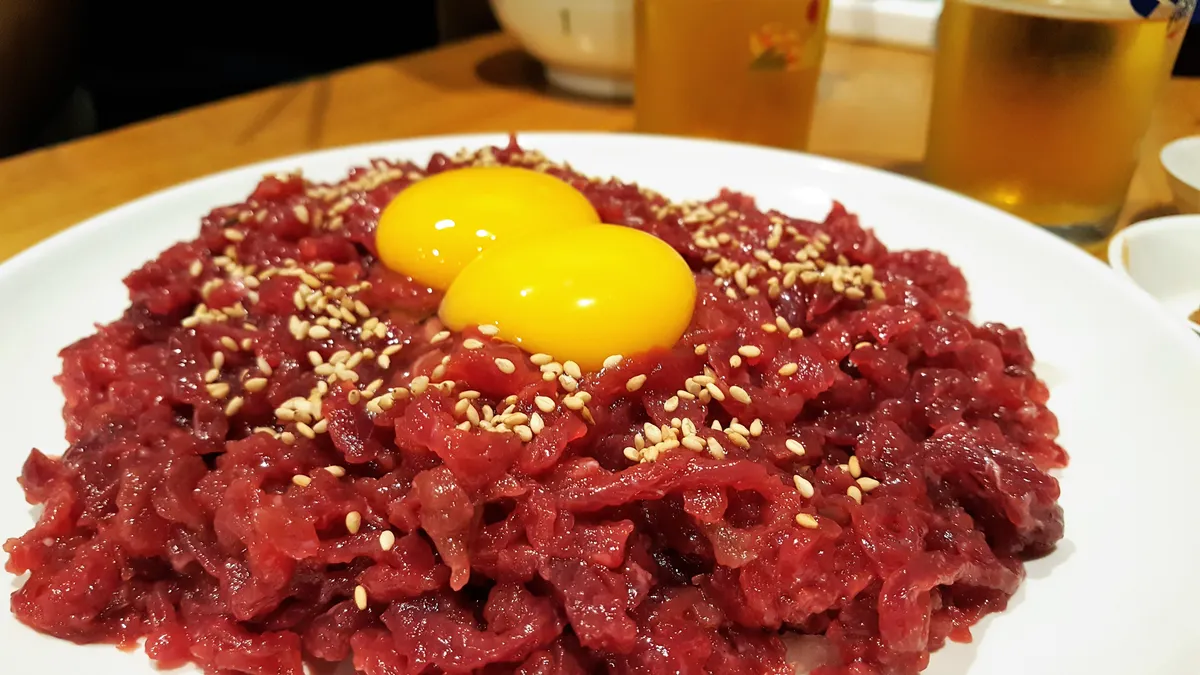
Photo: CYAN via Wikimedia Commons, CC BY-SA 4.0
A restaurant may arrange the beef in a mound or spread it across a plate. Some servings include an egg yolk, while others do not. If you avoid raw egg, ask whether the dish includes a yolk before ordering.
Yukhoe Ingredients and Seasoning
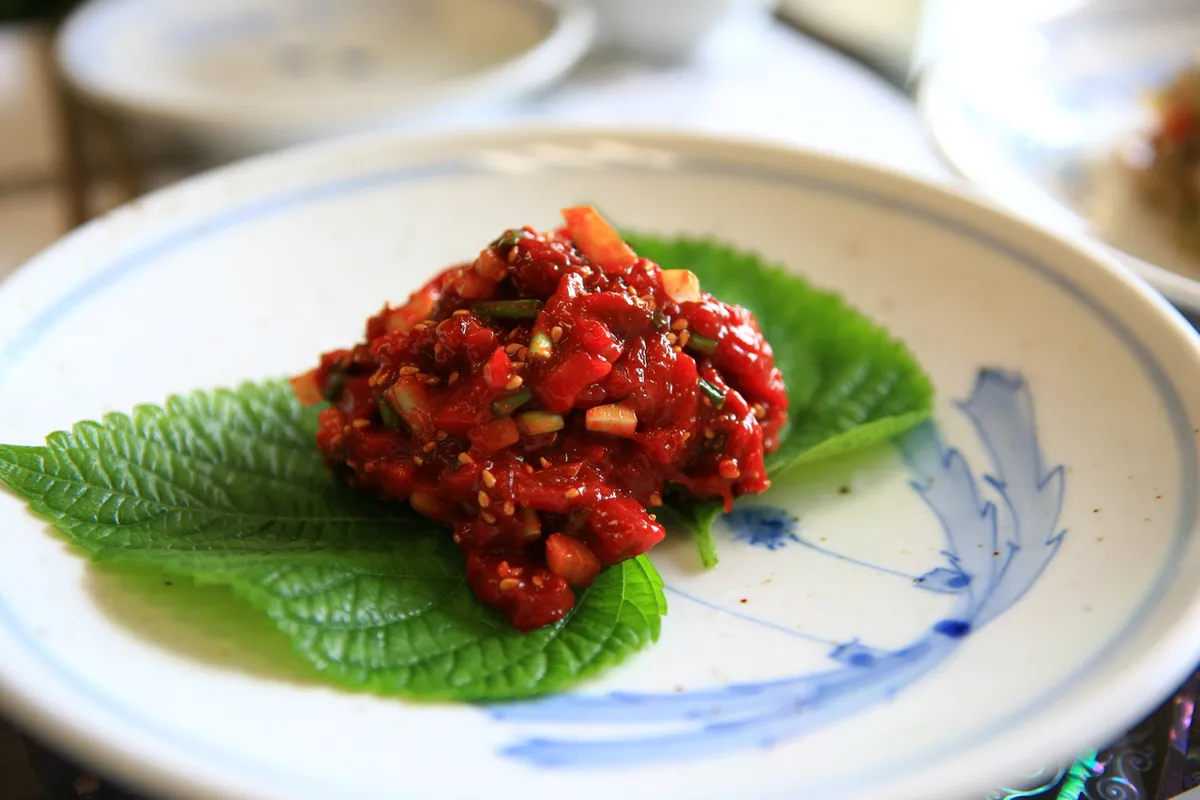
The core seasoning combines soy sauce, salt, and sesame oil. Garlic and thin strips of Korean pear are common accompaniments. The pear provides a crisp element beside the soft beef, while sesame seeds may be scattered over the finished plate.
Presentation is not fixed. Pear may sit beside the beef, form a ring around it, or appear underneath it. The seasoning can already be mixed through the meat when the plate arrives.
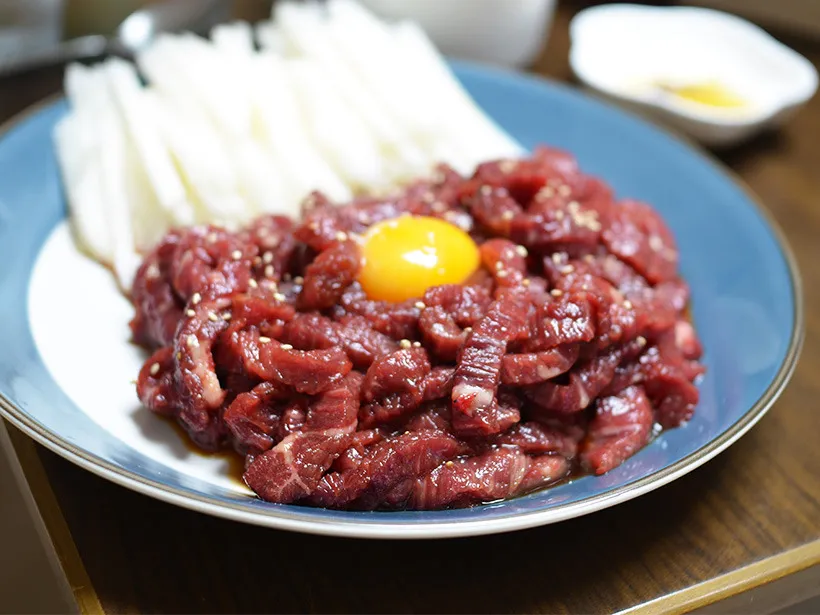
Photo: donza via Wikimedia Commons, CC BY 4.0
Because the dish may contain soy sauce, sesame, garlic, pear, and raw egg in addition to beef, diners with allergies or dietary restrictions should confirm the ingredients directly with the restaurant. The exact recipe cannot be assumed from the menu name alone.
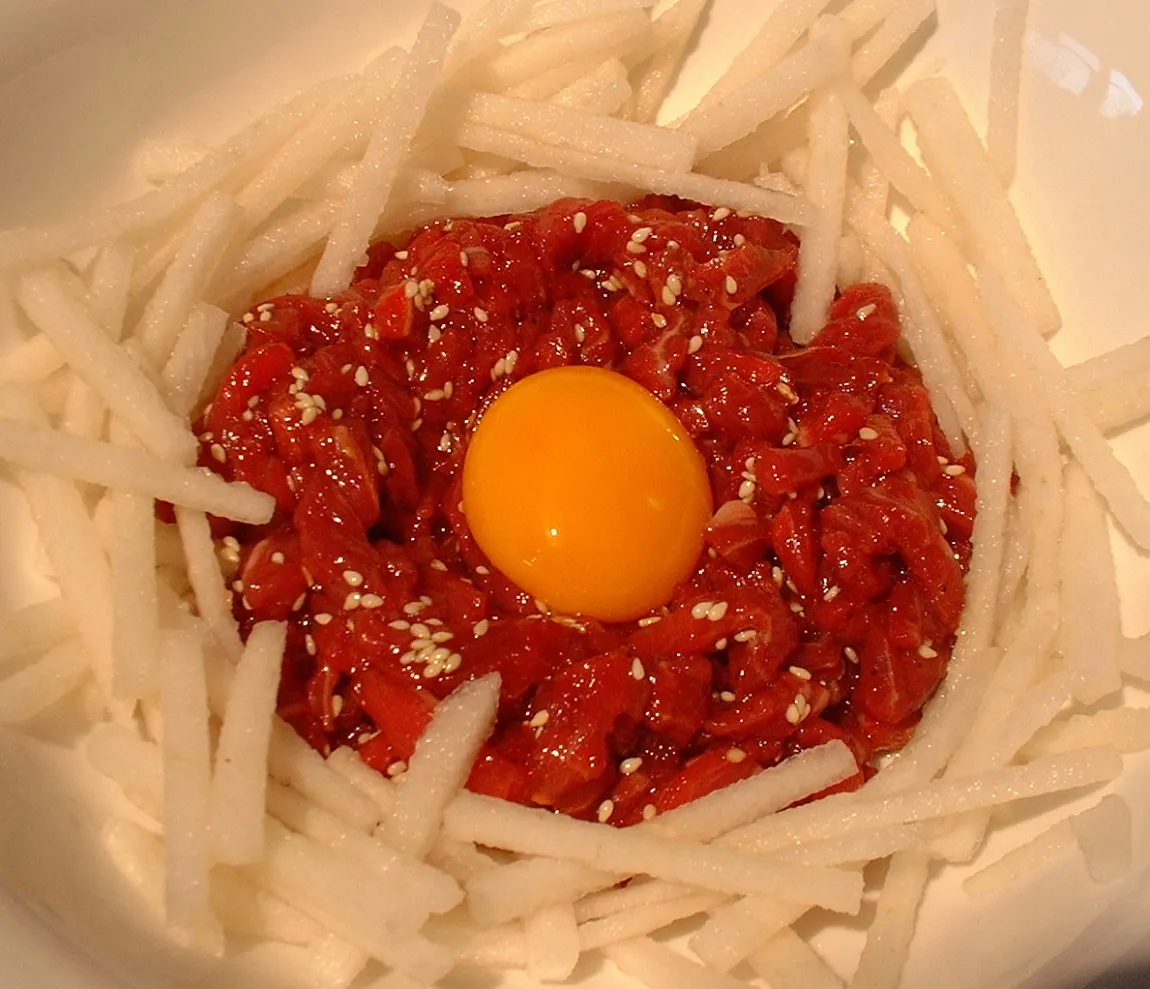
Photo: FotoosVanRobin via Wikimedia Commons, CC BY-SA 2.0
Yukhoe and Yukhoe Bibimbap
Standalone yukhoe is centered on the seasoned raw beef and its accompaniments. Yukhoe bibimbap (육회비빔밥) is a rice dish: bibimbap combines rice with vegetables and red chili pepper paste, and seasoned raw beef can be added as one of its toppings.
This distinction matters when reading a menu. Order yukhoe for a separate raw-beef plate. Choose yukhoe bibimbap when you want rice, vegetables, and raw beef combined as a mixed meal.
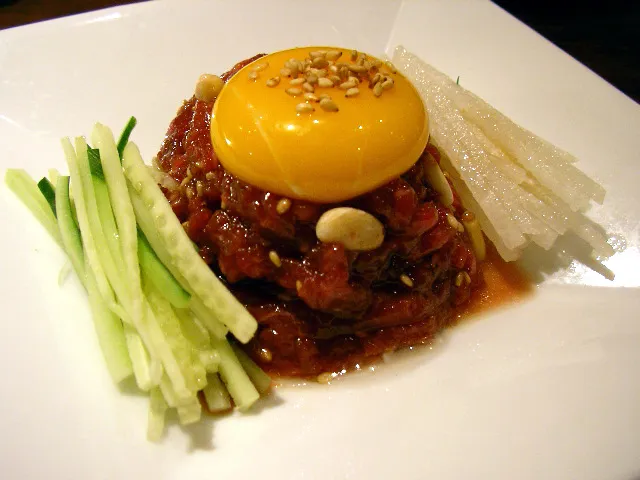
Photo: jetalone via Wikimedia Commons, CC BY 2.0
How to Order Yukhoe in Korea
Look for 육회 on the Korean menu. A simple order is “Yukhoe hana juseyo” (육회 하나 주세요), meaning “One yukhoe, please.” Portion sizes and included ingredients vary, so check the written menu or ask the restaurant rather than assuming one plate serves a particular number of people.
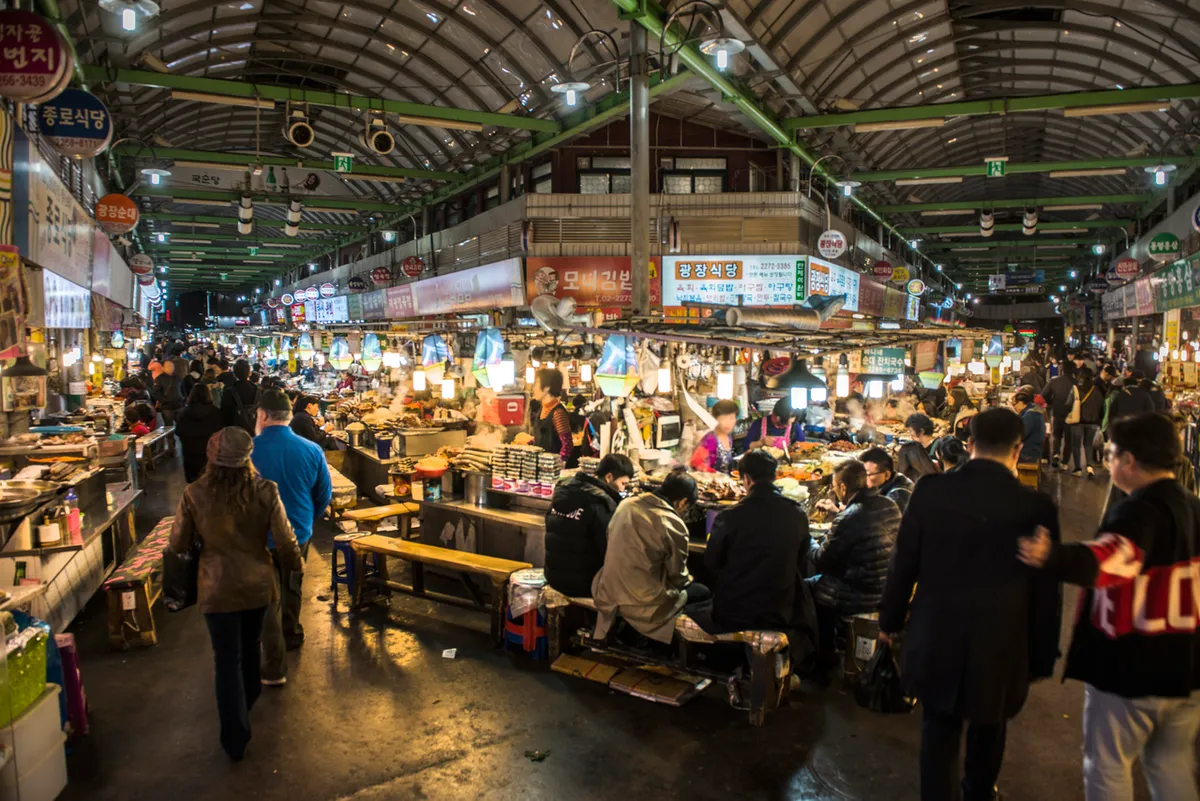
Seoul’s official city website lists beef tartare among the foods associated with Gwangjang Market (광장시장). The market is one documented place where travelers can look for the dish, although individual stall menus and operating details can change.
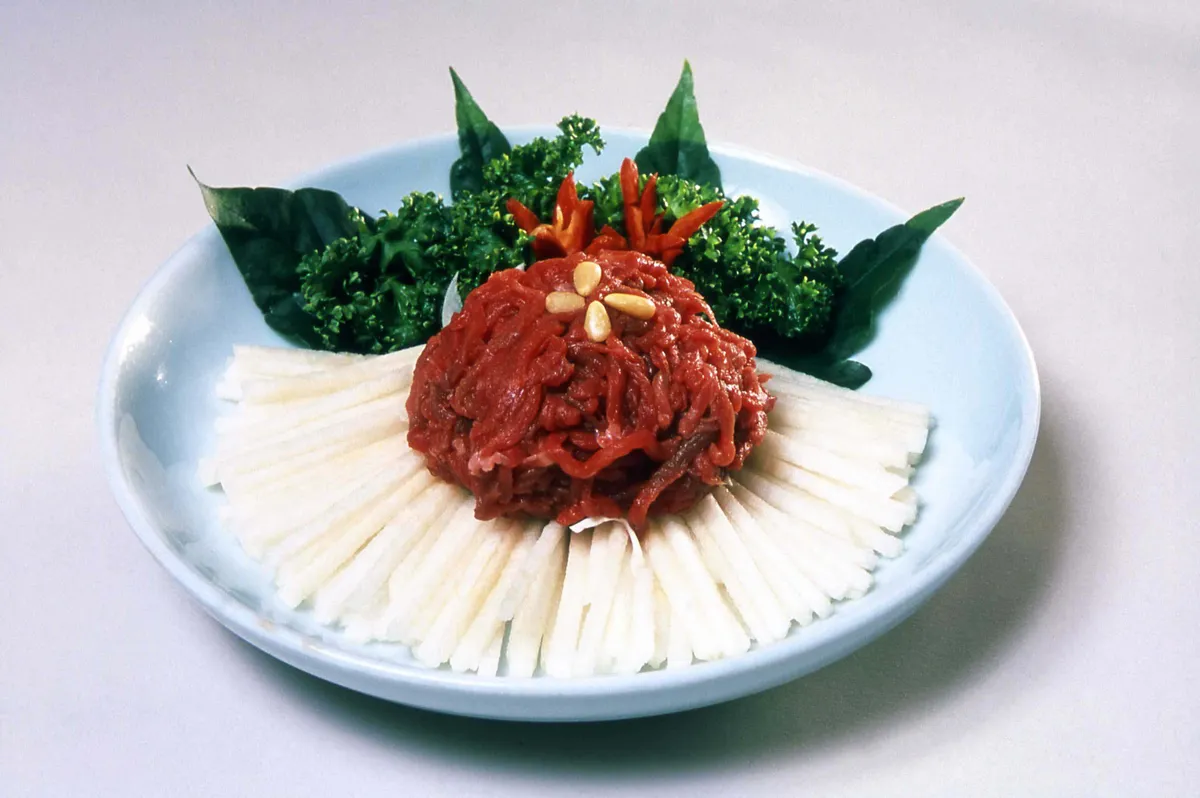
Photo: Korea.net and the Korean Culture and Information Service via Wikimedia Commons, CC BY-SA 2.0
Useful questions include whether the plate contains raw egg and whether the seasoning contains soy or sesame. Diners who do not eat raw meat should choose a cooked beef dish instead.
Raw Beef Food Safety
Yukhoe is intentionally served raw. The U.S. Centers for Disease Control and Prevention identifies raw or undercooked meat as a riskier food choice than meat cooked to a safe internal temperature.
The CDC advises extra precautions for adults aged 65 or older, children under five, pregnant women, and people with weakened immune systems because these groups are more likely to develop serious illness from food poisoning. Travelers in these groups should choose a fully cooked alternative.
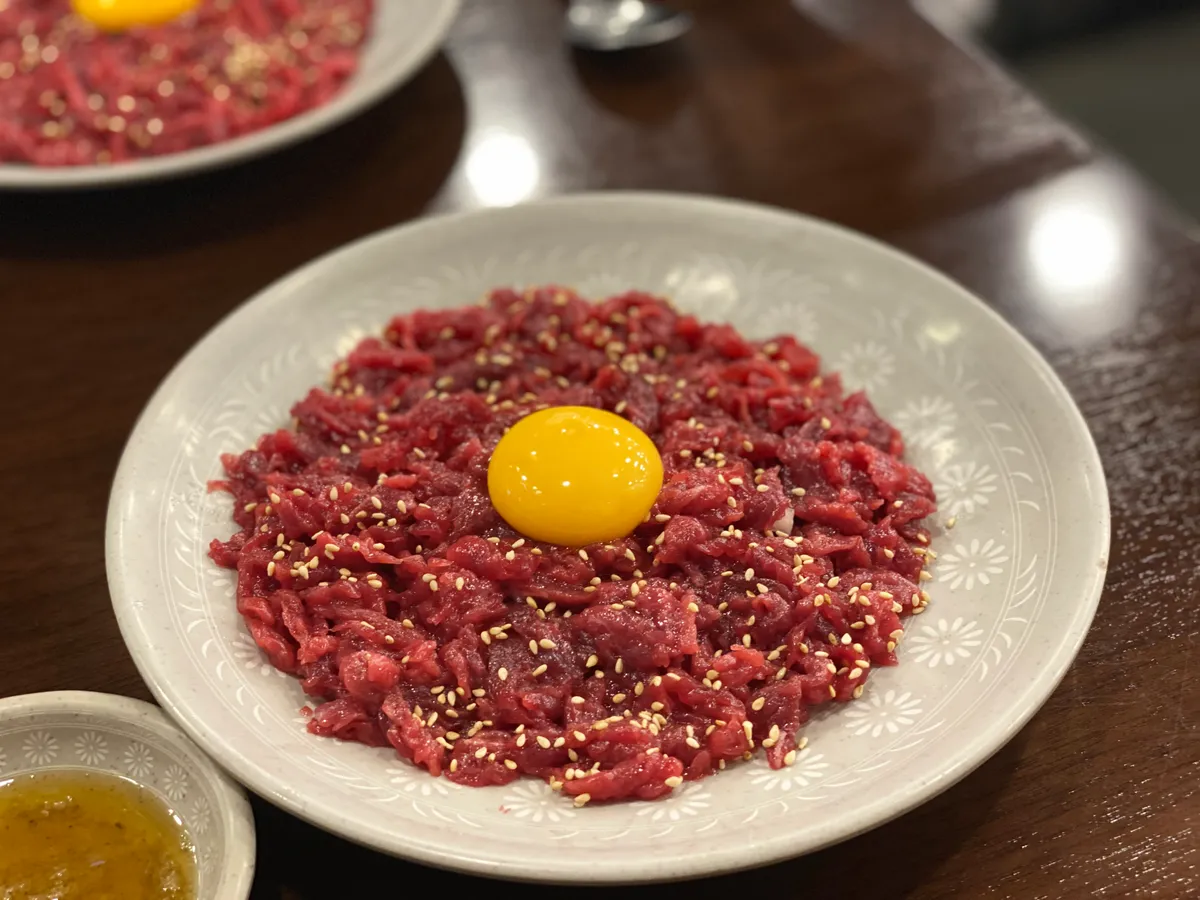
Photo: revi via Wikimedia Commons, CC BY-SA 2.0 KR
Food-safety guidance does not make a particular restaurant risk-free. If you are uncertain about raw beef or raw egg, selecting a cooked menu item is the safer option.
Frequently Asked Questions
Is yukhoe cooked?
No. Yukhoe is seasoned raw beef. Travelers who avoid raw meat should select a cooked beef dish.
Is yukhoe the same as beef tartare?
“Korean beef tartare” explains the basic idea in English, but yukhoe follows a Korean seasoning and presentation style. Its established components include soy sauce, salt, sesame oil, garlic, and Korean pear.
Does yukhoe always contain raw egg?
No single presentation applies everywhere. Some servings are topped with raw egg yolk, while others are served without it. Ask the restaurant if you avoid raw egg.
What is the difference between yukhoe and yukhoe bibimbap?
Yukhoe is a standalone seasoned raw-beef dish. Yukhoe bibimbap combines rice and vegetables with raw beef as a topping and is mixed before eating.
Where can travelers find yukhoe in Seoul?
The Seoul Metropolitan Government lists beef tartare among the foods available at Gwangjang Market. Confirm the current menu and operating details with the individual vendor before visiting.
Sources & References
Data Sources:
- Korean Food Information: Korea Foundation Korean Food Database — Yukhoe and Bibimbap entries
- Seoul Metropolitan Government — Gwangjang Market
- U.S. Centers for Disease Control and Prevention — Safer Food Choices
- Photos: Korea Tourism Organization and the credited Wikimedia Commons contributors
Official Sites:
Last verified: September 28, 2026
Yukhoe menus and operating details may change. Please confirm directly before visiting.