Seongsan Ilchulbong is a volcanic tuff cone on the eastern coast of Jeju, designated as Natural Monument No. 420 and included in Jeju’s UNESCO World Natural Heritage area. This guide explains what makes Seongsan Ilchulbong distinctive, how to read the landscape, what to see nearby, and where to base yourself for an eastern Jeju trip.
Why Seongsan Ilchulbong Matters in Jeju
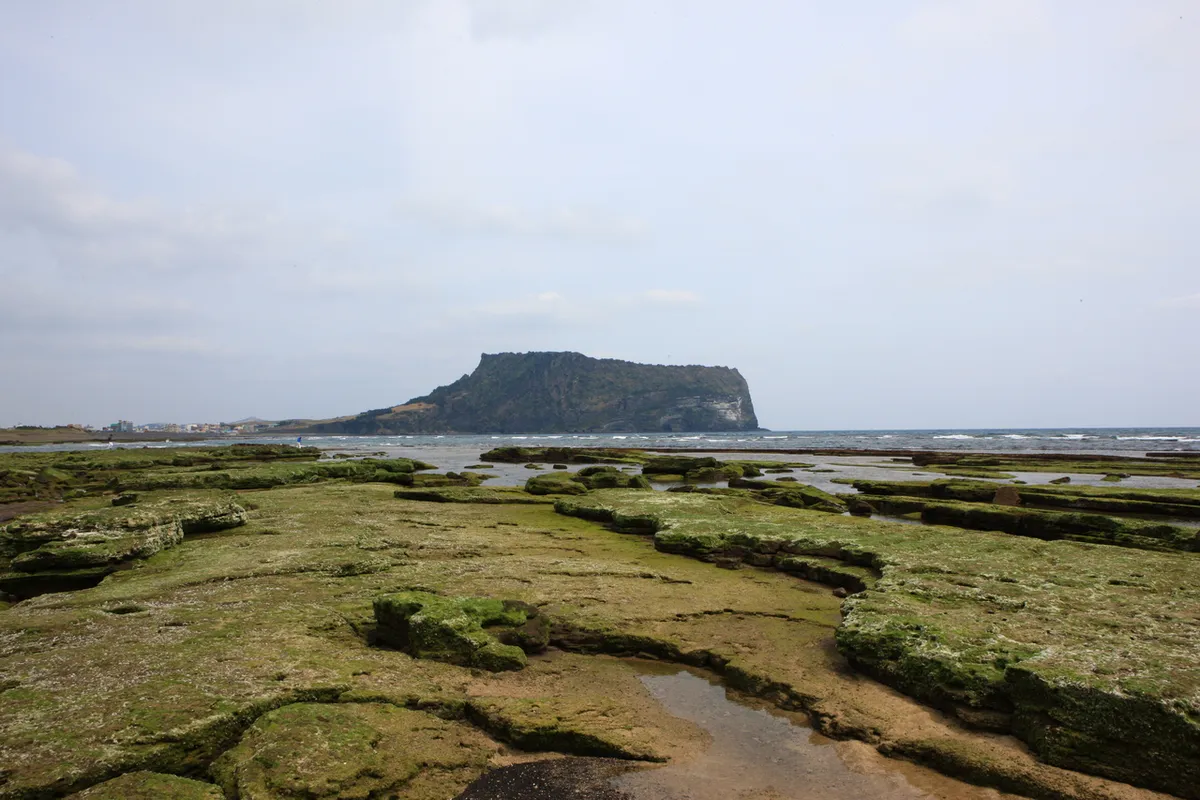
Seongsan Sunrise Peak (성산일출봉) rises from the sea at the eastern edge of Jeju Island. Its Korean name combines two ideas: “Seongsan,” often understood as Castle Mountain because of the fortress-like outline of the crater rim, and “Ilchulbong,” meaning Sunrise Peak.
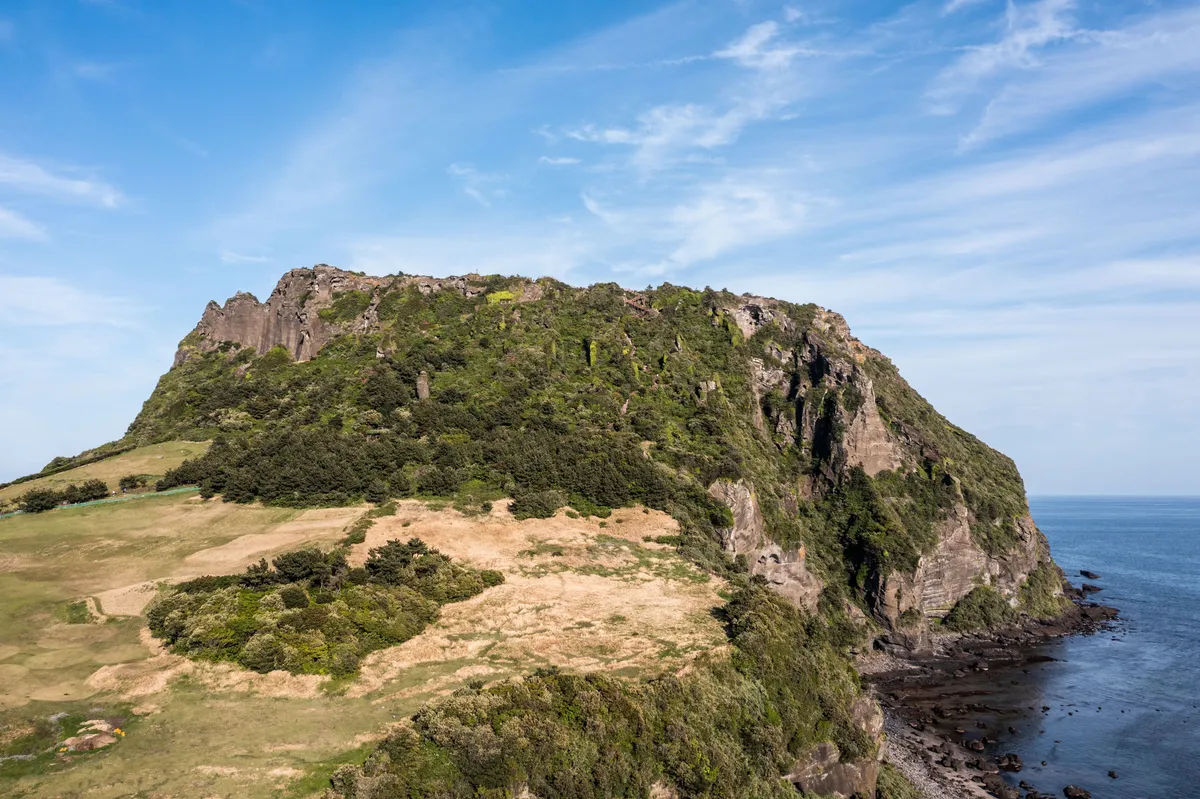
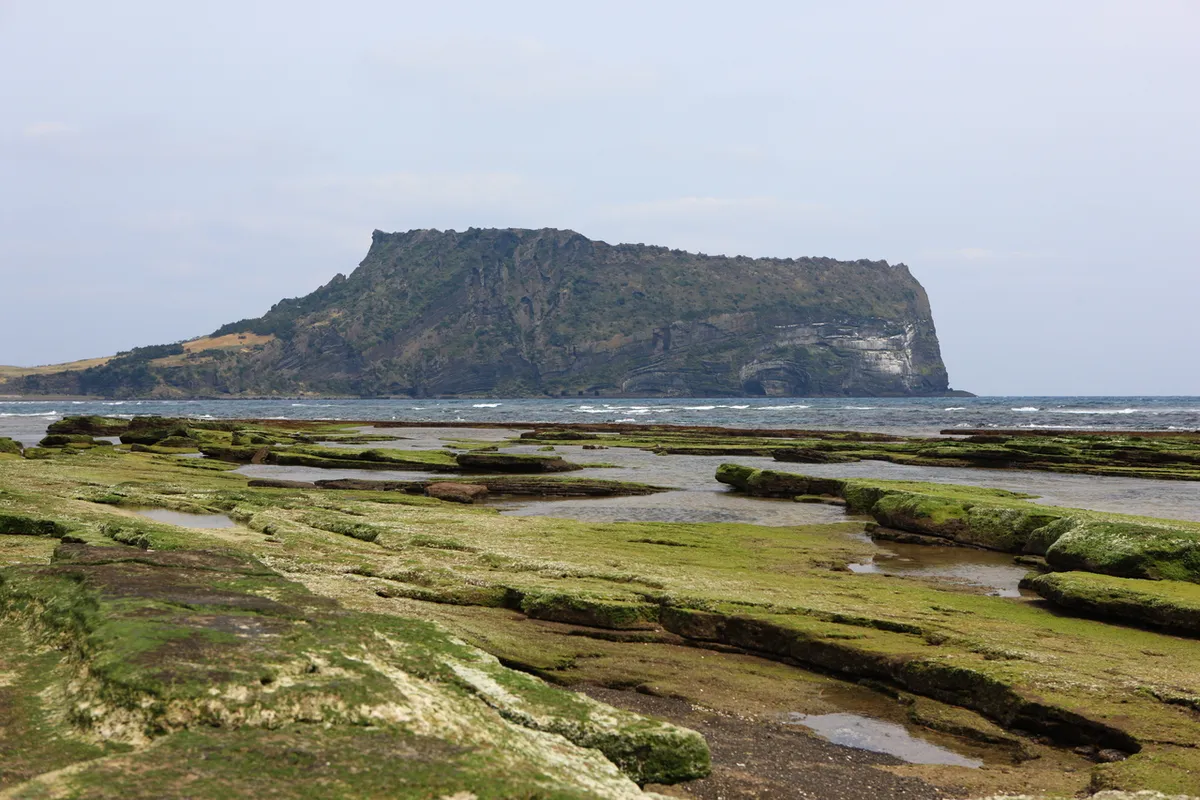
The site is not a typical inland oreum. Visit Jeju identifies the peak as a tuff cone formed by an underwater volcanic eruption about 5,000 years ago. When hot magma met cold seawater, volcanic ash accumulated in layered deposits, and wave erosion later shaped the steep outer slopes that define the cone today.
Its official designations give the place more weight than a viewpoint alone. The site was designated Natural Monument No. 420 on July 19, 2000, added to the UNESCO World Heritage List as part of Jeju’s World Natural Heritage area on July 2, 2007, and named a Global Geopark site in October 2010.
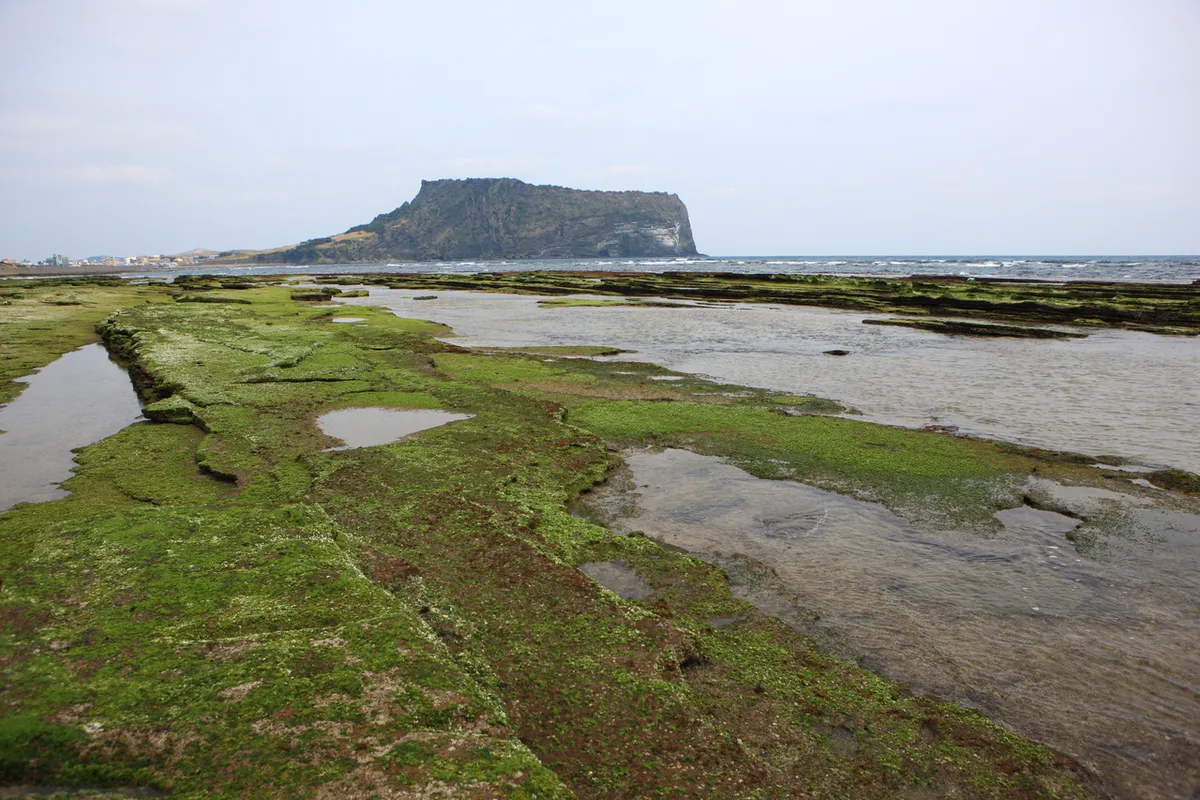
📍 TripKorea's Tip: Treat Seongsan Ilchulbong as both a geology site and a coastal viewpoint. The cliff face, tidal flats, crater rim, and nearby village all help explain why this eastern Jeju landmark is protected.
What to See at Seongsan Sunrise Peak
The main feature is the crater at the summit. Visit Jeju describes it as about 80,000 pyeong, approximately 264,000 square meters, with a grassy interior and a rim surrounded by 99 smaller rocky peaks. That structure is the reason the peak looks different from many other Jeju volcanic cones.
The summit trail is the paid section of the site. Visit Jeju notes that a steep staircase leads upward and gives an approximate climbing time of 20 minutes. The lower coastal route is a gentler free section, useful for visitors who want to see the sea-facing slopes without going to the summit.
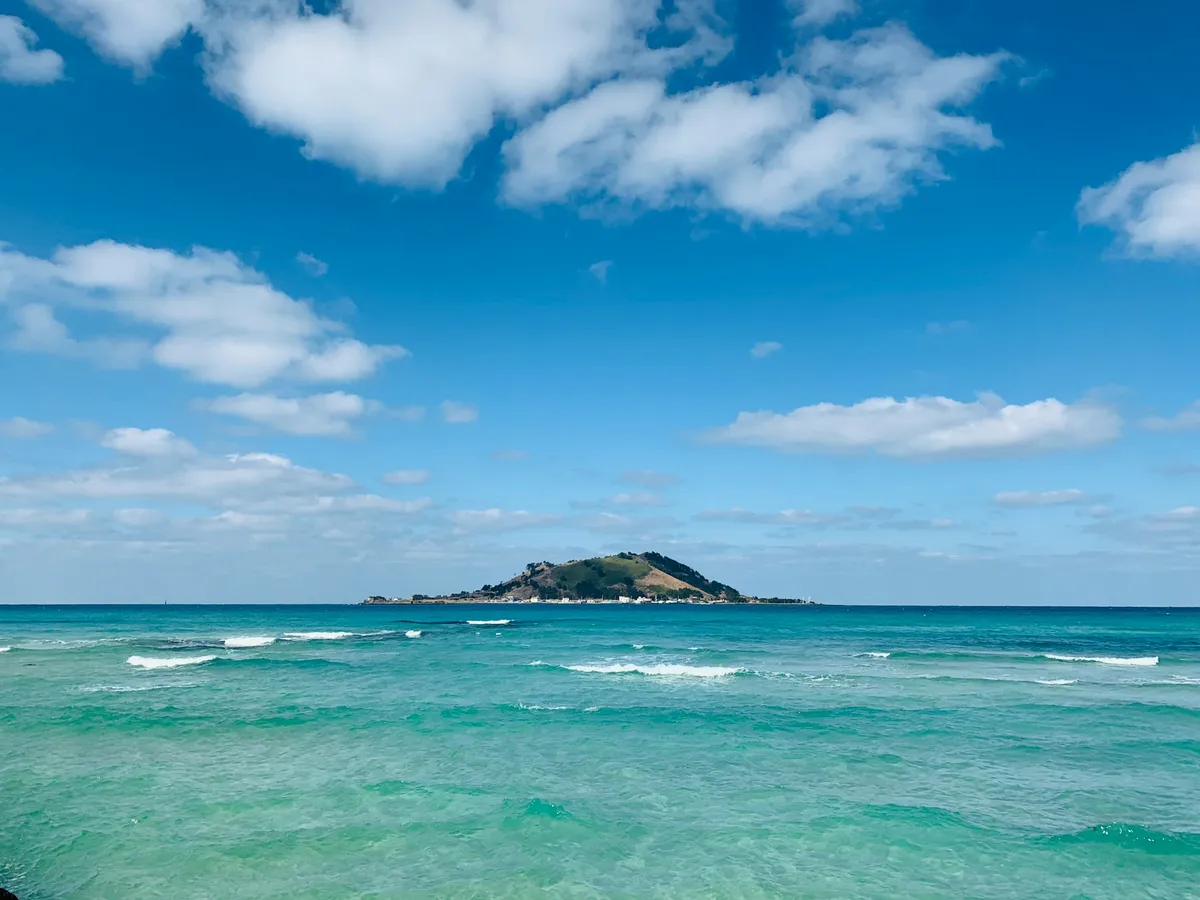
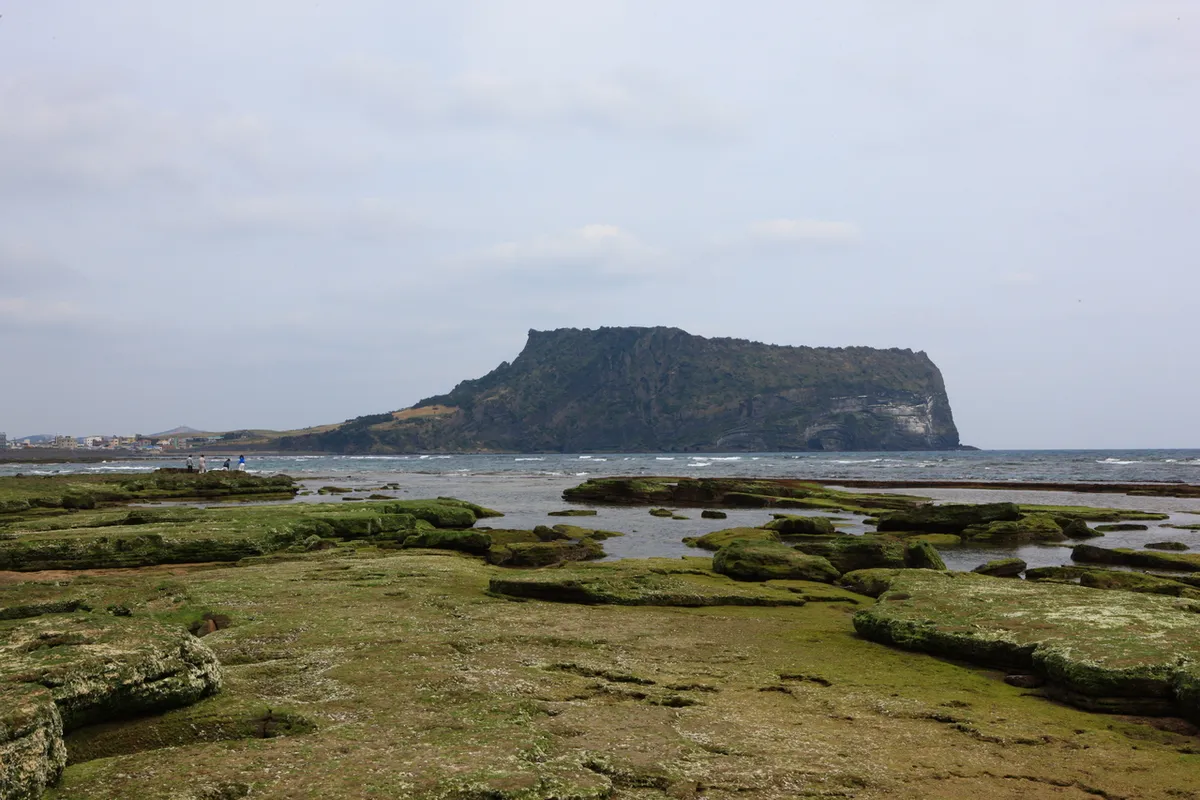
Because the protected area sits directly beside the ocean, the landscape changes with tide, weather, and light. From lower viewpoints, the cone appears as a broad mass above coastal rock platforms. From the upper route, the crater and the surrounding sea explain why the location became associated with sunrise viewing in the first place.
🚨 Warning: Food is prohibited at Seongsan Ilchulbong, and the official Visit Jeju listing notes a monthly closure on the first Monday of each month, or the next day if that Monday is a public holiday. Check the current notice before setting out, especially for early-morning visits.
Hours, Address, and Visitor Basics
The address is 284-12, Ilchul-ro, Seongsan-eup, Seogwipo-si, Jeju. The Visit Jeju listing gives the contact number as +82-64-783-0959 (064-783-0959) and places it in the Seongsan area of Seogwipo-si.
Seasonal opening information is listed by Visit Jeju as follows: winter from November to February operates until 18:00, with tickets from 06:00 to 17:00; spring and autumn from March to April and September to October operate from 05:00 to 19:00, with tickets from 05:00 to 18:00; summer from May to August operates from 04:30 to 20:00, with tickets from 04:30 to 19:00.
Those hours matter because the site is tied to sunrise, but they also change by season. The safest planning approach is to confirm the latest local notice before choosing a sunrise entry, particularly in winter or around public holidays.
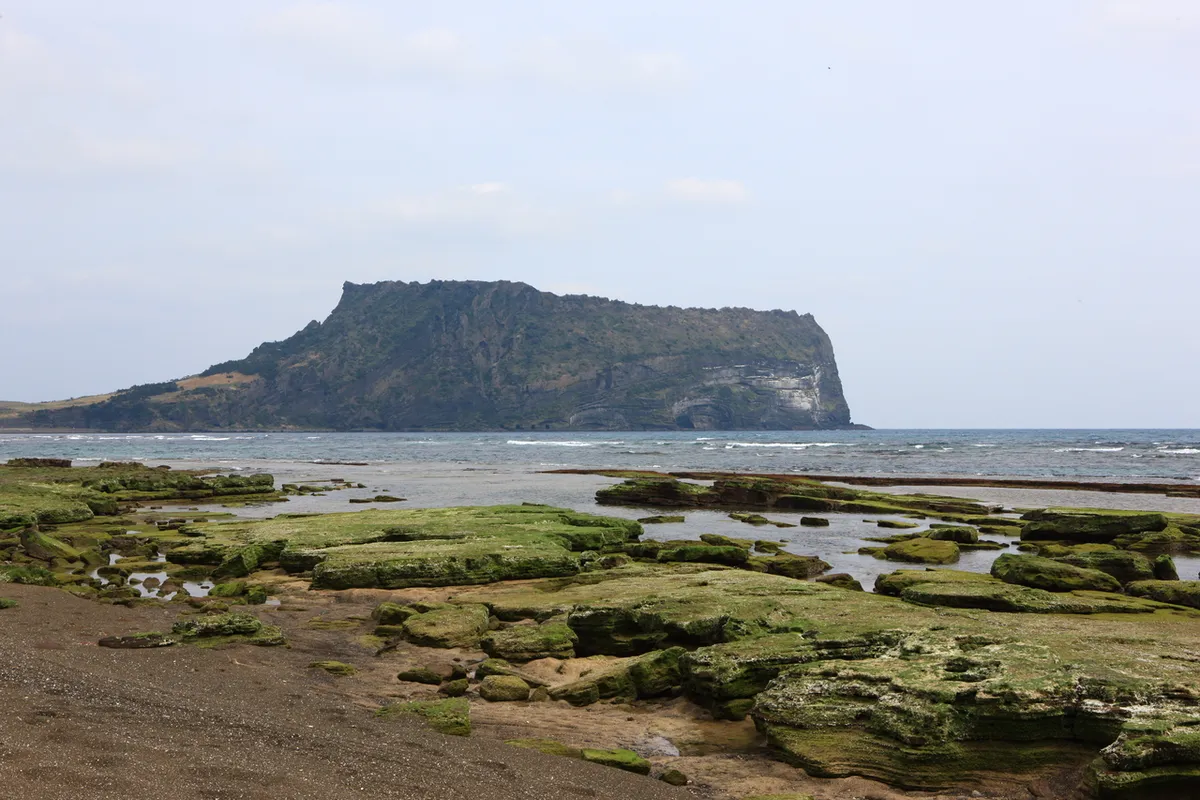
💡 Local Tip: If the summit is not the priority, use the free lower section to understand the coastal shape of the tuff cone. It gives context for the underwater eruption origin without requiring the steeper staircase route.
Nearby Places Around Eastern Jeju
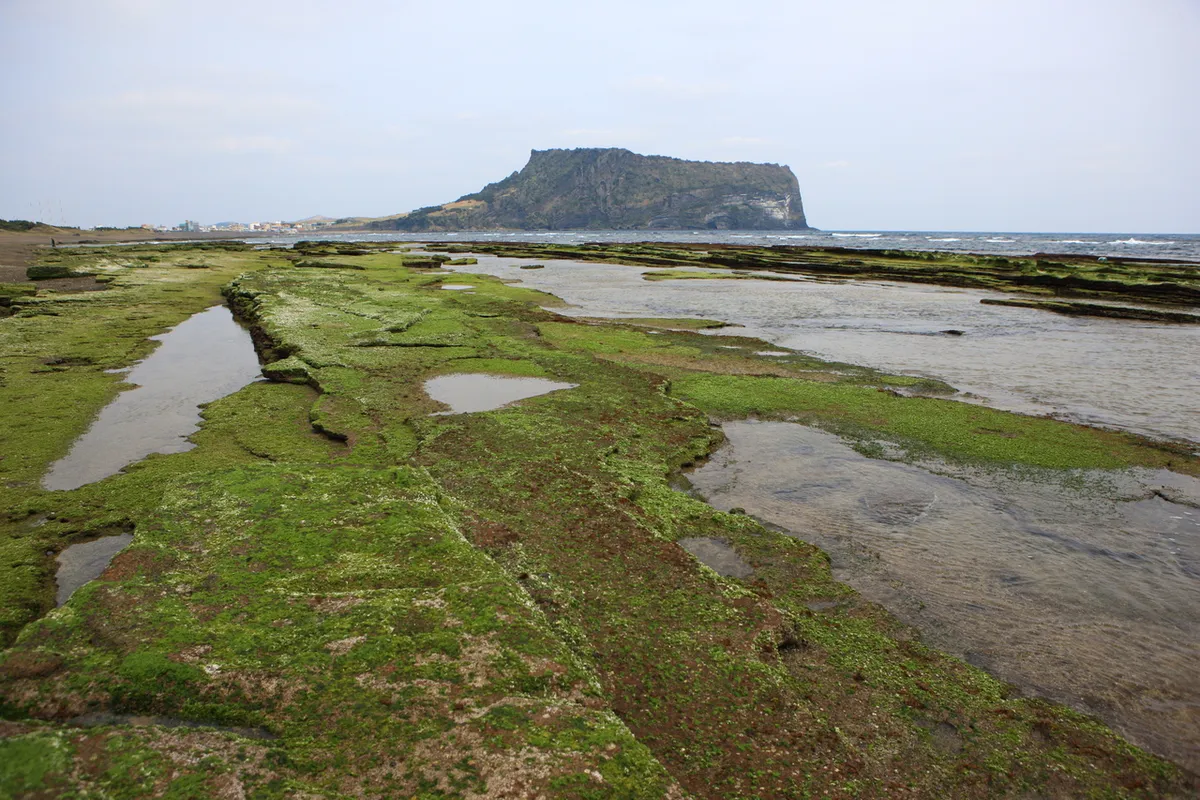
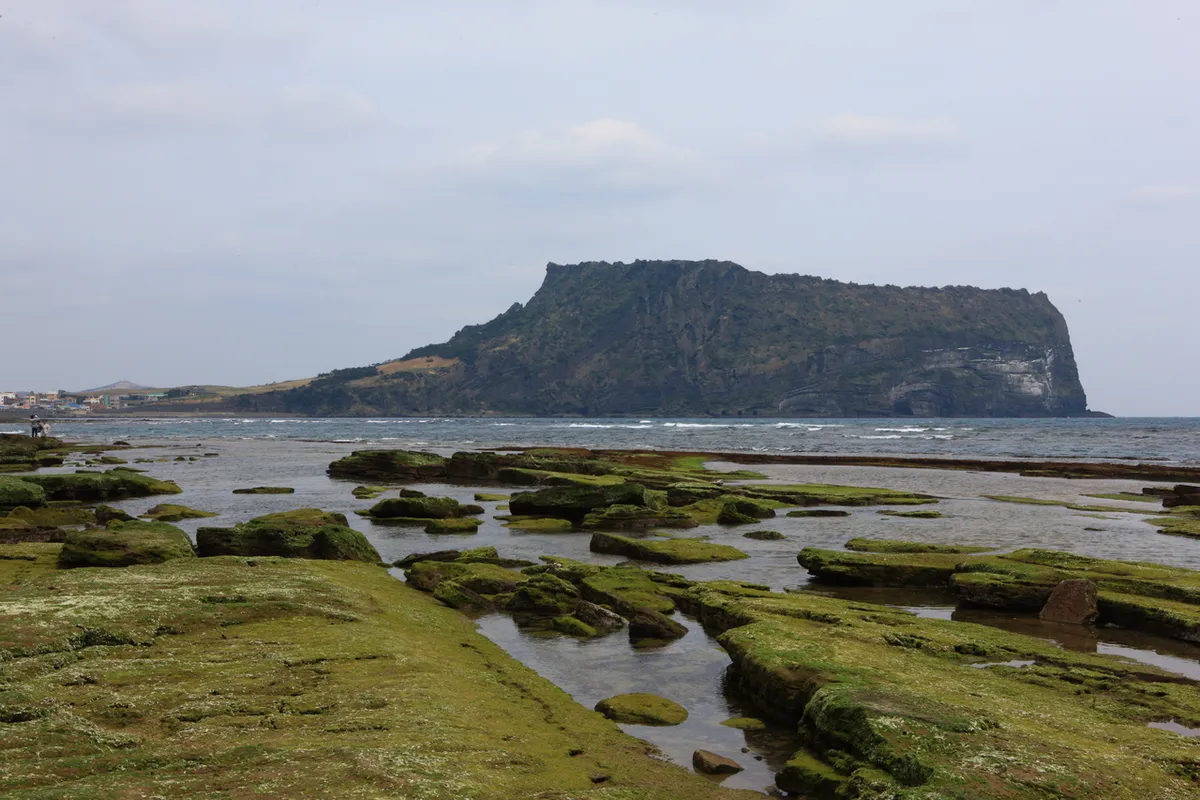
Gwangchigi Beach (광치기해변) sits on the route between the peak and Seopjikoji. It as the end point of Jeju Olle Trail Route 1 and the starting point of Route 2. The beach is known for exposed lava formations and black sand, with the tuff cone visible from the shoreline.
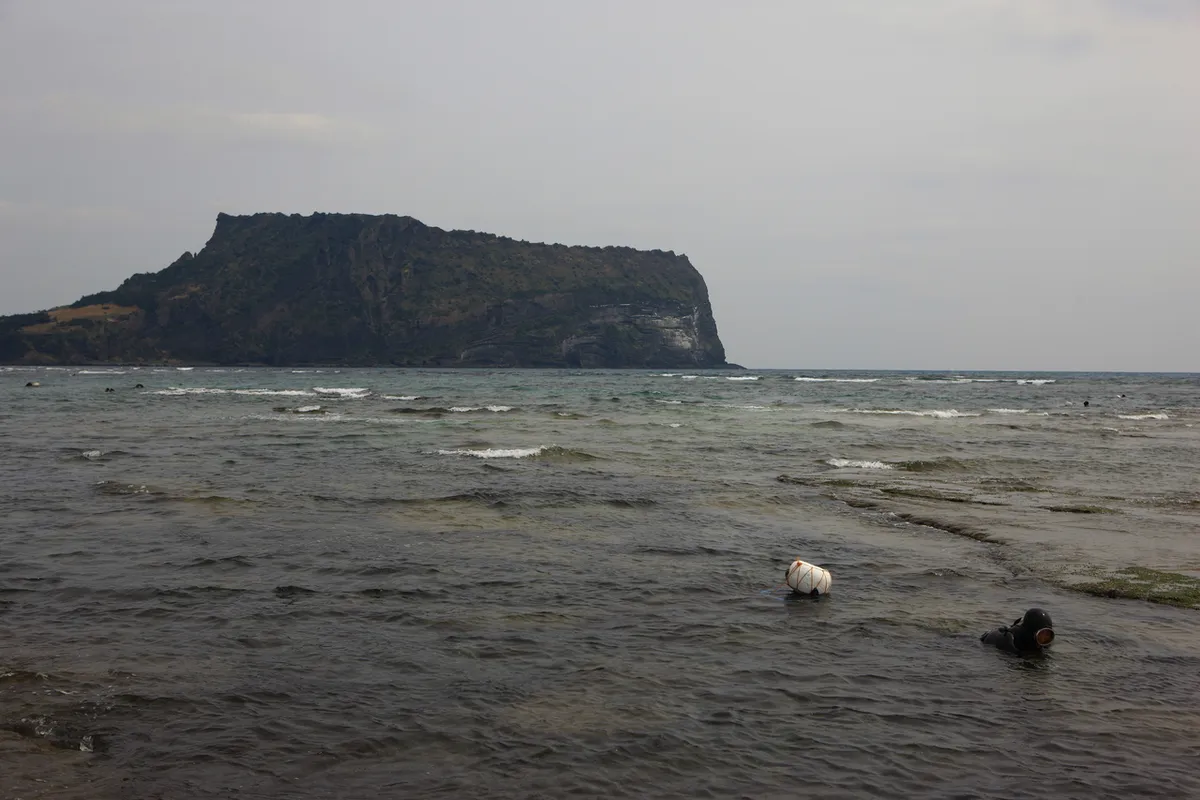
Another nearby cultural stop is Seongsanpo Haenyeo Gongyeonjang (성산포 해녀물질공연장) at Umutgae Beach. It as a fishing area near the peak where haenyeo, Jeju’s women divers, demonstrate their work. The schedule can change depending on season and weather, so it should be treated as a flexible add-on rather than a fixed guarantee.
These nearby places work best as a short eastern Jeju cluster: the peak for the tuff cone and crater, Gwangchigi Beach for the coastal lava platform, and the haenyeo performance area for local maritime culture when conditions allow.
🗣️ Korean Phrase: “Seongsan Ilchulbong eotteoke gayo?” (성산일출봉 어떻게 가요?) means “How do I get to the peak?” It is useful when asking for local bus, taxi, or direction help in eastern Jeju.
Where to Stay for Seongsan Ilchulbong
For an early visit, the most direct base is Seongsan. Staying in this part of eastern Jeju reduces the need to cross the island before sunrise or morning entry. TripKorea’s hotel listings include a dedicated Seongsan page for travelers who want to stay close to the peak and nearby coastal stops.
Find hotels in Seongsan near Seongsan Ilchulbong
Seogwipo is broader and more urban, with better access to southern Jeju routes. It can work for visitors who want Seongsan Ilchulbong as one part of a wider south-and-east Jeju itinerary. Jeju City is more practical for airport access and island-wide transport, but it places you farther from the eastern coast.
How to Plan the Visit
Plan the visit around the type of visit you want. A geology-focused visit should leave time for both the summit side and the coast below, because the cone’s form is easier to understand when viewed from multiple angles. A photo-focused visit can combine the peak with Gwangchigi Beach, where the foreground rock flats frame the cone from a lower coastal position.
For pacing, avoid treating the site as only a quick viewpoint. The official listing divides the area into free and paid sections, and nearby stops add context without requiring a long transfer. This is why Seongsan works well as a half-day eastern Jeju anchor rather than a single isolated stop.
If you are building a wider Jeju plan, pair this guide with TripKorea’s activity listings for island tours, outdoor experiences, and transport-friendly options in Jeju.
Frequently Asked Questions
Is it the same as Seongsan Sunrise Peak?
Yes. The Korean name is commonly translated as Seongsan Sunrise Peak. The Korean name refers to the Castle Mountain shape of the cone and its association with sunrise viewing.
Is the peak a UNESCO site?
Yes. Visit Jeju lists it as part of Jeju’s UNESCO World Natural Heritage area. It is also Natural Monument No. 420 and a Global Geopark site.
Where is it located?
The address is 284-12, Ilchul-ro, Seongsan-eup, Seogwipo-si, Jeju. It sits on the eastern coast of Jeju Island in the Seongsan area.
How long does the climb take?
Visit Jeju gives an approximate climbing time of 20 minutes for the steep staircase route to the summit. Actual time can vary by crowding, weather, and personal pace.
What can I see nearby?
Nearby options include Gwangchigi Beach, Seopjikoji, and the Seongsanpo Haenyeo Gongyeonjang area at Umutgae Beach. Gwangchigi Beach is also connected with Jeju Olle Trail Routes 1 and 2.
Plan Your Eastern Jeju Base
1. Stay close to the peak
Hotels in Seongsan near Seongsan Ilchulbong
2. Compare broader Jeju hotel areas
Hotels in Seogwipo
Hotels in Jeju City
Explore all Jeju hotels
3. Add Jeju activities
Discover things to do in Jeju
4. Keep the trip connected
Book a Korea eSIM for Jeju travel
Seongsan Ilchulbong belongs on an eastern Jeju itinerary because it combines a protected volcanic landform, a coastal setting, and nearby cultural stops in one compact area. Use the official seasonal hours, choose the summit or lower route based on your travel plan, and base yourself in Seongsan or Seogwipo if this side of Jeju is the main focus.
Sources & References
Data Sources:
Tourist Attraction Info: Visit Jeju official tourism information
Nearby Attraction Info: Korea Tourism Organization (TourAPI)
Photos: Korea Tourism Organization / PhotoKorea
Official Sites:
Last verified: 2026-06-14
All information verified at time of publication. Operating hours, closures, and access rules are subject to change. Please confirm before visiting.