Jeonju Hanok Village is the historic visitor district around Taejo-ro in Wansan-gu, Jeonju, with traditional houses, heritage gates, religious architecture, craft spaces, and hillside viewpoints concentrated in one cultural area.
This guide focuses on the verified cultural stops around the village core: Jeondong Catholic Cathedral, Pungnammun Gate, Omokdae and Imokdae Historic Sites, Jeonju Crafts Exhibition Hall, and Jeonjuhyanggyo Local Confucian School.
1. Start with the Jeonju Hanok Village Core
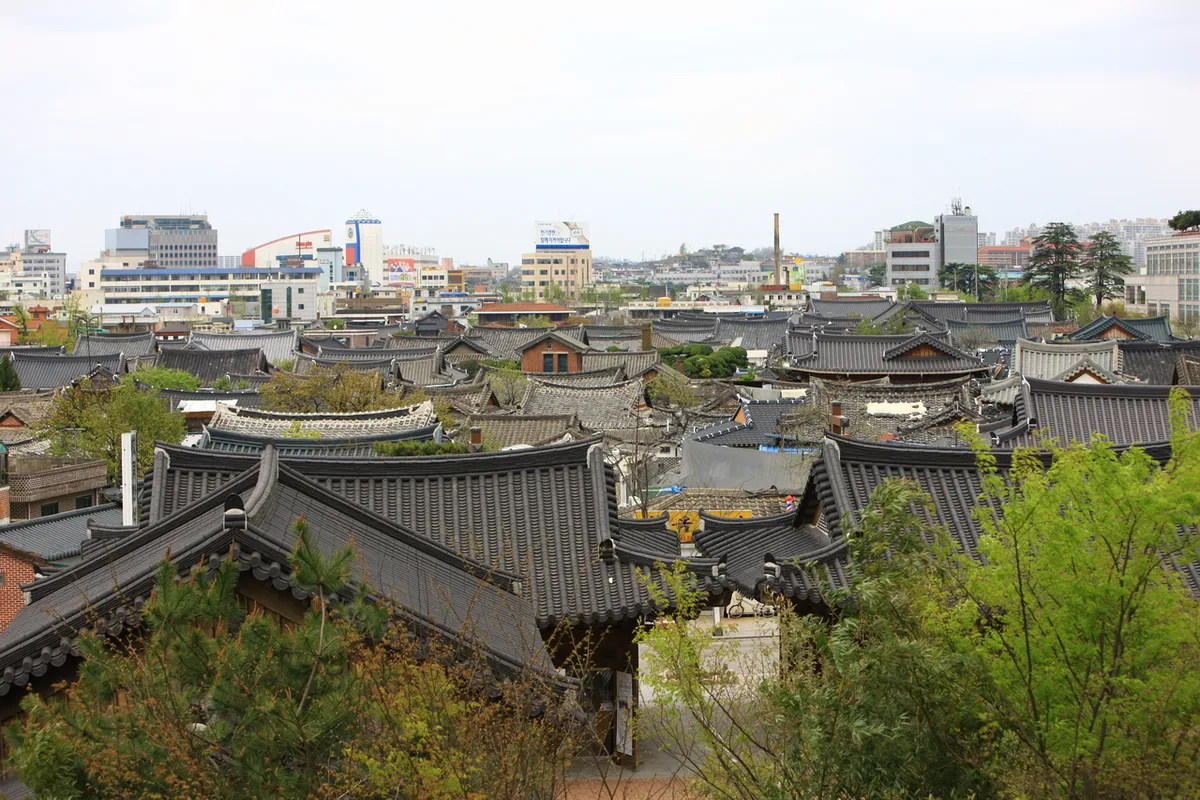
The village is best understood as a cultural district rather than a single building. Taejo-ro and the surrounding lanes connect hanok rooftops, exhibition halls, heritage sites, and visitor facilities within the Wansan-gu area of Jeonju.
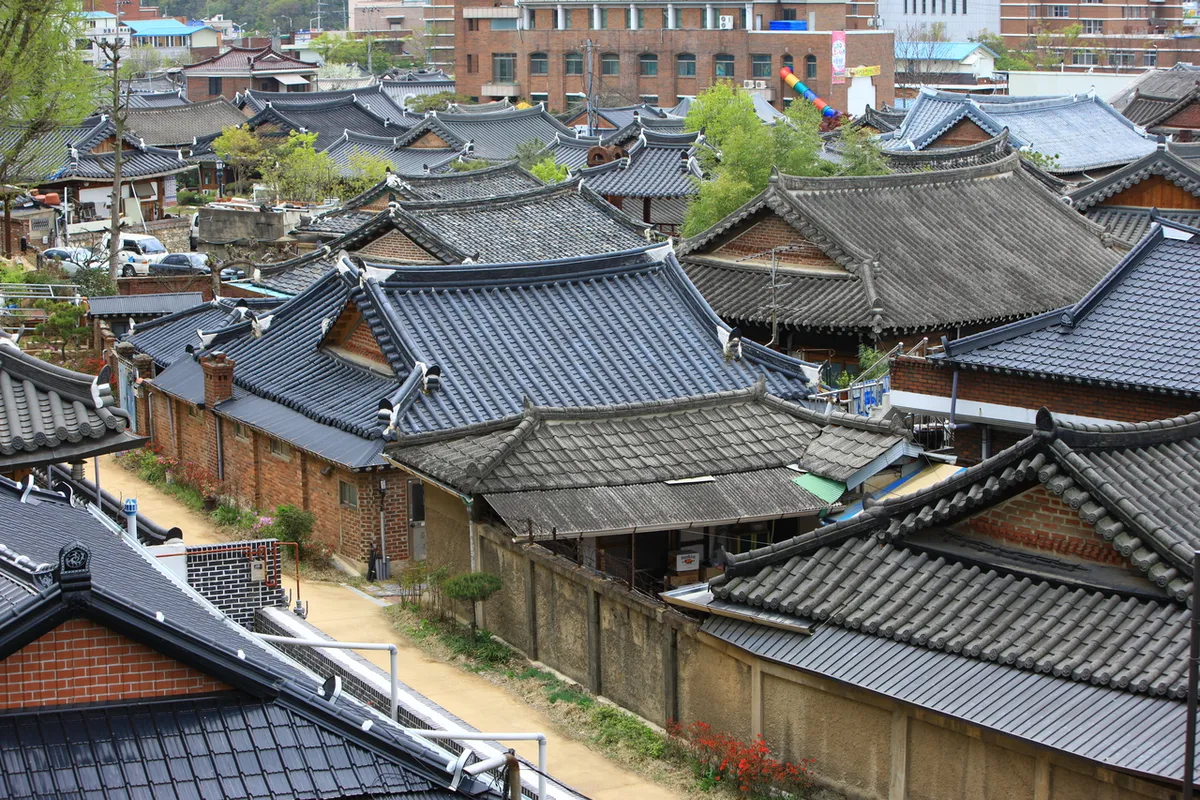
The visual character of the district comes from tiled roofs, low traditional buildings, stone walls, and narrow streets. This makes the area different from a museum-style reconstruction: visitors move through an active urban district where historic-style architecture and tourist services sit side by side.
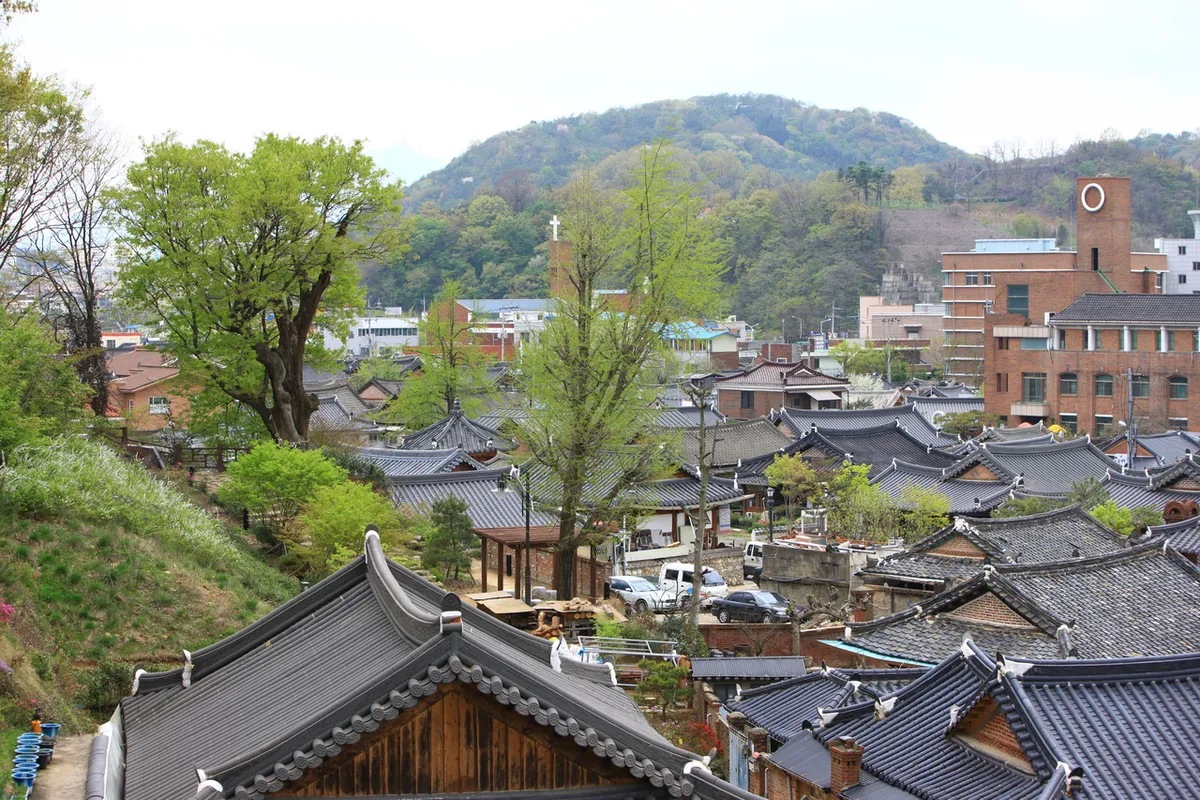
The central address references used in this guide cluster around Taejo-ro, Girin-daero, Hanji-gil, Hyanggyo-gil, and Pungnammun 3-gil. Because several sites are close together, the village works well as a culture-first base for travelers who want Korean architecture, history, crafts, and old-city landmarks in one area.
📍 TripKorea's Tip: Use the village core as the base, then branch outward by theme. Architecture-focused visitors can stay around the hanok streets and Gyeonggijeon area; history-focused visitors can add Pungnammun Gate, Omokdae, Imokdae, and Jeonjuhyanggyo.
2. See the Historic Core around Gyeonggijeon and Jeondong Cathedral
Gyeonggijeon Shrine is one of the main visual anchors near the hanok village streets. It sits close to other old-city landmarks, making this part of the district a practical starting point for a first Jeonju culture walk.
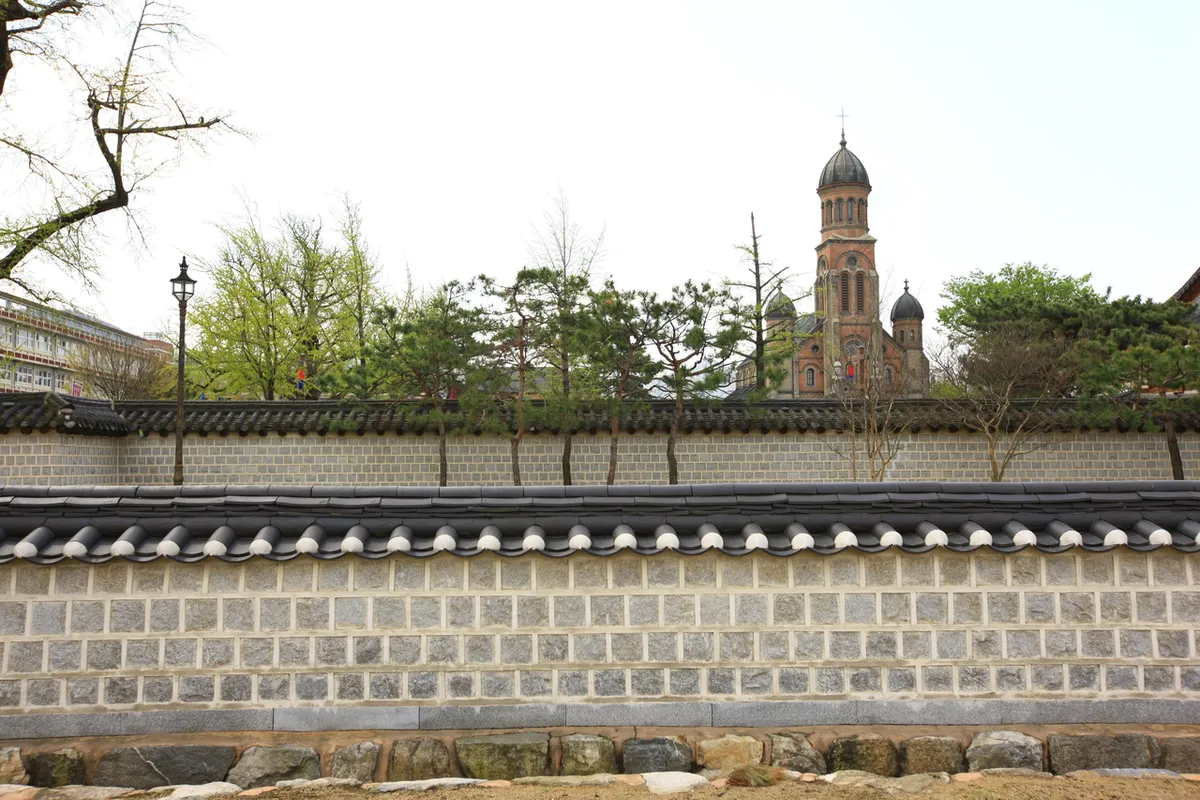
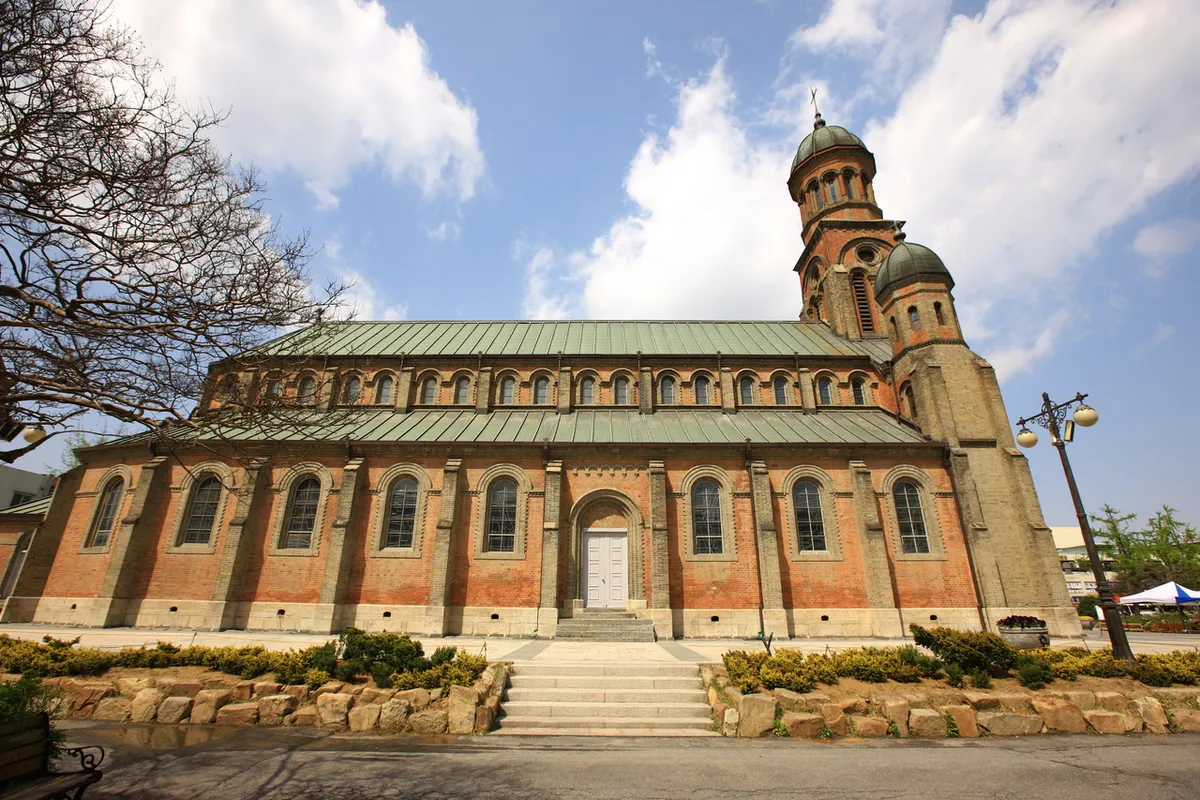
Jeonju Jeondong Catholic Cathedral stands at 51 Taejo-ro. The cathedral was built in honor of Roman Catholic martyrs of the Joseon dynasty, with land purchased by French Priest Baudenet in 1891 and construction completed in 1914.
The building is described as the first Romanesque building in the Honam region. Its design uses gray and red brick, Byzantine bell towers, and arched ceilings that meet in cross forms. The cathedral is also linked to the former Jeonjueupseong Walled Town, and some construction materials are linked to the old town wall.
Mass schedules are listed for Sundays, weekdays, and Saturdays, but visitors who want to enter respectfully should check the cathedral’s current notice before arrival. The information center is listed as +82-63-284-3222 / 063-284-3222 in Korea.
🚨 Warning: Treat the cathedral first as an active religious site, not only as a landmark. Keep photography and entry quiet around worship times, and avoid blocking entrances during services.
3. Add Pungnammun Gate for Joseon-Era City History
Jeonju Pungnammun Gate stands at 1 Pungnammun 3-gil. It was built during the Joseon dynasty in 1734 and is a designated Treasure.
The gate was the southernmost of the four city gates of Jeonju. It was severely damaged by fire in 1767 and later restored; the gate burned again during the Imjin War before being restored into the structure seen today.
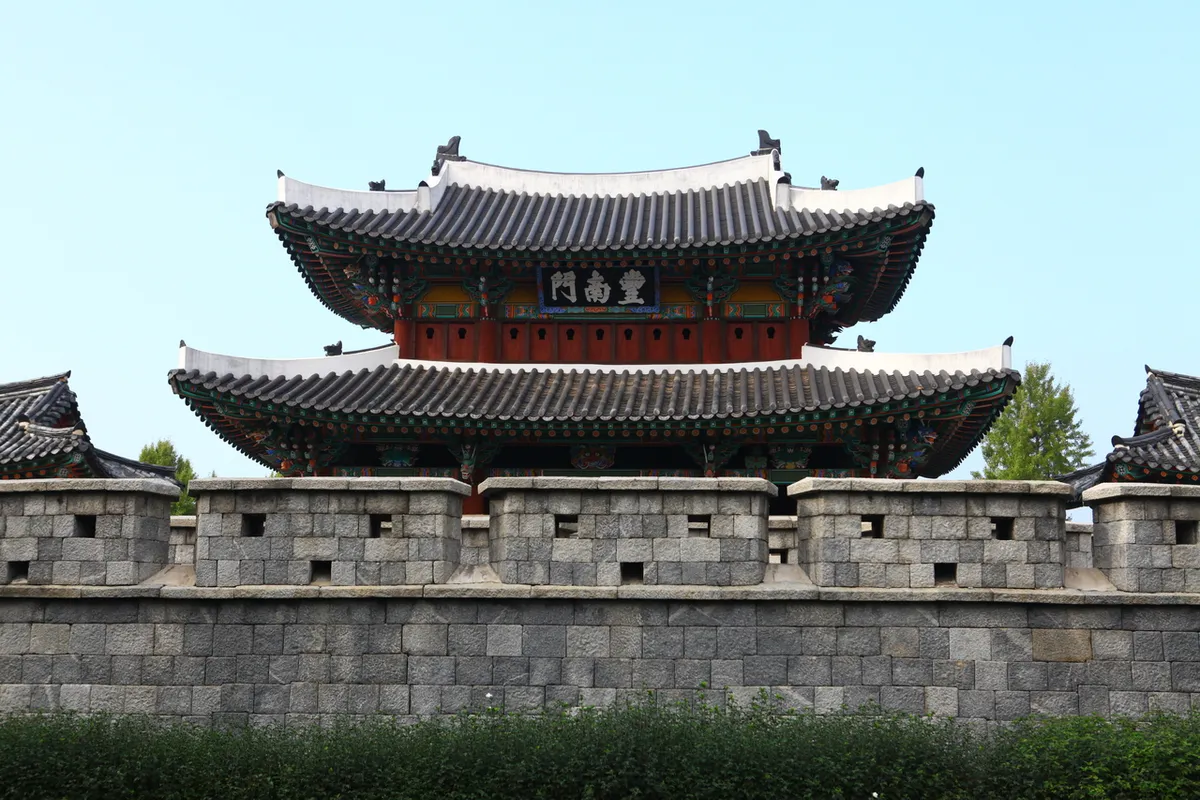
Pungnammun works well in the same cultural cluster as Jeondong Cathedral because the cathedral originally stood near the Pungnammun Gate area associated with the martyrdom site. This gives the southern edge of the village a layered historical setting: old city gate, Catholic history, and hanok district within a short urban radius.
The gate is listed as open all year round, with no parking available. The information center is +82-63-287-6008 / 063-287-6008 in Korea.
📍 TripKorea's Tip: Pungnammun is better treated as a short heritage stop than a long standalone attraction. Pair it with Jeondong Cathedral and the Taejo-ro side of the village for a compact historical section.
4. Walk up to Omokdae and Imokdae Historic Sites
Omokdae and Imokdae Historic Sites are listed at 55 Girin-daero in Wansan-gu. Omokdae sits on a steep hill and is connected with Yi Seong-gye, who later became King Taejo, the first king of the Joseon dynasty.
The site marks a place where Yi Seong-gye stopped to celebrate victory on his return from a battle against the Japanese army at Unbong Peak of Hwangsan Mountain. Across the bridge from Omokdae, Imokdae is situated at the foot of Seungamsan Mountain.
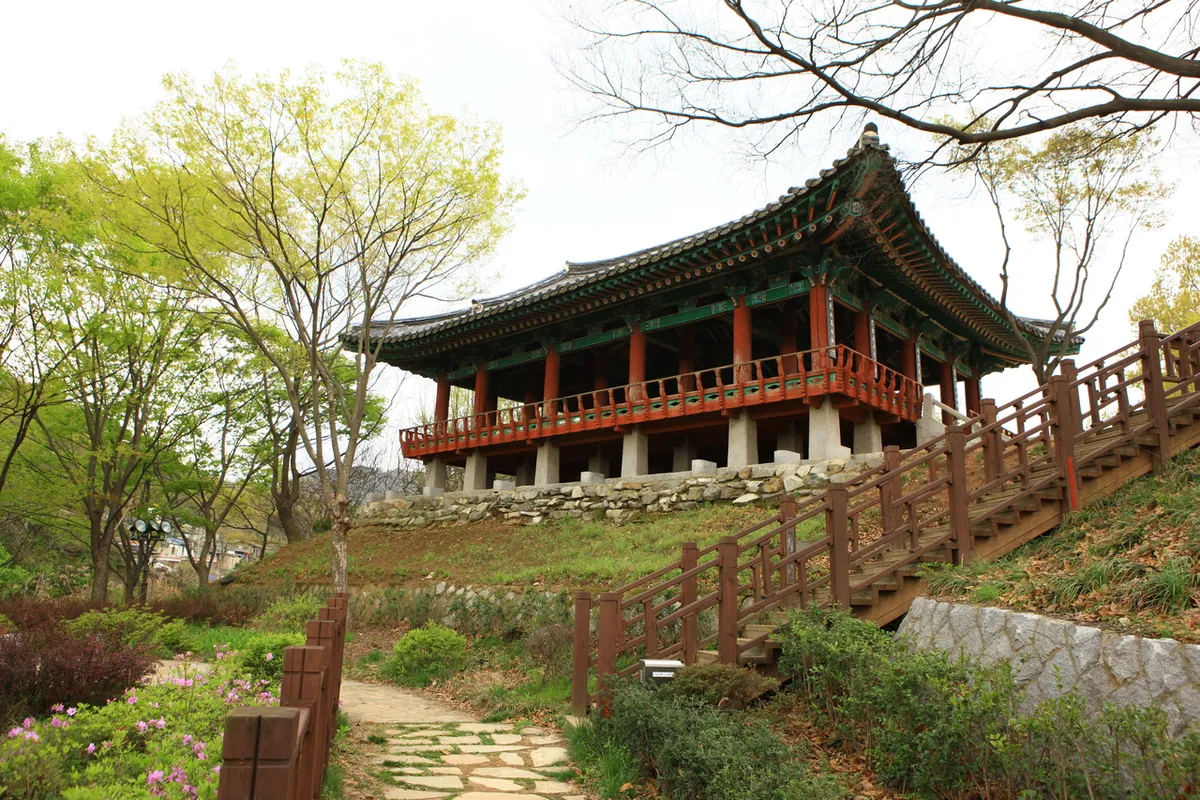
Imokdae is also connected with Mokjo, the great-great-grandfather of King Taejo. Memorial stones and a building stand downhill from Imokdae, and the engraved letters on the stones are attributed to the handwriting of Emperor Gojong.
The sites are listed as open all year round, with no parking available. The information center is +82-63-281-2114 / 063-281-2114 in Korea.
💡 Local Tip: This is the section of the district to choose when you want a higher viewpoint over the hanok rooftops. The hill setting is part of the site, so wear practical shoes rather than treating it like a flat street walk.
5. Finish with Crafts and Jeonjuhyanggyo
Jeonju Crafts Exhibition Hall is located at 15 Taejo-ro. The complex is made up of a Craft Hall, Special Exhibition Hall, and Experience Hall, with traditional works by master artisans and creative works by contemporary artists and designers.
The exhibition hall is listed as open from 10:00 to 18:00. Admission is free, while separate charges may apply for experience programs. It is closed on Mondays, January 1, the day of Seollal, and Chuseok.
For visitors using the village as a cultural base, this is the practical indoor stop. It also helps balance the route when weather or heat makes a fully outdoor walk less comfortable.
Jeonjuhyanggyo Local Confucian School stands at 139 Hyanggyo-gil. It was established during the Joseon dynasty and functioned as a national education center during the Joseon period. The school was originally located at the Gyeonggijeon Shrine site and was relocated in 1603.
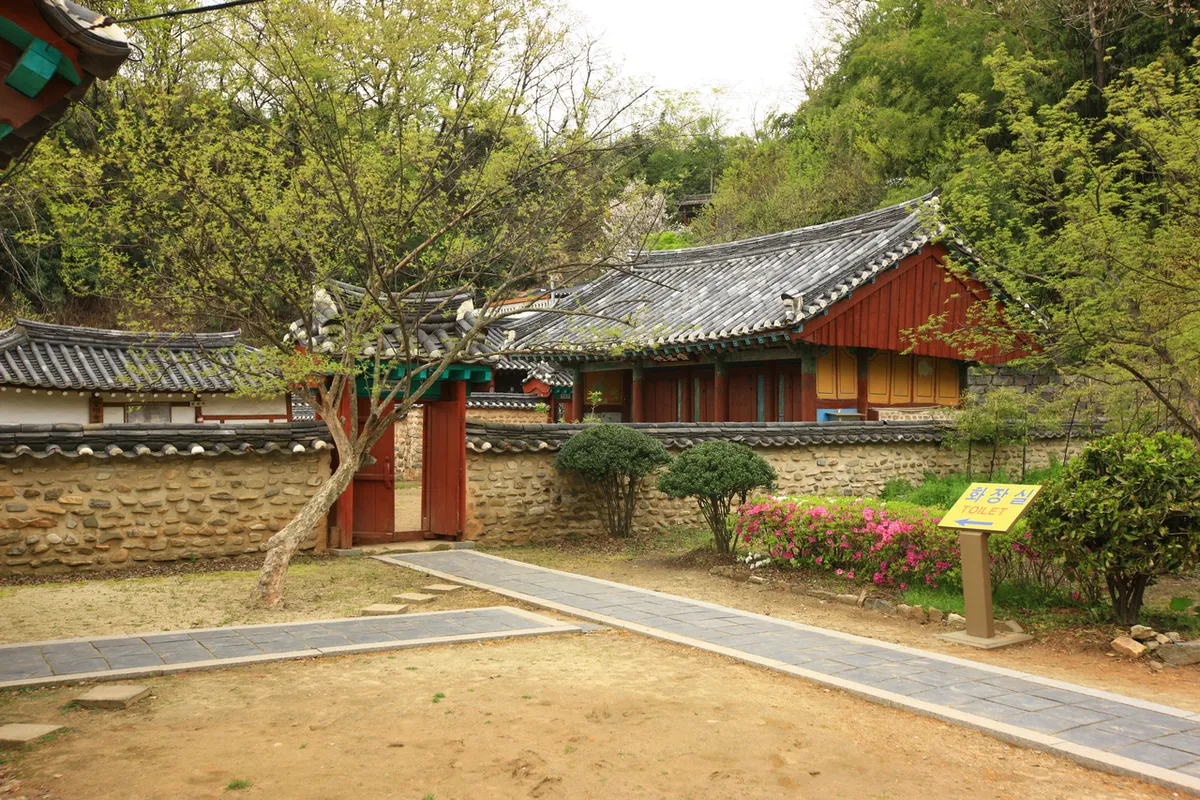
The main building of Daeseongjeon Hall enshrines mortuary tablets of seven Chinese Confucian scholars and 18 Korean scholars. The front yard is also noted for a 400-year-old ginkgo tree.
Opening hours are listed as 10:00-17:00 in winter and 09:00-18:00 in summer. The site is closed on Mondays, with closure moving to the following business day when Monday is a public holiday. The information center is +82-63-288-4548 / 063-288-4548 in Korea.
📍 TripKorea's Tip: If you are staying overnight, base yourself close to the village so the route can be split into two shorter walks. Hotels near Jeonju Hanok Village are the most direct option for this article’s route.
Practical Planning for the Village
The village area is in Jeonju, Jeonbuk-do, and the verified places in this guide are concentrated in Wansan-gu. The most useful planning method is to group sites by purpose: hanok streets for architecture, Jeondong Cathedral and Pungnammun for city history, Omokdae and Imokdae for hillside heritage, and Jeonjuhyanggyo for Confucian education history.
Best base: Hanok Village area, Jeonju.
Hotel CTA: Find hotels near the village or compare all Jeonju hotels.
Activities CTA: Browse things to do in Jeonju.
Transport CTA: Check Jeonju transport options.
The district works best as a cultural area with several verified stops, not as a single photo point. Plan the route around the places that match your travel purpose, then confirm current hours before visiting sites with posted closures.
Frequently Asked Questions
Where is the village located?
The village is in the Wansan-gu area of Jeonju, Jeonbuk-do. This guide focuses on the Taejo-ro and nearby historic district around Jeondong Cathedral, Pungnammun Gate, Omokdae, Imokdae, Jeonju Crafts Exhibition Hall, and Jeonjuhyanggyo.
What should I see first?
Start with the hanok streets around Taejo-ro, then add Jeondong Catholic Cathedral and Pungnammun Gate. If you want a higher viewpoint and Joseon-era history, continue to Omokdae and Imokdae.
Is Jeonju Crafts Exhibition Hall free?
Yes. Jeonju Crafts Exhibition Hall lists free admission, although separate charges may apply for experience programs. It is listed as open from 10:00 to 18:00 and closed on Mondays, January 1, Seollal day, and Chuseok.
Is Pungnammun Gate open all year?
Yes. Pungnammun Gate is listed as open all year round. Parking is listed as not available, so visitors should treat it as part of a walking route through the old-city area.
Where should I stay for this route?
The most direct base is the Hanok Village area of Jeonju. Staying near the village keeps the cultural stops close together and makes it easier to divide the route into shorter sections.
Plan Your Jeonju Basecamp
1. Stay close to the hanok streets
Best Hotels near the Hanok Village
Explore All Hotels in Jeonju
2. Add local activities
Discover Things to Do in Jeonju
3. Plan transport before arrival
Reserve Jeonju Transport Options
Use this Jeonju Hanok Village guide as a cultural route map: start with the hanok district, add the confirmed heritage sites around Wansan-gu, and keep hotel planning close to the village if the route is the main purpose of your Jeonju stay.
Sources & References
Data Sources:
Tourist Attraction Info: Korea Tourism Organization (TourAPI)
Photos: Korea Tourism Organization Photo Korea
Local Tourism Information: Visit Jeonju official tourism portal
Official Sites:
Last verified: 2026-08-16
All information verified at time of publication. Operating hours and admission details may change. Please confirm before visiting.