Jinjuseong Fortress (진주성), Historic Site No. 118, is a 171,805-square-meter stone fortress overlooking the Namgang River in Jinju. This guide covers its wartime history, Chokseongnu Pavilion, the National Museum, opening hours, admission, parking, and visitor rules.
1. Jinjuseong Fortress and the Battles of Jinju
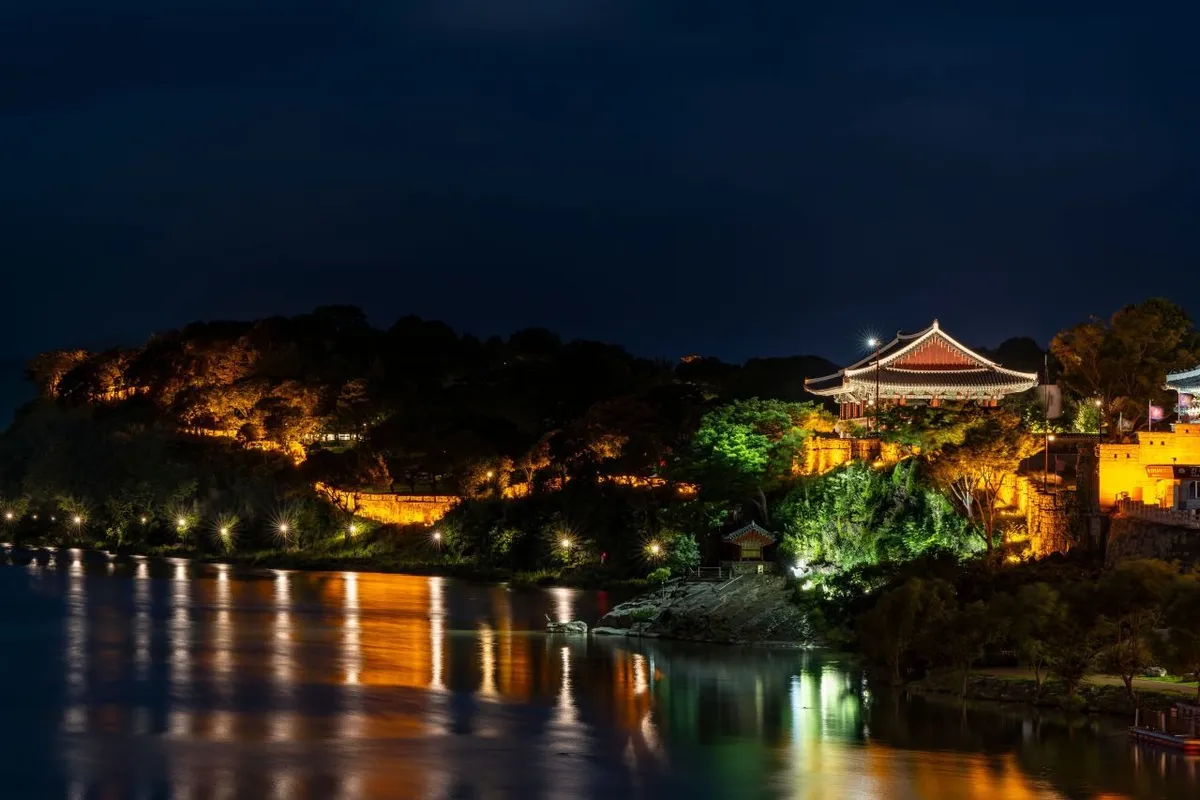
Jinjuseong began as an earthen defensive site and was rebuilt in stone in 1379, during the reign of King U of Goryeo, as protection against pirate attacks. The surviving fortress occupies a ridge above the Namgang River, and its stone circuit extends for 1,760 meters. Gates, command pavilions, shrines, monuments, and museum buildings now share the enclosed grounds.
The fortress became a major battlefield during the Imjin War, the Japanese invasions of Korea from 1592 to 1598. During the first Battle of Jinju in 1592, Magistrate Kim Si-min commanded approximately 3,800 defenders against a Japanese force of about 20,000. The defense is remembered as one of the three major Korean victories of the war.
A second battle followed in 1593. Approximately 70,000 soldiers, government officials, and civilians resisted inside the fortress and died during the final defense. These two battles explain why the site contains both military structures and memorial spaces rather than functioning only as a surviving city wall.
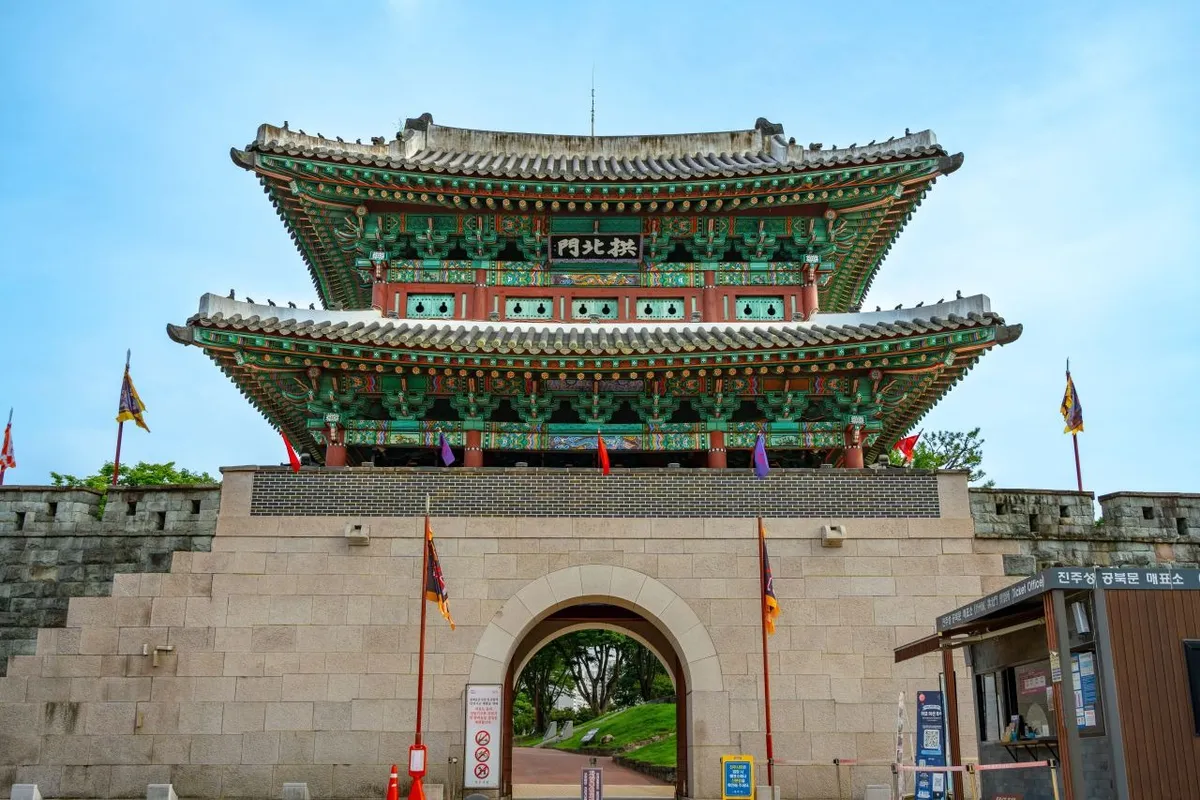
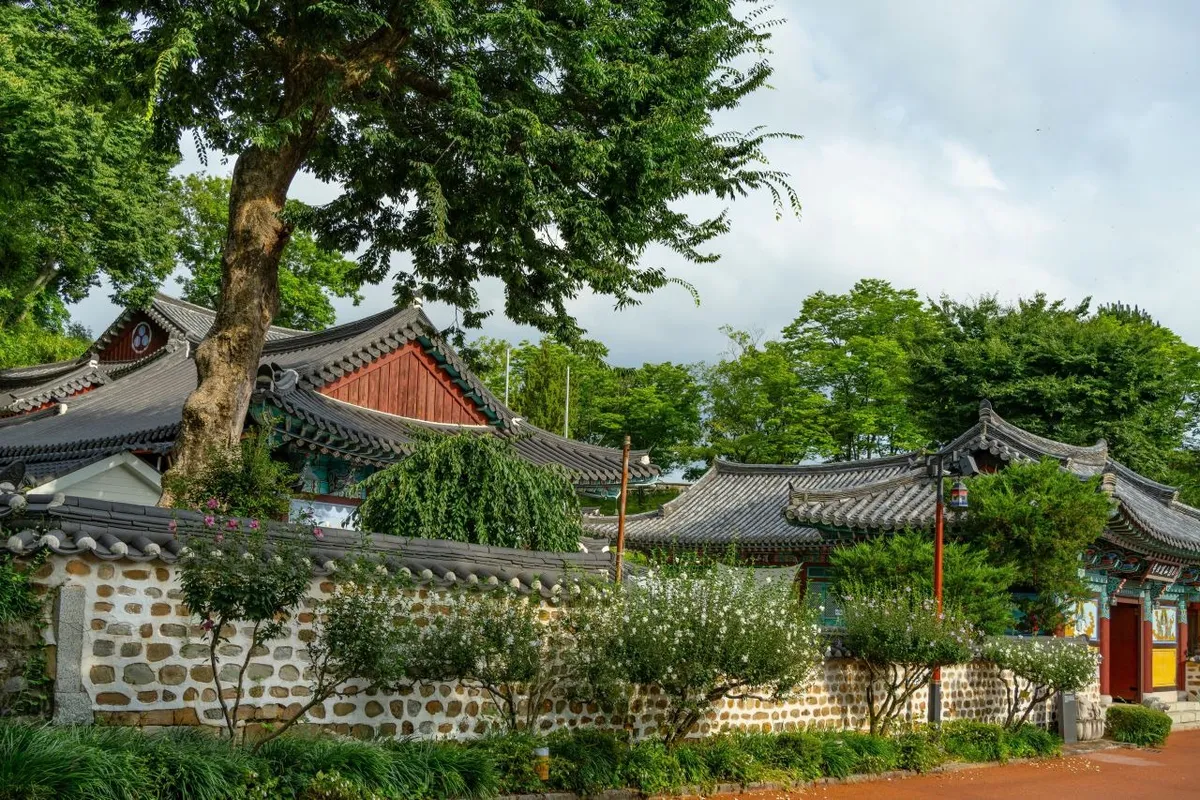
Gongbukmun is one of the gates into the grounds. From the gate area, paths connect the northern section of the fortress with the inner heritage buildings, the museum, and the riverside side of the enclosure. The route passes stone walls and tiled-roof structures that represent different administrative, defensive, religious, and commemorative functions.
💡 TripKorea's Tip: Treat the fortress as a complete historic compound rather than a single viewpoint. The main structures are distributed across the grounds, and the museum follows its own operating schedule.
2. Chokseongnu Pavilion Above the Namgang River
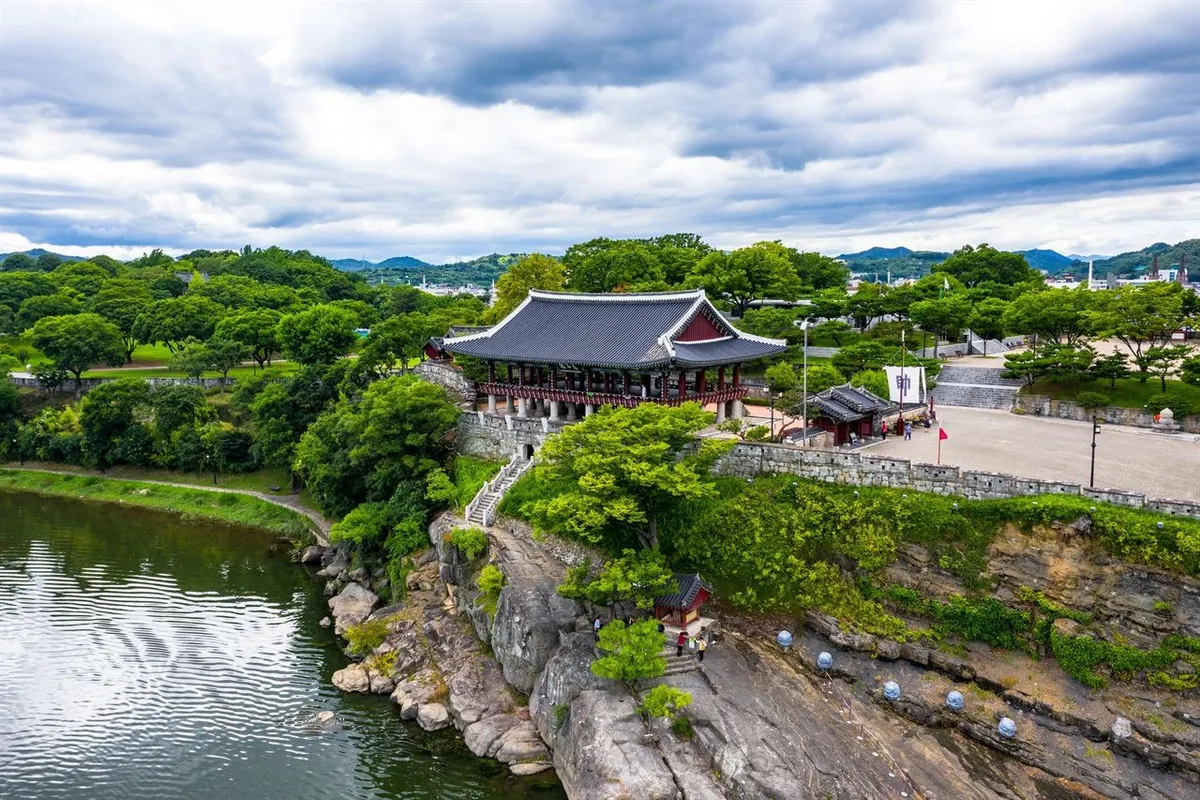
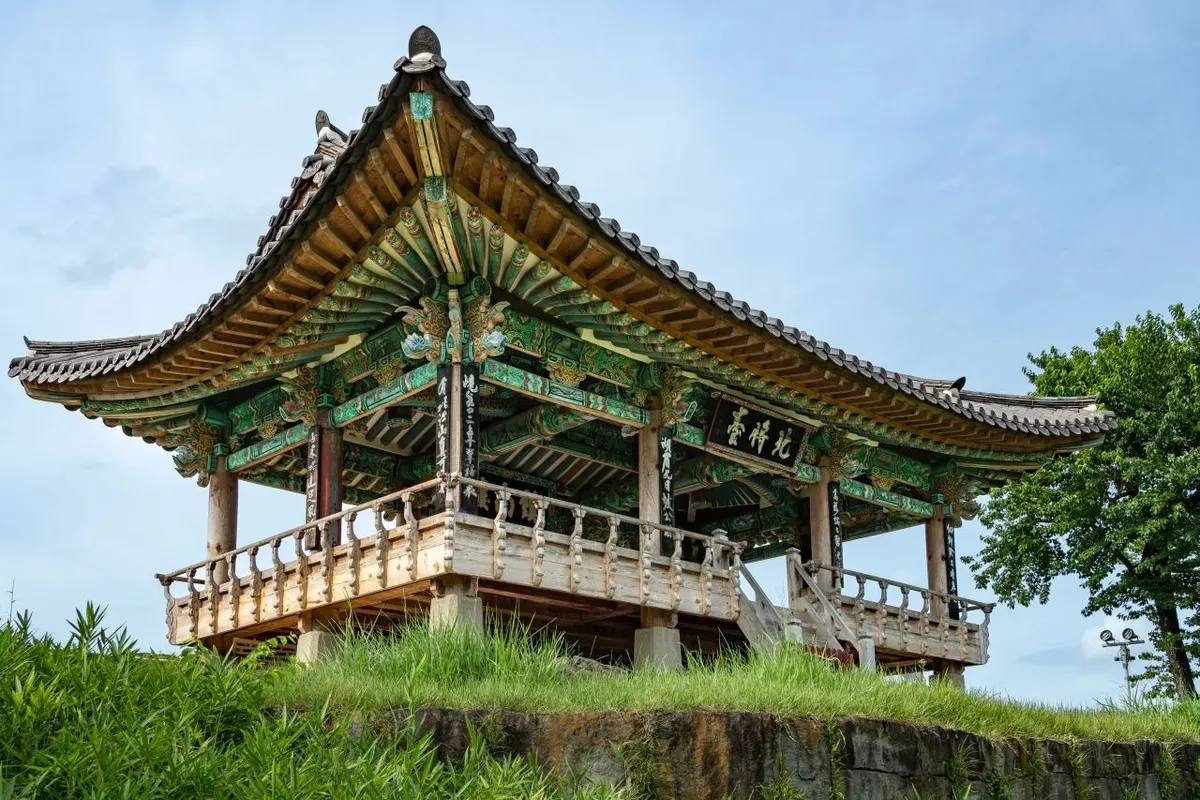
Chokseongnu Pavilion (촉석루) stands on a rocky cliff along the Namgang River. It was founded in 1241, during the Goryeo period, and underwent eight recorded reconstructions. The pavilion has five bays across its front and four bays along its sides and is designated as a Gyeongsangnam-do Tangible Cultural Heritage property.
Its historical function changed according to circumstance. During wartime, Chokseongnu served as a command post. In peacetime, it was used for local civil-service examinations. Its position at the edge of the fortress provided an open view across the river while keeping it connected to the inner defensive compound.
The pavilion is also linked to the memory of Nongae. During the second Battle of Jinju in 1593, she entered the Namgang River while holding a Japanese commander. The nearby river rock known as Uiam and Uigisa Shrine preserve this part of the fortress narrative within the same riverside area.
The riverbank opposite the fortress provides a broad view of Chokseongnu above the cliff. From this angle, the relationship between the pavilion, stone embankment, wooded fortress grounds, and Namgang River is visible without entering a separate attraction.
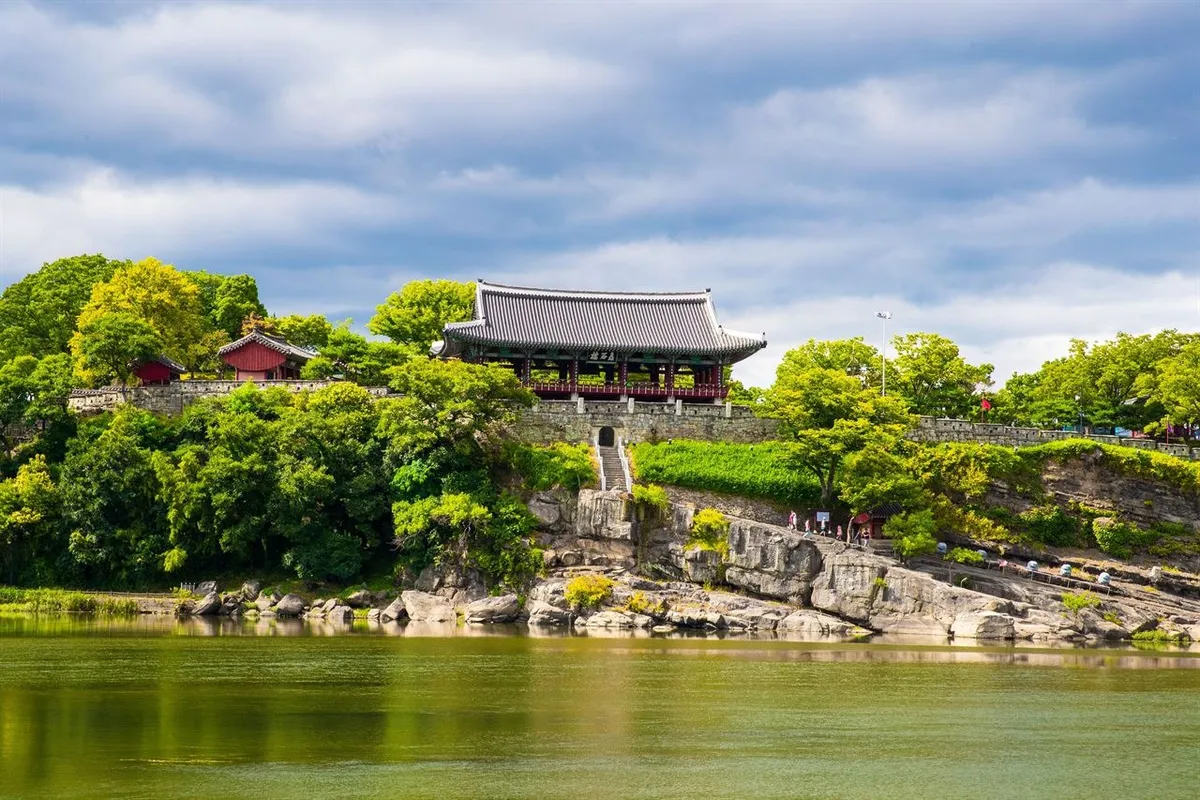
Chokseongnu lists visitor hours of 9:00 AM to 6:00 PM. These hours are narrower than the opening hours of the wider fortress grounds, so visitors arriving early in the morning or later in the evening should not assume that every interior heritage building will be open.
💡 Local Tip: Check the pavilion and museum schedules separately from the fortress gate hours. The grounds remain open beyond the paid viewing period, but individual buildings may close earlier.
3. Memorials and Heritage Structures Inside the Walls
The interior of Jinjuseong contains a concentrated group of sites associated with government administration, military defense, religion, and the two wartime battles. Named structures include Yeongnam Pojongsa Gate Pavilion, Bukjangdae and Seojangdae command posts, Changnyeolsa Shrine, Hoguksa Temple, Uigisa Shrine, and the Imjin Daecheop Gyesa Sunuidan memorial.
A statue of General Kim Si-min stands within the compound. His command during the 1592 defense forms the central historical context for the fortress, while the memorial areas record those who fought and died in the later 1593 battle. This division helps distinguish the victory commemorated at the first battle from the mass loss associated with the second.
The traditional buildings are not all from the same period or designed for the same purpose. Command posts belong to the military landscape, shrines preserve the memory of historical figures and defenders, and Hoguksa represents the religious component of the compound. Reading the site by function makes the collection of structures easier to understand than treating them as a single architectural group.
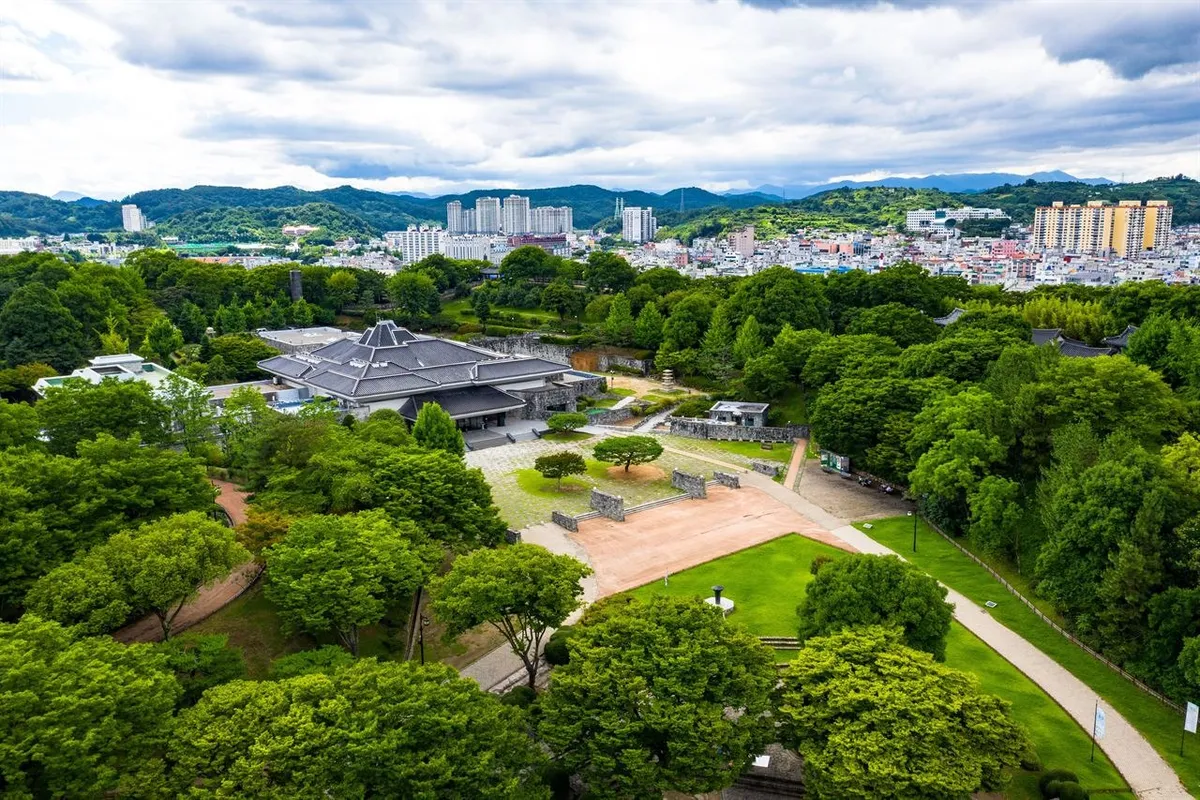
The fortress also contains an outdoor stage, a tourist information center, restrooms, and designated visitor facilities. Bicycles, electric scooters, and similar personal mobility devices are prohibited inside the grounds. Pets are also not permitted.
🚨 Visitor Rule: Plan to explore on foot. The restriction on bicycles and electric mobility devices applies within the fortress, and the official visitor information also lists a no-pets policy.
4. Jinju National Museum and Imjin War Exhibitions
Jinju National Museum opened in 1984 as the first national museum in Gyeongsangnam-do. It stands inside the fortress at 626-35 Namgang-ro and provides the exhibition context needed to connect the surviving structures with the military and social history of the Imjin War.
The museum originally focused on the history and culture of Gaya, an ancient state associated with the wider Gyeongsangnam-do region. In 1998, it was reorganized as a specialist museum for the Imjin War while continuing to cover the history and culture of western Gyeongsangnam-do.
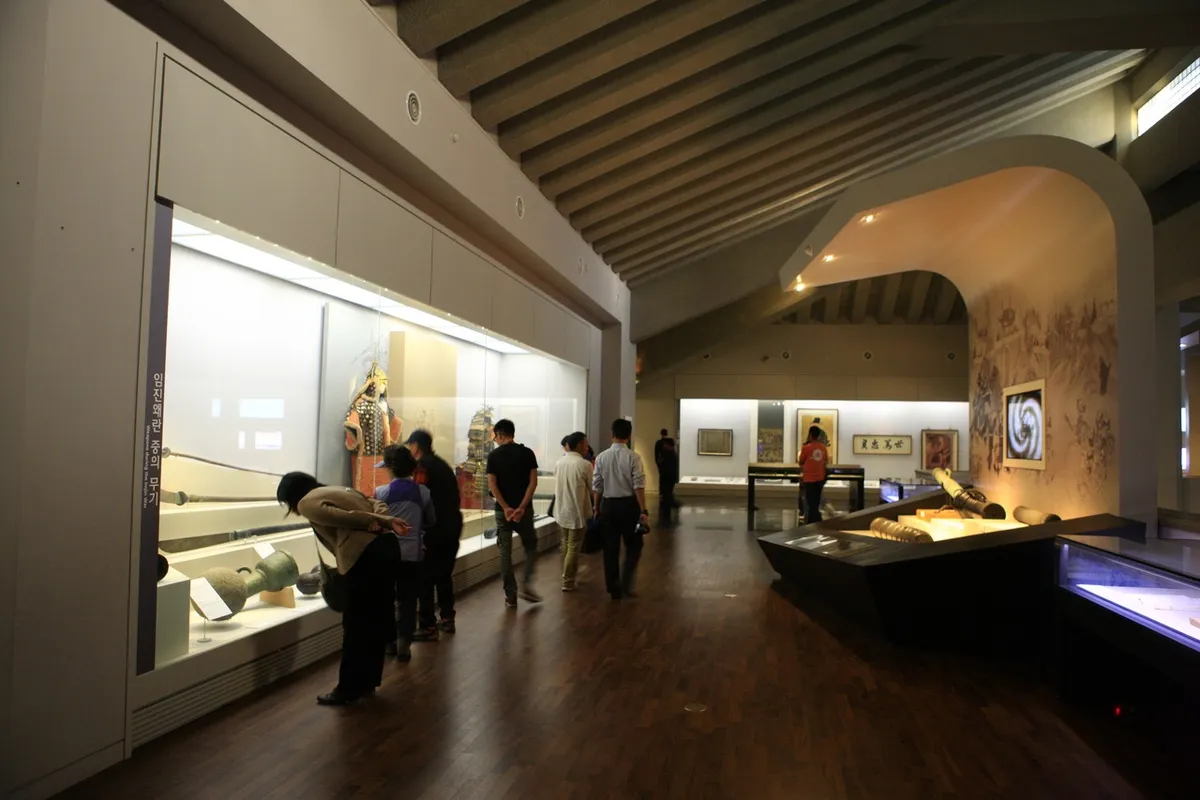
Its work includes collecting artifacts, conducting research and surveys, presenting exhibitions, and operating educational programs. The Imjin War Hall examines themes connected to the invasions, changes in East Asian society, and cultural exchange following the conflict. This museum component turns the fortress visit from an architectural walk into a documented account of the events represented by the monuments outside.
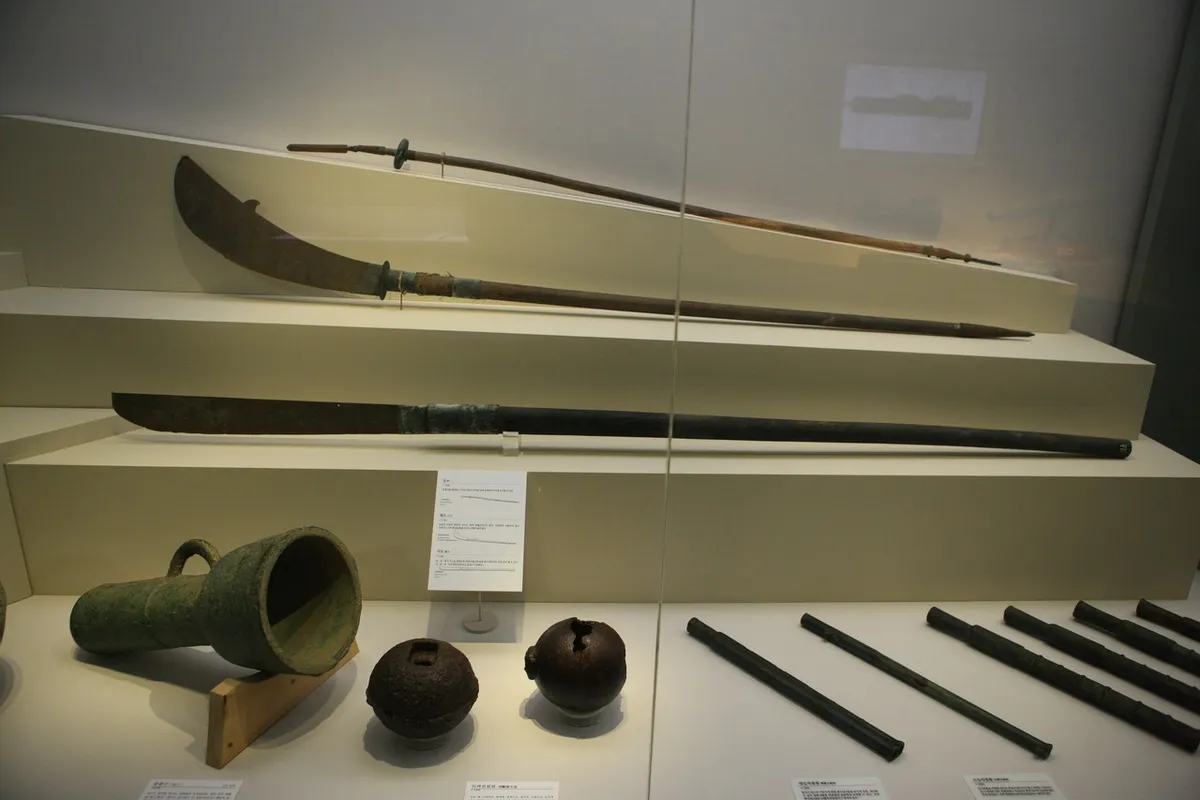
The museum operates from 9:00 AM to 6:00 PM. It closes on Mondays, New Year's Day, Seollal, and Chuseok. Admission to the museum itself is free, although non-residents of Jinju must pay the applicable fortress admission fee during paid viewing hours.
For museum inquiries, contact the Customer Support Team at +82-55-740-0698, or 055-740-0698 when calling within Korea. The museum recommends direct inquiries for group reservations and foreign-language guided tours.
💡 TripKorea's Tip: Visit the outdoor monuments and the museum as two parts of the same historical account. The museum explains the war and regional heritage, while the fortress preserves the physical setting where the battles took place.
5. Opening Hours, Admission, Parking, and Access
The fortress is located at 626 Namgang-ro, Jinju-si, Gyeongsangnam-do. From March through October, the grounds open from 5:00 AM to 11:00 PM. From November through February, they open from 5:00 AM to 10:00 PM. Paid viewing hours are 9:00 AM to 6:00 PM throughout the year.
Individual admission is 2,000 won for adults, 1,000 won for teenagers and military personnel, and 600 won for elementary-school children. Groups of at least 30 pay 1,400 won per adult, 600 won per teenager or military member, and 400 won per child. Jinju residents enter free with identification. Additional exemptions and discounts require the relevant identification or certificate, and discounts cannot be combined.
Parking is available. The listed rate for a small vehicle is 500 won for the first 30 minutes and 200 won for each additional 10 minutes. Large vehicles are charged 1,000 won for the first 30 minutes and 400 won for each additional 10 minutes. The tour-bus parking area across from the west gate ticket office is listed as free.
Wheelchairs and strollers are available in limited numbers. The Gongbukmun ticket office lists four wheelchairs and three strollers, while the Hogukmaru tourist information center lists two wheelchairs and one stroller. Identification is required when borrowing equipment. A free rapid charger for electric wheelchairs is located in front of Jinju National Museum.
Advance reservations are required for a fortress commentary service. The reservation number is +82-55-749-7449, or 055-749-7449 within Korea. General fortress inquiries can be directed to +82-55-749-5171, or 055-749-5171 within Korea.
Frequently Asked Questions
How much is admission to Jinjuseong Fortress?
Individual admission is 2,000 won for adults, 1,000 won for teenagers and military personnel, and 600 won for elementary-school children. Jinju residents enter free with identification, and specified exemption or discount groups must present supporting documents.
What time does Jinjuseong Fortress open?
The grounds open from 5:00 AM to 11:00 PM from March through October and from 5:00 AM to 10:00 PM from November through February. Paid viewing hours are 9:00 AM to 6:00 PM throughout the year.
Is Jinju National Museum free?
Admission to Jinju National Museum is free. Non-residents may still need to pay the fortress admission fee when entering the compound during paid viewing hours.
When is Jinju National Museum closed?
The museum closes on Mondays, New Year's Day, Seollal, and Chuseok. Its regular opening hours are 9:00 AM to 6:00 PM.
Are pets or bicycles allowed inside the fortress?
No. The official visitor rules prohibit pets, bicycles, electric scooters, and similar personal mobility devices within the fortress grounds.
Continue Planning Your Korea Trip
Jinjuseong Fortress combines a stone defensive compound, Chokseongnu Pavilion, Namgang River viewpoints, wartime memorials, and a national museum within one historic site. For additional regional and cultural options, browse things to do across Korea.
Sources & References
Data Sources:
- Tourist attraction information: Korea Tourism Organization (TourAPI)
- Fortress operations, admission, parking, facilities, and heritage information: Jinju City Tourism
- Museum history, exhibitions, hours, and admission: Jinju National Museum
- Photos: Korea Tourism Organization PhotoKorea
Official Sites:
- Jinju City Tourism: Jinjuseong Fortress
- Jinju City Tourism: Visitor Information
- Jinju National Museum
- Visit Korea
Last verified: September 14, 2026
All information was verified at the time of drafting. Operating hours, admission fees, parking charges, and access rules may change. Confirm current details before visiting.