Seed-filled pancakes, thick rice cakes in red sauce, and bowls of glass noodles give Busan street food a distinct presence around Nampo-dong (남포동). BIFF Square and nearby Bupyeong Kkangtong Market bring these foods into one downtown eating area, with snack counters by day and a separate night-market service in the evening.
This guide focuses on what to eat in those streets: a sweet pancake at BIFF Square, savory snacks in Bupyeong, and the difference between daytime market shops and the evening food carts.
1. Busan Street Food at BIFF Square: Ssiat Hotteok
BIFF Square (BIFF광장) is a street-food stop for ssiat hotteok (씨앗호떡), a sugar-filled pancake with a seed-and-nut filling. The pancake is fried in oil, opened, and filled with roasted nuts. Its browned outer surface and loose filling distinguish it from a sealed pancake served straight from the griddle.
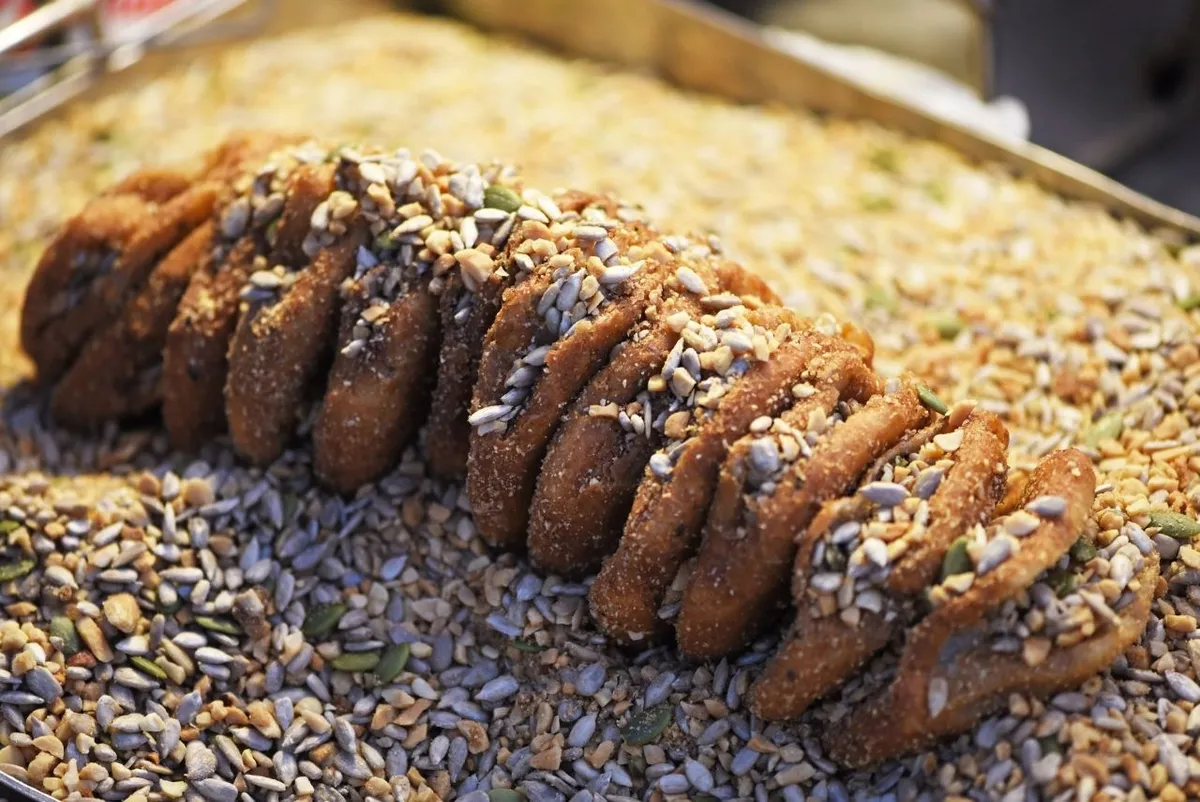
Photo: Busan Tourism Organization.
The filling matters as much as the dough. The sweet pancake combines a fried exterior with the texture of the added seeds and nuts; it is a different choice from the red-sauce snacks sold nearby. If you have a seed or nut allergy, this is an item to discuss with the stall before ordering, rather than treating it as plain bread.
BIFF Square also has tteokbokki, dumplings, and skewered snacks. A food visit can stay focused on those counters without becoming a seafood restaurant meal. For the square itself, use the area around 58-1 Gudeok-ro, Jung-gu, Busan; the public street and its individual food stalls do not share one opening schedule.
2. Bupyeong Market: Thick Rice Cakes in Red Sauce
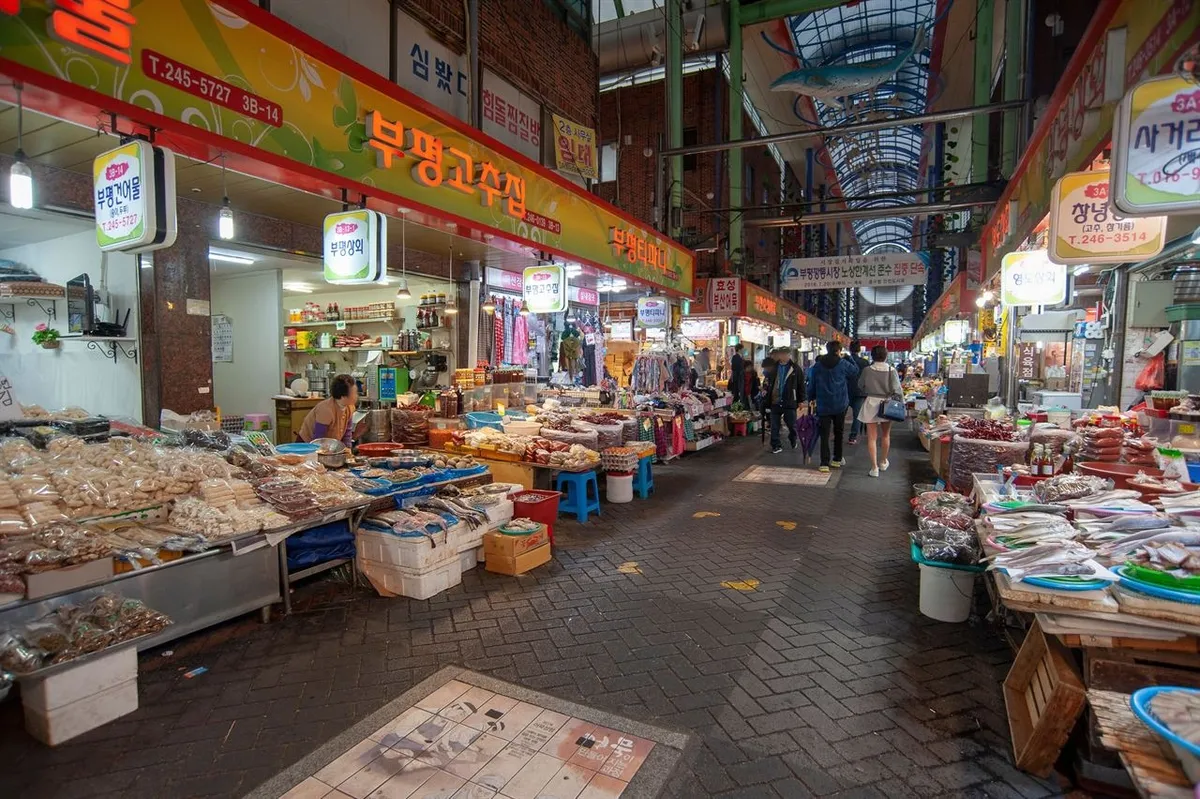
Bupyeong Kkangtong Market (부평깡통시장) stands beside Gukje Market (국제시장). Its food shops sell prepared snacks alongside ingredients such as seafood, vegetables, grains, and side dishes. The market is a separate eating stop from BIFF Square, although both belong to the wider Nampo-dong food area.
Tteokbokki (떡볶이), spicy rice cakes, is one dish to look for here. The Bupyeong style highlighted in Busan’s food guide uses thick bar-shaped rice cakes. Their shape gives the dish a different appearance from plates of small, thin rice-cake pieces.
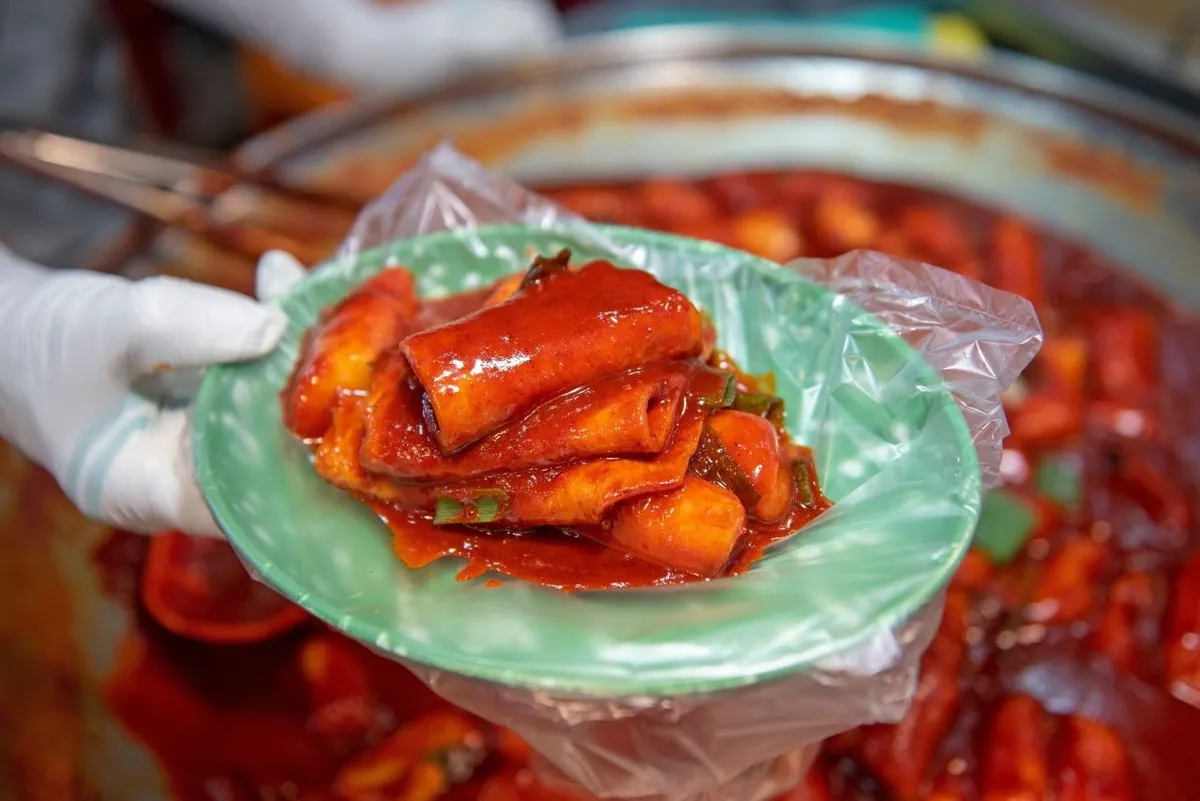
Photo: Busan Tourism Organization.
Choose this stop for rice cakes in a red, spicy preparation. The dish is not the same as multteok (물떡), rice cake served in broth, which offers another way to encounter rice cakes in Busan. Recognizing both names makes a stall’s display easier to read: red-sauce rice cakes and broth-served rice cakes are different orders.
The spicy rice-cake dish and broth-served rice cake provide two different starting points for a market meal. Prices and portions belong to the individual stall, not to the market as a whole; compare the preparations on offer rather than treating every rice-cake order as the same dish.
3. Fish Cakes and Multteok: Two Different Skewered Snacks
Eomuk (어묵) means Korean fish cake. Around Nampo-dong, the food appears both in market displays and on skewers in hot broth. BIFF Square has fish-cake skewers, while Bupyeong’s food shops offer fish cakes in several shapes.
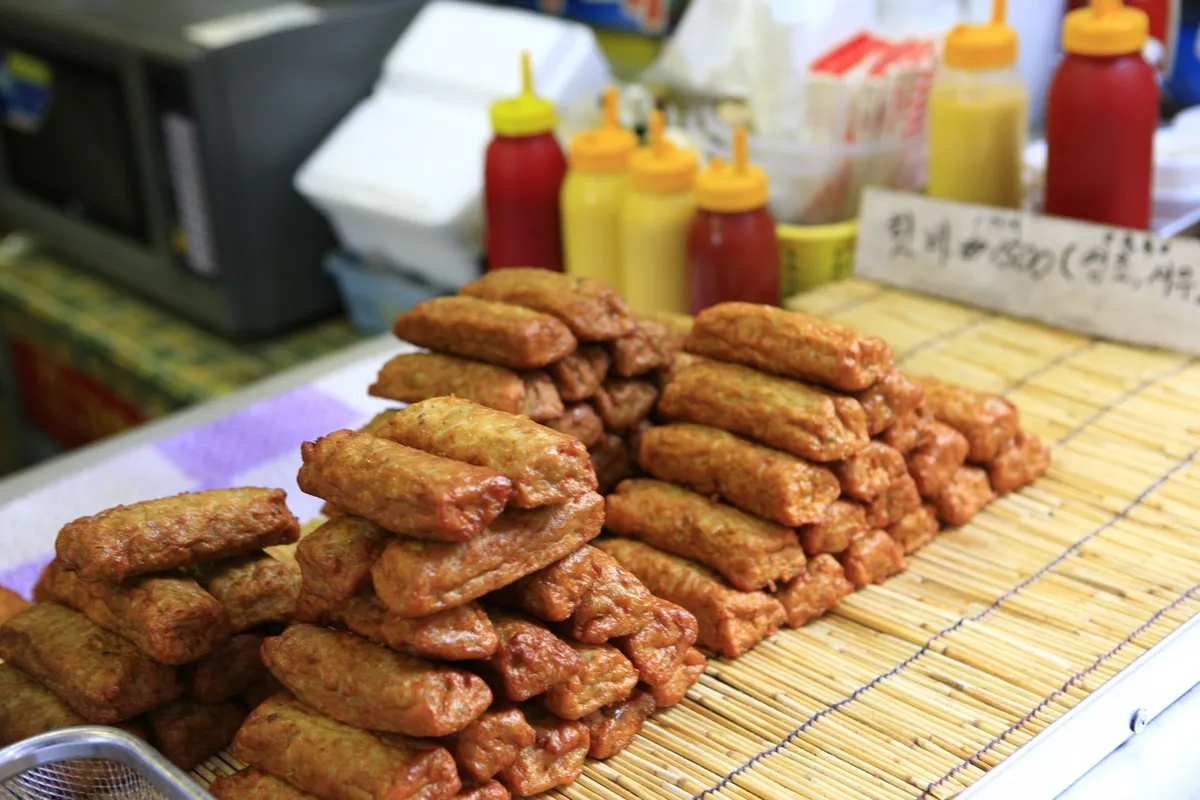
Photo: Korea Tourism Organization / Kim Ji-ho. Fish-cake display at neighboring Gukje Market.
Multteok is rice cake in broth, rather than fish cake. It is associated with Busan and the wider Gyeongsang region. This distinction is useful when similar-looking pale items share a counter: the Korean menu name tells you whether you are choosing a rice-cake item or a fish-cake item.
For a meal centered on clear broth rather than red sauce, these are the preparations to look for. The appearance of the broth does not establish its ingredients or allergy suitability, so ingredient questions still belong with the stall.
4. Bibim Dangmyeon and Yubu Jumeoni: Noodles or Stuffed Tofu
Bibim dangmyeon (비빔당면) is a Bupyeong market dish made with boiled glass noodles, garnishes, and red seasoning. It is mixed for eating rather than stir-fried as japchae is. A bowl therefore gives you a different meal format from the pancake and rice-cake counters.
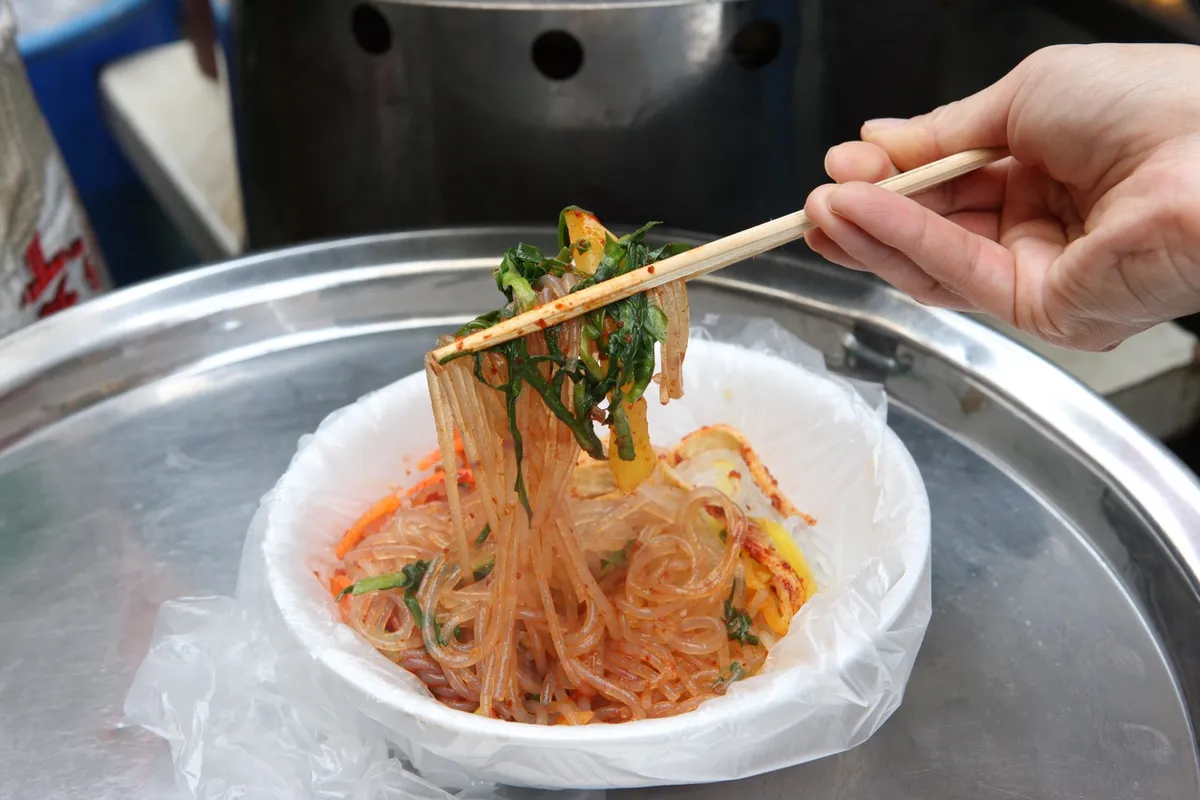
Photo: Korea Tourism Organization / Kim Ji-ho.
Look for the noodle name when you want a savory bowl instead of several individual snacks. The red seasoning is part of the dish’s spicy preparation, not simply a visual decoration. Mixing brings the separate garnishes and seasoning through the noodle strands.
Yubu jumeoni (유부주머니) offers another noodle-based choice in a different form. A fried tofu pocket holds glass noodles and vegetables, with its opening tied using a green stem such as water parsley or scallion. The pockets are served in broth, sometimes together with fish cakes.
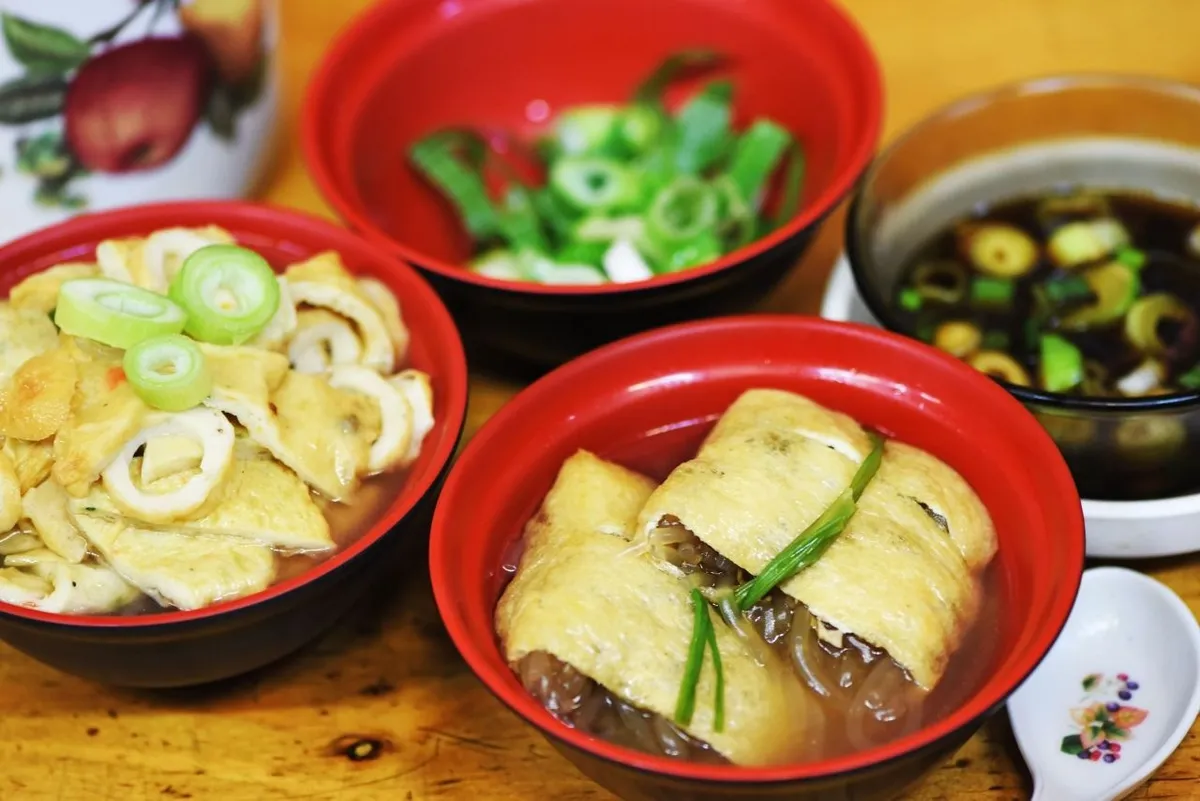
Photo: Busan Tourism Organization.
The tied parcel is the identifying feature. Opening it brings the noodle-and-vegetable filling into the soup, whereas bibim dangmyeon keeps the noodles in a seasoned bowl. Although tofu and vegetables are visible components, they do not establish that the finished broth is vegetarian.
5. Plan the Evening at Bupyeong Night Market
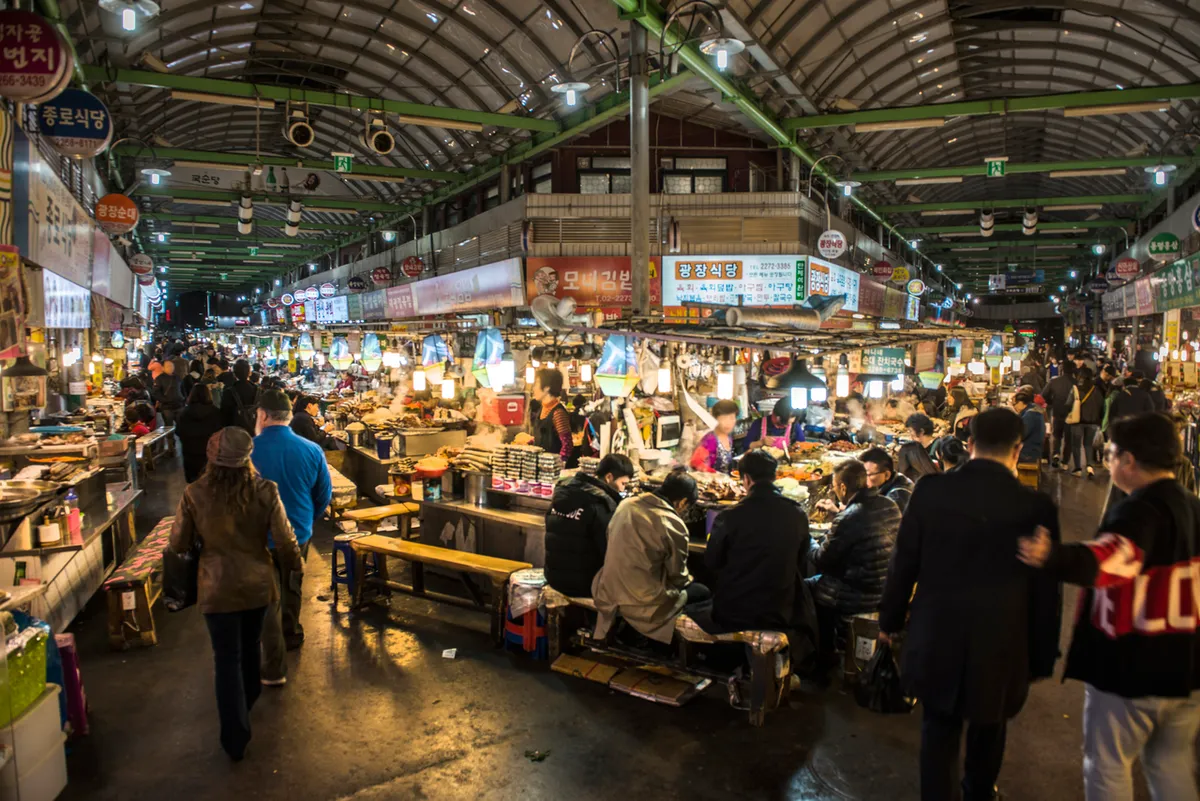
The night market is an evening food-cart service within Bupyeong Kkangtong Market, not a timetable for every daytime shop. It opened in 2013, and its advertised evening service runs from 7:30 p.m. to midnight, with holiday exceptions. Confirm holiday notices before making it the focus of a late visit.
During that service, wheeled food stalls gather in the alleys. Korean foods share the night market with foods from other countries, so not every counter represents a Busan specialty. For a Korean-food-focused visit, keep the menu names from this guide in mind rather than assuming all carts serve the same local dishes.
For a sweet stop, ssiat hotteok puts a seed-filled pancake into a handheld serving. A noodle bowl or tofu-pocket soup offers a different eating format; choose according to whether you want a sweet bite, spicy rice cakes, or a broth-based meal.
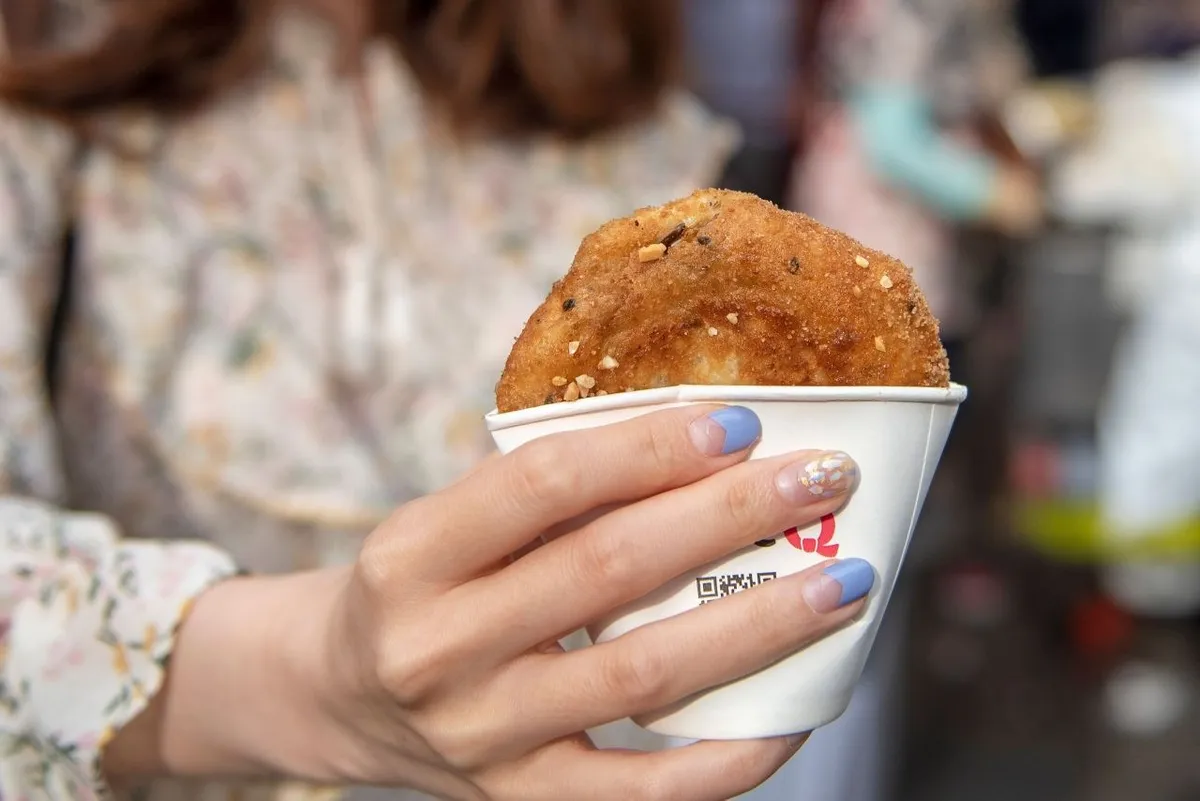
Photo: Busan Tourism Organization.
The market address is 48, Bupyeong 1-gil, Jung-gu, Busan. Keep to the right in the narrow night-market alleys, where carts occupy the center of the passage. Do not apply the evening cart schedule to a specific hotteok, noodle, or fish-cake shop without checking that business separately.
Frequently Asked Questions
Where can I eat street food in Busan’s Nampo-dong area?
BIFF Square has seed-filled hotteok, tteokbokki, and skewered snacks. Nearby Bupyeong Kkangtong Market offers rice-cake dishes, fish cakes, glass noodles, and tofu pockets, with a separate evening night market.
What is inside Busan’s ssiat hotteok?
It is a sugar-filled fried pancake with added seeds and roasted nuts. The pancake is opened after frying so the filling can be added. Check the stall’s ingredients if you have a seed or nut allergy.
What is the difference between multteok and eomuk?
Multteok is rice cake served in broth. Eomuk is fish cake, which can also be served on skewers in hot broth. The two Korean names identify different foods even when they appear at the same counter.
When does Bupyeong Kkangtong Night Market open?
The advertised night-market hours are 7:30 p.m. to midnight, with holiday exceptions. Those hours refer to the evening service, not every market shop. Check the current holiday arrangements before visiting.
Choose your Busan street food stop by the dish: seed-filled hotteok at BIFF Square, then rice cakes, fish cakes, glass noodles, or tofu-pocket soup around Bupyeong. Treat the evening carts as a separate part of the food visit rather than assuming the whole market follows one schedule.
Complete Your Korea Trip with TripKorea
For a base near the downtown food area, explore Hotels in Nampo, Busan. To combine the market meal with other city activities, browse Things to Do in Busan.
Sources & References
Food descriptions and market guidance: Busan Metropolitan City / Visit Busan. Korean rice-cake dish reference: Korea Foundation Korean Food Database.
- Visit Busan — Street Foods, Glass Noodles, Tofu Pockets, and Rice Cakes
- Visit Busan — Nampo-dong Food Area and BIFF Square
- Visit Busan — Bupyeong Kkangtong Market
- Visit Busan — Bupyeong Night Market Hours and Alley Guidance
- Visit Busan — BIFF Square Food and Visitor Information
Photos: Korea Tourism Organization PhotoKorea collection; Busan Tourism Organization and individual photographers are credited beneath the body photographs. Hero: Korea Tourism Organization / Niotani Studio. Archive photographs illustrate the foods and settings, not a guarantee of current vendor menus.
Last verified: 2026-10-11. Night-market hours were checked against Visit Busan; the market operator’s own website could not be accessed for an independent schedule check.
Menus, prices, stall availability, and holiday schedules can change. Confirm with the chosen stall or market before visiting.