Galbijjim (갈비찜) is a Korean braised short-rib dish built around bone-in beef, a soy-based seasoning, and vegetables cooked in the same pot. The ribs remain intact rather than being sliced for a grill or reshaped into patties.
This guide explains the standard ingredients, the braising format, differences from grilled galbi and tteokgalbi, spicy versions, and the menu details to check when ordering in Korea.
What Is Galbijjim?
The name combines galbi (갈비), meaning ribs, with jjim (찜), a category of dishes cooked with seasoned liquid until the main ingredients soften. The standard English name is Braised Short Ribs.
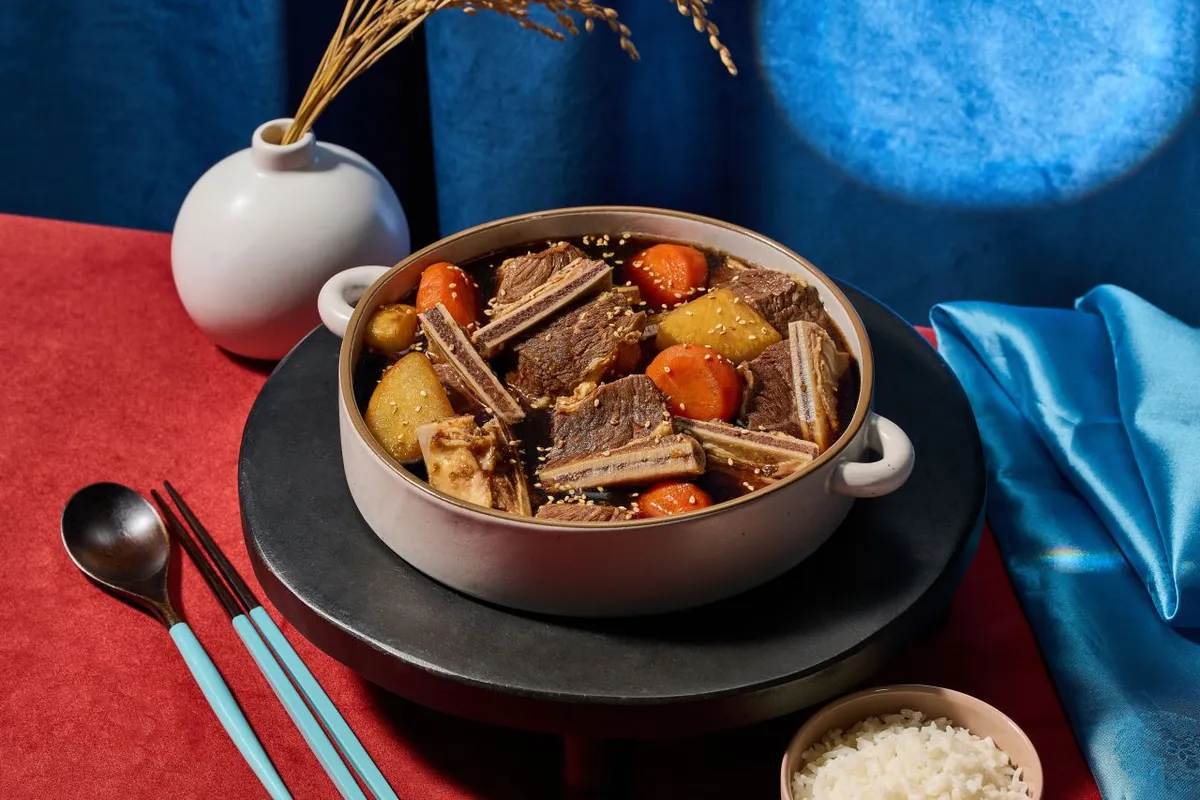
Beef short ribs are cut into chunks and simmered with seasoning rather than cooked quickly over a barbecue grill. The finished dish keeps the rib bones visible, with the meat served in a reduced brown braising liquid.
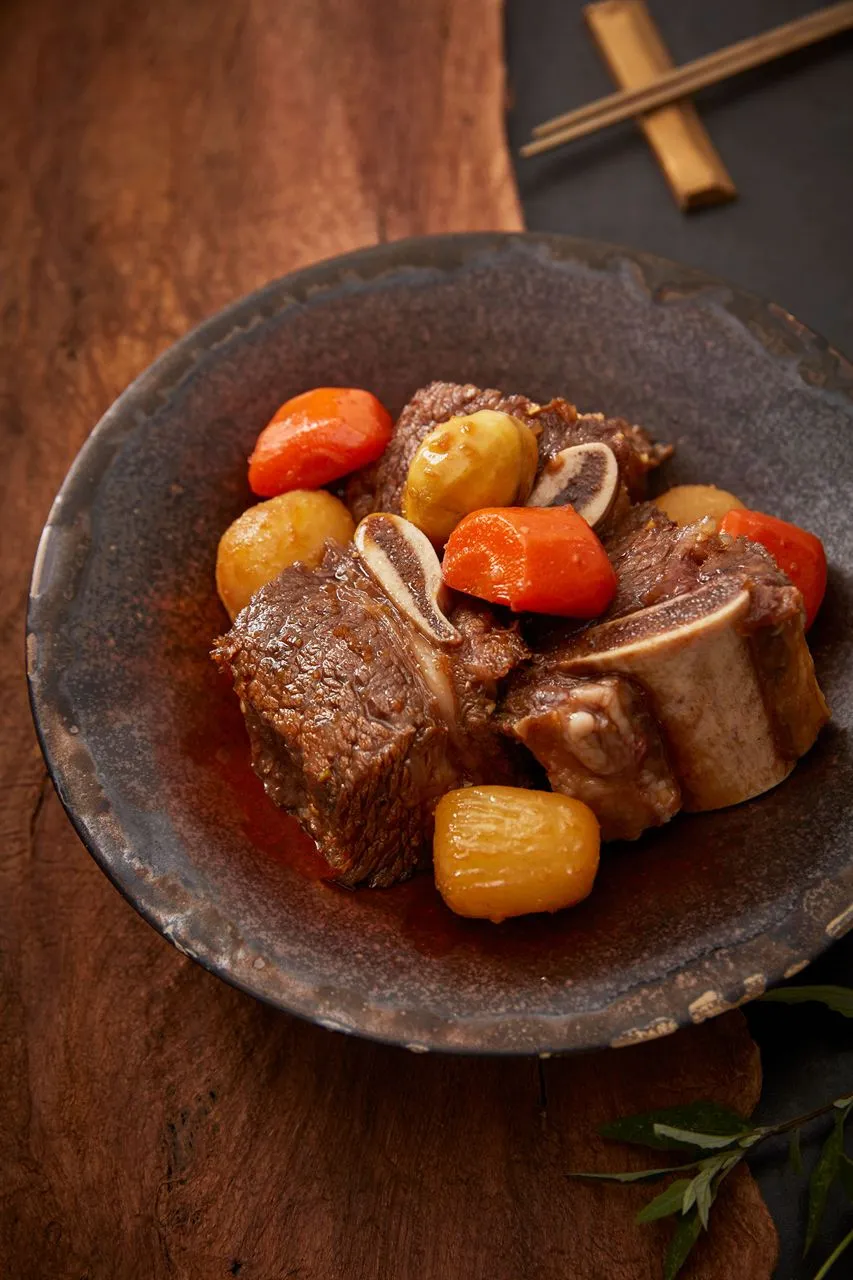
Photo: Korea Tourism Organization
Carrots, Korean radish, and chestnuts can make the components easy to distinguish on the plate. Restaurant presentations can range from a shallow serving plate to a lidded pot or a heated metal bowl.
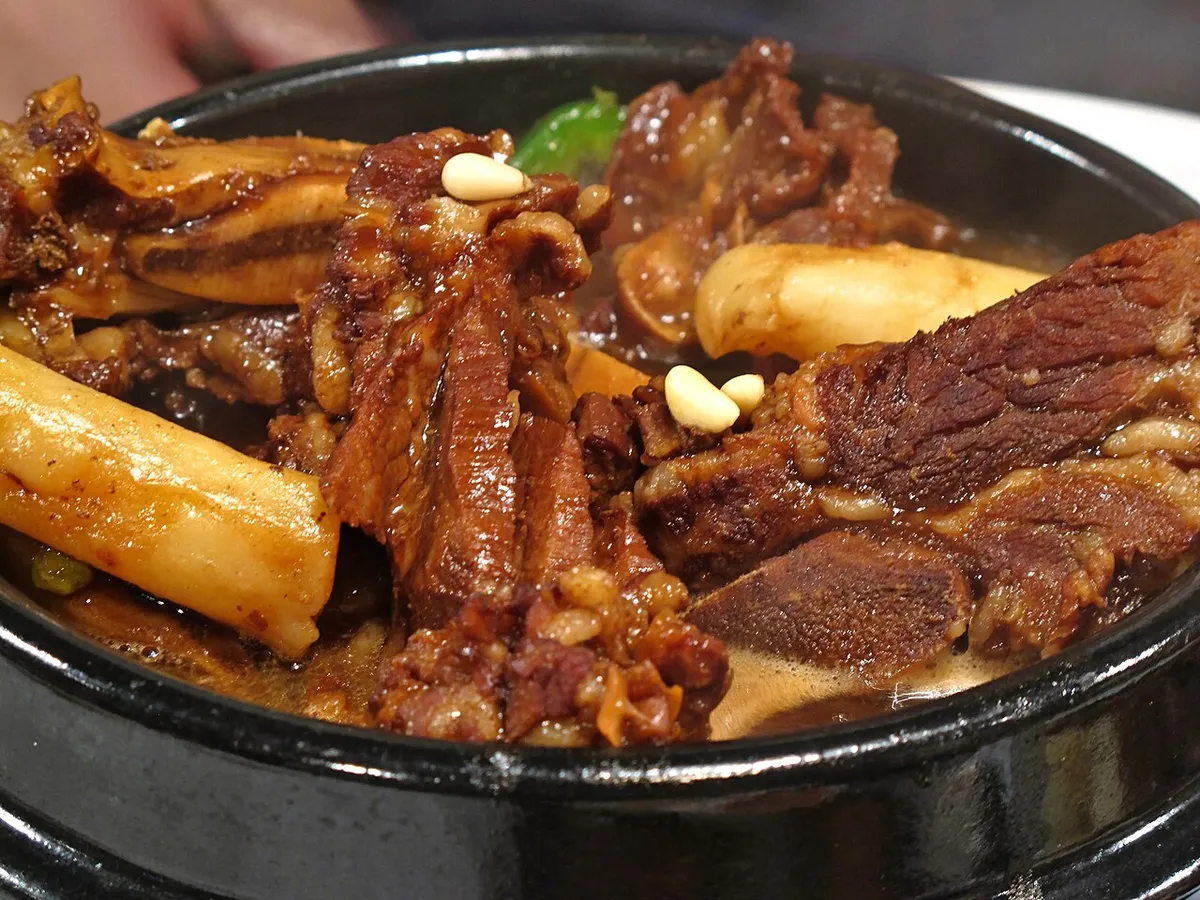
Photo: Chun Yip So via Wikimedia Commons, CC BY 2.0
The bones identify the short-rib cut, but the exact vegetables, garnish, sauce level, and portion size vary. Read the full menu name instead of relying on one photograph to predict a restaurant’s version.
Galbijjim Ingredients and Braising Method
The standard preparation begins with chunks of beef short rib. Soy sauce, garlic, sugar, and additional seasonings form the braising base.
The standard preparation includes Korean radish, carrots, chestnuts, jujubes, and ginkgo nuts. Julienned egg garnish and ground pine nuts may be added when it is served.
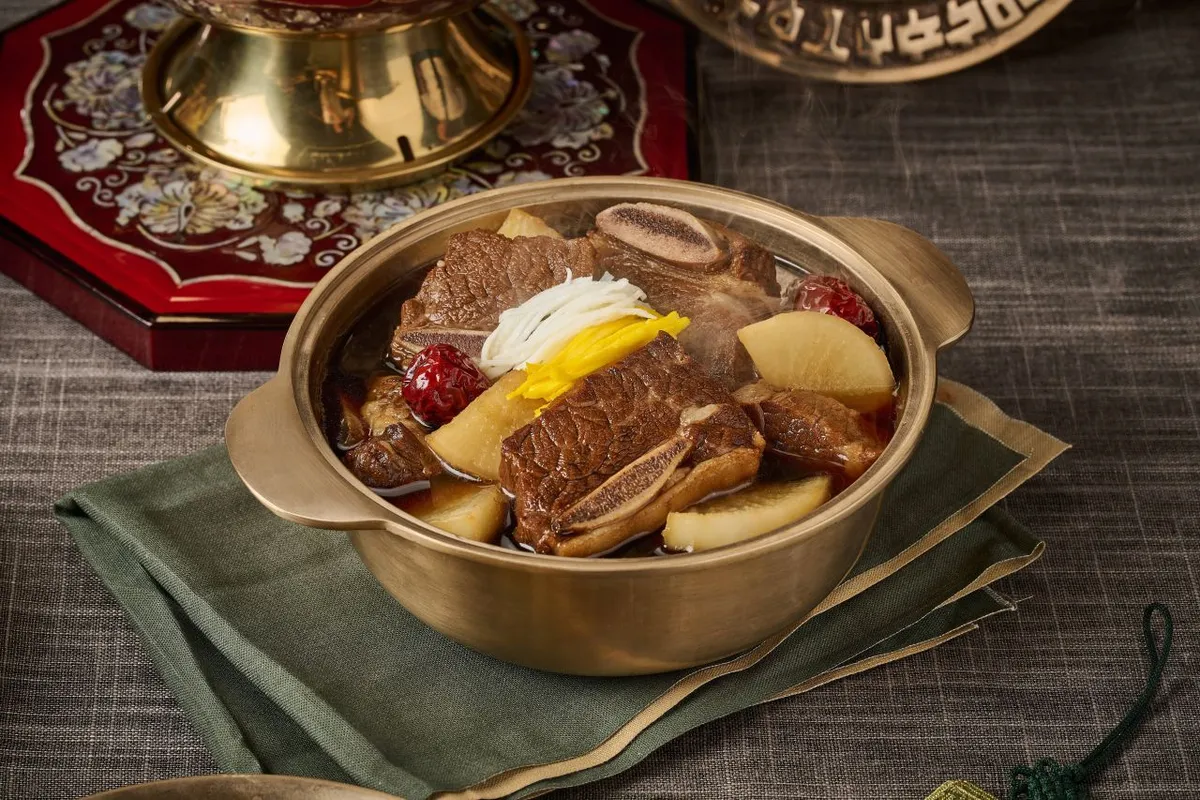
Photo: Korea Tourism Organization
The ingredients cook together over time, allowing the seasoning to reach the meat and vegetables. The result is different from a grilled rib because the meat is surrounded by braising liquid during cooking rather than exposed directly to a hot grill.
Not every restaurant includes every listed garnish or vegetable. Soy sauce is central to the standard seasoning, so diners managing soy or other food allergies should ask about the current recipe before ordering.
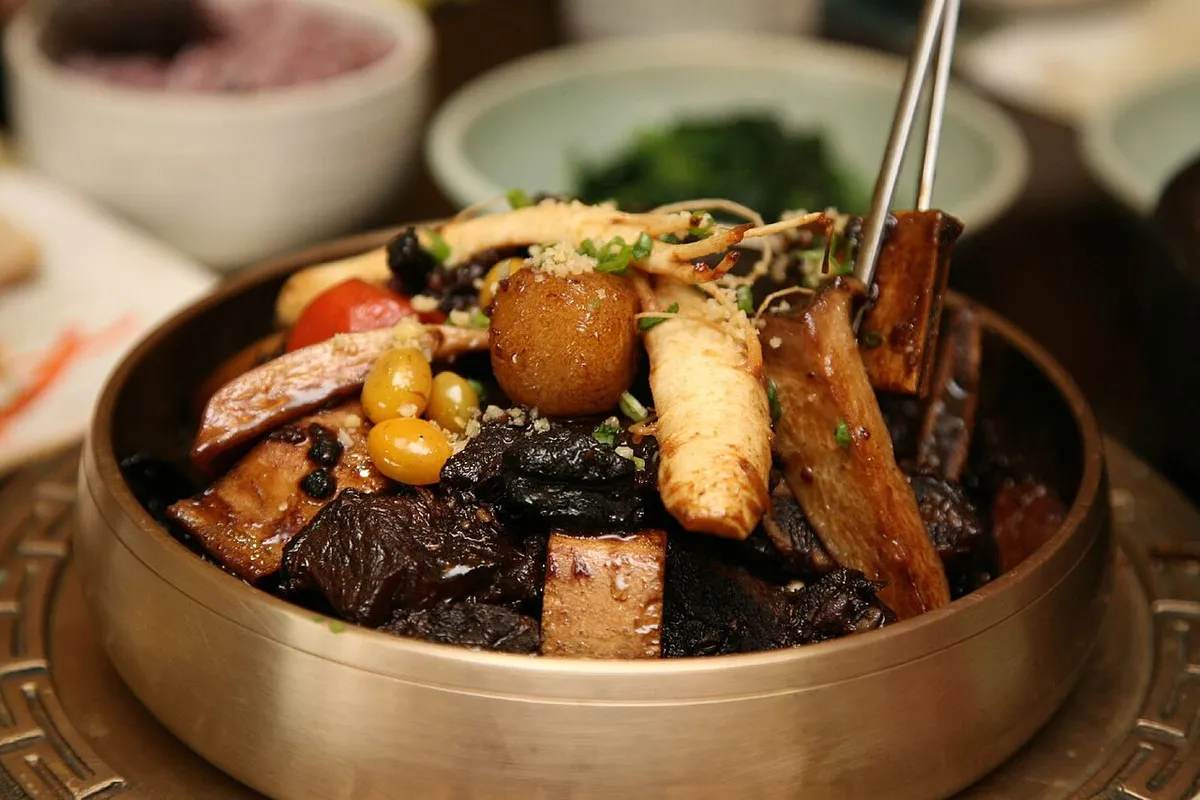
Photo: Junho Jung via Wikimedia Commons, CC BY-SA 3.0
Some versions add mushrooms or other vegetables. These additions should be treated as restaurant-specific variations rather than guaranteed parts of every order.
Galbijjim vs Grilled Galbi and Tteokgalbi
These three dishes all use the word galbi, but they describe separate preparations. The cooking method and the physical form of the meat provide the clearest distinction.
- Galbijjim (갈비찜): chunks of short rib braised with seasoning and vegetables.
- Galbi-gui (갈비구이): rib cuts cooked over a grill.
- Tteokgalbi (떡갈비): minced rib meat that is seasoned, shaped, and cooked on a grill.
The braised dish belongs to the jjim category rather than the grill-table format. It normally arrives already cooked, while galbi-gui is associated with grilled ribs and may be cooked at the table in barbecue restaurants.
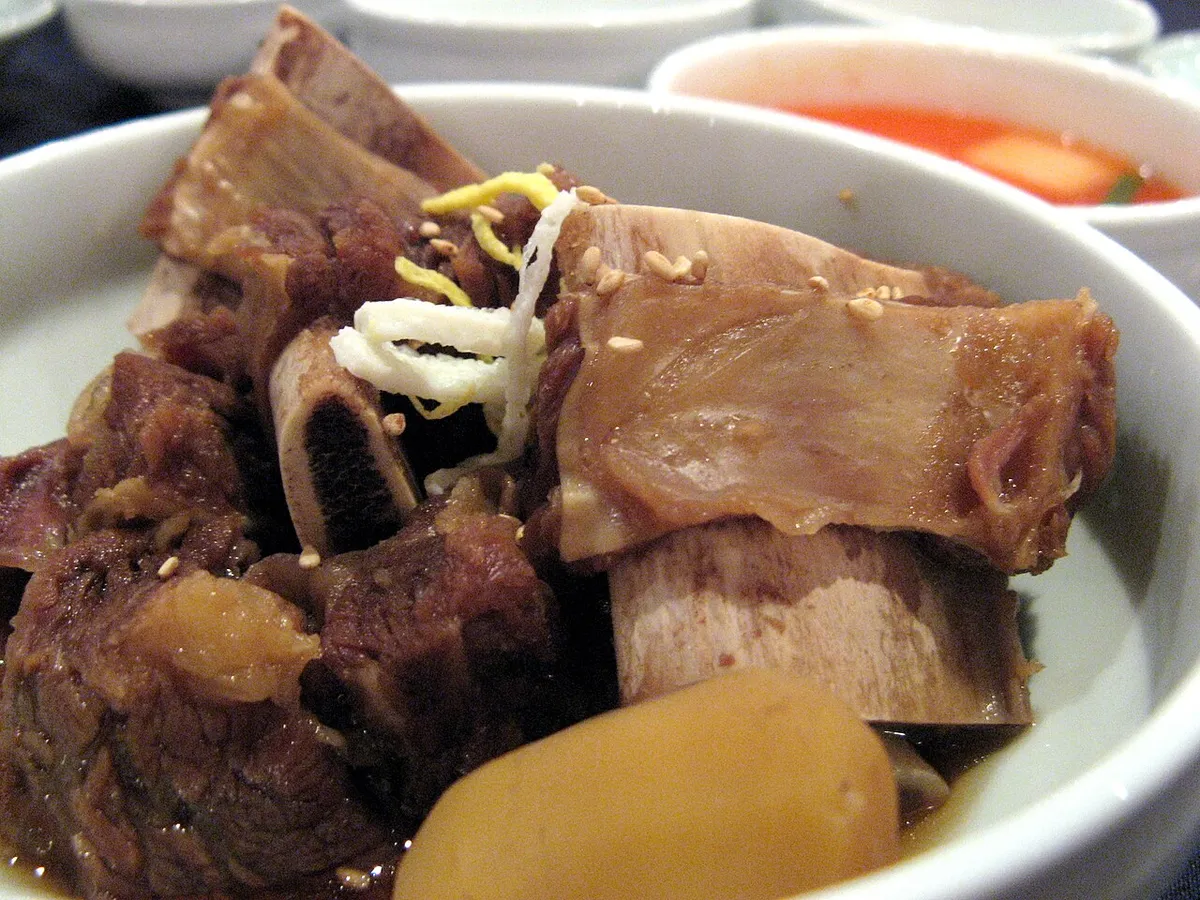
Photo: Richy! via Wikimedia Commons, CC BY-SA 2.0
The visible rib bones also separate it from the formed patties explained in TripKorea’s Tteokgalbi Guide. For table grilling, pork belly, and grilled rib terminology, use the Korean Barbecue Guide.
Spicy Galbijjim and Daegu Jjimgalbi
The standard braised-short-rib description uses a soy-based seasoning. Menus labeled maeun-galbijjim (매운갈비찜), meaning spicy braised ribs, use a chili-forward preparation instead.
Daegu’s Dongin-dong has a dining street identified with jjimgalbi (찜갈비). Daegu’s tourism authority describes the local version as ribs simmered with broth, seasoning, garlic, and red pepper powder.
The same city guide traces the dish on this street to the early 1970s, when taverns served jjimgalbi as both a drinking accompaniment and a side dish. The pictured version places the bone-in ribs in a metal bowl with visible chili seasoning.
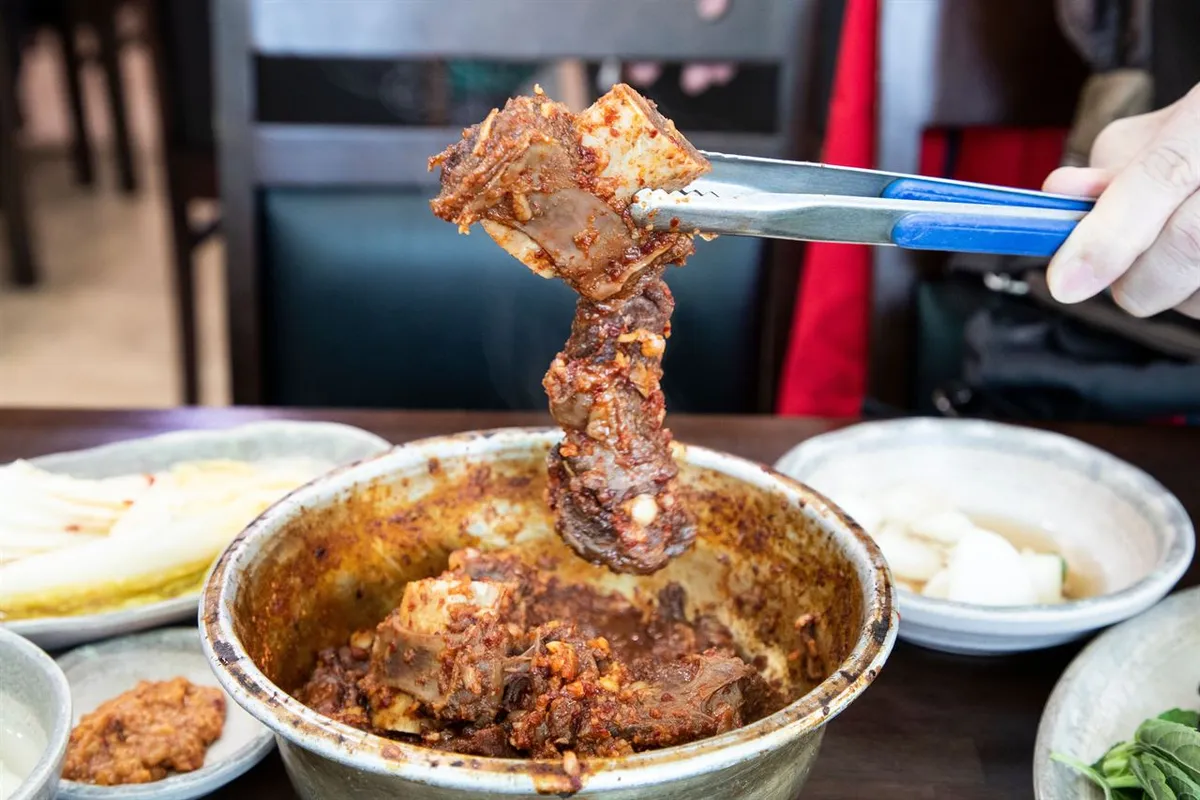
Photo: Korea Tourism Organization
This regional presentation should not be used to predict the heat level of every order. Check for the words maeun (매운), spicy, or jjimgalbi on the menu, and ask the restaurant when the description is unclear.
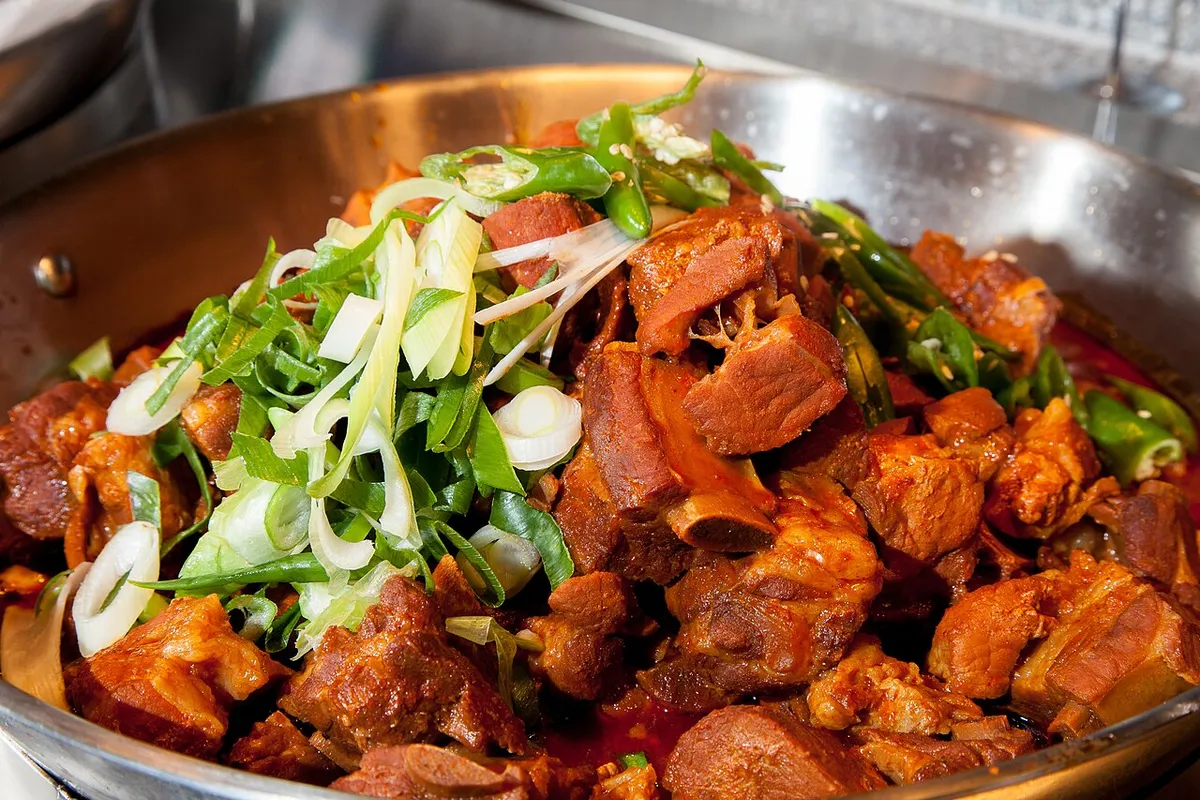
Photo: happy11u via Wikimedia Commons, CC0
A useful question is “Maewoyo?” (매워요?), meaning “Is it spicy?” If you need the soy-braised version, show the Korean name galbijjim (갈비찜) and confirm that it is not maeun-galbijjim.
How to Order and Eat Galbijjim
The dish may be sold as an individual meal, a shared pot, or part of a set menu. Confirm the serving size, minimum order, and whether rice is included before placing the order.
The meat is served on or around sections of rib bone. Separate the edible meat from the bone with the utensils provided, and take care with small bone fragments that may remain among the braised pieces.
Useful Korean questions include:
- Maewoyo? (매워요?) — Is it spicy?
- Igeo so-galbijjim-ieyo? (이거 소갈비찜이에요?) — Is this beef galbijjim?
- Myeot inbun-ieyo? (몇 인분이에요?) — How many servings is it?
- Bap-i poham-dwaeyo? (밥이 포함돼요?) — Is rice included?
Because the standard seasoning includes soy sauce, an allergy check should cover the braising sauce as well as visible garnishes. Other additions can differ, so ask directly rather than assuming that an unlisted ingredient is absent.
Frequently Asked Questions
What is galbijjim made from?
It is made from beef short ribs braised with soy sauce, garlic, sugar, and other seasonings. The standard preparation also includes vegetables and garnishes such as Korean radish, carrots, chestnuts, jujubes, ginkgo nuts, egg, and pine nuts.
Is galbijjim the same as Korean barbecue?
No. The dish is braised in seasoned liquid and arrives cooked. Korean barbecue galbi is grilled, often at or near the dining table.
Is galbijjim always spicy?
No. The standard version is soy-based rather than defined by chili. Spicy versions are commonly identified with words such as maeun-galbijjim or jjimgalbi, but recipes vary by restaurant.
What is the difference between galbijjim and tteokgalbi?
The braised ribs keep their bones intact during cooking. Tteokgalbi reshapes minced rib meat before it is cooked on a grill.
Does galbijjim contain bones?
Yes. The standard dish uses beef short ribs cut into chunks, and the rib bones remain in the serving dish. Eat the meat and leave the bones aside.
Continue Your Korea Food Planning
Galbijjim is defined by braising, bone-in short ribs, and a seasoned sauce rather than the grill-table format used for galbi-gui. Browse things to do in Korea when planning food markets, cooking activities, and other travel experiences.
Sources & References
Data Sources:
- Korean Food Information: Korea Foundation (한국국제교류재단) Korean Food Database
- Regional and Photo Information: Korea Tourism Organization PhotoKorea
- Photos: Korea Tourism Organization and Wikimedia Commons
Official Sites:
- Visit Korea — Korean Food
- National Folk Museum of Korea — Galbijjim
- Daegu Tourism — Dongin-dong Jjimgalbi Alley
- Galbi-jjim photo by Chun Yip So — CC BY 2.0
- Galbijjim photo by Junho Jung — CC BY-SA 3.0
- Galbijjim photo by Richy! — CC BY-SA 2.0
- Maeun-galbi-jjim photo by happy11u — CC0
Last verified: 2026-09-24
Restaurant recipes, serving sizes, included items, and ordering rules are subject to change. Please confirm directly before ordering.