Korean street food is built around bunsik snacks, market stalls, winter sweets, and quick meals sold in busy shopping streets and traditional markets. This guide covers the dishes foreign travelers most often meet first, with Korean names, basic ingredients, ordering notes, and market etiquette verified against Korean food and tourism reference data.
1. Korean Street Food Basics: Bunsik, Markets, and Stall Etiquette
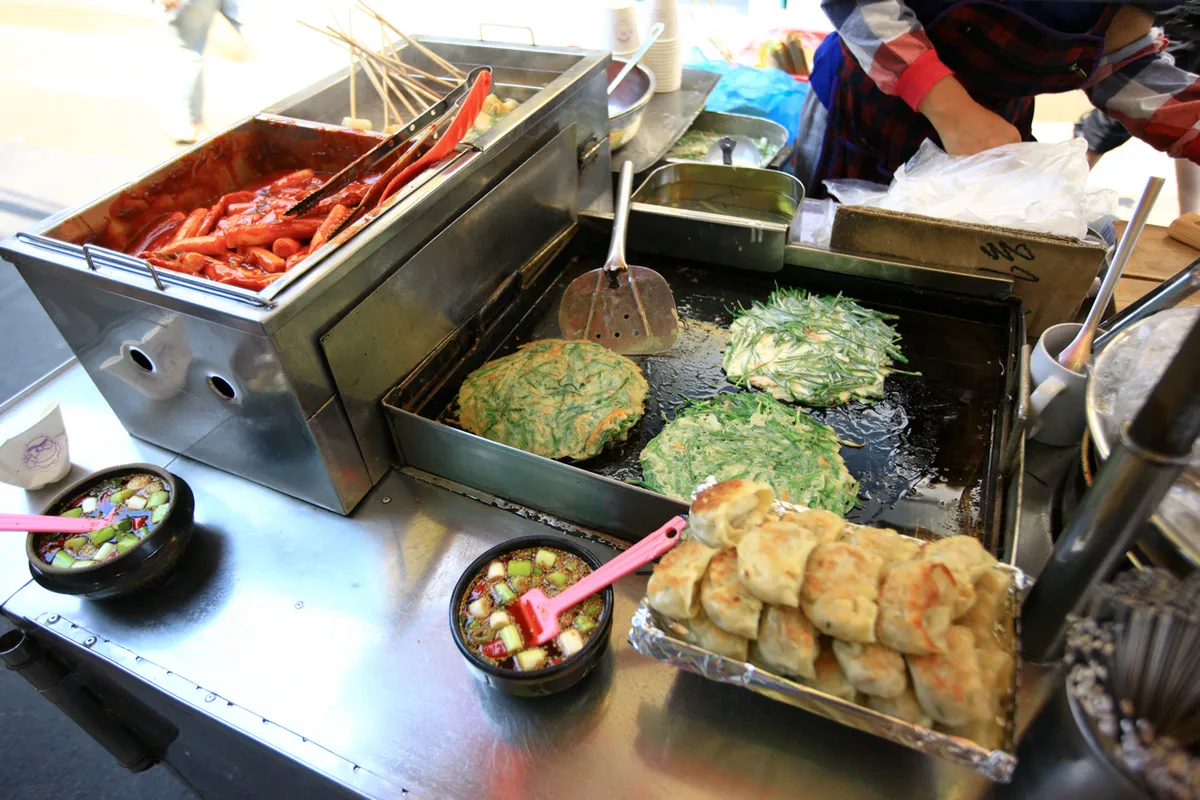
The word bunsik (분식) refers to casual snack-style food rather than a single dish. In practice, many street-food stalls and small shops serve combinations such as tteokbokki, gimbap, sundae, fried snacks, and fish-cake broth. These foods are usually ordered in small portions, shared at a counter, or packed for takeaway.
Traditional markets and commercial districts are the most common settings. Seoul's Gwangjang Market (광장시장), Myeongdong (명동), Namdaemun Market (남대문시장), Busan's Gukje Market (국제시장), and many neighborhood markets all have food alleys or vendors where several dishes can be ordered in one stop. Menus may be written in Korean only, so recognizing core dish names is useful.
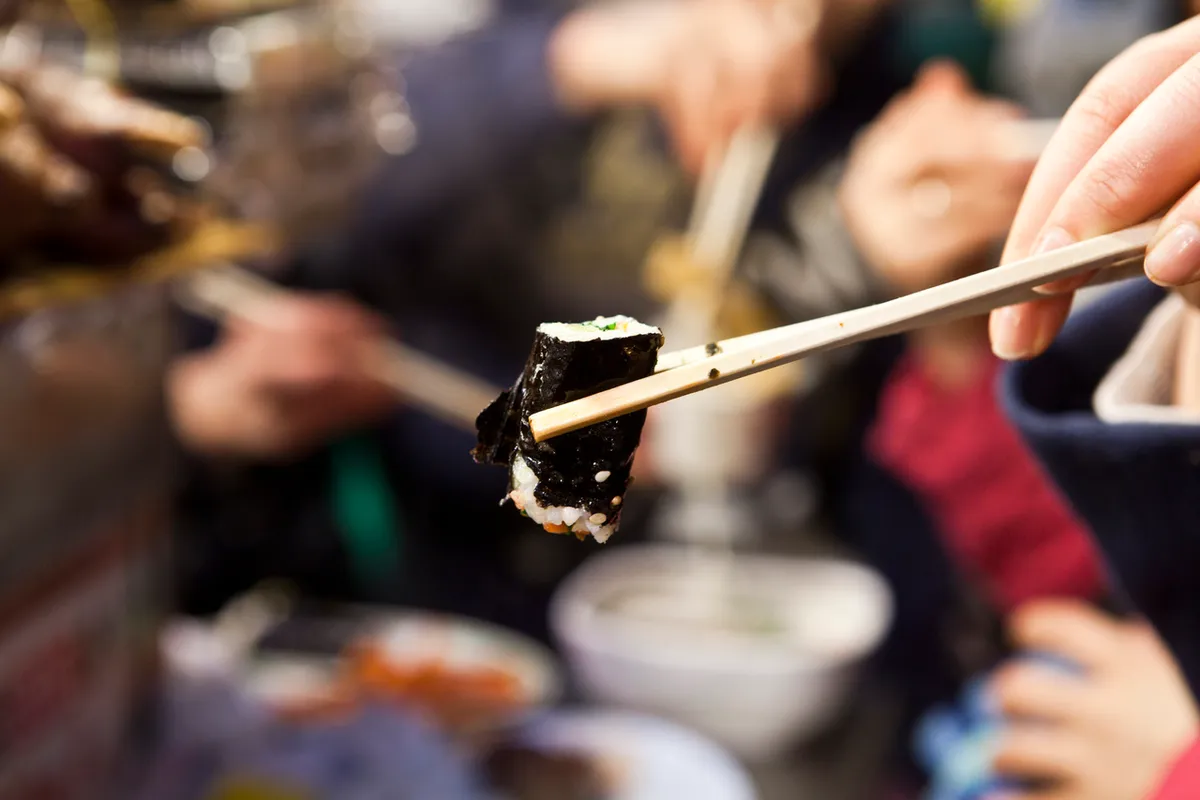
Payment methods vary by vendor. Larger stalls and market restaurants may accept cards, while smaller vendors may prefer cash or mobile payment. Travelers with allergies should ask before ordering, because sauces, broths, and fillings can include seafood, wheat, egg, sesame oil, or soy sauce.
2. Tteokbokki, Eomuk, and the Spicy-Sweet Bunsik Set
Tteokbokki (떡볶이) is one of the central dishes in Korean street food. The traveler-facing name refers to chewy rice cakes simmered in a red sauce, commonly based on gochujang chili paste and sugar. The Korea Foundation entry describes a stir-fried rice-cake dish and notes the modern spicy red-pepper-paste version, which is the form most visitors recognize today.
Street stalls often serve tteokbokki together with eomuk (어묵), Korean fish cake served on skewers or in hot broth. The broth is usually ladled into paper cups at bunsik stalls, especially in cold weather. Tteokbokki sauce is also used as a dipping sauce for fried snacks, gimbap, and sundae, so one order can connect several dishes on the same plate.
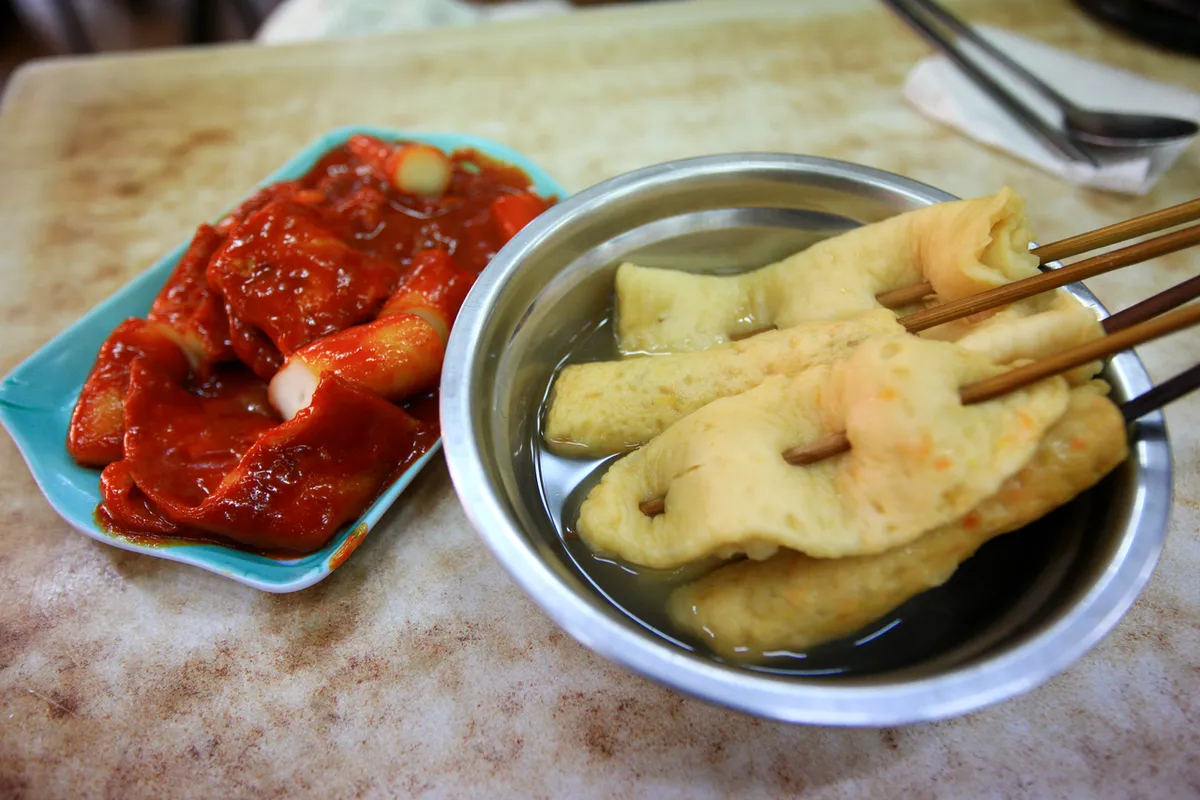
For spice control, ask before ordering rather than after the dish is plated. A useful phrase is “An maepge hae-juseyo” (안 맵게 해주세요), meaning “Please make it not spicy.” Some vendors prepare one large pan of sauce, so a milder version may not always be available.
3. Gimbap, Sundae, and Filling Street-Food Meals
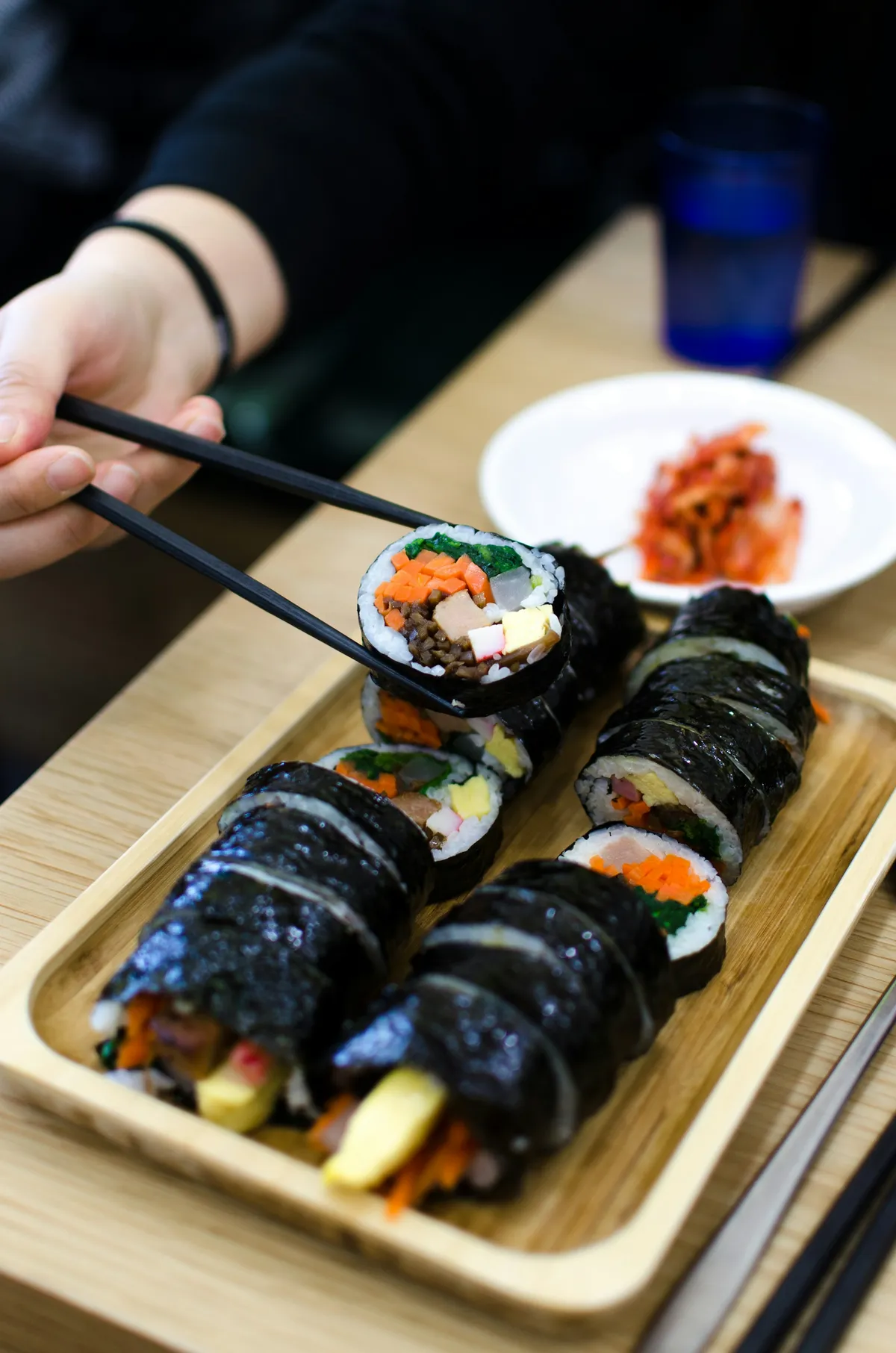
Gimbap (김밥) is rice rolled in dried laver with fillings such as egg, pickled radish, vegetables, and sometimes beef or other proteins. The Korea Foundation standard entry calls it “Rice Rolls in Laver,” but travelers will usually see the menu name romanized as gimbap. It is cut into bite-size rounds and works as a light meal or a side order with tteokbokki.
Sundae (순대) is Korean-style blood sausage. The Korea Foundation describes it as a sausage made with pork blood, vegetables, and rice or noodles. At street stalls, sundae is commonly sliced and served with salt or seasoning powder; in some regions, vendors may serve it with regional dipping sauces or add liver and other offal on request.
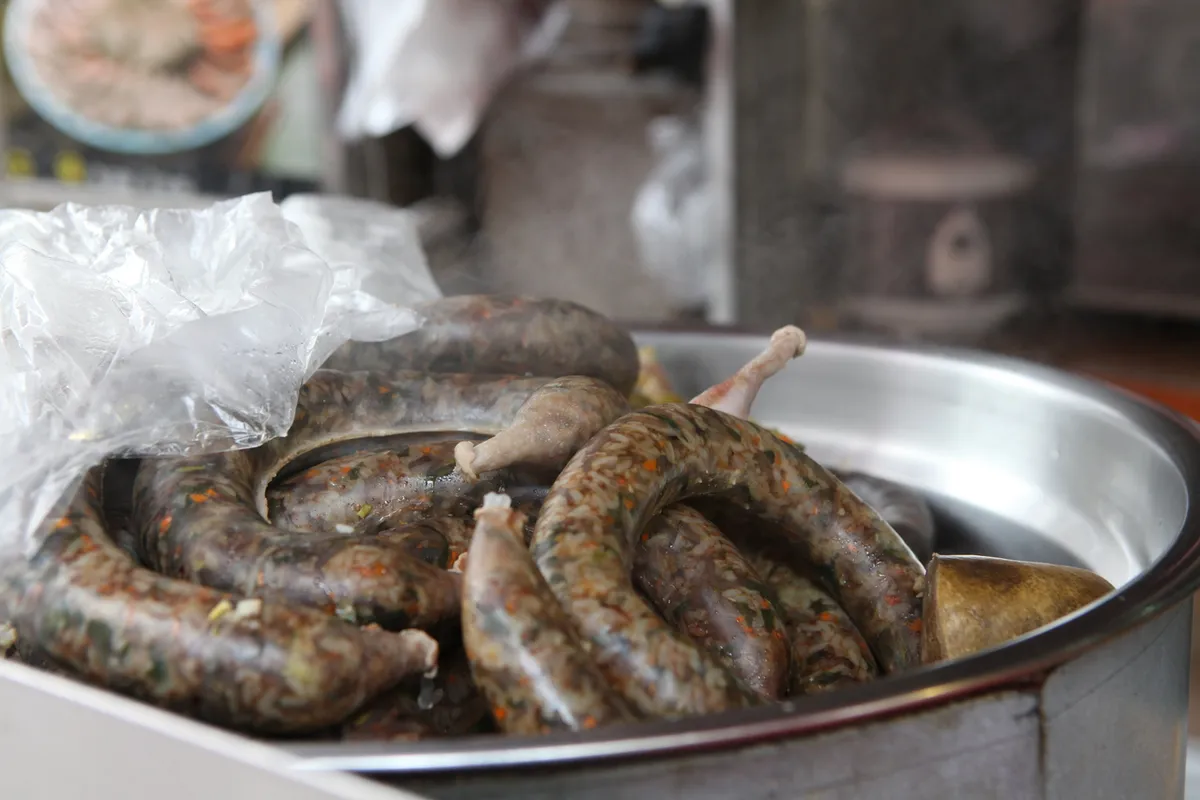
These two dishes are useful for travelers who want something more filling than a sweet snack. Gimbap is easy to share and pack, while sundae is more specific in flavor and texture. If offal is included by default, travelers can point to the sliced sausage and ask for only sundae.
4. Fried Snacks, Dumplings, and Skewers
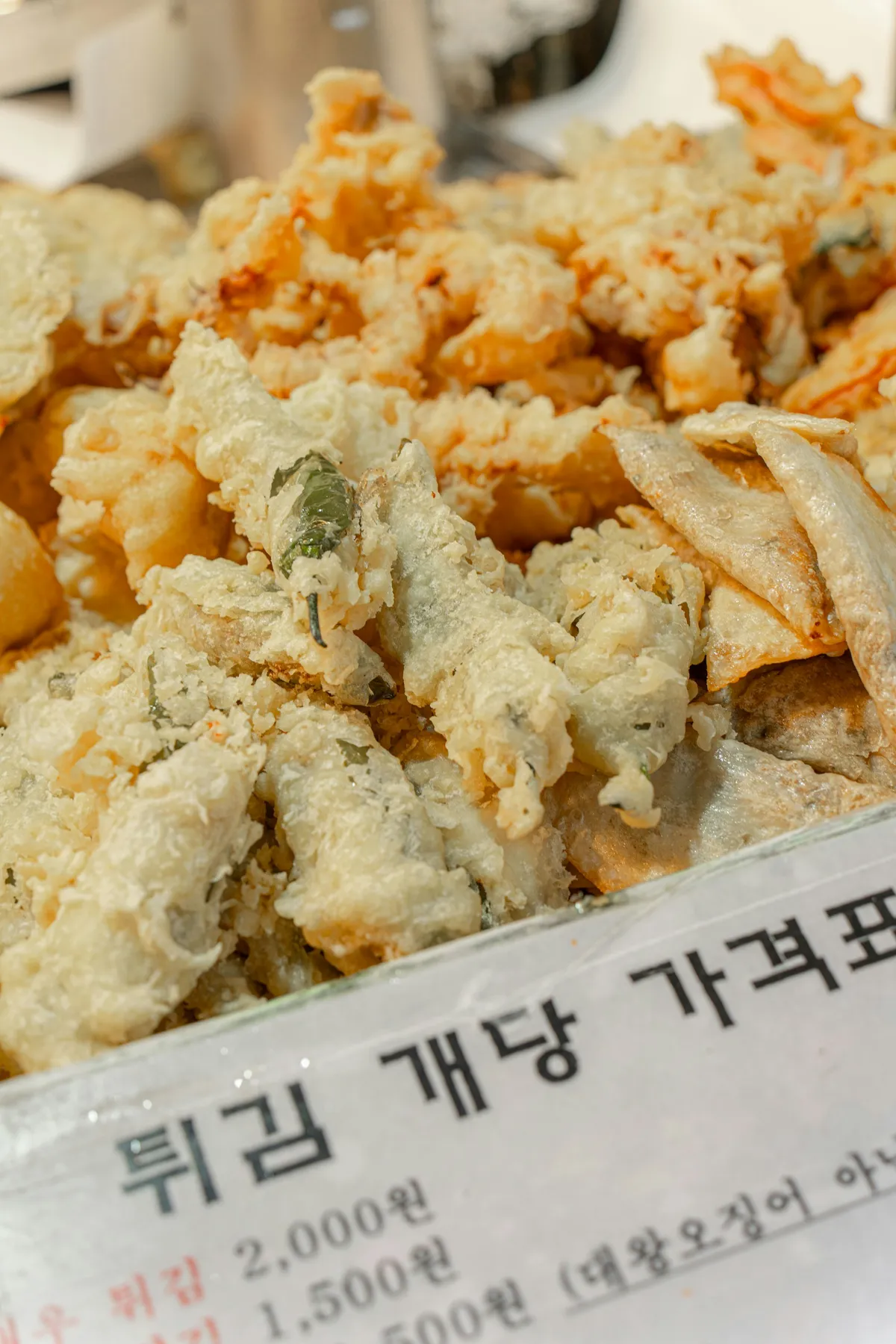
Fried snacks are usually grouped under twigim (튀김), a general Korean word for deep-fried items. Common market versions include fried shrimp, vegetables, sweet potato, squid, seaweed rolls, and dumplings. Korea Foundation entries include several deep-fried dishes, such as deep-fried sweet potato and deep-fried shrimp, which match the broader street-stall category.
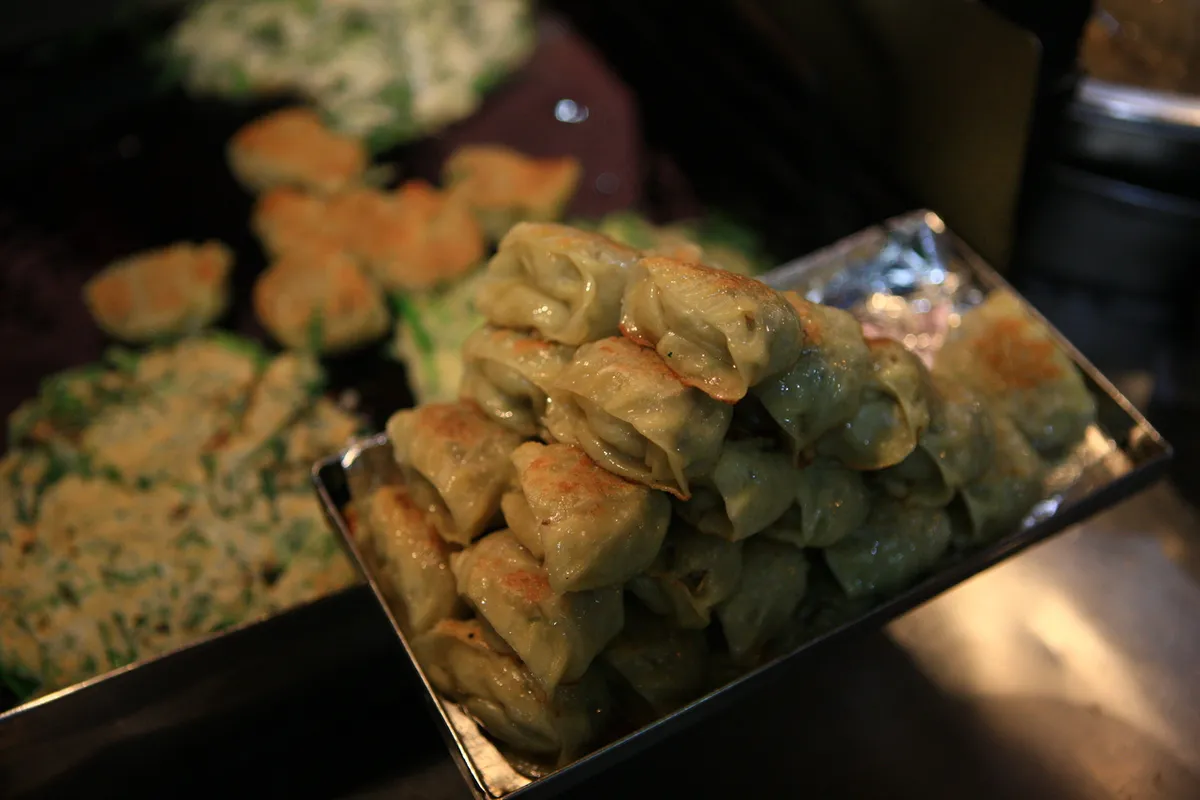
Mandu (만두), Korean dumplings, appear in steamed, boiled, and fried forms. The Korea Foundation database includes kimchi dumplings, boiled dumplings, and steamed dumplings. At markets, dumplings may be served alone, added to soup, or included in a mixed fried-snack order.
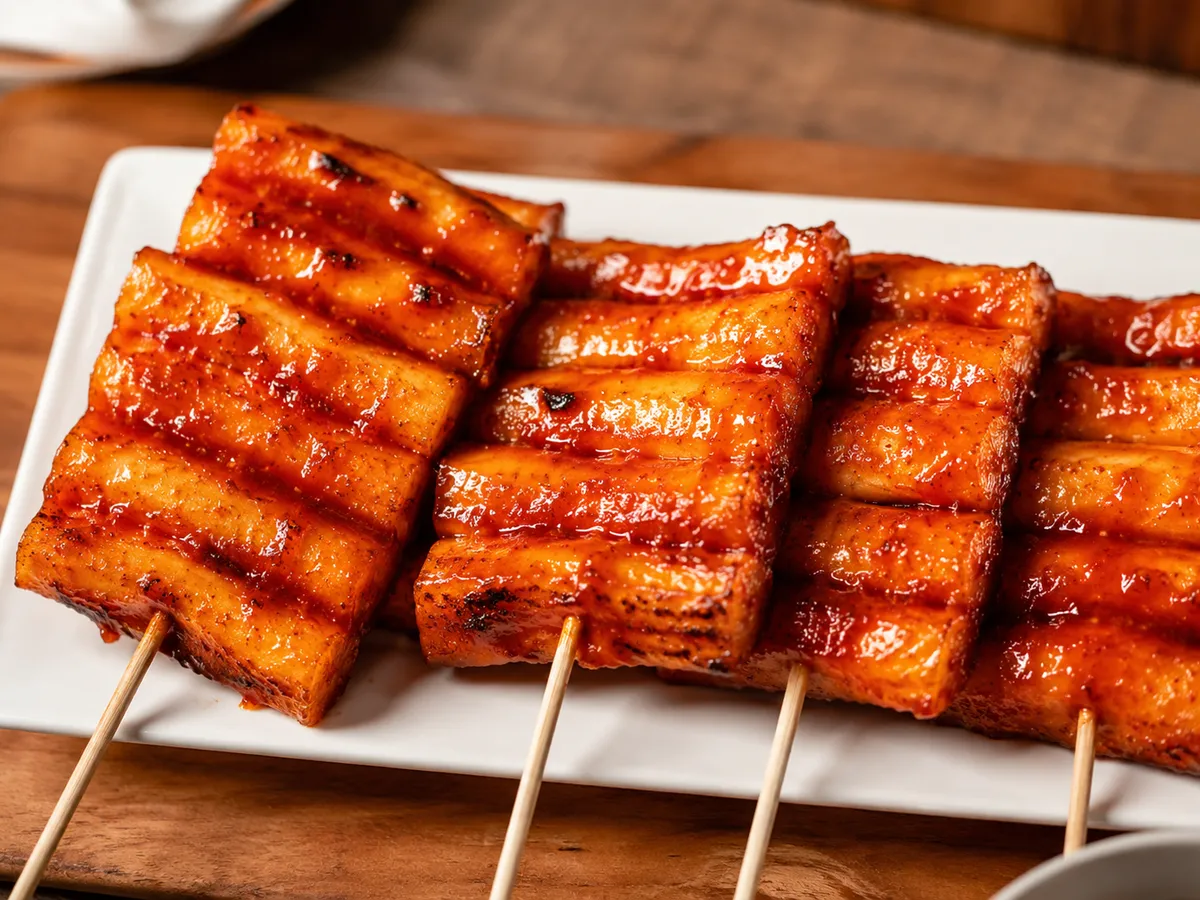
Skewers are another easy entry point because they can be ordered one by one.
Tteok-kkochi (떡꼬치), rice-cake skewers brushed with sauce, and grilled meat or vegetable skewers are simple to identify visually. Travelers should confirm sauce level if a red glaze is used.
5. Sweet Korean Street Food and Seasonal Snacks
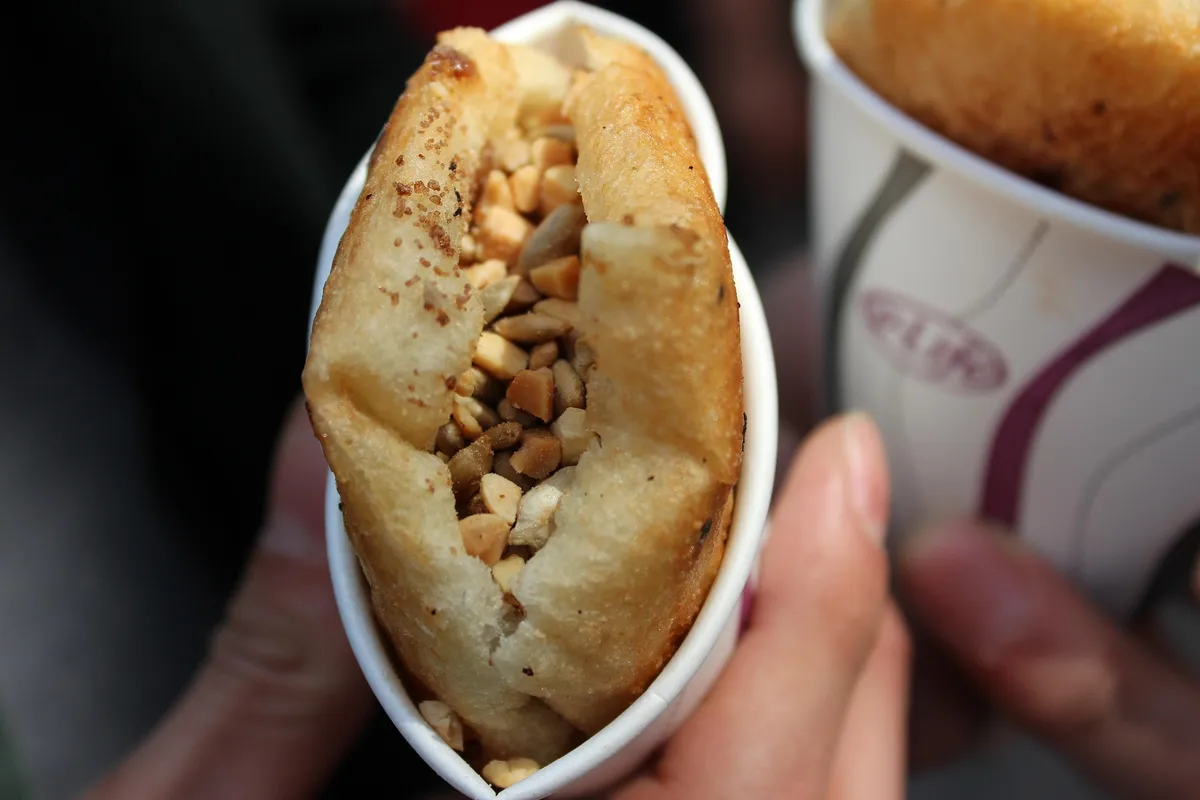
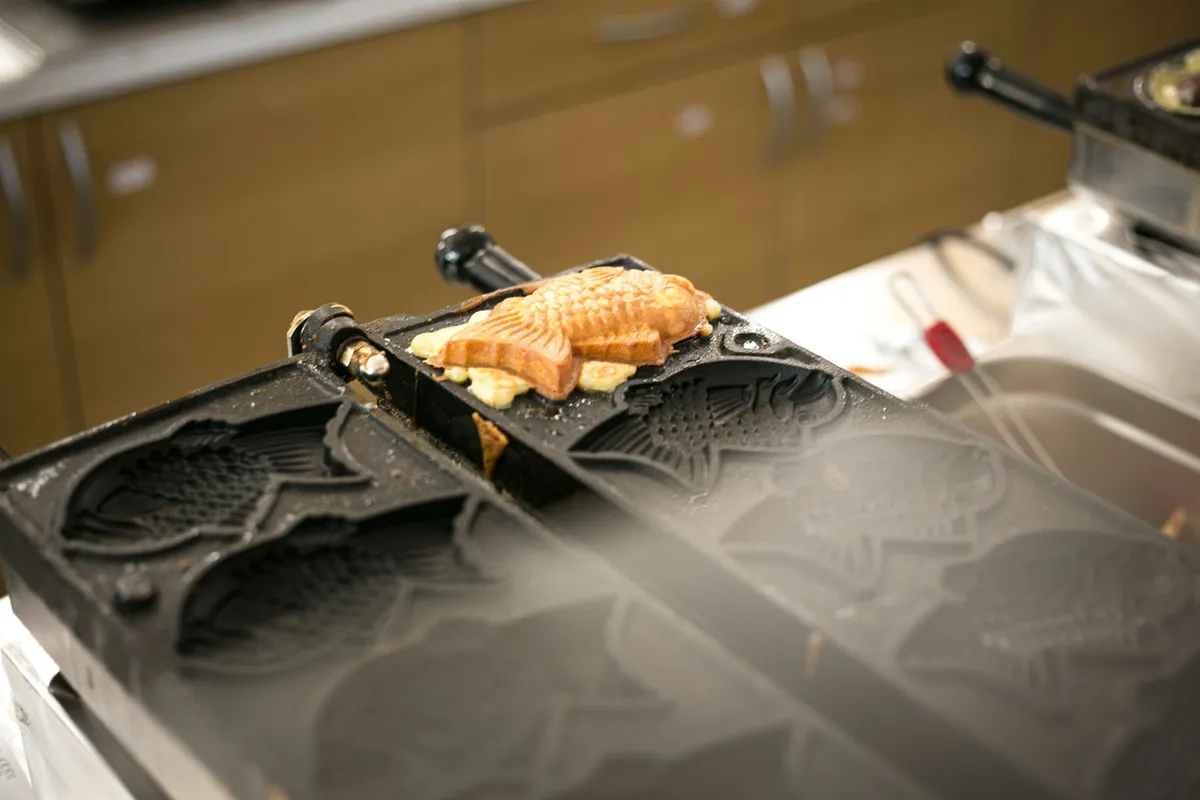
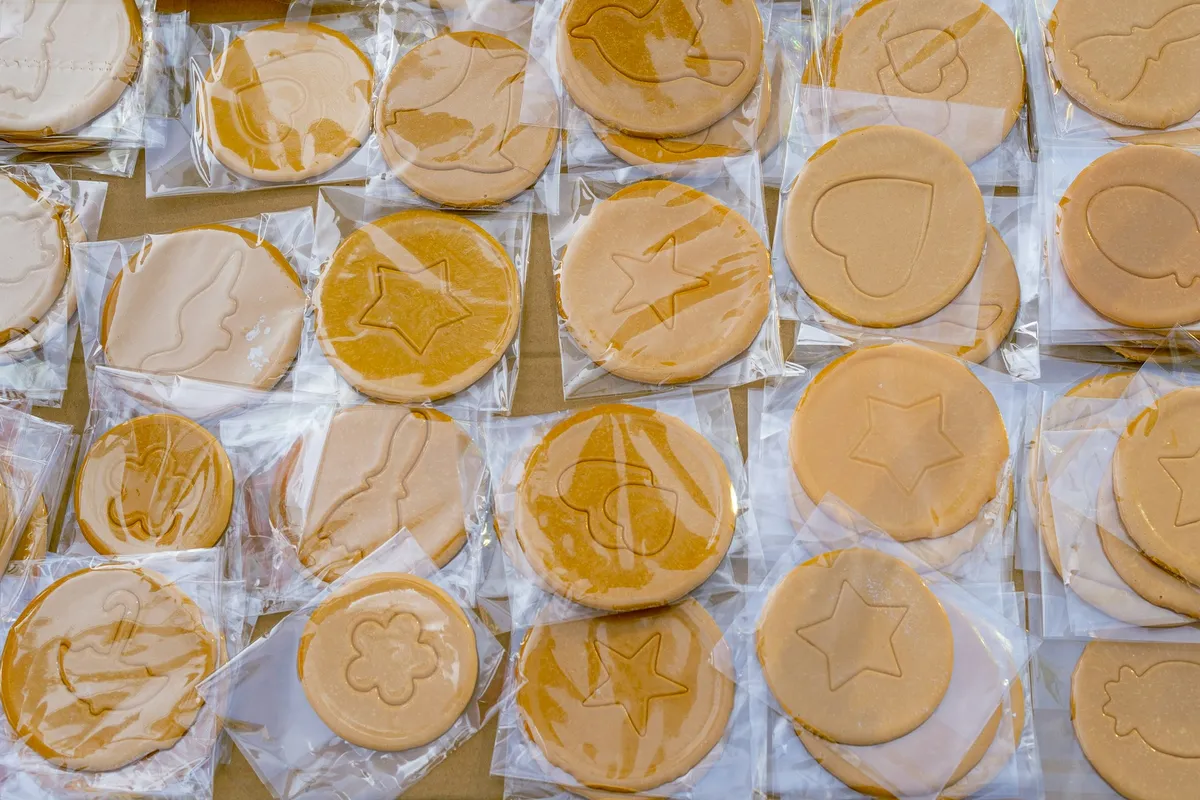
Sweet street food changes by season and neighborhood. Hotteok (호떡) is a filled pancake associated with colder months; common fillings include sugar, cinnamon, and nuts. Bungeoppang (붕어빵) is fish-shaped pastry usually filled with sweet red bean paste or custard, while dalgona (달고나) is a sugar candy linked to older street-snack culture.
For a broader food-focused itinerary, TripKorea's activity listings can help pair market visits with city sightseeing: Browse Things to Do in Korea.
Frequently Asked Questions
Which Korean street food should I learn first?
Tteokbokki (떡볶이) is a useful starting point because it appears widely at bunsik shops, market stalls, and shopping districts. It also pairs with fish cake, fried snacks, gimbap, and sundae.
Is Korean street food always spicy?
No. Tteokbokki is commonly spicy, but gimbap, many dumplings, fish-cake broth, hotteok, bungeoppang, and some fried snacks are not necessarily spicy. Always confirm sauces and fillings if you avoid chili, seafood, wheat, egg, or sesame.
Can I pay by card at Korean street food stalls?
Many market restaurants and larger stalls accept cards, but small vendors may prefer cash or local mobile payment. Carrying a small amount of cash is practical for street-food areas.
Where should I try Korean street food in Seoul?
Gwangjang Market, Myeongdong, Namdaemun Market, and neighborhood traditional markets are common places to find street-food stalls. Each area has a different mix of snacks, market meals, and takeaway items.
How do I ask for food that is not spicy in Korean?
Say “An maepge hae-juseyo” (안 맵게 해주세요), which means “Please make it not spicy.” Some stalls cook sauce in one shared pan, so a milder option may not always be possible.
Complete Your Korea Trip with TripKorea
K-Food Tours and Activities
Use TripKorea to connect food districts with markets, cooking experiences, and city activities.
Stay Connected
Check mobile data options before visiting markets, stations, and shopping streets where navigation and translation apps are useful.
TripKorea eSIM and Wi-Fi Options
Easy Travel
Plan airport transfers and local transport before moving between food districts and traditional markets.
Sources & References
Data Sources:
Korean Food Information: Korea Foundation (한국국제교류재단) Korean Food Database
Restaurant and tourism reference data: Korea Tourism Organization (TourAPI and PhotoKorea)
Photos: Korea Tourism Organization PhotoKorea
Official Sites:
Last verified: 2026-05-30
Restaurant hours, menus, payment methods, and stall locations subject to change. Please confirm directly before visiting.