Currency exchange in Korea means selling the foreign banknotes you brought with you and receiving Korean won (KRW). Choose a bank or authorized exchange service center, then compare the won you will actually receive—not just the largest number on a rate board. This guide explains cash-rate labels, airport counter selection and a provider-specific exchange sequence.
1. Currency exchange in Korea: where to go
The Korea Tourism Organization directs visitors to banks or authorized exchange service centers. Start with one of those service types rather than treating any business displaying foreign-currency symbols as interchangeable. Tell the provider which banknotes you have and that you want Korean won.
For an airport arrival, identify your terminal and whether the counter is in a public area, baggage claim or the departure duty-free area. Those are different locations, even when the bank name is the same. Use the actual airport facility entry rather than a bank's general opening-hours summary.
Incheon's official facilities directory, checked November 11, 2026, lists a KB Bank currency-exchange counter near Arrival Hall B on Terminal 1's first floor as operating 24 hours.
It separately lists the KB Bank branch on the west side of Terminal 1's basement with 09:00–16:00 hours. A bank branch and an exchange booth are not the same facility; the directory example does not mean every airport bank service is available overnight.
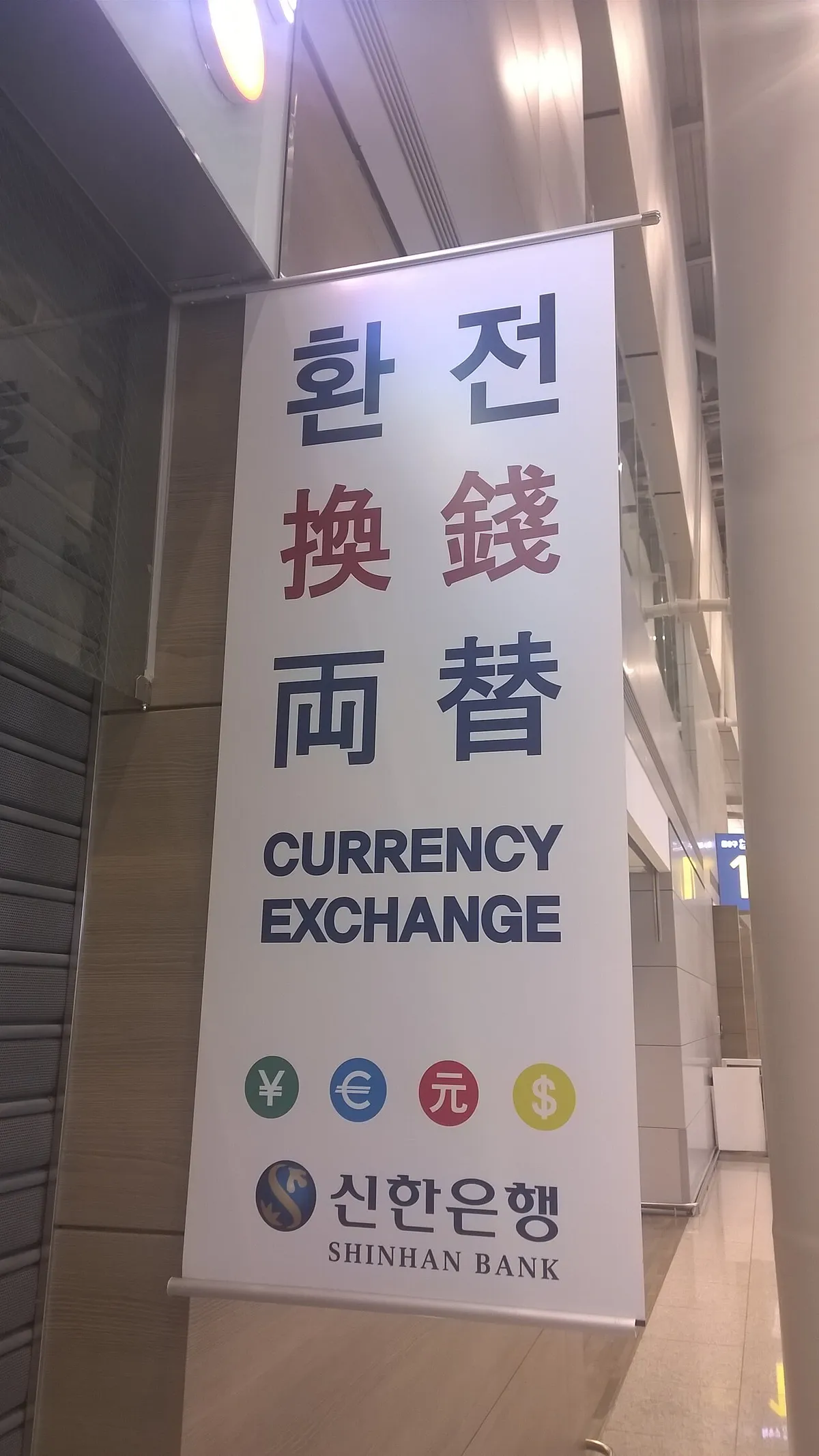
The sign above was photographed in 2016. It illustrates exchange signage, not a current Shinhan counter location. For a city bank, KTO gives general weekday hours of 09:00–16:00, with variation by bank and region. Choose the particular location you can actually reach during its exchange-service hours, rather than assuming airport-booth hours apply downtown.
2. Read the cash rate in the right direction
You are selling foreign cash; you are not buying it. That distinction matters when a bank shows separate buying and selling figures. State the transaction in full: “I have these foreign banknotes. How many Korean won will I receive?” This avoids relying on a bare “buy” or “sell” heading whose point of view you have not established.
On Hana Bank's rate documentation, 현찰 파실 때 means the rate when the customer sells foreign cash. 현찰 사실 때 is the opposite transaction: the customer buys foreign cash.
Hana calculates those cash rates separately from 매매기준율, the base rate. A base/reference rate is therefore not the same field as your cash-selling quote.
Also check the unit attached to the currency. Hana's selector labels Japanese yen per 100 yen and Vietnamese dong per 100 dong. A quote per 100 units is not a quote per single unit. Match the currency, transaction direction and quoted unit before comparing numbers from different boards or pages.
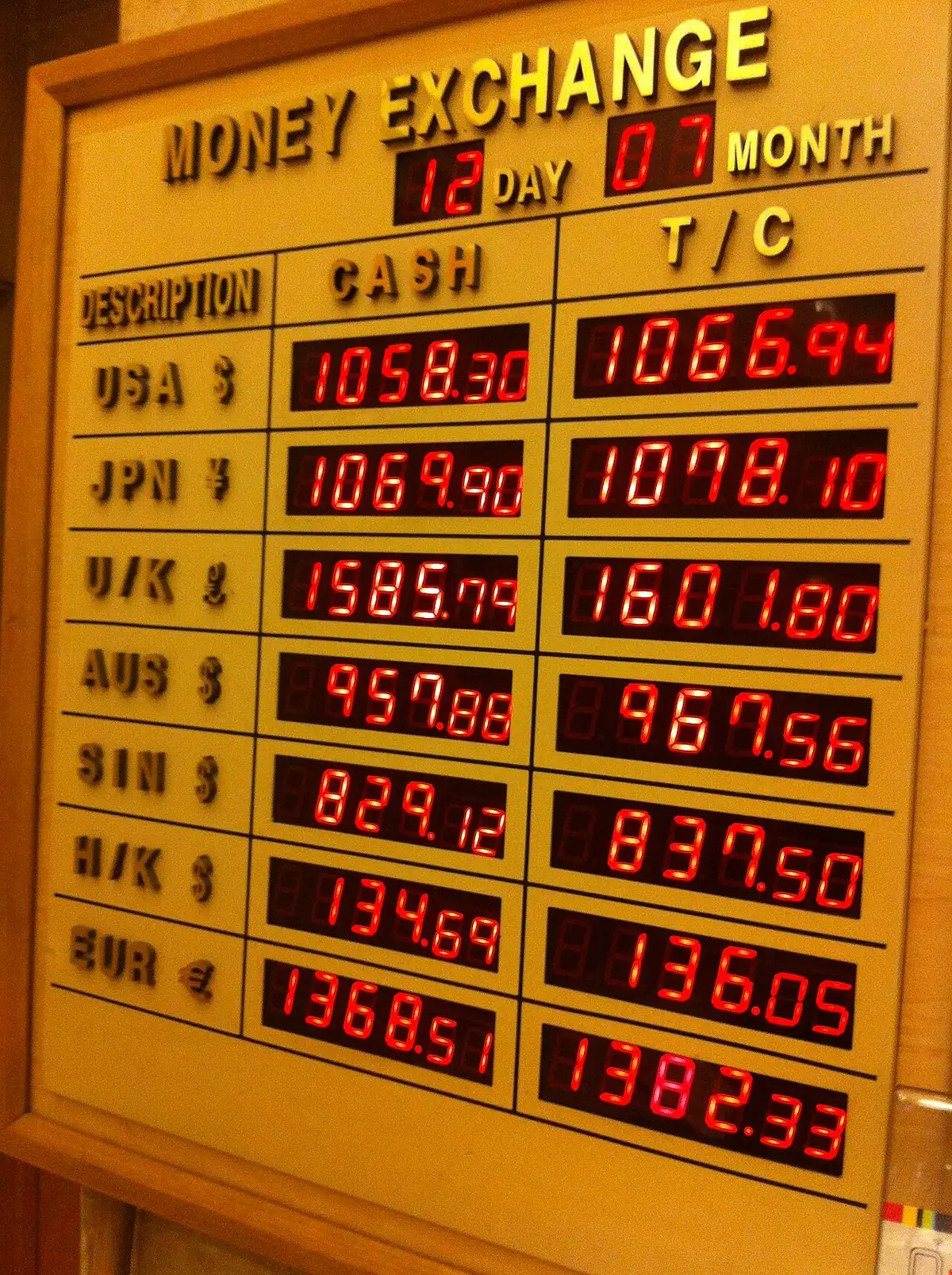
This exchange board was photographed in July 2013. Its figures are historical, not usable rates for your trip; its separate cash and travelers' cheque columns also show why the payment type matters. For banknotes, identify the applicable cash quote rather than choosing a number simply because it sits beside your currency's name.
For a practical comparison, ask each provider for the final KRW payout for the same amount of the same foreign currency. Ask whether the stated payout is the amount you will actually receive, including any charge the provider applies. This compares your transaction's result without assuming a fixed commission or claiming that every provider charges one.
A higher final won payout for identical foreign cash is a directly comparable quote. An advertised rate for a different direction or unit is not. Obtain the quote for your transaction at the time you exchange; an older screenshot or a reference converter cannot establish the amount a particular counter will pay.
3. Prepare your notes and start the exchange
Before going to the counter, separate the banknotes you intend to exchange from other currencies and coins. Identify the currency and amount so you can request a quote for that exact cash. If your notes are an older series, ask about those notes specifically: KTO warns that some exchange locations may not accept old foreign currency.
For identification in Seoul, the Seoul Metropolitan Government's guidance calls for a passport or residence card. A tourist following that guidance should bring their passport. Do not read this as a complete accepted-document list for every bank, service or transaction throughout Korea; the identification step for the specific machine example below is stated separately.
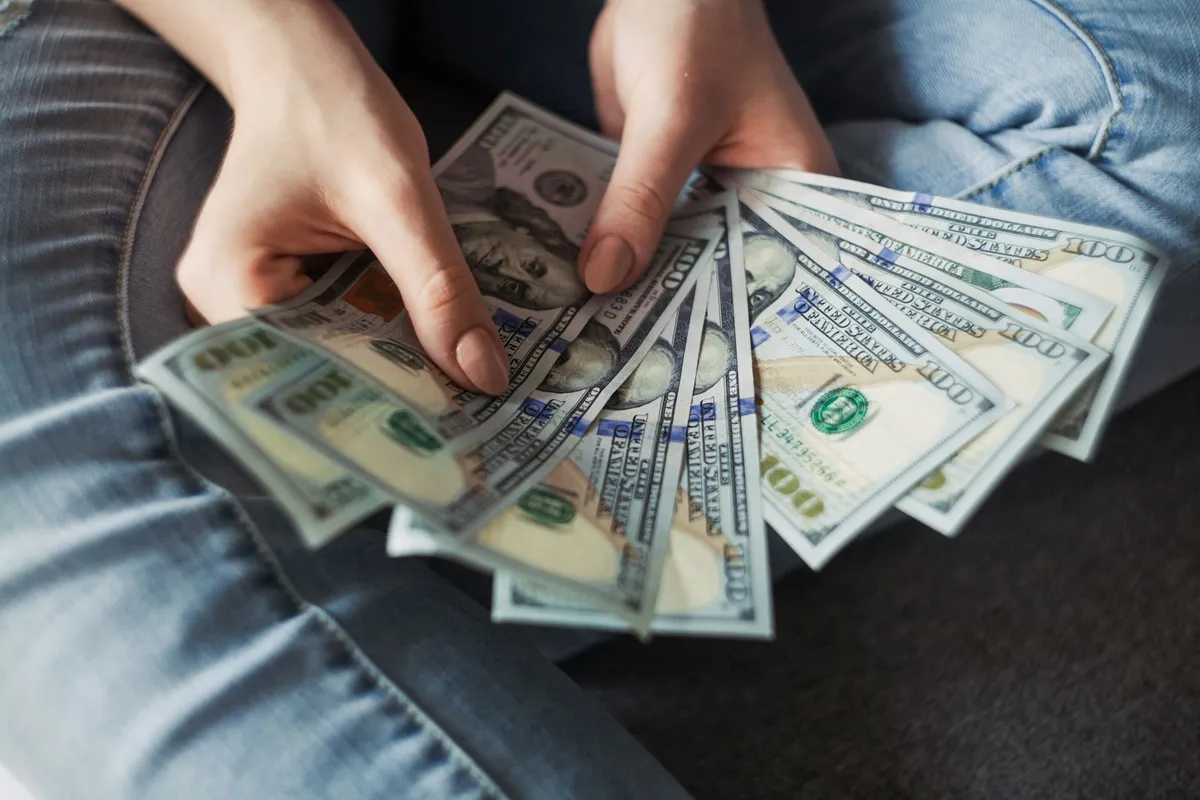
At a staffed counter, explain the foreign-cash-to-KRW direction and ask for the final payout before agreeing to the exchange. If a board's labels remain unclear, ask the staff which column applies to the notes you are selling. You do not need to interpret a remittance quotation or choose a foreign-currency purchase rate for this transaction.
A documented machine example: Money Box's own English Q&A sets out a sequence for its Money 24h currency-exchange machines. This is an operator-specific example, not a claim that all Korean exchange machines or staffed bank counters use the same screens.
Its published sequence starts with choosing a language, choosing Sell or Buy, and choosing the currency. For this guide's direction, you are selling your foreign cash for won. The next step is scanning a passport or ID, followed by putting money into the machine.
Money Box then tells the customer to check the amount that will be exchanged. Notice the order: in this machine's published instructions, cash insertion comes before that amount check. Do not confuse this with obtaining a staffed counter's quotation before handing over notes, or assume an undocumented cancel/refund step.
The operator also says its exchange service is cash-only, not funded by debit or credit card. If you instead want to obtain won from an overseas bank card, that is the separate process covered in Using ATMs in South Korea.
4. Check the payout and collect the record
At Money 24h, the remaining published steps are to take the exchanged money and, optionally, take a receipt. Keep the amount-check step separate from collecting the payout: looking at the exchange figure is not the same action as taking the cash. Before moving away, make sure you have collected the money and any receipt you selected.
The useful comparison is still the KRW amount for your own foreign notes, not the historical board pictured earlier. If an amount or the transaction direction is unclear, ask the provider to explain it rather than substituting the base rate you found online. The operator's receipt option does not establish a universal receipt requirement, refund promise or rule for changing leftover won back into foreign currency.
Cross-border cash declarations are a different issue from an exchange counter's quotation. If you need to check the rules for bringing money into Korea, use the Korea Customs Declaration Guide rather than treating an exchange provider's transaction conditions as customs rules.
5. Frequently asked questions
Is the airport always worse than a city exchange office?
Compare the quote for your transaction rather than assuming an airport or city location always pays more. Ask for the actual KRW payout for the same foreign cash, and use the airport directory to identify a counter you can reach. The Terminal 1 example above establishes a particular counter's listed availability, not that it is the cheapest or that all airport counters offer the same rate.
Can I exchange foreign coins as well as banknotes?
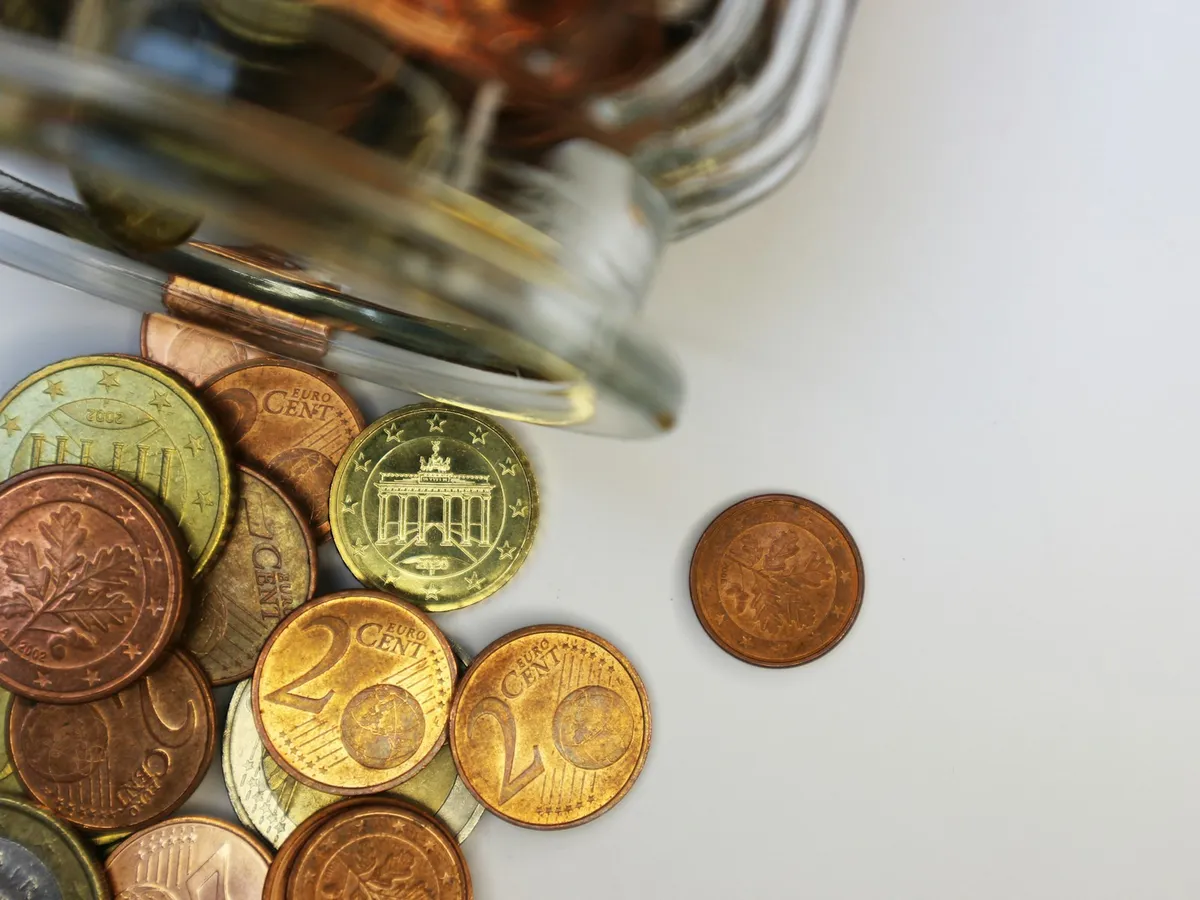
Do not assume that a banknote service takes foreign coins. Money Box explicitly says it does not exchange foreign coins and deals only with KRW coins. That is this operator's policy, not a verified rule for every bank in Korea. Keep coins separate from the notes for which you request a cash quote.
Does a reference exchange rate tell me exactly what I will get?
No. Hana's documentation distinguishes the base rate from the rate for a customer selling foreign cash. The currency unit matters too: its yen and dong entries use 100-unit quotations. Ask for the actual won payout for your notes; do not turn a reference figure into a guaranteed counter price.
Should this guide determine whether I use cash or a card?
No. This guide covers foreign banknotes exchanged into won, not the broader choice of payment method. Use Cash or Card in Korea for that decision. For currency exchange in Korea, keep the immediate task specific: identify the cash-selling quote, confirm the applicable amount, and collect the exchange payout.
Sources & References
Korea Tourism Organization: Korean currency and money exchange — bank/authorized-center guidance, general bank hours and old-note caution.
Incheon International Airport: facilities directory — actual terminal, area and facility-specific opening hours.
Seoul Metropolitan Government: currency exchange — Seoul identification guidance.
Hana Bank: cash-rate definitions and quotation units — bank-specific rate terminology.
Money Box: English Q&A — provider-specific Money 24h sequence, cash-only service and foreign-coin policy.
Last verified: November 11, 2026. Rates, supported notes and service availability can change. The airport directory example is not a guarantee of future opening hours; the archival photographs do not show current prices or counter locations.
Image Credits
Korean won banknote: minho jeong / Unsplash, Unsplash License.
Incheon exchange sign (2016): Vuong Tri Binh / Wikimedia Commons, CC BY-SA 4.0. Resized and converted to WebP; adaptation under the same license.
Seoul Garden Hotel board (July 2013): Woodarelaisku / Wikimedia Commons, CC BY-SA 3.0. Resized and converted to WebP; adaptation under the same license.
US dollar banknotes: Alexander Mils / Unsplash, Unsplash License.
Printing calculator: StellrWeb / Unsplash, Unsplash License.
Blank receipt-paper rolls: Panda Paper Roll / Unsplash, Unsplash License.
Euro coins: Roman Wimmers / Unsplash, Unsplash License.