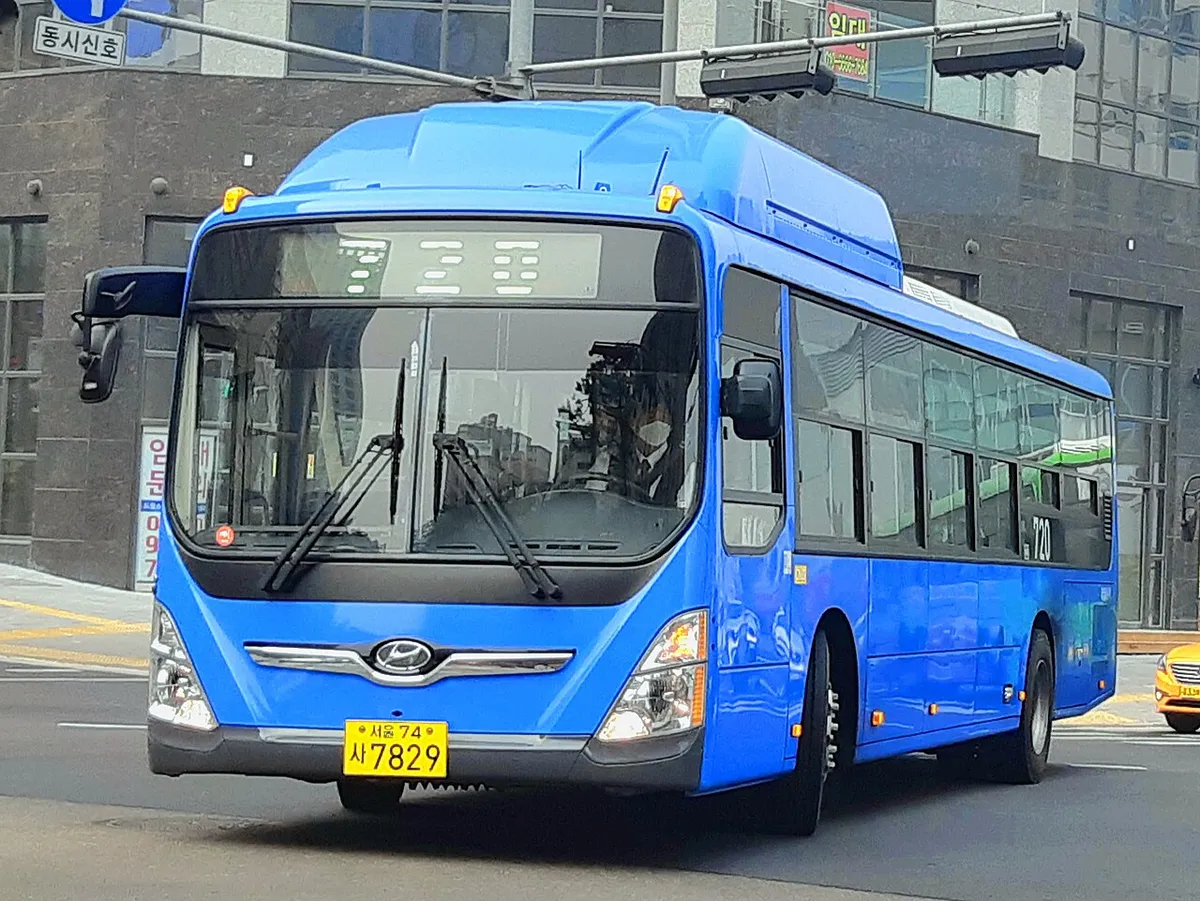
Seoul city buses use front-door boarding, transportation-card readers and a stop bell to request your destination. Learning how to ride Seoul buses means matching the route and direction before boarding, then tapping your card both when you enter and when you leave.
This guide follows one local bus journey from the stop to your destination, including a change to another bus or the subway. The procedure is based on Seoul Metropolitan Government’s passenger guide; airport buses and reserved intercity coaches follow separate arrangements.
1. How to Ride Seoul Buses: Find Your Stop
Start with the journey you intend to make in Naver Map or KakaoMap. Note the bus number, boarding stop, direction and stop where you will get off. If the journey includes a change, keep the first and second bus numbers separate so you do not mistake the onward service for the one you need now.
Use the route’s stop sequence to check direction, not just the number on the vehicle. Compare the stops after your boarding point with the route toward your destination. A matching bus number is only part of the check: it must be traveling along the part of the route you need.
Follow the walking portion of your planned journey to its actual boarding point. Compare the stop name and any stop identifier shown in your route information with the marker at the stop. Do not choose a shelter simply because it is the nearest one to your map pin.
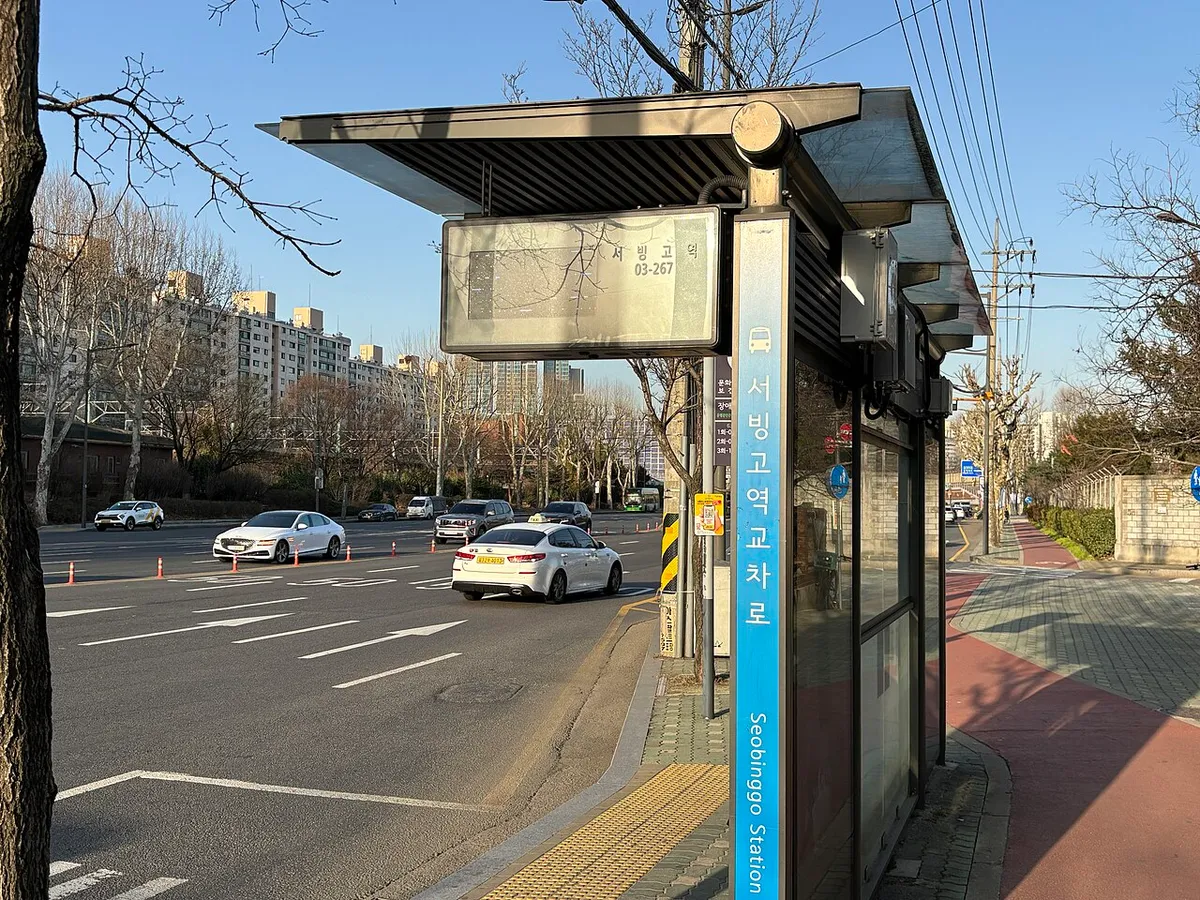
For the return journey, search again from your new starting point. Do not assume that the correct stop is directly across the road from where you arrived. Use the return route’s boarding location and following stops to establish where to wait.
Recognize the bus type without memorizing every route
Blue trunk buses connect areas across the city; green branch buses connect local areas with trunk buses and the subway. Yellow buses serve circulation routes, while smaller neighborhood buses provide local connections. Seoul also identifies red metropolitan buses separately. Color helps you recognize a service category, but the route number and direction determine whether to board.
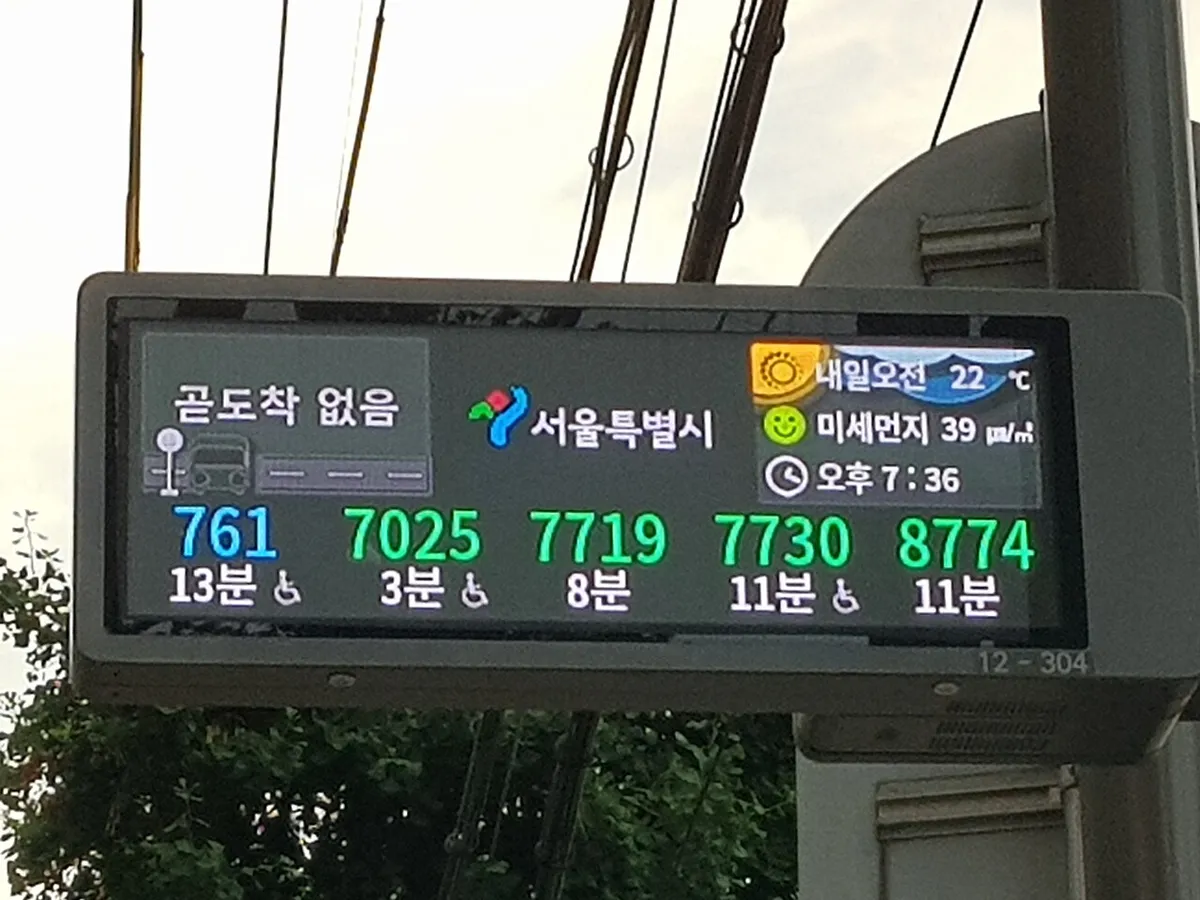
Seoul’s bus information system supplies estimated arrivals and vehicle locations through stop displays, the city’s public transportation website, and map apps. Find your route’s entry rather than treating the next bus approaching the stop as yours. Our KakaoMap and Naver Map guide covers app preparation separately.
2. Prepare Your Card and Board at the Front
Have a charged transportation card ready before the bus arrives. Tmoney is one of th prepaid cards listed in Seoul’s city-bus payment guidance. Buying the physical card and adding travel balance are separate steps; a new card is not a substitute for usable balance.
A subway single-journey ticket cannot be used on a bus. For broader card preparation and transport choices, see the Seoul transport guide. This bus procedure assumes you already have a working transportation card, rather than explaining card shopping or phone setup.
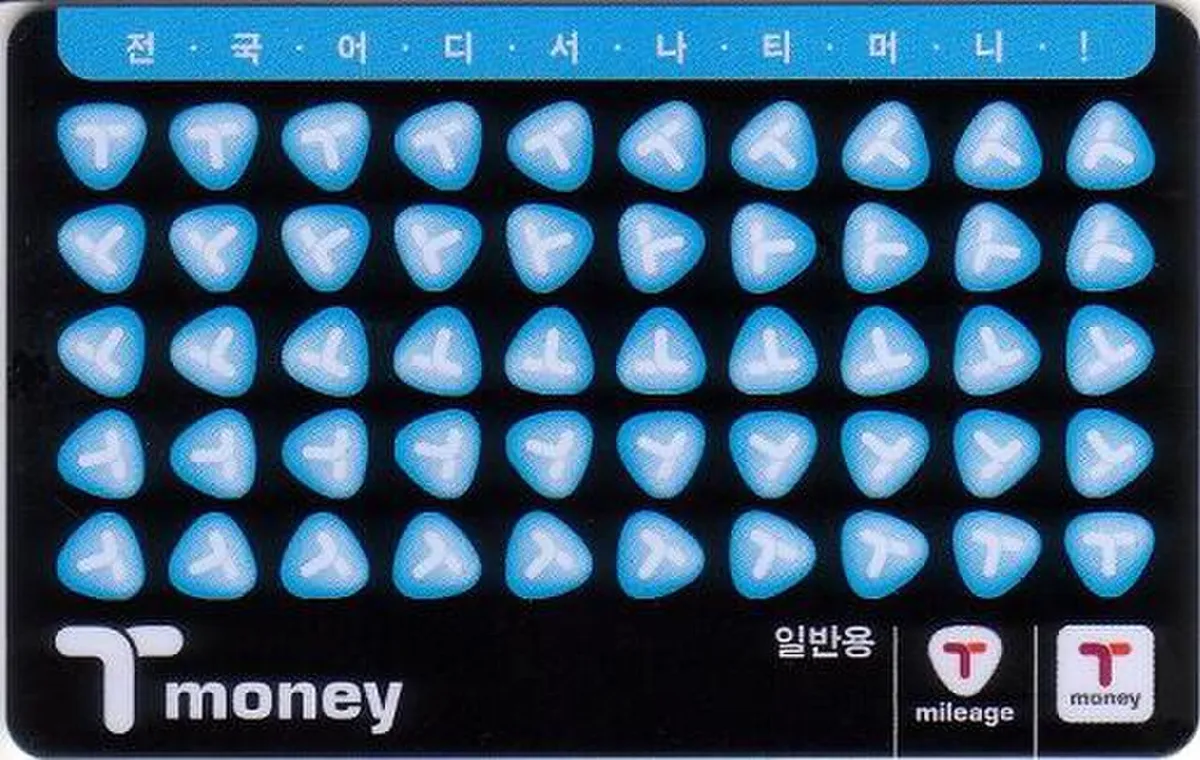
Do not make cash your only boarding plan: Seoul operates cashless buses. Likewise, a contactless symbol on an overseas bank card does not establish that it will work at every bus reader. The city has announced a staged rollout of overseas-card payments; use a supported transportation card unless the specific service confirms another method.
The adult transportation-card fare for regular blue trunk and green branch buses is KRW 1,500; the adult town-bus fare is KRW 1,200, according to the municipal fare schedule. Other categories have different fares. A journey with transfers can also involve fare differences or distance charges, so do not load only enough for a single boarding if you need to continue.
Tap beside the driver
Check the approaching vehicle’s number against your route, then board through the front door. Tap your transportation card on the reader beside the driver. Seoul’s passenger guide says a beep indicates successful payment. If the reader does not accept the card, ask the driver for assistance before continuing into the bus.
For straightforward individual transfers, each traveler should use their own card. If you intend to pay for several people with one card, tell the driver the number of passengers before tapping: the driver must set up the payment. Do not repeatedly tap one card expecting the reader to establish separate passengers automatically.
3. Follow the Stops, Press the Bell and Tap Out
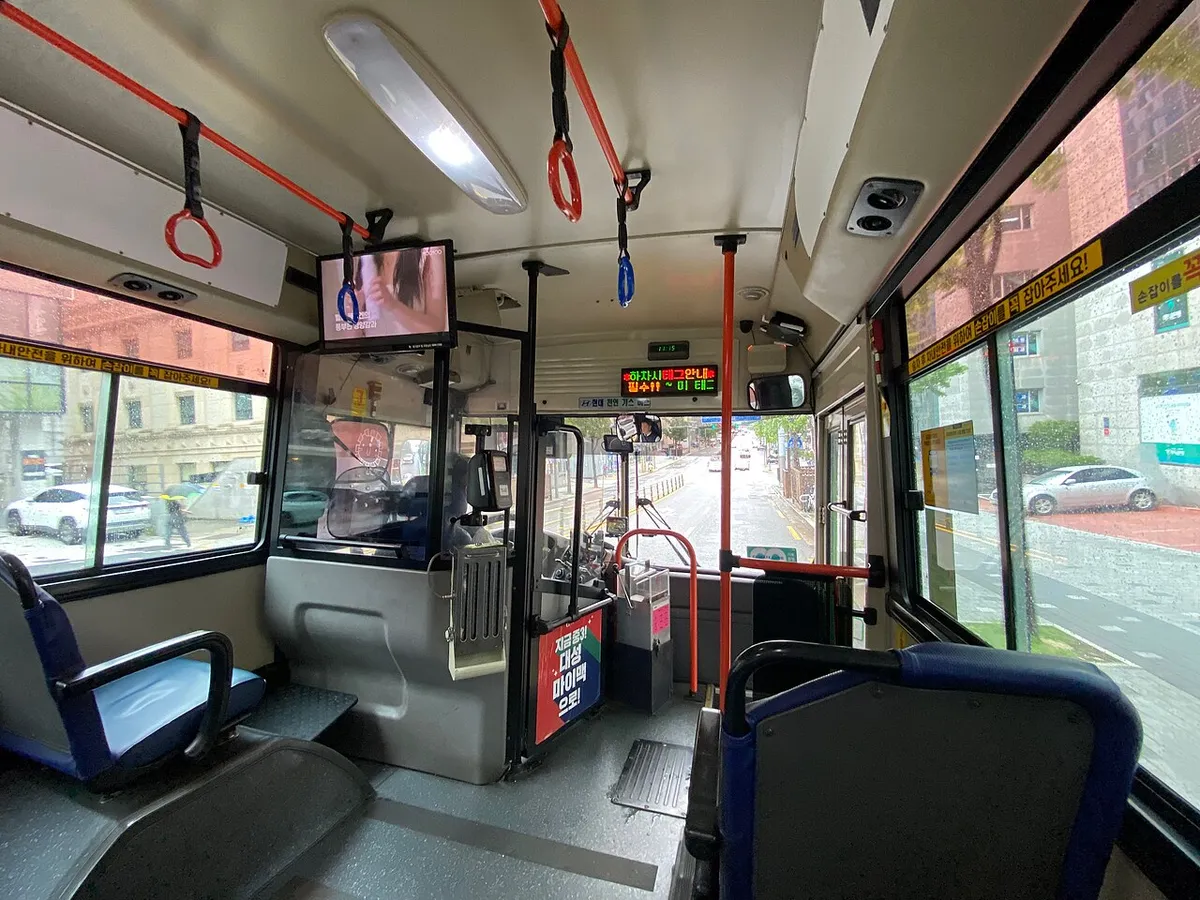
Keep your destination stop available while you ride. Seoul’s passenger guide says the bus indicates its location through a display or announcements. Compare these with your planned stop sequence rather than waiting until you recognize the building you want to visit. Keep the stop’s Korean name alongside its English name when available, so you can compare either version with your route information.
Separate the bus stop from your final destination. Your hotel, shop or other address may require a walk after you get off; use the stop specified in the route, not simply the point where the vehicle appears closest to the destination pin.
Request the stop before you arrive
When the bus indicates that it is approaching your stop, press the stop bell and prepare to leave. Press it before the bus reaches the destination stop, rather than after passing it. The bell requests the stop; it does not record your fare or replace a card tap.
Keep the card you used to board accessible for the exit reader. Before leaving, tap it on the reader by the rear passenger door, then exit through that door. The rear exit is the passenger doorway farther back along the side of the bus, not a door on the back-facing panel of the vehicle.
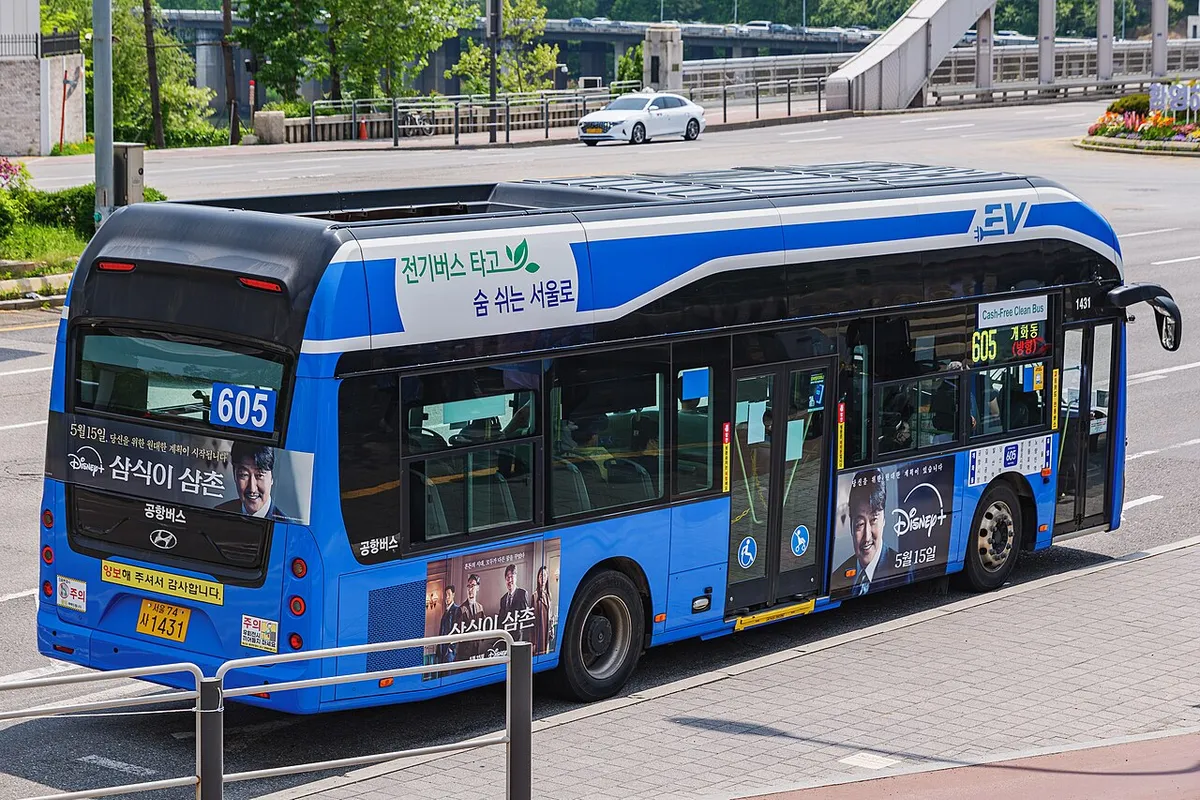
Make the exit tap part of every ride, not a step to remember only when another bus is waiting. It records the end of the ride for the transfer calculation. Changing to a different card at the next boarding will not continue the same card’s recorded journey.
If you miss your stop, get off at a subsequent stop and search for a new route from there. Do not assume that immediately taking the same numbered bus back will qualify for a transfer discount: same-route transfers are excluded. Recheck the boarding point and direction before starting again.
4. Transfer with the Same Card
A transfer discount links qualifying consecutive rides; it does not mean every onward journey is free. Seoul’s integrated transfer guidance requires one card per person, taps at boarding and exit, and boarding the next service within the permitted interval.
The usual interval is 30 minutes after getting off. It becomes 60 minutes between 9 p.m. and 7 a.m.; the city determines the applicable window from the next service’s boarding time. Up to four consecutive transfers, or five boardings, can qualify. This is not a daily allowance of four unrelated free trips.
After tapping out, find the next boarding stop from your planned connection. Check that service’s number and direction, and use its arrival information to identify the bus you need. The discount’s time limit does not remove the need to reach the correct stop and board the correct vehicle.
Use the same transportation card when boarding the next bus or entering the subway. The fare calculation can apply the higher basic fare among the services used, plus applicable distance charges. The same bus route or the same vehicle does not qualify as a discounted transfer.
Paying for several bus passengers with one card is a separate arrangement. Bus-to-bus discounts require the same party to continue the same journey and the driver to be told at each boarding; this grouped payment does not provide a subway transfer discount. For the rail portion itself, use our Seoul subway procedure guide.
5. Frequently Asked Questions
Can I ride a Seoul bus with a subway ticket?
No. A subway single-journey ticket is for subway travel only. Bring a supported, charged transportation card for the bus; buying a subway ticket does not prepare you for the bus portion of a route.
Do I need to tap when getting off?
Yes. Tap the card used for boarding on the reader by the rear door before exiting. The exit record is required for transfer calculations; pressing the stop bell does not record your exit.
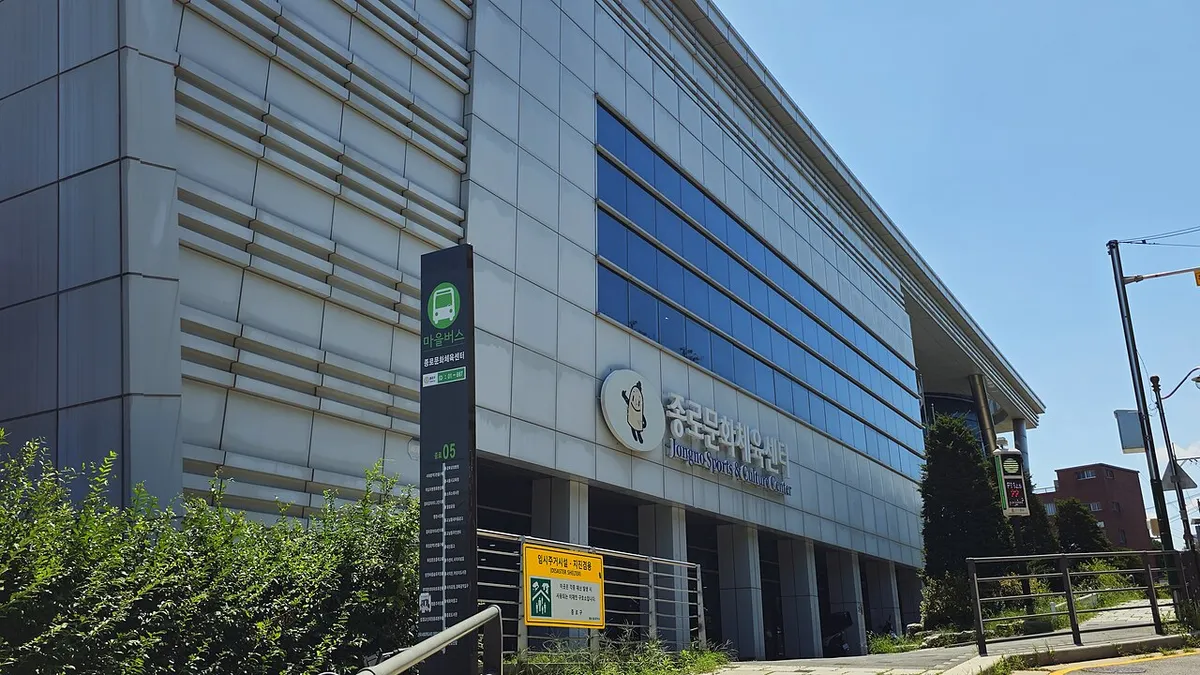
How do I recognize a neighborhood bus stop?
Neighborhood buses are called maeul buses (마을버스). Check the stop marker and the route shown in your journey information, rather than expecting every stop to have the same shelter design. Match the route and stop, even when the boarding point is a pole beside the pavement.
Can I pay for friends with one Tmoney card?
Bus drivers can set up payment for several passengers if told before the card is tapped. Shared-card transfers have additional conditions and do not extend to the subway. Separate cards avoid that grouped-payment arrangement when your journey includes rail.
The working sequence for how to ride Seoul buses is to match the route and direction, board at the front and tap, follow the stops, press the bell, then tap at the rear door and exit. Keep the same card for any qualifying onward connection.
Sources & References
Seoul Metropolitan Government: bus preparation, boarding, stop bell and exit procedure; bus types and payment guidance; current municipal fare schedule; integrated transfer conditions (Korean); cashless-bus explanation; overseas-card payment rollout announcement.
Help: For Seoul bus enquiries, the city lists Dasan Call Center at 02-120. For tourist information, its official site lists 1330 within Korea and +82-2-1330 from overseas.
Last verified: November 10, 2026. Fares, routes and payment arrangements can change. The photographs illustrate buses, cards and stop facilities; their displayed routes and arrival predictions are not current journey instructions.
Image Credits
Blue city bus: Wikiwater2020 / Wikimedia Commons, CC BY-SA 3.0. Resized and converted to WebP; adaptation under the same license.
Seobinggo stop shelter: MNXANL / Wikimedia Commons, CC BY-SA 4.0. Resized and converted to WebP; adaptation under the same license.
Arrival display: Wikiwater2020 / Wikimedia Commons, CC BY-SA 3.0. Resized and converted to WebP; adaptation under the same license.
Tmoney card: zisk / Wikimedia Commons, public domain (uploader release). Resized and converted to WebP.
Bus interior: Sgroey / Wikimedia Commons, CC BY-SA 4.0. Resized and converted to WebP; adaptation under the same license.
Bus doors: TurnOnTheNight / Wikimedia Commons, CC BY-SA 4.0. Resized and converted to WebP; adaptation under the same license.
Neighborhood stop marker: MonasteryInwang / Wikimedia Commons, CC0. Resized and converted to WebP.