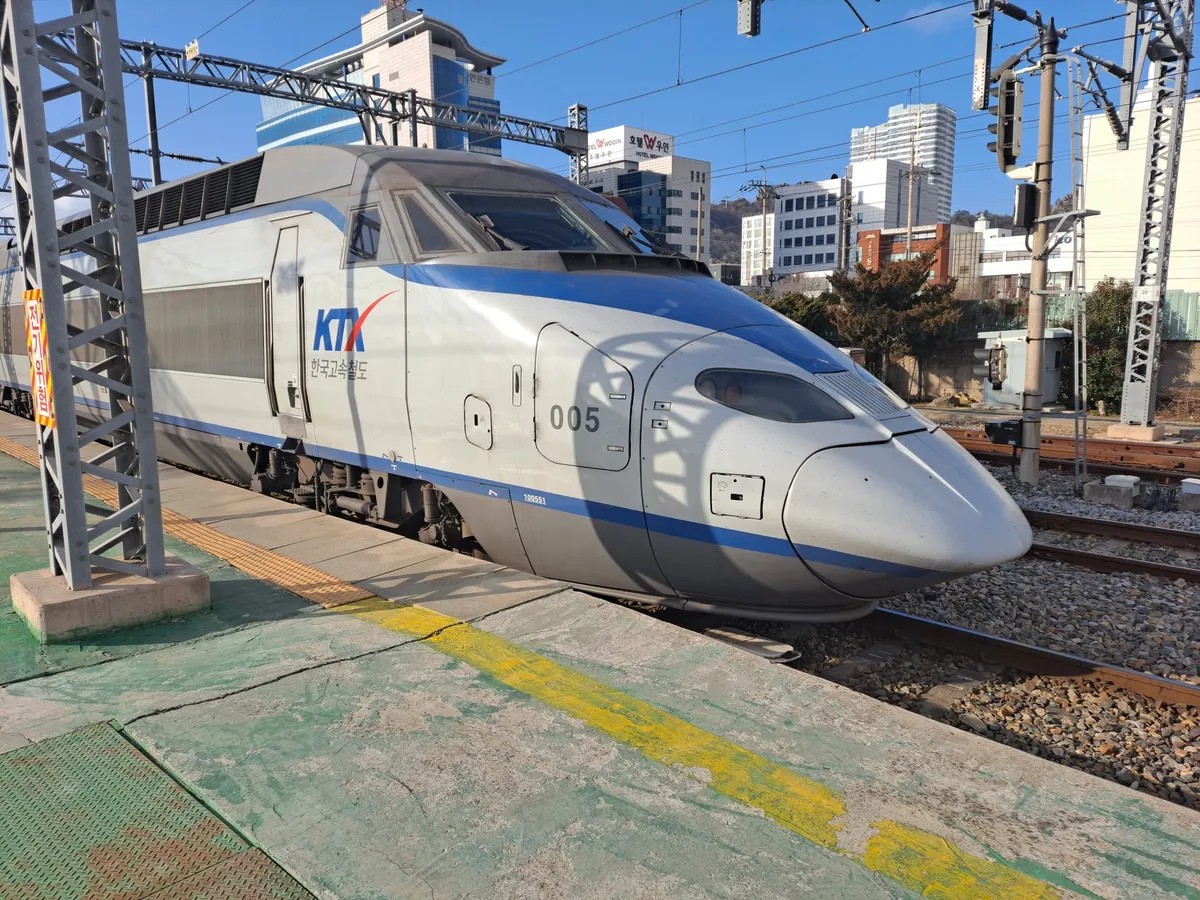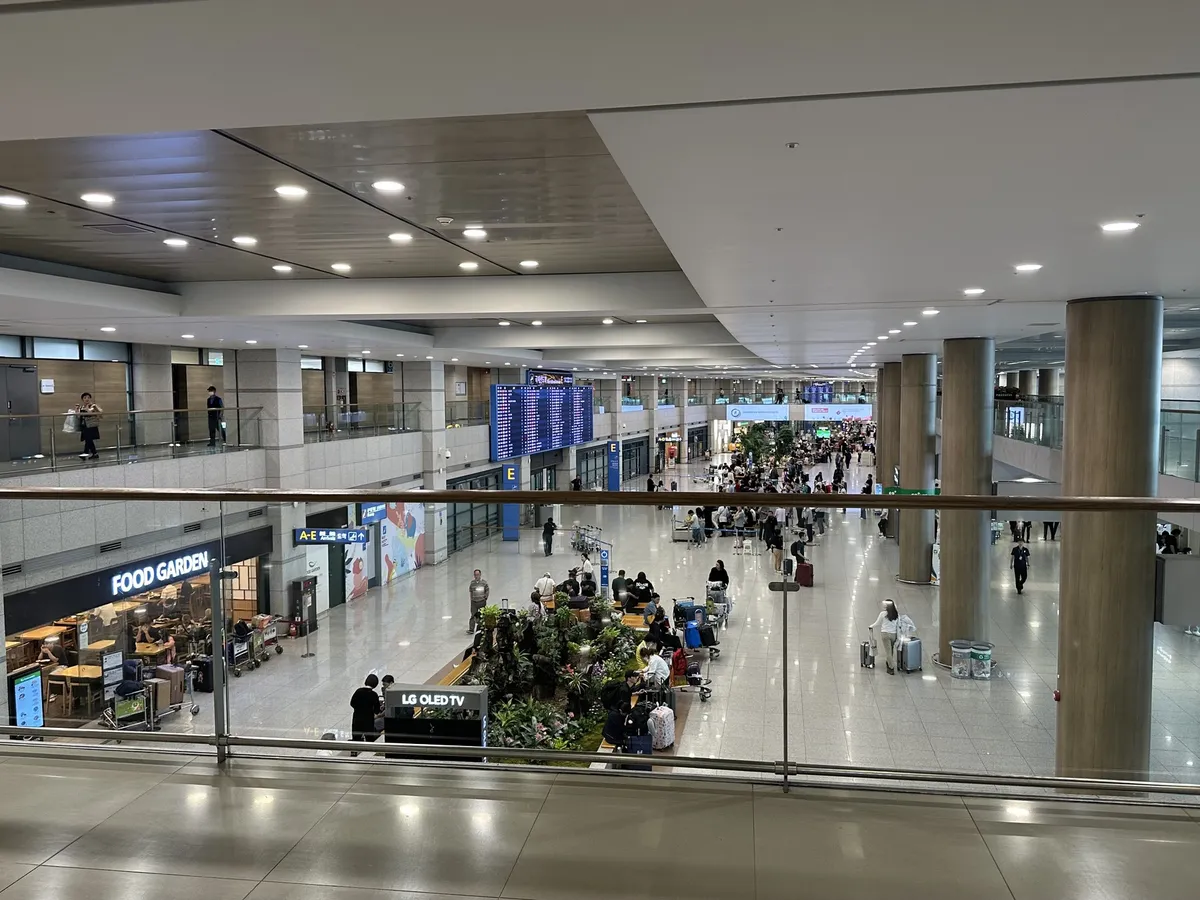
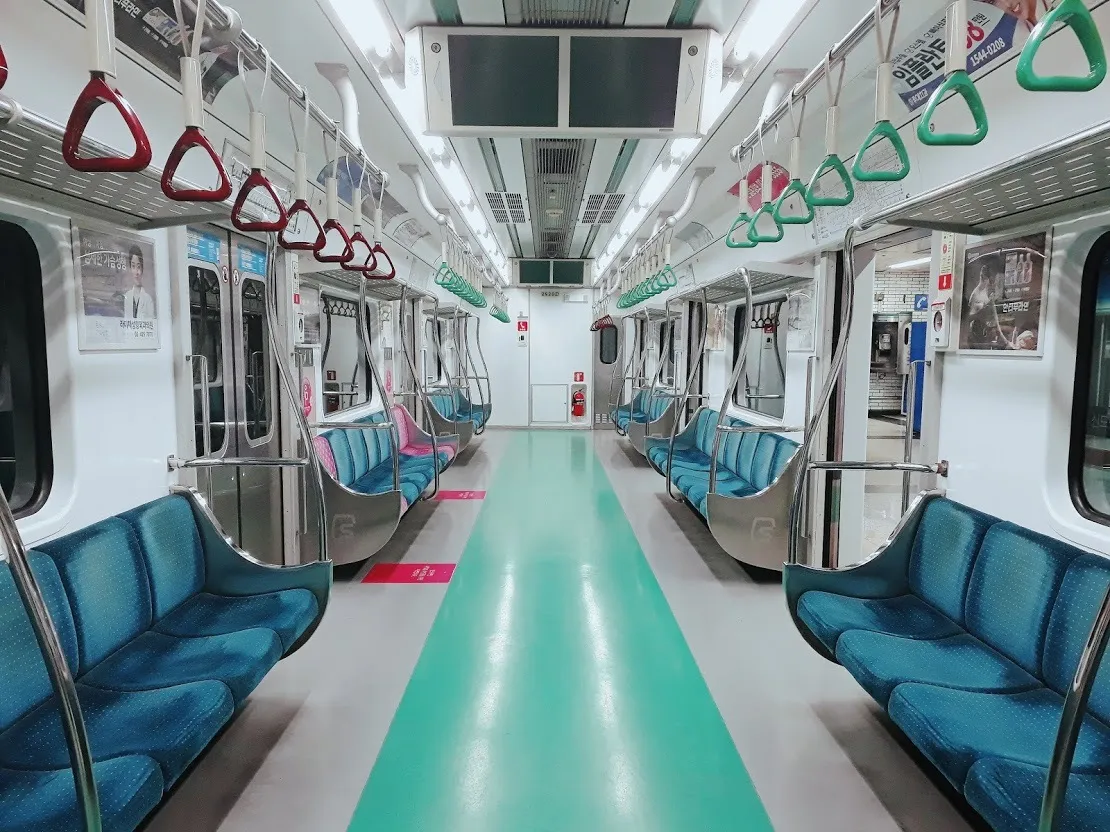
Seoul’s subway uses color-coded lines, named stations and numbered street exits. Learning how to use Seoul subway services means checking each of those separately: the correct station entrance does not automatically lead to the correct train.
This guide follows one journey from the street to the platform, through a transfer and out at your destination, including single-journey tickets and the checks that prevent wrong-direction travel.
1. How to Use Seoul Subway Signs
Before entering, save your departure station, destination station, any transfer station and final street exit. A route in Naver Map or KakaoMap gives you a journey to compare with station signs; our KakaoMap and Naver Map guide covers app preparation separately.
Match the line’s name or number as well as its color. At an interchange, one station name can serve several lines, so finding the right station is only the first check. Inside, follow the signs for the line you actually need.
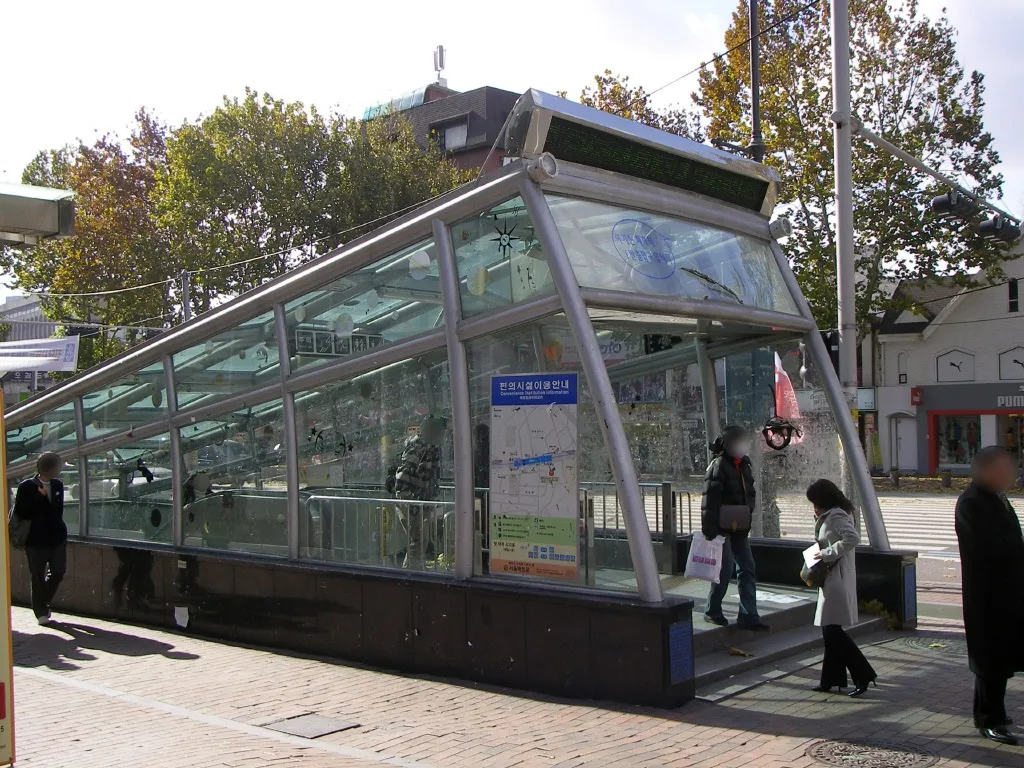
Keep three numbers separate. A line number identifies the service; a station code identifies a stop on that line; an exit number identifies a way between the station and the street. “Exit 4” is not “Line 4,” and it does not tell you which platform to use.
For a route with a change, note the next line and direction before leaving the first train. Keep the final exit with your destination address, rather than following an exit arrow while you are still transferring.
2. Buy a Ticket and Enter the Gates
Choose your payment before joining the queue
Use a charged Tmoney card or buy a single-journey ticket. Each subway passenger needs their own valid card or ticket; a group cannot pass through using one card repeatedly. For card preparation and other transport choices, see the Seoul transport guide.
Seoul Metro currently lists the adult basic fare as KRW 1,550 with a transportation card for up to 10 km, or KRW 1,650 with a single-journey ticket. Longer journeys cost more. The single-journey ticket also requires a separate KRW 500 refundable deposit; select your actual destination rather than assuming the basic fare covers it.
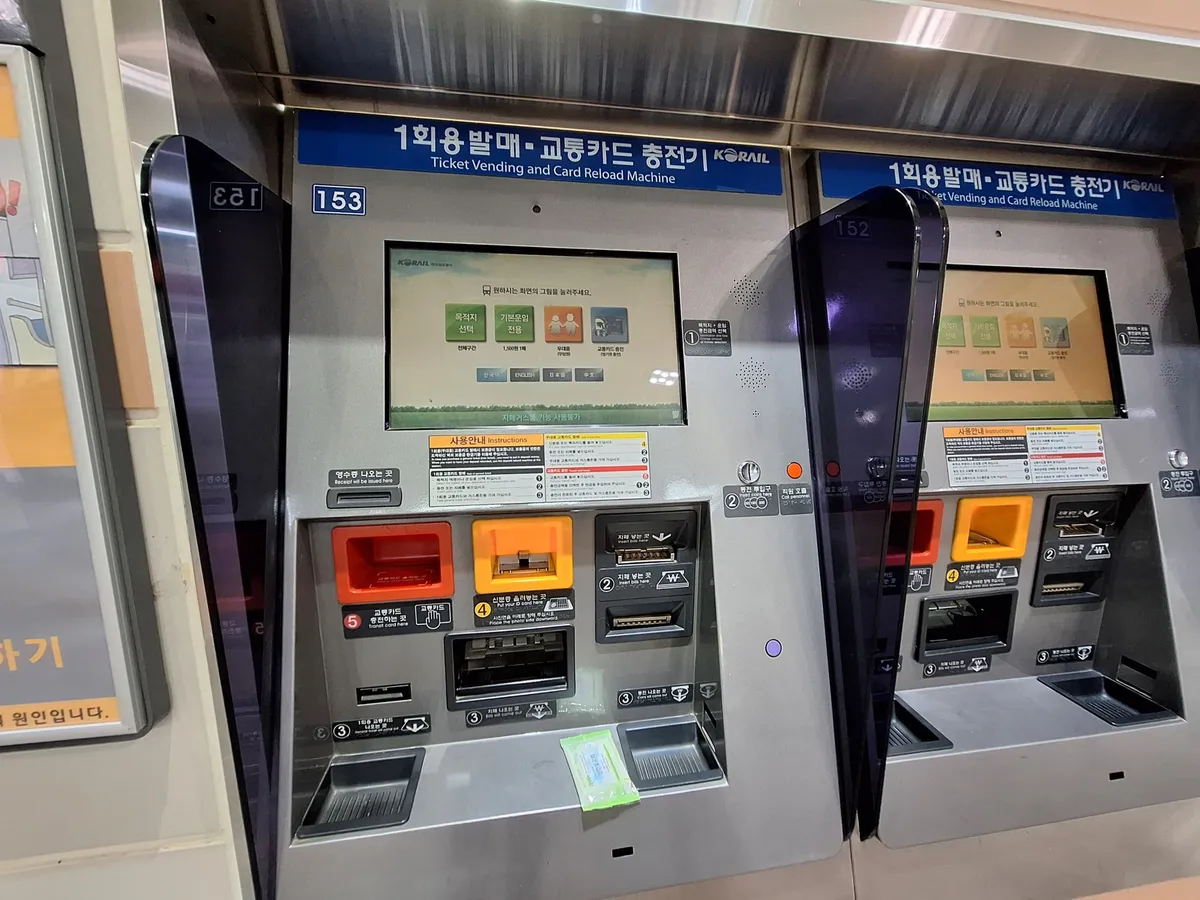
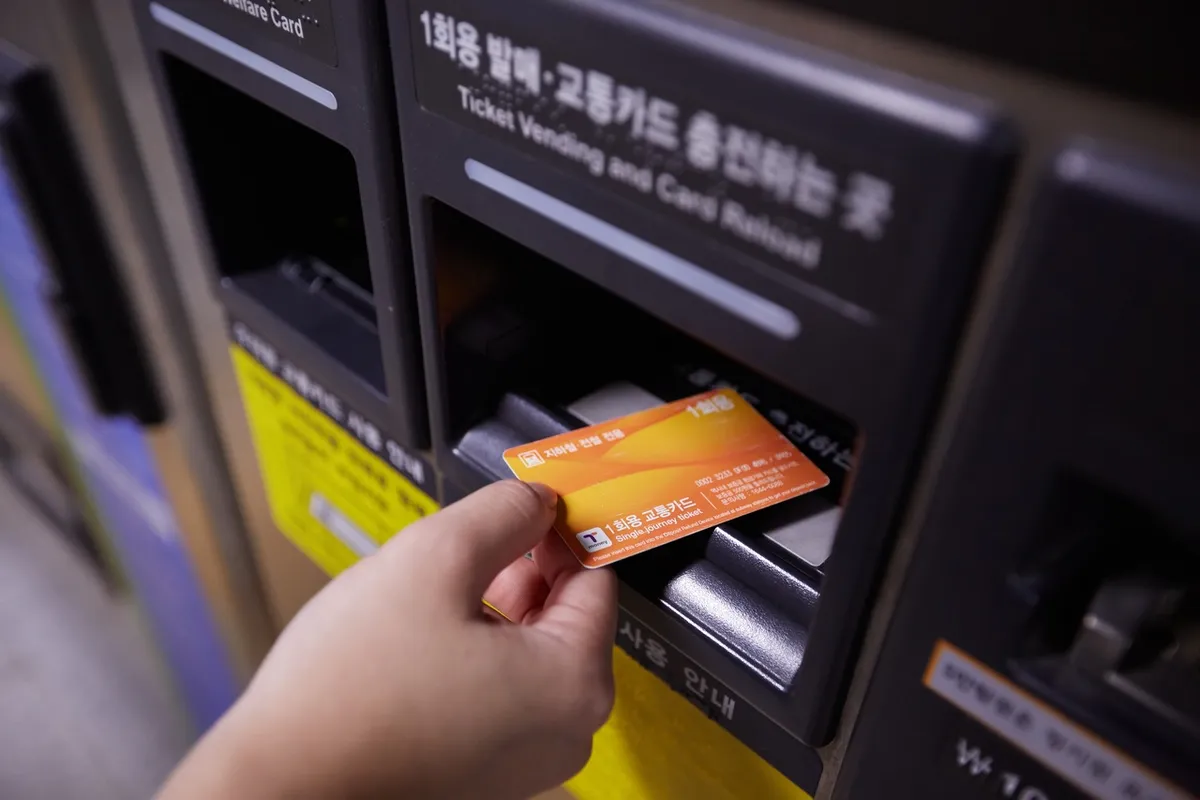
Buy a single-journey ticket
Choose English on the machine, select “Single Journey,” then find your destination by station name or station number. Select the number of tickets, check the total fare and deposit, pay, and collect the cards and any change. Keep the ticket until you have left through the destination gate.
KTO’s transport-payment guide says new ticket machines on Seoul Subway Lines 1–8 accept foreign-issued credit cards for single-use tickets. That does not mean every machine accepts them, or that buying a ticket lets you tap the bank card at the gate. Carry won cash as a backup.
Physical Tmoney purchase and top-up are a different transaction: KTO lists these as cash-only, without foreign-issued credit-card payment. Do not confuse the single-ticket payment option with recharging a transport card.
Check the direction before tapping in
Read the destinations shown beside the gates before entering, since the opposite platform may require a different entrance to the paid area. Tap your card or single-journey ticket on the reader and pass only after the gate accepts it. If the gate refuses, use its help/intercom button or speak to station staff rather than following someone through.
3. Find the Correct Platform and Train
Step 1: Match the next station, not just the line
On the platform, compare the station sequence and direction arrow with your route. The train’s displayed destination can be the end of its service, not your stop. Check that your destination lies along the section it will actually cover; trains sharing a line can have different termini or serve different branches.
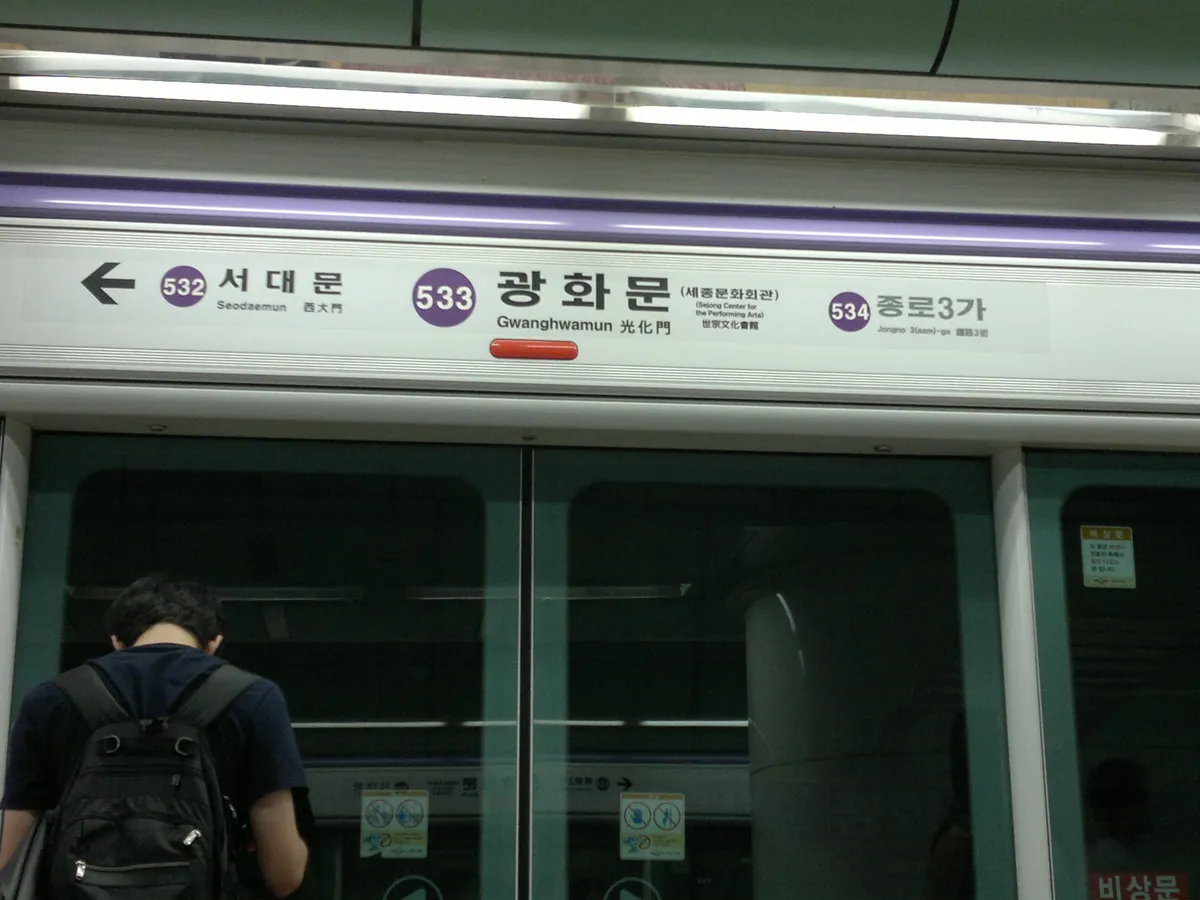
For Line 2’s main circle, inner circle (내선순환) runs clockwise and outer circle (외선순환) runs counterclockwise. Confirm the next station as well as the circle label. A train displaying a named terminus is not a promise to continue around the whole loop; check that it reaches your stop.
Step 2: Check local versus express
On Line 9, a local train stops at every station, while an express skips stops. Read the arriving train’s service type and the express-stop map before boarding. The operator lists red express icons and green normal-train icons, but read the words too rather than relying only on color.
If your station is not an express stop, use a local service or change from express to local at a suitable stop shown on the route map. Local and express trains do not always use different platforms, and some stations use opposite sides of the same platform. Follow the displayed service information. Line 9 does not charge an express supplement.
Step 3: Board and follow the stop sequence
Let passengers leave first, then board without rushing closing doors. Keep luggage with you and clear of doorways. Watch the onboard station display and listen for announcements, especially before your transfer. If the service ends before your destination, leave the train and check the onward departure rather than staying aboard a terminating service.
4. Transfer, Tap Out and Find Your Exit
Follow transfer signs rather than street exits
At the change station, follow “Transfer” signs and the next line’s color or number through the internal passage. Recheck the direction before boarding. Ordinary subway line changes within the paid area do not require buying another ticket, although distance charges and special-line surcharges can still apply.
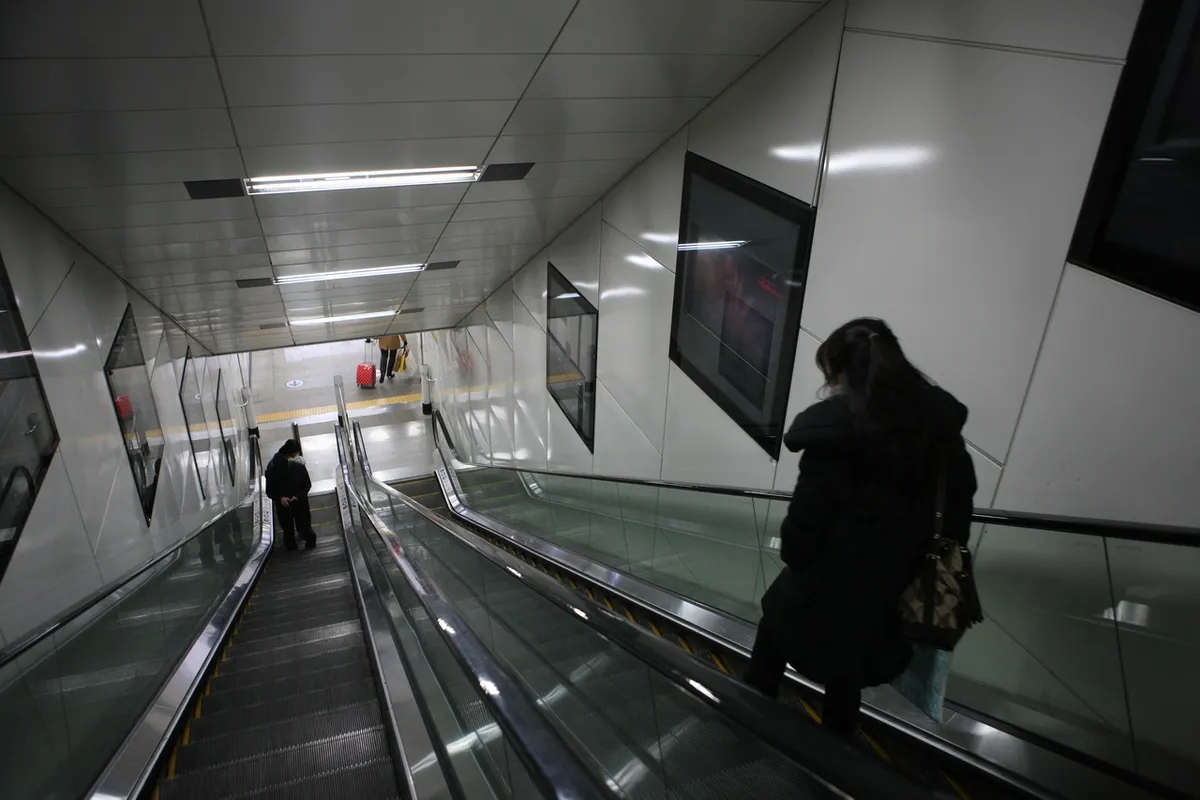
A gate does not always mean you are leaving the system. Line 9 has internal transfer gates that require a card or ticket tap; its operator says these gates track transfers without collecting a separate fare. Follow the marked transfer route rather than deliberately exiting to the street.
Plan the elevator route with luggage
Check access at the departure, transfer and destination stations, not just the first entrance. Seoul’s accessibility guidance explains that a street elevator may reach the ticketing level, with another elevator needed for the platform. The nearest numbered stair exit is not automatically the elevator route.
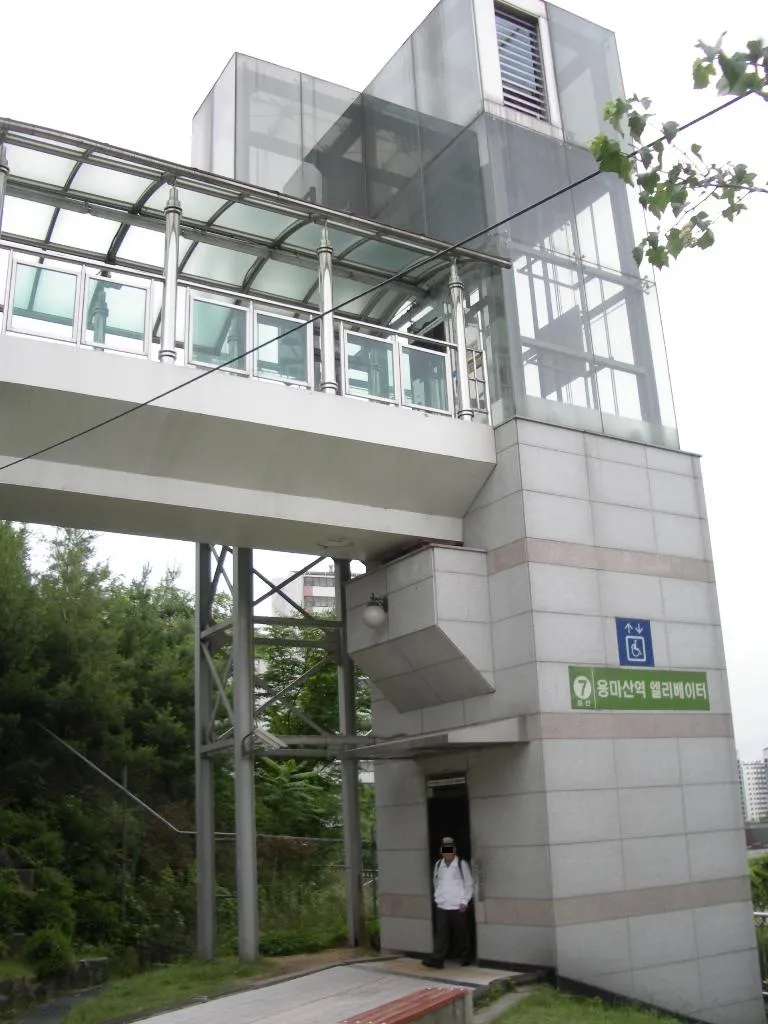
Look for elevator signs and ask staff where the complete route continues. Allow for the walk between lifts and platforms; an elevator shown in an older photograph is not confirmation that it is operating today. Choose the route you can manage with your bags, rather than carrying them onto an escalator you cannot use safely.
Finish the journey at the destination gate
Follow the exit signs, tap the same ticket or transport card at the gate, then find the numbered street exit for your destination. If the balance or ticket fare is insufficient, use the fare-adjustment machine near the gates or ask staff. Keep won cash available and use the intercom if you cannot complete the adjustment.
After exiting, return a single-journey card to a “Deposit Refund Device” to recover its KRW 500 deposit. This is not a refund of the train fare, and the single-journey ticket does not cover a bus connection.
Make sure a transport-card exit tap registers. Since March 7, 2026, missing the tap after a subway-only journey can add the card’s basic fare when you next board. The rule covers prepaid and postpaid transport cards; single-journey tickets, commuter passes and concession tickets are excluded.
Check the last connection and know where to ask
There is no single midnight deadline for every station. Check the operator timetable for your boarding station, direction and day type, then check the connecting line too. A late train may terminate before your stop even though trains are still running elsewhere.
For station help: use the gate intercom or platform emergency phone; Seoul Metro lists 1577-1234 for customer service. For tourist information or interpretation, use 1330. In a fire or medical emergency call 119; for police call 112. Give your station, line and platform or carriage location.
Other help in Korea: BBB Korea 1588-5644 for interpretation, 1345 for immigration guidance and 110 for government-service inquiries. These are not substitutes for emergency dispatch.
5. Frequently Asked Questions
Can I ride without a Tmoney card?
Yes. Buy a single-journey ticket for your destination at a station machine. Keep it for the exit gate and return it afterward at the deposit-refund machine.
What if I enter the wrong platform?
Ask station staff or use the gate intercom before leaving the paid area. Whether a change requires going through gates depends on the station; do not assume every ticket receives free re-entry.
Do I need another ticket when changing lines?
Not for an ordinary internal subway transfer. Follow the transfer passage, keeping the same card or ticket. Special-line charges and the final distance can still affect the fare.
Does a Line 9 express stop at every station?
No. Check the express-stop map and arriving train information. If your stop is local-only, board a local train or make the local connection shown in your route.
Can I assume the last train leaves at midnight?
No. Last departures differ by station, direction and day. Check that the train reaches your destination and that any connecting service is still available.
The practical way to remember how to use Seoul subway services is to check the line, direction, train destination and final exit separately—and keep the same valid ticket with you until the journey is complete.
Sources & References
Official transport, tourism and public-service references:
Last verified: October 22, 2026. Fares, station access and timetables can change; follow current operator notices and station instructions.
Image Credits
Line 2 carriage: Brit in Seoul — CC BY-SA 4.0.
Hyehwa entrance: ko:User:Jolly6656 — Public domain.
Soraepogu ticket machines: LandAndTree — CC BY 4.0.
Gwanghwamun platform sign: 阿貴 — CC BY-SA 3.0.
Yangjae escalators (2013): Korea Tourism Organization, Kim Ji-ho — Korea Open Government License Type 1.
Yongmasan elevator: Kaitak89 on kowp — CC BY-SA 3.0.
Single-journey card at City Hall (2014): 한국관광공사, 스튜디오 프레임 주민호 — Korea Open Government License Type 1.
Photographs resized and converted to WebP; they illustrate station equipment and are not live access or timetable information.