
The KORAIL Pass gives foreign visitors a choice of two to five travel days on eligible trains within a ten-day period, according to KORAIL’s official guide.
This guide explains when it can cost less than individual tickets, what the current prices include, and how to select travel days and reserve seats.
1. Is the KORAIL Pass Worth It?
The pass is worth considering when the eligible train tickets you would otherwise buy cost more than the pass.
Visiting several cities does not, by itself, establish a saving: the answer depends on the actual fares, the dates you travel, and the trains you intend to use.
Start with your journeys, not the pass. Write down the departure station, arrival station, travel date and class for each train.
Look up the corresponding individual ticket prices through the official KORAIL booking page, then add only journeys covered by the pass.
Compare that total with the pass matching your number of travel days. If individual tickets cost less, the pass does not save money. If the totals are equal, there is no fare saving.
If the ticket total is higher, the pass has a lower fare cost, provided you can use the trains and reservations your plan requires.

A useful threshold for a return journey
The two-day adult pass costs KRW 131,000. For an outward and return journey on two selected dates, the combined eligible ticket prices must exceed KRW 131,000 before the pass produces a fare saving.
For two equally priced tickets, that threshold is KRW 65,500 per journey. This is half the pass price, not a quoted fare for Seoul–Busan or any other route.
Use the prices shown for your actual trains rather than assuming that a return trip automatically pays for a pass.
Keep first-class extras and excluded transport outside the basic comparison. Do not add journeys you would not otherwise take just to make the pass appear economical.
2. Current Pass Types, Prices and Coverage
KORAIL currently lists four select passes. Each lets you choose the purchased number of travel days within ten days from the starting date. The current official menu does not divide these products into separate consecutive and flexible versions.
Two selected days: adult KRW 131,000; child KRW 66,000.
Three selected days: adult KRW 186,000; child KRW 93,000.
Four selected days: adult KRW 234,000; child KRW 117,000.
Five selected days: adult KRW 275,000; child KRW 138,000.
These are the prices in the official pass guide, checked on October 18, 2026. Adult pricing starts at age 13; child pricing applies to ages 6–12.
The guide allows one child under six to travel free with each accompanying adult, but this is not a promise of a separate reserved seat.
The current price table and official purchase options list adult and child categories, not separate youth or saver products.
If an older guide shows different categories or three- and five-day consecutive passes, use the current operator’s menu for your purchase.

Count dates, not nights or destinations
A two-day pass is not ten days of unrestricted travel. You choose two travel dates within the ten-day window.
The dates can be consecutive or separated; days spent sightseeing without using the pass do not need to be selected.
For a couple, compare each traveler’s ticket total with the appropriate individual pass price. For a family, apply each passenger’s age category separately.
Do not assume that traveling together creates a group discount in the current official menu.
It is not a nationwide public-transport card
KORAIL’s pass information covers eligible KTX and regular railway services. Its exclusions include SRT, metropolitan subways and special or temporary tourist trains.
A rail connection on your itinerary is therefore not automatically covered simply because it runs in Korea.
Keep local subway and bus spending separate from the intercity comparison. Before including a less familiar train, confirm its coverage in the operator’s pass information rather than relying on the station or destination name.
3. How to Buy the Pass and Reserve Seats
Step 1: Check your dates and passenger details
The pass is available to foreigners visiting Korea; KORAIL states that people with Korean nationality cannot use it.
Have a valid passport and credit card ready, and enter your personal details exactly as they appear on the passport.
Before paying, settle the number of travel days and check the trains you need. Buying the pass does not reserve a seat.
A low overall price is less useful if your plans depend on a departure with no suitable seats available.

Step 2: Purchase through the official pass page
Open KORAIL’s pass reservation page, select the pass and passenger category, and review the starting date and personal information before payment. Keep your pass number and confirmation accessible afterward.
The starting date determines the ten-day period in which your selected travel dates must fall. It is not necessarily your arrival date in Korea. Choose it around your rail journeys rather than automatically matching it to your flight.
Step 3: Register the dates you will travel
Go to MY TICKET and retrieve the pass using its number or your email address.
Open DETAILS, choose Add beside Departure Date, and register the travel dates before reserving seats.
Check that every planned pass journey falls on a selected date inside the valid period.
Purchasing more travel days does not extend the ten-day window, and a day you cannot use should not be counted as a saving.
Step 4: Make the seat reservations
Select your pass, choose SEAT RESERVATION, enter the journey details and search. KORAIL’s instructions direct economy-class passengers to select a seat, continue with Next, and check the result through Print or Usage History.
The current guide allows up to two reservation tickets per person per day. An earlier operator notice gives a separate limit for transfer tickets, so do not plan several connecting reserved trains as though every segment were automatically available under an unlimited seat allowance.
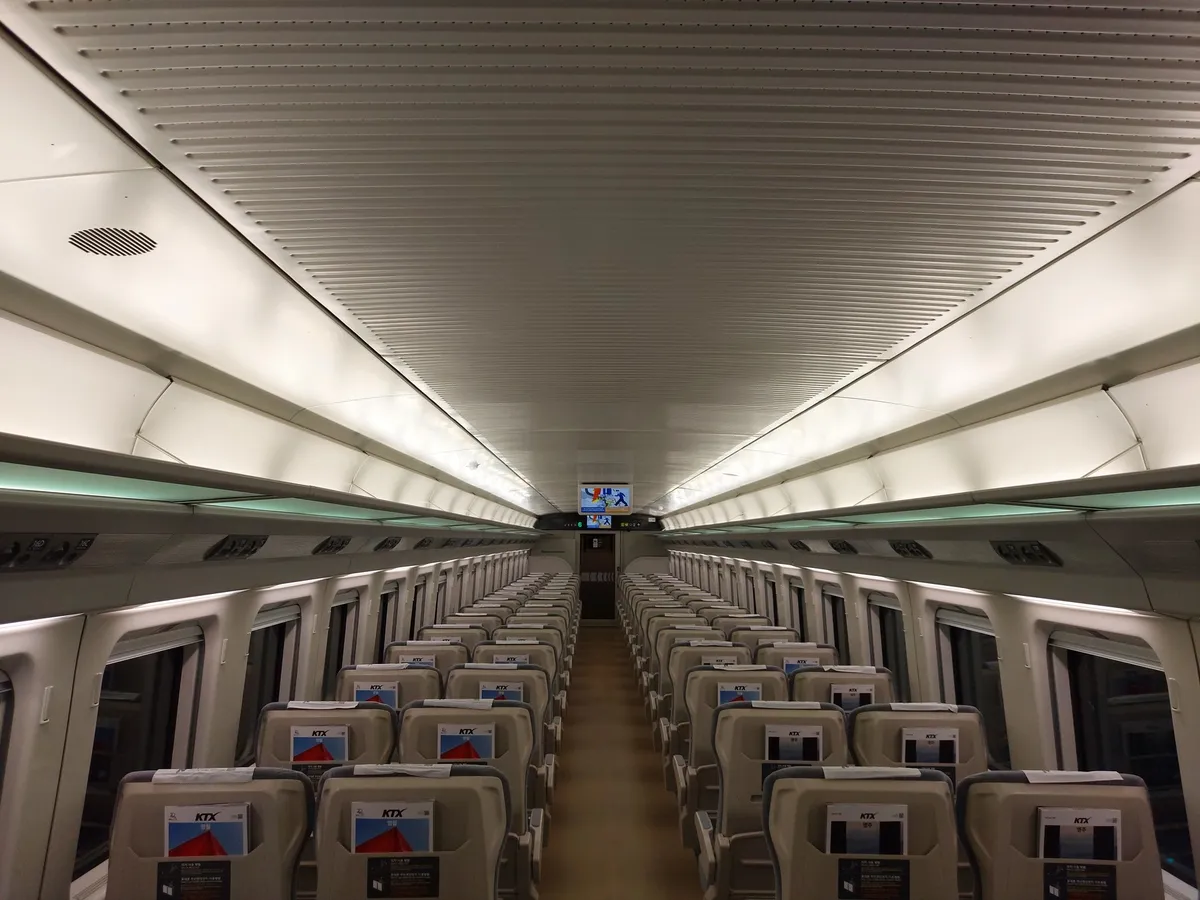
First class is not included without an extra payment. The current guide states a charge equal to 50% of the first-class seat price for the route.
This is not described as half the difference between economy and first class; check the actual charge before confirming.
For finding your train, carriage and seat at the station, continue with the KTX train guide. Those boarding steps are separate from purchasing a pass and allocating its travel days.
4. Reservation, Change and Cancellation Warnings
A pass does not guarantee a seat
KORAIL’s guide permits standing travel when seats are sold out, with a valid pass and passport.
That does not give you an assigned seat or an unrestricted right to travel on every date: KORAIL may announce specific restrictions on its website.
Check the operator’s notices for your travel period, particularly around Seollal (설날) and Chuseok (추석). Do not buy a pass on the assumption that it guarantees a seated holiday departure.
The current pass guide says reservations become available two months before departure, while some other KORAIL pages display a shorter booking window. Use the live reservation calendar to establish which dates are actually on sale for your journey.

Changing a booking is not the same as changing a pass
You cannot reserve the same journey twice on the same date. To change its departure time, cancel the existing seat reservation before that train departs, then make the replacement reservation subject to availability.
KORAIL’s FAQ allows one change to the pass starting date through MY TICKET → DETAILS. Personal information, passenger category and pass type cannot be edited after purchase; the instructions instead require refunding the pass and buying another, subject to the refund conditions.
Cancel before the pass period starts
Refunds are available only before the pass starting date, not afterward. Do not wait until the departure of your first train: the cutoff concerns the pass period, even if you have not used it.
Cancel reserved seats first. For an online purchase, use MY TICKET → DETAILS → REFUND. Passes bought from a travel agency or station must be refunded through the original purchase channel.
The official FAQ and purchase page currently give different wording about refund fees. Do not assume cancellation is free: confirm the refund amount and applicable terms with KORAIL or the original seller before buying.
The pass guide also states that pass holders cannot receive compensation for train delays and suspensions.
Carry valid travel documents, not screenshots alone
Bring your passport, valid pass and seat-reservation ticket when you have reserved a seat. The guide accepts the actual ticket screen opened on the mobile website, but explicitly says that a train-ticket screenshot is not valid.
The purchase page still instructs passengers to carry a printed pass. To meet that instruction, print it before travel and retain access to the live ticket screen as well. Do not rely on a saved screenshot as your boarding document.
5. Frequently Asked Questions

Does a two-day pass cover a ten-day trip?
It covers two selected travel dates within ten days from the pass starting date, not train journeys on all ten dates. Choose the dates on which you will use eligible trains.
If you need more rail-travel dates, compare the appropriate longer pass with individual tickets.
Is a pass automatically cheaper for a return journey?
No. Compare the exact eligible ticket total with the matching pass price. The two-day adult pass costs KRW 131,000; if your two tickets total less, individual tickets cost less.
Does buying the pass reserve my seats?
No. Register your travel dates and reserve seats separately through MY TICKET. The current guide lists a maximum of two reservation tickets per person per day, with availability and any applicable restrictions still relevant.
Can I use it on SRT or the subway?
No. KORAIL’s published exclusions include SRT and metropolitan subway services. Budget separately for excluded journeys and verify the coverage of any special tourist train before including it in your comparison.
Can I refund an unused pass after its starting date?
No. The operator’s instructions say refunds are unavailable after the starting date. Arrange any cancellation before the pass period begins, cancel reserved seats first, and confirm the refund amount through the original seller.
Choose a KORAIL Pass only after comparing eligible fares, selected dates and the reservations you actually need. If individual tickets fit the trip better, there is no requirement to buy a pass.
Sources & References
Official operator sources: KORAIL pass prices, eligibility, reservations and conditions;
official pass purchase page;
pass FAQ and refunds;
pass changes effective December 11, 2025;
operator pass-details notice and transfer-ticket caveat;
individual ticket search;
current notices.
Help: KORAIL’s English pages list +82-1599-7777, 08:00–20:00 KST. In Korea, emergency numbers are 119 for fire and medical emergencies and 112 for police. Other assistance: tourist information 1330, immigration information 1345, government enquiries 110, and BBB Korea volunteer interpretation 1588-5644.
Last verified: October 18, 2026. Prices, reservation availability and pass conditions can change. Recheck the official purchase terms and your selected dates before payment. Comparison thresholds above are calculations from pass prices, not quoted route fares.
Image Credits
KTX train: Hajoon0102 / Wikimedia Commons — CC BY-SA 4.0. Resized and converted to WebP; adapted photograph under the same license.
Fare comparison: Aaron Lefler / Unsplash — Unsplash License.
Planning together: Vitaly Gariev / Unsplash — Unsplash License.
KTX-Cheongnyong standard class: 생각하는 나무 / Wikimedia Commons — CC BY-SA 4.0. Resized and converted to WebP; adapted photograph under the same license.
Seoul Station concourse (2014): Minseong Kim / Wikimedia Commons — CC BY-SA 4.0. Resized and converted to WebP; adapted photograph under the same license.
Travel notes: Kristin Hardwick / Wikimedia Commons — CC0.
Busan Station trains (2011): Steve46814 / Wikimedia Commons — CC BY-SA 3.0. Resized and converted to WebP; adapted photograph under the same license.