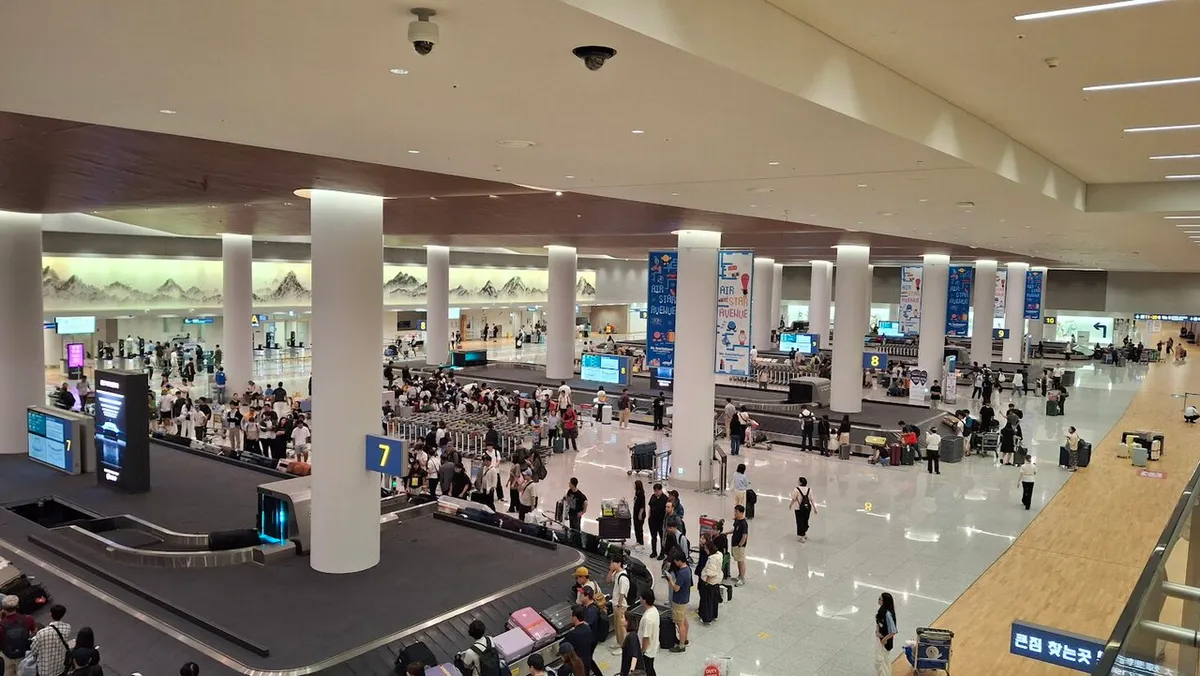
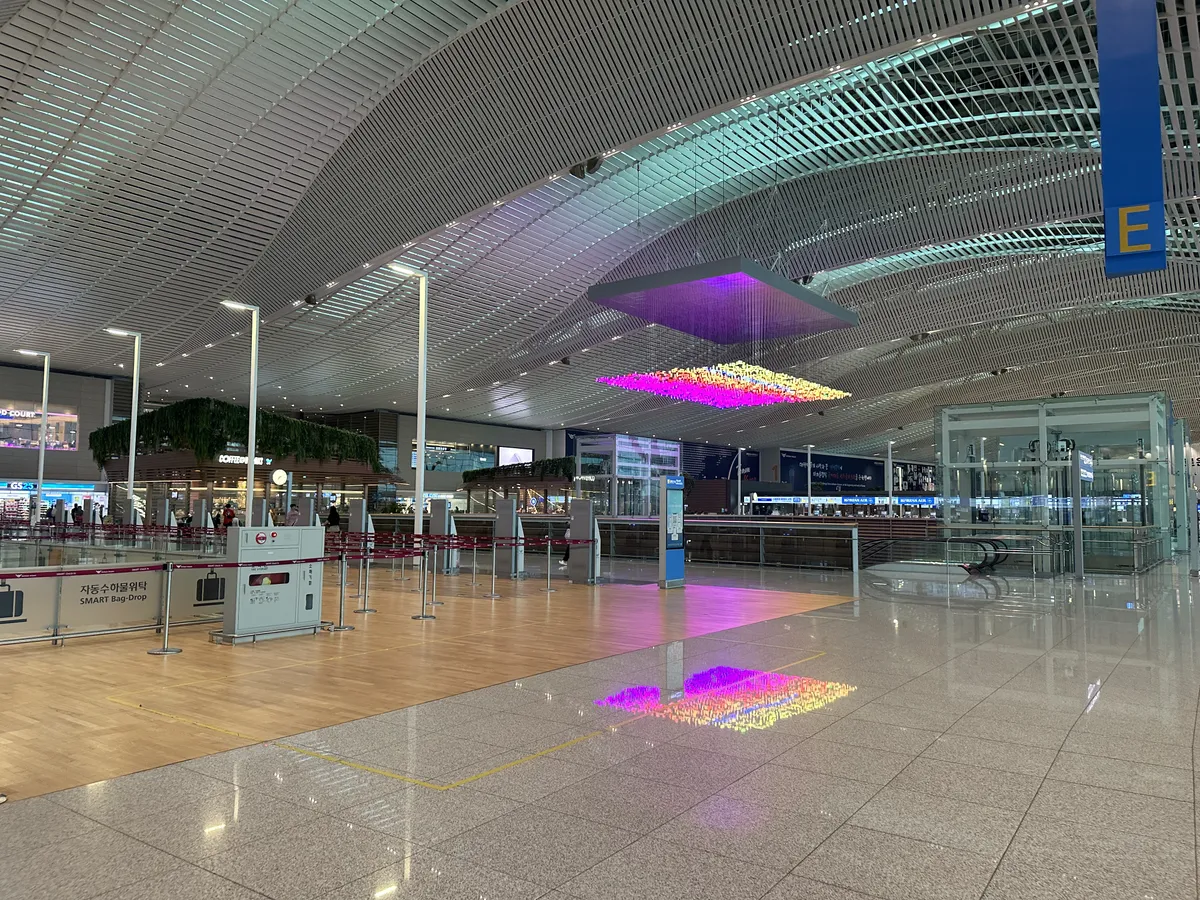
International departures at Incheon Airport begin on the third floor of the passenger terminal, according to the airport’s official departure guide. This Incheon Airport departure guide follows the journey from confirming your terminal to check-in, baggage handover, security, departure immigration and the boarding gate.
The airport divides these into separate stages. An online check-in confirmation, a baggage receipt and a boarding pass serve different purposes, while the time shown for departure is not the same as the time you should reach the gate.
1. Confirm Your Terminal Before Leaving
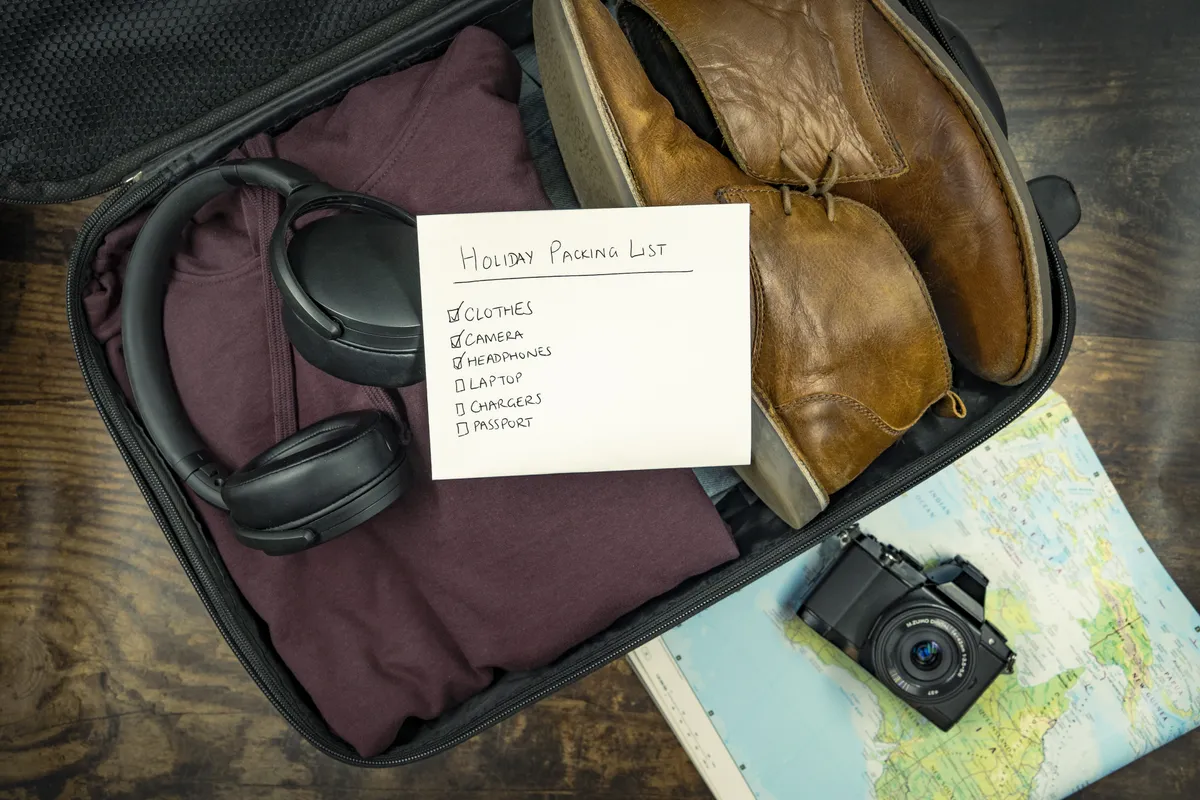
Check the terminal on your e-ticket, then confirm your actual flight through the airport’s flight information and your operating airline. Incheon Airport warns that codeshares and airline circumstances can change the terminal used. A remembered airline list is therefore not a substitute for checking the flight you will take.
A codeshare can display the name and flight number of the airline that sold the ticket while another carrier operates the aircraft. Asiana’s official guidance directs passengers on its codeshares to the operating airline’s check-in counter. Use that distinction when deciding which counter to visit, rather than searching only for the selling airline’s logo.
For an international departure, head to the third-floor departure area of the correct terminal. Once there, use the flight information display system, commonly abbreviated FIDS, to locate the check-in counter. The airport’s counter guide recommends checking through airport flight information or the airline before arrival and confirming the assignment on the departure-floor displays.
Plan arrival separately from the final check-in cutoff. Incheon Airport’s departure advice dated October 7, 2024 recommends arriving three hours before departure; its FAQ also describes three hours in advance as a general check-in planning point. This is arrival guidance, not a promise about queues or a universal airline deadline. Follow your carrier’s requirements for your flight and any special assistance or document checks.
2. Check In, Then Hand Over Checked Baggage
Choose the service your flight supports
Web or mobile check-in can issue a boarding pass before you reach the airport, but Incheon Airport notes that not every airline or flight supports it. Check the result carefully: a reservation receipt or a notice asking you to exchange a document at the counter does not mean that every airport task is complete.
Asiana explicitly states that a ticket for exchange cannot be used for boarding and must be exchanged for a physical boarding pass at the airport. If your airline requires document verification, go to its designated counter even if you completed an online form. The operating airline determines which documents and services apply to your journey.
The airport’s self-service kiosk sequence is to confirm reservation details, verify the passport, confirm the itinerary and select a seat, then print the boarding pass. Its kiosk guidance lists restrictions involving visa-requiring destinations, codeshares and passengers traveling with infants. These are kiosk restrictions, not a rule that every airline prohibits online check-in with an infant: Asiana’s online guidance specifically allows it.
If the machine or online service cannot complete your check-in, use the staffed counter. Do not keep trying a service for which your route or documents are ineligible while the applicable airline deadline approaches. Counter staff can complete the checks that the self-service route cannot handle.
Baggage handover is a separate step
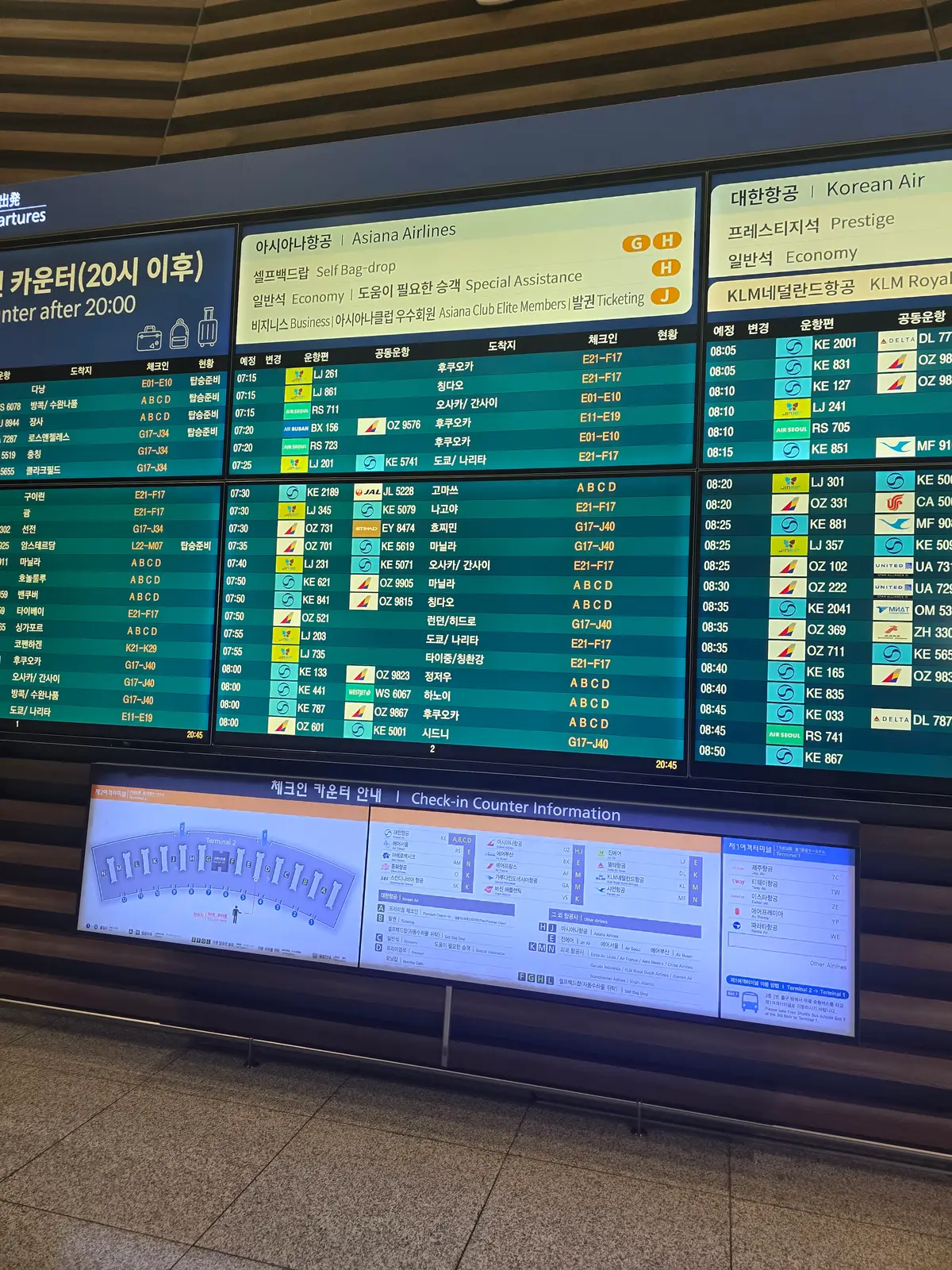
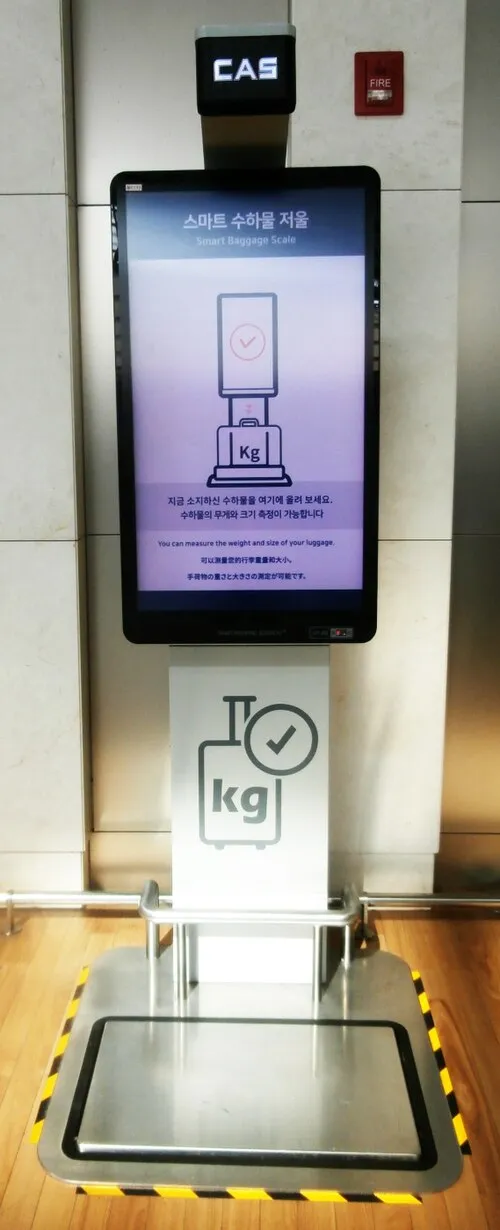
A boarding pass does not put your suitcase into the aircraft’s baggage system. If you have checked baggage, complete the airline’s bag-drop or counter procedure before proceeding to passenger security. Self-bag-drop availability, accepted passengers, baggage allowance and operating hours vary by airline, as the airport’s service guide makes clear.
At an eligible self-bag-drop machine, scan the boarding pass and passport, place the bag, follow the baggage-rule prompts, attach the baggage tag and collect the confirmation receipt. The airport instructs passengers to load one piece at a time and use the provided tub for bags with long straps or light baggage. Keep the receipt with your travel documents rather than leaving it at the machine.
The airport publishes different checked-bag screening instructions for the two terminals. At Terminal 1, it asks passengers to wait nearby for about five minutes until the checked bag passes X-ray inspection. At Terminal 2, it directs passengers to the designated screening area in the departure hall to confirm that the bag has passed. Follow staff instructions for your particular baggage handover.
Check-in, bag drop and boarding each have their own cutoff. For example, Korean Air’s counter guidance states that its international check-in closes one hour before departure. That figure is not a deadline for every airline, every baggage service or every boarding gate. Confirm the instructions for your operating carrier instead of treating any single airport-wide number as universal.
3. Complete Security and Departure Immigration
Finish the necessary public-area tasks before entering departure processing. If you need a landside airline counter or other service, complete it first: Incheon Airport states that after passing immigration into the duty-free zone, passengers cannot return to the pre-security area through the normal departure route.
Security screening and immigration are separate stages. At the departure-hall entrance, the airport’s ordinary procedure requires your passport and boarding pass for identification. A departure-hall entrance is not your aircraft’s boarding gate. If the designated entrance is crowded, the airport says another nearby departure hall may be used; this does not mean choosing a different terminal or boarding gate.
Follow the security officers’ directions for placing belongings in trays and passing through the metal detector or body scanner. Additional screening may be conducted. The current airport screening page contains both a generic instruction about separating electronic devices and a more specific note on laptop and tablet handling, so follow the instructions given at the actual checkpoint rather than relying on an older photograph or tutorial.
Detailed liquid, battery and restricted-item rules are covered in the Korea carry-on rules guide. For this departure sequence, the important distinction is that checked baggage has its own screening process, while you and your cabin belongings must complete passenger screening before immigration.
At staffed departure immigration, present your passport to the inspector. The airport notes that the boarding pass may also be checked. Keep both accessible until you reach the boarding gate; completing airline check-in does not complete immigration inspection.
What SMARTPASS does—and does not do
Incheon Airport’s SMARTPASS uses passport, face and boarding-pass registration for facial identity recognition at supported departure points. Its departure-hall service is available to registered passengers regardless of airline, but boarding-gate use is limited to selected gates for participating airlines. Those two kinds of availability should not be confused.
The airport’s SMARTPASS guide lists a minimum age of seven, with parental consent required for users under fourteen. It also tells passengers to carry their passport and boarding pass, not place them in checked baggage. If you renew your passport, the airport requires you to re-register your SMARTPASS ID.
SMARTPASS is separate from the Ministry of Justice’s Smart Entry Service. It does not remove the security and immigration stages from the departure journey, and registering your face is not the same as enrolling in immigration e-gates. Use the ordinary staffed route when the service is unavailable for your flight or you need assistance.
4. Reach the Correct Gate and Avoid Terminal Mix-Ups
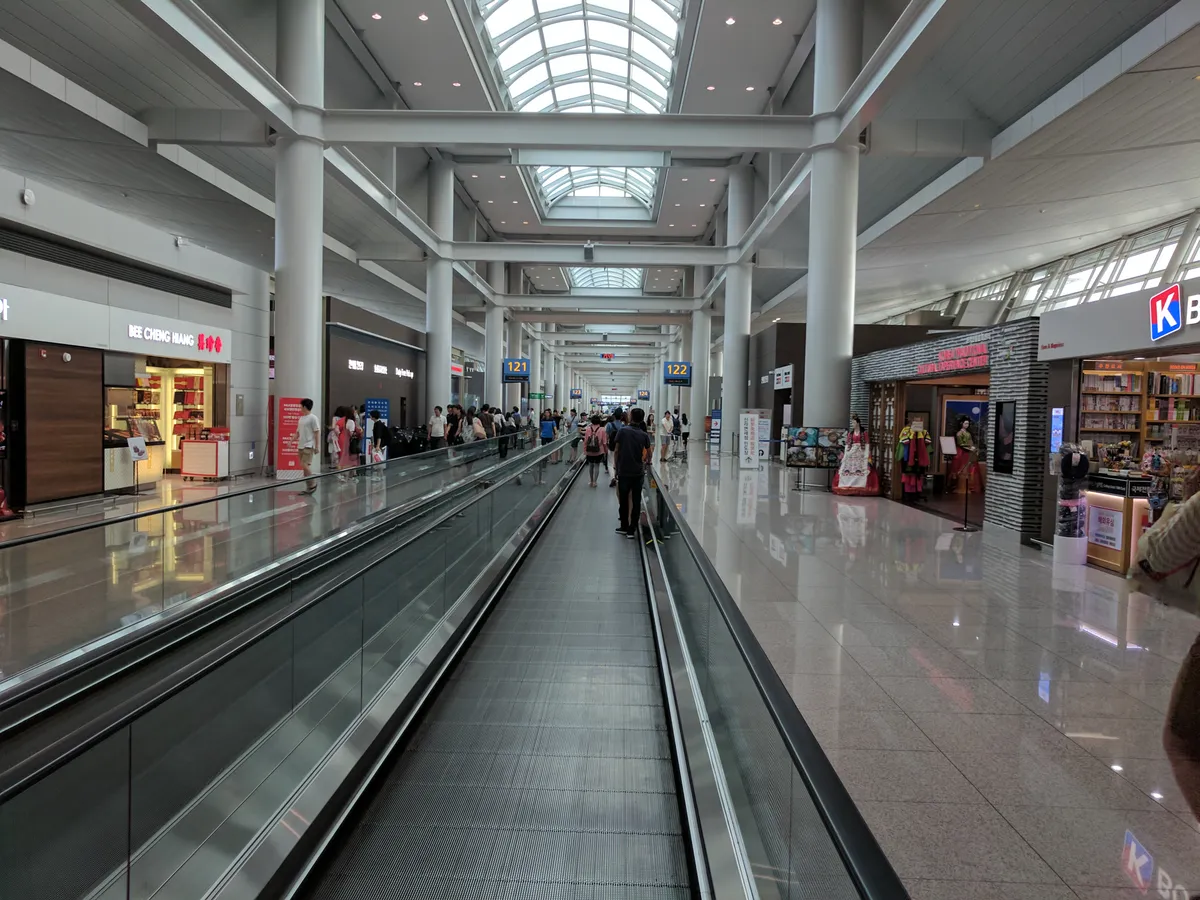
After immigration, check the boarding pass and current flight display for your gate. The airport’s departure guide lists gates 1–50 for Terminal 1, 101–132 for the Concourse and 208–290 for Terminal 2. These ranges explain the layout; your actual flight assignment remains the deciding information.
If your flight leaves from the Concourse, follow the signs for its shuttle train. Incheon Airport describes this train as a 24-hour service and explicitly warns that return is not allowed on the outbound Concourse journey. Complete any necessary main-terminal tasks before taking it. It is not a public-area shortcut for a passenger who has arrived at the wrong terminal.
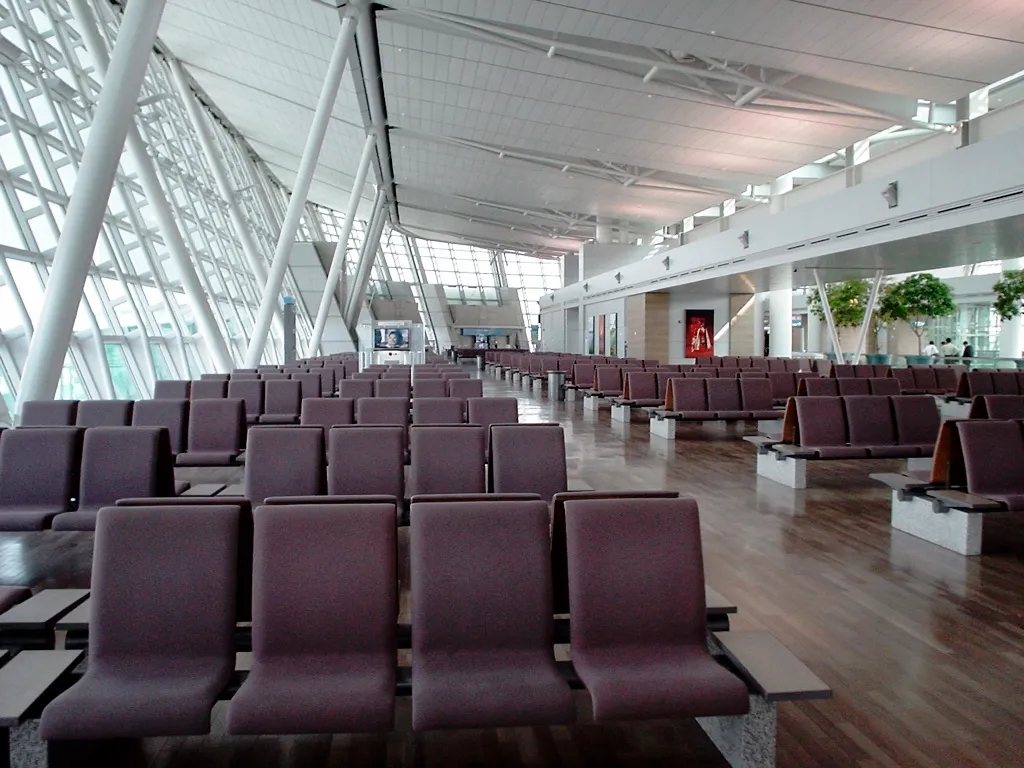
Keep boarding time separate from scheduled departure time. Check the instructions on your boarding pass and from your airline, and reach the assigned gate accordingly. Do not use the scheduled takeoff time as your arrival target at the boarding counter. A photograph of a gate display or another airline’s closing rule cannot establish the deadline for your flight.
If you are at the wrong terminal
While still in the public area, confirm the correct terminal with airport information or your airline. The airport provides landside inter-terminal shuttle buses and identifies airport rail as a paid transfer option. These are different from the airside train used to reach the Concourse.
Current shuttle guidance places the Terminal 1-to-Terminal 2 service at third-floor Entrance 8 and the reverse service at Terminal 2’s third-floor Entrance 7. Here, an entrance number refers to a building door, not an aircraft boarding gate. Check the linked airport shuttle directions and timetable before using the service; a bus interval is not a guaranteed transfer duration.
If an airline cutoff is close or has passed, contact airline staff about your flight. Airport transport information does not guarantee late check-in, an escort or free rebooking. The airport’s customer-service number is 1577-2600, with published hours of 07:00–22:00 year-round.
Important departure reminder: Confirm three locations separately: the passenger terminal, the check-in or bag-drop counter, and the boarding gate. The public-area terminal shuttle and the outbound Concourse train solve different navigation tasks.
5. Incheon Airport Departure Guide FAQ
How early should I arrive at Incheon Airport?
The airport’s published departure advice recommends three hours before departure. Check your airline’s current instructions as well, especially for document checks or additional services. Arrival guidance is not the same as the final counter or boarding cutoff.
Can I go straight to security after online check-in?
Only proceed after obtaining an accepted boarding pass and completing any required document checks and checked-baggage tasks. Some online results require a counter visit. Follow the operating airline’s instructions for your flight.
Does SMARTPASS let me skip security or immigration?
No. It is a facial identity service used at supported departure points, not a replacement for security screening or immigration. The airport also requires you to carry your passport and boarding pass.
Can I return after taking the train to the Concourse?
The airport’s outbound Concourse instructions explicitly state that return is not allowed. Finish the necessary main-terminal tasks before taking the shuttle. Do not use it to correct a landside terminal mistake.
What should I do if I reach the wrong terminal?
Confirm the flight’s terminal and ask airline staff if a deadline is close. Use the airport’s current landside shuttle or paid rail directions. Transfer availability does not guarantee that the airline can accept you after its cutoff.
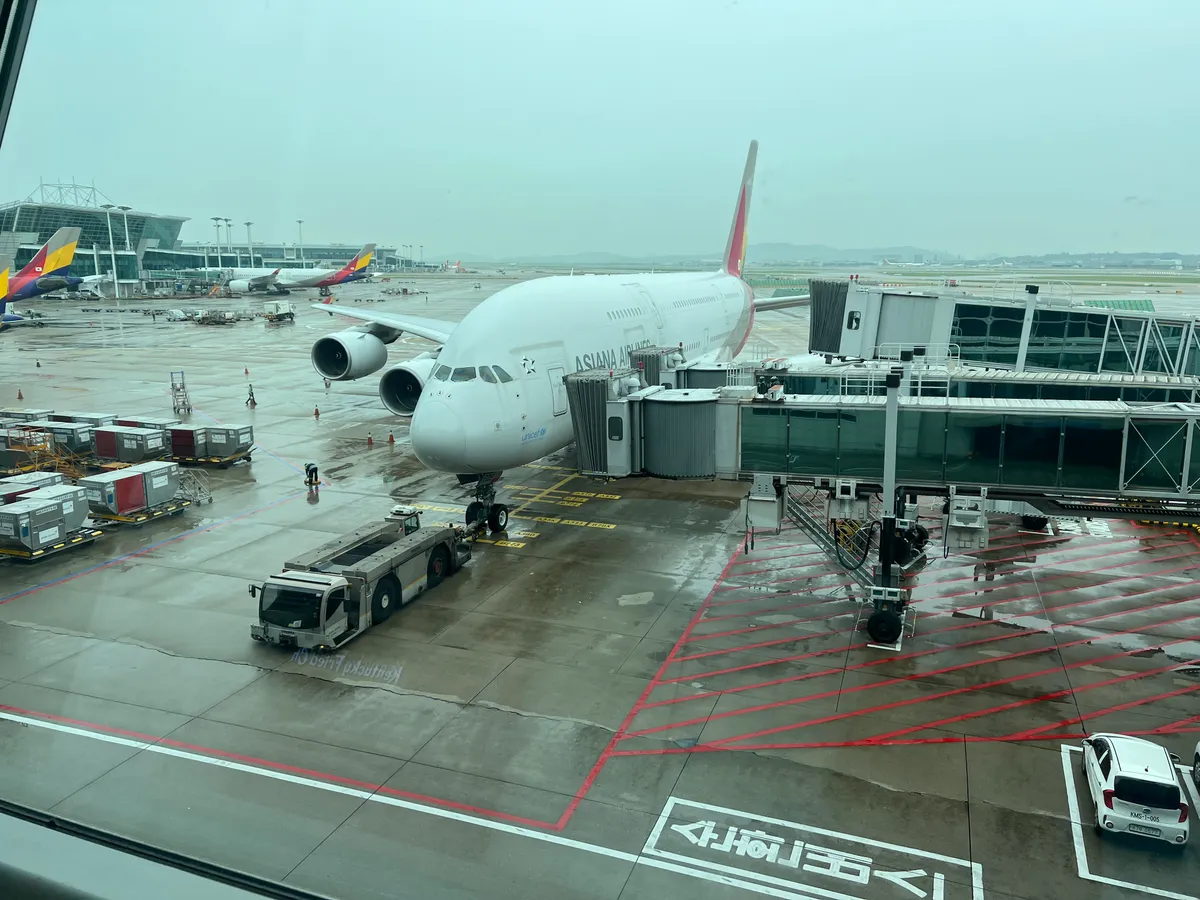
Use this Incheon Airport departure guide alongside your flight’s current instructions: confirm the terminal, finish check-in and baggage handover, clear security and immigration, then reach the assigned gate for boarding.
Plan Your Journey to the Airport
For the journey before terminal check-in, compare the Korea airport transfer options or read the AREX airport train guide. Confirm that the option you choose serves your departure terminal.
Sources & References
Official airport sources: Incheon Airport departure procedures; check-in counters and checked-bag screening; web and mobile check-in; self check-in and bag drop; security screening; staffed immigration; SMARTPASS.
Terminal transfers: Terminal 1-to-Terminal 2 shuttle; Terminal 2-to-Terminal 1 shuttle; inter-terminal transport.
Airline sources: Korean Air counter check-in; Asiana codeshare check-in; Asiana online check-in and boarding documents.
Arrival-time reference: Incheon Airport departure advice, October 7, 2024. Operational guidance above was checked on October 2, 2026; terminal assignments, service availability and airline deadlines can change. Recheck the official airport and operating-airline information before travel.
Emergency and interpretation contacts in Korea: Fire and ambulance 119; police 112; tourist information and interpretation 1330; immigration information 1345; government enquiries 110; BBB Korea interpretation 1588-5644. Sources: Visit Korea emergency guidance, Immigration Contact Center, Integrated Government Call Center and BBB Korea service information. Airport customer service and airline counters are the relevant first contacts for routine terminal and boarding questions.
Image Credits
Terminal 2 departure check-in hall: AirportTerminalGuy / Wikimedia Commons, CC BY 4.0.
Find flight and airline check-in area: Twotwo2019 / Wikimedia Commons, CC BY 4.0.
Check luggage weight before airline bag acceptance: Sarang / Wikimedia Commons, Public domain (PD-self author dedication).
Departure packing preparation: Familydestinationsguide.com Images / Wikimedia Commons, CC BY 2.0; creator: Family Destinations Guide.
Move through gate concourse: Robin van der Vliet / Wikimedia Commons, CC BY-SA 4.0.
Historical Incheon Airport gate waiting area: Redshirt (English Wikipedia) / Wikimedia Commons, Public domain — author release (photographed in 2004; historical waiting-area illustration).
Aircraft and jetbridge boarding context: JCSigma2000 / Wikimedia Commons, CC BY 4.0.
Images resized and converted to WebP for display. Photographs show airport facilities and neutral departure preparation; they are not live flight, counter or queue information.