Planning to visit a Korean fish market
(like Noryangjin Fish Market) or a coastal seafood restaurant?
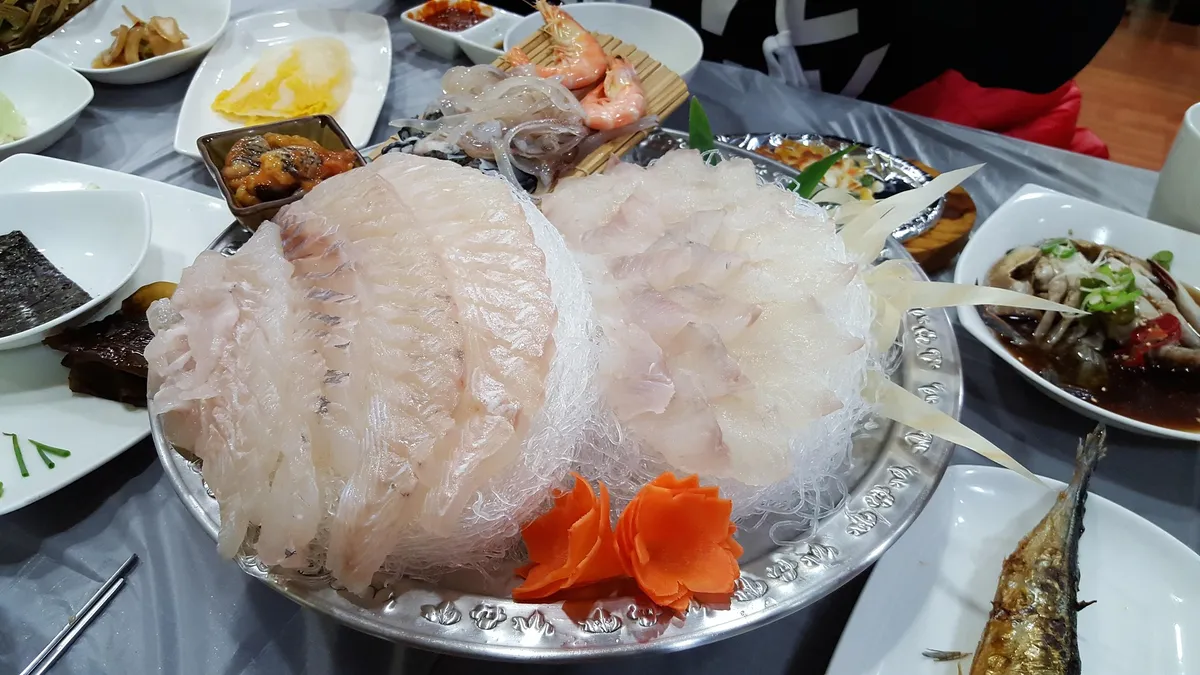
Get ready for a feast. Korean seafood culture is entirely different from the static Japanese sushi/sashimi experience where you just dip a slice of fish in soy sauce.
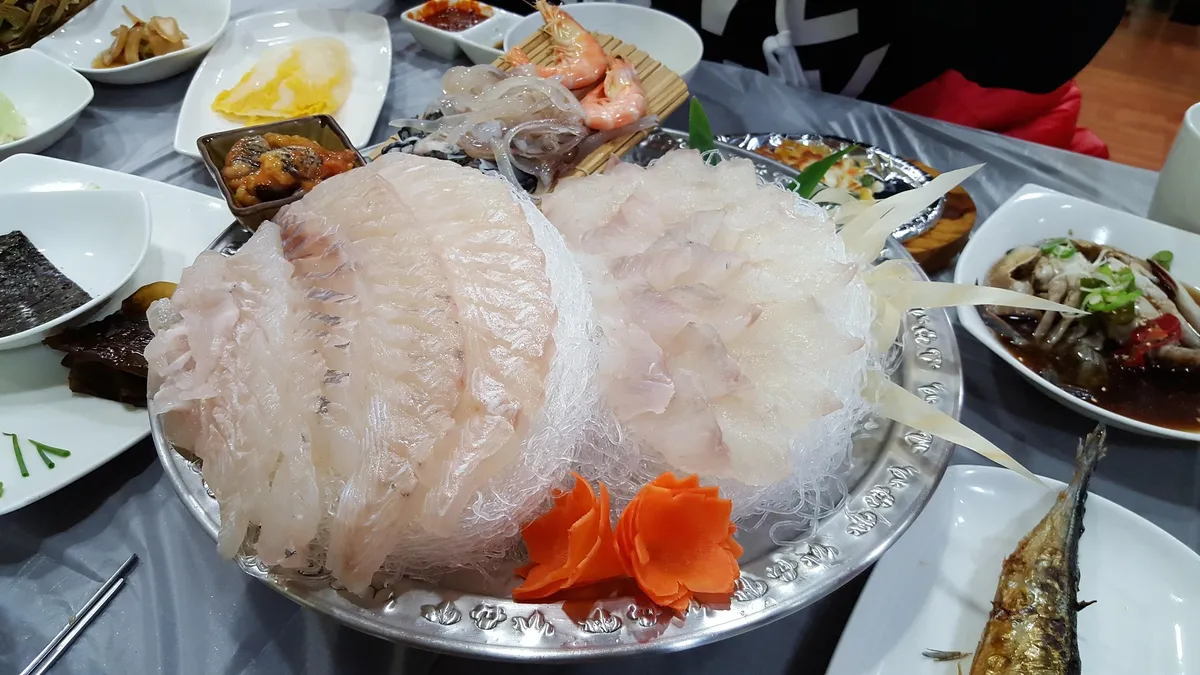
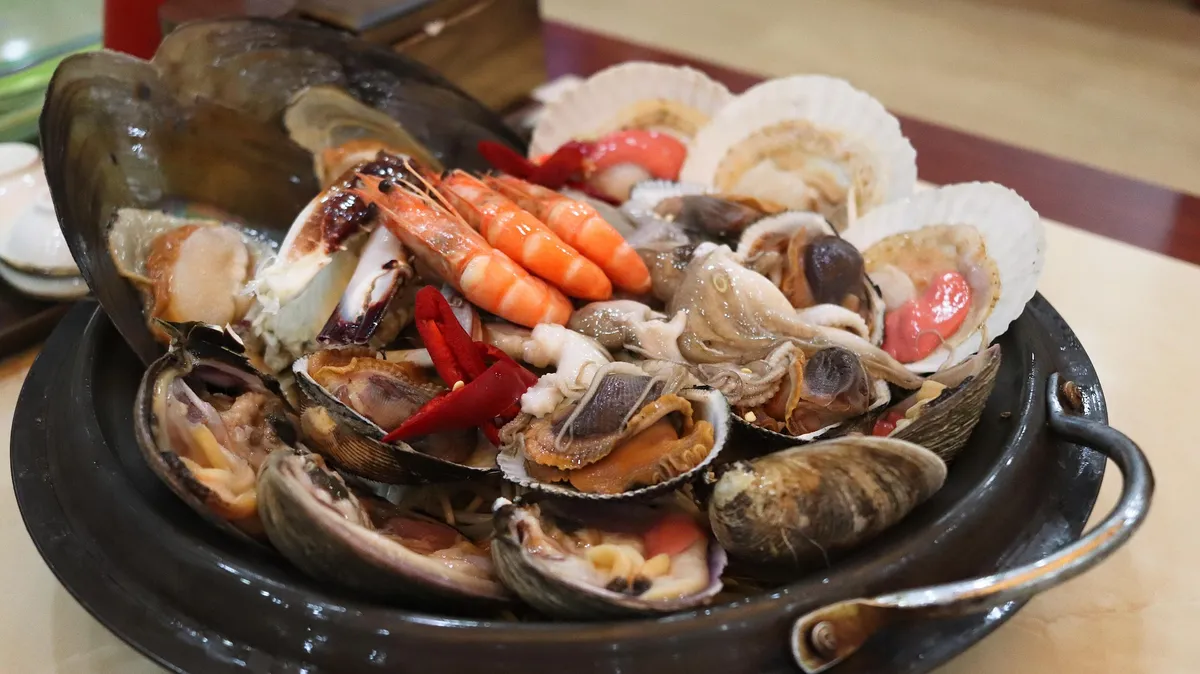
It is a culinary adventure where you taste dynamic, live seafood right in front of you and create
your own dynamic lettuce wraps (Ssam) with intense sauces and fresh vegetables.
Here is the 'Ultimate K-Seafood Survival Guide' to help you enjoy the Korean sea 100 times more deliciously and safely, just like a true local.
1. Adventurous & Fresh Seafood
Before the main sashimi arrives, the table is covered with fresh seafood plates called 'Ssukidashi (Side dishes)'. Here are the local favorites packed with ocean flavors. Local Koreans also dip these seafoods in a sweet and spicy red sauce called 'Chojang'.
Sannakji (Live Octopus): What is it?: The symbol of overwhelming freshness
you can only experience at a Korean seafood restaurant.
Freshly caught octopus is chopped up and tossed in sesame oil and seeds.
Enjoy its dynamic life force squirming on the plate with your eyes first!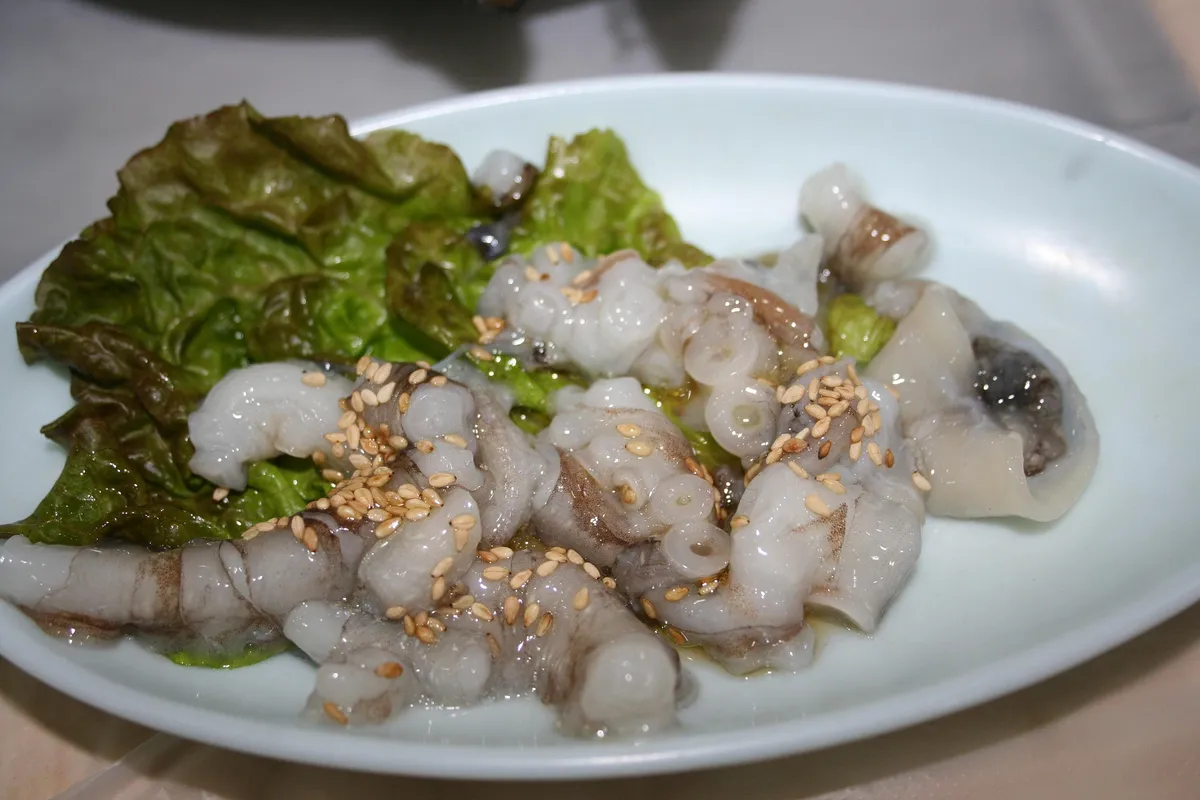
🚨 How to eat & Warning: The suction cups on the tentacles are very strong,
so as soon as you put it in your mouth, savor the nutty sesame aroma and chew it thoroughly and rapidly until it is completely crushed. The chewy and bouncy texture is a masterpiece.
Jeonbok-hoe (Raw Abalone): Enjoy the 'luxury of the sea', abalone,
as fresh sashimi. Its firm, crunchy texture and subtly spreading ocean scent are top-notch.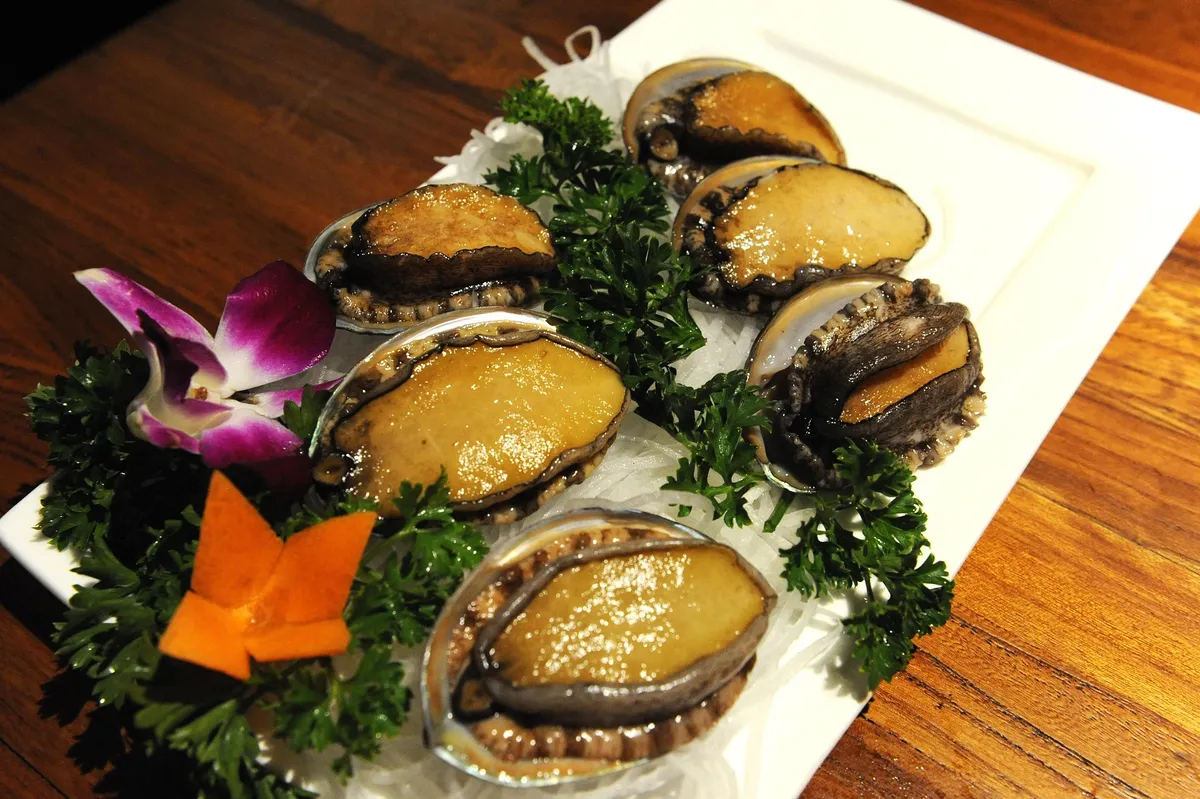
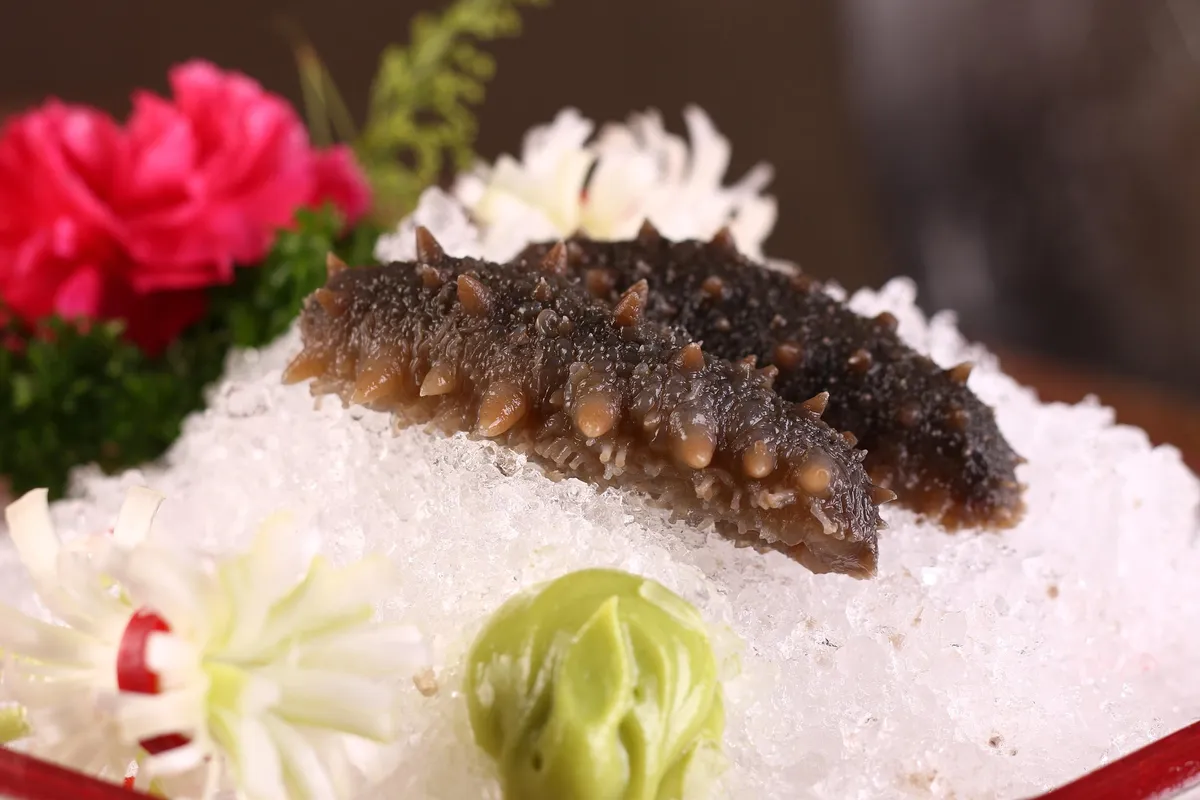
Haesam (Sea Cucumber): Despite its unique visual, its firm and chewy texture that gets better as you chew is incredibly appealing. Crushing it in your mouth makes it the perfect pairing for Soju.
Gaebul (Penis Fish / Urechis Unicinctus): You might hesitate at first due to its unique appearance, but it is one of the top delicacies local gourmets seek out first at a seafood restaurant. Once you chew it, the subtle sweetness that spreads and the chewy texture will delight your mouth. Dip it deeply in the sesame oil & salt sauce.
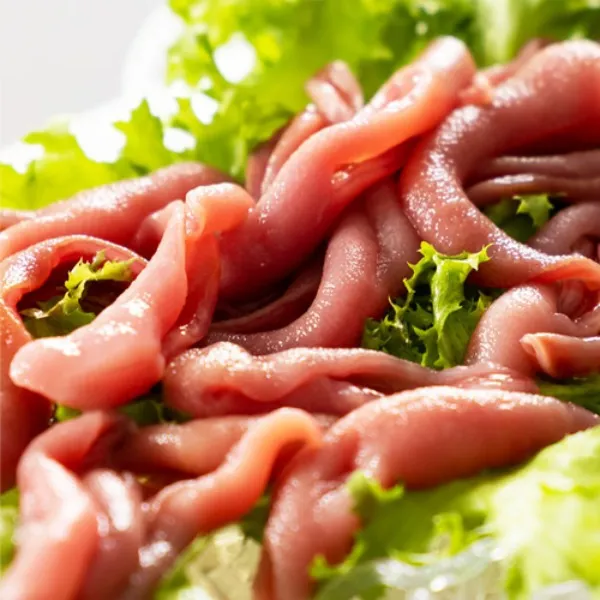
Meongge (Sea Pineapple): It holds soft flesh inside a bright, colorful shell. One bite creates an explosion of bittersweet, intense ocean breeze in your mouth. Dipping it in sweet and spicy Chojang creates a fantastic harmony.
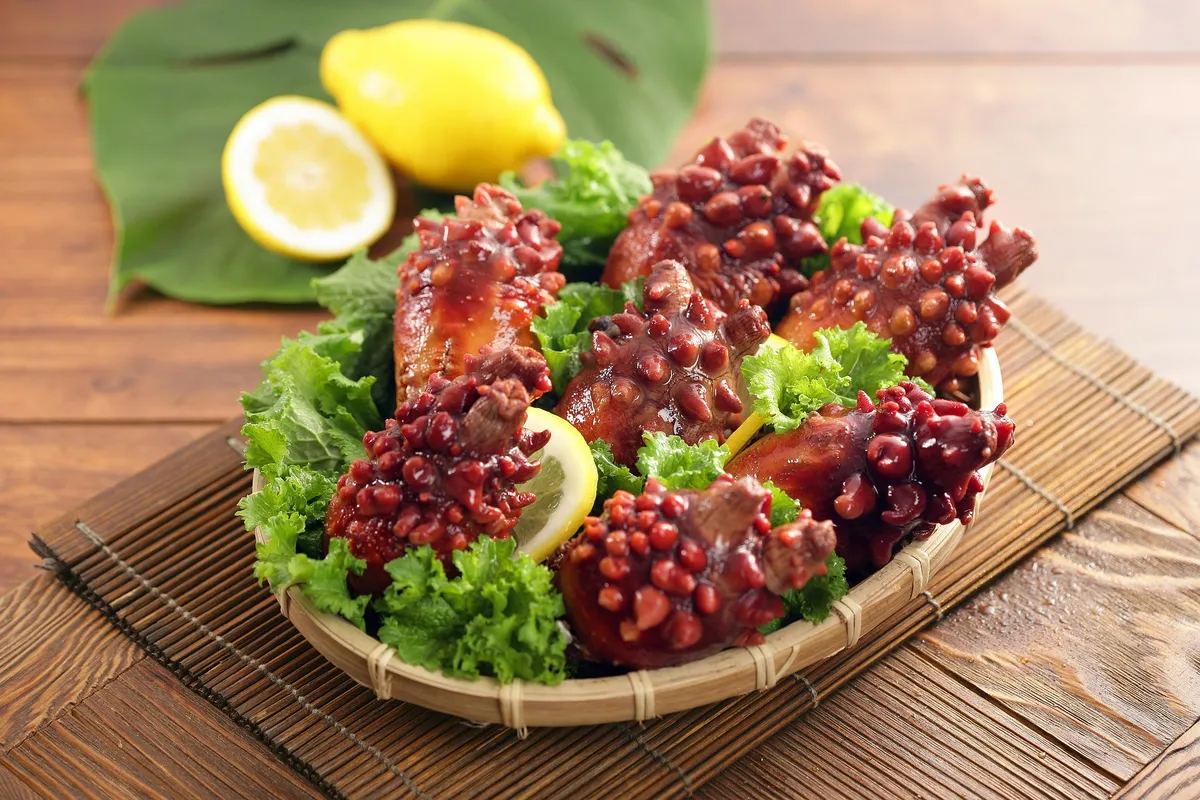
2. The Dipping Sauces
The main raw fish (like Halibut or Rockfish) has arrived. Don't be disappointed by eating it plain or with just a drop of soy sauce like Japanese sashimi, thinking "It's just chewy and has no taste." Korean raw fish is completed by the 'taste of the sauce.'
Chojang (The Essence of Sweet & Spicy): A red sauce made by mixing Korean red paste (Gochujang) with vinegar and sugar. The sweet, sour, and spicy taste perfectly erases the earthy or
fishy smell unique to white fish.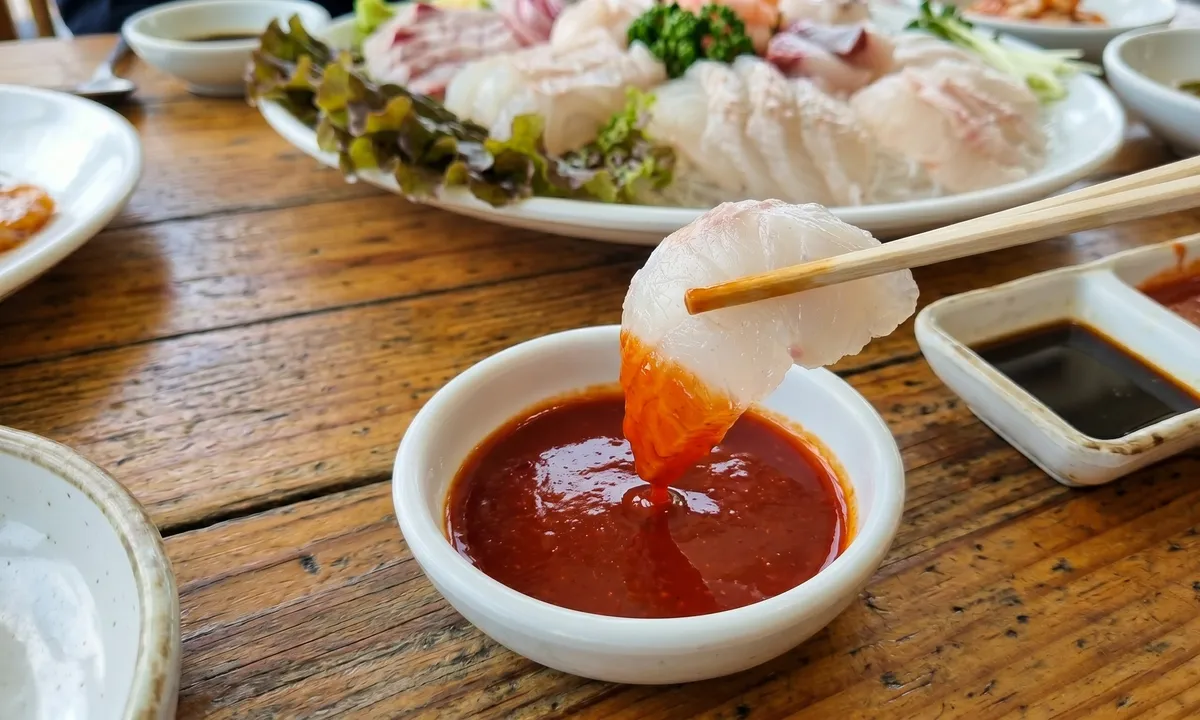
Makjang (The Locals' Secret Weapon): The ultimate dipping sauce made by mixing Ssamjang (soybean paste) base with plenty of minced garlic, green chilies, and savory sesame oil. It is the best when dipping fatty fish like Yellowtail or Sea Bass.
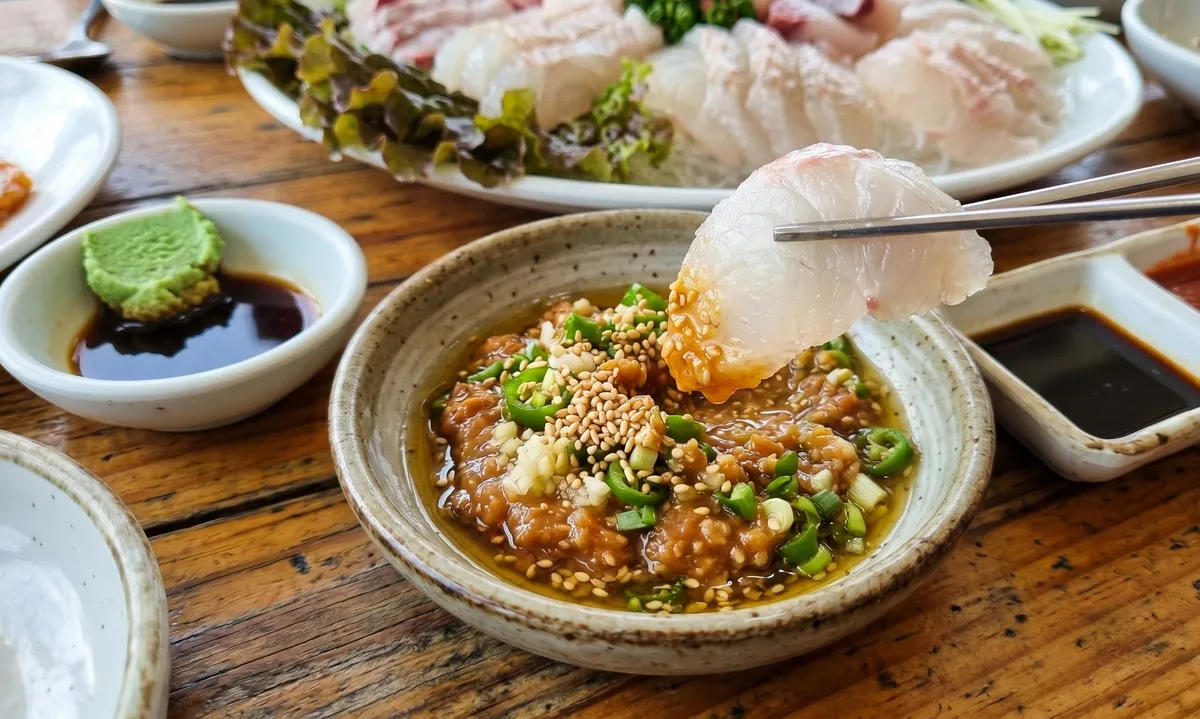
Soy Sauce & Fresh Wasabi: Korean soy sauce is slightly sweeter.
Dissolve plenty of fresh wasabi and dip just the edge of the fish
to enjoy the original taste of the fish.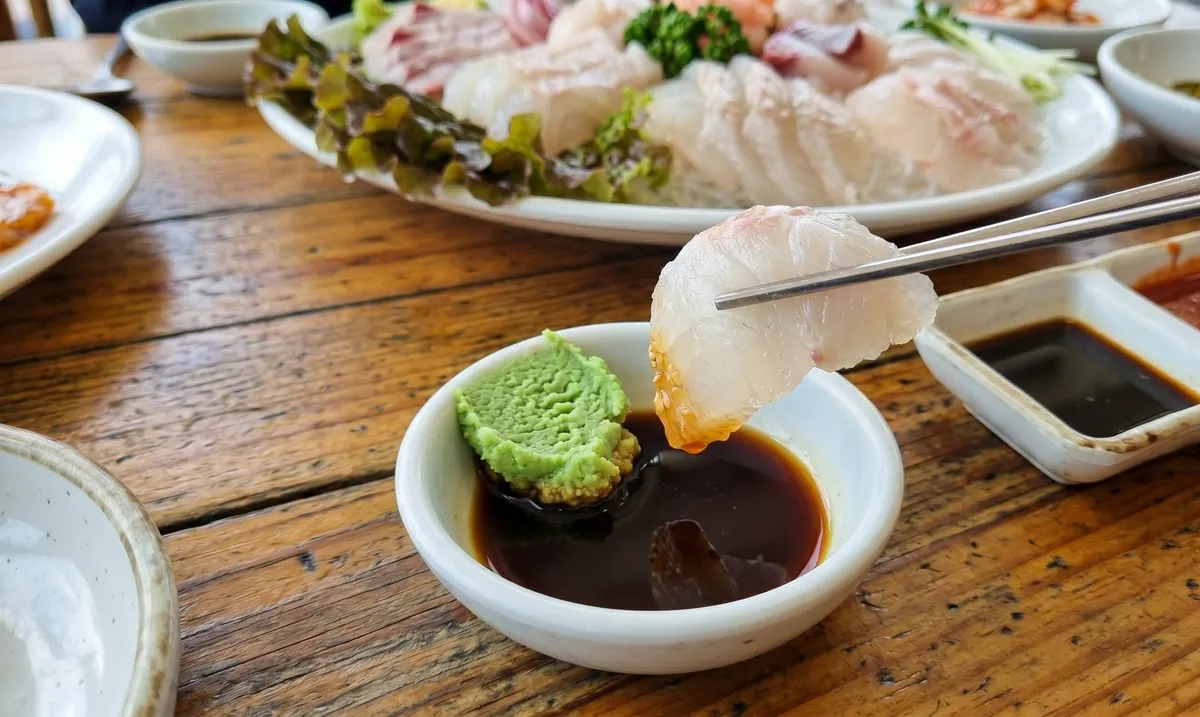
3. The Art of 'Ssam' (Lettuce Wraps)
The flower of Korean food is 'Ssam'. Just like meat, raw fish must be eaten as a wrap to taste its best. Pop it in your mouth following the formula below. A perfect gastronomic party will open in your mouth.
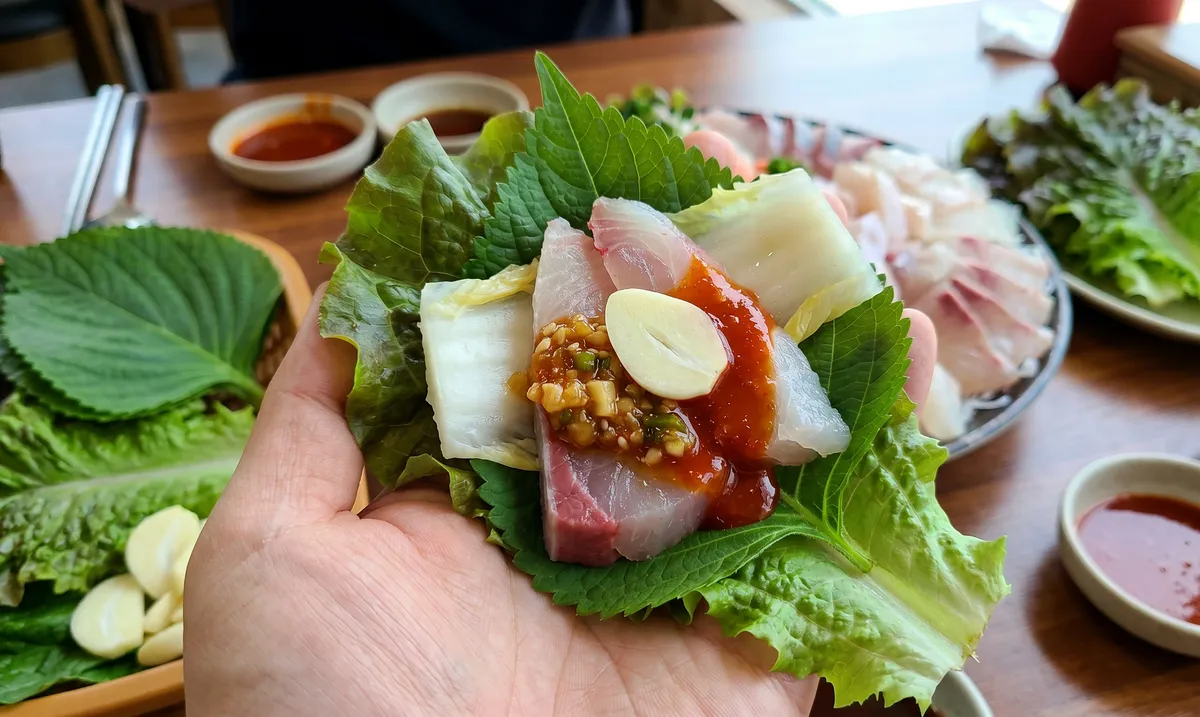
Step 1 : Place a fresh lettuce or fragrant perilla leaf on your palm.
Step 2 : Add a piece of White Kimchi or washed aged Kimchi on top. The crisp and refreshing Kimchi perfectly catches the greasiness of the fish.
Step 3 : Dip two thick slices of sashimi generously in Makjang or Chojang and place them in the center of the leaf.
Step 4 (The Core) : Add a slice of raw garlic! This is a must, as the garlic perfectly cuts off the fishy taste of the fish. (If you like it spicy, you can optionally add a slice of hot green pepper.)
4. The Grand Finale of the Meal, Maeuntang (Spicy Fish Stew)
Don't head to the counter just because you've almost finished the sashimi!
The true finale of a Korean seafood restaurant is 'Maeuntang (Spicy Fish Stew)'.
It is a bright red stew boiled vigorously with the leftover fish bones and head, plus plenty of radish,
water dropwort, and red pepper powder.
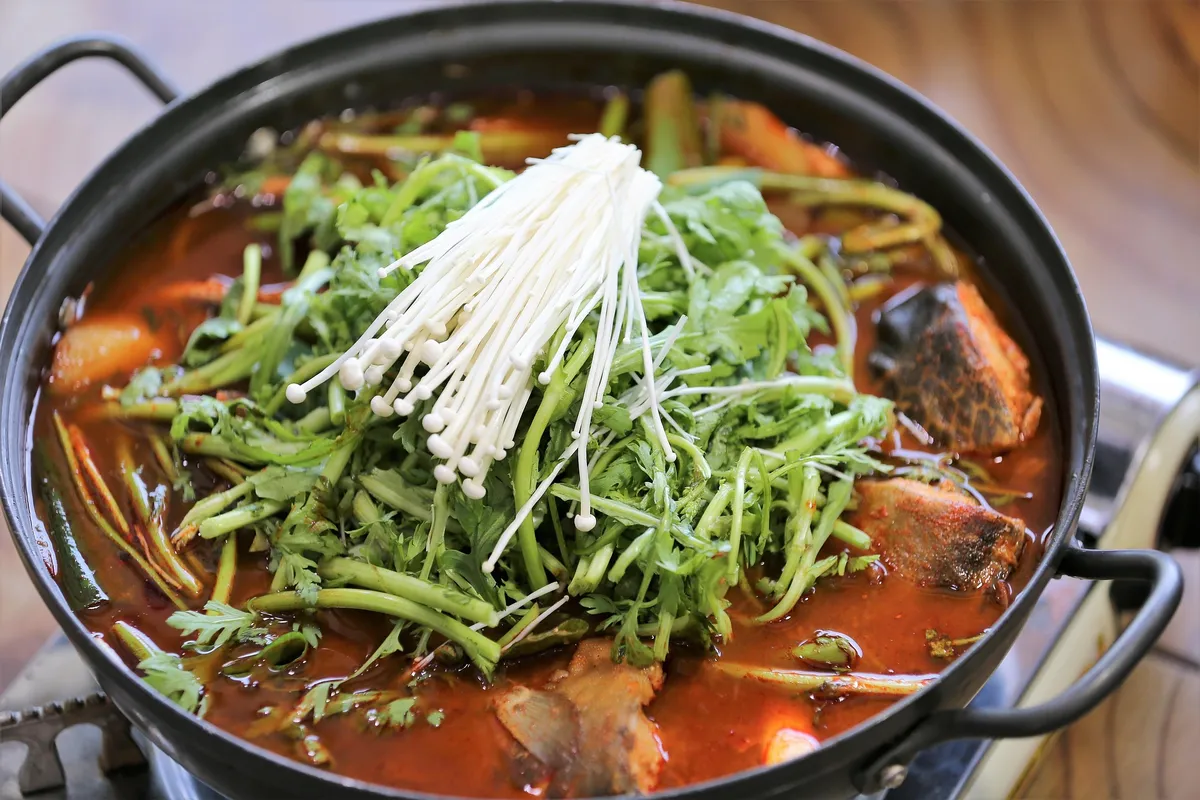
You can also add leftover garlic or peppers to the
broth and boil it. If you eat the spicy broth mixed with a bowl of rice, or tear in some Dough flakes (Sujebi) and pair it with a glass of Soju, you will perfectly understand why Koreans love seafood restaurants.
Set Up Your Perfect Seafood Basecamp
If you plan to enjoy Sannakji and raw fish with Soju at a fish market,
riding complex public transportation while tipsy is the worst choice.
Set up the items below perfectly before departure for a comfortable food trip!
1. Book a 'Hub Hotel' Near the Action (Top Priority)
Korea's major seafood spots are scattered across Seoul, Busan, and Jeju.
Reduce travel time and book your accommodation in the optimal location
where you can safely eat until late at night.📍 Exploring Seoul (Noryangjin Fish Market)
Yeouido: A 10-minute taxi ride away, offering premium Han River views.
👉 [Book Hotels in Yeouido]Hongdae: Perfect for enjoying vibrant Korean nightlife after your meal.
👉 [Explore Hotels in Hongdae]All over Seoul: Seoul’s transit is perfect.
Choose a hotel that fits your overall itinerary.
👉 [Explore All Hotels in Seoul]
📍 Exploring Busan (Jagalchi & Millak Market)
Nampodong: Directly across from Jagalchi Market.
👉 [Explore Hotels in Nampodong]Haeundae / Gwangalli: Ideal for those who want ocean views with their meal.
👉 [Book Hotels in Haeundae]
👉 [Book Hotels in Gwangalli]
📍 Exploring Jeju Island
All over Jeju: The entire island is a seafood paradise.
Pick the best stay for your route.
👉 [Explore Hotels in Jeju]
2. Book a Fish Market Tour (No Haggling or Language Barriers!)
If you are afraid of haggling with merchants in a huge fish market, book a market tour
with a local expert. The guide will pick the freshest sashimi and set up the perfect
Makjang and Ssam for you.📍 Seoul Noryangjin Fish Market:
Experience the best sashimi at fair prices with a local guide.
👉 [Book Noryangjin Fish Market Guide Tour]📍 Busan Jagalchi Market:
100% enjoy the energy of the port city and the romance of the night market.
👉 [Book Busan Jagalchi Market Night Tour]
3. Essential Market Survival Item: Uninterrupted Data (eSIM)
Fast and stable data is essential to read menus with Google
Translate or translate fish names to show merchants inside the complex market.
👉 [Book High-Speed Unlimited Korea eSIM (Instant QR Delivery)]